Traditional Greek Food: What to Eat in Greece, Dish by Dish
Traditional Greek food explained by course: meze, dips, seafood, oven dishes and sweets, plus drinks and regional specialities, so you can order with confidence.
On this page
A Greek taverna meal rarely arrives as starter, main and dessert in the way visitors expect. It builds from a cluster of small plates shared around the table, and understanding that rhythm is the fastest way to order well anywhere in the country.
This guide follows the meal as it usually unfolds: dips and mezedes, vegetable and pulse dishes, pies, cheese, seafood, meat, then sweets and drinks. Dish names appear in Greek with a plain-English explanation on first use, so you can match what you read here to any menu.
What Traditional Greek Food Actually Means
The organising principle of a Greek table is meze culture: many small dishes ordered together and shared, rather than individual courses. Greeks call the group around the table the parea, and the food is built to keep that group talking for a long lunch or a slow evening.
Is it rude not to finish food in Greece? No. Sharing plates means leftovers happen, and tavernas are used to tables ordering more than they finish.
What are the most popular Greek dishes to try first? Tzatziki, horiatiki salad, grilled octopus, souvlaki, moussaka and loukoumades cover the range most visitors meet first and appear on almost every taverna menu. Add one pulse dish such as gigantes and one pie from a bakery to see the wider kitchen.
Which traditional Greek dishes are vegetarian? Dips, fava, gigantes, fasolada, briam, horta, dakos, rice-stuffed gemista and most mezedes are normally meat-free. Ask about egg, dairy and stock in patties and stuffed vegetables, since recipes differ between kitchens.
Mezedes (μεζέδες) are those small plates, and they are where most meals begin. A taverna may serve them as a fixed spread or let you choose; either way, ordering four or five between two people is a reasonable start before deciding on a main dish.
It also helps to separate restaurant food from home cooking. The rotisserie gyros most visitors know arrived in Greece after 1922 with refugees from Asia Minor, so it is a modern staple rather than an ancient dish, as the history in this overview of Greek cuisine explains.
How to Read a Greek Menu
Greek menus group dishes in ways that tell you how they are cooked. Mezedes are the small plates; laderes are oil-based vegetable and pulse dishes, often stewed or baked and served lukewarm; tis oras means made to order, which usually signals grilled meat or fish that takes longer.
Bread is a separate matter. In many tavernas it is brought to the table automatically and charged for, so if you do not want it, say so at the start rather than discovering it on the bill.
Prices vary by island, view and season, and no reliable published figure covers every taverna. Check the printed menu or ask before ordering fish sold by weight, since that is where bills climb fastest.
Dips and Spreads to Start
Tzatziki (τζατζίκι) is yogurt with cucumber and plenty of garlic, sometimes lifted with dill. Skordalia (σκορδαλιά) is a thick potato-and-garlic cream, and on Nisyros it is made with stale bread and grated almonds instead.
Fava (φάβα) is a purée of yellow split peas served with olive oil, onion and lemon. Melitzanosalata (μελιτζανοσαλάτα) is a smoky aubergine dip with garlic, oil and wine vinegar, and tirokafteri (τυροκαυτερή) is a spicy whipped feta dip.
Taramosalata (ταραμοσαλάτα) is a pale fish-roe cream, and it is worth ordering only by the sea, where it is more likely to be made in-house rather than bought in. Pair two or three dips with bread and a salad rather than ordering every one on the list.
Salads and Vegetable Plates
Horiatiki (χωριάτικη), the village salad, is tomato, cucumber, green pepper, onion, feta and olives, dressed with oil and oregano. Every kitchen makes it slightly differently, sometimes with capers or barley rusks.
Dakos (ντάκος) is a Cretan barley rusk softened with grated tomato and topped with cheese and herbs, a filling snack that appears across Crete. Chorta (χόρτα) are wild greens boiled and dressed with oil and lemon; they are usually listed simply as greens.
Briam (μπριάμ) is an oven-baked mix of courgette, aubergine, potato and tomato in the style of a Greek ratatouille. It is one of the most dependable meat-free mains on a menu, alongside the oil-based vegetable dishes grouped as laderes.
Beans and Pulses
Fasolada (φασολάδα) is a white bean soup with tomato, carrot, celery and onion, and it is closely associated with Lent, when many households eat it for weeks. Gigantes (γίγαντες) are giant beans baked in tomato sauce, best when they come out of the oven rather than a tin.
Revithokeftedes (ρεβυθοκεφτέδες) are chickpea patties, roughly the Greek answer to falafel. They often contain egg as a binder, so anyone avoiding egg should ask at the taverna before ordering rather than assuming they are vegan; it is also worth checking current menu details with the kitchen, since recipes vary.
Pies and Phyllo
Spanakopita (σπανακόπιτα) is spinach and feta wrapped in phyllo, and tiropita (τυρόπιτα) is the cheese-filled version; the small pocket-sized forms are spanakopitakia and tiropitakia. These are bakery food as much as taverna food, eaten warm from the tray at breakfast or as a snack.
Bougatsa (μπουγάτσα) is filo pastry filled with custard or semolina cream in many northern cities, but the filling changes by region and can be soft cheese. Order it fresh and dusted with cinnamon, and expect it to be sweet unless the shop says otherwise.
Cheese and Fried Bites
Saganaki (σαγανάκι) is cheese fried in a small pan, often sheep's milk or a hard cheese such as kefalotyri, sometimes breaded with sesame. It arrives hot and squeaking, and it is a plate to share rather than a solo portion.
Local cheeses appear under the name of the village or island rather than a brand, and they are worth asking about on Chios, Lesvos and Limnos in particular. The taverna's own cheese, sometimes called choriatiko tyri, is usually the simplest and most interesting choice.
Seafood: Octopus, Calamari and Fish of the Day
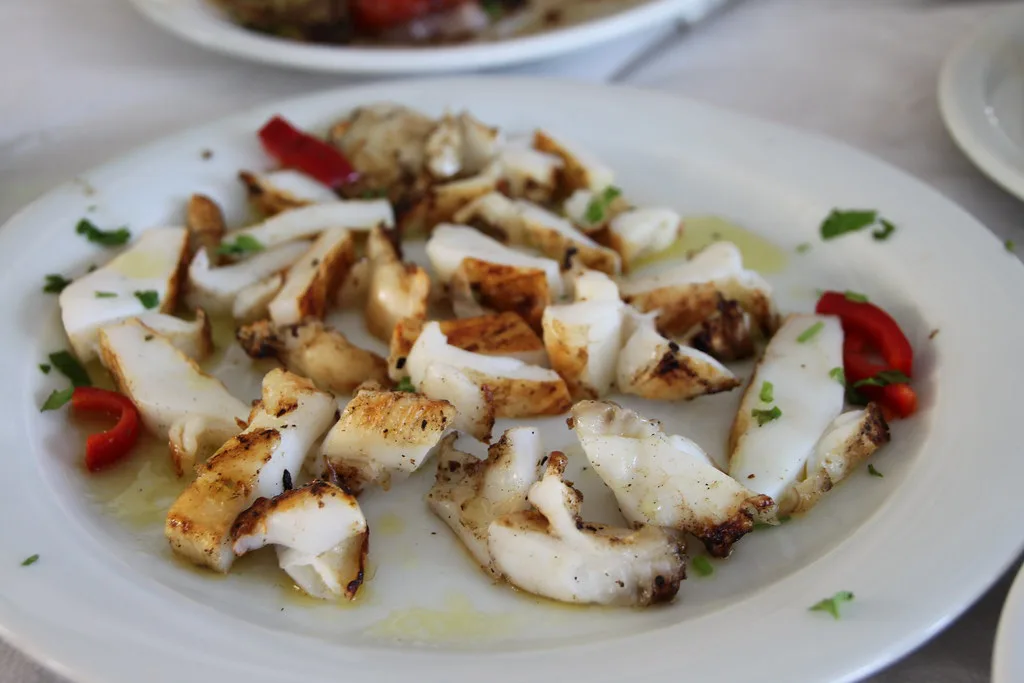
Grilled octopus (χταπόδι) is usually dried in the sun before grilling and served with vinaigrette, while calamari (καλαμάρι) comes as fried rings with lemon. Shrimp saganaki (γαρίδες σαγανάκι) bakes small shrimp in tomato sauce under melted feta.
Much of the fish advertised on Greek menus is frozen and bought from wholesalers, so it is worth eating seafood at seaside tavernas where the family may own the boat. Ask whether the fish is fresh and where it came from before committing to a whole fish.
Kakavia (κακκαβιά) is a fish soup served with the fish on a separate plate, a dish for a slow table rather than a quick one. Fish of the day, psari tis imeras, is the phrase to look for, but ask the price and the weight before it is cooked.
Meat Dishes Worth Knowing
Souvlaki (σουβλάκι) is a skewer of pork, chicken or lamb, and bifteki (μπιφτέκι) is a grilled minced-meat patty, both quick and cheap by comparison with oven dishes. The pita-wrapped version belongs to greek street food rather than to a sit-down taverna meal.
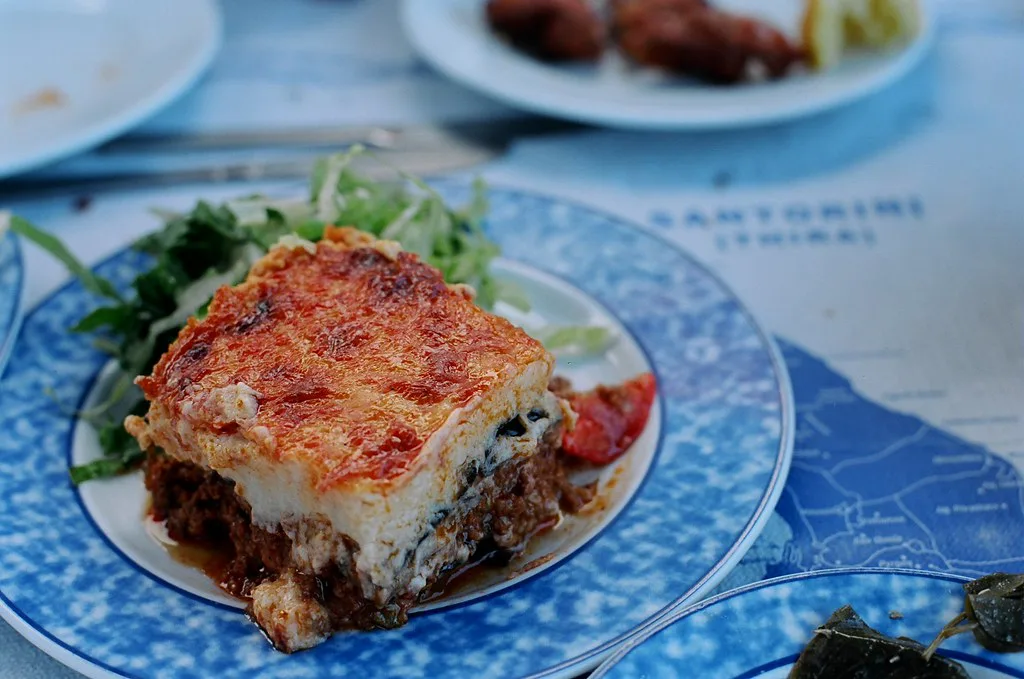
Moussaka (μουσακάς) layers aubergine and potato with minced meat and béchamel, while pastitsio (παστίτσιο) is a baked pasta and meat casserole. Both are taverna staples and take time to cook, so they tend to be better at lunch than late at night.
Kleftiko (κλέφτικο) is lamb or goat slow-cooked with vegetables, and stifado (στιφάδο) is a stew with small onions and tomato, usually beef. Spetzofai (σπετζοφάι) is a smoky sausage and pepper stew from the north, a good dish to seek out in Volos or Thessaly.
Lamb and goat remain the festive meats, served at Easter and family celebrations, and goat is common enough that it appears on ordinary taverna menus. If a dish is sold by the kilo, ask for the weight you want before it is carved.
Stuffed Vegetables and Vine Leaves
Gemista (γεμιστά) are tomatoes, peppers and sometimes courgettes stuffed with rice, herbs and optionally minced meat, then baked with potatoes. The word simply means stuffed, and the rice-only version is one of the most reliable meat-free mains in Greece.
Dolmades or dolmadakia (ντολμάδες) are vine leaves wrapped around rice, or rice and meat, and served cold or warm depending on the kitchen. Ask which version you are getting, because the vegetarian cold ones and the meat-filled warm ones are different dishes in practice.
Sweets to Finish
Loukoumades (λουκουμάδες) are small yeast doughnuts soaked in honey and dusted with cinnamon, best eaten hot and shared. Ravani (ραβανί) is a semolina cake soaked in syrup, and baklava is layered phyllo with nuts and honey syrup.
Glyko koutaliou, or spoon sweets, are fruit preserved in thick syrup and offered in tiny spoonfuls, sometimes with a glass of water rather than a spoon. Greek yogurt with honey is the simplest finish, and in many traditional tavernas a small dessert still arrives unasked.
What to Drink with the Meal
House wine comes by the carafe, often from the barrel, and retsina is white wine deliberately flavoured with pine resin. Assyrtiko from Santorini is Greece's best-known white grape, with Agiorgitiko from Nemea and Xinomavro from Naoussa among the reds to look for.
Ouzo is an anise spirit that clouds when water is added, and raki or tsipouro is a clear grape spirit served in small glasses with meze. Both are sipping drinks for a long table, not something to rush before food.
Greek coffee (ελληνικός καφές) is brewed in a small copper pot and served with the grounds settled at the bottom; order it sketos for no sugar, metrios for medium or glykos for sweet. Freddo espresso, iced and shaken to a foam, has become the more common summer choice than the older frappé.
Vegetarian and Vegan Ordering
Most mezedes are vegetable-based, which makes Greece easier for meat-free eaters than its grilled-meat reputation suggests. Pulses, dips, horta, briam and rice-filled gemista are the dishes to build a meal around.
Recipes vary by kitchen, so confirm whether a dish contains egg, dairy or meat stock, especially for patties and stuffed vegetables. Ask directly rather than relying on the menu description, since a taverna may adapt a classic recipe from one week to the next.
Regional Differences to Plan Around
Crete is the place to order dakos and wild greens, Santorini is where Assyrtiko is grown, and the north leans on sausage dishes such as spetzofai. Island tavernas often serve their own cheese and whatever fish came in that morning, so menus shift more than on the mainland, and the same island logic shapes where to eat in Santorini as anywhere else.
On the islands, some restaurants close for the winter months, so a favourite place may simply be shut outside the season. Check directly with the taverna before building a day around it, particularly in spring and late autumn.
Practical Notes on Ordering
Portions of meze are small by design, so order in stages and add dishes as the table empties rather than covering the table at once. Bread, water and sometimes a small cover charge are added to the bill, and it is normal to ask for the total before paying.
At a busy seaside taverna in high season, it is worth choosing your table carefully, since a table with a view usually costs more than the same dish one street back. Decide which you want before you sit down, because swapping after the order is awkward.
Where to Go Next
Use this list to decode any taverna menu, then let the place decide the details: dakos and greens on Crete, Assyrtiko on Santorini, sausage stews in the north, and fish wherever the boat comes in. The city and island guides take each of those further, with the dishes and neighbourhoods that matter locally, including what to eat in mykonos when you want the same decisions made on the islands.
If you want to start with the dishes most people try first, begin with tzatziki, horiatiki, grilled octopus, souvlaki and loukoumades, then work outward from there. Order slowly, ask about fish and bread, and the rest of the menu opens up.
Explore more Greece sauna guides
Frequently Asked Questions
Is it rude not to finish food in Greece?
No. Sharing plates means leftovers happen, and tavernas are used to tables ordering more than they finish. What is more likely to draw a comment is refusing food offered by a host at home, which is a different setting from a restaurant.
What are the most popular Greek dishes to try first?
Tzatziki, horiatiki salad, grilled octopus, souvlaki, moussaka and loukoumades cover the range most visitors meet first and appear on almost every taverna menu. Add one pulse dish such as gigantes and one pie from a bakery to see the wider kitchen.
Which traditional Greek dishes are vegetarian?
Dips, fava, gigantes, fasolada, briam, horta, dakos, rice-stuffed gemista and most mezedes are normally meat-free. Ask about egg, dairy and stock in patties and stuffed vegetables, since recipes differ between kitchens.
Do Greek tavernas charge for bread?
Often yes, bread is brought to the table and added to the bill without being ordered. If you do not want it, say so when you sit down rather than at the end of the meal.
What is the difference between meze and a main course in Greece?
Mezedes are small shared plates ordered together at the start, while a main course is a single larger portion such as grilled fish, kleftiko or pastitsio. Many tables eat mostly meze and never order a main at all.
Should I order fish at a seaside taverna or inland?
Seaside tavernas are the better bet, since much menu fish is frozen and bought from wholesalers and coastal kitchens are more likely to have a boat connection. Inland, the grill and oven dishes are the stronger choice.
What do Greeks drink with a taverna meal?
House wine by the carafe, retsina, ouzo or tsipouro with meze, and beer are all common, followed by Greek coffee or a freddo espresso. Order water alongside; it usually arrives without asking.
Sources
Notes for eating well in Greece
Optional updates to our guides.
You might also like

Continue reading
More guides you'll find useful