What to Eat in Mykonos: Local Dishes and Tavernas
A practical guide to what to eat in Mykonos, from kopanisti and louza to amygdalota, with which areas to eat in, how to book, and off-season limits.
On this page
Most visitors come to Mykonos for the whitewashed lanes and the beaches, but the island also has a short list of foods that are genuinely its own rather than generic Greek taverna fare. The three to know are kopanisti, a peppery spreadable cheese; louza, a cured pork made in the Cyclades; and amygdalota, almond sweets. Knowing these names helps you read a menu and decide where to spend a meal, whether in Chora (the main town) or at a beach suburb such as Ornos.
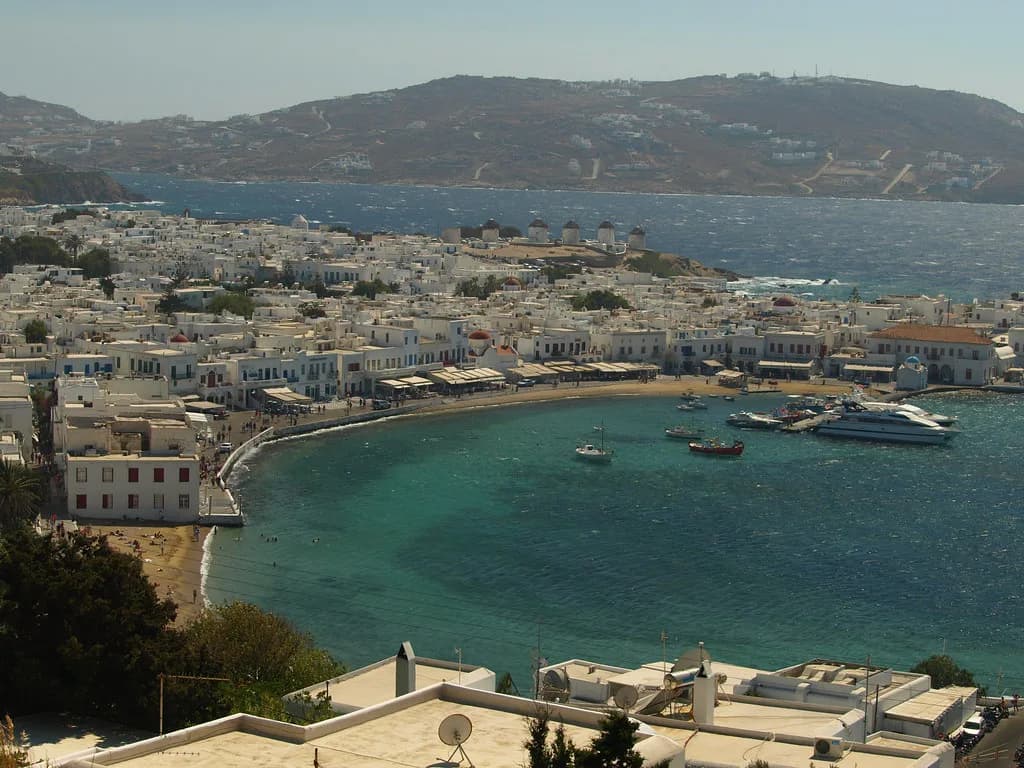
Mykonos Town is compact and walkable, so much of your eating can happen on foot between the windmills, Little Venice and the Old Harbor, which is where daily boats to Delos leave. If you want the broader sightseeing context first, including things to do in mykonos beyond the table, plan your walks around meal times rather than the other way round.
The Mykonian foods worth planning a meal around
Start with what is actually local. Kopanisti is a soft, spreadable cheese with a sharp, peppery bite, usually served as part of a meze table (small shared plates) with bread or barley rusks. Louza is pork that has been cured and dried, sliced thin and eaten as a meze or in a sandwich. Amygdalota are almond-based sweets, often shaped by hand and scented with rose or orange flower water.
These three are the anchor of a Mykonos food day: a meze plate with kopanisti and louza at lunch, amygdalota with coffee in the afternoon. Everything else on a menu, from horiatiki salata (the Greek village salad of tomato, cucumber, onion, olives and feta) to grilled fish, is pan-Greek and can be good anywhere in the islands. Ordering both the local specialities and one or two Greek classics gives you the clearest picture of the island's cooking.
Kopanisti: the peppery spreadable cheese
Kopanisti is best understood as a spread rather than a slicing cheese. It is soft enough to smear on bread, and its flavour is salty and tangy with a chilli-like heat that comes through on the finish. On a menu it may appear as kopanisti alone, as a dip with paximadia (twice-baked barley rusks), or folded into a salad dressing. Ask whether it is served plain or with a drizzle of olive oil and herbs, because the garnish changes how hot it tastes.
Because it is a cheese, it can appear on a cheese board or as one item in a mixed meze selection. If you are ordering for a group, one portion of kopanisti with bread is enough to introduce it to the table; if you love it, order a second rather than building the whole meal around it. Pair it with something plain and grilled, not with another strongly flavoured dip, so the heat stays readable.
Louza: cured pork from the Cyclades
Louza is cured pork, in the same family as prosciutto or other air-dried hams, but made in the Cyclades with local seasoning. It is usually sliced very thin and served as a meze, sometimes with cheese or fruit, sometimes on bread. The slices should be firm and dark at the edge, and the flavour is savoury and lightly spiced rather than smoky.
If you see louza on a menu as part of an assorted cold plate, it is a good way to try it alongside kopanisti without committing to a full portion. It also works as a lunch item in a sandwich if you want something quick before a beach or a boat. Do not expect it to be the cheapest thing on the menu; cured meats are usually priced as a premium meze, so check the menu before ordering a large round for the table.
Amygdalota: almond sweets and where they fit in a day
Amygdalota are small almond sweets, often chewy or marzipan-like, and they are the natural end to a Mykonos meal or a mid-afternoon stop. They are sold in bakeries and sweet shops as well as served in restaurants, so you can buy a few to eat later rather than ordering a full dessert. Look for them plain, dusted with sugar, or flavoured with rose or citrus.
A practical way to use them is as a walking snack between sights. Mykonos Town is small enough to cross on foot, and the lanes around Matogianni Street are lined with shops where you can pause. If you want a structured tasting instead of buying blind, a mykonos food tour can put sweets like amygdalota in context with savoury stops, though you should confirm the route and what is included before booking.
Seafood and meze: what to order and how to read the menu
Greek menus use a small vocabulary that is worth learning before you sit down. Meze means small shared plates; a meze table is several of these together, not a starter followed by a main. Grilled fish is usually sold by weight, so ask for the price per kilo and the size of the fish before it is cooked. Octopus, calamari and shrimp are common, and shrimp saganaki is shrimp baked in a tomato and cheese sauce, which is richer than plain grilled seafood.
Mykonos has a seafood restaurant in Mykonos Town, Raya Restaurant, which a travel source describes as a Mediterranean seafood restaurant. Other Mykonos Town options named by the same source include Captain's and M-Eating. Rather than treating any of these as a ranking, use them as starting points and check the current menu and opening hours before you go, since island restaurants adjust with the season.
Souvlaki and gyros: the fast, cheap option
Souvlaki is meat grilled on a skewer, and gyros is meat cooked on a vertical rotisserie and shaved into a pita or onto a plate. Both are the everyday fast food of Greece, and in Mykonos they are the obvious choice when you want a quick lunch without a long table service. A gyros pita is a full meal in itself, usually with tomato, onion, tzatziki (a yogurt and cucumber dip) and sometimes fries inside.
The trade-off is speed and price against atmosphere. A gyros shop gets you fed quickly, which matters if you are catching an afternoon boat to Delos or heading to a beach, but it will not give you the long meze lunch that is the other pleasure of the island. If you want to compare the specific shops, best gyros in mykonos covers the options in more detail.
Where to eat by area: Chora, Little Venice, Old Harbor, Ornos and Platys Gialos
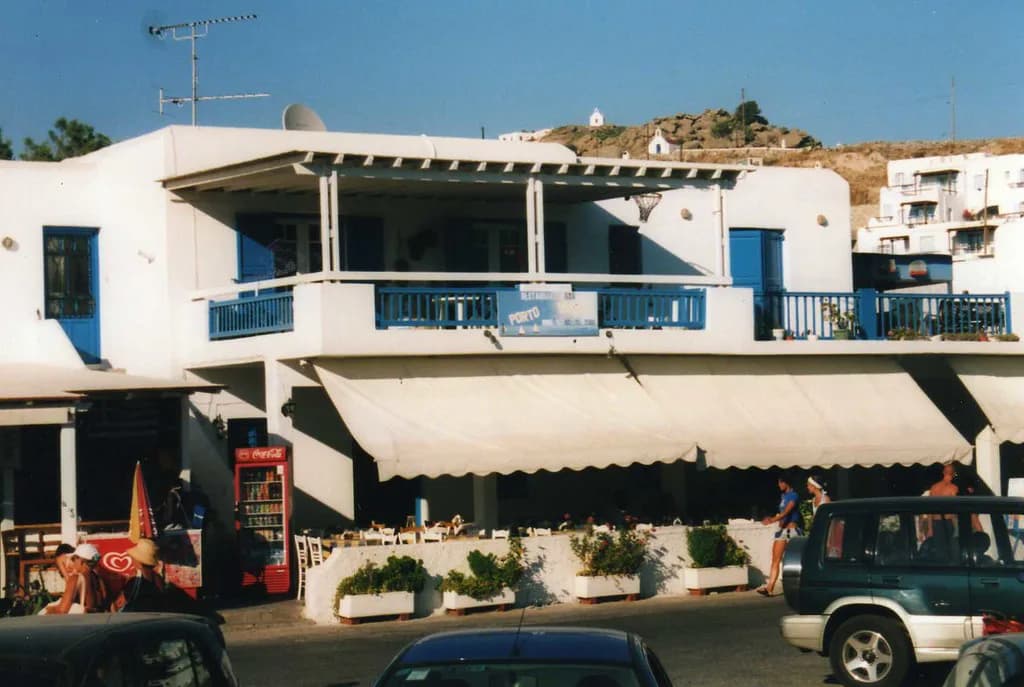
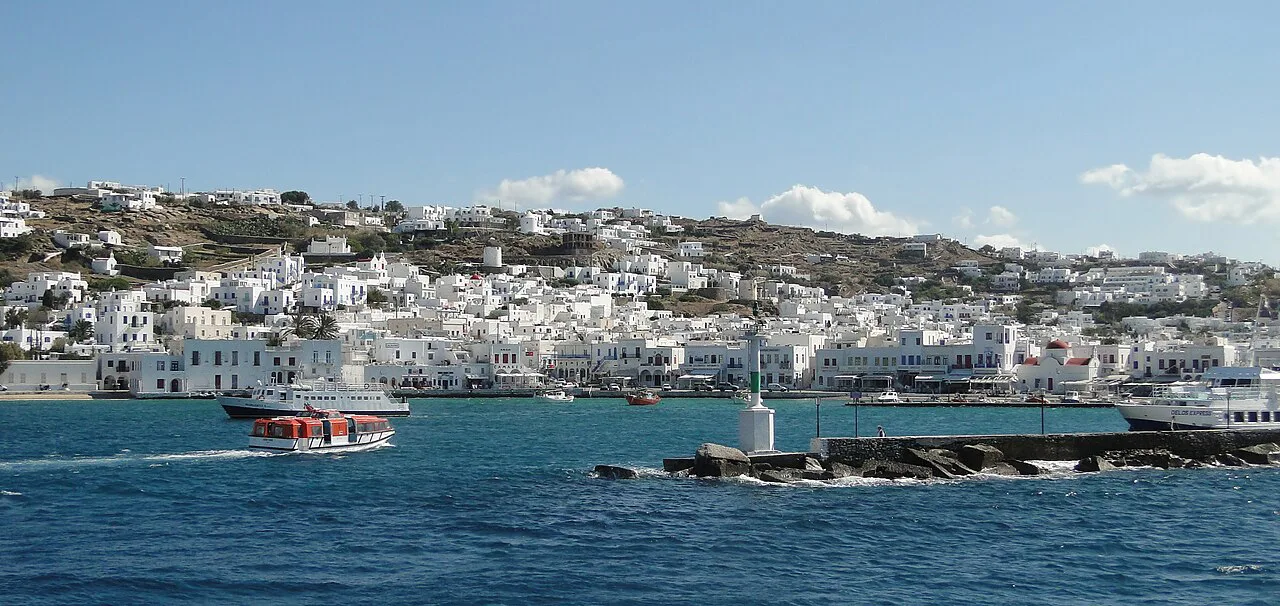
Chora, or Mykonos Town, is where most of the named restaurants sit, and it is the easiest area to eat in without a car. The Old Harbor, just around the corner from Little Venice, has restaurants along the waterfront and is also where boats to Delos depart; a source puts the crossing at roughly 30 minutes with ferries running about hourly from around 9am. That makes the Old Harbor a sensible lunch stop before or after a Delos trip, but you should confirm the day's schedule at the ticket booth.
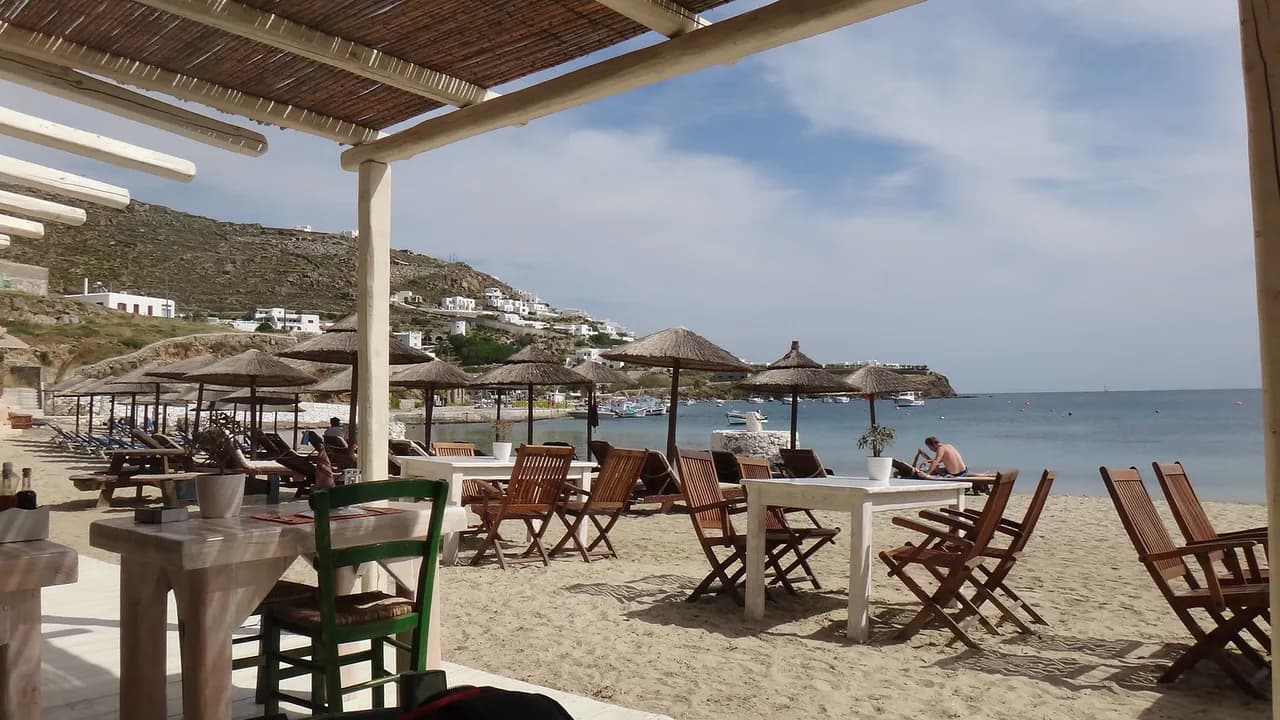
South of town, Platys Gialos is a small beachfront town where a travel source names Blue Myth Restaurant and Avli Tou Thodori as highly rated options. Ornos is another south-coast base with a beach and a cluster of places to eat, and it suits travellers who want to stay outside the town's evening bustle. Both areas are beach-resort territory, so expect menus aimed at holiday appetites and check whether a place is open in the shoulder season.
Ornos is described by Lonely Planet as a beach resort area, which is a useful expectation-setter: it is a place for sand and easy meals rather than a old village centre. If you are based there, plan on eating near the beach or taking a short bus or taxi ride into Mykonos Town for a wider choice. The island's taxis and buses are limited in peak season, so decide in advance whether you want to stay local or travel for dinner.
View versus value: Little Venice and windmill-side tables against back streets
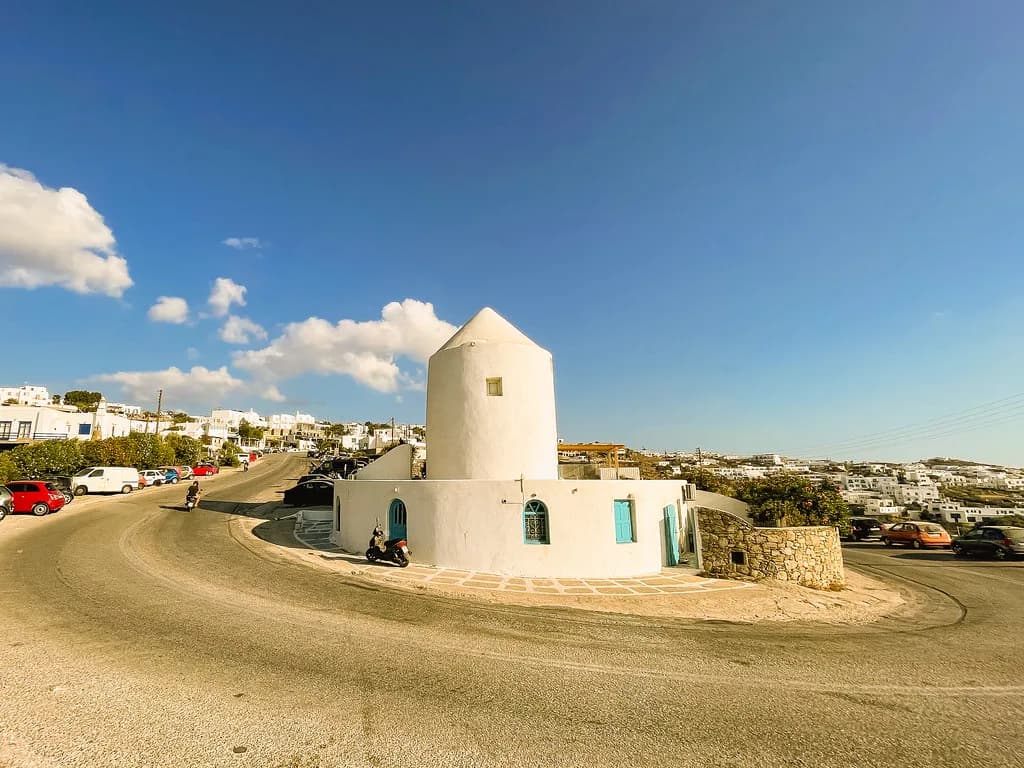
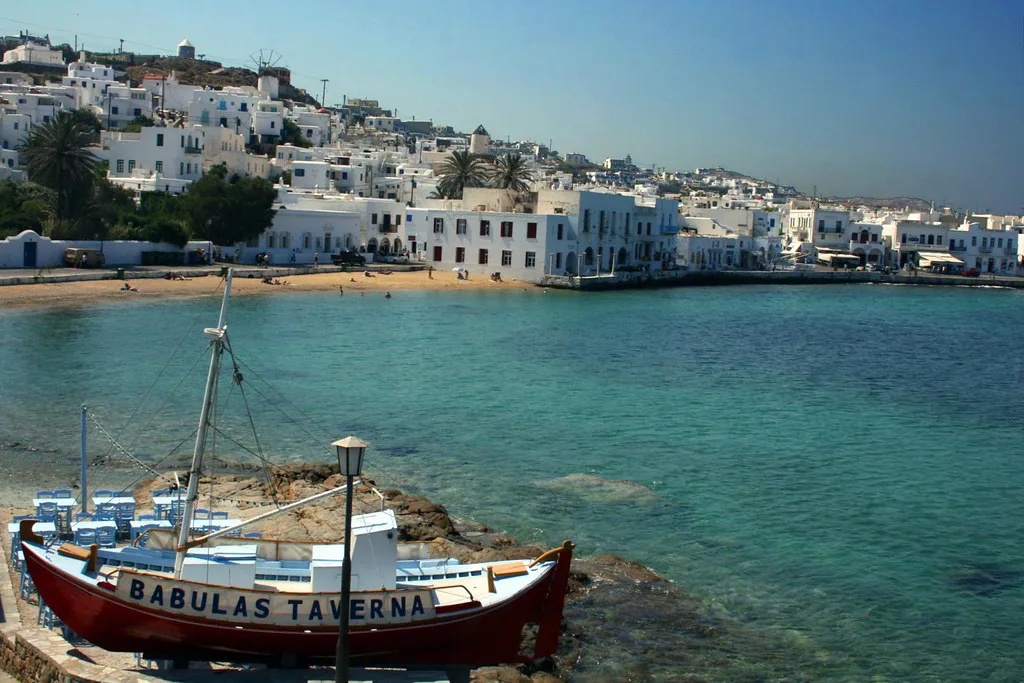
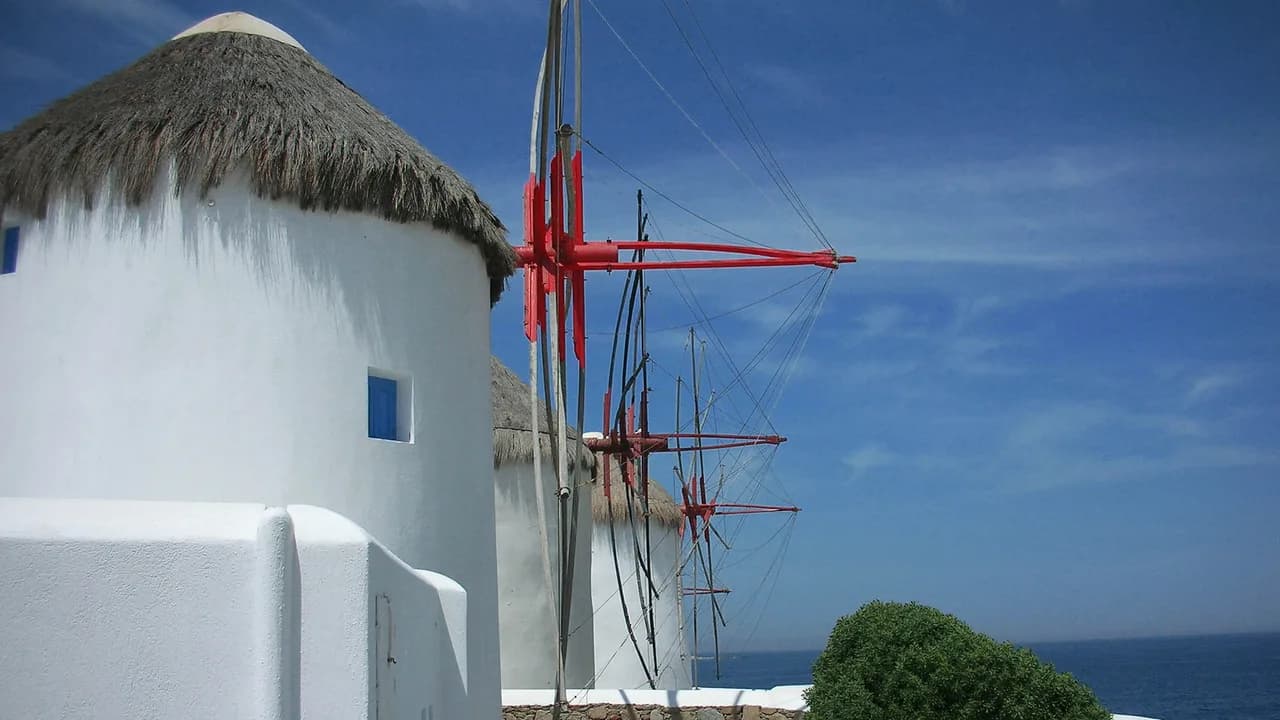
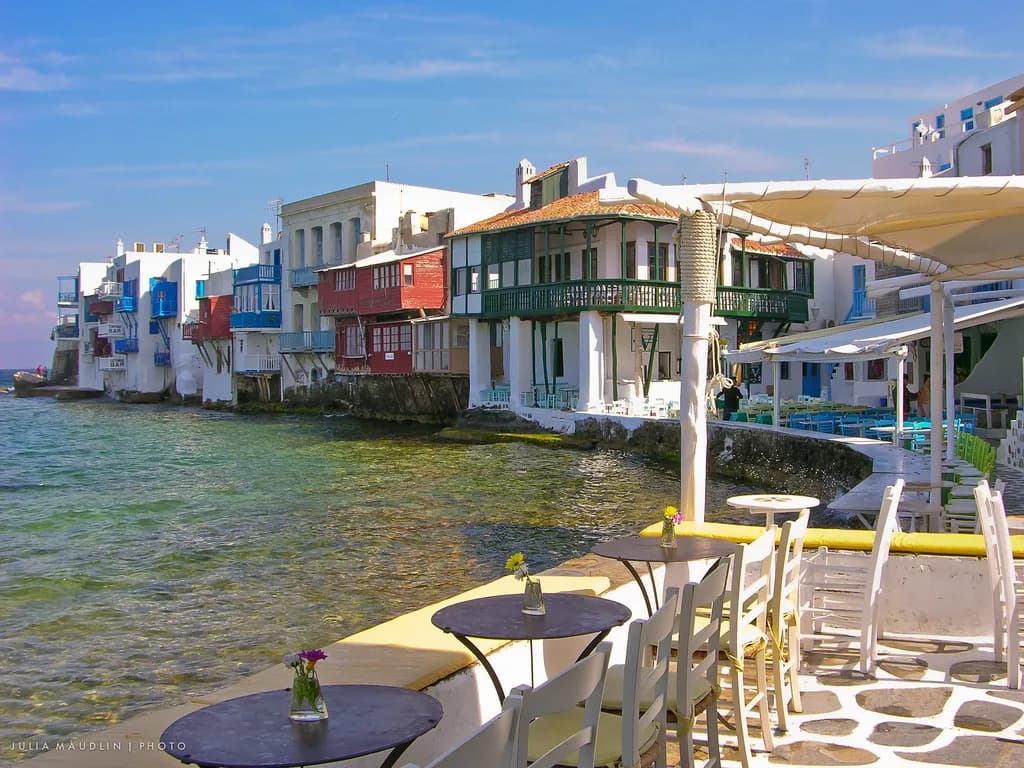
Little Venice is the row of old merchant houses whose balconies hang over the water, and many of them now hold cafes and restaurants. The windmills at Kato Mili sit right next to it, making this the island's most photographed sunset spot. Tables here are sold on the view, so expect to pay more for the same plate than you would a few lanes inland, and expect the best seats to go early.
The alternative is to eat in the lanes of Chora, away from the water, where the rent is lower and the menu often more traditional. You give up the sunset framing but gain quieter tables and usually better value. A workable compromise is a drink in Little Venice at sunset and dinner in a back street afterwards, which lets you see the view without paying a view premium for the whole meal.
Booking advice for sunset tables and peak-summer dinners
In July and August, Mykonos Town fills up and the waterfront tables at Little Venice are the first to go. A travel source advises making dinner reservations in advance if you are visiting during the busy summer months. That applies most strongly to sunset seatings and to any restaurant with a caldera-style or harbour view, where the number of good tables is small.
Book directly with the restaurant rather than through a third party where possible, and ask specifically for the seating time and table position you want. For sunset, aim to arrive well before the sun goes down rather than at the last minute, because a reserved table does not guarantee a front-row view. If a place cannot confirm a table type, treat the booking as a time slot rather than a view.
Seasonality: what an April or November trip means for open kitchens
Mykonos is a strongly seasonal island. A travel source notes that from November through March the weather turns chilly and sometimes wet, and fewer restaurants and hotels stay open. In April the island is still coming out of its winter slowdown, with some kitchens reopening and others not yet ready, which means a list of restaurants planned in advance may not all be available on the day.
The practical fix is to build your eating plan around what is actually open rather than around a fixed list. Pick two or three areas, such as Chora and Ornos, and confirm on the day which places are serving. If you are travelling in the shoulder months, treat any named restaurant as a possibility rather than a certainty, and keep a fallback near your hotel.
Practical ordering notes: portions, sharing and the meze table
A Greek meze table is built by sharing, so order fewer dishes than there are people and add more as you go. Two or three meze per person is usually plenty when bread and a main are also coming. If you order a whole fish by weight, ask for it to be filleted or served whole depending on how comfortable you are dealing with bones, and confirm the price before it goes on the grill.
Drinks follow the same logic. A carafe of house wine or a bottle of retsina, the resinated wine that is an acquired taste, is the usual accompaniment to meze. If you want a broader reference for Greek dishes beyond Mykonos, traditional greek food covers the national menu, and corfu food shows how another island's kitchen differs, which is a useful comparison when you are deciding what is genuinely local here.
Plan Your Meal Around Mykonos
Build a Mykonos eating plan around the local trio of kopanisti, louza and amygdalota, then fill in with seafood, meze and a gyros lunch when speed matters. Choose your area deliberately: Chora for choice, Little Venice for the view at a premium, the Old Harbor for boats, and Ornos or Platys Gialos for beach-side meals. Book sunset tables ahead in summer and keep a fallback in the shoulder months.
Explore more Mykonos sauna guides
Frequently Asked Questions
What food is Mykonos known for?
The island's own specialities are kopanisti, a soft peppery cheese spread; louza, cured pork sliced thin as a meze; and amygdalota, almond sweets. Beyond those, Mykonos menus are broadly Greek, with seafood, meze and grilled meats.
What is kopanisti and how is it eaten?
Kopanisti is a spreadable cheese with a salty, tangy flavour and a chilli-like heat. It is served with bread or barley rusks as part of a meze table, or sometimes as a dip or in a salad dressing.
Where do locals eat in Mykonos?
Sources do not give a definitive local list, and many places in Chora and at the beaches cater to visitors. A practical approach is to eat in the back lanes of Mykonos Town away from the waterfront, where menus tend to be simpler and prices lower than at view tables.
Is Mykonos expensive for food?
Little Venice and windmill-side tables charge a premium for the view, while back-street tavernas and gyros shops are cheaper. Menu prices for specific restaurants are not published in the sources here, so check the menu or ask before ordering, especially for fish sold by weight.
Do restaurants in Mykonos close in winter?
Many do. From November through March fewer restaurants and hotels stay open, and April is a transition month when some kitchens are still reopening. Confirm on the day rather than relying on a list made in advance.
What are the top Greek foods to try in Mykonos?
Alongside the local cheese, cured pork and almond sweets, try horiatiki salata, the Greek village salad, grilled fish, and a gyros pita for a quick lunch. Shrimp saganaki, shrimp baked in tomato and cheese, is a richer seafood option worth ordering in a group.
Sources
Notes for eating well in Greece
Optional updates to our guides.
You might also like
Continue reading
More guides you'll find useful