Greek Coffee: How to Order and Drink It in Greece
Greek coffee is boiled and unfiltered. Learn how to order sketos, metrios or glykos, how the kaimaki foam forms, and how it differs from frappé and freddo.
On this page
Ordering coffee in Greece means choosing between three quite different drinks that often share one menu: a hot, unfiltered cup boiled on the stove; a foamy iced instant coffee; and a cold espresso poured over ice. Knowing which is which saves you from nodding at the wrong word and getting a drink you did not expect. This guide covers the vocabulary, the foam, and the pace of a kafenio so you can order correctly the first time.
What Greek Coffee (Ellinikos Kafes) Actually Is
Greek coffee, called ellinikos kafes, is made from very finely ground beans boiled in a small long-handled pot known as a briki, then poured into a small cup with the grounds still in it. Nothing is filtered out. The drink is short and strong, and it is never served with milk or cream, which surprises travelers used to a cappuccino.
What does sketos, metrios and glykos mean? These are the sugar levels for Greek coffee, fixed before the coffee is boiled. Sketos means no sugar, metrios means one teaspoon or serving, glykos means two, and variglikos is the very sweet version.
How do you drink Greek coffee? Let the cup stand for a minute so the grounds settle to the bottom, then sip slowly and stop before the muddy layer. Do not stir it, since that brings the sediment back up.
What is the difference between Greek coffee and frappé? Greek coffee is hot, brewed from finely ground coffee in a briki and served unfiltered. Frappé is a cold, foamy drink made from instant coffee, sugar, ice and water, sometimes with milk.
The grind matters more than the machine: a powder-fine coffee is what allows the brew to foam and then settle. Expect a small cup, a saucer, and usually a glass of cold water on the side. If you have only ever had espresso, the strength will feel familiar but the texture, with sediment at the bottom, will not.
The Kafenio: Why You Sit Rather Than Grab
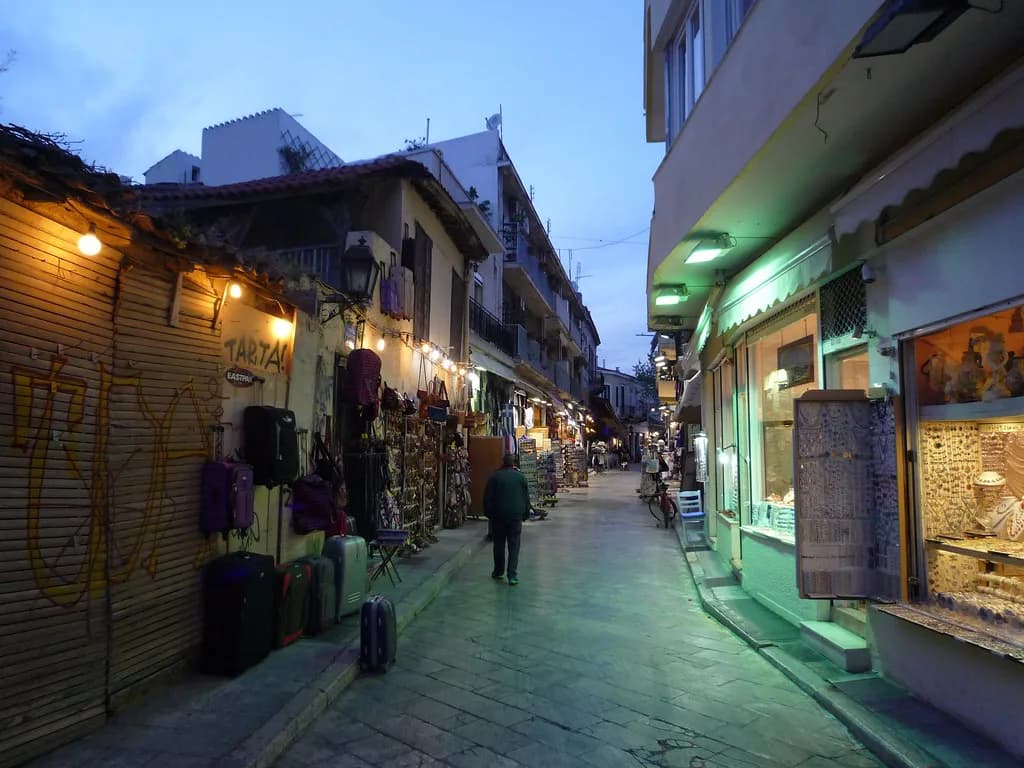
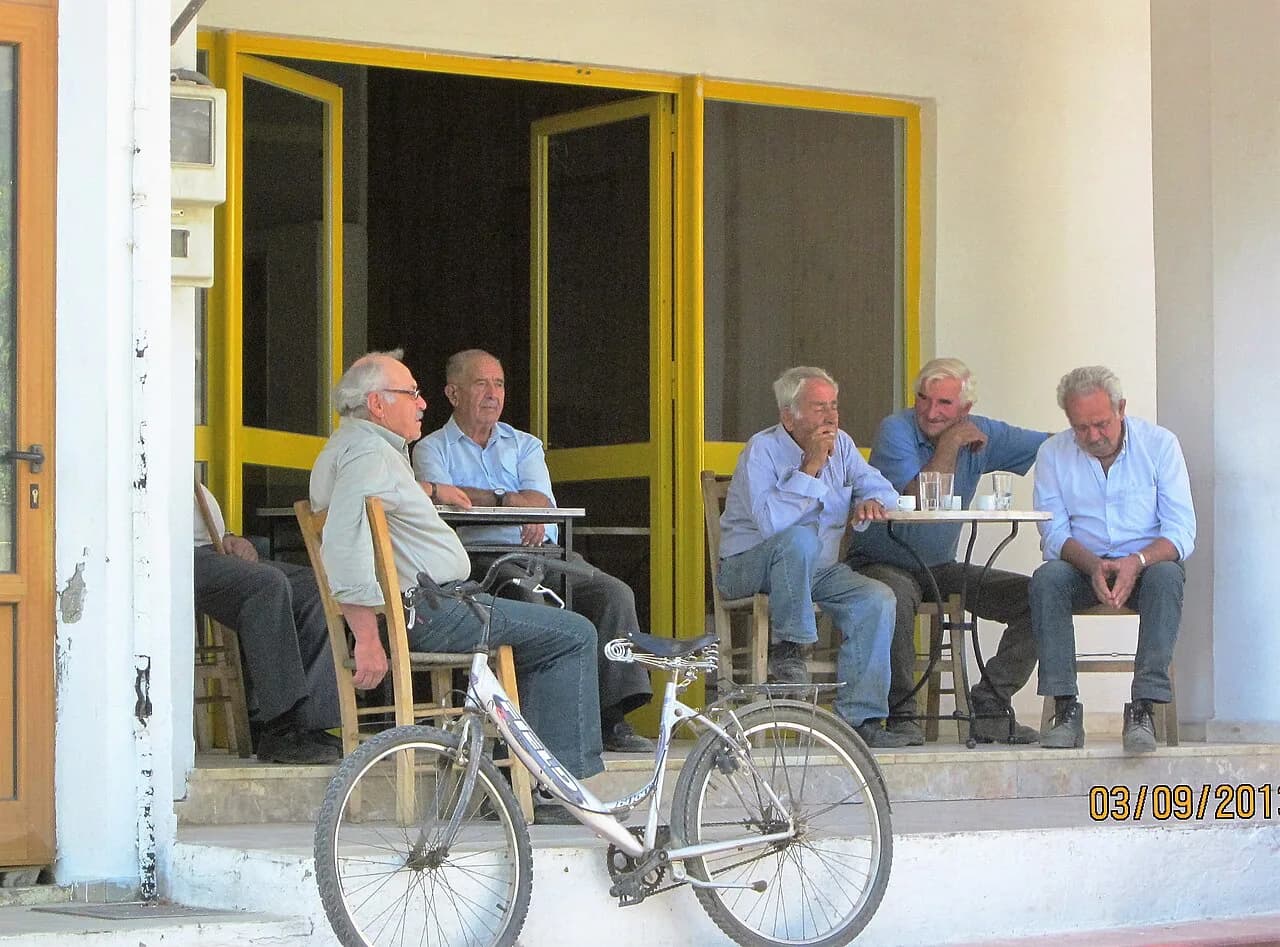
A kafenio is the traditional coffee house, and it runs at a different speed from a takeaway counter. One account describes these places as gathering spots where older men talk, play backgammon and linger over a Greek coffee served until late, which is a fair signal of the expected pace. Treat a kafenio as a place to sit for a while rather than a two-minute stop.
That slower rhythm is the point. Ordering a second cup is normal, and nobody will hover to turn your table. If you are on a tight schedule, a stand-up espresso bar or a bakery counter is usually the better fit; if you have twenty minutes to spare, the kafenio is where the drink makes most sense.
How to Order: Sketos, Metrios, Glykos and Variglikos
Sweetness is fixed at the moment the coffee goes on the heat, not stirred in afterwards, so you must state it when you order. Sketos means no sugar, metrios means one teaspoon added before boiling, glykos means two, and variglikos is the very sweet version built on three tablespoons of sugar. Say the word on its own and the waiter will understand.
A second source gives the same scale in slightly different measures: metrios as semi-sweet with one serving of sugar, glykos with two, and sketos for none. The lesson is not the exact spoon count but the fixed order: no sugar, some sugar, more sugar, very sweet. If you normally take your coffee unsweetened, start with sketos, because even metrios tastes sweet to many visitors.
You may also see glykys vrastos, an intensely sweet variation that is boiled more than once. It is a different drink from a standard glykos rather than just a sweeter one, so order it only if you want something dessert-like. When in doubt, ask for metrios as a middle ground and adjust on the second cup.
How to Drink It Without Getting a Mouthful of Grounds
Give the cup a minute. The grounds need time to sink to the bottom, and sipping too early means grit. Once it has settled, drink slowly and stop while there is still liquid above the sediment; the muddy layer at the base is not meant to be swallowed. It is normal to leave it.
Do not stir the cup before drinking, or you will undo the settling you just waited for. Some drinkers take audible sips to draw the aroma up, though this is optional and not a rule you need to follow. The practical points are simple: let it rest, sip slowly, and finish before the bottom third.
Kaimaki: Why the Foam Decides the Cup
A well-made cup carries a light foam on top, called kaimaki. The richer that foam, the better the coffee is judged to be, which is why the pot is kept over low heat and stirred while it brews. If the foam is thin or missing, the cup was rushed.
The briki's shape does real work here: a narrow top and long handle let the coffee rise and foam before it boils over. At home, the technique is to heat gently until the surface trembles and foams, lift the pot off, let the bubbles fall, then return it briefly to foam once more before pouring. That second rise is the sign the cup is ready.

Greek Coffee vs Frappé vs Freddo
Frappé is the foamy iced coffee you will see everywhere in summer, made from instant coffee, sugar, ice and water, sometimes with milk, and shaken until frothy. It is a cold, light, refreshing drink, not a brewed coffee. The same sweetness words apply: sketo, metrio and gliko.
Freddo espresso and freddo cappuccino are a different family again: espresso, hot or freshly pulled, shaken or poured over ice, with the cappuccino version adding a cold milk foam. Greek coffee is none of these. It is hot, unfiltered and boiled; frappé is cold and instant; freddo is cold and espresso-based. Pick by weather and by whether you want sediment in the cup.
The frappé has a tidy origin story worth knowing: an employee of the Nestlé company, Dimitris Vakondios, is credited with inventing it when he could not find hot water for a Nescafé and mixed the coffee with cold water in a shaker instead. The name frappé was not settled until 1979, according to the same account. Treat that as the popular version of events rather than a documented certainty.
Is It the Same as Turkish Coffee?
The drink is close to Turkish and other eastern Mediterranean unfiltered coffees, and the naming shifted in Greece over the twentieth century. One source states that until the 1960s it was called Turkish coffee, and that the modern name took hold afterwards. Present the point simply: similar method, different national label, and a naming history that locals know well.
In practice, the brewing equipment and grind are shared across the region, so asking for Greek coffee in Greece and Turkish coffee in Turkey gets you much the same cup. In Greece, use the Greek word. It is the safer and more natural order.
What to Eat Alongside
Greek coffee is usually served with a glass of cold water, which is there to sip between mouthfuls rather than to pour into the cup. For something sweet, the sources point to pastries such as baklava and kataifi, both built on thin filo pastry layered with nuts and syrup. One piece is plenty alongside an already sweet glykos.
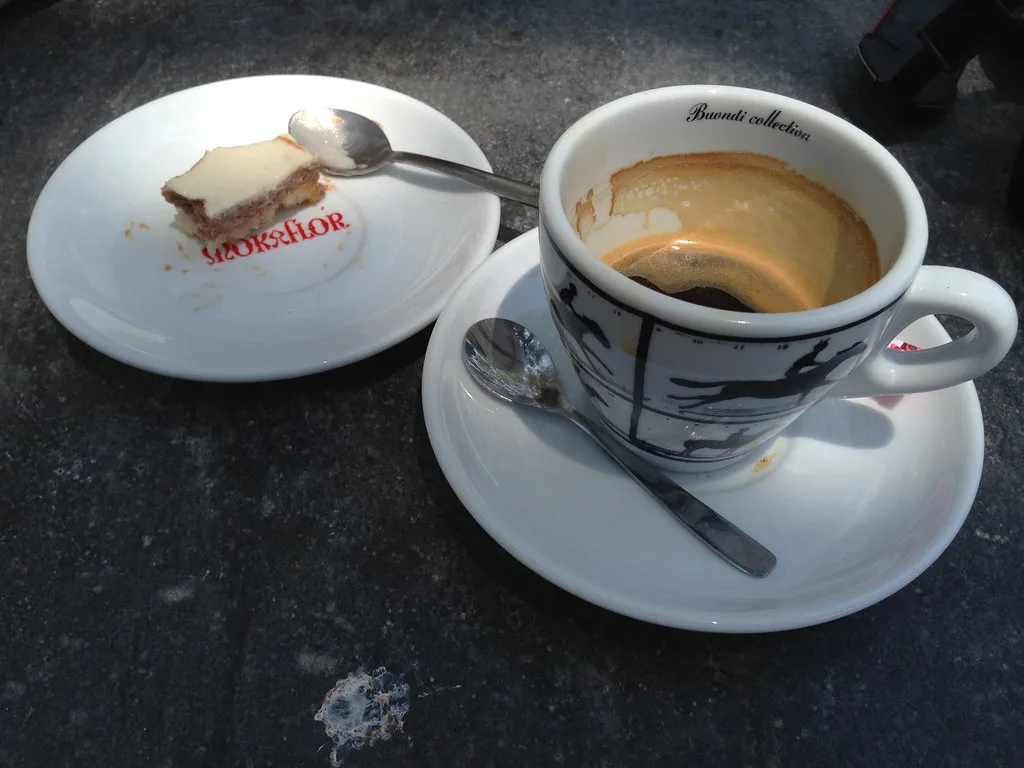
If you want a full sit-down rather than a pastry, coffee works well as the close of a meal rather than a standalone snack. For what comes before it, from salads to seafood, see this guide to traditional greek food. A small slice of cake or a couple of biscuits may come on the saucer.
Where It Fits in a Day of Eating
The most useful slot for Greek coffee is after lunch or in the mid-afternoon, when the table is cleared but nobody is in a hurry. It also makes a sensible bridge between a late breakfast and a taverna dinner, especially if you order it sketos to avoid sugar before a big meal. If your morning starts with yogurt and honey, a metrios alongside fits naturally.
In a city, the mid-afternoon cup often turns into a walk and something eaten standing up, so it helps to know how souvlaki, spanakopita and the rest of the greek street food repertoire are sold before you set out. That way you can pair a sketos with a small savoury stop instead of a second pastry. Keep the order small either way, since a full meal usually follows later.
In warm months, many locals switch to frappé or freddo after midday and keep the hot cup for the morning or the end of a meal. That is a preference, not a rule; a kafenio will serve the hot version at any hour. On a hot day, the iced options are simply easier to drink slowly.
Coffee is only one part of the drinking culture. An evening in Greece may move from a coffee to ouzo with meze, or to a small glass of tsipouro, so plan the coffee as the daytime drink and leave the stronger pours for later.
Making It at Home Without a Briki
You need three things: very finely ground coffee, water, and a small pot you can heat gently. A briki is ideal, but a small saucepan works if you watch it closely and pull it off the heat as soon as it foams. The grind is the part you cannot fake; espresso powder is too coarse and will not foam the same way.
The source technique is to put water and sugar in the pot first, then the coffee, and heat on low until the surface trembles and foams. Lift it off until the bubbles fall, return it once more, and pour when it foams again. Use a smaller pot rather than a larger one, since a wide pan makes the foam hard to judge.
If you have no suitable pot at all, the honest answer is to drink it out rather than improvise. A hotel breakfast buffet or a bakery counter will often have a machine, and ordering a cup there is a cheaper experiment than buying equipment you may not use again. Ask for it by the sweetness word, not by brand.
Buying Greek Coffee to Take Home
Greek grocery shops and online Greek grocers stock ground coffee in tins and bags, and the grind is usually labelled as fine or traditional rather than espresso. Brands that appear in a Greek-grocery listing include Loumidis Papagalos, Bravo and Venizelos, alongside decaf versions. Choose the fine grind, not a beans-only bag, unless you have a grinder at home.
Prices on those listings are retail and often quoted in US dollars for shipping abroad, so they tell you little about what a cup costs in a Greek cafe. Check the packet for the grind and the roast rather than the marketing line, and buy a small tin first if you are experimenting.
Ordering Outside Greece and in Busy Tourist Areas
Away from Greece, the drink may appear as Greek coffee, Turkish coffee or simply unfiltered coffee, and the sweetness words often mean nothing to the staff. Order in plain terms: no sugar, one sugar, two sugars, and mention that you want the grounds left in. If the cafe only has an espresso machine, you will get a different drink whatever the menu says.
In heavy tourist areas of Greece, the same applies in reverse: the menu may list frappé and freddo prominently while Greek coffee sits at the bottom. Ask for elliniko and state the sugar level. If the cup arrives with a spoon and no foam, it was probably made in a machine rather than a briki.
How It Compares With Other Greek Drinks
Coffee is not the only thing to order with care. Beer, wine and spirits each have their own local vocabulary, and a mid-morning coffee followed by a cold beer at lunch is a normal summer pattern. For the beer side, this greek beer guide covers the main labels you will meet.
If you are eating meze with a drink, the coffee usually comes at the end. A plate of small dishes, from stuffed peppers to Kalamata olives, is a different kind of sitting from a kafenio cup, and it is worth knowing which you are settling into before you order. The same after-meal coffee habit applies whether you are working through a meze table or planning where to eat in Corfu.
For a seafood lunch, coffee afterwards is a common finish, and the same rule applies: order it after the plates are cleared rather than alongside. This guide to seafood in greece covers what to order before the cup arrives.
Plan Your Coffee Stop
The words to memorise are few: ellinikos for the drink, sketos, metrios or glykos for the sugar, and kaimaki for the foam you are hoping to see. Say them when you order, let the cup settle, and stop before the grounds. That is the whole technique.
Everything else, from which cafe to pick to what the cup costs, is best checked on the spot. Menus and opening hours vary by season and by neighborhood, and a kafenio that is busy at noon may be quiet by late afternoon.
Explore more Greece sauna guides
Frequently Asked Questions
What does sketos, metrios and glykos mean?
These are the sugar levels for Greek coffee, fixed before the coffee is boiled. Sketos means no sugar, metrios means one teaspoon or serving, glykos means two, and variglikos is the very sweet version. Say the word on its own when you order and the staff will understand.
How do you drink Greek coffee?
Let the cup stand for a minute so the grounds settle to the bottom, then sip slowly and stop before the muddy layer. Do not stir it, since that brings the sediment back up. A glass of cold water usually comes on the side.
What is the difference between Greek coffee and frappé?
Greek coffee is hot, brewed from finely ground coffee in a briki and served unfiltered. Frappé is a cold, foamy drink made from instant coffee, sugar, ice and water, sometimes with milk. Freddo espresso and freddo cappuccino are a third option, built on espresso and served over ice.
Is Greek coffee the same as Turkish coffee?
The method is very similar: a fine grind, a small pot, and grounds left in the cup. The naming in Greece changed during the twentieth century, and one account dates the shift to the 1960s. In Greece, ask for Greek coffee.
Do you eat the grounds at the bottom of Greek coffee?
No. The sediment is left in the cup and not meant to be swallowed. Drink down to the layer of grounds and stop there. This is why the cup is small and why you are not expected to finish it.
What is a briki and can I make Greek coffee without one?
A briki is the small long-handled pot used to boil the coffee. A small saucepan on low heat can stand in if you pull it off as soon as it foams. The part you cannot substitute is the very fine grind, since espresso powder will not foam the same way.
Where can I try Greek coffee in Crete?
Kafenia and cafes across Crete serve it, including in Rethymno and Hersonissos, where the sources behind this guide are based. Rather than relying on a single address, look for a place with tables and backgammon boards and order at the counter or from a waiter. Check the menu for the sugar words.
Which is better in summer, Greek coffee or freddo?
That is a matter of preference rather than a rule. Many people switch to frappé or freddo in hot weather because an iced drink is easier to sip slowly, while a kafenio will serve the hot cup at any hour. Try both and decide for yourself.
Sources
Notes for eating well in Greece
Optional updates to our guides.
You might also like
Continue reading
More guides you'll find useful