Things to Do in Corfu: Town Sights, Coasts and Food
Plan things to do in Corfu with a walkable Corfu Town route, fortress and museum stops, coastal and mountain side trips, and the local dishes worth ordering.
On this page
Corfu Town works as a base because most of its sights sit inside a compact old town on the eastern coast, squeezed between two Venetian fortresses and looking out to the Ionian Sea. That geography lets you walk a full day of churches, squares and museums without a car, then use the island's roads for coast and mountain days. The trade-off is that a town-only trip misses the west coast coves and the mountain villages, while an island-only trip misses the layered architecture that earned the old town its UNESCO listing.
This guide orders Corfu Town into a realistic walking route, names the fortress climbs and museum stops that justify their time, and sets out the coastal and inland side trips. It also explains the local dishes in plain English, because Corfiot cooking draws on Venetian and British periods rather than following a standard mainland menu. Opening hours and festival programmes change by season, so look them up on each site's own listing before setting out.
Why Base Yourself in Corfu Town (Kerkyra)
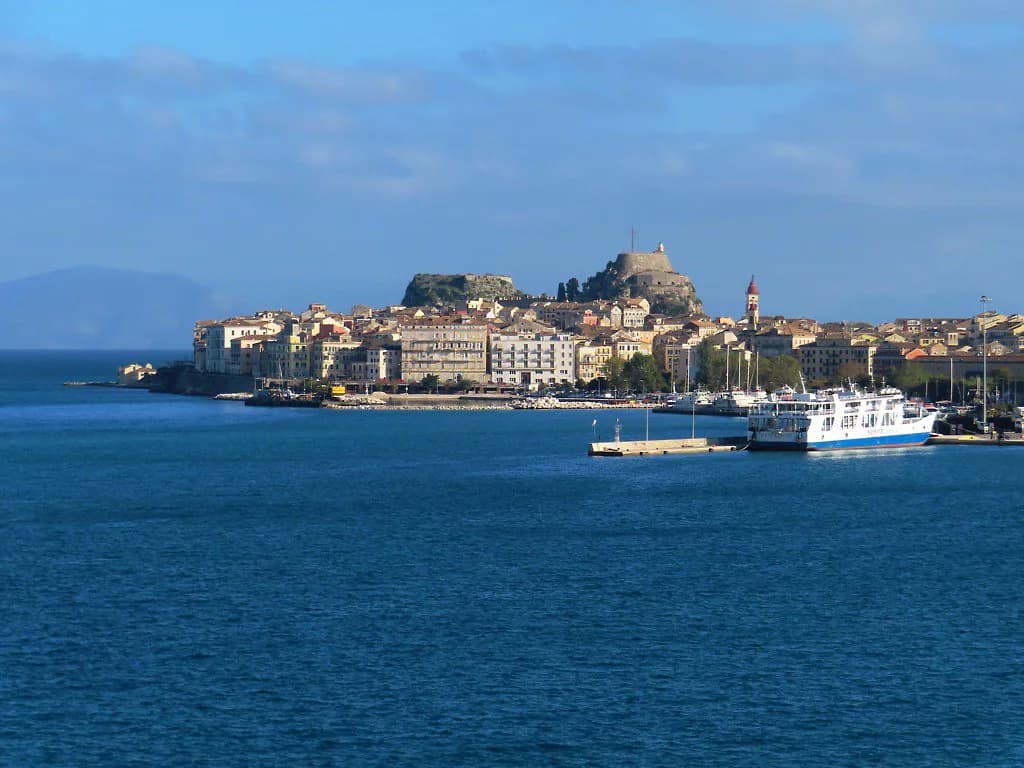
Corfu Town, also called Kerkyra, sits on the island's eastern coast at the mouth of the Adriatic, a position that made it a prize for successive powers. Greek, Roman, Byzantine, Venetian, French and British rule left layers that are still visible in the fortresses, palaces and lanes. The old town is UNESCO-listed, and its two Venetian fortresses flank a walkable core of squares, churches and narrow streets.
The practical case for staying here is density: the Spianada, the Liston, the Campiello quarter, the churches and the main museums all fall within a walk. The trade-off is that the town is not a beach base, so swimmers need a car, a boat or a coach to reach the coast. If your trip is short, two nights in town plus one coastal day covers more than a week of scattered one-night stops, and the same harbour-and-old-town logic shapes the things to do in Chania.
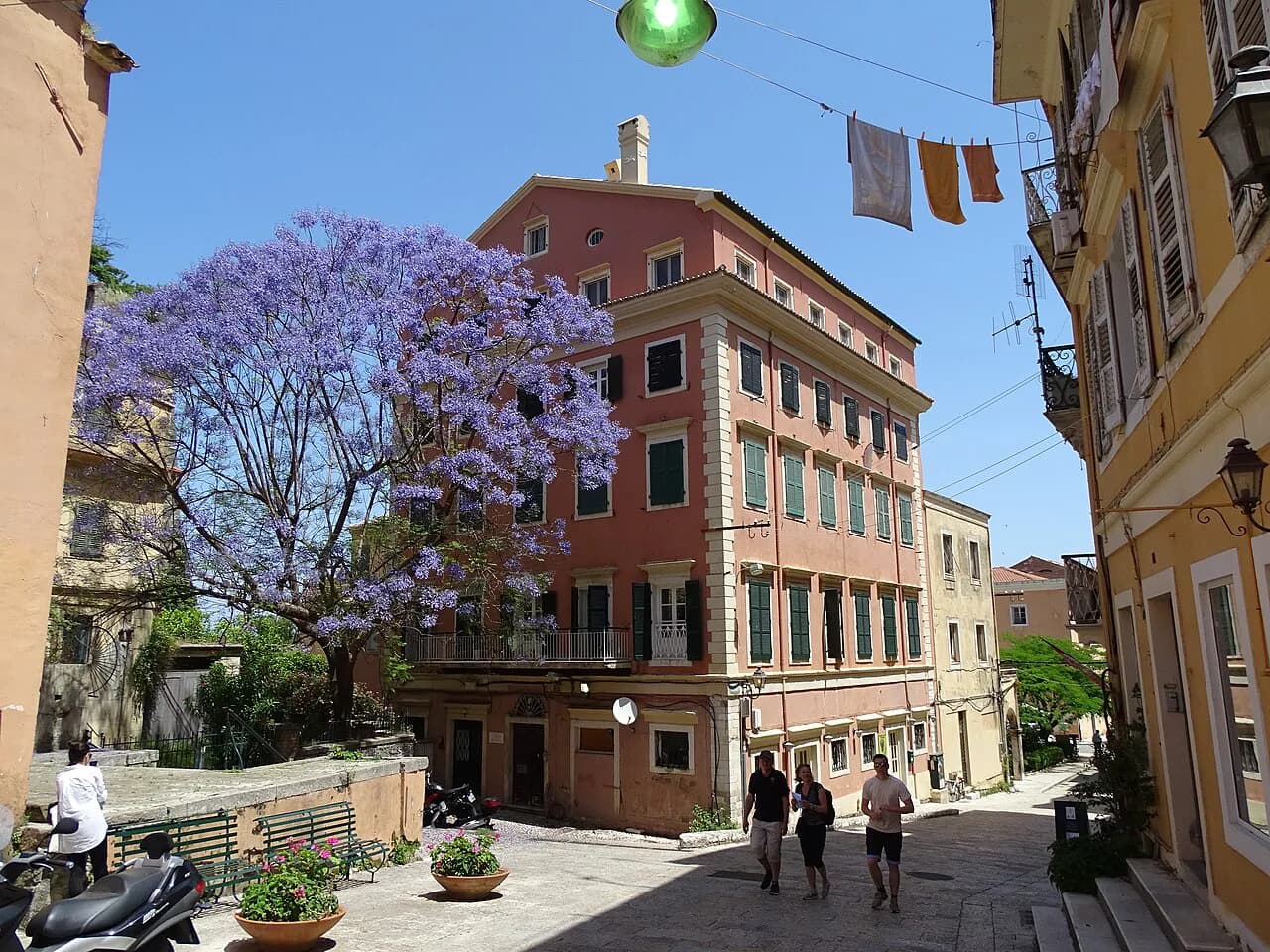
Read the old town slowly rather than as a checklist. The Campiello, the medieval heart of Corfu Town, rewards wandering with no fixed route: look up at balconies, step into side lanes and pause for a drink when you find a square. Pair the walking with the best restaurants in corfu guide when you want to plan meals around the same streets, and keep a loose order so you do not double back across the town.
A One-Day Walking Route Through Corfu Town
Start at the Spianada, the large park between the Old Fortress and the Liston, which the British once used for cricket and which still holds a Victorian bandstand at its centre. Cross it toward the Liston, the arcaded promenade modelled on Parisian lines during the French period and now lined with cafés, restaurants and boutiques. This opening pair gives you the town's scale before you enter the lanes.
From the Liston, walk into the Campiello and let the streets pull you uphill and down without a strict path. Aim next for the Church of St Spyridon, built in 1596 and holding the relics of the island's patron saint, recognisable by its red dome and tall bell tower. The interior carries icons, silver lamps and ceiling frescoes, and the church anchors the town's religious calendar.
Two more churches sit within easy walking distance: the Orthodox Cathedral of 1577 and the 11th-century Byzantine Church of St Jason and St Sosipater, which holds icons and time-faded frescoes. Roughly forty Greek Orthodox churches stand in Corfu Town, so treat three as a good sample rather than a quota. Finish the loop back at the Spianada, where an evening pass along the Liston arcade makes a natural end.
Fortresses and Viewpoints: Old and New
The Old Fortress, or Palaio Frourio, stands on its own promontory and is reached by crossing a seawater moat on a footbridge. The Venetians built on Byzantine foundations, and the climb to the lighthouse repays the effort with views over the town, the coast and, on clear days, the mainland. Inside, the Byzantine Collection sits in the Church of St George, a neoclassical building that reads almost like a Doric temple.
The New Fortress is the counterintuitive stop: despite the name it dates to 1578, so it belongs to the same Venetian defence story. Both fortresses deliver the best elevated views in town, and both cost you time and steep walking. If you only climb one, choose by appetite for height: the Old Fortress gives the sea crossing and the lighthouse, while the New Fortress gives a different angle over the modern town.
Fortress and museum visits compete for the same hours, so decide before you set out. A morning on the Old Fortress plus one museum is a fuller day than ticking both fortresses and three collections. Opening hours and event closures vary, so confirm them at the entrance or on the site's own notices, since the fortresses host cultural events in summer.
Museums Worth the Time
The Archaeological Museum of Corfu holds the Gorgon pediment from the Temple of Artemis, the oldest stone pediment in Greece and a depiction of Medusa's end carved some 17 metres long. That single piece justifies the visit even on a short trip. The museum sets the island's ancient layer against the Venetian and later streets outside, which makes it a useful first stop before you walk the town.
The Byzantine Museum occupies a 15th-century church and displays icon art from the 13th to the 17th centuries, a dense collection that suits a focused hour rather than a full afternoon. The Museum of Asian Art, housed in the Palace of St Michael and St George, holds one of Greece's significant collections of Asian art, with pieces from China, Japan and India. The palace itself is a neoclassical landmark worth seeing from the outside even if you skip the galleries.
Elsewhere on the island, the Kapodistrias Museum in the village of Evropouli occupies the family's summer residence and covers the life of Ioannis Kapodistrias, the first governor of independent Greece. It is an inland stop rather than a town one, so slot it into a driving day. Choose two town museums maximum if you also want the fortresses and the churches in the same day.
Coastal Side Trips North: Kalami, Kassiopi, Avlaki and Kerasia
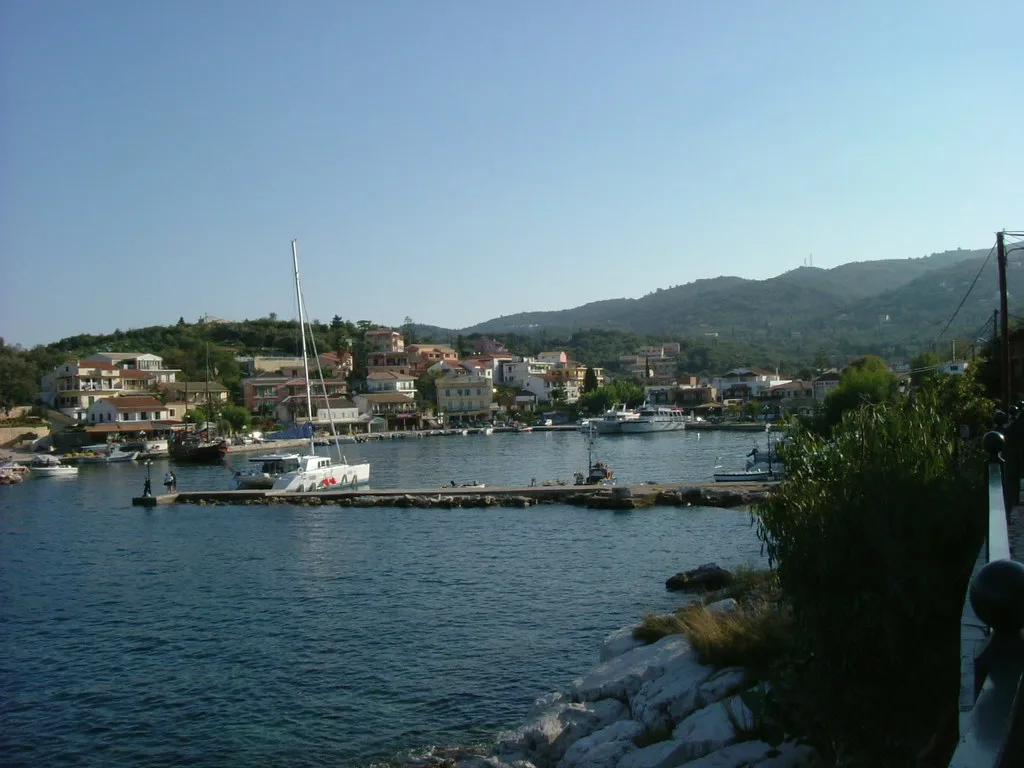
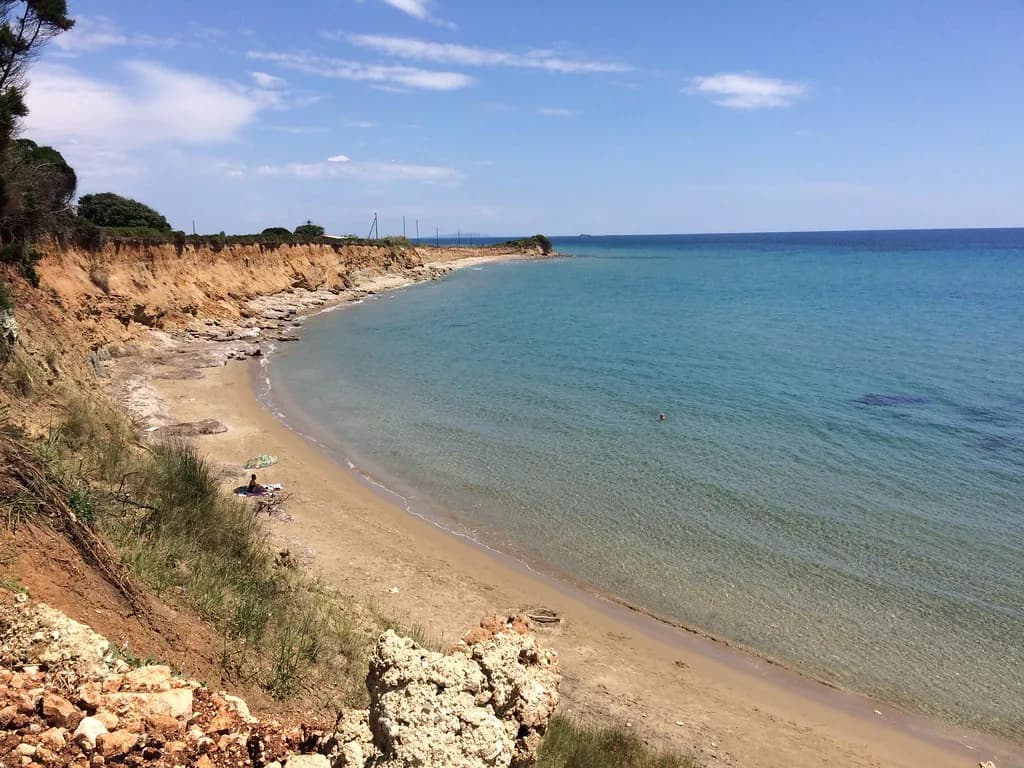
The northeastern coast runs from Kalami Bay, once home to the Durrell family and still a quiet pebble-and-cove shoreline, up to Kassiopi, where a small harbour sits beside Byzantine fortress ruins and a cluster of tavernas. Smaller beaches at Avlaki and Kerasia offer clear water and mountain backdrops with less development. Base yourself in one village and drive between them rather than trying to see all four in a single afternoon.
Kassiopi is the useful hub: harbour, ruins and food in one place, which makes it the better choice for an evening meal than the smaller coves. The trade-off is that the northeast coast is the island's most polished corner, so harbour tables tend to cost more than back-street ones elsewhere. Book ahead in high summer, and confirm seasonal opening before you drive out of season, since many coastal kitchens close for the winter months.
If the Durrell association is your reason for the drive, treat Kalami as a landscape stop. The bay is still a quiet pebble-and-cove shoreline, and the pebble beaches at Avlaki and Kerasia nearby reward the same drive. Ask locally about the Durrell house before planning around it.
West Coast: Paleokastritsa Coves and Sea Caves
Paleokastritsa is the west coast's signature stop, with about six small beaches set in coves of clear water beneath steep cliffs. Boat trips leave from the main beach to the sea caves, including the Blue Eye, where the water takes on a bright azure tone. Renting a small motorboat is an alternative for travellers confident handling one, and it lets you reach coves with no road access.
Above the water, the 13th-century Monastery of the Virgin Mary sits on a promontory with gardens, a small museum of Byzantine icons and wide sea views. It pairs naturally with a swim below, and the combination fills a full day from Corfu Town. Paleokastritsa is popular, so arrive early in summer and plan lunch away from the main beachfront if you want calmer tables, using the restaurants in paleokastritsa corfu listings rather than the first menu you pass.
The drive across the island from Corfu Town is the cost of this day: Corfu is roughly 64 kilometres long and 32 kilometres at its widest, so nothing is very far, but mountain roads slow you down. Pair Paleokastritsa with the inland village of Doukades, known for traditional cooking, on the same loop rather than making two separate west-coast trips.
Mountain and Inland Stops: Old Perithia, Angelokastro and Doukades
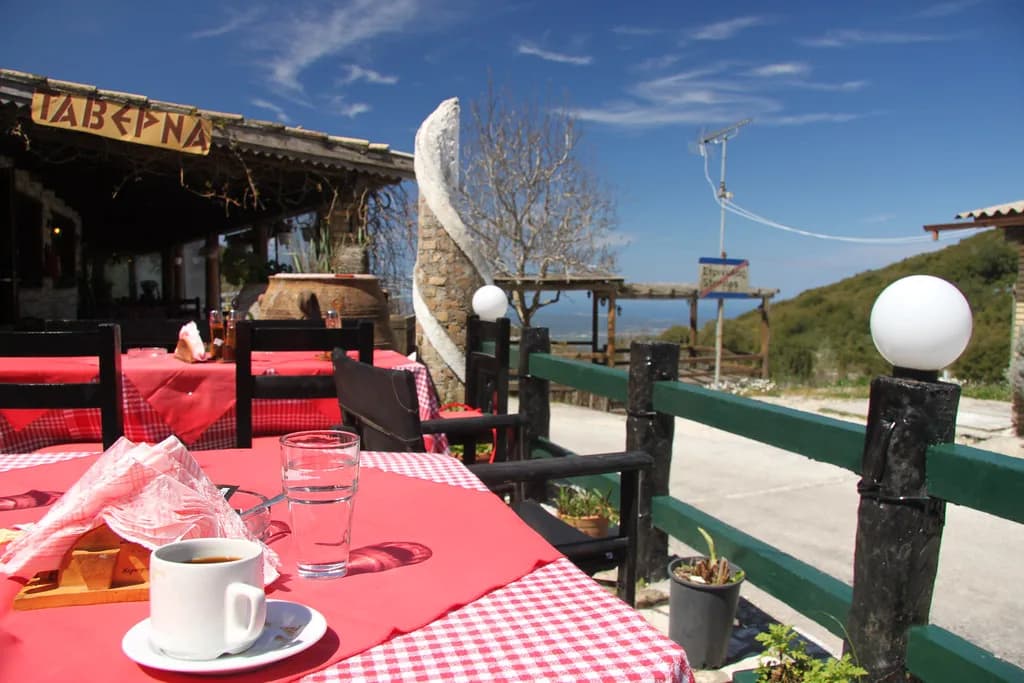
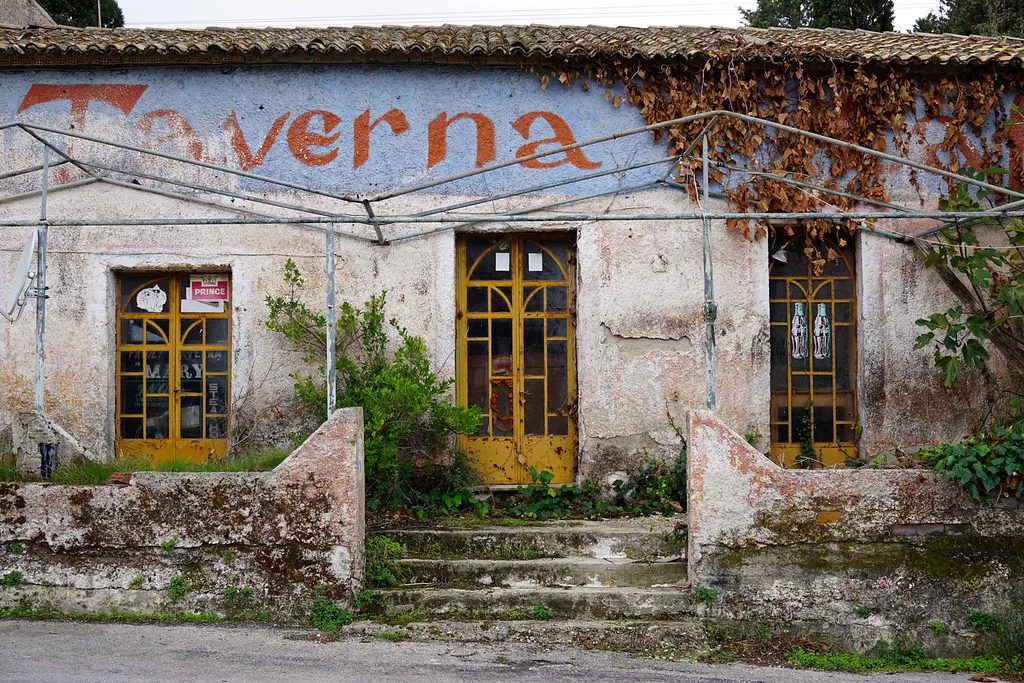
Old Perithia sits beneath Mount Pantokrator, Corfu's highest peak, and is the island's oldest mountain village. Residents left in the 1960s for the coast, and restored stone houses now hold tavernas and guest rooms. Eight churches and Venetian-era stonework remain, which makes the village a walkable piece of island history rather than a single sight, and a corfu taverna lunch here is the obvious midday stop.
Angelokastro, the Angel's Castle, perches on a cliff about 300 metres above the sea and dates to the 13th century, when it guarded the northwest approaches. The climb is steep and the reward is a panorama over the island and the Ionian, with the cave church of Agia Kyriaki inside the complex. Combine it with Old Perithia in one mountain day rather than treating each as a separate excursion.
Doukades, near Paleokastritsa, has a reputation for traditional cooking and family-run tables, which makes it a sensible lunch stop between the coast and the mountains. Mountain villages and harbour villages demand different driving: the northeast coast is a straightforward coastal road, while the Pantokrator slopes mean winding, slower going. Budget accordingly and do not stack a mountain village and a west-coast swim into one tight afternoon.
South and Southwest: Achilleion, Lake Korission and Benitses
The Achilleion Palace near Gastouri was built by Empress Elisabeth of Austria as a summer residence and now operates as a museum with gardens and statues of Greek figures, Achilles most prominent among them. It sits south of Corfu Town and works as a half-day stop on the way to the coast. The neoclassical building and its terraces carry the story of nineteenth-century European philhellenism as much as any Corfiot one.
Lake Korission, near the southwest coast, is the island's most important wetland, a lagoon cut off from the sea by sand dunes and a stop for migrating birds including flamingos in season. The adjoining Halikounas Beach is a long golden strand with steady winds, which suits windsurfers and kitesurfers more than swimmers who want stillness. This corner stays relatively undeveloped compared with the northeast, so bring what you need.
Benitses, once a fishing village and now a resort town, sits on the southern route from town and holds a shell museum as a diversion from the beach. Further south, Kavos serves a younger nightlife crowd, though quieter stretches exist just off the main strip. Sequence the south as one driving day: Achilleion in the morning, Lake Korission and Halikounas in the afternoon, and Benitses on the way back.
Food in Corfu: What Sofrito, Pastitsada and Bourdeto Actually Are
Corfiot cooking differs from standard mainland Greek menus because of its Venetian and British layers. Sofrito is thinly sliced veal cooked in white wine and garlic sauce, a dish that reads mild and aromatic rather than tomato-heavy. Pastitsada is beef or cockerel slow-cooked in a spiced tomato sauce and served with pasta, the island's Sunday-table staple, while bourdeto is a spicy fish stew traditionally made with scorpion fish where paprika gives a noticeable, variable kick.
Kumquat products arrived with British cultivation and now appear as liqueurs, sweets and preserves. The small fruit gives the island one of its few genuinely local drinks, and a kumquat liqueur makes a better souvenir than a generic bottle. For a structured introduction to the island's kitchen, a corfu cooking class or a food tour in town can compress a lot of explanation into a few hours.
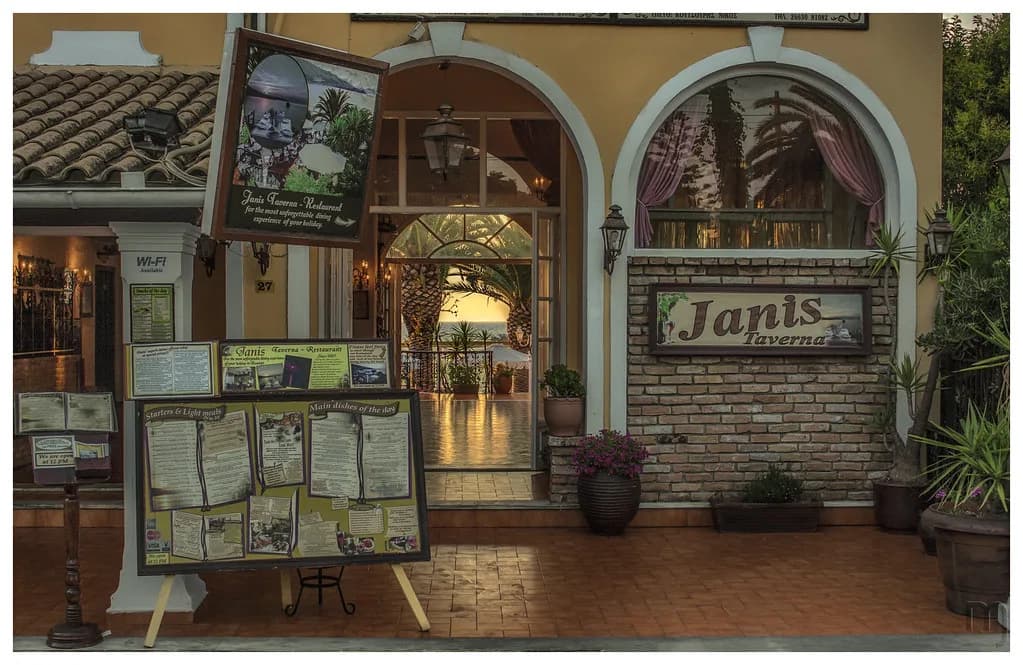
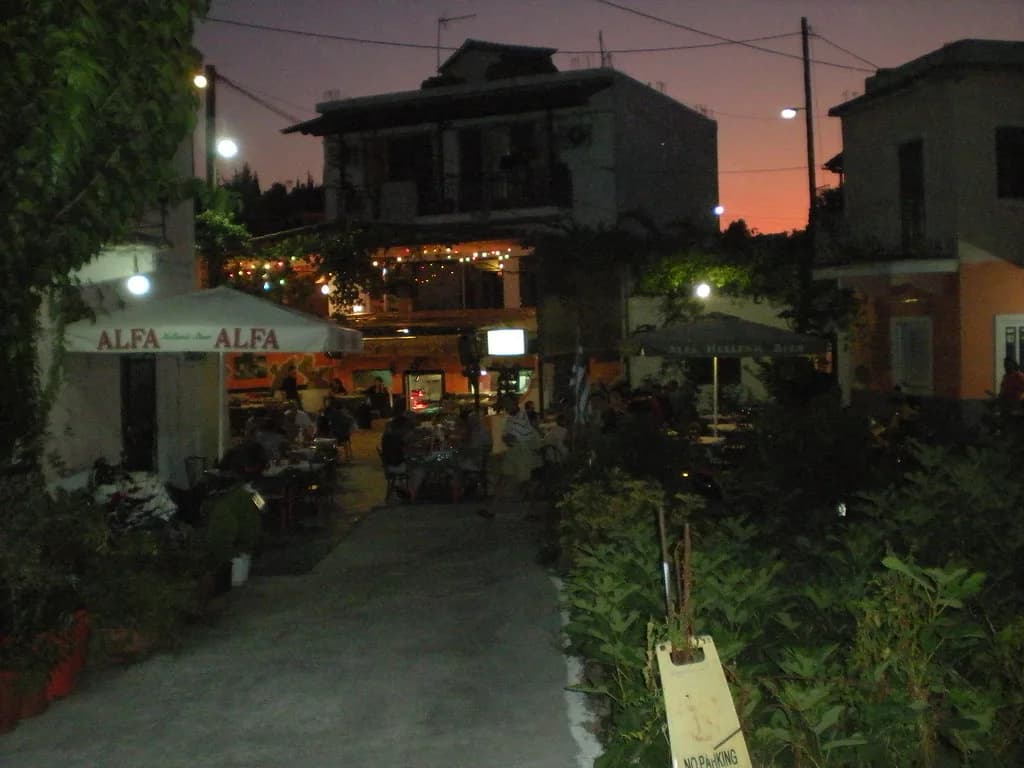
Where you eat matters as much as what you order. Harbour tables in Kassiopi and beachfront rooms in Paleokastritsa buy you the view, while back-street tavernas in Corfu Town buy you better value and more local custom. Read the corfu food guide before you go, then decide by neighbourhood rather than by whichever menu is closest to your hotel.
Olive Oil and Local Produce
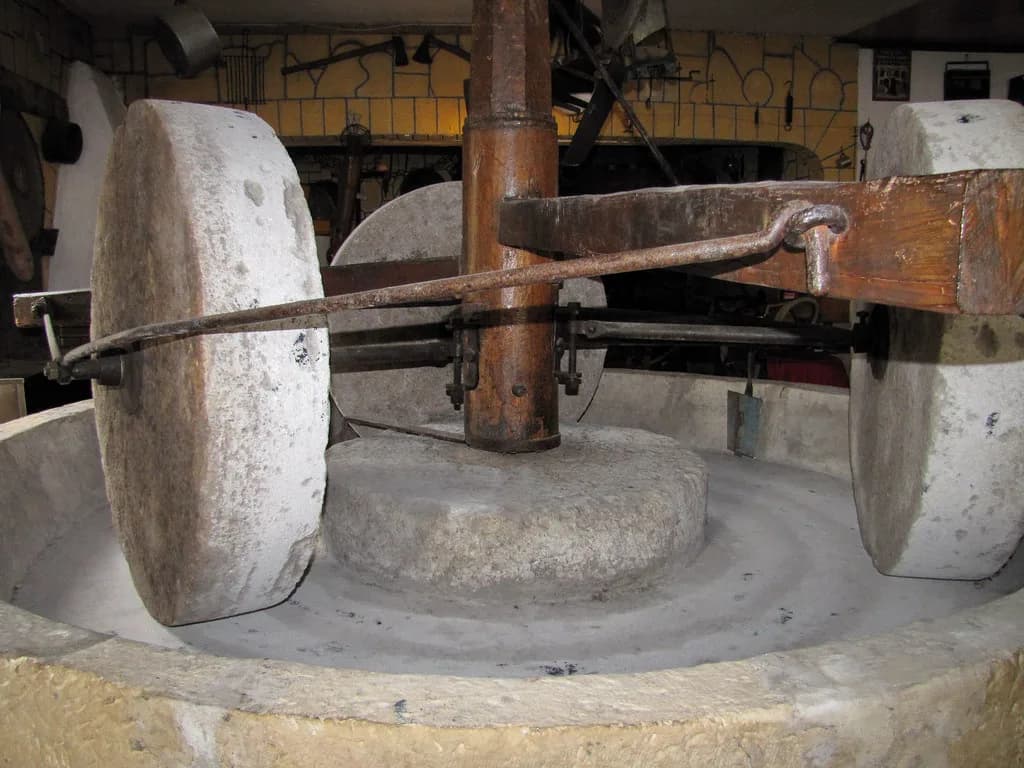
Corfu has an estimated three to four million olive trees, many of them old, and the Lianolia variety underpins the island's oil. Several estates run tours and tastings that explain the harvest-to-bottle process and how to judge quality. The Governor's Olive Mill near Agios Matheos is one such producer, working with the local variety.
An estate visit fits best into a driving day in the south or west, where the groves are easiest to reach from the main road. Book ahead where a tasting is involved, since small operations run to appointment rather than walk-in hours. Buy oil near the end of your trip so it travels home in a suitcase rather than in a hot car for a week.
Getting Around: Car, Coach or Boat
Public transport links the main towns and attractions, but a rental car gives the freedom to reach the less accessible coast and mountain stops at your own pace. Organised coach excursions cover the popular sights without driving, and boat trips give a different angle on the coastline and access to beaches with no road. Weigh the cost of a car against the inflexibility of a coach timetable, especially if you want an evening meal away from town.
The island's size makes any single day trip feasible: at roughly 64 kilometres long and 32 kilometres wide, you can cross from Corfu Town to Paleokastritsa or to the northeast coast and return the same day. What you cannot do is combine three corners without spending the day in the car. Group stops by coast, and keep one day free for town walking on foot.
Ferry and flight timetables change by season, so confirm timings with the ferry company or airline before booking a tight connection, and leave slack on arrival and departure days. For a broader look at what sits near the town, see the Corfu Attractions: 7 Visitor Guides hub and pick the sights that match your base.
When to Go and How to Sequence a Short Trip
Corfu's Easter is among the most distinctive in Greece, with the Holy Saturday pot-throwing custom, when residents toss clay pots from balconies. The Feast of St Spyridon is marked three times a year, on 11 April, 11 August and 12 December, with processions carrying the saint's relics through the town. In summer, villages host panigiri, local festivals honouring patron saints, with music, dancing and food. These are recurring customs, so check the year's programme for exact dates and timings.
For a short trip, give Corfu Town two nights and one full walking day covering the Spianada, the Liston, the Campiello and St Spyridon's, with a fortress or a museum added. Then take one coastal day, either northeast for Kassiopi or west for Paleokastritsa, and one inland day mixing Old Perithia with Angelokastro. That sequence keeps driving grouped and leaves the town's lanes for the hours when the light is soft.
Many island kitchens close roughly from November to April, so out-of-season travel means fewer coastal tables and more reliance on the town. Confirm seasonal openings and book sunset or harbour tables in high summer. A corfu food tour is a reliable wet-weather or shoulder-season fallback when the coast is quiet.
Common Mistakes to Avoid
The biggest mistake is treating Corfu Town as an airport stop en route to a beach hotel. The old town between the fortresses holds churches, museums and squares that deserve a full day on foot, and skipping them leaves the island's history unread. Build the town into the start or end of the trip rather than squeezing it into a transfer.
The second is overloading one day with both fortresses, three museums and a coast drive. Choose one fortress, one museum and one neighbourhood per day, and let the rest wait. The third is ignoring the back lanes: the Campiello's side streets and the area behind the Liston hold the quieter cafés and the local tables, so walk them before choosing where to sit.
Plan Your Visit
Corfu rewards a trip that pairs town and island: a walked day in Corfu Town through the Spianada, the Liston, the Campiello and St Spyridon's, one fortress or museum, then coastal and mountain days on separate loops. Book harbour or sunset tables in summer, confirm seasonal openings out of season, and keep the driving grouped by coast.
Use the best restaurants in corfu guide to plan meals around the same streets and villages you are already visiting, and read What to Eat in Corfu before you sit down so that sofrito, pastitsada and bourdeto make sense on the menu. For more guides, see the Corfu Attractions hub.
Explore more Corfu sauna guides
- Best Restaurants in Corfu
- Best Restaurants in Corfu Town
- Corfu Food
- Corfu Cooking Class
- Corfu Food Tours
- Corfu Kumquat
- Corfu Sofrito
- Corfu Tavernas
- Restaurants in Kassiopi, Corfu
- Restaurants in Paleokastritsa, Corfu
- Things to Do in Heraklion
- Things to Do in Nafplio
- Corfu History for Visitors
- Is Corfu Expensive? Real Trip Costs and Where Your Money Goes
Frequently Asked Questions
What is Corfu Town known for?
Corfu Town, or Kerkyra, is known for its UNESCO-listed old town between two Venetian fortresses, the Spianada and the Liston promenade, the Campiello lanes and the Church of St Spyridon. The Archaeological Museum, the Byzantine Museum and the Museum of Asian Art add museum weight to a walkable core.
How many days do you need in Corfu?
Two nights in Corfu Town plus one full walking day covers the main sights on foot. Add one coastal day, northeast to Kassiopi or west to Paleokastritsa, and one inland day pairing Old Perithia with Angelokastro, for a realistic four- to five-day trip.
What food is Corfu known for?
Corfiot cooking reflects Venetian and British layers rather than a standard mainland menu. Look for sofrito, thinly sliced veal in white wine and garlic; pastitsada, meat slow-cooked in spiced tomato sauce with pasta; bourdeto, a paprika-spiced fish stew; and kumquat liqueurs and sweets.
Is Corfu a party island?
Parts of it are: Kavos at the southern tip caters to a younger nightlife crowd. Elsewhere Corfu is quiet, with mountain villages, monastery stops and family beaches, so the island suits both party travel and slow touring depending on where you base yourself.
How do I get to Corfu?
Corfu has an airport near Corfu Town and ferry connections to the mainland and other Ionian islands, with public transport linking the main towns. Schedules change by season, so check ferry and flight times before booking tight connections and leave slack on arrival day.
What should I do in Corfu Town in one day?
Start at the Spianada, cross to the Liston, wander the Campiello lanes and visit St Spyridon's Church. Add one fortress, ideally the Old Fortress with its seawater moat and lighthouse climb, or one museum, then return to the Liston arcade for an evening pass.
Is the Durrells house in Corfu still there?
Kalami Bay on the northeast coast is the Durrell association on the island, and the house is a local landmark rather than a formal attraction. Ask locally in the village before planning a visit around it, since there are no published visiting arrangements.
Sources
Notes for eating well in Greece
Optional updates to our guides.
You might also like
Continue reading
More guides you'll find useful