Things to Do in Mykonos: Town, Beaches and Delos
Plan Mykonos by area: Mykonos Town, Little Venice, the windmills, the Old Harbor, Delos ferries and the southern beaches, with eating and timing tips.
On this page
Mykonos looks small on a map, but its highlights sit in clusters that reward a little planning. Mykonos Town, Little Venice, the Kato Mili windmills and the Old Harbor are all within a short walk of each other, so they fit into one unhurried block rather than four separate outings. The beaches and the Armenistis Lighthouse sit further out and need transport.
A second block belongs to Delos, the uninhabited archaeological island offshore, which needs its own ferry, entrance ticket and half-day. Everything else on the island is a choice: party beaches or quiet coves, a harbour-front table or a lane in town. This guide groups the island's sights by area and explains the trade-offs, including which places to check before you travel and where to eat.
Quick Orientation: How the Sights Group Into a Day
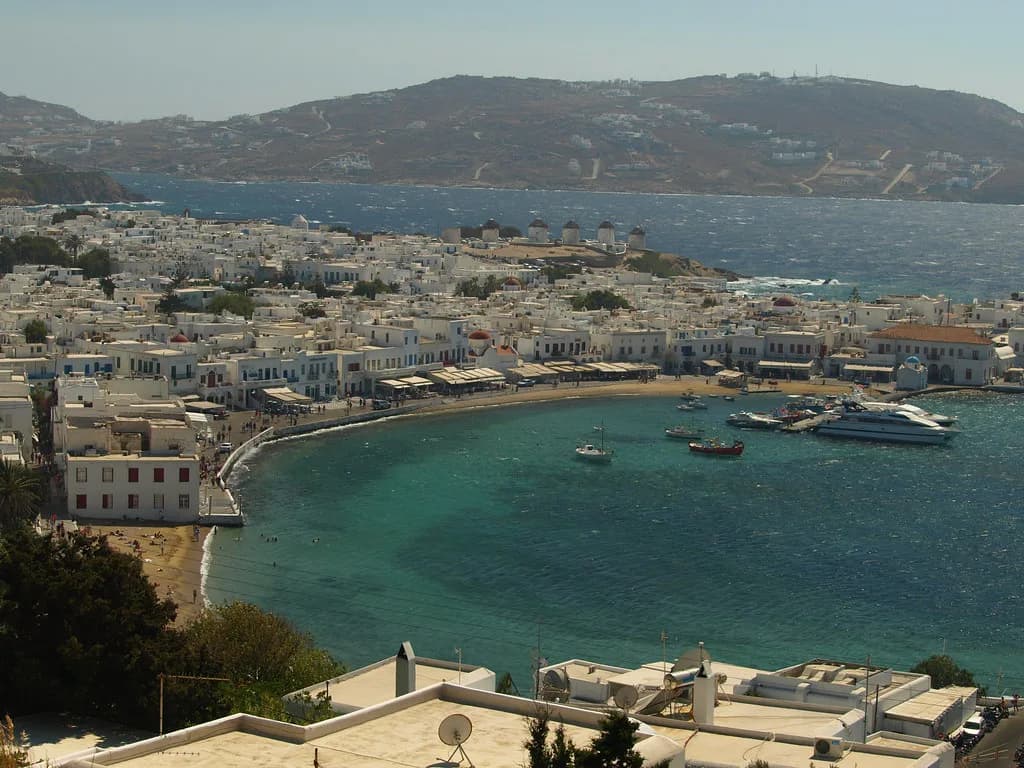
Mykonos Town, also called the Chora, holds most of the island's famous sights in one walkable area. Within the town and its immediate edges you will find the whitewashed lanes, the Panagia Paraportiani church, Little Venice, the Kato Mili windmills and the Old Harbor. The beauty of this layout is that a single morning covers the lot without a vehicle.
The beaches lie to the south and east, spread out enough that you should pick one or two rather than attempt all of them. Paradise, Super Paradise, Elia, Agrari, Lia, Fokos, Kapari, Agia Anna and Agios Ioannis each have a different character and a different access problem. The Armenistis Lighthouse sits on the island's north-west corner and only makes sense if you already have a car.
Delos is the one major sight that is not on Mykonos at all. Boats leave from the Old Harbor in Mykonos Town, which means the trip needs a dedicated half-day rather than an hour squeezed between other stops. If you have only one full day on the island, the choice between Delos and a beach afternoon is the main planning decision you will face.
Mykonos Town (Chora): Lanes Built to Confuse
The Chora is a maze of whitewashed lanes, colourful doors and small churches, and the maze is deliberate. The layout, with its dead ends and twisting alleys, was designed to disorient pirates raiding the town, which explains why every corner looks like the last and why maps are only modestly useful. Treat getting lost as part of the walk and use the waterfront as your compass.
Matogianni Street is the town's main shopping spine, mixing high-end boutiques with small local places along cobbled ground and bougainvillea. Even if you are not buying, it is the natural route through the centre and connects most of the town's landmarks. Wander off it deliberately: the smaller lanes to either side are where the architecture, rather than the retail, stays the main event.
Walking the town is straightforward but slow, especially in peak season when the narrow lanes fill up. Early morning gives you the lanes almost to yourself and better photographs of the doors and churches. In the evening, the same lanes become the route between bars and restaurants rather than a sightseeing circuit.
Panagia Paraportiani at the Kastro Gate
Panagia Paraportiani sits at the entrance to the Kastro neighbourhood, the oldest part of Mykonos Town. The church is unusual because it is effectively five churches built one on top of another, which gives it the lumpy, sculptural white mass that appears on so many postcards. Its name means Our Lady of the Side Gate, taken from its position beside the old entrance into the quarter.
Because it is small and sits on the edge of the water, the church is best visited as part of a town walk rather than as a destination in itself. It takes a few minutes to see, so pair it with the lanes of the Kastro and the waterfront nearby. Expect company in high season, since this is one of the island's most photographed spots.
Little Venice: Waterfront Tables and the Sunset Question
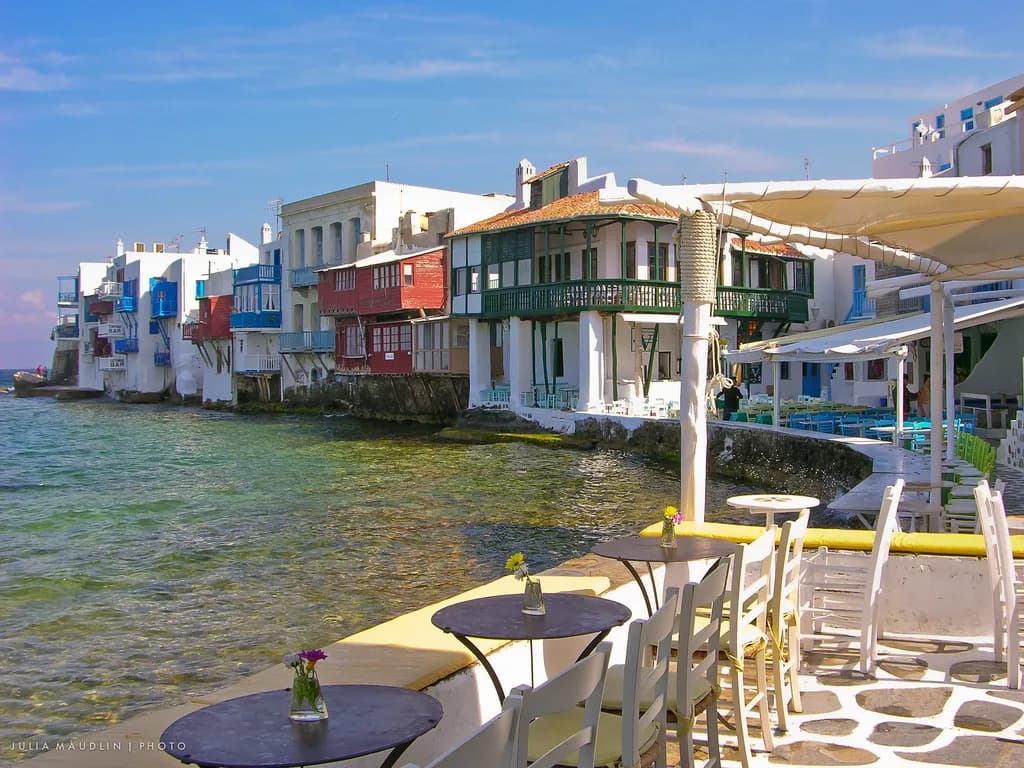
Little Venice is a row of old fishing and merchant houses whose balconies hang directly over the water, built in the 18th century so traders could reach the sea from their doorsteps. Many of the houses now hold cafes and restaurants, which is why the area doubles as the island's most contested sunset seating. The tables are the attraction and the bottleneck at the same moment.
If a sunset table matters to you, plan it as a booking problem, not a wander-past decision. Arrive well before the sun drops, expect to pay for the address rather than the cooking alone, and be ready to accept a second-row seat if the water's edge is taken. The trade-off is real: bayside balconies bring the view and the crowds, while back lanes in town bring better value and shorter waits.
Little Venice is also the start of the evening in a practical sense, because the bars and restaurants here feed into the rest of the Chora on foot. That makes it a sensible place to begin a night out rather than a detour. Later on, the lanes around it stay busy, which is worth knowing if you want quiet.
The Kato Mili Windmills Next Door
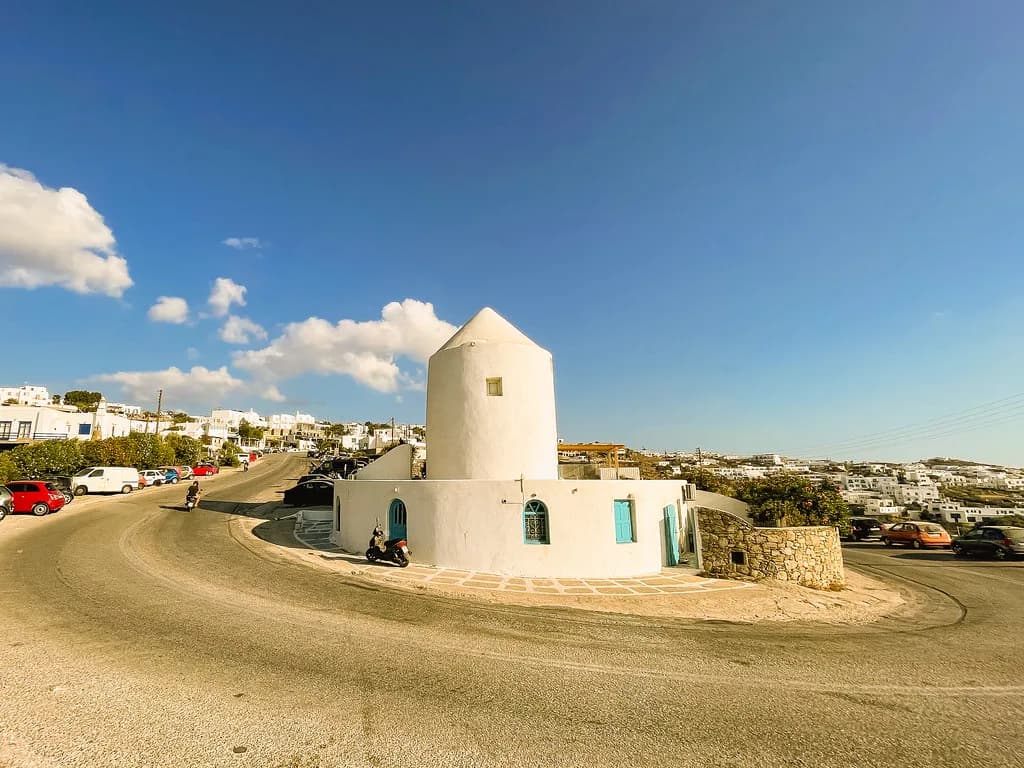
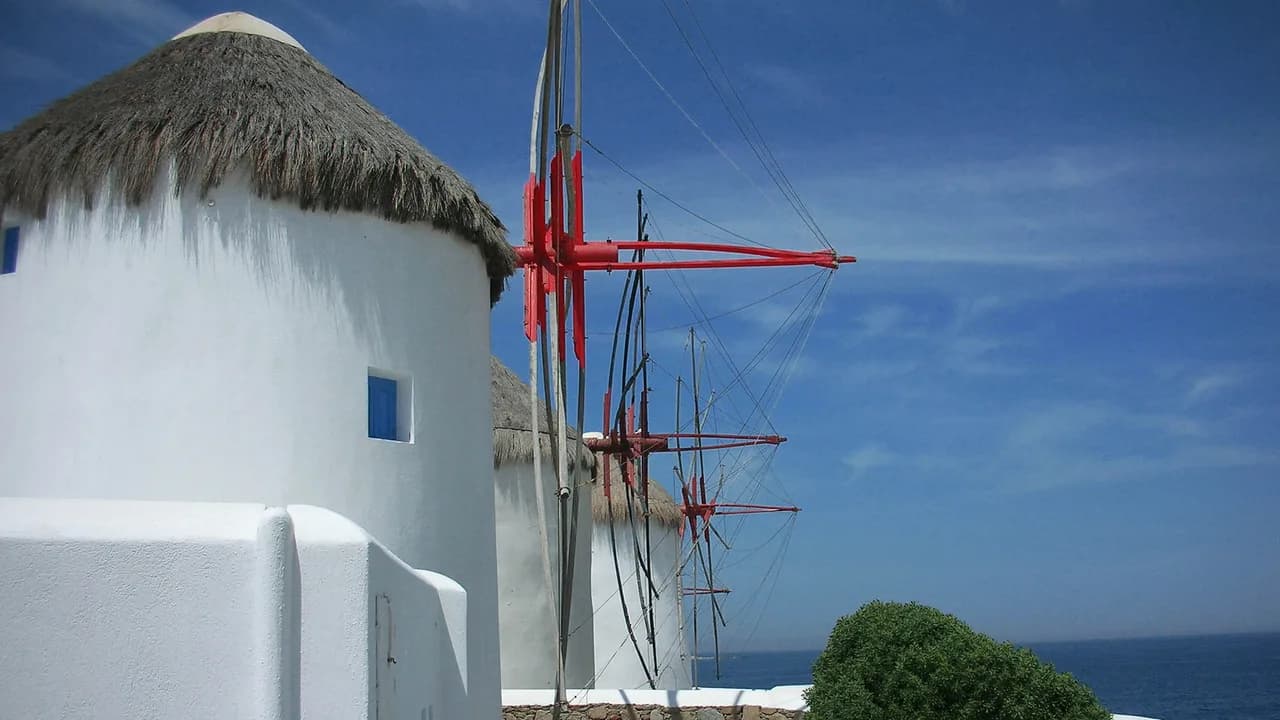
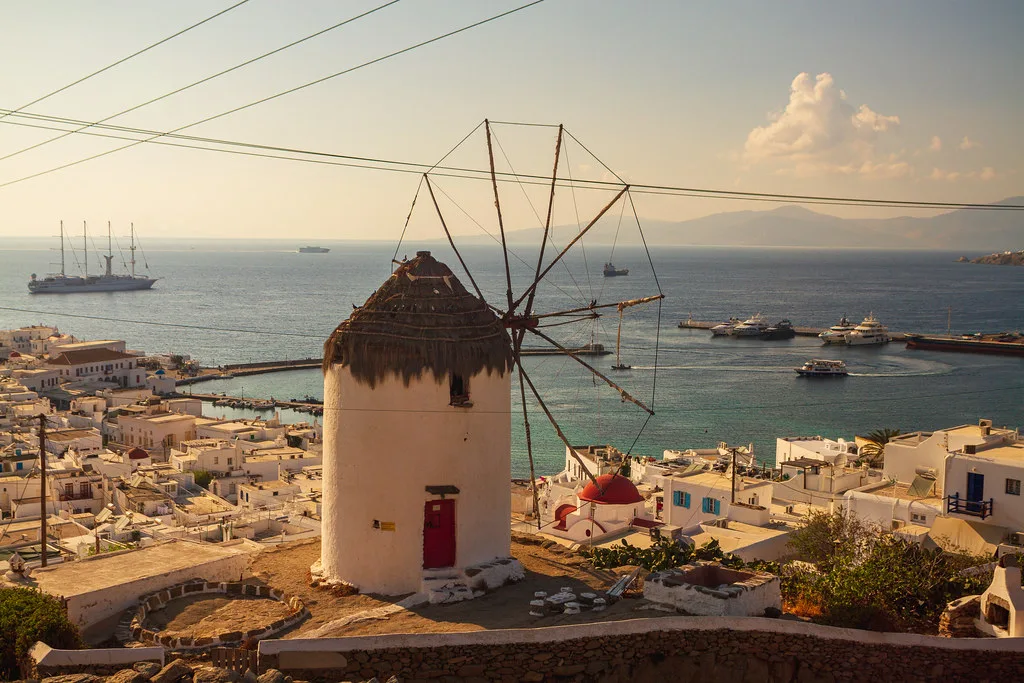
The Kato Mili windmills stand on the hill just beyond Little Venice, and they are the ones everyone photographs. The Venetians used them for grinding grain, and they are the best remaining expression of the island's windy reputation. The views back over the bay and down onto Little Venice are excellent, and the spot works well at sunset for exactly that reason.
Some of the windmills have been put to new uses, including storage and accommodation, and the island's windmill heritage is explained at Boni's Windmill, which has fewer visitors and a broad view over the bay. The short walk between Little Venice and the windmills makes sense at either end of the day, when the light is low and the heat has eased.
The Old Harbor: Boats, Waterfront Tables and a Small Church
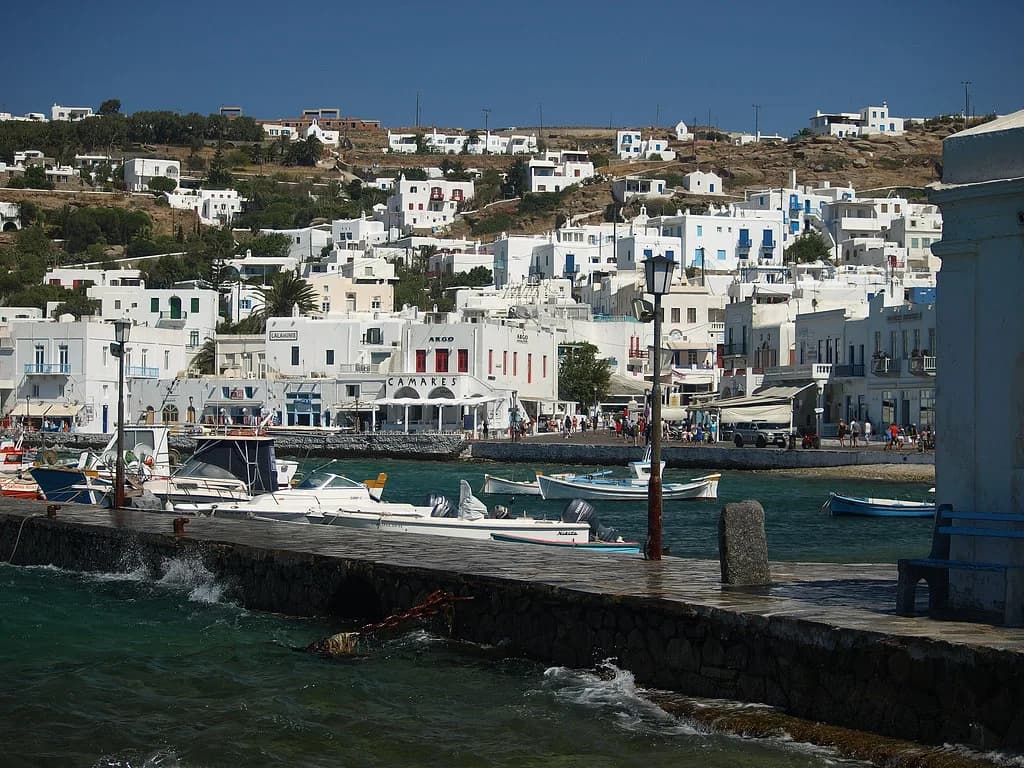
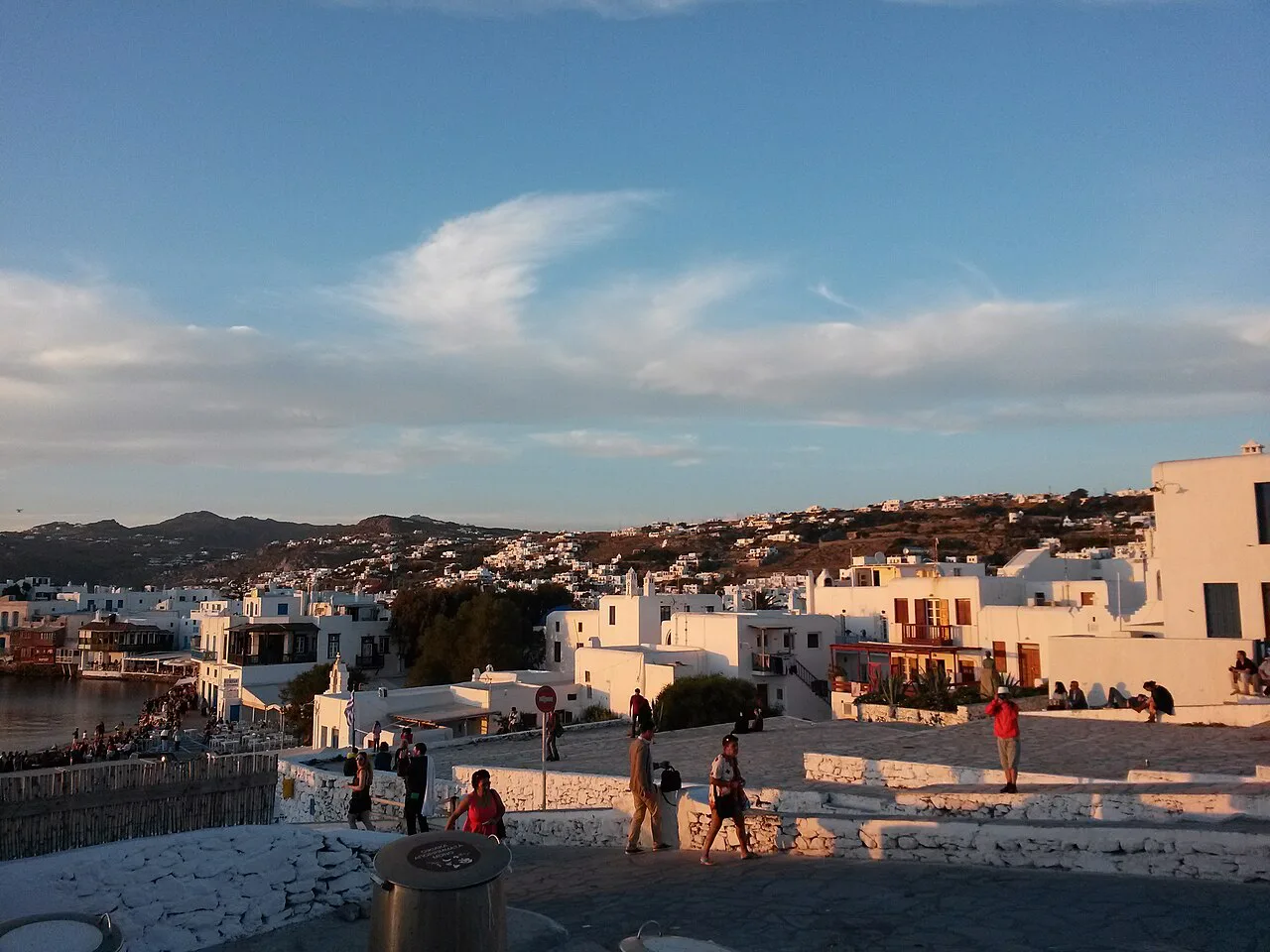
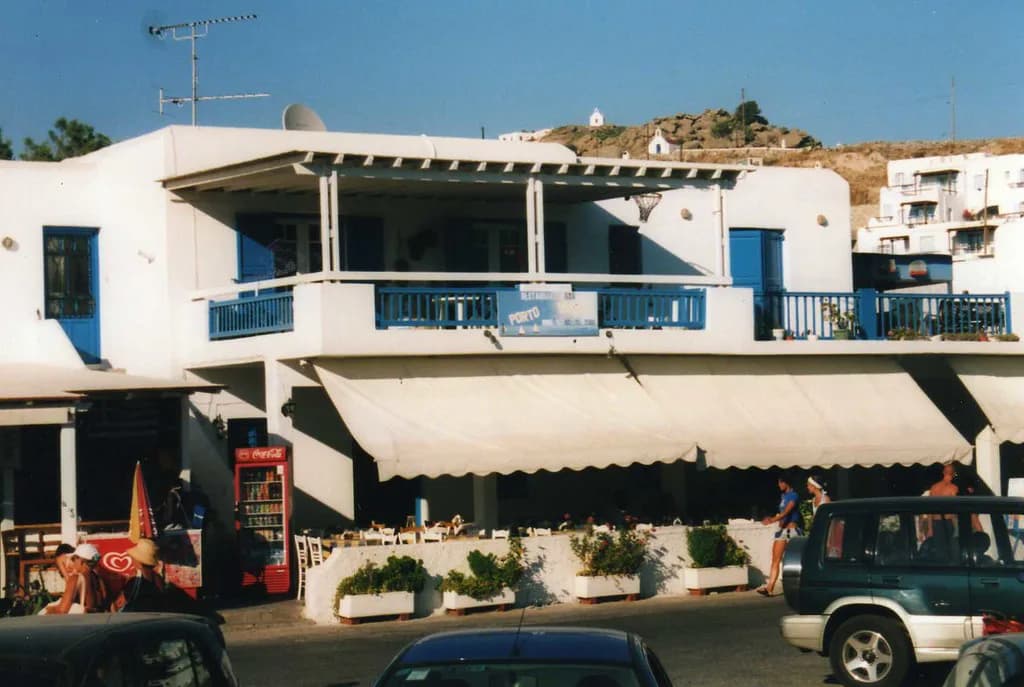
The Old Harbor sits just around the corner from Little Venice and is still a working-looking waterfront, with fishing boats, restaurants along the edge and a small church by the dock. It is the most practical base in town for a boat trip or an early start, since the Delos boats leave from here. The waterfront is also one of the easiest places to settle into a table without a formal plan.
For eating, the Old Harbor gives you a straightforward trade-off: waterfront tables put the boats in front of you, while the lanes behind offer more variety and often less pressure. Either way, the harbour is a sensible anchor if you are staying nearby and want dinner within walking distance of your room.
Day Trip to Delos: A Half-Day of Its Own
Delos lies about 30 minutes by ferry from Mykonos and is one of the most important archaeological sites in Greece, a UNESCO World Heritage Site and, in mythology, the birthplace of Apollo and Artemis. The island is uninhabited and filled with ruins, so it needs a proper block of time rather than a quick stop. A self-guided walk can take ninety minutes or more depending on your interest.
Ferries leave from the Old Harbor roughly every hour starting around 9am, and you buy tickets at the small booth in the harbor. A round-trip ferry ticket costs about €20–25, and the entrance to Delos is a separate €20 on top. Check the ferry schedule and ticket prices with the ticket booth on arrival.
The ferry timetable makes Delos a genuine half-day rather than a side trip, and the exposed ruins offer little shade, so an early crossing is the sensible pick. If you would rather not arrange transport and tickets separately, guided tours bundle both and run morning and evening. The trade-off is cost and fixed timing against the simplicity of having it all organised.
Beach Choices: Party Beaches Versus Quiet Coves
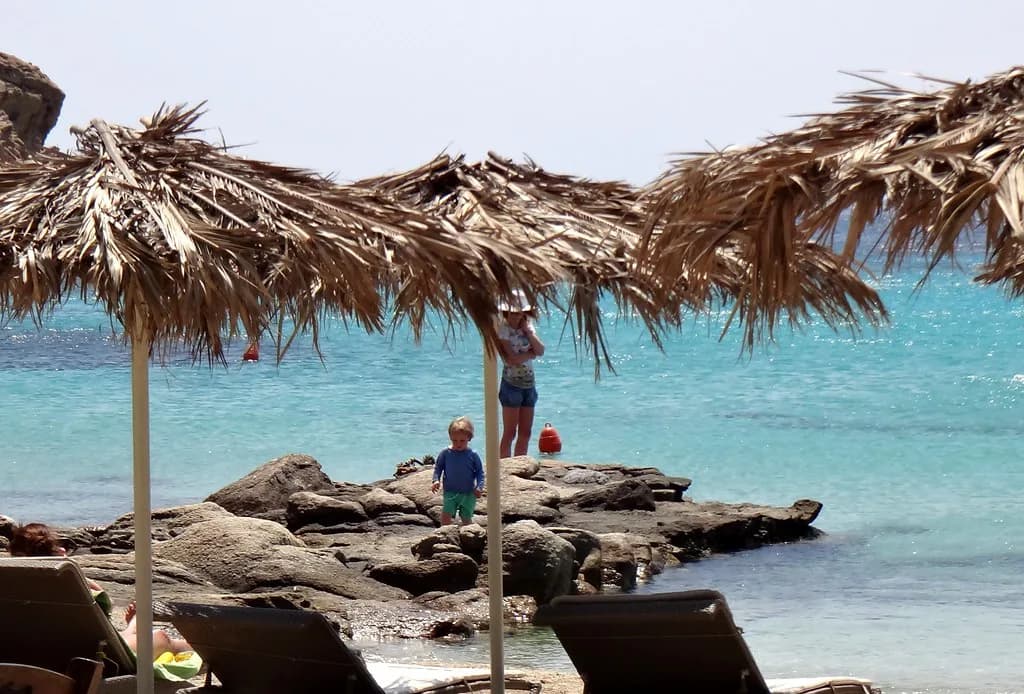
Paradise and Super Paradise are Mykonos's party beaches, small strips lined with restaurants and clubs that run from afternoon into the early hours, with the liveliest atmosphere in June through August. Out of season the same beaches can be almost empty, which makes them a perfectly pleasant swim rather than a scene. If the club soundtrack is not what you want from a beach day, look further along the coast.
Quieter alternatives include Elia, Agrari, Lia, Fokos, Agia Anna and Agios Ioannis, each with its own access quirks. Kapari is a tiny beach about 15 minutes from Mykonos Town, but its last stretch is a rough, narrow dirt road, so most people park at Agios Ioannis and walk the final bit or arrive by ATV. That is the honest trade-off between quiet water and easy arrival.
Super Paradise and the surrounding beach clubs can get crowded and organised in high season, and the beach clubs along this coast are where the island's party reputation is made. If you want a calmer day, choose a beach with less club infrastructure and accept fewer facilities. Either way, beach hopping by bus, car or ATV eats more time than the map suggests.
Getting Around: Car, Bus, Taxi, ATV or on Foot
You can get around Mykonos by car, bus, taxi, water taxi, ATV, scooter and on foot, and the right choice depends on whether you plan to leave the town. The roads outside town can be potholed, and the beach roads in particular include dirt and narrow rough stretches, so a small car or ATV is easier than something large. Parking at popular beaches and near the windmills is limited in high season.
If you stick to Mykonos Town, Little Venice, the windmills and the Old Harbor, you do not need a vehicle at all, because they are all within walking distance of each other. Delos adds only a walk to the Old Harbor ferry. A car earns its place when you want to reach the quieter beaches or drive out to the lighthouse.
For the ferry to Mykonos from Athens, note that the crossing takes about three to five hours depending on the vessel. Fast catamarans cut the time but produce the bumpiest ride, while the larger conventional ferries are steadier and slower. Booking ferry tickets in advance is sensible for fast services, which can sell out even outside peak season.
Armenistis Lighthouse: Is the Drive Worth It?
Armenistis Lighthouse sits on the island's north-west edge, reachable only by a winding, narrow road. The lighthouse itself is a modest sight, and the view right at it is not the best the island offers; the drive back toward Mykonos Town is where the panorama opens up, over the coast and the inland ridges. Treat it as a scenic drive with a lighthouse stop rather than the reverse.
The honest calculation is that the trip only pays off if you already have a rental car, spare time and a tolerance for rough, narrow roads. If you are relying on buses or have a tight itinerary, skip it and spend the time on Delos or a quiet beach instead. Beaches and ruins reward the effort more reliably.
Where to Eat: Town Lanes and Platis Gialos
Eating in Mykonos splits neatly between Mykonos Town and the southern coastal villages. For a full list of options in Mykonos Town, including D'Angelo, Raya, Captain's and M-Eating, see the guide to the best restaurants in Mykonos. In high summer, dinner reservations in town are worth making in advance rather than hoping to walk in.
Down on the south coast, Platis Gialos is a small beachfront town with highly rated restaurants including Blue Myth and Avli Tou Thodori. Staying here puts the beach at your door and the town a short bus or taxi ride away, which suits anyone who would rather wake up to water than to lanes. The trade-off is that you will rely on transport for an evening in the Chora.
For a first orientation to the island's dishes, the guide to what to eat in mykonos keeps the ordering simple. For a more ambitious meal, the fine dining mykonos options cluster in and around the town. If you are exploring the south coast, restaurants in ornos mykonos make a useful extension of the Platis Gialos and Ornos beach strip.
When to Go and How Long to Stay
June through August is peak season, with hot weather and the largest crowds. May and September are the sweet spots for decent weather with fewer people, while mid to late April can be remarkably quiet but still too chilly for comfortable swimming. Each window changes what a Mykonos day looks like.
From November through March the island goes into a slower mode, with chilly, sometimes wet weather and fewer restaurants and hotels open for business. The island effectively hibernates in parts, opening up gradually through April, so an early-spring visit means checking that specific places are open. Focus on the town and the walking sights when the sea is out of reach.
One full day and one night covers Mykonos Town and either a beach afternoon or Delos, which is enough for a short ferry stop. Add a day or two if you want to beach hop or explore beyond the town by car. More than that starts to feel leisurely rather than packed, which suits the island's rhythms.
Suggested Shapes for One, Two and Three Days
With one day, walk Mykonos Town in the morning, moving through Matogianni Street to Panagia Paraportiani, then take Little Venice and the Kato Mili windmills before the sun gets low, and finish at the Old Harbor. Choose Delos or a beach, not both. With two days, spend the first on the town and the second on Delos, returning for a sunset drink in Little Venice.
Three days allows a beach day of its own, a slow meal in Platis Gialos or Ornos, and a car outing to the quiet beaches or the lighthouse drive. That structure suits couples and families who want the island's scenery without the full party schedule. It also leaves room for a mykonos cooking class if you would rather learn the food than only eat it.
Plan Your Mykonos Days by Area
The trick to Mykonos is to stop treating it as a list and start treating it as three or four areas. Walk the town and its waterfront in one block, give Delos a half-day of its own, and choose your beaches deliberately rather than trying to tick off every cove. The same area-based approach works well in other Greek island ports, so compare things to do in chania if you want to see how a harbour town and its surroundings split into walkable blocks. That structure keeps the days relaxed even when the island is busy.
Book the sunset tables you care about, reserve ferries and dinner in high summer, and leave your driving plans flexible enough to skip the lighthouse if the roads do not suit you. For the rest, use the area guides on this site and check any specific restaurant's hours or season before you commit a meal to it.
Explore more Mykonos sauna guides
- Best Restaurants in Mykonos
- Mykonos Cooking Class
- What to Eat in Mykonos
- Best Gyros in Mykonos
- Brunch in Mykonos
- Fine Dining in Mykonos
- Mykonos Beach Restaurants
- Mykonos Food Tour
- Mykonos Olive Oil Tasting
- Restaurants in Ornos, Mykonos
- Sunset Restaurants in Mykonos
- Things to Do in Heraklion
- Things to Do in Nafplio
- Mykonos History
- Mykonos Churches
- Where to Watch the Sunset in Mykonos
- Is Mykonos Expensive? A Realistic Look at What You'll Spend
- Shopping in Mykonos
- Planning a Mykonos Wedding
Frequently Asked Questions
How many days do you need on Mykonos?
One full day and one night is enough to walk Mykonos Town and choose either a beach afternoon or the Delos day trip. Add a day or two if you want to beach hop or explore the island by car. A three-day visit lets you combine the town, Delos and a quiet beach without rushing.
Which part of Mykonos is best for a first visit?
Mykonos Town, the Chora, is the natural base for a first visit, because Little Venice, the Kato Mili windmills, Panagia Paraportiani and the Old Harbor are all within walking distance. It also puts you closest to the Delos boats. Beach areas such as Platis Gialos and Ornos suit travellers who prioritise the sea over the lanes.
Is Delos worth a day trip from Mykonos?
Yes, if you can give it half a day. The ferry takes about 30 minutes, the archaeological site is a UNESCO World Heritage Site and a self-guided walk can take ninety minutes or more. Ferries leave roughly hourly from around 9am, and both the ferry and the site entrance are priced separately, so check the current fees before you go.
Do you need a car to get around Mykonos?
No, if you stay in Mykonos Town and want Little Venice, the windmills, the Old Harbor and the Delos ferry. A car helps if you want the quieter beaches or the Armenistis Lighthouse drive, but be prepared for rough roads and limited parking. Buses, taxis, ATVs and water taxis cover the rest.
What is Little Venice in Mykonos?
Little Venice is a row of waterfront houses built in the 18th century by merchants and ship captains, with balconies over the water. Many now house cafes and restaurants, which makes it the island's main sunset spot. Tables fill early, so book ahead if a water's-edge seat matters to you.
Are Mykonos beaches good for swimming in April?
The water is generally still chilly in April, even though the weather can be pleasant and the island is quiet. That makes April better for walking the town and visiting Delos than for long swims. Beach clubs and restaurants also open gradually through the month.
What can you do in Mykonos at night?
Little Venice and the Old Harbor are the evening anchor in town, with bars and restaurants along the water. Paradise and Super Paradise carry the beach club scene, running from afternoon into the early hours in high season. For a quieter night, the lanes of the Chora and a harbour-front table work well.
When is the best time to visit Mykonos?
May and September offer a good balance of weather and smaller crowds. June through August is hot and busy, while April is quiet but cold for swimming. From November through March, expect cooler, wetter weather and fewer restaurants and hotels open.
Sources
Notes for eating well in Greece
Optional updates to our guides.
You might also like
Continue reading
More guides you'll find useful