Museums in Greece: Which Ones Are Worth Your Time
Pick the Greek museums worth building a day around, from Athens and Delphi to Crete, Rhodes and Santorini, with what each collection holds and how long to allow.
On this page
Greece has far more museums than any one trip can absorb, so the useful question is not which is best but which belongs beside the site, neighborhood or lunch you already have planned. A regional archaeological museum explains the ruins you just walked through; a national collection gathers treasures from the whole country under one roof. Treating the two as different kinds of stop changes how you build a day.
Why Greek museums are a planning decision, not a checklist
Archaeological museums in Greece generally display finds from the surrounding region, from prehistoric pottery to sculpture, coins and everyday objects, which means they work best immediately before or after the site they explain. National collections in Athens gather material from across the country, so they belong to a city day rather than an island one. Reading the collection this way tells you whether a museum deserves a free morning or a spare hour.
Which museums in Greece are worth a full morning? The Acropolis Museum and the National Archaeological Museum in Athens, the Archaeological Museum of Heraklion and the Archaeological Museum of Delphi all hold substantial collections that reward several hours. Smaller regional and island museums usually take around an hour, so treat them as afternoon stops rather than morning anchors.
Can I visit the Heraklion museum and Knossos on the same day? Yes, and the pairing makes sense because the museum holds the Minoan finds from Knossos, including the Snake Goddess and the Phaistos Disc. Book or check timed entry and site tickets in advance, and start early so the museum is not rushed.
How do I choose between the National Archaeological Museum and the Acropolis Museum? Choose the National Archaeological Museum for breadth across Greek antiquity, in the Exarcheia neighborhood near the Viktoria metro stop. Choose the Acropolis Museum for depth on a single site, at the foot of the Acropolis on Dionysiou Areopagitou, if you have already seen the ruins.
The practical consequence is sequencing. A small local museum can take around an hour, while a large national collection with extensive galleries can absorb several hours, so pairing a big museum with a long taverna lunch is more realistic than squeezing two major collections into one morning. Leave the smaller regional museums for afternoons when you are already in town.
Greece also holds dozens of Byzantine and post-Byzantine collections, more than fifty historical and folklore museums and many thematic museums alongside the archaeological ones, so a museum day does not have to mean antiquity. Check what a museum actually holds before assuming it is an archaeological collection, because the range spans religious art, maritime heritage, military history and local traditions.
Athens: the National Archaeological Museum in Exarcheia versus the Acropolis Museum
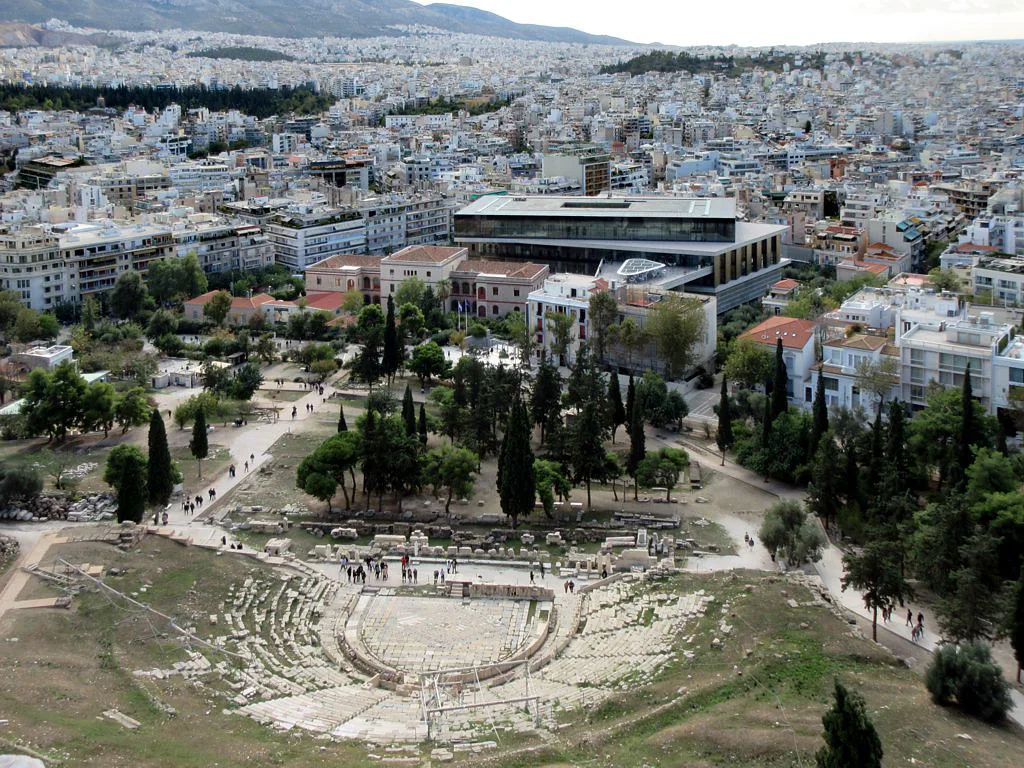
Athens has two anchors for first-time visitors, and they sit in different neighborhoods, which matters for routing. The National Archaeological Museum occupies a neoclassical building on Patission Street in Exarcheia, reached by the Viktoria metro stop, and gathers material from the Neolithic era through Cycladic and Mycenaean art to Hellenistic jewellery. The Acropolis Museum sits on Dionysiou Areopagitou at the foot of the Acropolis hill, by the Acropolis metro stop, and holds finds from the excavations on the rock itself.
Choosing between them is really a question of scope. Go to the National Archaeological Museum for breadth across Greek antiquity and a heavier, older museum experience with two cafés, one on the square outside and one in the interior atrium; go to the Acropolis Museum for a single site told in depth in a modern glass building opposite the Parthenon itself. If you only have one museum morning, pick the collection that matches the ruins you have already seen.
What to see in the National Archaeological Museum
The headline pieces are the reason to allocate real time rather than an hour. The Mask of Agamemnon, a gold funerary mask from Mycenae dated to the 16th century BC, is displayed here, along with the Bronze Zeus or Poseidon and the Jockey of Artemision, bronze sculptures that anchor the sculpture galleries.
If you are planning your route through the galleries, note that the collection ranges from Neolithic and Cycladic pieces to Egyptian art, post-Byzantine material and Hellenistic jewellery, so decide in advance which floors matter to you. The museum also holds a long-established library of some 20,000 volumes and hosts temporary exhibitions and archaeology lectures, which can shift what is on view.
What to see in the Acropolis Museum
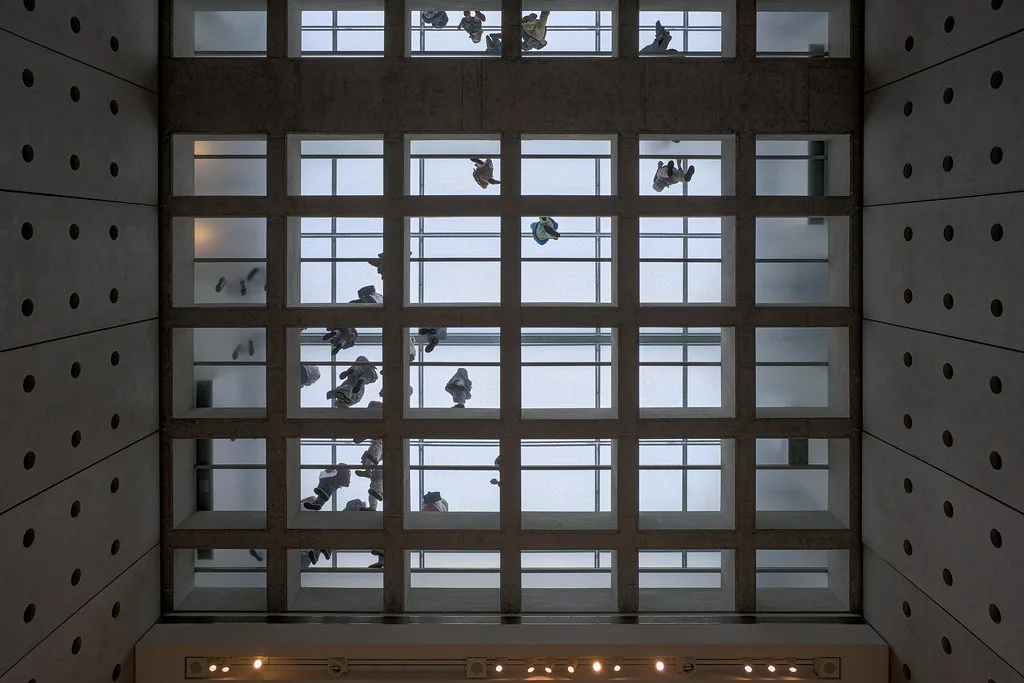
The Acropolis Museum is built around the finds from the sacred rock, and its best-known exhibits are the Caryatids, the original figures from the Erechtheion, alongside the Parthenon sculptures and the Kritios Boy. The top-floor Parthenon gallery is arranged to be read against the temple visible through the glass, which is why the museum rewards a slow pass rather than a quick circuit.
Allow more time than the building's compact footprint suggests: the museum holds more than 4,000 exhibits across three levels, several times the display space of its predecessor, and the archaic gallery alone justifies a detour. Because it sits on Dionysiou Areopagitou, it works well as a morning stop followed by a walk through Plaka for lunch, rather than as an add-on to an Acropolis climb on the same hot afternoon.
Athens beyond the big two
The Benaki Museum is the strongest second-tier stop for range: founded in 1930 from the collection of Antonis Benakis, it now spans six museum annexes, four archival annexes and a library, with holdings covering Greek art and culture alongside Islamic, pre-Columbian, African and Chinese works. Its ground-floor café under a large glass wall overlooking the atrium makes it a sensible midday base.
The Museum of Cycladic Art on Neofitou Douka, near the Evangelismos metro stop, focuses on the ancient cultures of the Aegean and Cyprus, with Cycladic figurines as the core of the permanent collection, and pairs them with temporary exhibitions. The Byzantine and Christian Museum on Vasilissis Sofias Avenue holds some 25,000 objects, about 3,000 of them on display, in the Villa Ilissia setting; both reward a focused hour rather than a full afternoon.
For something different, the Numismatic Museum occupies the Iliou Melathron, the former Athens residence of Heinrich Schliemann, and its roughly 500,000 objects are mostly coins, medals and weights running from the 6th century BC onward. The painted interiors are as much the attraction as the cases, and the garden café is a quiet alternative to the busier museum restaurants.
Which Athens museums are closest to each other
The Benaki, the Museum of Cycladic Art and the Byzantine and Christian Museum cluster around the Kolonaki and Vasilissis Sofias axis, within walking distance of each other and of the Syntagma and Evangelismos metro stops. That makes a two-museum morning realistic if you pick one large and one small collection, with a lunch in Kolonaki between them. The Acropolis Museum and the Numismatic Museum sit further apart, near the Acropolis and Syntagma respectively, so pair them only if you are comfortable with a longer walk or a short metro hop. If your route heads west instead, our Ioannina Attractions: 6 Visitor Guides covers where the local collections fit beside the town's own sights.
The National Archaeological Museum is the outlier, north of the centre in Exarcheia, so it deserves its own half day rather than being slotted between two Syntagma-area stops. Build the route around metro stations rather than a single loop, and the city's museum geography becomes manageable.
Delphi: the Charioteer and the sanctuary itself
The Archaeological Museum of Delphi belongs to the site rather than to a town day, and the pairing is the point. Its collection includes the Charioteer of Delphi and the Sphinx of Naxos, two of the bronzes and sculptures that give the sanctuary its reputation, displayed close to the ruins of the oracle itself.
Plan Delphi as a single excursion: the museum explains what you are looking at on the slope above, and the site explains why the objects matter. Because the museum is small, an hour inside plus two on the ruins is a realistic shape for the day, leaving time for the drive back.
Crete: the Heraklion museum and Knossos
The Archaeological Museum of Heraklion holds the Snake Goddess and the Phaistos Disc, the clay disc with spiral stamps whose meaning is still unresolved, and it is the natural companion to a visit to Knossos. Doing both on the same day is efficient, but the museum's Minoan galleries are substantial enough to justify a separate morning if you want to read the labels rather than skim. If you want to extend the museum day into lunch and a walk, see Heraklion Attractions: 10 Visitor Guides.
If Minoan material is your priority, check tickets and any timed entry for the museum before fixing your Knossos slot, since the two sites are usually booked together. Further west, the Archaeological Museum of Chania gives a smaller regional counterpart for travellers basing themselves in the west of the island.
Santorini: the Museum of Prehistoric Thera and the Akrotiri finds
The Museum of Prehistoric Thera in Fira is the island's answer to the beach-and-sunset itinerary, holding wall paintings and everyday objects from the Neolithic and Cycladic periods along with finds from the Minoan settlement of Akrotiri. If you are already visiting the excavated site, the museum is the place where the frescoes and small finds make sense, so put it before or after Akrotiri rather than on a separate day.
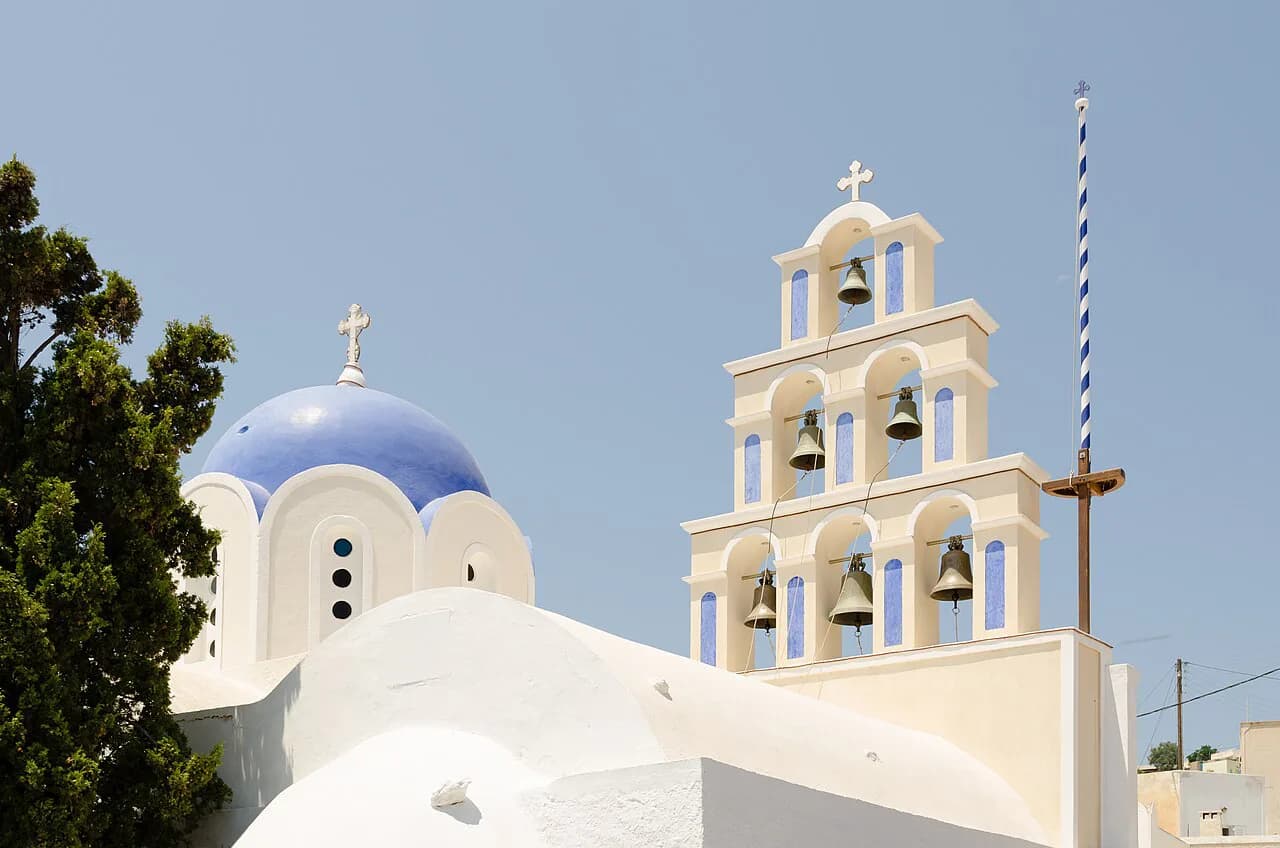
Because Santorini's days fill quickly with caldera walks and village stops, a museum hour is easiest in the morning before the heat and the crowds build. The island also supports a slower itinerary of village churches, including those in Mesa Gonia and Exo Gonia, if you want to break up the antiquities with something closer to the present day.
Rhodes: a modern-art break from the ancient collections
The Museum of Modern Greek Arts in Rhodes offers a deliberate change of register, showing a small collection of paintings, sculptures, engravings and prints by Greek artists of the 19th and 20th centuries. After several days of ancient sculpture and medieval fortifications, it resets your eye without demanding a full afternoon.
Rhodes town is compact enough to combine the modern-art collection with the island's other museum stops, including the Archaeological Museum of Rhodes in the old town, and with a slow walk around the medieval walls. Keep the modern museum for a hot midday slot when outdoor sightseeing loses its appeal, then return to the streets in the late afternoon.
Olympia: the Hermes of Praxiteles
The Archaeological Museum of Olympia is built around the site's sculpture, most famously the Hermes of Praxiteles along with the sculpted metopes from the Temple of Zeus recovered during excavation. Because the finds come from the sanctuary next door, the museum works best as the second half of an Olympia visit, after you have walked the ruins.
Olympia is a long excursion from most bases, so give it a full day rather than squeezing it in alongside another site. The museum itself is not vast, which means an hour to ninety minutes inside is usually enough, leaving the rest of the day for the archaeological site.
How long to allow: small local museums versus national collections
The most useful rule of thumb is that a smaller local museum may take around an hour, while larger museums with extensive collections can require several hours, so build that contrast into your plan rather than assuming every museum needs a morning. A regional archaeology museum with a few rooms is best treated as a ninety-minute stop, while the Acropolis Museum or the National Archaeological Museum earns a half day.
Time also depends on whether you read labels and whether the museum is your main reason for being in that town. If you are travelling for food and landscape and museums are secondary, choose one major collection per city and use small regional museums as rainy-day or late-afternoon options. That keeps the museum from becoming a box-ticking chore.
Sequencing a trip: which museum belongs beside which site
Museums that are tied to a single site belong with that site: Delphi with the sanctuary, Olympia with the sanctuary, Heraklion with Knossos, and Santorini's Museum of Prehistoric Thera with Akrotiri. Seeing the ruins first and the finds second (or the reverse, if you prefer context before ruins) makes both more legible, and keeps you from making a separate trip for a museum that belongs to something you are already visiting.
City museums that draw on a whole region or the whole country, like the National Archaeological Museum or the Benaki, fit into an urban day and work well with a neighborhood walk. Building the itinerary around one anchor per day, instead of stacking several museums, keeps the pace sustainable and leaves room for a proper lunch.
Practical habits: verify hours before you build a day around a museum
Opening hours and closing days vary by museum and by season, and Greek state museums often change schedules without much notice, so confirm the current timetable on the museum's own website before you commit to a travel day. That is especially true in shoulder season, when some sites and museums operate shorter hours than in midsummer.
A second habit: check whether your museum has timed entry or is included in a combined ticket with the archaeological site, since that determines whether you book ahead or buy on arrival. Where a site and its museum share a ticket, the combined version usually saves a queue, but you need to confirm the current arrangement rather than assume it.
Where museums sit in the day around meals
Greek museum mornings and taverna lunches fit together well, because most museums are a morning activity and most tavernas fill from about two in the afternoon. Build the day as a large collection in the morning, lunch within walking distance, and a lighter afternoon of neighborhood wandering rather than a second heavy museum.
On the islands, where a single museum may be the only indoor cultural stop, use it to break up beach time in the middle of the day, then eat late. If a museum is near a village with churches worth seeing, such as the church of Panagia Platsani in Oia on Santorini, pair the two so you are not making a separate trip.
Plan Your Visit
The strongest museum itineraries in Greece are built around one anchor per day: a national collection in Athens, a site museum at Delphi, Olympia or Knossos, or an island museum that explains the ruins nearby. Choose by what you are already seeing, check hours before you lock the day, and leave room for a long lunch afterwards.
If your trip reaches Corfu, Rhodes or Crete, the local museum guides cover the smaller collections and how they fit around the towns, the food and the walking, so you can pick a museum that suits the day you already have planned.
Explore more Greece sauna guides
Frequently Asked Questions
Which museums in Greece are worth a full morning?
The Acropolis Museum and the National Archaeological Museum in Athens, the Archaeological Museum of Heraklion and the Archaeological Museum of Delphi all hold substantial collections that reward several hours. Smaller regional and island museums usually take around an hour, so treat them as afternoon stops rather than morning anchors.
Can I visit the Heraklion museum and Knossos on the same day?
Yes, and the pairing makes sense because the museum holds the Minoan finds from Knossos, including the Snake Goddess and the Phaistos Disc. Book or check timed entry and site tickets in advance, and start early so the museum is not rushed.
How do I choose between the National Archaeological Museum and the Acropolis Museum?
Choose the National Archaeological Museum for breadth across Greek antiquity, in the Exarcheia neighborhood near the Viktoria metro stop. Choose the Acropolis Museum for depth on a single site, at the foot of the Acropolis on Dionysiou Areopagitou, if you have already seen the ruins.
Are Greek museums open year-round?
Opening days and hours vary by museum and season, and state museums sometimes change schedules at short notice. Check the museum's own website for the current timetable before building a day around it, particularly outside the summer months.
What can I see at the Museum of Prehistoric Thera on Santorini?
The museum holds wall paintings and everyday objects from the Neolithic and Cycladic periods along with finds from the Minoan settlement of Akrotiri. It makes most sense combined with a visit to the Akrotiri excavation itself.
Sources
Notes for eating well in Greece
Optional updates to our guides.
You might also like
Continue reading
More guides you'll find useful