Gluten Free in Greece: What to Order and Where to Eat
A practical guide to eating gluten free in Greece, with named places in Athens and the Peloponnese, Greek dishes explained, and questions to ask before ordering.
On this page
Greek food is not automatically gluten free, but the everyday menu gives you plenty of room to work with. Grilled meats, tomato-and-cucumber salads and roasted vegetables turn up almost everywhere, and many dishes are naturally made without wheat. The risk sits in specific places: pita bread, filo-based pies, shared fryers and the bread basket that arrives before you have ordered anything.
This guide covers Athens first, where two entirely gluten free kitchens and a gelato shop are easy to fit into a sightseeing day, then the Peloponnese, which works best as a driving route with one dependable stop per town. Named restaurants below are drawn from published gluten free guides to Greece by Capture 'n Crave, not from our own visits, so treat each one as a lead rather than a guarantee.
Why Greece Is Easier Than You Might Expect
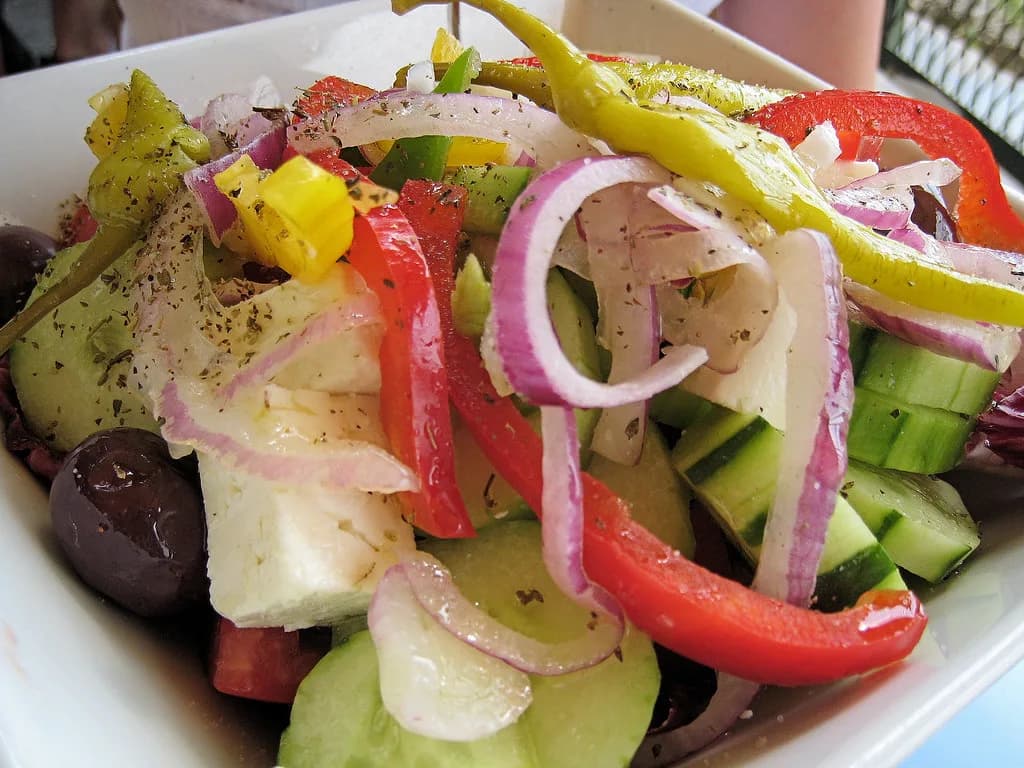
The baseline Greek taverna menu is built around ingredients rather than batters. Grilled meat or fish, a Horiatiki salata of tomato, cucumber, onion, olives and feta, roasted vegetables and plain rice or potatoes cover a large share of what is served. A kitchen can usually plate these without wheat, which is why travelers who eat gluten free often report few problems outside the bread and pastry side of the menu.
Is Greek food generally safe for coeliacs? Much of the everyday menu, including grilled meats, salads and roasted vegetables, is naturally made without wheat, but Greek food is not automatically safe. Pita, filo pies, breaded fried food and desserts are the main sources of wheat, and shared fryers are a cross-contact risk.
What Greek dishes contain wheat? Pita bread, spanakopita and other filo pies, baklava and most syrup pastries contain wheat. Moussaka often includes a flour-thickened topping, and saganaki may be dredged in flour before frying.
Are there dedicated gluten free restaurants in Athens? Two are named in published gluten free guides to Athens: Greek Stories near the Acropolis Museum and Nudie Foodie Psiri, both described as entirely gluten free kitchens. A gelato shop called Django, about five minutes on foot from the Acropolis Museum, is also noted for labeled gluten free flavors.
The traps are predictable once you know them. Pita is wheat bread, pies such as spanakopita are made with filo pastry, and anything breaded or fried in a shared fryer carries cross-contact risk. Desserts lean heavily on filo and syrup, so baklava and similar pastries are not a safe bet unless a kitchen says otherwise. For a broader map of the cuisine beyond the gluten question, see our guide to the traditional greek food you will meet on most menus.
Dish Decoder: What the Names Mean and Which Involve Wheat
Moussaka is a baked layered dish of aubergine, minced meat and a topping that traditionally includes a flour-thickened sauce, so it is not automatically safe. Saganaki is cheese cooked in a pan, usually firm kefalotiri or a similar Greek cheese, and can be dredged in flour before frying, which is why some kitchens can make a gluten free version on request and others cannot. Gyros is meat cooked on a vertical rotisserie and served in pita with tomato, onion and tzatziki; the meat itself is often safe, the pita is not.
Spanakopita is spinach and feta baked in filo, so it contains wheat by definition unless a kitchen specifically makes a gluten free version. Pita is the flatbread used for gyros and for scooping dips; it is wheat bread and should be swapped for a plated gyro without it. Baklava is layers of filo with nuts and syrup, again wheat-based. Htapodi is octopus, usually grilled and served plain, and is one of the simpler safe orders when it is not floured before grilling.
Fried seafood and small fried fish are a particular cross-contact risk, because the same oil often handles floured or breaded items. If a kitchen cannot confirm a separate fryer, ask for grilled fish or seafood instead. Our seafood in greece guide covers the grilled options, including garides saganaki, which is shrimp baked with tomato and cheese and usually avoids the fryer entirely.
The Real Cross-Contact Traps
Four things cause most problems in Greek restaurants. Shared fryers handle breaded calamari, floured saganaki and potatoes in the same oil; the bread basket lands on the table before you have had a chance to ask; pita is warmed on the same grill as the gyros meat; and dessert menus are dominated by filo and syrup pastries. Naming these four items when you order saves a lot of back-and-forth.
The bread basket is worth declining at the start of the meal rather than after it is already on the table, since crumbs travel. If you want bread with a meal, ask whether the kitchen keeps a separate gluten free loaf, as some do. For dessert, the safer direction is toward Greek yogurt with honey or a simple fruit plate rather than anything from the pastry list.
Athens: Greek Stories Near the Acropolis Museum
Greek Stories is the strongest single lead for a gluten free meal in central Athens. One traveler's published account describes it as an entirely gluten free kitchen located right near the Acropolis Museum, serving versions of moussaka, gyros, saganaki, pita bread and baklava. That combination is unusual, because most places that handle gluten free safely can only adapt part of the menu rather than the whole of it.
The trade-off is straightforward. A dedicated kitchen gives you the freedom to order almost anything on the list, including the dishes you would otherwise skip, but it is one restaurant in one neighborhood, near the Acropolis Museum, so it will not cover dinners across a whole trip. Use it as your anchor meal on a museum day and plan the rest of the week around ordinary tavernas where you ask careful questions. The same guide notes their desserts are very large, worth knowing before ordering two.
Athens: Nudie Foodie Psiri and Django for Gelato
Nudie Foodie Psiri is also reported as entirely gluten free, with a menu built around smoothie bowls and spanakopita, plus vegan and vegetarian options. It sits in Psiri, a central neighborhood north-west of the Acropolis, and the same account describes it as slightly tucked away, so map it before setting out. The cited guide notes it is closed on Mondays, which is the sort of detail worth confirming before you build a day around it.
Django is a gelato shop roughly five minutes on foot from the Acropolis Museum, recommended in the same Athens guide for its gluten free flavors and clear allergen labeling. It is aimed at anyone looking for something cold after a museum visit rather than a full meal, and the ingredient labels make it easier to decide without a long conversation. For a wider look at sweets, including the non-gluten-free classics, see our greek desserts guide.
Athens Practicalities: Neighborhoods and Timing
Greek Stories and Django both cluster near the Acropolis Museum, so they pair naturally with a morning visit to the museum and a lunch afterwards. Psiri is a different walk, roughly north-west of the Acropolis, and better slotted in when you are already headed toward Monastiraki or the central market area. Grouping meals by neighborhood rather than by reputation saves a lot of backtracking in a short Athens stay.
Lunch and dinner also change your options. A dedicated gluten free kitchen is a reliable lunch stop, while small family-run tavernas are often easier to question outside the dinner rush. If you want a Greek coffee after the meal, ask for it plain and black; the drink itself has no gluten, and a Greek breakfast of yogurt and honey is a simple way to start the day without bread.
Peloponnese Road Trip Logic: One Reliable Stop Per Town
The Peloponnese rewards travelers with a car, because the reliable options are spread across towns rather than concentrated in one city. A practical pattern is to identify one dependable restaurant per overnight stop, then treat everything else as bonus. The published guide to gluten free eating in the region lists single leads in Delphi, Nafpaktos, Olympia, Sparta and Nafplio, which maps neatly onto a week-long loop.
Small-town tavernas often have no website or posted menu, and the cited guide notes that many family-run places outside Athens communicate through Instagram or Facebook instead. That lack of a website is not a red flag; it is the norm for places where the owner cooks and serves. Contact the restaurant through whichever channel exists before you arrive if you need assurance about cross-contact.
Peloponnese Picks: Five Named Stops
Vakhos in Delphi sits on the upper main road and is described in the published guide as having a labeled menu of vegetarian, gluten free and dairy free options, with gluten free bread brought in place of the standard basket. Ev-Oinos in Nafpaktos has an extensive menu and staff who could answer gluten questions directly, despite having only an outdated social media page rather than a website. In Olympia, Taverna The Garden at Hotel Europa seats guests among olive trees and is open to non-residents; in Sparta, Elysse is a small family-run place where the owner knows each ingredient; and in Nafplio, Pidalio is the busier, pricier lead.
These are reported leads rather than tested recommendations, so treat each as a starting point and confirm details when you book. The value of naming one place per town is that a road trip depends on having somewhere to aim for at the end of a driving day. For an overview of how Greeks eat more broadly, our guide to greek meze covers the small plates that make up much of a taverna table, including the stuffed peppers and Kalamata olives that usually appear without wheat.
Olympia Trade-Off: Olive Grove Versus Town
Taverna The Garden at Hotel Europa sits outside Olympia itself, in an olive grove that the cited guide describes as particularly good at sunset. The trade-off is that you are eating at a hotel restaurant rather than among the tavernas in town, so the setting leads and the walkability falls away. If you want a short stroll to and from your table, choose differently; if you want the atmosphere and have a car or a taxi, it is the pick of the area in the published account.
The same guide notes there were no gluten free dessert options there, so plan to finish the meal elsewhere or skip dessert. Booking ahead matters more at a hotel restaurant with a view, because the terrace tables are the reason people go.
Supermarkets and the Road-Trip Snack Kit
Sklavenitis is a Greek supermarket chain with branches across the Peloponnese and in Athens, and it is the practical backup for any road trip. The published guide reports finding gluten free bread, crackers and biscuits there, which is enough to build a snack kit for long driving days between towns. Using a supermarket also gives you a low-risk breakfast option in hotels where the buffet is uncertain.
Keep a small bag with bread, crackers and a labeled snack in the car so a delayed lunch does not force a rushed decision at a roadside stop. For drinks, beer is worth a caution: many mainstream Greek lagers are brewed with barley, so treat beer as wheat-containing unless the label says otherwise. Our greek beer guide covers what to look for, and the same care applies to ouzo and tsipouro, which are spirit-based and generally not a gluten concern but are worth checking if you are sensitive.
Dedicated Kitchen Versus Family-Run Taverna
Greek Stories and Nudie Foodie Psiri offer the comfort of an entirely gluten free kitchen, which removes most of the conversation from the meal. The trade-off is that you are choosing a specific kind of restaurant, often with a higher bill than a neighborhood taverna. The cited guide describes Pidalio in Nafplio as on the more expensive end of the meals covered, so it helps to know before you sit down.
Elysse in Sparta stands for the other side of the choice: a small family-owned place where the owner knows every ingredient, described as inexpensive and one of the more distinctive meals on the route. That kind of restaurant gives you local character and easier conversation, but you carry more of the responsibility for asking. For meals in small tavernas, a printed translation card in Greek is the single most useful item you can bring.
How to Ask in Small Family-Run Places
Phrase the question around ingredients rather than around the condition. Asking whether a dish contains flour, bread or pita, and whether the fryer is shared, gets clearer answers than a general request for gluten free food. In a small kitchen the person cooking is often the person serving, so the answer you get is the one that matters.
A translated Greek dining card, printed or saved offline, solves the vocabulary problem when a waiter's English runs out. Order plainly grilled dishes when you are unsure, and ask for bread and pita to be left off the table rather than removed later. Drinking a glass of ouzo with the meal is a common taverna habit, but the spirit is a side note rather than a substitute for asking about the food.
Booking and Timing
Reserve ahead at hotel-restaurant terraces such as Taverna The Garden in Olympia, where the view is the draw and the best tables go first. In small towns, a phone call or message the day before gives the kitchen time to think about a gluten free version of a dish. Walk-ins still work out of season, but the more specific your needs, the more notice helps.
Check current details before you travel, since restaurant ownership and menus change and small places sometimes close for a stretch without updating anything online. Then confirm the menu again when you arrive, because the person who answers the phone may not be the person cooking that night. Two checks cover almost every surprise.
Plan Your Visit
Build your Greek trip around a dedicated gluten free anchor in Athens, a supermarket stop for the road, and one named lead per Peloponnese town. That structure leaves room for the ordinary taverna meals that make the trip worth taking, without leaving dinner to chance. For street food, our greek street food guide explains the gyros and souvlaki end of the menu, where the pita is the piece to hand back. If island time follows the mainland, Things to Do in Rhodes: Town, Beaches & Villages is a useful next stop for planning meals around a sightseeing day.
Before you leave, check the current status of the named restaurants and confirm your questions in writing where you can. A printed Greek card, a small snack bag and a short list of safe orders cover most of the uncertainty, and the rest is a matter of asking at the table.
Explore more Greece sauna guides
Frequently Asked Questions
Is Greek food generally safe for coeliacs?
Much of the everyday menu, including grilled meats, salads and roasted vegetables, is naturally made without wheat, but Greek food is not automatically safe. Pita, filo pies, breaded fried food and desserts are the main sources of wheat, and shared fryers are a cross-contact risk. Ask about each dish and each cooking method rather than relying on the cuisine as a whole.
What Greek dishes contain wheat?
Pita bread, spanakopita and other filo pies, baklava and most syrup pastries contain wheat. Moussaka often includes a flour-thickened topping, and saganaki may be dredged in flour before frying. Anything breaded or fried in a shared fryer also carries risk, so ask before ordering.
Are there dedicated gluten free restaurants in Athens?
Two are named in published gluten free guides to Athens: Greek Stories near the Acropolis Museum and Nudie Foodie Psiri, both described as entirely gluten free kitchens. A gelato shop called Django, about five minutes on foot from the Acropolis Museum, is also noted for labeled gluten free flavors. Check current details before visiting.
Can I find gluten free bread in Greek supermarkets?
Sklavenitis, a supermarket chain with branches across Athens and the Peloponnese, has been reported to stock gluten free bread, crackers and biscuits. Stock varies by branch, so check the shelf, and keep a small supply in the car on driving days.
How do I explain gluten free needs in a small Greek taverna?
Ask about ingredients rather than the condition: whether a dish contains flour, bread or pita, and whether the fryer is shared. A printed Greek dining card helps when language is a barrier. In family-run places the person serving is often the person cooking, so direct questions tend to get direct answers.
Where can I eat gluten free on a Peloponnese road trip?
Published guides name Vakhos in Delphi, Ev-Oinos in Nafpaktos, Taverna The Garden at Hotel Europa in Olympia, Elysse in Sparta and Pidalio in Nafplio. Treat each as a lead to confirm rather than a guarantee, and pair the route with Sklavenitis supermarket stops for backup supplies.
Sources
Notes for eating well in Greece
Optional updates to our guides.
You might also like

Continue reading
More guides you'll find useful