Ancient Sites in Greece: A Practical Guide to the Main Ruins
Plan a trip around Greece's ancient ruins, from the Acropolis and Delphi to Knossos, Lindos and Akrotiri, with practical advice on clusters and timing.
On this page
A ruin visit in Greece is rarely a quick stop: it usually means walking on uneven stone, waiting in a ticket queue, and crossing an exposed site with little shade. Because the country's headline sites are spread across the mainland and several islands, the single most useful planning decision is geographic. Pick one cluster per region and resist the urge to chase every famous name in a single trip.
The clusters below follow the main routes: Athens and Attica, day trips into the Peloponnese and central Greece, Crete, Rhodes, and the Cyclades. Each entry says what the site is, where it sits, and what shapes the time you should allow. Where a site is partly rebuilt or split across two locations, that trade-off is spelled out so expectations match reality.
How a Ruin Visit Actually Works
Most Greek archaeological sites combine a ticketed core with surrounding ground you can walk freely, and the ticketed part is where queues form. Buy or reserve through the official Greek tourism site before you travel, then check opening hours and closing days for your specific date, since schedules shift between summer and winter. Arriving near opening time buys you cooler air and shorter lines at the busiest places.
What is the oldest archaeological site in Greece? The Minoan palace at Knossos, near Heraklion on Crete, is usually cited as one of the oldest sites you can visit, with a history of roughly 4,000 years. Older settlements exist in the Aegean, but Knossos is the one most travellers encounter on a standard itinerary.
Are any of the Seven Wonders of the Ancient World in Greece? The list of the Seven Wonders was assembled by later writers, and the surviving references mention the Statue of Zeus at Olympia. That statue is long gone, but you can visit the sanctuary at Olympia where the Temple of Zeus stood.
How many ancient sites are there in Greece? There is no simple official count, because sites range from the Acropolis to small unstaffed ruins. Major ticketed sites number in the dozens, and hundreds of smaller archaeological locations are recorded across the country.
Expect sun and stone underfoot. Many sites, including the Acropolis hill in Athens and Lindos on Rhodes, require a climb, so plan the visit for the morning or late afternoon and carry water. Comfortable shoes with grip matter more than any other kit: marble paths worn smooth by millions of feet are the most common tripping hazard.
Athens and Attica: The Acropolis and Beyond
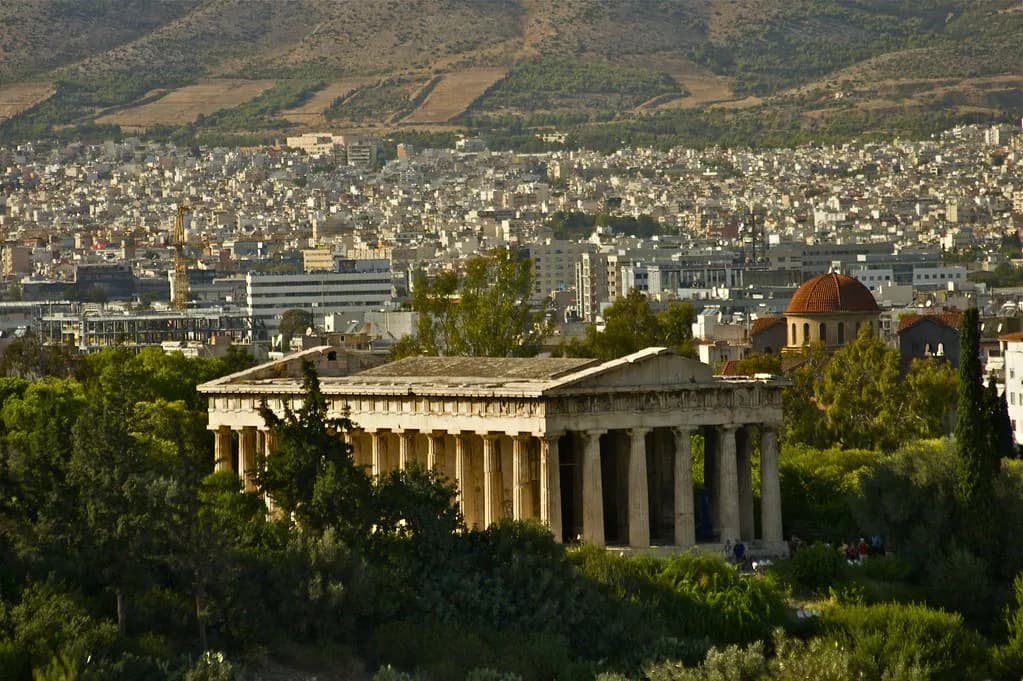
The Acropolis is the hill above modern Athens, and the Parthenon is the temple dedicated to Athena at its summit. It was built in the 5th century BC under Pericles as a place of worship, and its proportions have shaped architecture ever since. The site is a UNESCO World Heritage Site, and the climb plus the surrounding monuments easily fill a half day.
Athens functions as one large archaeological zone: ancient walls and monuments turn up around the modern city, and some metro stations display finds uncovered during construction. Beyond the centre, the Attica peninsula holds the Temple of Poseidon at Cape Sounio, on the southernmost tip of the coast. It is one of the most photogenic spots in the region and is especially striking in the evening, which makes it a sensible afternoon excursion rather than a rushed morning add-on.
Set aside one or two Athens days for ruins and leave the rest to neighbourhood wandering and eating. The most common mistake here is stacking the Acropolis, a museum and a coastal temple into a single day; each involves standing and walking, and the heat compounds it. For what to order once you are off the hill, this guide to what to eat in Greece covers the dishes you will meet in tavernas around the city, and it pairs naturally with checking the currency in greece before you start spending.
Day Trips From Athens: Delphi, Mycenae, Epidaurus and Corinth
Delphi sits on the pine-covered slopes of Mount Parnassus and was regarded by the ancient Greeks as the centre of the world, home to the oracle. The sanctuary contains temples, treasuries, altars and a theatre spread across a hillside, so a visit is genuinely vertical. It is a popular day trip from Athens and is often described as the second most important ancient site in Greece after the Acropolis, which makes it worth giving a full day rather than an afternoon.
Mycenae lies in the Peloponnese about 120 kilometres from Athens, and the drive is long enough that it works best as part of a day that also stops elsewhere. The Lion's Gate and the so-called Tomb of Agamemnon mark the Mycenaean capital associated with the launch of the Trojan War. Nafplio, an elegant harbour town, is only about 25 kilometres further on, so the two combine into a manageable loop with a proper lunch stop.
Epidaurus, in the Argolis region of the Peloponnese, is home to one of the earliest surviving Greek theatres and a nearby sanctuary of Asklepios; the ensemble became a UNESCO World Heritage Site in 1988. The theatre is still used for performances, so check whether your travel dates collide with a show if you want the site quiet, or embrace it if you want an evening of drama. The site is compact compared with Delphi, making it an easy pairing with Mycenae on the same drive.
Ancient Corinth is a two-part site and needs to be budgeted as such. The lower archaeological area holds the Temple of Apollo and a large odeon, while Acrocorinth is a separate fortified hill above the city with walls and the remains of a temple to Aphrodite; climbing it takes extra time and effort. The Corinth Canal nearby is worth the short stop on the drive between Athens and the Peloponnese.
Crete: Knossos and the Minoan World
Knossos Palace sits near Heraklion on Crete and dates back roughly 4,000 years to the Minoan civilisation, the earliest of the cultures covered in the standard Greek travel itinerary. Parts of the palace were reconstructed in the 20th century, which means you are seeing a blend of ancient fabric and modern interpretation rather than a purely ruined shell. For some visitors that limits the atmosphere; for others it makes the layout, rooms and frescoes far easier to read, so decide which matters more before you commit a day.
Knossos is the second most-visited archaeological site in Greece after the monuments of Athens, so treat it as a timed appointment rather than a wander-up stop. A private or small-group guide earns its fee here more than at most sites, because the reconstruction and the Minoan context are hard to piece together from labels alone. Crete is large enough that a sensible base matters; staying in or near Heraklion keeps Knossos simple, while western bases turn it into a long day.
If you want an urban counterweight to the ruins, the old harbour towns of Crete reward a slow evening. Agios Nikolaos, with its small lake and harbour-side tavernas, is a natural stop in eastern Crete, and the Rethymno old town in the west pairs a Venetian fortress with lanes built for lingering. Both make good places to end a driving day after a site visit.
Rhodes: Lindos and the Acropolis Above the Village
Lindos sits on Rhodes, with its acropolis crowning the rocky outcrop above the village. The climb is part of the visit: a monumental staircase leads up to a colonnaded walkway, past the Sanctuary of Athena Lindia and a relief of a Rhodian trireme, with wide sea views from the top. Structures on the summit date as far back as the 4th century BC.
The trade-off at Lindos is between view and comfort. The village below is dense and popular, and the climb up is hot in the middle of the day, so early or late slots beat midday on both counts. If you are building a longer stay on the island, Rhodes Old Town is the obvious base for pairing the acropolis with the medieval city; the Rhodes History for Visitors guide covers the rest of the island's past for context before you go.
Cyclades: Delos, Akrotiri and the Island Ruins
Delos lies in the Aegean next to Mykonos and is reached by a boat crossing of roughly 30 minutes across about 6 miles of water. The archaeological site is one of the most extensive excavations in the Mediterranean; the Avenue of the Lions is the landmark most people come to see. Delos is a half-day trip from Mykonos rather than a lost afternoon, and you should plan your ferry back rather than assume one will fit your mood.
On Santorini, Akrotiri lies in the southwest of the island near the capital, Thira. The settlement was buried in volcanic ash in the 17th century BC, and the excavated streets, buildings and pottery are protected under a roof, which makes it a rare ruin you can visit without full sun exposure. It is thought to have inspired Plato's story of Atlantis, though that remains a claim of interpretation rather than fact. For the island's wider chronology, from Akrotiri to the later classical city, the Santorini History for Visitors guide is the sensible companion.
Olmypia and the Peloponnese Circuit
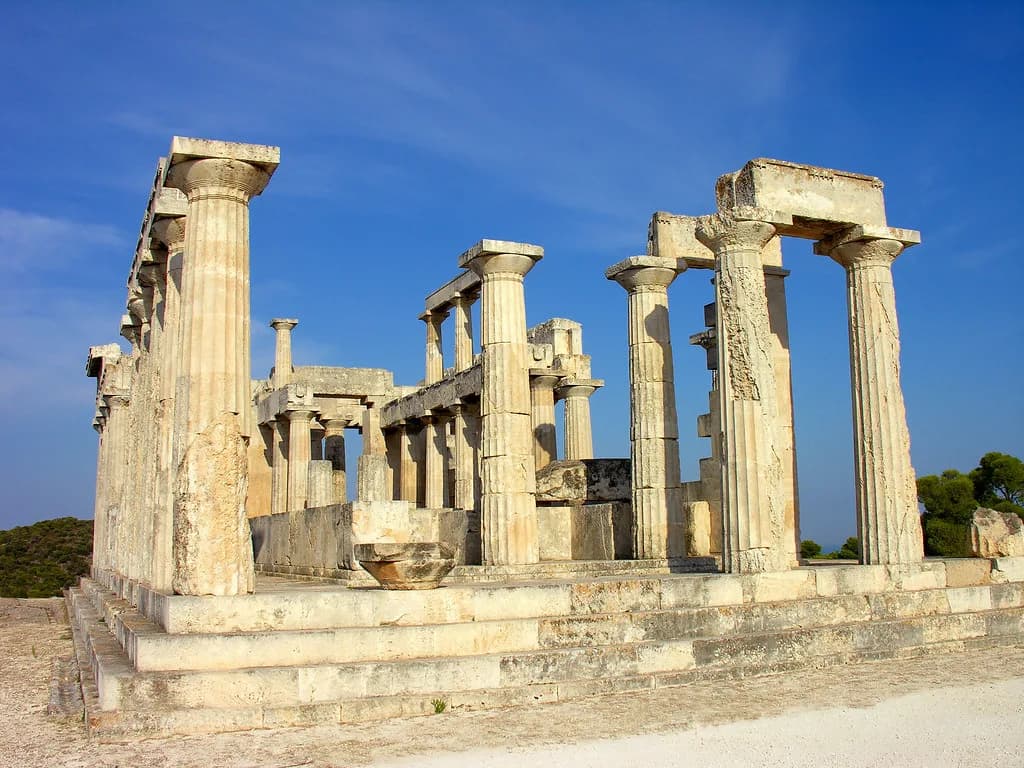
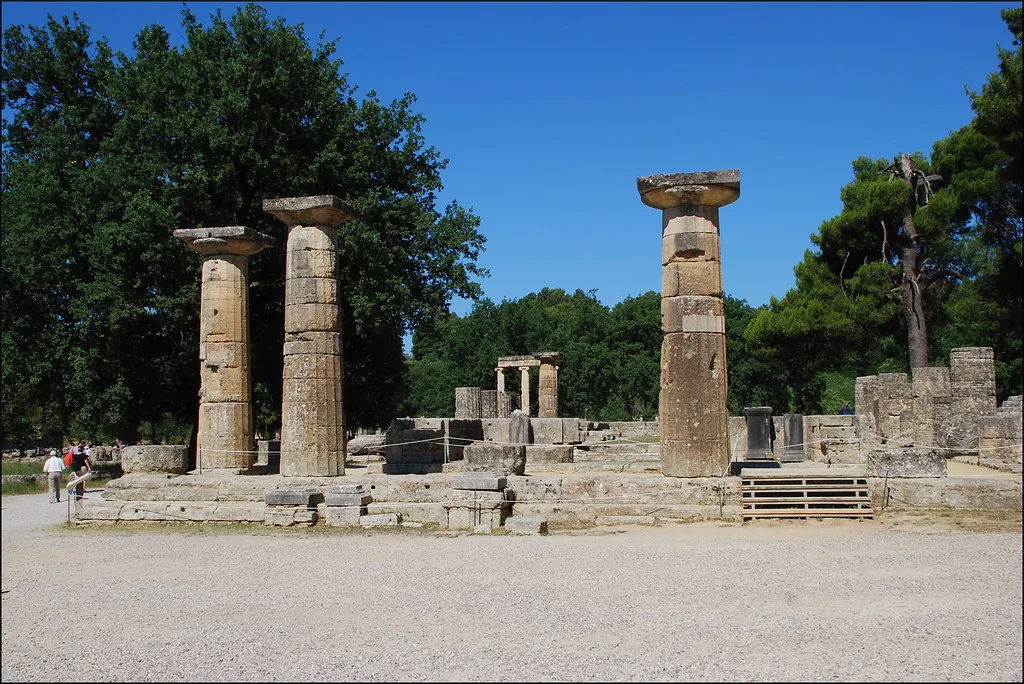
Olympia, in the western Peloponnese, was a sanctuary of Zeus and the site of the ancient Olympic Games every four years. The Temple of Zeus is the largest and most important building on the site and one of the largest Doric temples in Greece; the ancient stadium and the workshop of Pheidias are also visible. The Olympic flame is lit here, which gives the site a resonance that the archaeology alone would not.
Olympia fits naturally into a mainland loop with Mycenae, Nafplio and Epidaurus, but the distances add up. A rough rule is to drive no more than two hours between site visits in the Peloponnese, stopping in a town for lunch rather than eating at the car park. In harbour towns, favour the back-street tavernas serving ladera (vegetable stews) and grills over the waterfront menus with photographs, and expect a modest cover charge per person as normal practice.
Guided Tours Versus Going It Alone
A guide earns their fee where context is scarce or the setting is confusing: Knossos with its reconstruction, Delphi with its layered sanctuary, and mountain sites where the story is as much about ritual as architecture. At clearly signed, compact sites, a good guidebook or a detailed site plan does most of the work at lower cost. Book guides through licensed operators, and confirm the language and group size in writing before you commit.
Self-guided travellers should check the official ticketing site for ticket types, combos and timed slots before assuming anything about price. Ancient sites in Greece vary widely in what a ticket includes, and multi-site passes can be worth it or not depending on your itinerary. Verify on the day of booking rather than relying on a blog written a few years earlier.
Timing, Heat and Moving Between Islands
Greek ruins are mostly open sites with little shade, and the hours when the light is best for photographs are also the most crowded. Aim for opening time, break in the middle of the day, and return in the late afternoon if you have the energy. Carry twice the water you think you need, wear a hat, and treat slippery marble with respect: the steps are worn and uneven at almost every major site.
Multi-island itineraries rarely combine well with a heavy ruin agenda. Delos needs a boat crossing timed around your ferry, Knossos needs a day from your Crete base, and Lindos needs a morning on Rhodes. Island hopping with two ferries per week spent on ruins is a common regret, so be honest about how many sites you can genuinely absorb.
Pairing Ruins With Meals
The best ruin days have a lunch anchor: a town with a proper taverna rather than a snack stand at the gate. After Mycenae, Nafplio is the obvious stop; after Epidaurus, the Argolis villages; after Akrotiri, the towns around the caldera are full of options but the harbour end is cheaper and less rushed. In Thessaloniki, which has its own Roman and Byzantine heritage, the central market streets are the natural place to build a walk between meals.
Fried seafood, horiatiki (the Greek salad of tomato, cucumber, onion, olives and feta), and grilled meat are the safe orders in tourist-heavy areas, and they usually arrive quickly. If you want souvlaki or gyros in a pita, look for a busy counter with turnover rather than a display that has sat all day. Wherever you eat, ask for the price of the day's fish by weight before ordering: it is a standard practice, not a suspicion.
For a quieter base between mainland ruins, the Saronic islands work well: Hydra Town is car-free and reaches the mainland by ferry, so it slots into an Attica-and-Peloponnese route without an extra flight. It is a good way to break up a run of archaeological days.
Common Planning Mistakes
Overloading is the standard error: three sites in a day looks fine on a map and feels punishing in the sun. Choose one major site and one small stop per day, and leave the rest for the next visit. If you are travelling with children, smaller sites with fewer stairs often go down better than the headline monuments.
Underestimating the drive is the second error. A site that looks close on a map may involve mountain roads and slow traffic; the Delos crossing alone takes about half an hour, and a Peloponnese loop stretches the day. Build slack into ferry and driving days, and do not book a flight on the same day you plan to see a major ruin.
A third error is treating ruins as interchangeable. Delphi, Knossos and Lindos each reward a different kind of attention: landscape and ritual at Delphi, interpretation at Knossos, and the climb and the view at Lindos. Pick the ones that match your interest rather than trying to tick off a list.
Plan Your Visit
Start with geography: choose one mainland cluster and one island, and build the rest of the trip around the sites you can reach without a punishing drive or a tight ferry connection. Group Athens with Cape Sounio, pair Delphi with an overnight near Parnassus, and let the Peloponnese take a couple of days if you want Mycenae, Epidaurus and Olympia in one loop. The same cluster-first logic works when you plan around what to eat in Greece, since regional dishes and markets anchor you to the places you are already visiting.
Where you sleep and eat will shape the visit as much as the ticket does. A harbour town with an old quarter, whether Agios Nikolaos or Rethymno, gives you somewhere to walk to in the evening after a ruin day, rather than another drive. For a base near the eastern ruins, our Agios Nikolaos Attractions: 6 Visitor Guides covers what to see and where to eat in town, and Ioannina Attractions: 6 Visitor Guides does the same for a mainland stop on the road to Delphi.
Finally, remember to check: opening hours, ticket options and seasonal closures change, so look them up on the official site for your exact dates before booking transport or accommodation around a site visit.
Explore more Greece sauna guides
Frequently Asked Questions
What is the oldest archaeological site in Greece?
The Minoan palace at Knossos, near Heraklion on Crete, is usually cited as one of the oldest sites you can visit, with a history of roughly 4,000 years. Older settlements exist in the Aegean, but Knossos is the one most travellers encounter on a standard itinerary. Check the official site for the current dating presented and for section closures.
Are any of the Seven Wonders of the Ancient World in Greece?
The list of the Seven Wonders was assembled by later writers, and the surviving references mention the Statue of Zeus at Olympia. That statue is long gone, but you can visit the sanctuary at Olympia where the Temple of Zeus stood. The site itself, not the wonder, is what you see today.
How many ancient sites are there in Greece?
There is no simple official count, because sites range from the Acropolis to small unstaffed ruins. Major ticketed sites number in the dozens, and hundreds of smaller archaeological locations are recorded across the country. Rather than counting, group them by region and plan one or two per day.
How do you get to Delos from Mykonos?
Delos is reached by boat from Mykonos, with a crossing of roughly 30 minutes over about 6 miles of water. Check the departure times and the return boats before you set off, since the ruins are the destination and there is no town to wait in. Book your crossing early in the day to allow enough time on the island.
Is Knossos worth visiting if it is partly reconstructed?
It depends on what you want from a ruin. The reconstruction makes the palace layout and frescoes far easier to understand, especially with a guide, but it does reduce the sense of a pure ruin. If you want speculative atmosphere, choose another site; if you want to understand Minoan planning, Knossos delivers.
Which ancient sites in Greece are best for kids?
Knossos works well because the reconstructed rooms and wall art give children something concrete to look at, and Epidaurus appeals with its huge theatre. Sites with steep climbs, such as Lindos or Acrocorinth, are harder work for small legs. Read the plan first and pick one main site per day.
What were ancient Greek towns called?
The standard term is polis, which meant a city-state and its citizen community rather than just the built-up area. A settlement had an acropolis, normally the fortified high point, and an agora, the open market and civic square. Modern place names often preserve these elements.
Sources
Notes for eating well in Greece
Optional updates to our guides.
You might also like

Continue reading
More guides you'll find useful