Greek Beer: Brands, Styles and How to Order One in a Taverna
A practical guide to Greek beer: lager and pilsner styles, brands like Mythos, Fix and Alfa, island microbreweries, and how to order at a taverna.
On this page
Beer sits on almost every Greek table, from a ferry-deck lunch to a long meze dinner, and the range has widened well beyond the familiar brands. Understanding a few basics about lager, pilsner and ale lets you read any Greek label and order with confidence. This guide covers the everyday brands, the craft breweries worth knowing, ordering language and what to drink with the food in front of you.
Why Beer Belongs on a Greek Table
Greece's warm climate and long outdoor eating season make beer a natural companion to the small plates that open most meals. The country has a high level of beer consumption, and in recent years many microbreweries have appeared, according to a Greek drinks blog. That means a taverna may pour a familiar mass-market lager alongside a locally made pilsner or pale ale. The practical result is that beer is no longer just a fallback when you do not want wine; it can be a deliberate pairing with the meze in front of you.
Is Stella a Greek beer? The available sources do not settle where Stella is brewed, so treat any claim with caution. Check the label: it states the brewery and country of origin.
What kind of beer do Greeks actually drink? Lager dominates, and Mythos is described as the most well-known Greek beer brand, with Alpha and Fix also widely available. Craft beer has grown through microbreweries across the mainland and islands.
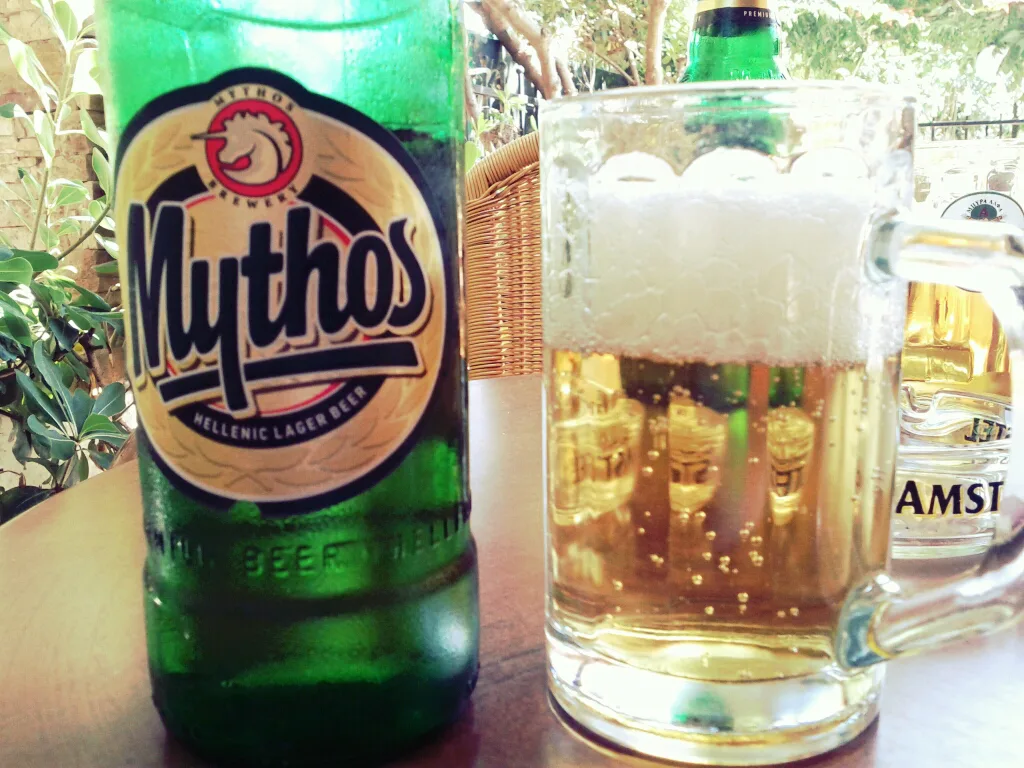
Is Mythos a lager or an ale? Mythos is described as an original lager. Lagers are bottom-fermented and typically lighter in aroma than ales, which are top-fermented and often fruitier or more complex.
Lager, Pilsner and Ale: The Plain-English Difference
Most beer is divided by how it ferments. Lagers are bottom-fermented, with yeast settling at the bottom during production, and they usually have light malt and hop aromas; pilsner is a lager style with high bitterness from a generous hop load, giving a firm bitter finish. Ales are top-fermented and more complex, with fruit, caramel, cocoa or coffee notes depending on the type. Knowing these two families is enough to decode most of a Greek beer list before you commit to a bottle.
The Everyday Greek Brands You Will See Most
Mythos is described as the most well-known Greek beer brand, an original lager, and it is easy to find around the country. Alongside it, Alpha and Fix appear repeatedly in Greek beer ranges, with Fix described as a 100 percent Athenian beer. These are the reliable, widely distributed lagers you will spot on supermarket shelves, kiosk fridges and taverna menus. For a first Greek beer, any of them is a safe, familiar lager template to calibrate your taste against.
Reading a Greek Beer Label
Beyond plain lager, labels use style names that tell you what to expect. Amber is a reddish lager with hop and caramel aromas, bock is a darker beer with slightly higher alcohol and chocolate-caramel notes, and dunkel is a dark brown beer in the same flavour family. Rauchbier is a dark beer with a strong smoke aroma. On the ale side you may meet red ale, weisse (wheat beer, often unfiltered and cloudy), stout, strong golden ale and Belgian-inspired abbey and Trappist styles. Similar names do not always guarantee the same flavours, because each brewery interprets them its own way.
Greek Microbreweries Worth Knowing
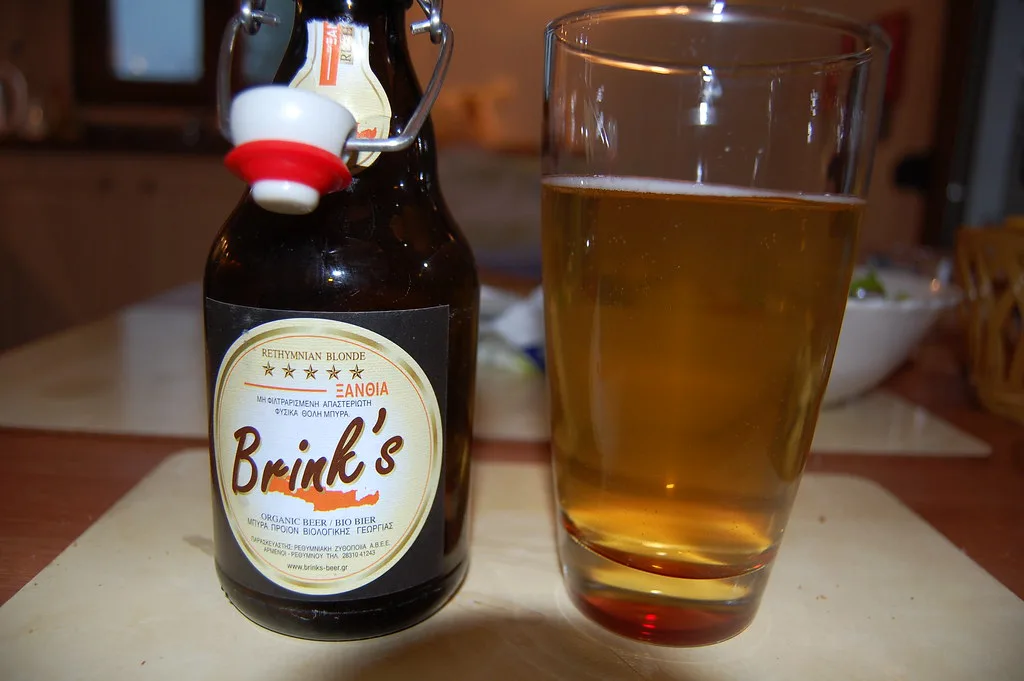
Greece's craft scene has produced a set of small breweries whose beers show up in bars and specialist shops. Nissos is noted for its pilsner, Voreia for stout, Chios for a house ale, and Noctua, based in Athens, for a pale ale. Strange Brew is associated with a jasmine IPA, Elixi with Delphi, Kirki with a pale ale, Corphes with mountain tea and sage, and Donkey with a yellow beer linked to Santorini. These are examples of styles the breweries are known for, not a ranking; the point is that a Greek craft list can span pilsner, stout and IPA within a few lines.
Island and Regional Beer
Craft beer is produced across the country, including the islands, and many areas have their own label made with local ingredients. For a traveller this changes how you choose where to drink: a harbour-front bar with a view may carry the big brands, while a back-street bar or a well-stocked kiosk may be where the local island beer appears. Asking what is brewed locally is often more useful than asking for a specific brand, because distribution varies from island to island and season to season. If a particular label matters to your trip, check the brewery's own channels before you rely on finding it.
How to Order Beer in a Taverna
Ordering is straightforward once you know the word: beer is bira, so a cold beer is mia bira, and a bottle is mia bira se boukali. In practice, pointing at the fridge or naming the brand works just as well, and staff will usually ask whether you want it bottled or on draft. Glass sizes and draft availability vary by venue, so if size matters to you, ask before ordering. Bottles are the safer bet at small tavernas where draft lines are limited, while bars with a craft list are more likely to pour a draft. Expect to be asked if you want it well chilled; in summer, that is the default.
What to Eat With Greek Beer
Lager is a flexible partner for appetisers, and pilsner's bitterness suits salty, spicy or olive-heavy dishes. Greek guidance suggests pilsners alongside olives, spices, rocket, radishes and sharp cheeses, including saganaki and mature kefalotyri or kefalograviera. That makes beer a good fit for a table of small plates: horiatiki salata with its olives and salty feta, or a plate of grilled cheese, both work with a crisp lager. If you order a mixed spread of traditional greek food, a pilsner or bitter lager keeps up with the stronger flavours. For a meat-forward snack on the move, greek street food such as souvlaki from a vertical rotisserie is a classic beer pairing.
Beer, Ouzo or Tsipouro: Choosing the Right Drink
Beer, ouzo and tsipouro occupy different moments at a Greek table. Ouzo and tsipouro are distilled spirits, often sipped slowly with meze, while beer is the lighter, longer drink that suits a hot afternoon or a casual meal. Many locals simply choose by mood and weather rather than by rule: a cold lager with lunch, a spirit with a long evening of small plates. If you want to try both, order beer first and the spirit after the food arrives. Neither is a substitute for the other, and ordering a beer does not mark you as a tourist.
Serving Temperature, Glassware and Local Choices
General beer guidance is to serve lagers at about 4 to 7 degrees Celsius, without ice cubes or a frozen glass, in a sparkling-clean glass that helps the foam last. Greek tavernas usually get the temperature right, but a warm bottle on a hot day is worth sending back or swapping for a colder one. If you want to drink like a regular, ask what is local, and if you want to try craft without committing to a full bottle, look for bars with a short draft list. Small-batch beer usually costs more than the mass-market brands, so compare the list before you order a round.
One trade-off is worth naming. A table with a caldera or harbour view often charges for the setting through higher drink prices, while a plain back-street taverna may pour the same beer for less and stock a local label the waterfront bars skip. Decide which you are paying for before you sit down, and apply the same logic when choosing where to eat in Rhodes. If you want to try a specific brewery's beer, check its own website or social accounts for where it is sold, since stock changes. For the rest of the meal, this site's guide to greek cheese pairs naturally with a cold lager.
Buying Greek Beer to Take Home
If you want Greek beer after your trip, specialist online Greek food shops such as Greek Flavours sell bottles for delivery abroad, though stock varies and some ranges show as empty at times. Check the shipping terms and the minimum order before you fill a basket, since international delivery rules differ by destination. For everyday brands like Mythos, Alpha and Fix, an airport or supermarket purchase before flying is often simpler than shipping glass. For craft beer, a specialist retailer is the more realistic route, but shelf listings shift, so it is worth browsing the craft range directly rather than expecting every brewery to appear.
Your final check: confirm prices and availability at the shop or bar directly, as neither is published in a way you can rely on in advance. If you are planning a beer-focused evening, call or check the venue's own channels first. That is the only reliable way to know what is on draft tonight.
Plan Your Beer Order
Start with the difference between lager and ale, then use the label to pick a style, and let the food decide the rest. A familiar brand is a safe start, a local craft label is the more interesting choice, and a pilsner with salty meze is a reliable pairing. Ask for bira, expect a bottle by default at small tavernas, and check the price of anything on draft before ordering a round. Keep expectations flexible, because what a bar stocks changes more than the beer itself.
Explore more Greece sauna guides
Frequently Asked Questions
Is Stella a Greek beer?
The available sources do not settle where Stella is brewed, so treat any claim with caution. Check the label: it states the brewery and country of origin. Greek brands that are clearly identified include Mythos, Alpha and Fix, along with craft breweries such as Nissos, Voreia and Chios.
What kind of beer do Greeks actually drink?
Lager dominates, and Mythos is described as the most well-known Greek beer brand, with Alpha and Fix also widely available. Craft beer has grown through microbreweries across the mainland and islands. At a taverna, the default is usually a cold bottled lager.
Is Mythos a lager or an ale?
Mythos is described as an original lager. Lagers are bottom-fermented and typically lighter in aroma than ales, which are top-fermented and often fruitier or more complex. If you want an ale, look for pale ale, IPA or weisse on a craft list.
How do I order a beer in Greek?
Say mia bira for one beer, or mia bira se boukali for a bottle. Staff often ask whether you want it bottled or on draft, and pointing at the fridge or naming a brand also works. If size matters, ask before ordering.
Can I find craft beer on the Greek islands?
Yes, craft beer is produced across Greece, including the islands, and many areas have their own label using local ingredients. Availability varies by island, bar and season, so ask what is brewed locally and check the brewery's own channels if a specific beer matters to you.
What food goes with a pilsner?
Pilsner's hop bitterness suits salty, spicy and olive-heavy dishes. Greek guidance pairs pilsners with olives, rocket, radishes and sharp cheeses such as saganaki and mature kefalotyri or kefalograviera. A mixed meze table is a good match for a crisp lager or pilsner.
Should I choose beer, ouzo or tsipouro?
They suit different moments. Beer is the lighter, longer drink for hot afternoons and casual meals, while ouzo and tsipouro are spirits often sipped slowly with meze. Ordering beer first and a spirit after the food arrives is a simple way to try both.
How should beer be served?
General guidance is to serve lagers at about 4 to 7 degrees Celsius in a clean glass, without ice or a frozen glass, so the foam and aromas hold up. If a bottle arrives warm on a hot day, ask for a colder one. Prices and draft availability should be confirmed at the venue.
Sources
Notes for eating well in Greece
Optional updates to our guides.
You might also like


Continue reading
More guides you'll find useful