Greek Breakfast in Greece: What to Order and Where
What Greeks actually eat for breakfast: koulouri, bougatsa, yogurt with honey and Greek coffee. Learn what each item is and where to find it on your trip.
On this page
Breakfast in Greece is often a short, bread-led stop rather than a long sit-down meal, which is why the bakery counter and the coffee cup matter more than the menu. For many Greeks the focus is bread and coffee first, with yogurt, fruit and cheese playing a supporting role depending on the day and the season.
That makes planning easy: you can eat well in ten minutes near your hotel, or build a slower morning around a cafe table if you have time before the archaeological site opens. The trade-off is almost always speed and cost against comfort and variety.
What a Greek breakfast usually looks like
Expect a smaller, quicker meal than the buffets at resort hotels. A typical morning spread might be thick plain yogurt with honey on the side, fresh seasonal fruit such as oranges or figs, a basket of bread and a piece of fresh cheese with local butter.
What do Greeks usually eat for breakfast? Commonly a bread-led, quick meal: a sesame koulouri from a cart or bakery, a piece of bougatsa or a filo pie, thick yogurt with honey, and a small strong coffee. Sit-down plates of eggs and cheese are more common in hotels and modern cafes than in everyday bakery routines, and habits vary by region and season.
What is koulouri? Koulouri is a ring-shaped savoury yeast bread covered in sesame seeds, sold from vendor carts and bakeries and eaten from morning onward. Some versions are plain, others filled with jam or chocolate-hazelnut spread.
Is a Greek breakfast different from a hotel buffet breakfast? Yes, in scale and pace. A hotel buffet offers variety, seating and cooked dishes, while a neighbourhood bakery or cart is faster and narrower, usually bread, pies and coffee.
Coffee and bread are the core for a lot of people, so pastries are not an optional extra — at many counters they are the breakfast. If you want a proper sit-down plate of eggs and cheese, that is more common in hotels and modern cafes than in a neighbourhood bakery.
Treat any description of a national breakfast as a pattern rather than a rule: habits shift between Athens apartments, island villages and hotel dining rooms. Use the list below as a shortlist to recognise, not a script to follow.
Koulouri: the ring-shaped sesame bread
Koulouri is a ring of savoury yeast bread rolled in sesame seeds, sold from vendor carts and bakery counters and eaten at almost any hour. The nutty, crunchy exterior around a soft crumb is why it works as both breakfast and a mid-afternoon snack, and some versions are filled with jam or chocolate-hazelnut spread.
Buy one warm if you can and eat it walking, since the appeal is the contrast between crisp seeds and soft bread rather than any topping. As a grab-and-go option it is hard to beat on a sightseeing morning, but it will not keep you at a table if you want a slower start.
Greek coffee: how it is made and how to order it
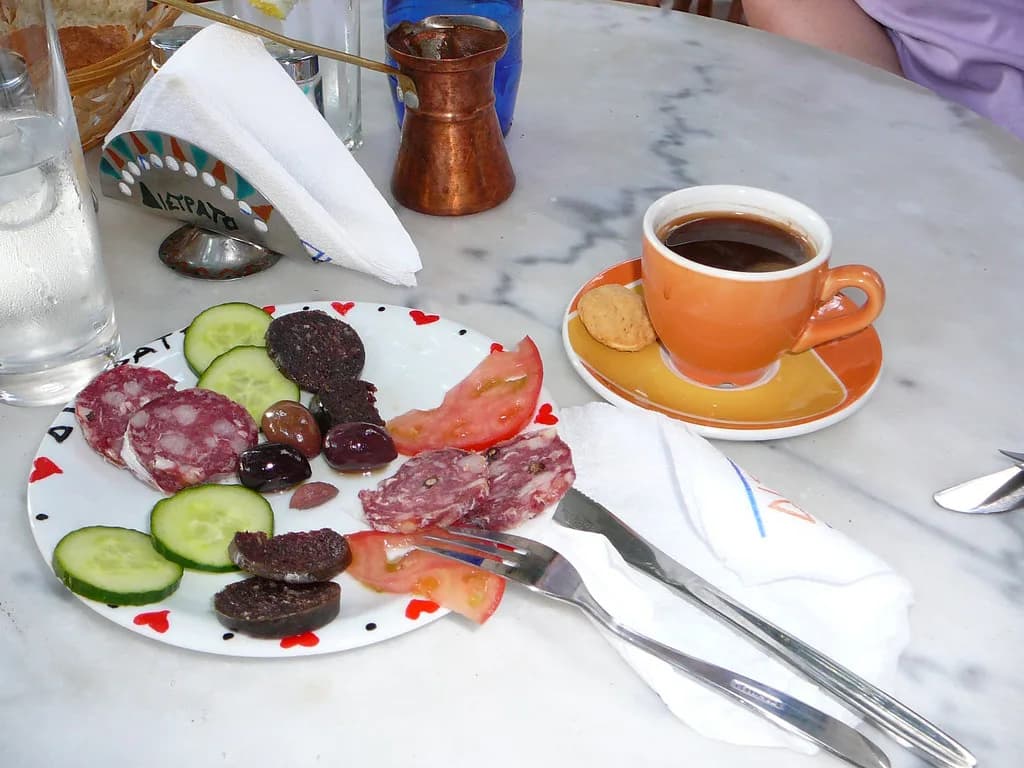
Greek coffee is finely ground beans boiled in a small pot, producing a strong, black brew usually served sweetened, with a layer of grounds settled at the bottom of the cup. Sip carefully and stop before the silt, and do not expect the iced milky coffees you may be used to at home.
Ordering is simple but worth knowing before you queue: ask for it without sugar, lightly sweet or sweet, and expect a small cup rather than a mug. For the vocabulary and the difference between the pot-boiled style and other Greek cafe drinks, our guide to greek coffee explains the names in plain English.
Bougatsa and other morning pies
Bougatsa is a warm pie of thin filo pastry wrapped around a cream filling, dusted with cinnamon and sugar, and it belongs to the morning hours in northern Greek baking traditions. Savoury versions with cheese also exist, so ask what is in the tray before you point.
Beyond bougatsa, bakery windows fill with spanakopita and tyropita — spinach and cheese pies in filo — which function as breakfast, snack or light lunch depending on the hour. The practical test is turnover: a tray that empties quickly is being baked fresh and will still be warm when you get it.
Yogurt with honey and walnuts
When yogurt appears on a Greek breakfast table it is usually plain and unflavoured, served with honey on the side for drizzling and often walnuts crumbled over the top. That separation matters: you control the sweetness instead of getting a pre-sweetened pot.
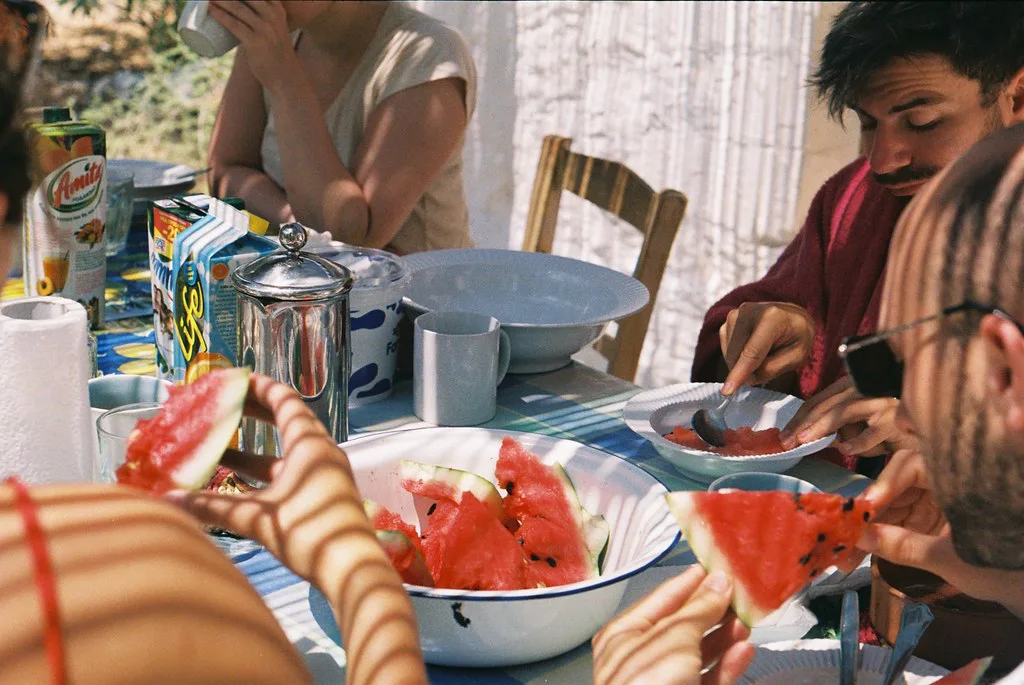
Fruit depends on the season, so expect oranges, figs or berries at different points in the year rather than all at once. At a hotel buffet this is usually self-service from a chilled counter; at a cafe it arrives as a composed bowl, which is slower and usually the more expensive route.
Cheese and bread at breakfast
A breakfast table may include fresh feta and a cube of rich local butter alongside the bread basket, which is why the bread matters as much as the cheese. Crumbling feta onto warm bread with a little honey is a simple combination worth trying once.
If cheese is a highlight of your trip, the wider guide to greek cheese covers the main named varieties and where they turn up on menus. At breakfast, keep it simple: one cheese, good bread, and coffee is a complete order in most bakeries.
Sesame bread and coffee as the classic pairing
The combination that best explains Greek mornings is a sesame bread ring dipped into strong, sweet coffee, a pairing that balances the nutty crust against the bitterness of the brew. It is also the cheapest way to eat breakfast standing up, with no table service and no waiting for a menu.
Hotel breakfast, bakery, cafe or taverna: the trade-offs
A hotel buffet gives you variety, eggs, seats and no decisions before coffee, but it keeps you inside the building and is priced into your room rate rather than chosen. A bakery counter is faster and cheaper and shows you what locals actually buy, at the cost of standing or eating on a bench.
A cafe table sits in between: you get a seat and a proper cup, and you pay for it in time and in the drink price. A taverna is rarely a breakfast venue, so save those tables for lunch and dinner and treat the morning as bakery or cafe territory.
Modern hotel kitchens often rework the same tradition into plated dishes such as baked eggs with zucchini and feta, seared halloumi with cherry tomatoes, or a cheese-and-honey-filled tsoureki bun. That is a useful preview of the flavours, but it reflects one hotel's interpretation rather than the everyday bakery counter.
Sit-down vs grab-and-go around sightseeing
On a day with a timed museum slot or an early ferry, choose the bakery: a koulouri and a coffee take minutes and travel well. On a slower day, sit down for yogurt and a proper cup and use the table to plan the route between sights. If that morning routine leads you toward Crete, the same bakery-first rhythm applies to Things to Do in Chania: Harbour, Old Town and Day Trips.
If your first stop is street food later in the day, keep breakfast light and read our greek street food guide so you know what to expect from the vertical rotisserie counters at lunchtime.

Sweets at breakfast: loukoumades, tsoureki and when they appear
Loukoumades are small deep-fried dough balls soaked in honey syrup, and they turn up more often as a treat than as a weekday breakfast. Tsoureki is a soft, slightly sweet festive bread flavoured with mahlab and mastic; a bun filled with cheese and honey is a hotel-style variation rather than the standard loaf.
Both sit closer to the dessert end of the spectrum, which is why a bakery morning might pair one sweet item with a savoury pie or a plain koulouri. Our greek desserts guide covers the wider range if you want to plan an afternoon stop instead.
What you likely won't find at breakfast
Boxed cereal, breakfast sandwiches and heavy cooked plates are not typical outside hotels and international cafes, so do not count on them in a village bakery. Adjust expectations rather than hunting: the sesame ring and the coffee pot are the reliable order almost everywhere.
Practical ordering tips: portions and sharing
Portions vary by shop, so treat a pie or a filled koulouri as one item per person and share a second only if you are still hungry. At a bakery counter, point at what you want and say how many — that is faster than asking for a description in translation.
If you want a full Greek meal later, the guide to traditional greek food explains dishes such as Horiatiki salata and Shrimp saganaki so you can order dinner with confidence. Breakfast is the warm-up, not the main event.
Plan Your Morning
Build breakfast around one bakery stop and one coffee, then decide whether you want a table. Check bakery opening hours the day before if you are leaving early, since smaller shops may open later than you expect.
On the islands, many restaurants and cafes close roughly from November to April, so off-season travellers should confirm what is open in their area rather than assuming the summer routine holds. After that check, the rest is easy: follow the sesame smell and order a coffee.
Explore more Greece sauna guides
Frequently Asked Questions
What do Greeks usually eat for breakfast?
Commonly a bread-led, quick meal: a sesame koulouri from a cart or bakery, a piece of bougatsa or a filo pie, thick yogurt with honey, and a small strong coffee. Sit-down plates of eggs and cheese are more common in hotels and modern cafes than in everyday bakery routines, and habits vary by region and season.
What is koulouri?
Koulouri is a ring-shaped savoury yeast bread covered in sesame seeds, sold from vendor carts and bakeries and eaten from morning onward. Some versions are plain, others filled with jam or chocolate-hazelnut spread. Eat it warm for the contrast between the crisp seeds and the soft crumb.
Is a Greek breakfast different from a hotel buffet breakfast?
Yes, in scale and pace. A hotel buffet offers variety, seating and cooked dishes, while a neighbourhood bakery or cart is faster and narrower, usually bread, pies and coffee. The buffet is convenient but keeps you indoors; the bakery shows you what people actually buy on a normal morning.
What is bougatsa?
Bougatsa is a warm pie made with thin filo pastry wrapped around a cream filling, finished with cinnamon and sugar. Savoury cheese versions also exist, so ask what is in the tray. It is a morning food in northern Greek baking traditions and best eaten soon after it comes out of the oven.
How is Greek coffee served?
Finely ground coffee is boiled in a small pot and served in a small cup, usually sweetened to your chosen level, with the grounds settled at the bottom. Sip carefully and stop before the silt. Ask for it without sugar, lightly sweet or sweet when you order.
Do Greeks eat eggs at breakfast?
Eggs appear but are not the everyday default; they are more often part of hotel and cafe breakfasts, sometimes baked with vegetables and cheese. If you want eggs, look for a cafe or hotel rather than a bakery counter, and expect the bakery to offer pies, bread and pastries instead.
Where can I find a Greek breakfast in Greece?
Bakeries, street carts and cafes are the usual places: carts and bakery counters for koulouri and pies, cafes for yogurt, coffee and a seat, and hotels for a broader buffet. Named venues, addresses and opening hours change, so check locally before an early start.
What time do Greeks eat breakfast?
There is no single national timetable; many people take a quick coffee and bread before work or school, and a slower breakfast belongs to weekends and holidays. If you are planning around an early ferry or site opening, check bakery hours the day before.
Sources
Notes for eating well in Greece
Optional updates to our guides.
You might also like
Continue reading
More guides you'll find useful