Seafood in Greece: Where to Eat and What to Order
Plan a Greek fish taverna meal: how whole fish is priced by the kilo, which species are cheap, how to spot fresh versus frozen, and the classic dishes to try.
On this page
Ordering seafood in Greece is less about picking a dish from a list and more about a short negotiation over a fish you can see. Understanding how that works, and which names on the menu mean cheap and which mean expensive, is the difference between a relaxed lunch and a bill you did not expect. The guide below moves from the everyday end of the fish counter to the premium one, explaining the dish names as they come up.
Two things shape almost every fish meal: supply and weight. A taverna prices most whole fish per kilo, so a bigger fish is a bigger bill, and a stretch of rough weather can empty the display entirely. Read the sections that match your appetite and budget, then use the ordering script near the end when you sit down.
Why Greek Seafood Is Priced by the Kilo, and How the Kitchen Visit Works
In most fish tavernas the list of mezedes (small plates) carries fixed prices, but whole fish is sold by weight. The usual routine is that one person from the table follows the waiter to the kitchen or the display, points at what looks good, and the fish is weighed before it is cooked. Ask for the weight and the per-kilo rate at that moment, because that is when you still have a choice; one long-running account of Greek fish eating suggests half a kilo of whole fish is enough for two.
What seafood is popular in Greece? The everyday favourites are sardines and anchovies, fried or grilled; squid, grilled or fried; octopus as a meze with ouzo; and whole bream or sea bass sold by weight. Shrimp baked with tomato and cheese, mussels, and cured fish like lakerda round out the menu.
Why is fish in Greece so expensive? Whole fish is priced per kilo, so size drives the bill, and supply is limited by fishing pressure and by rough weather that keeps boats in port. Imported and farmed fish fill some of the gap.
How can I tell if the fish is fresh or frozen in a Greek taverna? The reliable method is to ask directly. Menus sometimes mark frozen fish with a bracketed abbreviation, which the Greece Travel fish guide reports as a convention, but the waiter is the better source.
The trade-off is control versus convenience. Fixed-price plates let you budget exactly, while kilo pricing gets you fish at its best but leaves the total open until the weighing. If you are a group of four, naming a total weight you are comfortable with before the fish is cleaned is perfectly normal and saves awkwardness later.
The Cheap and Reliably Good End: Sardines, Anchovies, Mackerel and Smelt
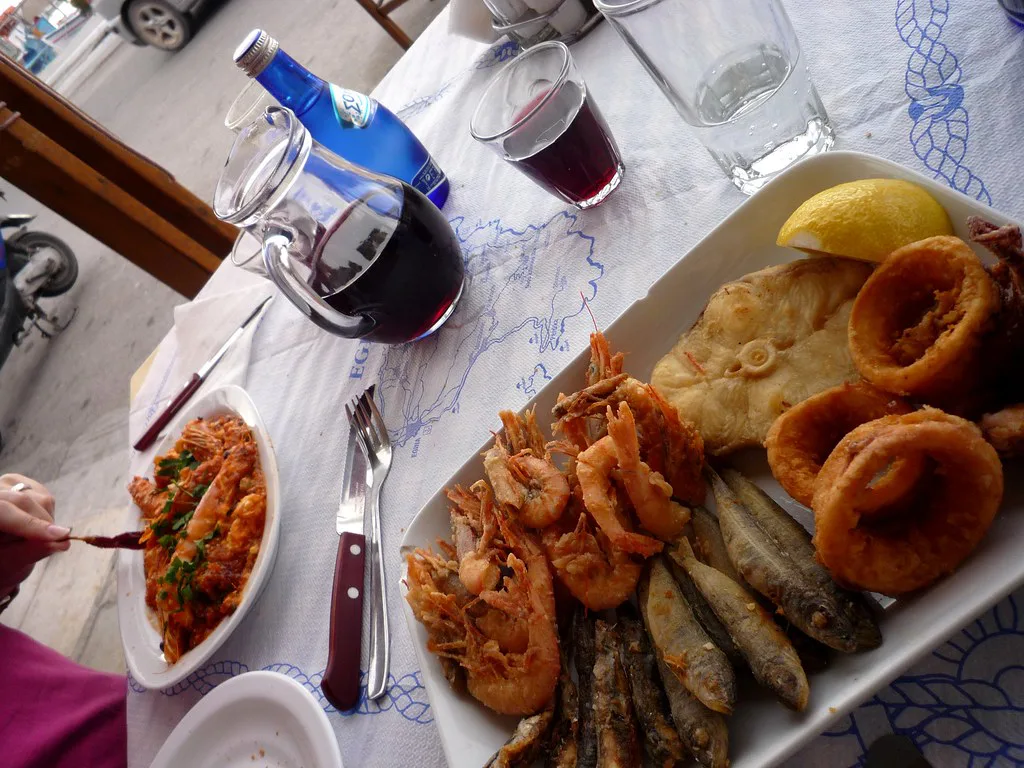
The least expensive fish are also the ones most Greeks order without ceremony. Sardeles (sardines), gavros (anchovies), kolios (mackerel), gopa (bogue) and marides (smelt) sit at the bottom of the price ladder, and according to a long-running guide to Greek fish they are just as tasty as the costly species. They arrive grilled, fried, or sometimes baked with tomato, lemon and oregano, and the smallest sardines are considered the best.
Fried gavros is treated almost like a side dish: tiny fish, heads removed, eaten whole with vinegar or lemon, and the same source reports that vinegar keeps them crisp while lemon softens the crust. Marides are similar in size but keep their heads and are eaten bones and all, so do not waste time trying to fillet them. Order two or three of these plates with bread and a salad and you have a full, inexpensive meal.
Kalamari, Thrapsala and Soupia: The Squid Family, Fresh Versus Frozen
Kalamari (squid) is the name visitors know, but the family has three useful members. Thrapsala looks and tastes like squid but is a different animal, served grilled or fried whole, while soupia (cuttlefish) has shorter tentacles and is almost always stewed with tomato rather than fried. Fried kalamarakia usually appears in the meze list because it is cheap, but nothing stops you ordering it as a main, and our guide to greek meze explains how these small plates are meant to be combined.
Freshness is the key decision here. The Greece Travel fish guide reports that when kalamari is in season the menu will say so, and that the cut rings are more often the frozen, imported product while fresh squid tends to be grilled or fried whole. That same source describes a menu convention in which a fish marked with the abbreviation for frozen, shown in brackets, is frozen rather than fresh; treat it as a reported practice and a useful signal rather than an absolute rule, and ask the waiter directly if it matters to you.
Grilled Octopus as Meze: Why Preparation Matters
Octopus, chtapodi in Greek, is the seafood most often served as a meze with ouzo rather than as a main course. Grilled is the preparation most cooks consider the benchmark, with marinated versions as a second option and stewed-with-pasta versions further down the list. The meat needs long tenderising before it reaches the grill, and the practical consequence is simple: a chewy plate usually signals rushed preparation rather than bad luck.
The Greece Travel fish guide is blunt on sourcing, noting that a good share of octopus sold in Greece is imported rather than local, which is worth knowing if provenance matters to you. It is also not a dish to order in a hurry at a busy table; grilled octopus works best as a shared starter while you wait for a whole fish to come off the grill.
Whole Grilled Fish by Weight: Bream, Sea Bass and Red Porgy
The middle of the price range is a family of bream and similar fish, usually grilled or baked whole and sold by the kilo. Names to recognise are fagri (red porgy), sargos (white sea bream), tsipoura (gilthead bream), lavraki (sea bass), lithrini (pandora) and synagrida (dentex). Higher up, and priced by supply, sit xifia (swordfish) and Mediterranean tuna, both often cut into steaks rather than sold whole.
Farmed versus wild is the honest question to ask here. Greece Travel reports that sargos and lavraki are the species most likely to be farmed, with Greece a leading European producer, and notes that fish farms are visible along the coast near Sounion. If you want wild fish, say so and expect the price and the available size to change; if you do not mind, farmed bream is a reliable, affordable choice.
Barbounia and Koutsomoures: When the Premium Red Mullet Is Worth It
Barbounia (red mullet) is the fish that divides Greek tables: small, pink-red, and by far the most expensive thing on many menus. Writing in the Greece Travel fish guide, the author calls it the best-tasting fish he has eaten and quotes a price of 55 euros a kilo as his own experience rather than a current market rate, while adding that half a kilo is enough for two. Use that as a shape for budgeting, not a figure to rely on; ask the taverna for today's rate.
Koutsomoures are the paler, cheaper cousins and some diners prefer them, which makes them the sensible way to test whether the premium end suits you. Both are excellent fried or grilled, and either works as the centrepiece of a table built around cheap mezedes. If the price per kilo is beyond your budget, a mixed plate of gavros and kalamari plus one shared bream achieves a similar meal for less.
Shrimp, Mussels and Shellfish: Saganaki and Fried Whole Shrimp
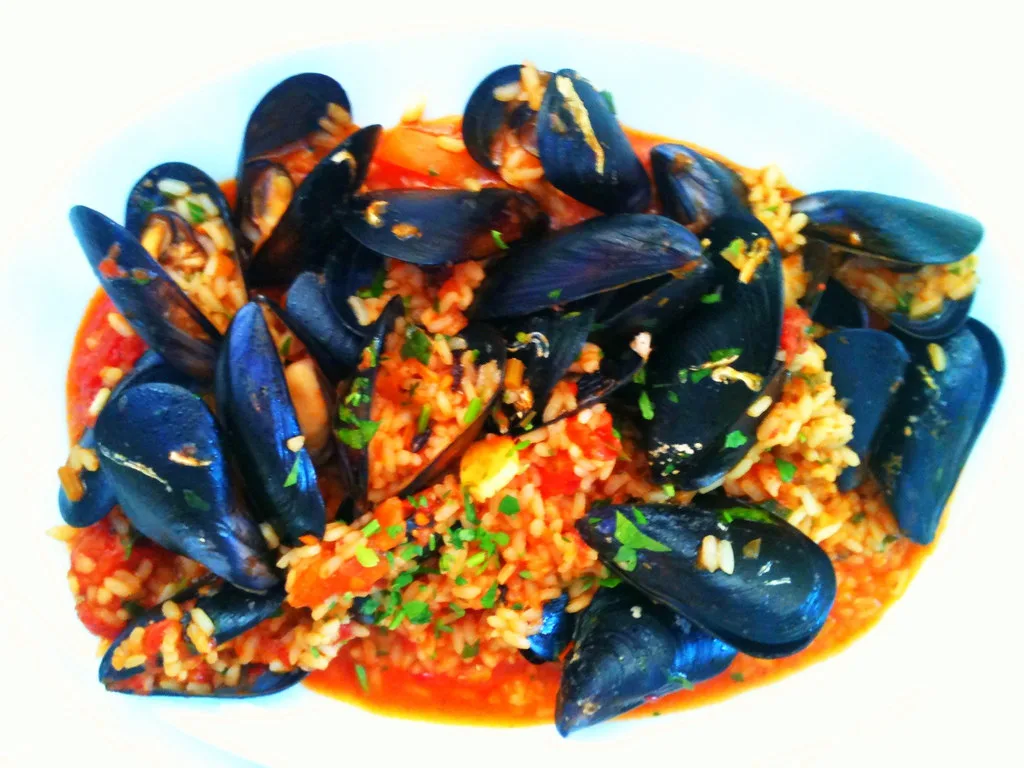
Garides (shrimp) are common across the islands, and Shrimp saganaki, shrimp baked with tomato sauce and cheese, is the version you will see in nearly every ouzeri (a bar serving ouzo and small plates) and mezedopouleio (a small-plates taverna). It is a rich, shareable starter rather than a light one. Mussels, media, appear steamed or in their own saganaki, and on Lesvos and other islands shellfish is a local speciality rather than an import.
Fried whole shrimp, heads and all, are a Lesvos habit, and karaviedes, the giant salt-water crayfish, are expensive and, in the Greece Travel account, not worth the money. The sensible move with shellfish is to order one cooked dish like saganaki plus a plate of plainly grilled shrimp, and to ask whether the shellfish is local before you commit to a large portion.
Fish Soup and Salt Cod: Psarosoupa, Bakaliaro and Galeos
Psarosoupa, also called kakavia, is a fish soup usually built on rofos (grouper) and other rock fish, finished with avgolemono, an egg-and-lemon broth that thickens and lightens it. It comes either as broth alone or with the cooked fish on a separate plate, and the with-fish version is the fuller meal. The Greece Travel fish guide cites the fish soup at Byzantino in Plaka as an example and notes that some island tavernas will take a whole-pot order if you call the day before.
Bakaliaro (salt cod) is winter food, served most famously as bakaliaro me skordalia, batter-fried cod with a thick garlic and potato sauce, in the basement tavernas of Plaka that open for the cold months. Galeos, a small shark often translated on menus as a snapper, is fried and served the same way with skordalia. Both are boneless and inexpensive compared with whole fish, and both are heavy, so order one plate to share.
Lobster and Astakomakaronada: Why the Bill Can Reach Hundreds
Astakos (lobster) is the top of the Greek fish counter, and astakomakaronada, lobster with long macaroni in tomato sauce, is the dish most often associated with celebration tables. Greece Travel warns that a table with lobster can run to a few hundred euros or more, and that skippers of charter boats sometimes steer guests to tavernas that pay commission. The same source argues Mediterranean lobster is overrated and lacks the claws that make Atlantic lobster worth the price.
If you want the experience, agree the weight and the total before the lobster goes in the pot, exactly as with whole fish. If the price per kilo sounds high, remember that the pasta absorbs a lot of sauce and a shared portion can feed a table. For most travellers the better value lies in the cheaper species above, with the lobster money spent on a good bottle of wine instead.
Raw and Cured Fish: Sardeles Pastes, Lakerda and Gavros Marinatos
Sardeles pastes is the summer speciality most visitors never order: fresh sardines salted in a net on the boat and ready to eat the same evening, filleted at the table and eaten raw with ouzo. Lesvos is the place most associated with it, especially in July, when the sardines are the right size, though later in the season they need longer in salt. Lakerda is a cured fish, tuna or mackerel depending on who you ask, cut into steaks and marinated for days in lemon and olive oil, also a natural ouzo companion and a Lesvos staple.
Gavros marinatos, marinated anchovies, is the gentler, fresher cousin of the salty anchovy you know from pizza, served with oil and vinegar and found widely in ouzeries in Athens and the islands. The Greece Travel fish guide names the version at the Captain's Table in Molyvos, on Lesvos, as one example of the dish. Order one of these cured plates alongside the cooked mezedes; they cut through fried food and cost relatively little.
Meze Strategy: Tarama, Atherinia and How Many Plates to Order
A Greek seafood meal usually starts with a spread of mezedes, and the trick is mixing textures rather than ordering five fried plates. Tarama salata, a whipped fish-roe dip, is the standard opener, and it is worth asking whether the kitchen makes it in-house or scoops it from a tub. Atherinia, tiny fish dredged in flour with sliced onion and deep-fried, are the crisp counterpoint; on Kea, the Greece Travel fish guide cites Rolando's in Hora as an example of the dish, and on Chios it is shaped into a fried cake. Slices of Horiatiki salata, the plain tomato, cucumber and feta salad, reset the palate between fried plates.
For a table of two, three or four mezedes plus one shared main is usually enough; for four people, expect to order five or six mezedes and two mains. Keep one plate raw or cured, one fried, one vegetable and one cheese or dip, and the table stays balanced. Bread is charged, so order it deliberately rather than assuming it comes free, and remember how the rest of the Greek meze repertoire beyond seafood fits the same pattern.
Fresh, Frozen and Imported: Reading the Menu Honestly
Freshness in a Greek fish taverna depends on the weather as much as the kitchen. The Greece Travel fish guide notes that after several days of rough seas a coastal taverna may have no fresh fish at all, and that farmed and imported fish fill the gaps. Octopus and cuttlefish in particular are often imported, and frozen kalamari is common even in places that fry it well.
The practical response is to ask three questions before you commit: is it fresh or frozen, is it local or farmed, and what is the price per kilo. A waiter who answers clearly is a good sign. If the answer is vague, choose a fixed-price cooked dish like garides saganaki instead, where the kitchen cannot surprise you at the till.
Where to Eat Fish: Seaside Tavernas Versus City Ouzeries
The classic fish meal happens on the water, and the coast southeast of Athens around Anavissos and towards Sounion is the model: a string of tavernas with waiters waving you in, a display of fish, and tables facing the sea. The trade-off is that this is a drive, not a stroll, and the prices on the coast reflect the view. In Athens, Plaka's basement tavernas serve winter cod dishes, and the city's ouzeries handle the small-plate side of seafood well all year.
The harbour-versus-back-street trade-off is real. A table on the quay buys you the view and the convenience, while a taverna one street inland often uses the same supplier and lands you a calmer bill. If you have hired a car, a short drive out of a port town usually finds cheaper fish; if not, ask at your accommodation which local taverna the family uses for a weekday lunch. If your trip includes the Cyclades, our guide to things to do in Mykonos covers the island's town and beaches alongside its seafood tavernas.
Ordering Script: What to Say and What Inflates the Bill
A short script covers most situations. Ask for the fish of the day, ask to see it, ask the weight and the per-kilo price, then say yes. Useful phrases are fresh or frozen, and the Greek words for grilled and fried; writing the dish name on your phone and showing the waiter is common and never rude. If you want a set budget, say so before the fish is cleaned.
The main ways a seafood bill climbs are ordering several whole fish instead of one, accepting the largest fish in the display without asking the weight, adding lobster or karaviedes casually, and ordering too many fried plates. Bread, water and a cover charge add a little. None of this is a trap; it is simply the kilo system working as designed, and a table that agrees one big fish plus four mezedes usually leaves happy.
Two Checks Before You Go: Seasonal Openings and Menu Details
Island fish tavernas often close for the winter, and coastal places outside Athens may open only for the warm months, but specific dates vary by island and by owner. Check the taverna's own page or phone ahead if you are travelling outside the main season. Confirm the current menu and prices the same way, since the figures in circulation reflect past visits rather than today's market.
How to Build a Seafood Meal in Greece
Start cheap and work upward: a plate of gavros or sardeles, one kalamari or octopus meze, a dip, and a shared bream by weight will show you how the taverna cooks before you spend on the premium end. Add a cured plate from Lesvos or a bowl of psarosoupa in winter, and you have covered most of what a Greek fish kitchen does well.
Do the weighing together, ask about fresh and farmed, and choose the quay only when the view is worth the premium. A fish meal in Greece rewards a few direct questions at the start and a willingness to order the small, cheap species the locals order themselves, much as you would when navigating greek street food from a vertical rotisserie counter.
Explore more Greece sauna guides
Frequently Asked Questions
What seafood is popular in Greece?
The everyday favourites are sardines and anchovies, fried or grilled; squid, grilled or fried; octopus as a meze with ouzo; and whole bream or sea bass sold by weight. Shrimp baked with tomato and cheese, mussels, and cured fish like lakerda round out the menu. Lobster is the celebration dish.
Why is fish in Greece so expensive?
Whole fish is priced per kilo, so size drives the bill, and supply is limited by fishing pressure and by rough weather that keeps boats in port. Imported and farmed fish fill some of the gap. Cheap species such as sardines and anchovies are still excellent and cost a fraction of premium fish.
How can I tell if the fish is fresh or frozen in a Greek taverna?
The reliable method is to ask directly. Menus sometimes mark frozen fish with a bracketed abbreviation, which the Greece Travel fish guide reports as a convention, but the waiter is the better source. After days of bad weather, a coastal taverna may have no fresh fish at all.
What is the cheapest good fish to order in Greece?
Sardines, anchovies, mackerel, bogue and smelt sit at the bottom of the price ladder and are served grilled or fried. Fried anchovies with vinegar, and grilled sardines, are the classic choices. They are usually offered as mezedes, so you can order several and share.
How much fish should I order per person?
For whole fish, roughly half a kilo feeds two people according to one long-standing account, which works out to about 250 grams per person before bones. Ask the waiter for the weight of your chosen fish and plan one shared whole fish plus several mezedes for a table of three or four.
What is the difference between kalamari and thrapsala?
Kalamari is squid, usually cut into rings and fried or grilled whole when fresh. Thrapsala is a different but similar animal, served grilled or fried whole. Soupia, cuttlefish, is the third member of the family and is almost always stewed in tomato.
What is barbounia and why does it cost so much?
Barbounia is red mullet, a small fish with a very high per-kilo price. Because whole fish is sold by weight, the rate is quoted at the counter, so ask the taverna for today's per-kilo figure and the weight of the fish you have chosen before it is cooked.
What is sardeles pastes and where is it eaten?
Sardeles pastes is fresh sardines salted in a net on the boat and eaten raw the same evening, usually with ouzo. It is associated with Lesvos, especially in July, and occasionally appears elsewhere in the Aegean. It is a summer dish and is not always on the menu.
Sources
Notes for eating well in Greece
Optional updates to our guides.
You might also like

Continue reading
More guides you'll find useful