Things to Do in Chania: Harbour, Old Town and Day Trips
Plan your days in Chania with a walkable Old Town loop, harbour and lighthouse viewpoints, honest eating advice, and the trade-offs of beach and mountain trips.
On this page
Chania is the western gateway to Crete, and its centre is unusually easy to work with: a compact Old Town wrapped around a Venetian harbour, with quarters of narrow lanes spreading out behind it. Almost everything worth seeing in the city sits within a walk of the waterfront, which means you can plan mornings on foot and save a rented car for the days you leave town. The decisions that matter most are about how to split your time between harbour, back streets and coast.
This guide treats each stop as a choice rather than a checklist. A seafront table buys you the view; a square inland buys you a busier, more local room and often better value. A boat trip to a famous beach buys convenience at the cost of crowds; the same beach by car buys flexibility at the cost of winding roads and parking. Below are the specific dishes, distances and tramps that make those trade-offs easier to judge.
How Chania Fits Together on Foot
The Venetian Harbour is the hinge of the city, and the old quarters ring it: Topanas on the western side, Evraiki, the old Jewish Quarter, and Splantzia, the former Turkish quarter, behind and to the south. They are small enough to cross in minutes, so a wrong turn costs you very little. Start at the water, then pick a direction inland and let the lanes bring you back.
The intercity bus station sits a short walk from the Old Town, which is why basing yourself inside the old centre works so well without a car. Walking to the harbour from the bus station takes around ten minutes, and from there most sights are within another short stroll. Taxis exist, but ride-share apps do not operate in Chania or elsewhere on Crete, so plan around buses, taxis or your own two feet.
One practical warning about sleeping in the Old Town: the lanes are lively, and Friday nights can be noisy enough that earplugs are worth packing. Choosing a room a street or two back from the harbour is the simplest way to keep the walkability while losing some of the late sound. Air conditioning matters in high summer, when afternoon heat pushes people indoors.
The Venetian Harbour Loop and the Sea Wall
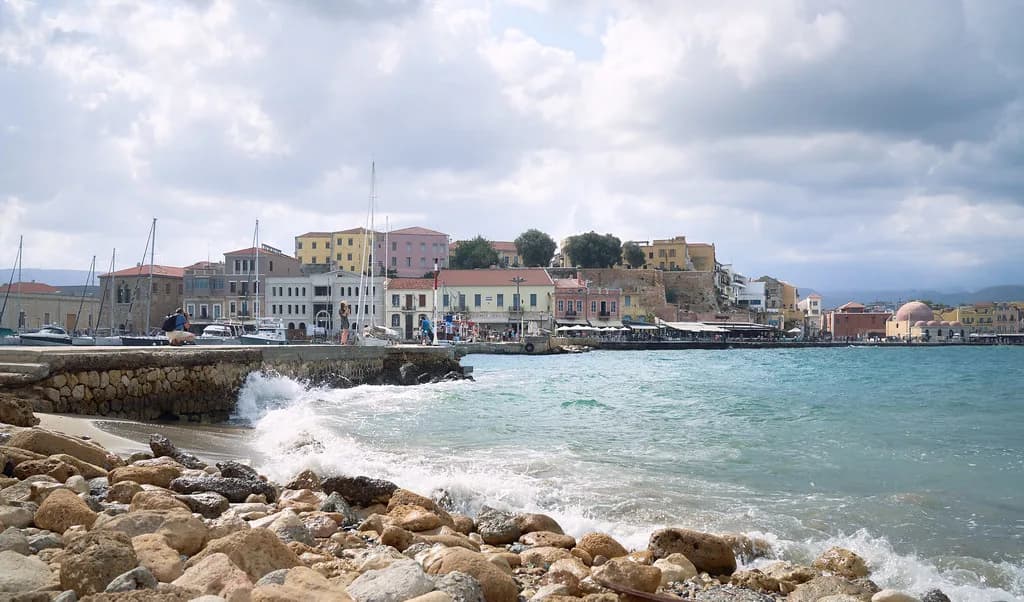
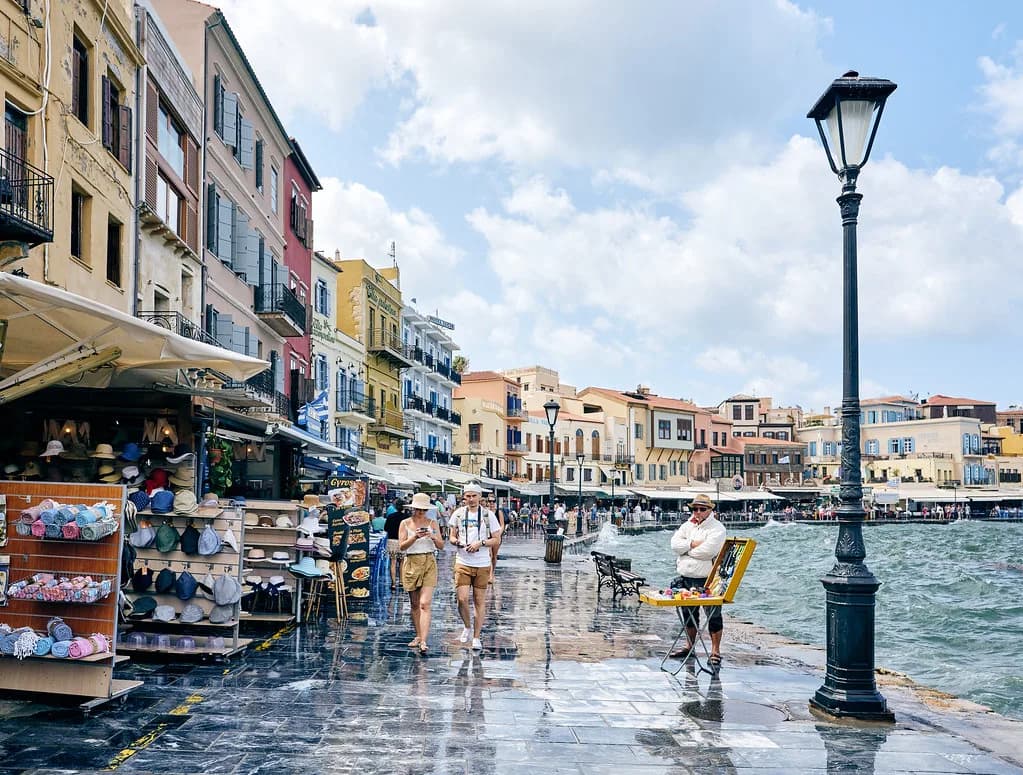
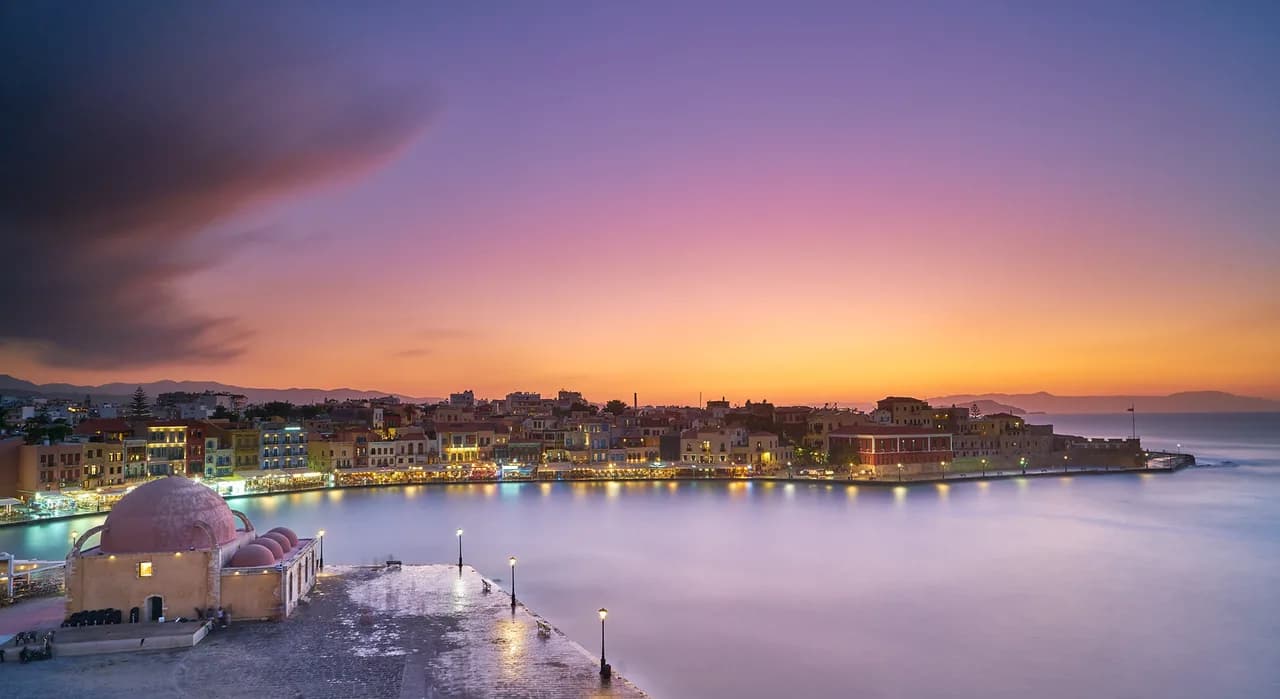
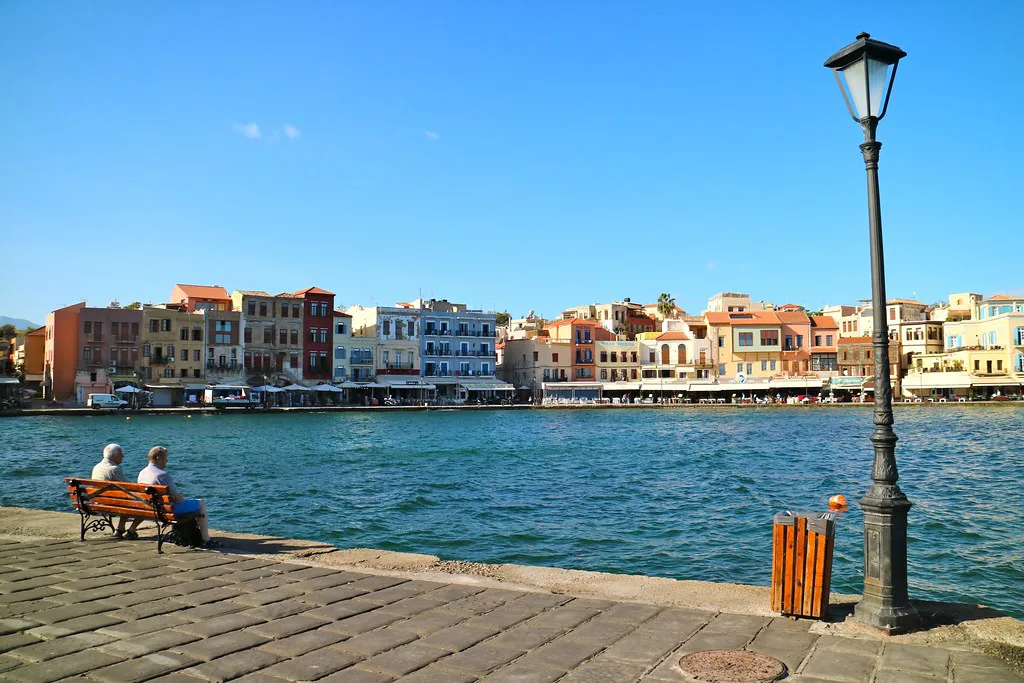
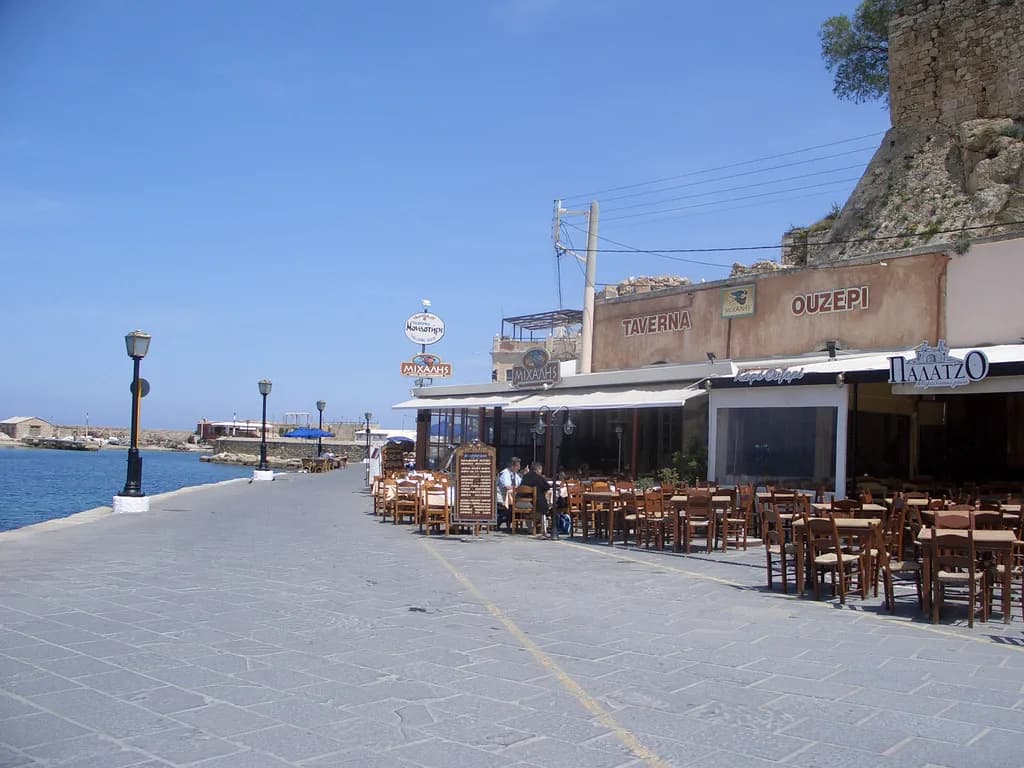
The harbour dates to the Venetian period, and the promenade that curves around it passes colourful facades, a small boat marina and the Küçük Hasan Pasha Mosque building, which now serves as an exhibition space rather than a working mosque. Walking the full loop takes well under an hour at an unhurried pace, but most people stop repeatedly for photographs.
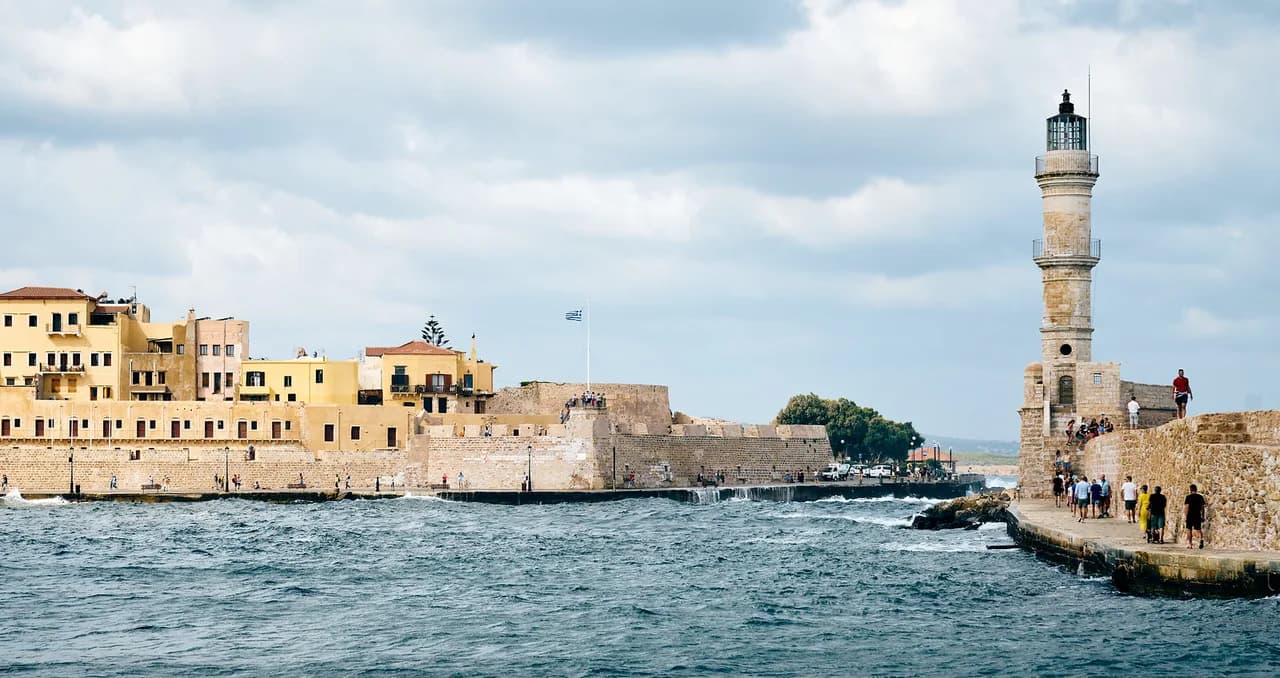
The best value viewpoint is the old sea wall, which you can walk along to nearly circle the harbour, with open water on one side and the Old Town on the other. It leads towards the Egyptian Lighthouse, originally Venetian and rebuilt in the nineteenth century by Egyptian troops, whose minaret-like shape is the city's signature silhouette. Visitors cannot go inside the lighthouse, but the base gives you a wide sweep back over the rooftops and the mosque.
Getting to the lighthouse on foot is a longer walk than it looks from the cafés, so carry water and allow for the sun on the exposed stretch. In July, the sun does not set until about nine in the evening, which leaves a generous gap between an afternoon rest and dinner on the water. Treat that timing as a July observation rather than a fixed rule for your own dates.
Harbour Tables Versus Back Streets
Harbour-front restaurants exist for the view, and you pay for it in the bill; the trade-off is a front-row seat as the light fades over the lighthouse. That does not automatically mean poor food. Review scores are the quickest filter before you sit down, since some kitchens on the promenade are clearly stronger than others, and the difference is rarely visible from the menu board.
Pallas, on the harbour side, runs two buildings and its own bakery, which makes it a realistic option for both a sunset dinner and a morning pastry. Amphora Taverna fills up in the evenings for a reason and keeps a lively room with live music, while Plateia is another waterfront address where grilled fish arrives properly handled. None of these is a secret, so book or arrive early if the view is the point.
The alternatives are inland. For a broader shortlist with addresses by neighbourhood, this guide to the best restaurants in chania old town is a sensible starting point before you commit a dinner to a single view. If what you actually want is a cooking session rather than a table, a chania cooking class is the other way to spend an afternoon indoors.
What to Order and What the Names Mean
Gyros is the street-food baseline: meat shaved from a vertical rotisserie and wrapped with onion, tomato, fries and a yogurt sauce. In Greece the meat is normally pork or chicken, not the lamb-and-beef mixture sold abroad, and the portion is usually large. Expect to pay roughly four to five euros at city shops, and note that Grigoros, a corner shop by the main city square, is one of the named options.
Souvlaki is skewered grilled meat, chargrilled chicken being the version singled out at Amphora Taverna on the harbour. Gemista are vegetables, usually tomatoes and peppers, stuffed with rice and herbs and baked, often served with yogurt; Kouzina in Spatzia Square serves a version worth knowing about. Grilled fish is sold by weight and is best chosen from the cabinet or the ice rather than ordered blind.
If you want the wider picture of Cretan cooking before you order, from wild greens to sheep's-milk cheese, read up on cretan food first so the menu reads less like a translation exercise. For the dedicated gyros comparison, there is a separate guide to the best gyros in chania.
Splantzia and Spatzia Square
Splantzia is the old Turkish quarter, and its centrepiece is Spatzia Square, a local gathering place ringed by tavernas with outdoor tables. The Church of Agios Nikolaos on the square dates to the fourteenth century and was converted to a mosque under Ottoman rule, which explains the minaret standing opposite the bell tower. Arriving for lunch rather than dinner gives you the square at its most useful, with tables free and the kitchen unhurried.
The lanes around the square reward a slow loop: a former mosque's minaret here, a stretch of Byzantine wall there, and a steady supply of small cafés. This is also where the Old Town's neighbourhoods stop feeling like a single stage set and start feeling like separate villages pressed together. Give it an hour on foot, more if you plan to eat.
For a structured version of the same ground, with tasting stops built in, a chania food tour takes the guesswork out of ordering. It is a reasonable first-day move if you would rather learn the local names before choosing your own dinners.
Seafood and the Beach at Nea Chora
West of the Old Town, Nea Chora pairs a city beach with a small marina, and the road facing the marina holds a row of fish restaurants that cater to locals as much as visitors. Kaiki is the address singled out, where you choose your fish from the iced cabinet before it is cooked. The atmosphere is far less postcard than the Venetian Harbour, which is exactly the point.
The beach itself is a short walk from the Old Town and has shade and calm water, making it the easiest swim in the city. Sunbeds there cost around ten to fifteen euros for a pair, and the surrounding restaurants make a full day of it. It is developed and busy, but less of a scene than the island's famous beaches.
The trade-off at Nea Chora is straightforward: convenience and a lower tourist-to-local ratio in exchange for a city setting rather than a wild one. If your priority is a calm swim without a bus ride, this is the answer. If your priority is turquoise water and pink sand, you will need to leave town.
History Stops Between Meals
The Folklore Museum of Chania occupies a small house just off the main pedestrian street to the harbour and recreates a typical Cretan home of the eighteenth and nineteenth centuries. A walk-through takes about half an hour, which makes it an easy filler between lunch and the evening promenade. The Etz Hayyim Synagogue in the Jewish Quarter, restored as a museum and memorial, is entered by ringing the bell during the visiting hours posted on the door.
The Minoan city of Kydonia underlies modern Chania, and the largest exposed section of its foundations sits a few blocks from the harbour, with dates stretching back thousands of years. Smaller fragments turn up in odd places, including ancient tombs displayed under glass flooring in a gift shop in the Jewish Quarter where a former church once stood. These are free, quick stops rather than half-day visits, and they fit naturally into a harbour loop.
Museum and synagogue visiting hours are worth checking before you build a day around either, since both can change seasonally. That is the one place in this itinerary where a phone check genuinely changes the plan. The Chania Attractions: 8 Visitor Guides hub is a useful place to compare these stops side by side.
Markets, Bakeries and Olive Oil to Take Home
Chania's Old Town is dense with food shops, and the practical strategy is to buy as you walk rather than save it for a final sweep. Olive oil from Cretan producers is the obvious suitcase item; Biolea Estate, roughly a forty-minute drive from the city, is sold in the Old Town at Le Miel, so you can buy without the drive. Check how you will carry glass before you fall for a large tin.
Bakeries around the harbour do the morning work: Pallas runs its own, and Grain Café near the route to the bus station is a practical breakfast stop before an early departure. Fresh juice stalls and small bars dot the lanes when the midday heat peaks. Keep receipts for anything you plan to declare at customs.
Nea Chora on Foot or a Car for the Day
You can absolutely see Chania without a car. Buses run to the popular spots in summer, though timetables get thinner outside peak season, and the Old Town itself is walkable end to end. Renting a car for a single day is a reasonable middle path: it gives you the mountain villages and beaches without committing to driving for the whole trip.
Bear in mind that Cretan mountain roads are winding enough to unsettle a nervous passenger, and that an automatic gearbox makes the narrow stretches easier. If you are staying in the Old Town, sort out where the car can be parked when you reserve it, since the lanes themselves are not a parking plan. For a wider set of city guides across Greece, the things to do in corfu page shows how other islands handle the same car-or-bus question.
Day Trips: Beach, Bus and Gorge Trade-Offs
Elafonissi sits roughly eighty minutes from Chania by car, and in early July it is packed, with parking a fifteen-minute walk from the sand. The famous pink tinge is modest in reality. Going very early or visiting in the shoulder months improves the experience considerably; the quieter alternative is Kedrodasos, which has far fewer facilities, so bring supplies.
Balos is the harder call. Many rental companies forbid taking their cars down the rough access road, and doing it anyway can mean a fine, so the realistic options are a boat from Kissamos or Chania, or a 4x4. The boat skips the walk down, which is where the best views over the lagoon come from. Weigh the scenery against the logistics before committing a whole day.
Rethimno is the easiest day out: about an hour by bus, with services running roughly hourly from Chania's main bus station along the Heraklion route. The Venetian Fortezza, the old town lanes and the lighthouse fill a comfortable few hours, and the streets are often shaded in the afternoon heat. Buses on this route can fill, so a car gives you more freedom if you want to stop at beaches like Episkopi on the way. If you decide to stay the night, these Rethymno Attractions: 10 Visitor Guides cover the same harbour-and-lanes formula at a slower pace.
Samaria Gorge is a full day rather than a half day, with a trail of about sixteen kilometres through the gorge and a long transfer at each end. It suits walkers who are happy to start early and finish late, and less so anyone hoping to combine it with an evening in the Old Town. Ancient Aptera, by contrast, is about twenty minutes by car and has no public transport, so it pairs naturally with a rental day.
Eating in the Hills at Ntounias
Ntounias Educational Farm sits about fourteen miles south of Chania, reached through a mountain pass and the village of Theriso. Everything is cooked over wood fire in clay pots or wood-burning ovens, using produce from the farm or nearby growers, and the recipes are squarely Cretan. It is a lunch destination rather than a quick stop, and the drive is part of the day.
Pair it with the monastery of St George near Vamos, about twenty-five minutes further on from Ancient Aptera, where a small entry charge lets you wander the grounds and see the old olive press. The combination makes a loop that uses the car properly rather than idling it in a beach car park. A quick call ahead is sensible, since rural kitchens keep their own calendars.
Practical Points for the Old Town
Walking is the default. The harbour, the quarters, the museums and Nea Chora all sit within a comfortable stroll of each other, and the bus station is close enough to walk to with luggage if you are staying in the centre. Taxis are available for airport transfers, but there is no ride-share coverage, so book transfers in advance if you are arriving late.
For city buses, buying tickets in advance from the kiosk in the main square is cheaper than paying the driver, and routes show up in standard map apps. Schedules for boats and intercity buses thin out in the shoulder season, so check the day before you travel rather than relying on summer frequency.
If your trip stretches beyond Crete, the things to do in mykonos guide covers a very different kind of Greek island day, where the harbour is smaller and Matogianni Street does the work that Chania's lanes do here.
Plan Your Visit
The most useful way to plan Chania is to give the city one unhurried day on foot, then decide whether the second day belongs to a beach, a gorge or a wood-fired lunch in the hills. Book any harbour table with a view ahead, keep a cheaper back-street or square option in reserve, and treat the sea wall walk as the fixed point around which everything else arranges itself.
Check museum and synagogue days, and boat and bus schedules, before you lock the itinerary. Everything else in Chania rewards improvisation, especially the lanes behind the waterfront where the menus are shorter and the tables are fuller.
Explore more Chania sauna guides
Frequently Asked Questions
What should I not miss in Chania?
The Venetian Harbour loop and the walk along the old sea wall towards the Egyptian Lighthouse are the essential circuit, since they combine the city's best free views with its densest concentration of cafés and historic buildings. Add one inland quarter, either Splantzia around Spatzia Square or the Jewish Quarter with the Etz Hayyim Synagogue, to see the city beyond the waterfront.
Can you do Chania without a car?
Yes. The Old Town, harbour, museums and Nea Chora beach are all walkable from each other, and the bus station is a short walk from the centre. Buses cover the popular day-trip destinations, though timetables thin outside summer, and there are no ride-share apps, so use taxis or buses for the airport.
What food should I try in Chania?
Start with gyros, which in Greece means pork or chicken carved from a rotisserie and wrapped with fries, tomato and yogurt sauce, not the lamb-beef mix sold abroad. Then try gemista, vegetables stuffed with rice and baked, chargrilled souvlaki, and grilled fish chosen by weight at the Nea Chora marina restaurants.
Is Elafonissi or Balos worth the trip from Chania?
Both are long days with real trade-offs. Elafonissi is roughly eighty minutes by car and very crowded in high summer, with the pink colouring subtler than photographs suggest. Balos involves a rough access road that many rental companies prohibit, so most visitors take a boat or a 4x4, which skips the walk that gives the best views.
How do I get from Chania to Rethimno?
Buses run roughly hourly from Chania's main bus station along the Heraklion route, and the journey takes about an hour. The old town lanes, the Venetian Fortezza and the lighthouse fill a few comfortable hours, and the return buses can be busy, so start early in high season.
What can I do in Chania in one day?
Walk the harbour and sea wall in the morning, stop at the Folklore Museum or the Kydonia ruins near the water, then lunch in Spatzia Square away from the seafront prices. Spend the afternoon at Nea Chora beach, and return to the harbour for dinner and the sunset over the lighthouse.
Sources
Notes for eating well in Greece
Optional updates to our guides.
You might also like
Continue reading
More guides you'll find useful