Greek Meze: How Mezedes Work and What to Order
Greek meze is a way of eating, not a fixed menu. Learn how mezedes are ordered and shared, the classic plates to know, and how ouzeri differ from tavernas.
On this page
Meze is less a menu than a rhythm. You order several small savoury dishes, they land in waves, and the table stays in use for hours while drinks are refilled. The food matters, but the format matters more: a good meze table is built, not simply ordered.
This guide explains the vocabulary you will meet on Greek menus, the classic plates and what is actually in them, and the drinking-first venues where meze makes most sense. It also gives concrete ordering rules for two people and for a group, so you leave room for the dishes that arrive late.
What Meze Means in Greek Eating
Meze is a spread of small plates shared across the table, and in Greece it usually belongs to the later part of the evening rather than to a quick lunch. It is a sociable format first and a culinary one second: the point is a long table with drinks, conversation and a steady flow of plates.
What is the difference between meze and mezedes? Meze is the concept of eating small savoury plates with drinks, and it also names a single plate. Mezedes is the plural: the collection of dishes on the table.
What is an ouzeri? An ouzeri is a bar centred on ouzo, the aniseed spirit that turns cloudy when water is added. Its food is meze-sized because the drinks lead the evening.
What is a seafood meze? It is a meze table weighted towards the sea: fried squid, small grilled fish, greens dressed with oil and lemon, and dishes such as shrimp baked with tomato and feta. Order one or two at a time, since seafood plates are usually the priciest on the menu and leave the kitchen fastest.
That matters when you plan a day. If you sit down at seven expecting a three-course dinner, you may find the meze table is only warming up. Treat a meze meal as an event of two hours or more, and eat a light lunch if you intend to do it properly.
Meze, Mezedes and Mezedopoleio: The Words Explained
Meze is the concept and also the singular plate; mezedes is simply the plural, the collection of small dishes on the table. A mezedopoleio is a place whose identity is built on serving meze, as opposed to a taverna whose menu runs to larger main courses. In practice the categories blur, but the label tells you what the kitchen is optimised for.
Ordering is conversational. Menus are typically organised by role rather than by course, so you build a table by choosing a few cold dips and cheeses, one or two fried items, a sausage or braised dish, and something from the sea if the kitchen has it. Plate sizes are small enough that two people sharing four or five dishes is a normal start, with more added as the table empties.
Pacing is the part visitors get wrong most often. Cold dishes such as dips, olives and cheese arrive almost immediately, fried plates follow, and anything braised or baked can take longer. Order in two rounds rather than one, and let the second round respond to how full the table actually is. If you would rather anchor the meal on the bigger classics first, see this guide to traditional greek food before you order.
The Classic Plates and What They Are
Dolmadakia are grape leaves rolled around rice with herbs and, in many versions, minced meat; they are served cold or at room temperature and eaten by hand or with a fork. Kalamarakia is squid, usually cut into rings, lightly floured and fried, and finished with lemon — order it where the kitchen is busy, since fried food is at its best when it goes out fast.
Stuffed peppers come in two common styles: red Florina peppers or long green kerato peppers filled with feta, soft cheese, rice, nuts and currants. Spetsofai is a stewed mix of Greek sausage, coloured peppers, tomato and a splash of ouzo, and it is the dish that justifies ordering bread for the table.
Gigandes are large white beans, usually baked with tomato and herbs and served at room temperature, which makes them a useful anchor for a table that is heavy on fried plates.
Building a Seafood-Led Meze Table
A seafood meze is simply a table weighted towards the sea: fried squid, small grilled fish, boiled greens dressed with oil and lemon, and perhaps a plate of shrimp cooked with tomato and feta. The Greek name for the last of these, Shrimp saganaki, is worth recognising on a menu because it behaves more like a shared bake than a starter, arriving bubbling in a small pan.
The trade-off is price and rhythm. Seafood plates tend to be the most expensive items on a meze menu and the quickest to leave the kitchen, so a table that orders four of them at once will be finished early. Order one or two, then decide whether the table wants more before committing. If the kitchen's larger seafood dishes interest you more, the main Greek food guide covers plates that work as a centrepiece.
Dips, Cheese and the Cold Half of the Table
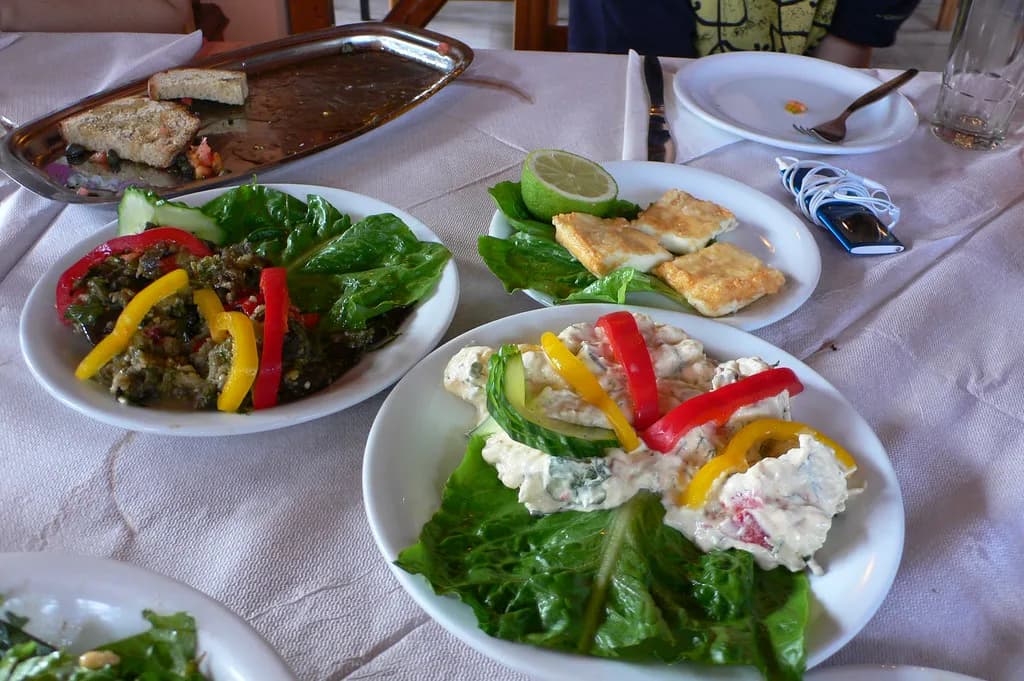
Tzatziki is strained yogurt with cucumber, garlic and olive oil, and it is the dip that resets the palate between fried plates. Whipped feta is exactly what it sounds like — feta blended to a smooth, spreadable cream — while tirokafteri is a chilli-spiked feta spread, and all three are scooped with bread rather than eaten alone.
Learn two cheese names and you can order intelligently anywhere: kasseri, a semi-hard sheep's-milk cheese that is often grilled or fried, and kefalograviera, a harder, saltier grating and frying cheese. Both appear on meze tables as warm plates rather than on a cheese board. For a fuller set of names and how they are served, this guide to greek cheese is the reference to keep open.
Olives, usually the large dark Kalamata type, and a slab of feta dressed with oregano and oil are the standard cold openers. They arrive fast and cost relatively little, which makes them a sensible first order while you read the rest of the menu.
Ouzeri and Tsipouradiko: Where Meze Belongs
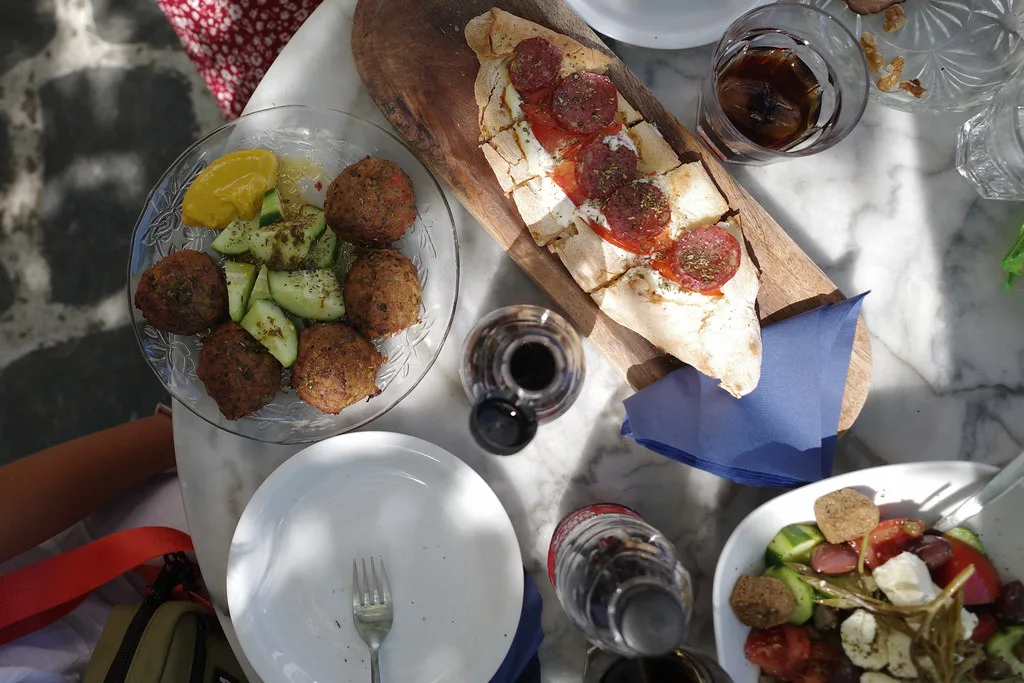
An ouzeri is a bar built around ouzo, the aniseed spirit that clouds when mixed with water, and its food is meze-sized by design because the drinks come first. A tsipouradiko works on the same logic with tsipouro, a grape spirit that is often served chilled and neat; in some towns, each round of spirit comes with a small plate attached.
A taverna is a different proposition: more likely to have main courses, families at the table and a full evening meal. Choose the ouzeri when you want a long, talkative table with small plates and no fixed end point, and the taverna when you want one substantial dish in front of each person. Neither is better; they answer different questions.
Drinks and Why the Plates Are Small
Ouzo is usually served in a small glass with water and ice alongside, and it is drunk slowly rather than in shots. Tsipouro is stronger and drier, and many drinkers take it neat with a glass of water on the side. Both are high in alcohol, so the small-plate format is practical as well as social: food keeps arriving as the evening lengthens.
If you are not drinking, a meze table still works. Order the dips and cold plates first and pace the fried dishes yourself; nothing about the format depends on alcohol, only on keeping the table occupied.
View Versus Value, Harbour Versus Back Street
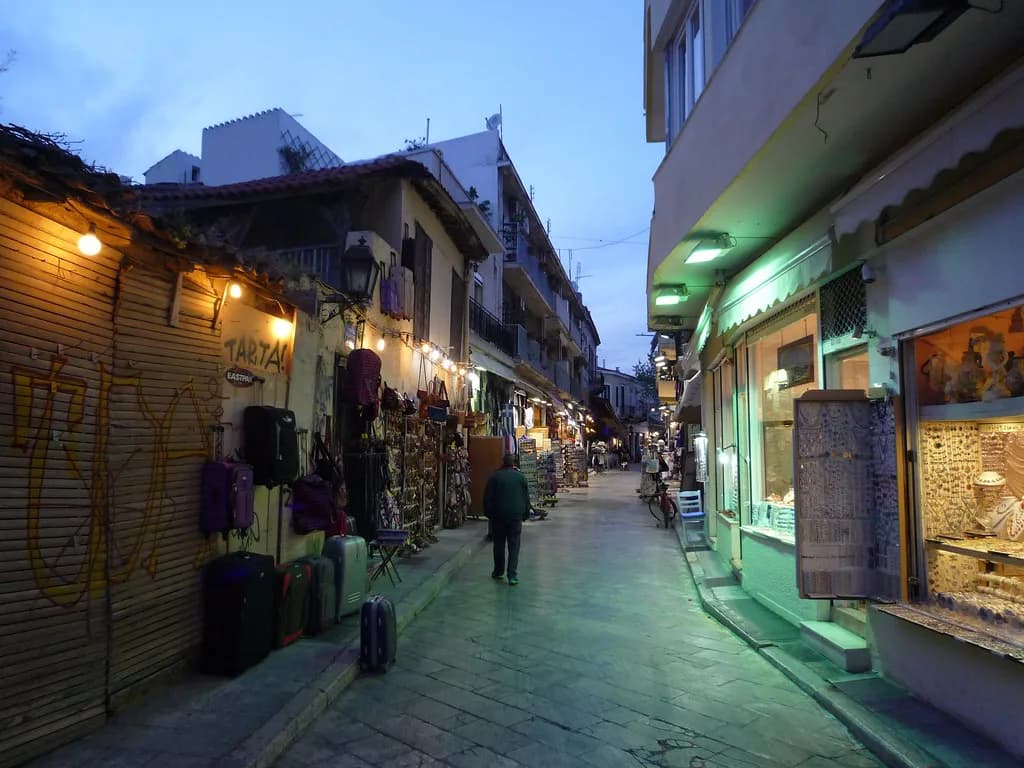
In harbour towns the tables nearest the water carry a premium, and you are paying largely for the position rather than the cooking. The practical move is to look at the menu before sitting: a short meze list with few fried items usually signals a kitchen that is not trying to cover everything at once.
The back-street trade-off is the reverse: fewer tables, less view, and often a menu that changes more often because it depends on what the kitchen bought that day. If you want a long meze table with a group, a harbour-front table may be the easier booking; if you want to order adventurously and cheaply, walk two streets inland and read the door menus.
Ordering for Two Versus a Group
For two people, start with two cold plates, one fried dish and one braised or baked dish — four plates in total — and add one more only once the table is half empty. Over-ordering is the standard mistake: meze plates look small individually but a table of eight dishes for two people goes cold before it is finished.
For four to six people, the rule flips. Order roughly one and a half plates per person in the first round with a mix of cold and hot, then let the emptiest end of the table drive a second round. Keeping one order in reserve also protects you if a dish arrives that the table wants to repeat.
When Meze Is Served
Meze is most reliably an evening affair in Greece, starting later than most visitors expect and continuing well past a normal dinner hour. Lunchtime meze exists too, particularly at weekends, but it is a smaller version of the same format rather than a separate meal.
Opening patterns at individual places do change, especially outside the main season, so check the specific venue's current details before you build an evening around it, as a listing may be out of date.
Building a Meze Spread at Home
A home version follows the same logic as the restaurant table: something cold and creamy, something salty, something fried, something from the oven, and bread. Feta, olives, tzatziki, kasseri and toasted pita wedges cover the first two roles; fried squid or small cheese pies the third; stuffed peppers the fourth.
Skip the impulse to crowd the board with fruit and sweet items. A meze spread is savoury and drink-friendly, and the sweet end of the meal usually comes later and separately, which is why greek desserts such as filo pastry sweets and Greek coffee belong to a different part of the evening. If you also want a morning meal that suits the same slow pace, these greek breakfast ideas or a bowl of Greek yogurt with honey work better than treating the board as an all-day affair.
Plan Your Visit
Meze rewards a little planning and then gets out of the way. Learn four or five dish names, choose the venue type to match the evening you want, and order in two rounds rather than one; that alone solves most of the difficulty visitors have with a Greek small-plate table.
Use the order per head as a rough guide rather than a rule, watch what the tables around you are eating, and keep a short list of dishes you want to try before you sit down. If you want a substantial single dish afterwards, the street-food route is the easy fallback, where a wrap carved from a vertical rotisserie is lunch rather than a slow evening. City kitchens apply the same small-plate rhythm to a bigger menu, so read where to eat in Thessaloniki if you want to build a meze-style table while you travel.
Explore more Greece sauna guides
Frequently Asked Questions
What is the difference between meze and mezedes?
Meze is the concept of eating small savoury plates with drinks, and it also names a single plate. Mezedes is the plural: the collection of dishes on the table. A mezedopoleio is a place built around serving them, while a taverna usually leans towards larger main courses.
What is an ouzeri?
An ouzeri is a bar centred on ouzo, the aniseed spirit that turns cloudy when water is added. Its food is meze-sized because the drinks lead the evening. A tsipouradiko does the same job with tsipouro, a grape spirit, and in some towns a small plate comes with each round.
What is a seafood meze?
It is a meze table weighted towards the sea: fried squid, small grilled fish, greens dressed with oil and lemon, and dishes such as shrimp baked with tomato and feta. Order one or two at a time, since seafood plates are usually the priciest on the menu and leave the kitchen fastest.
How many meze dishes should two people order?
Start with four plates: two cold, one fried and one braised or baked. Add a fifth only once the table is half empty. For four to six people, order about one and a half plates per person in the first round, then let the emptiest part of the table decide the second round.
Do I need to book a meze table in advance?
It depends on the table. Waterfront tables in harbour towns and small ouzeri with few seats fill first, so ask about reserving when you arrive in town or earlier the same day. For back-street places with changing daily menus, walking in and reading the door menu often works better than planning far ahead.
What should go on a home meze board?
Keep it savoury: feta, olives, tzatziki, a warm cheese such as kasseri or kefalograviera, toasted pita, and one fried or oven-baked plate. Leave fruit and sweets off the board; the sweet end of a Greek meal normally comes later and separately, usually with coffee.
Sources
Notes for eating well in Greece
Optional updates to our guides.
You might also like

Continue reading
More guides you'll find useful