Vegan in Greece: What to Order and How to Ask
Greek tavernas already serve many plant-based dishes, from giant beans to fava. Learn the dish names, fasting menus and phrases that make vegan ordering easier.
On this page
Greek cooking runs on olive oil rather than butter, and a large share of the mezé table is meat-free by design. That makes taverna eating easier than many visitors anticipate, but it does not make ordering automatic. The dishes below are the ones to recognise on sight, so you can judge a menu without reaching for a translation app.
The bigger obstacle is language, not supply: staff may offer a vegetarian dish when you ask for something vegan, so precision matters more than a list of restaurants. This guide covers the dish names, the fasting menus that produce them, and a repeatable pattern for assembling a meal, with links to the wider guides on traditional greek food and greek street food for context.
Why Greek Taverna Food Leans Plant-Based
Most vegetable dishes in a Greek kitchen are cooked in generous amounts of olive oil, and butter is uncommon in potato and vegetable preparations. That single fact explains why so many dishes on a standard menu happen to contain no animal products at all. The same source notes that Greek food is more plant-friendly than its feta-and-meat reputation suggests, with nearly any taverna able to offer a couple of meat-free options.
Is Greece good for vegans? Greece is easier than its reputation suggests. Greek cooking uses olive oil rather than butter in most vegetable and potato dishes, and tavernas typically offer several meat-free options, from baked giant beans to boiled greens.
What does nistisima mean on a Greek menu? Nistisima means fasting food, the dishes cooked during Orthodox fasting periods when meat, dairy and often olive oil are avoided. On a taverna menu it signals bean bakes, stuffed vegetables, pulses and vegetable stews that are vegan or close to it.
What traditional Greek dishes are accidentally vegan? Several dishes contain no animal products by default: gigantes plaki (baked giant beans in tomato), briam (roasted mixed vegetables), fava (yellow split pea puree), horta vrasta (boiled wild greens), dolmades (rice-stuffed grape leaves) and politiki salad (cabbage, carrot and celery with vinegar). Gemista, the rice-stuffed tomatoes and peppers, is usually vegan but should be checked for minced meat.
The other structural reason is religious. Orthodox fasting periods, known as nistisima, remove meat, dairy and often oil from the table for weeks at a time, and tavernas respond with dedicated meat-free and dairy-free dishes. If you see a menu section marked nistisima, treat it as the most reliable vegan territory on the page. Outside those periods the same dishes still appear, just less prominently.
Two practical warnings sit underneath this. First, veganism as a concept may not be understood in smaller places, so the word alone can produce a vegetarian recommendation. Second, a dish that looks plant-based can hide cheese, egg or meat stock, so the questions in the later section matter as much as the dish names.
The Core Vegan Dishes to Recognise
Gigantes plaki are large white beans baked in tomato sauce with onion, garlic, herbs and olive oil, sometimes with carrot added. They are oven-baked rather than stewed on the hob, which gives the beans a thicker, glossier sauce, and they appear on mainland and island menus alike. Order them as a shared centrepiece rather than a side.
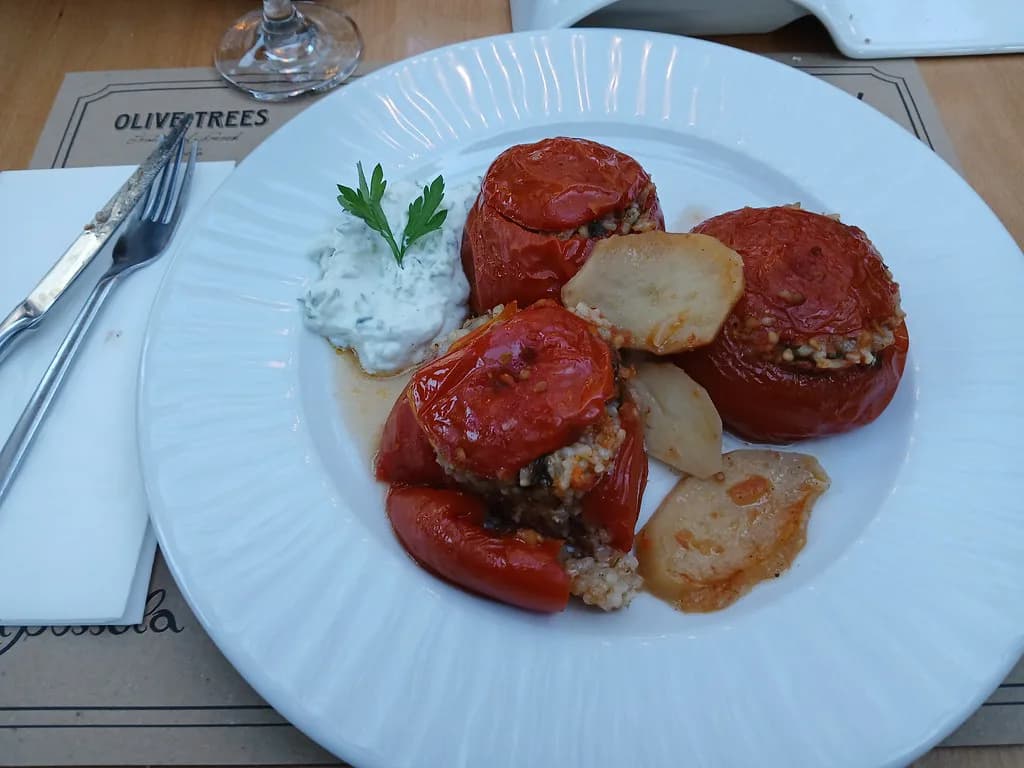
Gemista are tomatoes, and often peppers, hollowed and stuffed with rice, onion, garlic and herbs such as parsley and dill, sometimes with pine nuts or raisins, then baked with a tomato sauce. They are filling but not heavy, and one or two alongside a pulse dish makes a complete meal. Ask whether the stuffing includes minced meat, since both versions exist.
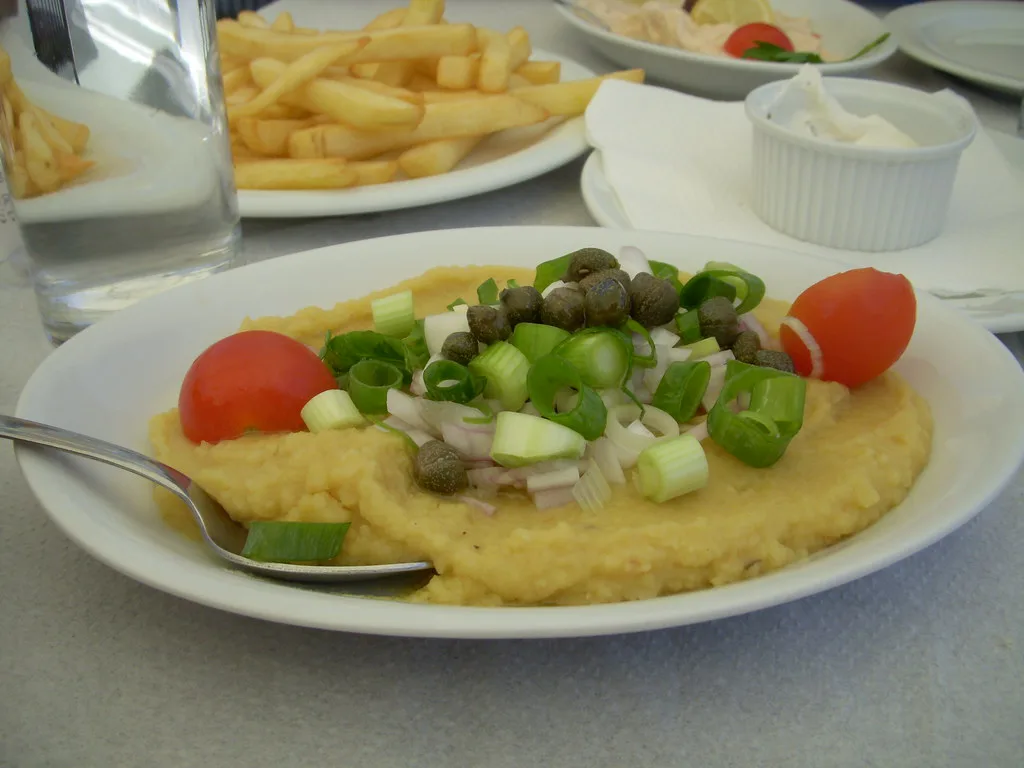
Briam, sometimes listed as tourlou tourlou, is a roasted mix of tomato, courgette, aubergine, potato and onion with olive oil and herbs. Fava is a smooth puree of yellow split peas simmered with onion and sometimes garlic, finished with olive oil and lemon and eaten with bread; it is not the same as the Middle Eastern fava bean dish. Horta vrasta are boiled wild greens, often dandelion, served with olive oil and lemon to balance their bitterness, while dolmades are grape leaves stuffed with rice, pine nuts, herbs and sometimes raisins.
Two more names worth knowing: spanakorizo is spinach cooked down with rice and is especially common during Lent, though it is light as a main on its own. Fasolada is a white bean soup with tomato, onion, carrot and celery that one source describes as often considered Greece's national dish. Pair any of these with a Horiatiki salata minus the feta, the tomato-cucumber-onion-olive salad most menus list, and you have a full table.
Fried and Street-Food Options
Tomatokeftedes are tomato fritters that originated on Santorini: ripe tomatoes are grated and mixed with chopped onion, mint, parsley, flour and sometimes breadcrumbs, then deep-fried until crisp. The mixture is seasoned with salt, pepper and sometimes cumin or cinnamon. They are not gluten-free, and because they are fried rather than griddled, they are a heavier item to share rather than a solo plate.
Fried potatoes are everywhere in Greece, in french-fry, fried and baked variations, cooked in olive oil and seasoned with herbs. Lemon potatoes are the version to look for if you want something brighter than chips. Ask about the frying oil and whether the potatoes are cooked in butter, since that is the usual place dairy sneaks into an otherwise plant-based plate.
For handheld food, the vertical rotisserie is the default image of Greek fast food, but the meat-free versions sold at dedicated vegan street-food counters are a separate category from the traditional souvlaki shop. In Athens, vegan mushroom gyros is the dish most often cited at Vegan Beat, a street-food spot repeatedly described as among the best vegan food in the country. Treat it as one confirmed option in the capital rather than a nationwide guarantee.
Soups and Cool-Weather Dishes
Fasolada, the white bean soup, turns up widely on the mainland but was not found on island menus by one long-form account of Greek vegan eating. Fakes, a lentil soup with tomato, onion, carrot and herbs, is more of a winter dish and appears most often in areas that get genuinely cold. Both are cheap, filling and usually made without meat, but confirm the broth.
This is where season matters for planning. In summer on the islands, taverna menus tilt towards grilled and raw vegetable dishes, dips and salads, and the slow-cooked soups recede. If soup is the meal you want, build it into mainland days or cooler months rather than expecting it on a beach-town menu in August.
Salads and Sides
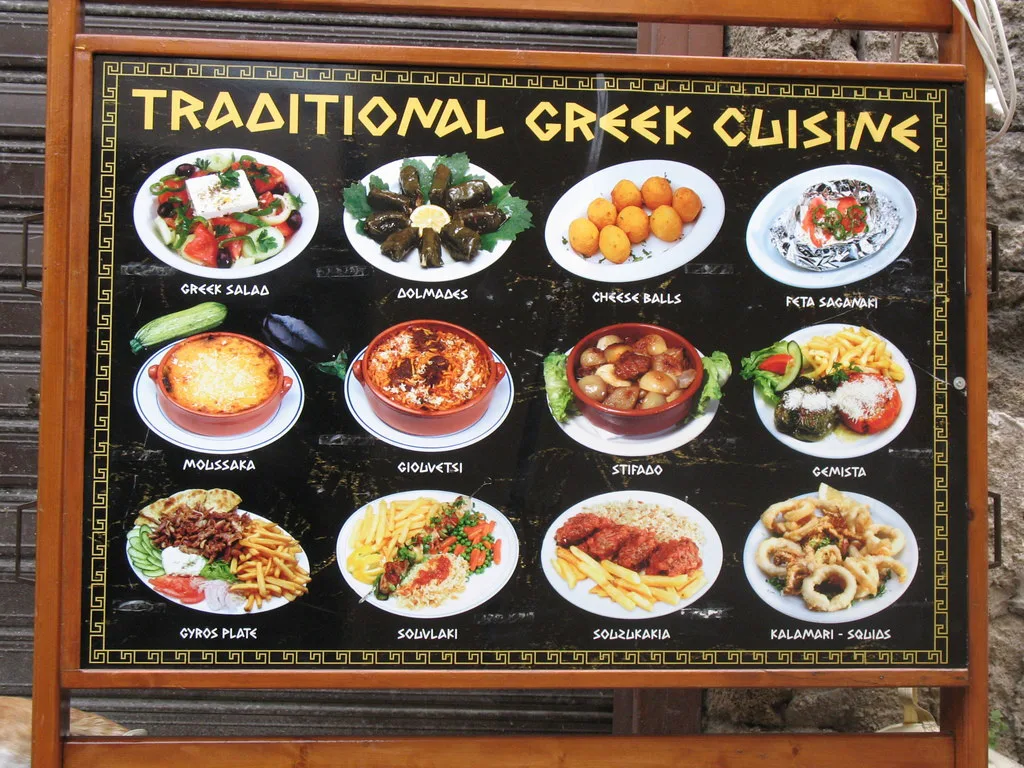
A Greek salad without feta is the simplest vegan order in the country: tomato, cucumber, onion, olives, oregano and olive oil. It is not a compromise dish, and staff are used to the request. Say no cheese rather than no feta if you want to be certain, since cheese can appear in other forms.
Politiki salad is the other one to know: cabbage, carrot, celery, pepper and herbs dressed with olive oil and vinegar. Some kitchens add meat or cheese to it, so ask before ordering. Bread is the default partner for fava and other dips, and it is normally brought without asking, so use it rather than ordering extra.
If you want a cheese course, the greek cheese guide is the place to check which varieties are animal-rennet and which are not before you commit.
Nistisima and Lenten Menus
Nistisima means fasting food, the dishes Orthodox households and tavernas cook during Lent and other fasting periods, when meat, dairy and often olive oil are set aside. In practice this produces a parallel menu of bean bakes, stuffed vegetables, pulses and vegetable stews that are vegan or close to it. Look for the word on a menu board or ask whether the kitchen has nistisima dishes that day.
The trade-off is that nistisima dishes are often cooked in large batches and served at room temperature or reheated, which is fine for beans and vegetables but means fried items may be less crisp. They are also the best value on the menu, since they are built from pulses and vegetables rather than meat. Outside fasting periods, the same dishes may only appear as sides.
How to Ask So You Get a Clear Answer
The word vegan is not always understood, and one traveler's experience was being pointed to the vegetarian option instead. Say the exclusions explicitly: no meat, no cheese, no milk, no egg, and ask about stock and cooking fat. Repeating the list at the point of ordering works better than a single question at the start.
Ask specifically whether the dish is cooked with butter, and whether the broth is meat-based. These two questions resolve most of the hidden-animal-product risk in Greek vegetable cooking, where olive oil is standard but exceptions exist. If a dish is finished with lemon and oil rather than a sauce, it is usually the safer bet.
Vegan Versions of Greek Classics
Moussaka, pastitsio, gyros and tzatziki all have plant-based reworkings in Greek cities, and dedicated vegan restaurants in Athens serve versions of each. Outside those venues, treat them as the exception rather than the rule: a standard taverna moussaka contains béchamel and mince, and a standard tzatziki is yoghurt-based. Ordering them vegan requires a kitchen that has deliberately built the dish that way.
The most reliable route is to check ahead. HappyCow's Greece directory lists vegan and vegetarian restaurants and natural food stores by area, which is useful for planning a city day around a specific meal.
Putting a Meal Together
Rather than hunting for a single vegan main, order two or three vegetable dishes plus one pulse dish and share. A typical table might combine gigantes plaki, horta vrasta, a feta-free Horiatiki and bread, which covers protein, greens, acidity and something to mop up with. This pattern works because Greek menus are built around a shared centre, not individual plates.
The trade-off is volume: vegetable dishes are often lighter than they look, and dishes like spanakorizo or gemista are not filling enough alone. If you are hungry, add potatoes or a second pulse dish rather than expecting one plate to do the work. Keep the fried items as a shared extra rather than the base of the meal.
Where It Works Best
Athens and the larger mainland towns support the widest choice: dedicated vegan kitchens, street-food counters and tavernas with marked nistisima sections. Smaller island villages run shorter menus, and the plant-based options narrow to what the kitchen cooked that morning. The general pattern is that many island restaurants close roughly November to April, so a winter visit means fewer tables and less choice overall; confirm what is open before you build a day around a specific place. On Crete, the same island logic applies to picking a base, which is worth weighing against the day-by-day options in this guide to things to do in Chania.
For dessert and coffee, the greek desserts and greek breakfast guides cover the plant-based corners of both meals, including filo pastry sweets and what to order alongside Greek coffee.
Plan Your Visit
The practical summary is short: learn six dish names, ask about butter and stock, and order two or three vegetable plates plus a pulse dish rather than one main. That covers most taverna meals in Greece without relying on a restaurant list. Where a specific venue matters, check its current menu directly before travelling.
For the wider picture on what appears on Greek tables, start with the traditional greek food guide and work backwards from there.
Explore more Greece sauna guides
Frequently Asked Questions
Is Greece good for vegans?
Greece is easier than its reputation suggests. Greek cooking uses olive oil rather than butter in most vegetable and potato dishes, and tavernas typically offer several meat-free options, from baked giant beans to boiled greens. The main difficulty is communication rather than supply, since the word vegan may not be understood everywhere and staff sometimes suggest a vegetarian dish instead.
What does nistisima mean on a Greek menu?
Nistisima means fasting food, the dishes cooked during Orthodox fasting periods when meat, dairy and often olive oil are avoided. On a taverna menu it signals bean bakes, stuffed vegetables, pulses and vegetable stews that are vegan or close to it. Look for the word on the menu board or ask whether the kitchen has nistisima dishes that day.
What traditional Greek dishes are accidentally vegan?
Several dishes contain no animal products by default: gigantes plaki (baked giant beans in tomato), briam (roasted mixed vegetables), fava (yellow split pea puree), horta vrasta (boiled wild greens), dolmades (rice-stuffed grape leaves) and politiki salad (cabbage, carrot and celery with vinegar). Gemista, the rice-stuffed tomatoes and peppers, is usually vegan but should be checked for minced meat.
How do I ask for no feta or no cheese in Greece?
Say the exclusion plainly and specifically: no cheese, no milk, no meat, no egg. For a Greek salad, asking for it without feta is a normal request and usually understood without difficulty. Repeating the list at the point of ordering is more reliable than a single question at the start, and it helps to ask about butter and meat stock too.
Is Greece vegetarian friendly?
Yes. Vegetarian dishes are standard taverna fare, and the meat-free repertoire is broad enough that most menus offer several options. The caveat is that vegetarian does not mean vegan: a dish may contain cheese, egg or a meat-based broth, so ask about those specifically if they matter to you.
Which Greek island is most vegan-friendly?
There is no reliable ranking. Santorini is associated with tomatokeftedes, the tomato fritters that originated there, but that is a single dish rather than a measure of how easy the island is to eat on. Larger towns and Athens generally offer more choice than small island villages, where menus are shorter and follow what the kitchen cooked that day.
Sources
Notes for eating well in Greece
Optional updates to our guides.
You might also like

Continue reading
More guides you'll find useful