Greek Cheese: A Traveler's Guide to Feta, Graviera and More
A practical guide to Greek cheese for travelers: what feta, graviera, kefalotyri and mizithra are like, how they are served, and what to know before ordering.
On this page
A taverna table in Greece rarely goes long without cheese. It arrives cubed beside olives before you have ordered, crumbled over a village salad, folded inside a pie, or sizzling in a small pan as saganaki. Learning to tell feta from graviera, and kefalotyri from mizithra, is one of the quickest ways to make sense of a Greek menu.
The useful split for travelers is not by region but by texture and salt: brined white cheeses, firm aged cheeses, and soft fresh ones. Each behaves differently on the plate, and each has a different answer to the question of whether it can survive the flight home. The notes below follow that order, with the dish names you will actually see printed.
This is a vocabulary and ordering guide rather than a producer list. Where a detail such as a shop's stock or a restaurant's menu changes, the article points you to the place that publishes it instead of guessing.
Why cheese appears at almost every Greek meal
Cheese works as a hinge between courses. It can open a meal as part of a meze spread, sit inside the main event as a pie or a topping, or close the table as a fried plate to share with drinks. That flexibility is why the same few cheeses recur under different names and cooking methods.
Which cheese is Greek? Several are strongly associated with Greece, including feta, graviera, kefalotyri, kefalograviera, mizithra, manouri and kasseri. Feta is the brined white cheese most often served at the table, while graviera and kefalotyri are firm aged cheeses used for slicing, grating and frying.
What is the difference between feta and graviera? Feta is a white cheese kept in brine, so it is salty, crumbly and served in slabs or crumbles, often with oil and oregano. Graviera is a firm aged cheese, usually sliced thinly or grated, with a nuttier flavor and a texture that holds together when grilled.
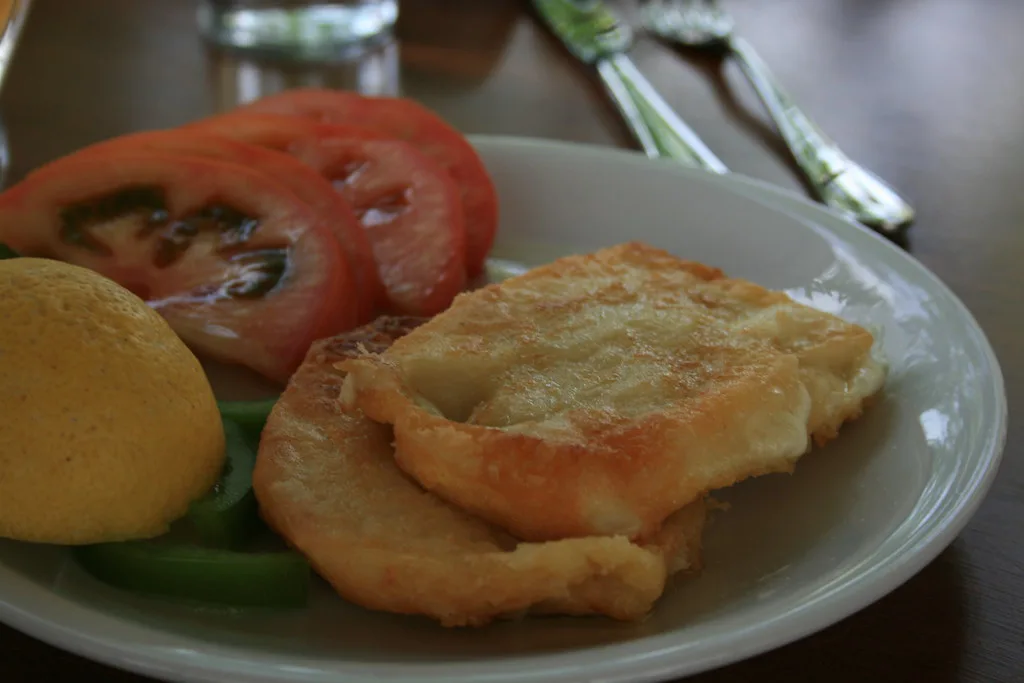
What is saganaki made with? Saganaki refers to the small pan it is cooked in, not to a single cheese, so the cheese used varies by kitchen. Kefalotyri and kefalograviera are common because they hold their shape when fried, and it is usually served hot with lemon.
For travelers, the practical consequence is that ordering cheese is rarely a single decision. You might order a slice of feta with oregano as a starter, then find graviera melted into a dish later, then meet mizithra grated over pasta. Knowing which is which helps you avoid ordering three salty fried plates in a row or missing the fresh cheese that would balance them.
The cheese counter and the menu also shift with the season and the island, because production is tied to grazing and to small dairies rather than to a national standard list. A hard sheep's-milk cheese you meet on one island may simply not appear on another. Treat any menu as a local snapshot rather than a fixed catalogue.
Feta: the brined white cheese you will meet most often
Feta is a white cheese kept in brine, which gives it a salty, tangy edge and a crumbly, slightly grainy texture. It is the default cheese of the Greek table: cubed with olive oil and oregano, crumbled into a Horiatiki salata (the Greek salad of tomato, cucumber, onion and olives, without lettuce), or baked with peppers and tomatoes.
Because it is brined, feta is salty enough that a small portion goes a long way, and it is usually served in a block or thick slab rather than grated. If you want a milder start to a meal, order it with bread and oil rather than alongside other cured or fried items. Greek salad is the classic entry point, but feta also appears inside pies and stuffings.
Feta is made from sheep's milk, goat's milk, or a blend, and the mix affects how creamy or sharp it tastes. On a menu, a cheese sold simply as feta is the brined white type; if you want something firmer and less salty, look further down the list for the hard cheeses.
Graviera: the firm aged cheese of Crete and the islands
Graviera is a firm, aged cheese, typically made from sheep's milk or a sheep-and-goat blend, with a nutty flavor and enough structure to slice thinly or grate. It is the cheese most often described as the Greek hard cheese of Crete and several islands, and it turns up both on a cheese plate and as a cooking cheese.
The most traveler-friendly way to meet graviera is grilled or pan-fried and served with honey, where the salt of the cheese meets the sweetness of the honey. Order it as a shared plate rather than a personal portion, because it is rich and pairs well with bread and a glass of something cold. If a menu lists graviera simply as a cheese, expect thin slices rather than a melted dish.
Naxos and Crete are the island names most often attached to graviera, and you will see the cheese sold in island shops and delis alongside other local products. Because aging times and milk mixes vary between producers, two gravieras can taste quite different; asking which island it comes from is a reasonable question at a cheese counter. If you are heading to the Cyclades, our guide to Things to Do in Naxos puts the island's dairies and tavernas in context.
Kefalotyri and kefalograviera: the hard cheeses for frying
Kefalotyri is a hard, salty sheep's or goat's milk cheese, and kefalograviera is a related firm cheese with a slightly softer character. Both hold their shape when heated, which is why they are the usual candidates for saganaki, the small pan-fried cheese plate served with lemon. The name refers to the pan, not the cheese, so saganaki on a menu can be made with different cheeses.
When you order saganaki, ask which cheese is used if the menu does not say. The difference matters: kefalotyri gives a sharper, saltier bite, while a softer cheese melts more and browns less. It is a plate built for sharing at the start of the meal, not a main course, and it is best eaten while hot and still crisp at the edges.
Kefalotyri also appears grated over pasta and baked dishes, where its salt does the seasoning for the whole plate. If you are ordering several dishes, a fried cheese plus a feta salad can tip the table salty, so balance with something grilled or tomato-based.
Mizithra and manouri: the soft, fresh cheeses
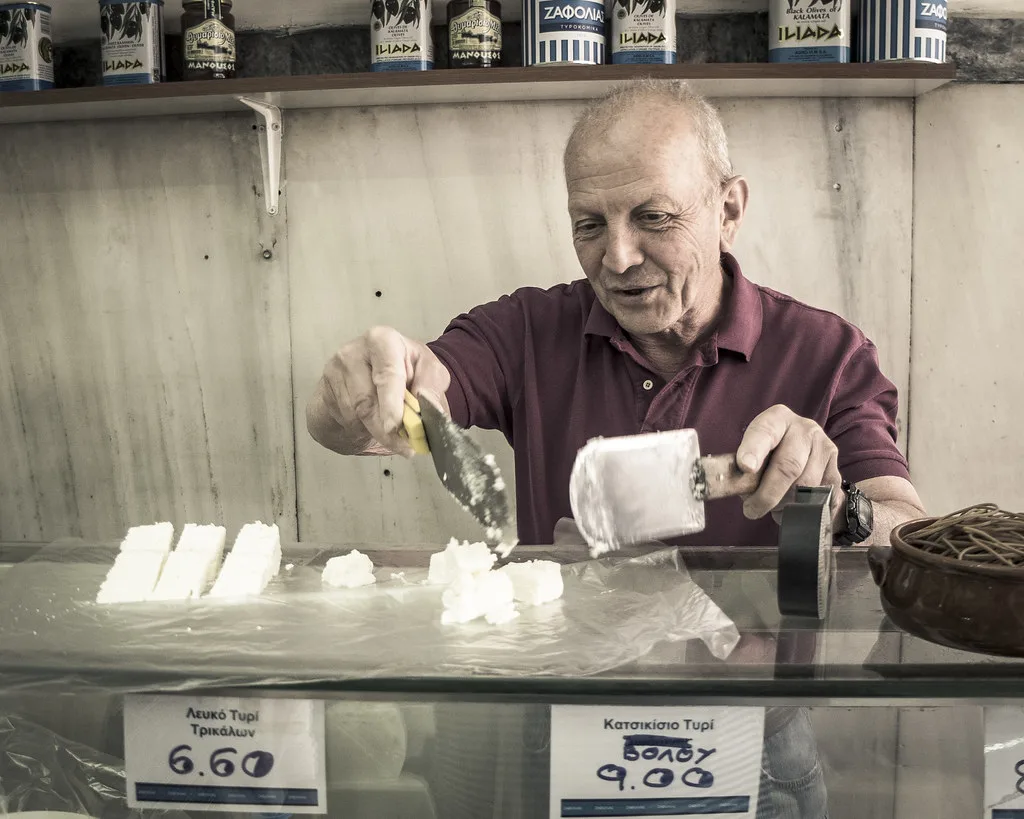
Mizithra is a fresh, soft whey cheese, mild and slightly sweet, and it is often served with honey or used as a lighter table cheese. Manouri is another fresh cheese, richer and creamier than mizithra, usually sold in small logs or rounds. Both are gentler than feta and work well when you want a break from salt.
On a taverna table these fresh cheeses may arrive as a starter with bread, or be folded into pies and sweets. Because they are mild, they are a good choice for a first cheese plate or for pairing with fruit and honey at the end of a meal. They also spoil faster than hard cheeses, which matters if you plan to carry one home.
A useful rule for reading a Greek menu: fresh cheeses are named on their own, while pies usually name the cheese inside. Tiropita is the cheese pie, and spanakopita is the spinach-and-cheese pie. If you see a pie listed without a cheese name, it is fair to ask which cheese is used.
Kasseri and halloumi: firm cheeses that hold their shape
Kasseri is a firm, slightly stretchy sheep's-milk cheese that melts well and browns nicely, which is why it appears in toasted sandwiches and baked dishes as well as on a cheese plate. Halloumi is the firm, squeaky cheese most associated with grilling, and it keeps its shape where other cheeses collapse.
Halloumi's origins are Cypriot rather than Greek, so you will see it on Greek menus as a familiar neighbor rather than a local cheese. It is often grilled or fried and served with lemon or a salad, and it is a reliable choice if you want a cooked cheese that will not merge into the rest of the plate. Because it is salty and dense, one portion between two people is usually plenty.
Kasseri and halloumi are also the cheeses most likely to survive a journey, since they are firm and keep better than fresh or brined types. That makes them good candidates for a food shop purchase, though any cheese you bring home still needs to be declared and transported according to your airline and destination rules.
How cheese is served in Greece: meze, pies, pasta and saganaki
The meze table is the best place to try several cheeses at once. A typical spread might include a slab of feta with oil and oregano, olives such as Kalamata olives, a fried cheese plate, and bread, with the cheeses acting as small bites rather than a course. Ordering two or three cheese plates to share across a group is more interesting than each person choosing one.
Pies are the other great cheese vehicle. Spanakopita wraps spinach, herbs and feta in thin filo pastry, and tiropita is the simpler cheese pie. Both are sold by the slice in bakeries and appear on taverna menus as a starter or snack, which makes them an easy, inexpensive way to taste local cheese during the day.
At the table, cheese also shows up grated over pasta, baked with vegetables, and fried as saganaki. For drinks, a glass of wine or a small tsipouro, the grape spirit also called raki in some regions, is the common pairing with a cheese plate. Ask for the cheese with bread and olives rather than a full plate of fried items if you want a lighter start.
How to order cheese at a taverna
Portions are usually designed for sharing, so treat each cheese on the menu as one plate for the table rather than a personal serving. If you are two people, one brined cheese, one hard or grilled cheese, and a basket of bread is a sensible opening order. You can always add a pie or a second grilled plate once you see the size.
Ask about the cheese by name when a menu is vague. Useful questions are which milk it is made from, whether it is brined or hard, and whether a grilled dish is made with kefalotyri or a softer cheese. Staff at a busy taverna may not know the producer, but they will usually know whether the dish arrives salty, mild, or melted.
Keep an eye on the balance of the whole table. A fried cheese, a feta salad and an olive plate are all salty, so pair them with grilled meat, a tomato dish or plain bread to avoid a one-note meal. Cheese is also a good shared item alongside other greek street food, since a pie or a grilled sandwich travels easily and needs no cutlery.
The same balance logic applies at the grill counter. A pita wrap from a vertical rotisserie is already rich, so choose a fresh cheese or a tomato salad on the side rather than a second fried plate; the lighter order keeps the cheese readable rather than buried under salt.

Buying Greek cheese to take home
Firm, aged cheeses such as graviera and kefalotyri keep better than fresh or brined ones, which is why they are the practical choice for a suitcase. Vacuum-sealed portions from a deli travel better than a loose wedge cut to order. Check the label for the milk type and whether the cheese needs refrigeration, and pack it in a sealed bag away from clothing.
Brined cheeses such as feta need their brine to stay in good condition, and fresh cheeses such as mizithra and manouri are the most fragile of the group. If you plan to carry one, buy it close to departure and keep it cool until you check your bag. For a more complete list of what a Greek cheese counter stocks, use the shop's own product pages rather than a general guide.
Customs rules for bringing dairy into your home country vary and can change, so confirm the current allowance with your own border agency before you buy. The same applies to how the cheese must be declared at check-in. It is worth checking twice only when a specific rule is unclear; otherwise the shop's packaging and label are your main source of detail.
Seasonal and regional variation across Greece
Cheese available on a Greek island is shaped by grazing and by small dairies, so what you find in one place may not travel to another. Island shops often sell local hard cheeses alongside olive oil, honey and rusks, and the selection can change through the year. That is a reason to buy what you taste rather than assume a favorite will be in stock everywhere.
Because cheese is often made in small batches, a village producer's graviera can differ from a shop's version of the same name. Where a shop publishes its current selection and delivery limits, check there. LAGMA, for example, lists its Greek cheese range for local delivery in Los Angeles and marks items as out of stock when they are unavailable, which is a useful reminder that online stock is not a guarantee of supply.
This is also why a national list of Greek cheeses can only be a rough guide. Regional names overlap, milk blends vary, and aging changes the texture of the same cheese from one producer to the next. Read the label and ask questions at the counter, since a name alone tells you only part of the story.
Plan Your Cheese Tasting
The simplest way to use this guide is to order by texture, not by name. Start with one brined cheese such as feta, add a hard one such as graviera or kefalotyri if you want a grilled plate, and finish with a fresh cheese such as mizithra or manouri if you want something mild. That gives you three different experiences rather than three versions of the same salty bite.
From there, follow the menu and the shop counter. Pies give you cheese inside a snack, saganaki gives you the fried version, and a deli gives you the take-home version. Each tells you something different about how the cheese is used, which is more useful than memorizing names.
For the dishes that surround the cheese, the wider guide to traditional greek food covers salads, mains and meze in context, and it is the natural place to continue planning a menu. Read it before you sit down and the cheese list will make much more sense.
Explore more Greece sauna guides
Frequently Asked Questions
Which cheese is Greek?
Several are strongly associated with Greece, including feta, graviera, kefalotyri, kefalograviera, mizithra, manouri and kasseri. Feta is the brined white cheese most often served at the table, while graviera and kefalotyri are firm aged cheeses used for slicing, grating and frying. Halloumi is often seen on Greek menus but is associated with Cyprus.
What is the difference between feta and graviera?
Feta is a white cheese kept in brine, so it is salty, crumbly and served in slabs or crumbles, often with oil and oregano. Graviera is a firm aged cheese, usually sliced thinly or grated, with a nuttier flavor and a texture that holds together when grilled. If you want a milder table cheese, choose graviera; if you want the classic salad cheese, choose feta.
What is saganaki made with?
Saganaki refers to the small pan it is cooked in, not to a single cheese, so the cheese used varies by kitchen. Kefalotyri and kefalograviera are common because they hold their shape when fried, and it is usually served hot with lemon. Shrimp saganaki is a different dish, made with shrimp in a tomato and cheese sauce.
Can you bring Greek cheese home from Greece?
Firm aged cheeses travel better than fresh or brined ones, but the rules for bringing dairy into your home country vary. Check the current allowance with your own border agency before buying, keep the cheese sealed and cool, and declare it at check-in if required. Ask the shop for vacuum-sealed portions.
What cheese goes into spanakopita?
Spanakopita is the spinach pie made with thin filo pastry, greens and feta, usually with herbs such as dill. Tiropita is the plainer cheese pie and may use feta or a mix of cheeses. Both are sold by the slice in bakeries and appear as starters on taverna menus.
How should I order cheese at a Greek taverna?
Treat cheese plates as shared starters. One brined cheese such as feta, plus one hard or grilled cheese, plus bread is a good opening order for two people. Ask which cheese is used in a fried dish, and balance salty plates with grilled dishes or a tomato-based course.
Sources
Notes for eating well in Greece
Optional updates to our guides.
You might also like

Continue reading
More guides you'll find useful