Greek Customs for Visitors: Etiquette, Meals and Traditions
A practical guide to Greek customs for visitors, covering greetings, coffee culture, church dress, name days and superstitions in plain English.
On this page
Most Greek customs a visitor meets are not formal rules but habits of pace and courtesy: you greet the room, you linger over one coffee, you eat dinner late and slowly. A few settings do carry real expectations, above all churches and monasteries, where dress is enforced rather than merely encouraged. Separating the two shows where to be careful and where to simply relax.
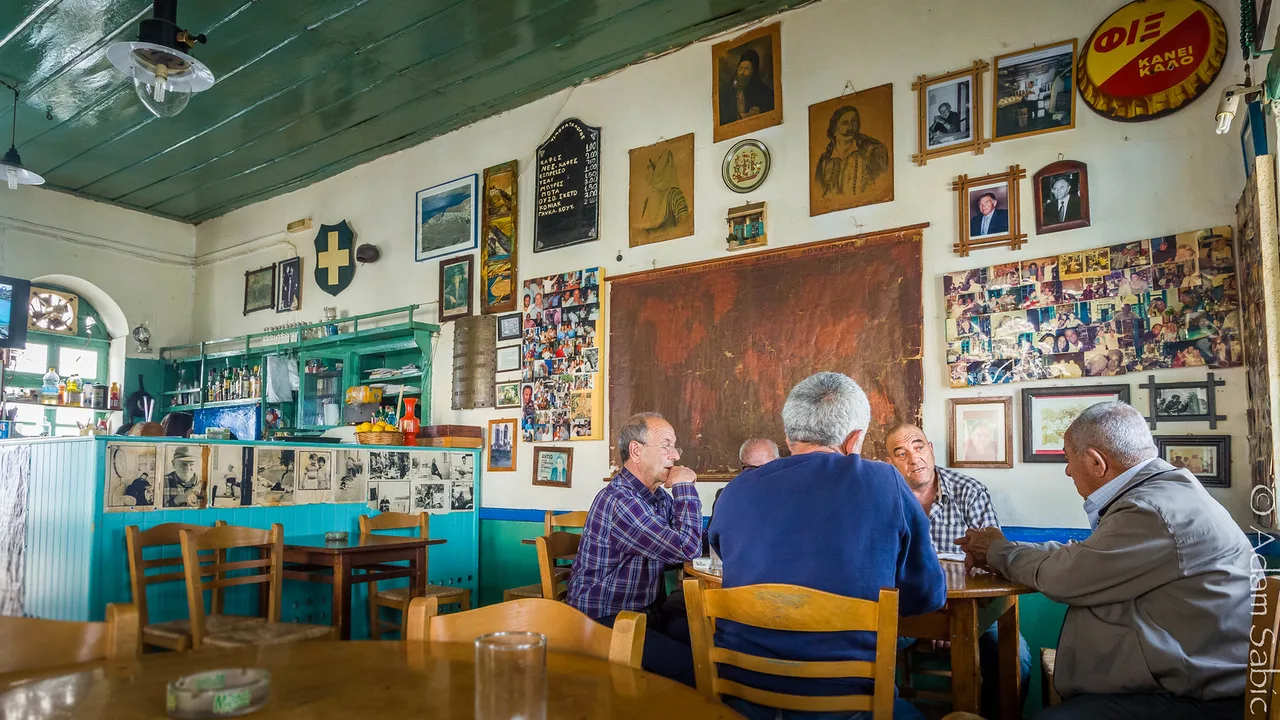
Food and drink are part of the etiquette rather than a separate topic. Coffee is nursed for an hour without pressure to reorder, alcohol comes with food and company rather than as a goal in itself, and a taverna meal is expected to take time. Where a dish or drink has a Greek name, it is explained in plain English the first time it appears. That unhurried table culture carries straight over to the islands, and our Naxos food guide shows how the same taverna rhythm plays out on a beach-and-mountain island.
Greetings and Everyday Politeness
Learning one or two words pays off immediately. Kalimera means good morning and doubles as a general hello earlier in the day, while a simple thank you covers most transactions; the pronunciation and the correct reply are worth a minute of prep before you land, and a short primer on basic Greek phrases will carry you through most shops and tavernas. Greetings are typically acknowledged on entering a small shop, cafe or taverna, even with a nod, and ignoring staff entirely reads as cold rather than efficient.
What are the most important Greek customs for a visitor to know? The everyday ones: greet staff when you enter a small shop or taverna, expect coffee to be nursed slowly without pressure to reorder, and plan dinner for nine or ten in the evening rather than seven. The one setting with firm rules is religious sites, where shoulders and legs are covered and monasteries may hand out wrap-around skirts.
How should you dress for Greek churches and monasteries? Cover shoulders and legs, and keep a light shawl or scarf in your bag for short-notice visits. At monasteries the standard is stricter, and even women wearing trousers may be asked to tie on a wrap-around skirt, which the site supplies, as happens at Meteora.
When do Greeks eat dinner and drink coffee? Dinner commonly starts from nine or ten in the evening, so a seven o'clock arrival may find an empty room. Coffee is a sit-down affair at any hour and one cup can last an hour without waiting staff pressing you to order again.
Personal space in conversation is generally closer than in northern Europe or North America, and gestures are expansive; neither is aggression. Offering your seat on a crowded metro or bus to an older passenger is noticed and appreciated. The exclamation you hear when a glass is raised belongs to the everyday small customs rather than to a formal toast, and a short explainer on what "Opa" Means in Greece covers the contexts where it lands well.
Thanking someone properly is the one phrase worth getting right, since it comes up at every till and table. The standard word is efcharistó, and adding polí softens it into a warmer thanks; if you want to hear it and reply naturally, this guide to how to say thank you in greek explains the pronunciation and the usual response. Greeks rarely expect a foreigner to be fluent, but the attempt is noticed.
Coffee Culture: Frappe, Tavli and the Art of Staying Put
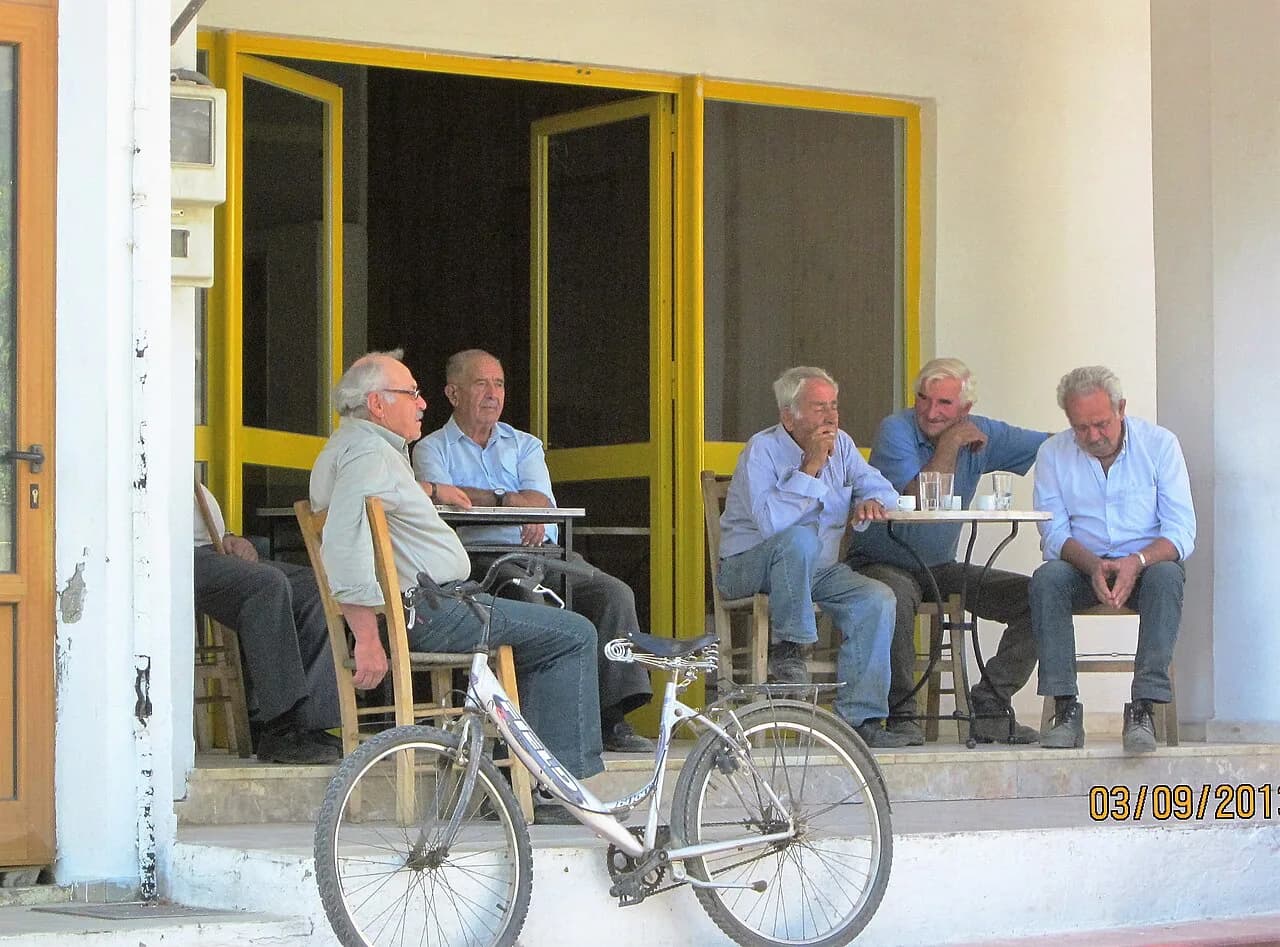
A frappe is iced instant coffee shaken with sugar and water into a thick foam and served over ice, closer to a coffee milkshake than an espresso. Ordering one signals that you intend to sit for a while: nursing a single cup for an hour is normal, and waiting staff will not hurry you out or push a second order, as an Athens resident's account of local cafe habits describes. This is one of the clearest everyday customs to adopt, since a rushed coffee reads as odd rather than polite.
You will often see tables of friends playing tavli, the Greek name for backgammon, over the same drinks for hours. The trade-off is practical: a long coffee is welcome at a quiet cafe, but at a small, busy table during peak lunch a venue may expect turnover, so read the room before settling in for an afternoon. If you want the board-game pace, choose a cafe with plenty of empty tables rather than a packed one.
Drinking Culture: Alcohol With Food and Company
Drinking in Greece is generally tied to eating and socialising rather than to getting drunk. Going out tends to start late, and people commonly drink at the table with a meal or a small snack rather than at home beforehand. Heavy public drunkenness is looked on poorly, and the practical translation for a visitor is simple: order food with your drinks, and treat the evening as a long conversation rather than a session.
That rhythm also shapes what you order. A taverna table usually has shared plates, a carafe or bottle to pass around, and no expectation that anyone finishes quickly. If you want a nightcap after dinner, expect it to come with something to nibble, because a drink on its own is the unusual order rather than the default.
Meal Timing and the Taverna Rhythm
Lunch is the main daytime meal for many Greeks and can run long, while dinner starts late by northern European standards, often from nine or ten in the evening. The taverna model is shared plates arriving as they are ready rather than a strict starter-main-dessert sequence, so ordering a few dishes at a time and adding more later is normal and not seen as indecisive. Bread and water usually arrive without being requested, and the bill is generally brought when you ask.
The trade-off visitors face is between the long lunch and the sightseeing day. A taverna meal in a village square can easily consume two hours, which is the point, so schedule it as the day's main event rather than squeezing it between two museums. If you want a quick midday stop before a site visit, a bakery or a stand-up souvlaki counter fits better than a full table, and a dish-by-dish guide to traditional Greek food helps you order without over-facing the table. The same timing logic applies when planning ancient sites in Greece, where an early start beats a late lunch.
Dress for Churches and Monasteries
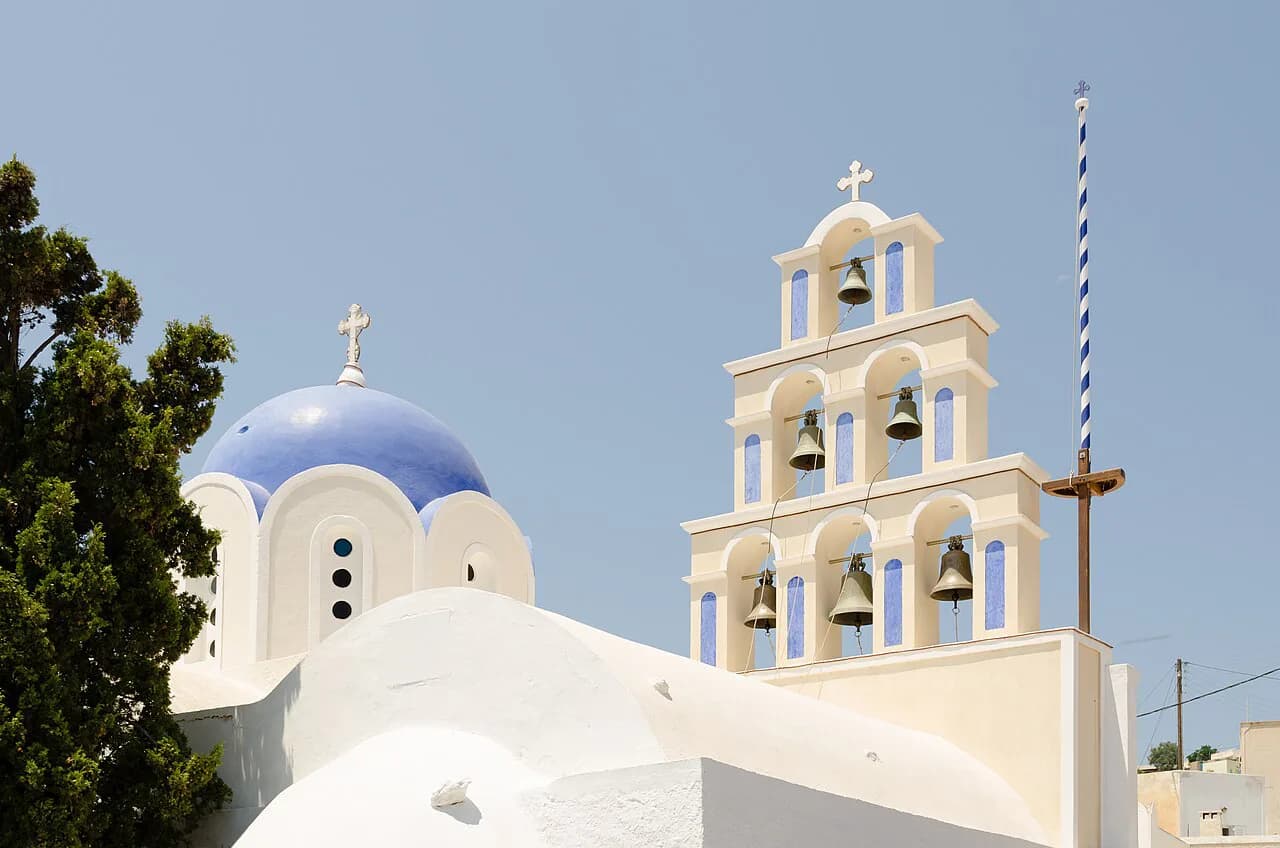
The one setting where dress genuinely matters is religious. Women are expected to cover shoulders and legs inside churches, and at monasteries the requirement is stricter: even women in trousers may be asked to tie on a wrap-around skirt, which the site supplies, as happens at Meteora in central Greece. Men should keep a shirt on. Carrying a light shawl or scarf costs nothing and solves the shoulder problem at short notice, and a long, loose skirt is more practical than shorts for a day of church visits.
A useful way to plan is to treat church visits as a separate leg of the day rather than a spontaneous detour in beach clothes. The monasteries of Meteora are the clearest example of enforced dress, and the wraps handed out there are a courtesy rather than an optional extra. Outside religious sites, dress in towns and on the beach is relaxed, and the only real faux pas is walking into a church in swimwear or bare shoulders.
Name Days and Why Strangers Get Congratulated
Many Greeks celebrate a name day, the feast day of the saint they are named after, more prominently than their birthday. If you know a Greek friend's name day, the standard greeting is chronia polla, meaning many years; when a stranger is congratulated in a shop or office, this is usually why. You do not need to bring a gift for an acquaintance, but a small sweet or a drink offered back is a normal exchange.
The practical use for a visitor is social rather than ceremonial: name days explain why a taverna may be fuller than usual on an ordinary weekday evening, and why a colleague or host seems to be celebrating something you have not been told about. Asking which saint's day it is will usually get a friendly explanation rather than a puzzled look.
Saints, Easter and Carnival: Fixed and Moving Dates
Some observances fall on fixed dates and others move with the Orthodox calendar, which is why Easter in Greece rarely matches the Western date. Carnival, known as Apokries, begins roughly in February and leads into Lent, and Clean Monday marks the start of Lent with a specific set of foods and, famously, kite flying, as an overview of Greek customs and traditions sets out. May Day and the Dormition on 15 August are fixed, while Easter shifts each year. Confirm the current year's Orthodox Easter date with an official tourism or church calendar before booking around it.
If your trip overlaps a major feast, expect transport and tavernas to be busier and some businesses to keep shorter hours on the day itself, so build slack into travel plans. Outside these periods, the customs you meet are the everyday ones: greetings, coffee, shared plates and late dinners. Carnival in particular is a public, street-level event rather than a private family occasion, which is why visitors are welcome to watch.
Everyday Superstitions: The Evil Eye and Spitting
The evil eye, mati, is the belief that envy or excessive admiration can bring misfortune, and it is invoked in everyday conversation far more casually than the English term suggests. You may see a blue bead or eye charm on a bracelet, in a car or above a doorway. Giving direct, lavish compliments, particularly about a baby, can prompt a spitting gesture or the word ftou, which is a customary way of warding off the evil eye rather than an insult. Do not be alarmed or offended; it is aimed at the bad luck, not at you.
The practical response for a visitor is to soften strong compliments with a gesture of the hand or a light ftou yourself, or to add the Greek phrase that accompanies it. Nobody expects a foreigner to get this exactly right, and a smile covers most awkwardness. Superstitions around Tuesday and the number four exist but are rarely enforced on visitors.
Getting Around: Metro Etiquette and Crossing the Road
Athens public transport is generally clean and easy to use, and the metro has three lines, with some stations displaying ancient artefacts found during construction; Syntagma station has a display of finds from the excavation. One resident's account describes boarding as something of a free-for-all, with passengers tending to push on before others have got off, so stand back and let the flow clear before boarding. Ticket machines carry menus in several languages, including English, and fares and multi-journey bundles change, so read the current price on the screen rather than relying on figures quoted in older posts.
On the roads, the same resident cautions that traffic rules are applied loosely, with stop signs often ignored and roundabouts treated unusually; wait a moment after the pedestrian light turns green before stepping out. This is practical caution rather than a legal verdict, and driving yourself is a decision to weigh against the metro. The metro is quickest for central Athens and the airport line, while taxis suit late nights and heavy luggage.
Hospitality and Small Gifts
Greek hospitality, filoxenia, is often expressed as food and drink pushed toward a guest rather than as formal etiquette. If you are invited to someone's home, bring something small and good: a box of sweets from a bakery, a bottle of wine, or fruit from a market. Flowers are fine but avoid stiff formal bouquets, and if your host offers a plate or a glass, accepting is part of the exchange; refusing outright can read as distance.
If you are the host, or want to return hospitality, offering to pay for a round or bringing something to the table is appreciated but not insisted upon; Greeks often compete over the bill. The safest route is to offer once or twice and then accept gracefully if a host insists on treating you.
Common Visitor Mistakes to Avoid
The mistakes that actually cause friction are few. Walking into a church in beachwear, treating a cafe table as a fast-food counter, or assuming a restaurant is closed because nobody hurries to bring the bill are the usual ones. Toplessness in a town street, which one Athens resident describes encountering in a busy city centre, reads as disrespectful rather than relaxed.
A second cluster is about timing. Turning up for dinner at seven will often mean an empty room, and arriving at a taverna at peak lunch hour expecting a slow afternoon table may not work in a popular place. Deciding which matters more to you, the long table or the packed itinerary, is the trade-off that shapes the rest of your day.
Plan Your Visit
Two things are worth checking before you go, and only two. First, current Athens transport fares and ticket options, which change and should be confirmed at the machine or on the Athens transport authority's site rather than taken from a dated blog. Second, dress rules for the specific churches and monasteries on your route, particularly at Meteora, where wraps are provided but shoulder cover is still expected.
Everything else comes down to pace: greet people, linger over coffee, eat later than you would at home, cover up at religious sites, and treat compliments about a baby with the customary gesture rather than offence. That is most of the etiquette a visitor actually meets.
Explore more Greece sauna guides
- "Opa": What It Means in Greek, and When You Hear It in Greece
- Basic Greek Phrases for Travelers
- Greek Dancing
- How to Say Thank You in Greek (Efcharistó) and What to Say Back
- Cats of Greece
- Cycladic Architecture
- Greek Hospitality
- Greek Name Days
- Greek Superstitions Explained
- Kalimera Meaning
- Santorini Donkeys
- Yamas Meaning
Frequently Asked Questions
What are the most important Greek customs for a visitor to know?
The everyday ones: greet staff when you enter a small shop or taverna, expect coffee to be nursed slowly without pressure to reorder, and plan dinner for nine or ten in the evening rather than seven. The one setting with firm rules is religious sites, where shoulders and legs are covered and monasteries may hand out wrap-around skirts.
How should you dress for Greek churches and monasteries?
Cover shoulders and legs, and keep a light shawl or scarf in your bag for short-notice visits. At monasteries the standard is stricter, and even women wearing trousers may be asked to tie on a wrap-around skirt, which the site supplies, as happens at Meteora. Men should keep a shirt on. Elsewhere in towns and on beaches dress is relaxed.
When do Greeks eat dinner and drink coffee?
Dinner commonly starts from nine or ten in the evening, so a seven o'clock arrival may find an empty room. Coffee is a sit-down affair at any hour and one cup can last an hour without waiting staff pressing you to order again. Lunch is often the main daytime meal and can run long.
What is a name day in Greece?
A name day is the feast day of the saint a person is named after, and many Greeks mark it more prominently than their birthday. The greeting is chronia polla, meaning many years. It explains why a taverna may be unusually full on a weekday evening or why a colleague is being congratulated.
What does the evil eye mean in Greece?
The evil eye, or mati, is the belief that envy or excessive admiration can bring misfortune, and blue eye charms are worn or hung to deflect it. A lavish compliment, especially about a baby, may draw a light spitting gesture or the word ftou, which wards off the bad luck rather than expressing insult.
When are Greek Easter and Carnival, and do the dates change?
Easter follows the Orthodox calendar and usually falls on a different date from Western Easter, so it moves each year. Carnival, called Apokries, begins roughly in February and leads into Lent, which starts on Clean Monday. May Day and 15 August are fixed. Confirm the current year's Orthodox Easter date with an official tourism or church calendar before booking around it.
Sources
Notes for eating well in Greece
Optional updates to our guides.
You might also like

Continue reading
More guides you'll find useful