Shopping in Chania: Chania Old Town Crafts & Leather Street
A practical guide to shopping in Chania: Skridlof leather street, the Municipal Market, Cretan knives and ceramics, and how Old Town workshops differ.
On this page
Shopping in Chania is not a single street or a mall trip. The useful spending is concentrated in the Old Town lanes, along the Venetian Harbor and inside the covered Municipal Market, while brand-name and household shopping sits outside the historic core. Deciding which of those you want before you set out saves a lot of walking.
The choice that matters most here is between a working craft workshop and a souvenir rack. Chania still has small, often family-run studios making leather goods, knives, ceramics and textiles, and they sit close to shops selling imported trinkets with the same Cretan labels. This guide sets out what is made locally, what each area is good for, and the questions to ask before you pay.
Quick orientation: where Chania's shopping actually sits
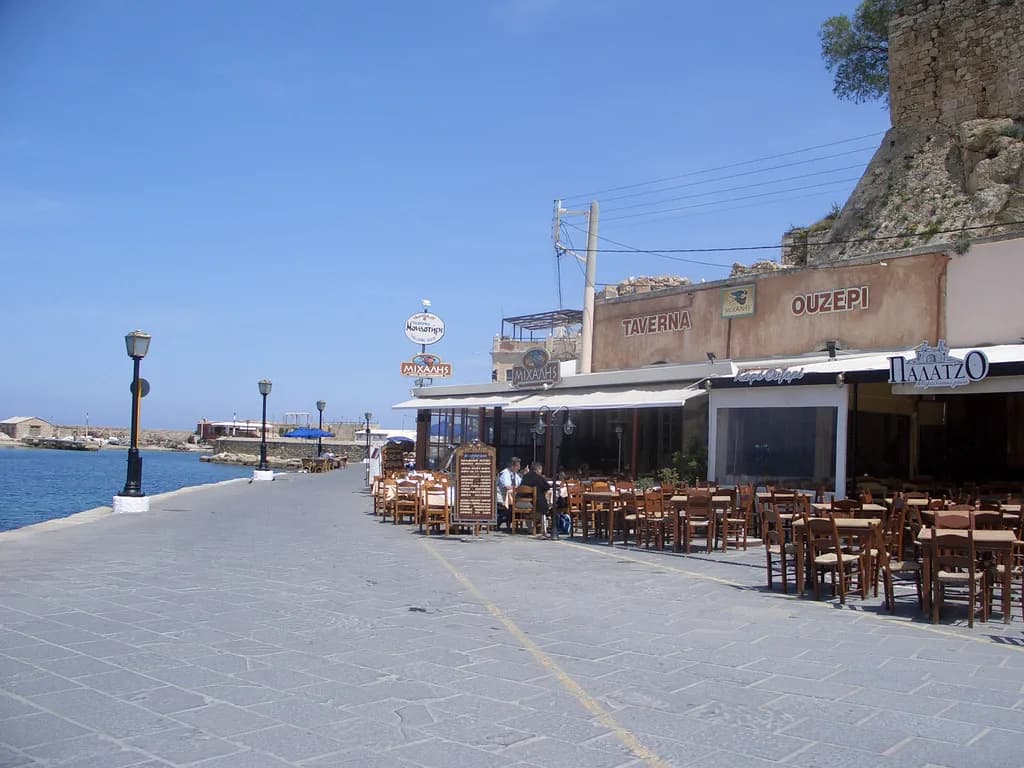
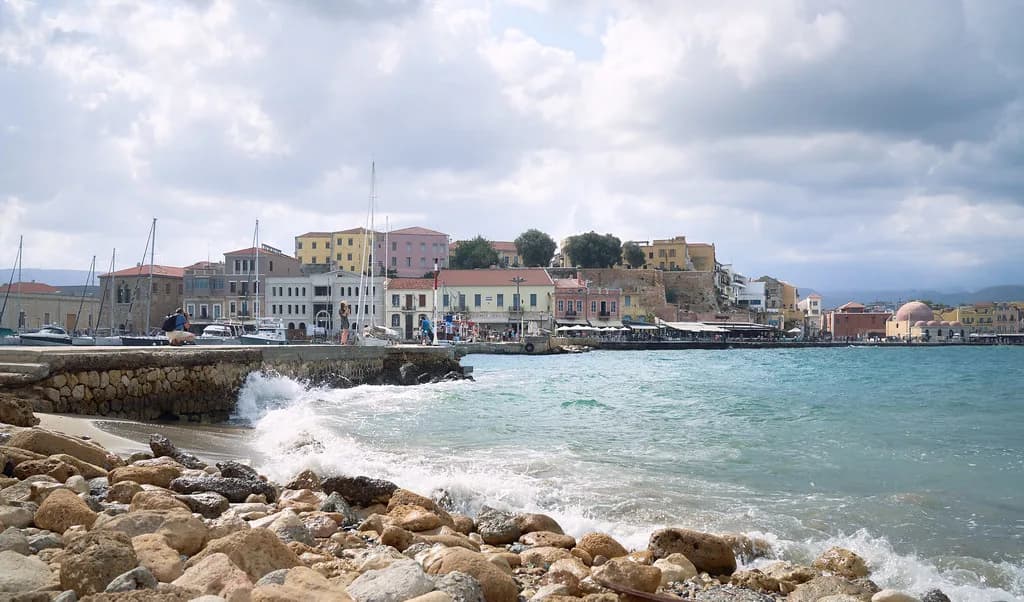
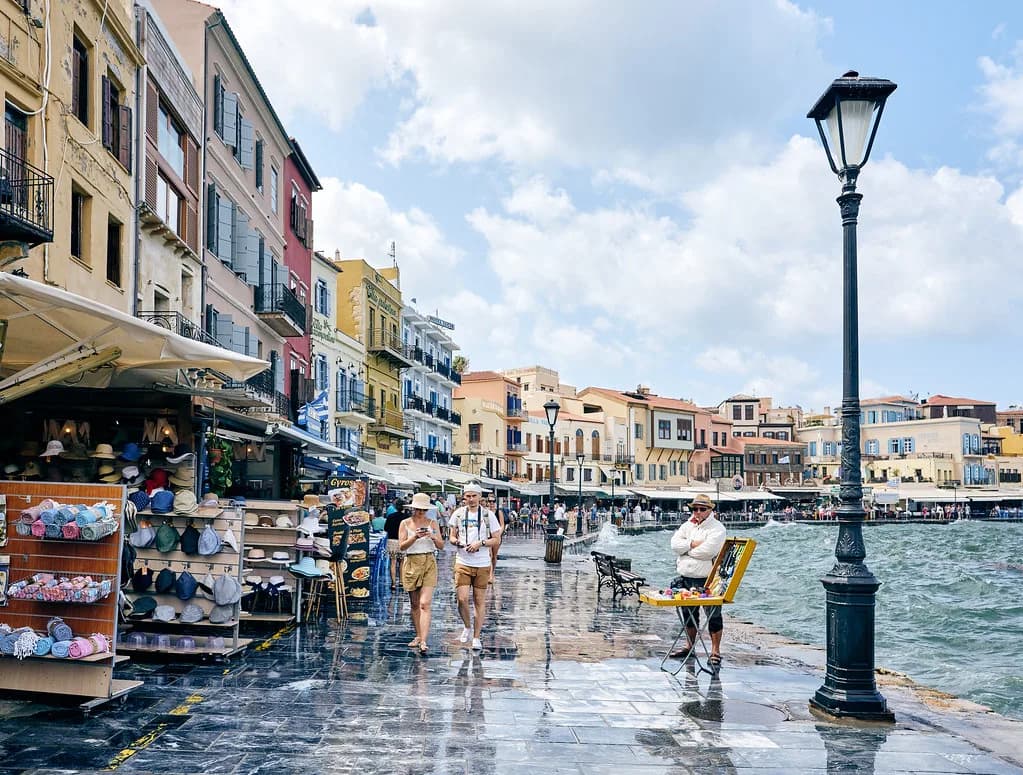
Four zones cover almost everything. The Old Town lanes and the Venetian Quarter hold the craft studios; the Venetian Harbor holds the knife makers and waterfront shops; the Municipal Market, known locally as the Agora, concentrates food under one roof; and modern retail is spread around the wider city rather than gathered in one central mall. If you are weighing this city against the island's other market town, our guide to shopping in Heraklion compares its Central Market and craft streets with Chania's.
Directory listings for the city make the same point: there are plenty of shopping locations in and around Chania, but no giant mall, and the international clothing brands are scattered rather than grouped in one district. Plan on walking or using short taxi hops between areas instead of expecting one stop.
If you have only an afternoon, pair the Agora with the Old Town rather than trying to reach everything. The market and the historic lanes are close enough to combine on foot, which leaves the out-of-centre retail for a day when you actually need it. When you plan the rest of the stay around those stops, the wider [things to do in Chania](/things-to-do-in-chania) guide shows how the harbor, Old Town and day trips fit together.
Skridlof Street (Leather Lane): workshops, custom-fit shoes and bags
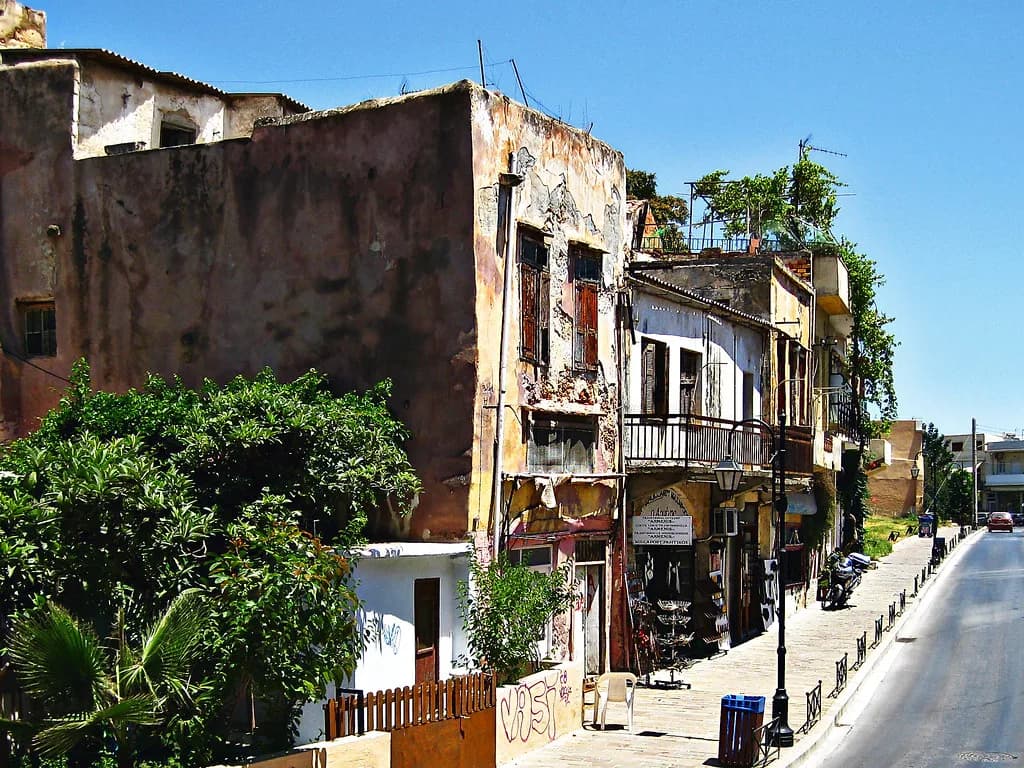
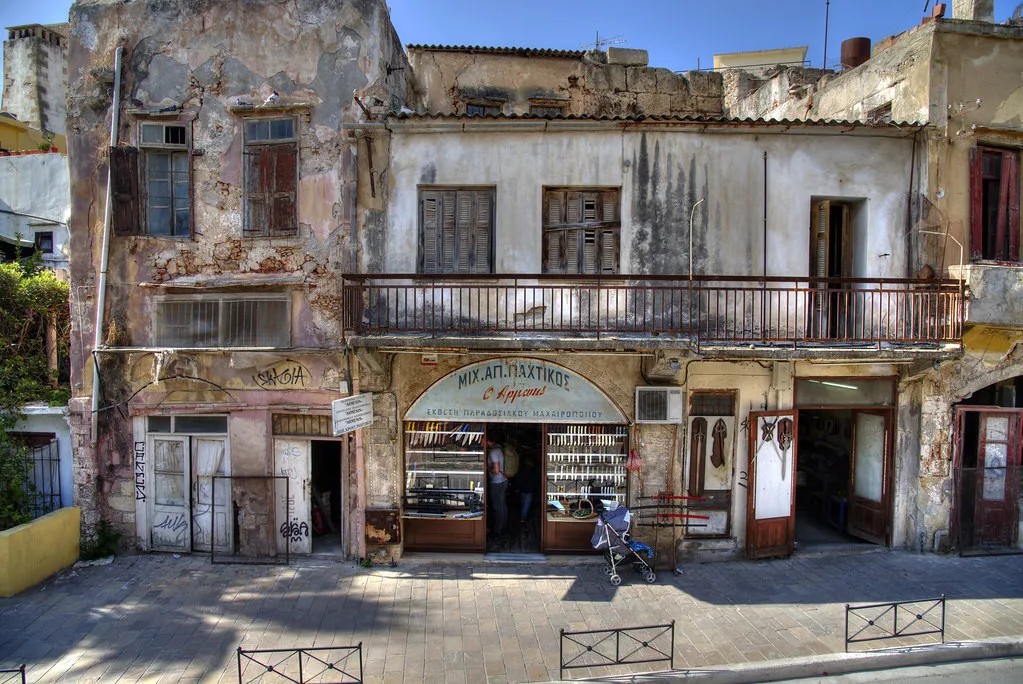
Skridlof Street is the city's leather quarter, a pedestrian alley lined with workshops making shoes, boots, bags and belts. Many of the businesses are second- and third-generation leatherworkers, and you can often watch cutting, stitching and burnishing at the bench. That visible work is the main reason to buy here rather than from a general souvenir shop.
The trade-off is time. Custom-fit shoes and bags are measured and made to order, and the same source reports that orders can often be completed within 24 to 48 hours, with shipping arranged for short stays and cruise passengers. If you are in Chania for two nights, ask at the first shop you like whether your order fits that window before you commit; if not, buy from stock or plan a return visit.
Kortsidakis Leather, a family business the source traces to the late 19th century and four generations, is named among the leather specialists selling shoes, bags and travel goods. Treat that as a starting point rather than a ranking, and compare stitching, lining and sole construction across two or three benches before deciding.
Cretan knives around the Venetian Harbor: why they are engraved and gifted
The Cretan knife is the most distinctive purchase in Chania and the one most worth understanding first. Traditionally given at weddings, births and other rites of passage, the blades are engraved with verses, blessings or proverbs, so what you are paying for is partly the forging and partly the inscription. Ask what the engraving says before you choose it.
O Armenis, working since 1912, is named among the knife makers using bone, horn, olivewood and natural bush wood, with blades heated, forged and hardened by hand at the workshop. A hand-forged knife with a named maker and a meaningful inscription is a different object from an unmarked blade in a display case, so ask who forged it and what the handle material is.
Before buying, settle two practical points: how the knife will be packed for travel, and whether your airline and destination allow it in checked baggage. Shops that sell to visitors regularly can advise on packing, but the rules are set by carriers and customs, so confirm them yourself rather than relying on the counter.
Ceramics, textiles and olivewood in the Old Town and Venetian Quarter
Behind the main Old Town streets, family-run ateliers work in ceramics, carved olivewood, stone and marble, and jewellery drawing on Minoan and Byzantine motifs. Many announce themselves quietly, with a door ajar or a potter's wheel audible from the courtyard, so slow down in the side alleys off the Venetian Quarter rather than sticking to the busiest lanes.
Two named studios show the range. Michalis Laventzakis Ceramics, established in 1980, makes handmade pieces in Greek folk-art forms, from dishes and mugs to vases and lamps; Mitos Art, in the Old Town since 1998, shows bronze and aluminium sculpture, ceramics and jewellery. Hand-thrown and hand-painted pieces vary between examples, which is exactly what separates them from identical souvenir stock.
For textiles, Nantoe Kaipoy specialises in hand-printed cotton and linen, from cushion covers and bags to foldable fabric wall hangings. Flat, lightweight pieces pack far better than ceramics, so if you are travelling with hand luggage only, textiles and prints are the sensible craft purchase.
Verekinthos Artisan Village, described as minutes from the Old Town, gathers around 15 workshops covering ceramics, metalwork, glass, leather, textiles, wood and musical instruments, and offers classes and hands-on sessions. Its cited pattern is roughly 9:00 am to 2:00 pm and 5:30 pm to 9:00 pm, typically closed on Sundays, but confirm the day you plan to go before making the trip.
Chania Municipal Market (the Agora): cheese, herbs, olive oil, honey and carob
The Municipal Market, built in 1913, is a cross-shaped covered building of stalls and the most efficient place to buy edible souvenirs. Expect Cretan cheese, olives, olive oil, honey, carob products, dried mountain herbs and spices, with vendors usually happy to explain where a product comes from. Because it is under one roof, it also works well in poor weather.
Specialist shops extend the same range beyond the market. Diavoos focuses on fresh and dried herbs, florals and spices, while The Grocery Store works with farmers and artisans and sells olive oils, honeys, liqueurs and spirits. Buying from a named shop or stall makes it easier to ask about origin and packaging than picking an unlabelled jar off a souvenir shelf.
Liquids are the packing problem. Olive oil and spirits need padded, sealed packaging in checked luggage, so ask the vendor how they prepare bottles for flights and whether they can seal them. Herbs, spices and honey are simpler to carry, which makes them the low-risk choice if you are moving between islands.
Beyond the Agora: street markets and specialty food shops
Chania also has open-air farmers' markets, which are a different experience from the covered Agora. The Laiki farmers' market and the Nea Chora farmers' market both appear in local shopping listings, but the specific market days are not confirmed in these sources, so check locally or with your accommodation before setting out.
At a street market you are buying produce rather than gifts: seasonal fruit, vegetables, olives, cheese and herbs sold by weight. It suits travellers with a kitchen or a picnic plan better than those looking for sealed, packable presents, and it is usually busiest early in the morning.
If food shopping is the main interest, build the day around the market and a cooking session rather than around shops. A hands-on [Chania cooking class](/chania-cooking-class) often begins with a market visit, which turns the same stalls into a guided introduction to Cretan ingredients.
Modern retail and the mall question
Chania has no giant mall in the centre. The international clothing brands familiar from other European cities are present in the city but spread out, so you need to walk or travel between them rather than visiting one complex. If you want chain retail, treat it as a separate errand rather than part of an Old Town wander.
OLEA Shopping Center appears in local shopping directories as one of the city's retail venues. The listing does not establish its size, its exact location or what it contains, so check its current stores and opening hours directly if a mall visit is part of your plan.
Making a day of it: pairing shopping with Old Town and harbor sights
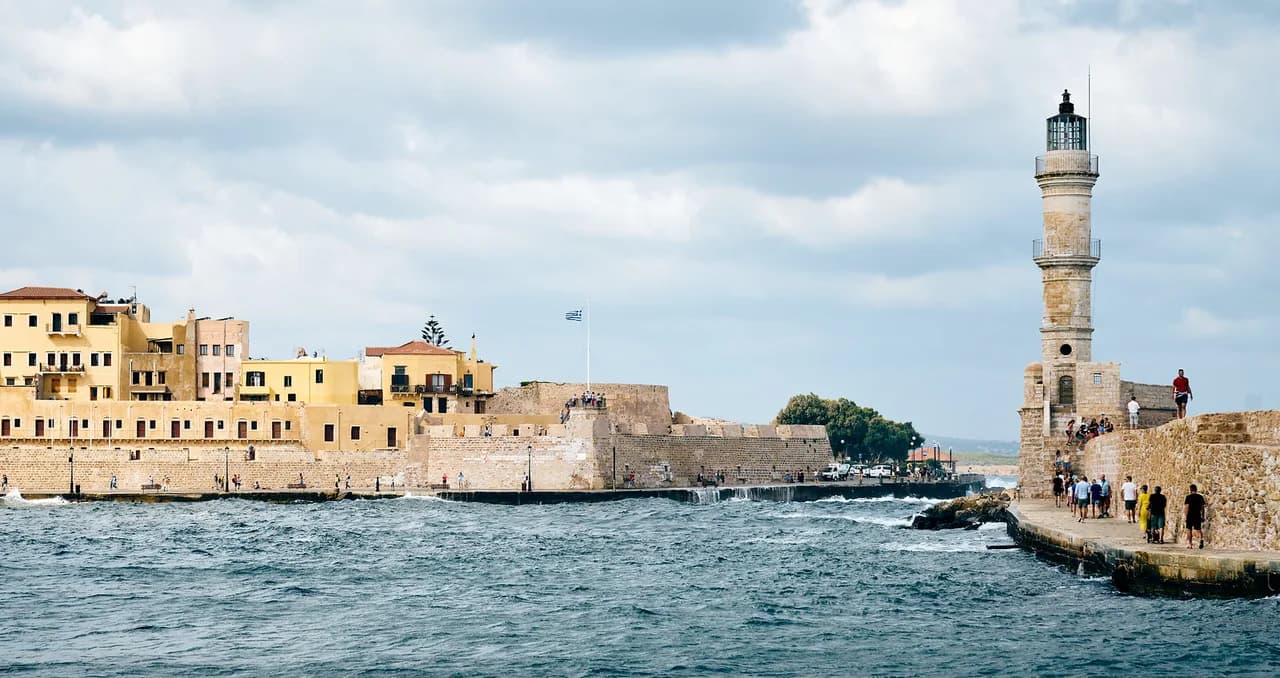
The shopping areas connect easily on foot. Start at the Municipal Market, walk into the Old Town lanes for the craft studios, then follow the waterfront to the Venetian Harbor for the knife workshops; that loop covers the essentials without a bus. Side alleys off the Venetian Quarter reward a slower detour.
Weigh the view against the value as you go. Harbor-front shops and cafés charge for position, while benches a street or two back often sell comparable work with more time to talk to the maker. The same logic applies at lunch: a back-street table usually stretches the budget further than a waterfront seat.
Build meals into the route rather than treating shopping as a separate outing. The [best restaurants in Chania](/best-restaurants-in-chania) are grouped by area, so you can plan a market morning, an Old Town afternoon and a late lunch without crossing the city twice.
Practical checks and common mistakes
Sunday changes the picture. Verekinthos Artisan Village is typically closed on Sundays according to the cited pattern, and smaller family workshops keep their own hours, so check the day before you rely on a particular studio being open. Many Old Town shops also close for part of the afternoon.
Carry cash for markets and small benches. Card acceptance varies between stalls and studios, and a short queue behind you is not the moment to discover a card reader is out of service; withdraw euros before you start the loop rather than hunting for a machine mid-route.
Weigh your luggage before you fall for ceramics. A hand-thrown vase is a genuine craft purchase and also heavy, fragile and awkward for island ferries; if your trip continues after Chania, ask about shipping or choose textiles, prints or herbs instead. Knives carry their own carrier and customs rules, so confirm those before buying.
Expect to see the same Cretan motifs at very different quality levels. The tell is usually the maker: a named workshop with visible work in progress, a founding story such as Kortsidakis Leather's four generations, and a willingness to explain materials. A rack of identical items with no maker attached is the opposite signal.
Plan Your Shopping in Chania
Aim for three stops rather than a full sweep: the Agora for edible souvenirs, Skridlof Street for leather, and the Old Town or Venetian Quarter for ceramics, textiles and knives. That covers what Chania actually makes, keeps the walking manageable and leaves time to compare before you buy.
Before you go, decide what you can carry and what you may need to ship, then check opening days for any single studio you have set your heart on. If you want the wider context of the city around the shops, the [Chania Attractions: 8 Visitor Guides](/attractions/chania) hub links the harbor, Old Town and day-trip guides in one place.
Explore more Chania sauna guides
Frequently Asked Questions
What should I buy in Chania?
The purchases most closely tied to local workshops are leather shoes and bags from Skridlof Street, hand-forged Cretan knives engraved with a verse or blessing, hand-thrown ceramics, hand-printed textiles and carved olivewood. For edible souvenirs, the Municipal Market covers cheese, olives, olive oil, honey, carob products and dried mountain herbs under one roof, with specialist herb and grocery shops adding more choice.
What is Skridlof Street in Chania known for?
Skridlof Street is the Old Town's leather quarter, a pedestrian lane of workshops making shoes, boots, bags and belts, many run by second- and third-generation leatherworkers. Custom-fit orders are measured and made at the bench, and short stays can often be accommodated with faster turnaround and shipping, so ask about timing before you commit to a made-to-measure pair.
Is there a shopping mall in Chania?
There is no giant mall in the historic centre; the international clothing brands are present in the city but scattered rather than gathered in one complex. OLEA Shopping Center is listed among the city's retail venues in local directories, but those listings do not establish its size, location or contents, so check its current stores and opening hours directly before making a special trip.
When are the street markets in Chania held?
Chania has open-air farmers' markets including the Laiki market and the Nea Chora market, distinct from the covered Municipal Market. The exact market days aren't confirmed in the sources used here, so ask your accommodation or a local shopkeeper before setting out. Street markets are generally busiest early in the morning.
Sources
Notes for eating well in Greece
Optional updates to our guides.
You might also like
Continue reading
More guides you'll find useful