How to Say Thank You in Greek: Efcharistó Pronunciation and Replies
Learn how to say thank you in Greek with efcharistó, pronounced ef-hah-ree-STOH, plus the stronger efcharistó polí and the standard reply parakaló.
On this page
Ordering a meal in a Greek taverna or paying for a ferry ticket goes more smoothly with a couple of words in the local language, and thank you is the one most travelers want first. The everyday word is efcharistó, a four-syllable term that looks harder on paper than it sounds out loud. This guide breaks it down, adds the warmer version and the expected reply, and places each phrase in situations you will actually meet.
It is also worth knowing that a little Greek goes a long way without being perfect. Taverna staff hear dozens of accents a day, so a clearly attempted efcharistó lands well even when the vowels wobble. The phrases here pair naturally with the rest of the Greek Customs and Etiquette travelers pick up, from greeting to tipping.
Why Efcharistó Trips Up English Speakers
The word is longer than the average English please or thanks, and its spelling suggests a cluster of consonants that does not really exist in speech. A licensed Greek guide who writes about archaeology and everyday travel points out that every sound in the word occurs in English too, which undercuts the idea that it is unpronounceable. His memory hook is an English name, F. Harry Stowe, which sounds almost exactly like the Greek word when said at speed.
How do you pronounce efcharistó? Break it into four beats, ef - cha - ri - STO, with the stress on the last syllable and a soft, breathy ch as in loch. A memory hook from a Greek guide is the English name F.
How do you say thank you very much in Greek? Add the word for much, polí, to the basic word, giving efcharistó polí. Use it when someone has done more than a routine service, such as finding you a table or helping with luggage, and keep the plain efcharistó for quick exchanges.
What do you say when someone says efcharistó to you? Parakaló is the standard reply, and it also means please when you are making a request. Hearing it back after you thank someone is normal and signals that the exchange is complete.
The hook works because it forces the stress onto the right syllable without a phonetic chart. Say the name naturally, drop the initial F, and what remains sounds almost exactly like efcharistó. That is a faster route than memorizing vowel symbols on a phrase card, which tends to produce a flat, over-careful reading in the middle of a busy shop.
The Basic Word: Efcharistó (Ευχαριστώ)
Efcharistó is written ευχαριστώ in Greek letters and transliterated variously as efcharisto or efcharistó; the accent marks the stressed final syllable. Break it into four beats: ef - cha - ri - STO, with the last syllable loudest and the ch soft as in the Scottish loch rather than a hard k. Say it to a waiter, a bus driver or a shopkeeper and it covers thanks in every ordinary setting.
One point of context helps if you also read older texts. Greek language teachers note that the verb behind efcharistó is a later usage rather than classical Greek, so a phrase book of ancient Greek will not present it as the standard word for thanks. For a modern trip the distinction changes nothing, but it explains why the word looks different from the thanks vocabulary in classical dictionaries.
Saying It With More Warmth: Efcharistó Polí
Efcharistó polí adds the word for much and turns a plain thanks into thanks a lot. Use it when someone has done more than hand you a plate: a taverna owner who finds you a table on a crowded terrace, a hotel clerk who holds your bag, or a stranger who walks you to the right bus stop. The extra word costs one syllable of effort and is heard as genuine warmth rather than formula.
There is a practical trade-off: polí at full volume can sound theatrical in small exchanges. Paying for a coffee calls for the plain word, while a favor deserves the longer form. If you are unsure, start short and let the situation decide whether more is warranted.
The Standard Reply: Parakaló
When you say efcharistó, the usual answer is parakaló, which does double duty as please and as you're welcome. It is the phrase you will hear back from waiters, kiosk owners and museum staff, so recognizing it matters more than producing it. If someone thanks you first, parakaló is the safe, polite reply.
The word also opens requests. Pointing at a bakery item and saying parakaló, or pairing it with the item's name, is a normal way to order without a full sentence. Learning to hear it as both an invitation and a reply removes one of the small confusions of a first day in Greece.
Short Forms and Casual Settings
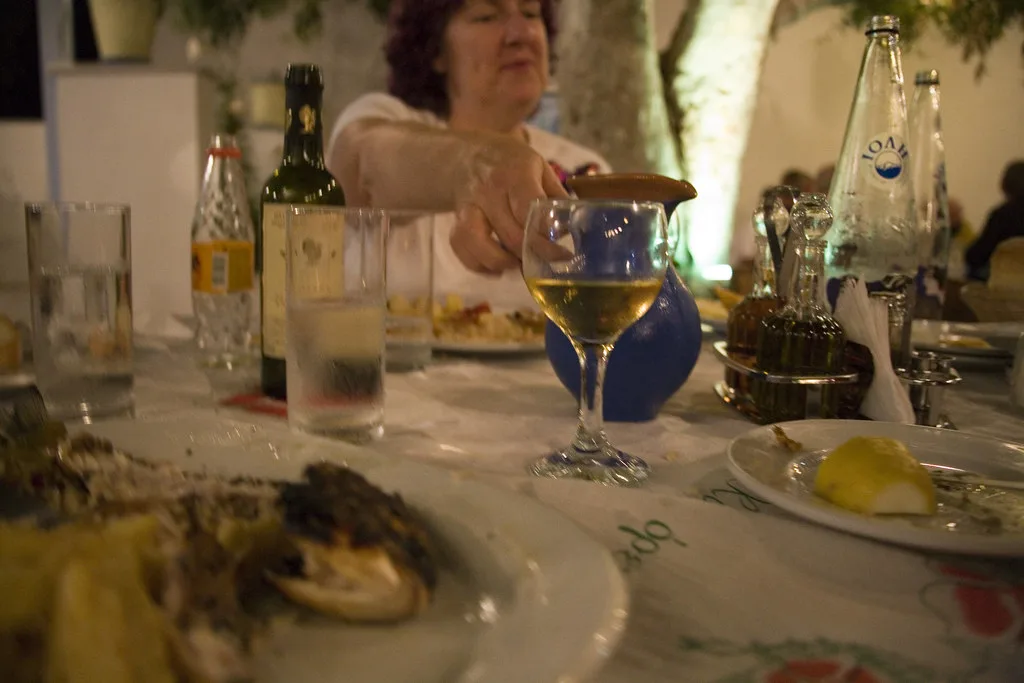
In a taverna, thanks often comes with food talk rather than on its own, and a short efcharistó as plates are cleared is enough. Staff rarely expect formal phrasing, and a smile plus the word does more than a perfectly accented sentence. The same word works at a hotel desk, where you might add it after asking for a late checkout or a taxi call.
In shops and bakeries, the exchange is quick: you ask with parakaló, pay, and say efcharistó as you take the bag. There is no separate casual word to learn, only a shorter delivery. Keep the stress on the final syllable even when speaking fast, because a flat ending is what most often causes a puzzled look.
Pairing Thanks With Hello and Goodbye
Most of the goodwill in a Greek exchange is carried by the greeting rather than the thanks. Kalimera means good morning and is used until roughly midday, while kali spera covers the afternoon and evening and kali nichta is said at night or before bed. Entering a shop with kalimera and leaving with efcharistó reads as polite in a way that thanks alone cannot.
In a taverna the round of phrases grows: a toast with yamas, which means to your health, and a goodbye as you leave. These small words do more for the mood of a meal than any attempt at a long sentence. Treat them as a set to practice together rather than separate vocabulary items.
Common Pronunciation Mistakes and How to Avoid Them
The usual errors are stressing the first syllable, hardening the ch into a k, and letting the final o drift into an English uh. Each fix is simple: stress the end, keep the ch breathy, and round the last vowel clearly. Practicing with the F. Harry Stowe hook trains the rhythm before you worry about individual letters.
A second trap is over-articulating every syllable, which makes the word sound like four separate pieces. Native speakers run it together, so aim for one smooth unit. Recording yourself once and comparing the rhythm, not the accent, is usually enough to iron out the worst habits before a trip.
Polite Extras Beyond Thank You
For a formal moment, Greek offers a longer phrase for that is very kind of you, transliterated as ine poli evgeniko ek merous sas. It suits a situation where someone has gone out of their way, such as returning a lost item or rearranging a booking. Most travelers will hear it rarely and need it less, but recognizing it prevents confusion when it is aimed at you.
Beyond words, small gestures carry weight: a nod to staff as you pass, patience at a busy counter, and a clear goodbye when leaving. Greek hospitality tends to reward attention to the person rather than perfect grammar. A traveler who greets, thanks and says goodbye in Greek will be treated as someone making an effort.
Practice Plan: Three Phrases to Lock In
Three phrases cover most of a trip: efcharistó for thanks, efcharistó polí for a real favor, and parakaló for please and you're welcome. Practice them aloud in that order, then add kalimera so greetings come first in your mind. Repeating them while walking or waiting for a ferry is more useful than reading a list once.
Try them in low-stakes places first, such as a bakery counter or a kiosk, before using them at a formal hotel desk. Feedback comes fast in a shop, where a smile or a nod confirms you were understood. Once the pair feels automatic, add the toast and the goodbye phrases and the set is complete, and the same habit prepares you for expressions like the opa meaning shouted across a dancing table.
A Note on Regional and Historical Variants
Cyprus uses its own form of Greek, and the everyday thank-you there is not identical to the standard phrase taught for Greece. This guide does not list a Cypriot form because reliable spelled examples were not available at the time of writing; ask locally or check a Cyprus-specific phrase resource before relying on one. In Greece itself, efcharistó is understood everywhere from Athens to the islands.
Historically, the picture is layered: the word most travelers learn belongs to modern usage rather than classical texts, where thanks was expressed differently. If you read ancient authors or visit archaeological sites with inscriptions, expect a different vocabulary and don't assume a phrase book will match. The distinction is trivia for a taverna but useful for anyone curious about how the language shifted, and it is worth keeping in mind when you tour the ancient sites in greece. Travelers heading west will find the same blend of old and new in the Things to Do in Corfu: Town Sights, Coasts and Food, where Venetian-era lanes sit beside modern tavernas.
Plan Your Visit
Learning one Greek word well is more useful than half-learning ten. Start with efcharistó, add polí when the moment deserves it, and recognize parakaló as the reply you will hear back. Pair all three with a greeting and a goodbye and you have the core of a polite exchange in any Greek city or island.
Explore more Greece sauna guides
Frequently Asked Questions
How do you pronounce efcharistó?
Break it into four beats, ef - cha - ri - STO, with the stress on the last syllable and a soft, breathy ch as in loch. A memory hook from a Greek guide is the English name F. Harry Stowe, which sounds almost identical when said quickly.
How do you say thank you very much in Greek?
Add the word for much, polí, to the basic word, giving efcharistó polí. Use it when someone has done more than a routine service, such as finding you a table or helping with luggage, and keep the plain efcharistó for quick exchanges.
What do you say when someone says efcharistó to you?
Parakaló is the standard reply, and it also means please when you are making a request. Hearing it back after you thank someone is normal and signals that the exchange is complete.
Is efcharistó formal or informal?
It works in both registers and is the everyday word for thanks, suitable for a taverna, a shop, a hotel desk or a taxi. For added warmth use efcharistó polí, and for a very formal moment there is a longer phrase meaning that is very kind of you.
How do you say thank you in Cypriot Greek?
Cypriot Greek has its own everyday forms, and they differ from the standard phrase taught for Greece. This guide does not give a spelled Cypriot version; check a Cyprus-specific phrase resource or ask locally before relying on one.
Can I just say thanks in English in Greece?
English is widely understood in tourist areas, and no one will be offended. Still, a clear efcharistó is short, easy to learn and usually gets a warmer response, so it is worth the small effort.
What does parakaló mean?
Parakaló serves as both please and you're welcome. You use it to open a request, such as asking for an item at a bakery, and you hear it as the reply when you thank someone.
Why does efcharistó look so different from classical Greek?
The verb behind the modern word is a later usage rather than classical Greek, so texts from antiquity express thanks differently. For a modern trip this changes nothing, but it explains why the word does not match the vocabulary in classical dictionaries.
Sources
Notes for eating well in Greece
Optional updates to our guides.
You might also like
Continue reading
More guides you'll find useful