Cats of Greece: Why They're Everywhere and How to Treat Them
Meet the cats of Greece, from the native Aegean cat to harbour strays. Learn why they are everywhere and how to behave around them on islands and in towns.
On this page
Cats are part of the ordinary furniture of a Greek trip. They drape themselves over harbour walls, thread between taverna chairs, and wait near kitchen doors in island villages where the same faces appear every evening. Understanding why they are so visible, and what locals expect you to do about it, makes the encounters easier and fairer to the animals.
This guide separates the native Aegean cat from the generic street cat, explains the practical reasons the population is so large, and gives a clear line on feeding, touching and photographing. It also points to where help actually matters, which is not the sunny week in August but the quiet months after the crowds leave.
What Visitors Actually Notice: Cats in Tavernas, Harbours and Village Lanes
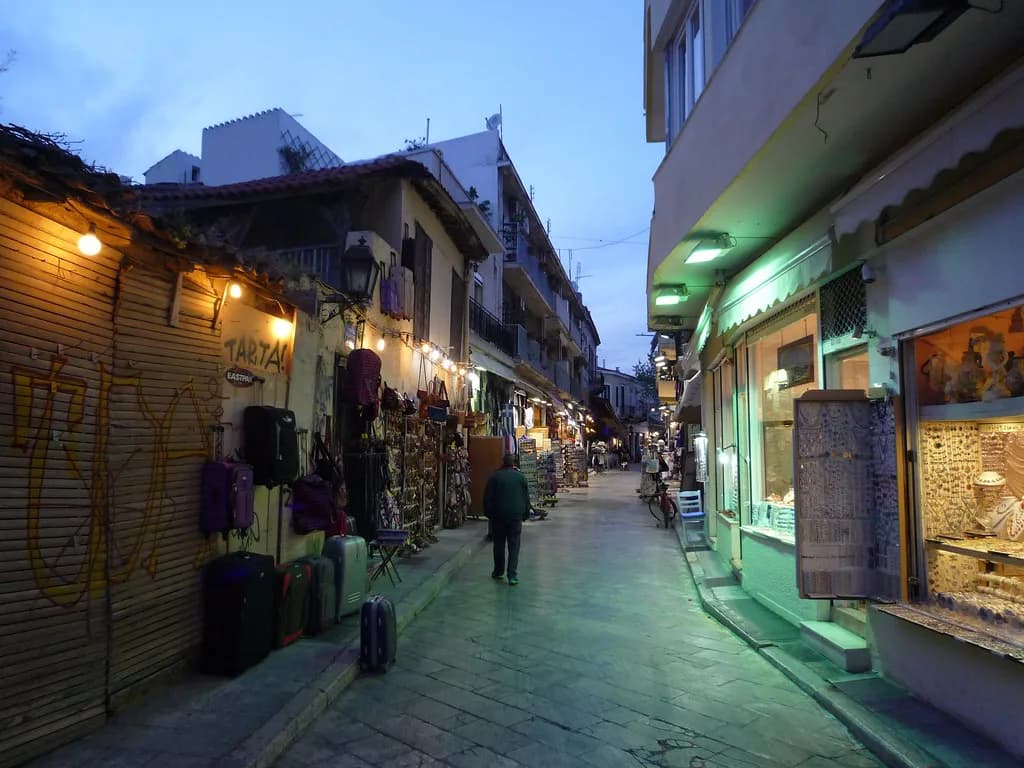
The pattern is consistent across the country. Harbours and fishing quays draw cats because boats and cleaning tables produce scraps; taverna courtyards draw them because diners drop food; village lanes draw them because bins and doorways offer shelter. None of this is staged for tourists, and it is the main reason photographs of Greek cats so often feature whitewashed steps and blue sea behind them.
Are cats special in Greece? Cats are a familiar and largely tolerated part of everyday life in Greek towns, harbours and island villages, but they are not treated as sacred animals. They are usually community cats that residents feed and know individually rather than pets with a single owner.
Why does Greece have so many cats? The main reasons are a steady food supply from harbours, tavernas and fishing, plus unmanaged breeding where neutering programmes are limited. Island populations also swell in the tourist season when food is abundant.
What is an Aegean cat and is it a breed? The Aegean cat is a naturally occurring landrace associated with the Cycladic Islands and western Turkey, not a pedigree breed with a studbook. That means it developed through generations of local survival rather than deliberate breeding.
On the islands the density feels higher than on the mainland, partly because the settled area is small and partly because the same cats work a compact circuit of harbour, square and back street each day. If you want to understand the rhythm of a Greek village before you arrive, it helps to read up on local manners first, since the same courtesy that governs a taverna table governs how you treat the animals around it. Our guide to Greek customs covers the basics of behaving like a guest rather than a spectator. For the harbour-and-square circuit itself, this guide to things to do in Naxos follows the same lanes between port and village.
One practical note for anyone eating outdoors: cats are quick, and a plate left unattended at a harbourside table is fair game. Keeping your hands and cutlery on your own plate, rather than shooing animals away dramatically, is the low-friction approach most staff prefer.
The Aegean Cat: Greece's Native Landrace and How It Differs from a Stray
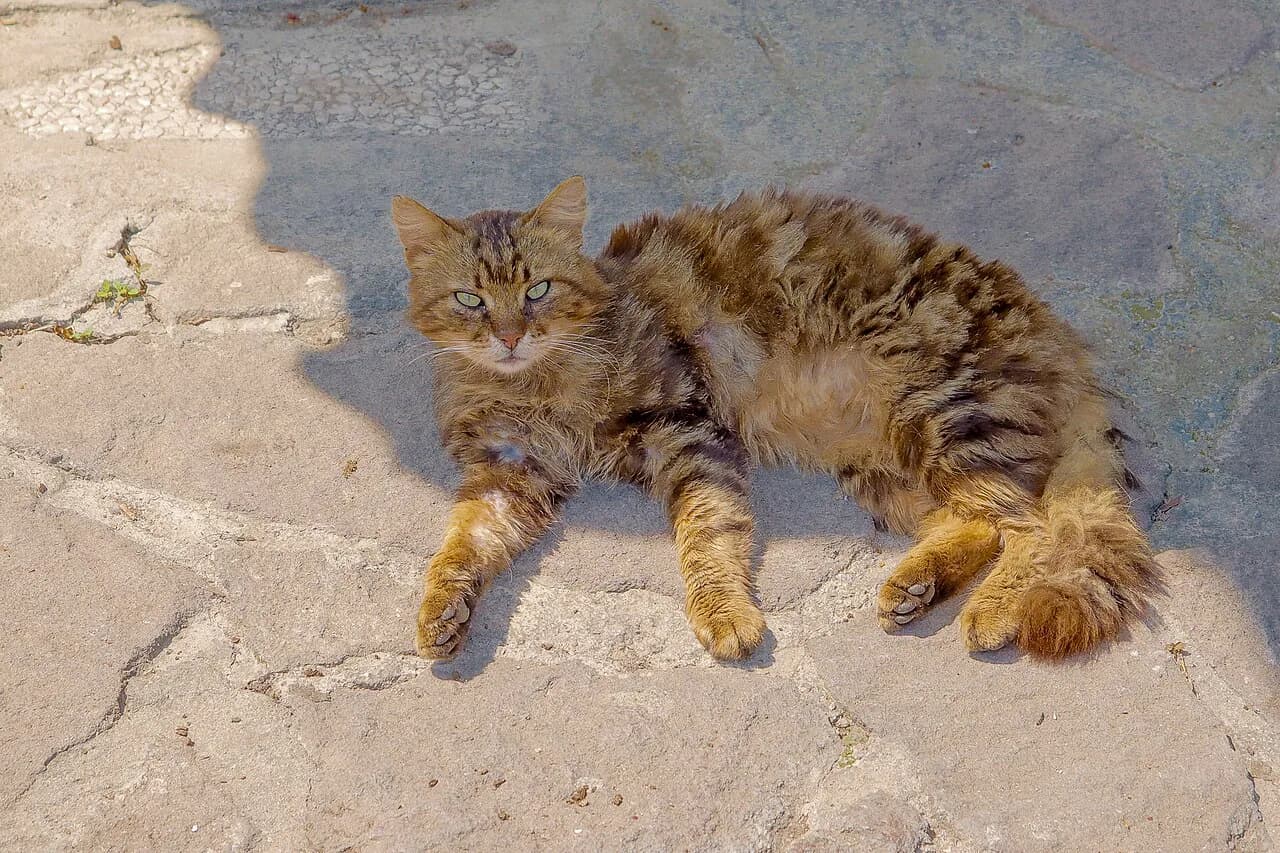
The Aegean cat is a naturally occurring landrace associated with the Cycladic Islands and the coast of western Turkey, rather than a pedigree breed maintained by breeders. Landrace means the population developed through generations of local survival without a studbook, so the cats vary in size and marking while sharing a general type suited to island life. The Wikipedia entry on the Aegean cat is the most direct summary of that distinction.
In practice you will not reliably tell a native Aegean cat from a mixed harbour stray at a glance, and it is not worth pretending otherwise. The useful takeaway is conceptual: the cats you see are largely a local, self-sustaining population with a long history in the Aegean, not simply abandoned pets. Treating every cat as a lost domestic animal leads to well-meant interference, such as trying to pick one up or relocate it, that does neither the cat nor the community any good.
Why Greece Has So Many Cats: Island Economics, Food Waste and Unmanaged Breeding
Food is the first driver. Fishing harbours, open kitchens and outdoor dining generate a steady supply of scraps, and a small island with a long tourist season generates far more of it than the resident population alone would. Cats that can find food in a compact area breed successfully, and without systematic neutering the numbers climb back quickly after any decline.
The second driver is seasonal. Island economies swell in summer and contract sharply afterwards, and the food supply contracts with them. This is why the visible cat population in July is not a reliable indicator of how many the island supports in February, and why welfare effort concentrated in high season misses the harder months. It also explains why cats cluster around the places that keep working in winter, such as the year-round harbour rather than the seasonal beach bar.
The Greek taverna table itself feeds into this. Bread usually arrives without being ordered and is charged for, as described in this overview of traditional Greek cuisine, so a table that leaves most of its bread behind is contributing directly to the local cat economy. Declining the bread at the start of the meal if you will not eat it is a small, polite intervention. Our guide to what to eat in Greece is useful here, since knowing what is coming makes it easier to order only what you will finish, much as the ancient sites in Greece reward knowing what you are looking at before you arrive.
Were Cats Sacred in Ancient Greece? Separating the Record from Internet Claims
The claim that cats were sacred in ancient Greece circulates widely online and should be treated with caution. Cats were venerated in ancient Egypt, and that association is frequently transferred to Greece in popular retellings without support. Greek religious and domestic life is richly documented, but a formal cult of the cat is not something to assert casually, and no source in this guide establishes it.
What can be said with confidence is narrower and more interesting: cats were present around Greek households and harbours over the long term, doing the rodent control that made them tolerated rather than worshipped. If ancient Greek religion and civic life interest you, the documented sanctuaries and sites are a better starting point than folklore about animals, and a guide to ancient sites in Greece will point you at the places where the evidence is visible.
How Greeks Treat Cats: Community Cats, Taverna Cats and Local Attitudes
The cats around a Greek taverna are usually not one person's pets. They are community animals that several people feed, tolerate and occasionally take to a vet, and the taverna owner often knows them individually. A widely shared piece on the cats of Greece makes the point that Greeks get to know specific animals and enjoy seeing them in the streets, which matches the way staff talk about the cats outside their own door.
This matters for how you behave. Feeding a cat is not a rescue; it is joining an existing arrangement, and the person who carries the cost and the responsibility is the resident, not the visitor. Ask before assuming a cat is unowned, and take a cue from staff about whether feeding is welcome at that table. Photographing a cat is harmless, but blocking a doorway or a kitchen pass to get the shot is not.
Cats also share space with other animals around food. Understanding how a Greek meal is structured, including the bread and the mezedes that arrive first, helps you anticipate what will be dropped and when the cats will appear.
Cats Around Your Table: What to Do During a Meal
The rule that works almost everywhere is simple: do not feed cats from the table. Human food is poorly suited to them, and handouts teach them to crowd diners, which creates friction with staff who have to manage the next table. If a cat settles under your chair, let it be. If it climbs onto the table, a firm gesture towards the floor is enough; there is no need for drama.
Do not pour milk for a cat either, however traditional it looks in a photograph. Adult cats do not need milk, and the safer general position is to leave feeding to residents who know the animals and can supply appropriate food. If you genuinely want to help, the better move is to ask the taverna owner or a local shop whether there is a feeding arrangement you can contribute to rather than improvising one at your table.
You can read more about how a meal runs, course by course, in this account of traditional Greek cuisine, which explains why the table fills up quickly and why scraps accumulate. It also explains why an untouched plate is unusual and a half-eaten one invites attention.
Feeding Strays Responsibly: Why Milk and Leftovers Can Be a Mistake
The instinct to feed is generous, but it has consequences. Scraps and milk attract more cats to a spot than it can support, concentrate animals near roads and taverna kitchens, and make the population harder to manage responsibly. Discarded food also draws the attention of the people who run the premises, and their tolerance has limits that visitors do not see.
If you want to feed, do it in a way that a resident can sustain after you leave: ask first, use food intended for cats rather than restaurant leftovers, and put it down away from the entrance and the kitchen pass. Then clean up. Water is generally a more useful contribution than food in hot weather, and it does not create the same crowding. Any decision to help should be checked with the people who live there year-round rather than decided on the spot.
Safety and Etiquette: Touching, Photographing and Children Around Strays
Strays are not tame, even when they approach confidently. Handling unknown cats carries a risk of scratches and bites, and a cat that is friendly at the harbour in July may be wary or unwell later in the year. Keep your hands back, let the cat choose the distance, and wash your hands before eating, particularly if children have been petting animals at a taverna.
For photographs, get low, use a longer lens if you have one, and avoid flash near animals resting in shade. A cat asleep on a step is a better picture than a cat being chased for a better angle, and the same courtesy you would extend to a person applies. Children should be supervised closely around stray animals and taught not to offer food from the hand.
If you are travelling with children and want to set expectations before the trip, it helps to explain that the cats belong to the place rather than to visitors. The same principle of not imposing on local life runs through how to behave at a Greek table, where bread may arrive unrequested and a small courtesy goes a long way. Efcharistó polí is worth knowing for the moment a taverna owner waves away your thanks.
If You Want to Help: Vets, Feeding Groups and Volunteer Networks
The most effective help is usually money or supplies channelled through a local group that already does the work, rather than a visitor's own improvised feeding round. Island communities often have informal networks of residents who trap, neuter and feed, and they are the people who know which cats are already handled. Ask at a taverna, a bakery or a local shop whether such a group exists; a vet clinic in a larger town can usually point you towards it.
Do not name-hunt or cold-call organisations from abroad without checking they are still active. Island volunteer capacity is small and seasonal, and an inbox full of offers in August is not the same as help in February. If you want to contribute, ask what is actually needed at the time you are there, and be honest about what you can sustain after you go home.
Off-Season Reality: What Happens to Island Cats When the Summer Crowds Leave
The real welfare story is not the summer photograph; it is the winter that follows. When the seasonal tavernas close and the visitors leave, the food supply drops sharply, while the cats remain. The general pattern on the Greek islands is that many restaurants close roughly November to April, and where that is true the cats that lived off the summer trade go with less.
This is why residents matter more than tourists in the long run. A modest regular contribution through a local group, or a donation made before you leave rather than a feeding session on your last evening, has a longer reach than anything a visitor can do at the table. If you return to the same island in a different season, you will notice the difference yourself.
Cats in Greek Art and Everyday Life: From Harbour Mascots to Shop Doors
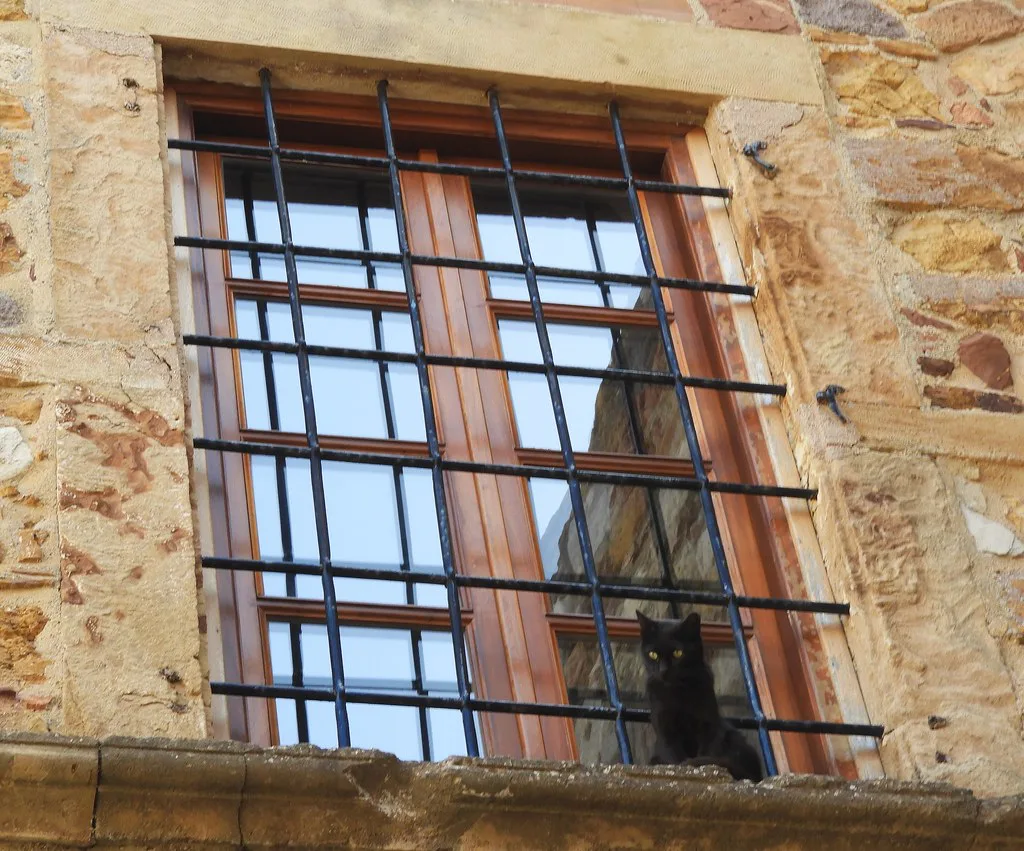
Beyond the postcard, cats occupy a settled place in Greek everyday life. They are painted on shop signs, photographed on windowsills, and known by name to the people on their street. A harbour cat that has been there for years is a small piece of local continuity, and residents often talk about individual animals the way they talk about neighbours.
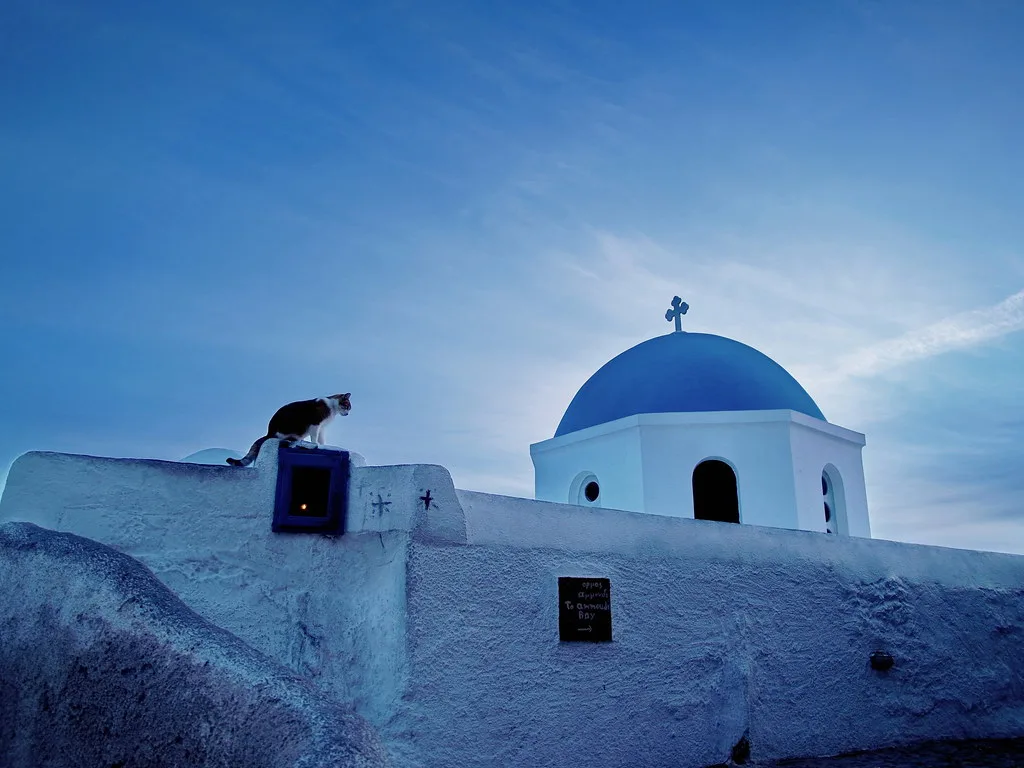
The visual culture of the islands supports this. Whitewashed walls, blue doors and stepped lanes provide the frame that appears in most photographs of Greek cats, and understanding that built landscape makes the pictures better. A guide to Cycladic architecture explains the whitewash-and-blue palette and the lanes that cats use as their own routes through a village.
Greek social life gives animals a background role rather than a central one, but the same occasions recur. Celebrations, name days for Saint Constantine or Saint Helen, and long evenings in the square all bring people and cats into the same space. Read up on Greek name days and what happens when the table fills up, and you understand why the local cat knows the calendar better than you do.
Beyond the Cat: Other Animals You May Meet Around Tavernas and Markets
Cats are the most conspicuous, but not the only animals you will see around food. Donkeys still work on some islands, and the ethics of riding them in the heat are worth thinking about before you do it. Our guide to Santorini donkeys covers the steep steps at Fira old port and the trade-offs involved in animal labour in a tourist economy.
Around markets and harbours you may also meet dogs, goats and the occasional mule, particularly in rural areas. The same principle applies: observe, ask before touching, and do not feed animals from your plate. Market shopping in Greece is part of the pleasure of a trip, and a guide to shopping in Thessaloniki gives a sense of how markets function as everyday places rather than attractions, with animals as part of the scenery.
Quick Decision Checklist: Feed, Photograph, Donate or Simply Leave Alone
When a cat approaches, run through a short list. Is it in a place where feeding is clearly part of the routine, and has a resident said it is welcome? If not, leave it alone. Are you photographing without blocking a door or a kitchen pass? If yes, take the shot and move on. Are you tempted to pick the cat up? Do not, unless it is clearly in danger and a local is helping.
If you want to do more than look, the durable options are a donation to a local neutering and feeding group, supplies bought locally and handed over, or a conversation with a taverna owner about what the street actually needs. What does not help is deciding, on your last evening, to feed the cats of the harbour from your plate and call it kindness. When in doubt, leave the animal be and enjoy the fact that it is there at all.
A last piece of etiquette ties the whole trip together. The raised glass and the shout of opa you will hear across a taverna are not a cue to do anything with the cats, but they do mark the moment when a table becomes a shared occasion, and knowing what the opa meaning is keeps you on the right side of the line between joining in and performing.
Plan Your Visit
The cats of Greece are a genuine part of the place, not a photo opportunity, and the best visits treat them that way. Eat your meal, keep your scraps off the floor, ask before you feed, and let residents set the terms. If you want to help, help the people who stay through the winter, and your contribution will outlast the holiday.
Before you travel, read up on Greek table manners and a few basic Greek words, since both make the everyday encounters easier. Then simply watch the harbour at dusk, when the boats come in and the cats know exactly what time it is, and you will have understood more about the island than any guidebook explains.
Explore more Greece sauna guides
Frequently Asked Questions
Are cats special in Greece?
Cats are a familiar and largely tolerated part of everyday life in Greek towns, harbours and island villages, but they are not treated as sacred animals. They are usually community cats that residents feed and know individually rather than pets with a single owner. Visitors are expected to enjoy them without disrupting the routine that locals maintain.
Why does Greece have so many cats?
The main reasons are a steady food supply from harbours, tavernas and fishing, plus unmanaged breeding where neutering programmes are limited. Island populations also swell in the tourist season when food is abundant. The numbers are most visible in summer and much less visible after seasonal businesses close.
What is an Aegean cat and is it a breed?
The Aegean cat is a naturally occurring landrace associated with the Cycladic Islands and western Turkey, not a pedigree breed with a studbook. That means it developed through generations of local survival rather than deliberate breeding. You cannot reliably identify one at a glance among harbour cats.
What were cats called in ancient Greece?
Ancient Greek sources do not give the cat a single prominent, well-attested name in the way they do for other domestic animals, and claims about a Greek cat cult should be treated carefully. What is documented is the presence of cats around households and harbours over the long term as rodent control. Anyone repeating a specific ancient Greek word for cat should be able to cite a source.
Are stray cats in Greece safe to touch?
Strays are not tame and may scratch or bite if handled, so it is safer not to touch them at all. Let the cat choose the distance and wash your hands afterwards, especially before eating. Children should be supervised and discouraged from offering food by hand.
Should you feed the cats in Greece?
Usually not from your table. Human food and milk are poorly suited to cats, and feeding at a taverna concentrates animals where they are not wanted and creates work for staff. If you want to help, ask a resident whether there is a feeding arrangement you can support, and prefer water in hot weather.
What happens to Greek island cats in winter?
The food supply drops sharply when seasonal restaurants close, which on many islands happens roughly November to April, while the cats remain. Winter is the harder period for welfare, and it is when local neutering and feeding groups need support most. Summer feeding by visitors does little for the months that follow.
Where in Greece will you see the most cats?
Harbours, fishing quays, taverna courtyards and village lanes are the reliable places, and small islands tend to feel denser than mainland cities. Rather than hunting for a hotspot, watch the working parts of a village, such as the quay at dusk or the back lanes behind the square. That is where the routine is.
Sources
Notes for eating well in Greece
Optional updates to our guides.
You might also like

Continue reading
More guides you'll find useful