Santorini Donkey Rides: Fira Steps, Prices and Alternatives
Santorini donkey rides climb the Fira steps from the old port. Here is what the route involves, what it costs and how the cable car compares.
On this page
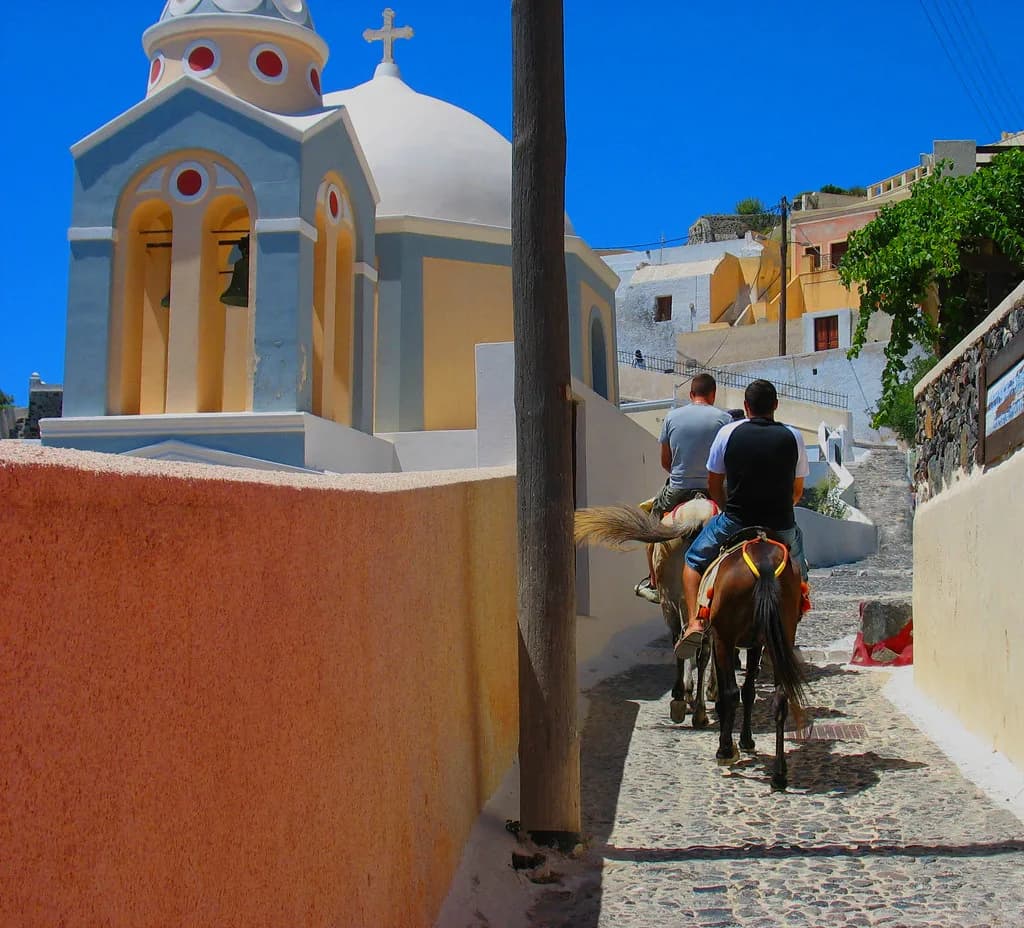
The Santorini donkey ride is not a loop around a village square. It is a one-way climb or descent on a stepped path that links the old port at the base of the caldera to Fira, the island's clifftop capital, with donkeys and mules carrying riders up or down. Searches for a donkey ride in Oia are common, but the routed service on the island runs on the Fira steps, not in Oia.
This guide is for travelers deciding how to cover those steps: whether to ride, walk, or take the cable car. It sets out the published numbers, the welfare concerns that animal organizations and media have raised about working animals in the heat, and the practical trade-offs of each option.
Where the Ride Runs: Old Port to Fira
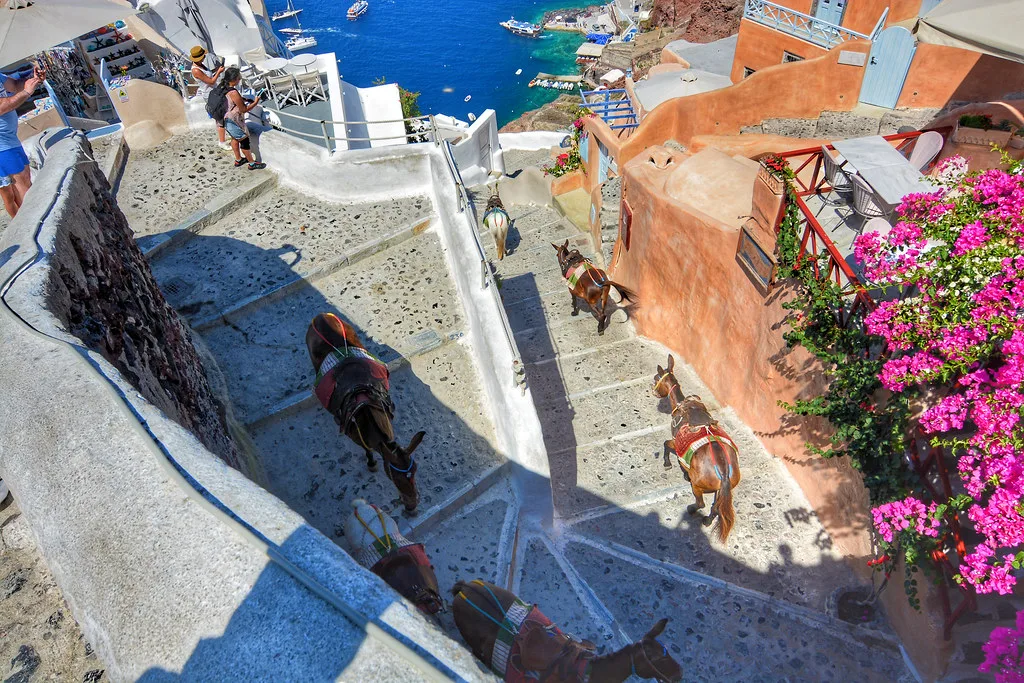
The route begins at the old port, the small harbour directly below Fira where boat trips and cruise tenders land. From the water's edge a stepped path zigzags up the caldera wall to the town, and this is the stretch where donkeys and mules work. The old port is not the island's main ferry port at Athinios, so do not expect the ride to start where conventional ferries dock.
Can you ride a donkey in Santorini? Yes. Donkeys and mules carry riders between the old port below Fira and the town itself, on the stepped path up the caldera wall.
How much does a Santorini donkey ride cost? The ride is published as a per-person fare for a single ascent or descent, and the figure has been listed alongside the step count. Prices can change, so confirm the posted rate at the old port before you pay rather than relying on what a previous visitor paid.
How many steps are there from the Santorini port to Fira? The climb from the main port up the caldera is 588 steps. The staircase is continuous and largely unshaded, so the number matters less than your pace and the time of day you start.
Oia sits at the northern tip of the caldera and has its own steep paths and steps, but the animal-assisted climb that operators advertise and visitors ask about is the one from Fira's old port. If you are staying in Oia, treat the Fira ride as a separate excursion rather than something on your doorstep.
Because the route is short and fixed, the decision is simple: you either take an animal, walk the same steps, or pay for the cable car that runs between the port and Fira. Each puts you at the top in a different amount of time and with a different level of effort.
The Route in Numbers
The published listing for the ride puts the climb at 588 steps from the main port up the caldera to the town, with a fare of 10 euros per person for the ascent or descent. Treat that step count and price as published figures that can change rather than fixed facts, and confirm them at the port before committing. Note that the staircase paving is worn smooth in places, so footwear with grip matters whether you climb on foot or ride.
On foot the climb is a steady staircase rather than a scramble, but it is continuous and exposed, so the time it takes depends far more on your pace and how often you stop than on distance. The ride compresses that effort into a few minutes under the animal's own pace, which is the main practical reason people choose it.
The path is also shared. Walkers, riders and animals use the same steps, so the safest approach is to keep to one side, listen for handlers, and avoid sudden stops in the middle of the flight.
What the Ride Costs and What It Covers
The published fare is a simple per-person charge for a single ascent or descent, not a guided tour or a loop. If two people want to ride up and walk down, expect to pay the fare once per rider for the one direction, and confirm whether a handler accompanies the animal on the descent as well.
Payment arrangements, tipping and any change to the official price are published at the port rather than online, so check the posted rate on the day instead of relying on older travel posts. Keep small notes ready if you intend to pay on arrival.
Welfare Concerns: Heat, Load and Public Attention
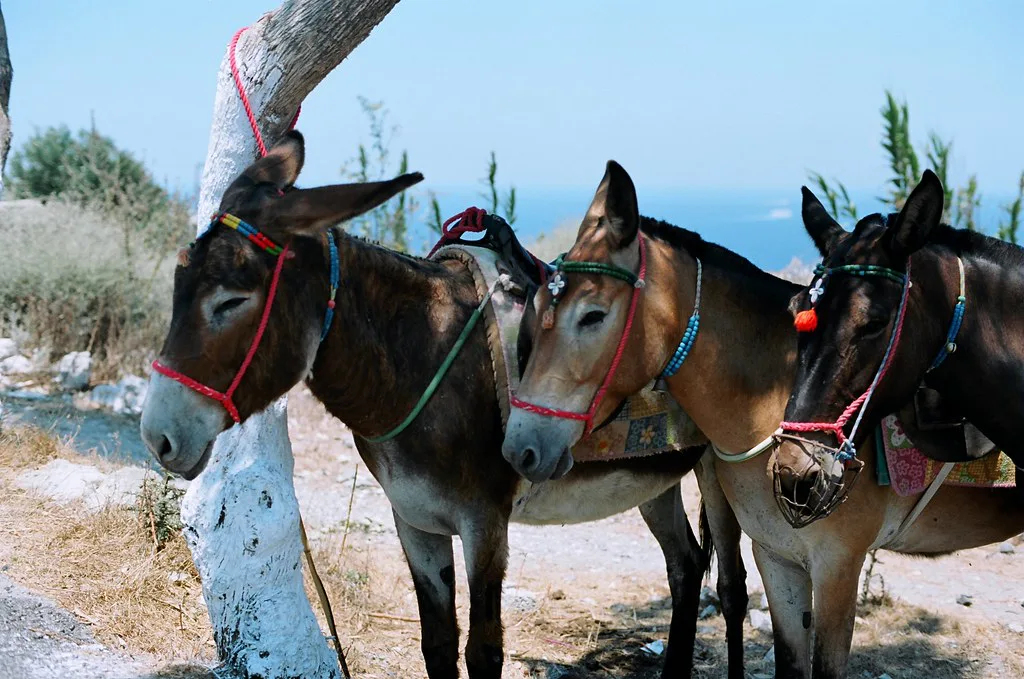
The most serious question about the Fira ride is animal welfare, and it is not a fringe concern. Reporting on the steps has documented animals working the climb in high summer heat, and animal welfare organizations have campaigned specifically about the weight the donkeys and mules carry and the conditions they work in.
Video coverage from the steps has focused on the number of animals still working the route and the steep, slippery nature of the climb, which is the part of the debate a visitor can actually see. Reading a couple of these accounts before you book gives you the context that a sign at the port will not.
None of this means the ride is banned or that every operator works the same way. It does mean the ride is a choice with an ethical dimension, and travelers who care about it should decide before they reach the top of the steps rather than at the ticket point.
Weight and Load Limits: How to Check
Campaigners and media reports have focused on rider weight as the central welfare issue, but there is no single published limit to quote for every operator, and rules can differ between animals and handlers. Ask the handler directly about weight limits and how many animals are working that day, and take a refusal as the answer rather than negotiating. A few words of basic Greek phrases can make that exchange easier if the handler is busy, and a quick efcharistó polí as you leave is the standard thank-you.
A practical way to check is to ask at the port before any money changes hands whether the animal will carry one rider or two, and whether larger riders are turned away. If the answer is vague, walk or take the cable car instead; the steps are the same either way.
Walking the Steps vs the Cable Car vs the Ride
Walking costs nothing but effort, and it is the option that puts you on the path at your own pace with time to stop for the caldera view. The trade-off is heat and exposure: there is little shade on the staircase, so an early start matters more than fitness.
The cable car is the mechanical alternative between the old port and Fira, and it removes the climb entirely in a few minutes. It runs on its own schedule and can queue heavily when cruise tenders land, so it is fastest outside the peak arrival window rather than at it.
The donkey ride sits between the two: faster than walking uphill, slower and more expensive than the cable car, and carrying the welfare question that the other options do not. If time is tight and the queue for the cable car is short, the cable car wins on every count except the experience itself. Weighing a short ride here follows the same logic as sizing up other uphill routes on the mainland, like the climb to the Acropolis of Athens.
Port Days and Cruise Crowds
When cruise ships anchor below Fira, tenders land at the old port in waves, and the cable car queue, the steps and the animals all absorb the same crowd at once. That is the moment the staircase feels congested and the ride feels rushed, and it is the strongest argument for timing your ascent away from tender arrivals.
Ship schedules are published by the cruise lines and by the port, so check which vessels are in on your date before you fix a time. A mid-afternoon climb, after the morning excursions have gone up, is usually calmer than the first hour after tenders start running.
Practical Notes for the Steps
Wear shoes with grip, because the paving on the staircase is worn smooth in places and sandals are a poor choice on the descent. Carry water, a hat and sun protection, and remember that the climb is unshaded for most of its length.
The path starts at the old port and ends in Fira's town edge, so you do not need a map; follow the flight upward. If you are meeting someone in town, agree on a landmark at the top before you split up, since the exit points from the steps into the lanes are not obvious.
If You Skip the Climb: What to Do in Fira
Fira rewards a slow hour even if you arrive by cable car. The lanes above the caldera hold small churches, viewpoints and shops, and the town is the natural base for a meal after the climb rather than before it. The whitewashed volumes and vaulted roofs you pass are typical of the wider Cycladic style, so a slow lane wander doubles as a lesson in it.
For a proper sit-down meal, look for the tavernas and ouzeries in the lanes set back from the caldera edge, where the view premium drops and the menu is aimed at residents as much as visitors. Order a few shared plates rather than a single main, and ask what is cooked that day; the plates are mezedes, the small dishes Greeks order together and eat across the table. If you want a wider survey before ordering, our guide to what to eat in Greece covers the national dishes dish by dish.
If a plate of grilled octopus or a bowl of tomato-based shrimp saganaki is on the table, it is worth knowing what you ordered: octopus is usually grilled and dressed with vinegar or lemon, while saganaki means the dish is baked with tomato sauce and cheese. Fish is often sold by weight, so ask for the price before it is cooked.
A raised glass of ouzo with those plates will often draw an opa from the next table; the word marks the moment rather than the drink, and it is worth knowing when and why Greeks say it. The guide to the opa meaning covers the settings the word belongs to and the everyday moments it marks.
A Quick Decision Checklist
Choose the cable car if you have limited time, are traveling with small children or heavy bags, or simply want the caldera view without the climb. Choose the walk if you are comfortable on stairs and can start early enough to avoid the heat and the tender crowds.
Choose the donkey ride only after you have read the welfare reporting, asked about weight limits, and accepted that the fare is per person, per direction. If any of those answers feel wrong on the day, the steps and the cable car are both still there.
Planning Your Ascent
The Fira steps are short, steep and unavoidable in some form, and the choice between donkey, cable car and foot is a genuine trade-off rather than a formality. Check the posted fare and step count at the port on the day, since prices and conditions can change between seasons.
Book nothing in advance for the ride itself; the decision is best made at the old port once you see the queue and the animals working. For the wider etiquette of moving through Greek towns and villages, the Greek Customs and Etiquette guide is the place to start. If the climb leaves you with a spare day in Athens, our guide to ancient sites in greece covers the ruins worth planning around.
Explore more Greece sauna guides
Frequently Asked Questions
Can you ride a donkey in Santorini?
Yes. Donkeys and mules carry riders between the old port below Fira and the town itself, on the stepped path up the caldera wall. This is the routed service on the island; searches for a donkey ride in Oia refer to a different location, and the working route is the Fira staircase.
How much does a Santorini donkey ride cost?
The ride is published as a per-person fare for a single ascent or descent, and the figure has been listed alongside the step count. Prices can change, so confirm the posted rate at the old port before you pay rather than relying on what a previous visitor paid.
How many steps are there from the Santorini port to Fira?
The climb from the main port up the caldera is 588 steps. The staircase is continuous and largely unshaded, so the number matters less than your pace and the time of day you start.
Is there a weight limit for donkey rides in Santorini?
There is no single published limit that applies to every animal and handler. Rider weight is the central issue in the welfare debate, so ask the handler directly and accept a refusal as the answer. If the response is vague, walk or take the cable car instead.
Is riding a donkey in Santorini ethical?
It is contested. Animal welfare organizations and media reporting have raised concerns about heat, rider weight and the condition of working animals on the steps, while the ride continues to operate. Travelers who care about the issue should read the reporting and ask questions at the port before booking.
Do donkey rides run in Oia as well as Fira?
The routed, advertised animal ride is on the Fira steps between the old port and the town, not in Oia. Oia has its own steep paths, but it is a separate place at the northern end of the caldera and should not be treated as a donkey-ride location.
What is the alternative to the donkey ride up to Fira?
You can walk the same staircase or take the cable car between the old port and Fira. The cable car is the fastest option but queues when cruise tenders land, while walking costs nothing but effort and requires an early start in summer.
Sources
Notes for eating well in Greece
Optional updates to our guides.
You might also like
Continue reading
More guides you'll find useful