Opa Meaning in Greece: When You'll Actually Hear It
Opa is a Greek exclamation closer to "oops" than a toast. Learn what it means, when Greeks use it, and whether plate smashing still happens.
On this page
Travelers usually meet the word opa in a restaurant slogan or a tour-bus video, where it is presented as the sound of Greek joy. In everyday use it is far smaller and more practical: a reaction word Greeks drop when something slips, spills, surprises or nearly goes wrong at the last second. This guide explains what opa means, when you will genuinely hear it around a taverna table, and how it differs from the calls that actually accompany a toast.
Short Answer: What "Opa" Translates To
Opa is best translated as something like "oops" or "whoops" — a quick exclamation rather than a word with a fixed meaning. It surfaces when someone knocks a glass, trips on a step, catches a falling plate just in time, or when a sudden moment needs a sound rather than a sentence. Because English has no single word that covers the same range, travelers often misread opa as a cheer, when in practice it is closer to a reflex.
What does "opa" mean in Greek? It works as a quick exclamation rather like "oops" or "whoops": a sound people make when something slips, spills, wobbles or nearly goes wrong. It is not a fixed word with one tidy translation, so the situation around it carries most of the meaning.
Is opa a toast or a cheer? Not really. The word Greeks use to raise a glass is yamas, with the fuller form stin ygeia mas, both meaning roughly "to your health".
Do Greeks still smash plates and shout opa? Plate breaking is associated with celebration, but whether it happens in a particular taverna depends entirely on that venue. Some hosts stage it, some discourage it and many do not do it at all.
The same short exclamation is used across the Mediterranean and beyond, and Greek speakers use it both to react to the unexpected and, occasionally, to warn someone of a hazard they have not yet noticed. That double life is why a single English gloss never quite fits: the same syllable can be light comedy or a quick alert. Treat it as a tone word, and let the situation tell you which one it is.
The Word Unpacked: Surprise, Slips and Sudden Moments
Think of opa as a verbal shrug combined with a raised hand. It belongs to the family of Greek interjections that carry feeling rather than information, so context does all the work: a cook who drops a spoon laughs and says opa, and a diner who watches a glass wobble says it too. It is rarely aimed at anyone, and it almost never requires an answer.
That flexibility is why the word has spread so widely. Outside Greek, the same letters show up in unrelated places — as a German informal word for grandfather or a grandad-like address, as an abbreviation in medical and administrative writing, and as a family nickname in several languages. The music and film clichés attached to opa in the English-speaking world add another layer that has little to do with a Greek kitchen.
If you are collecting useful words before a trip, opa belongs on the list with greetings and thanks rather than with menus. It is small, optional and forgiving — a word you notice before you use it. Broader background on table manners and greetings sits in our guide to greek customs, which is the better place to start if you only have room for one page.
When You'll Hear It in a Greek Taverna — and When You Won't
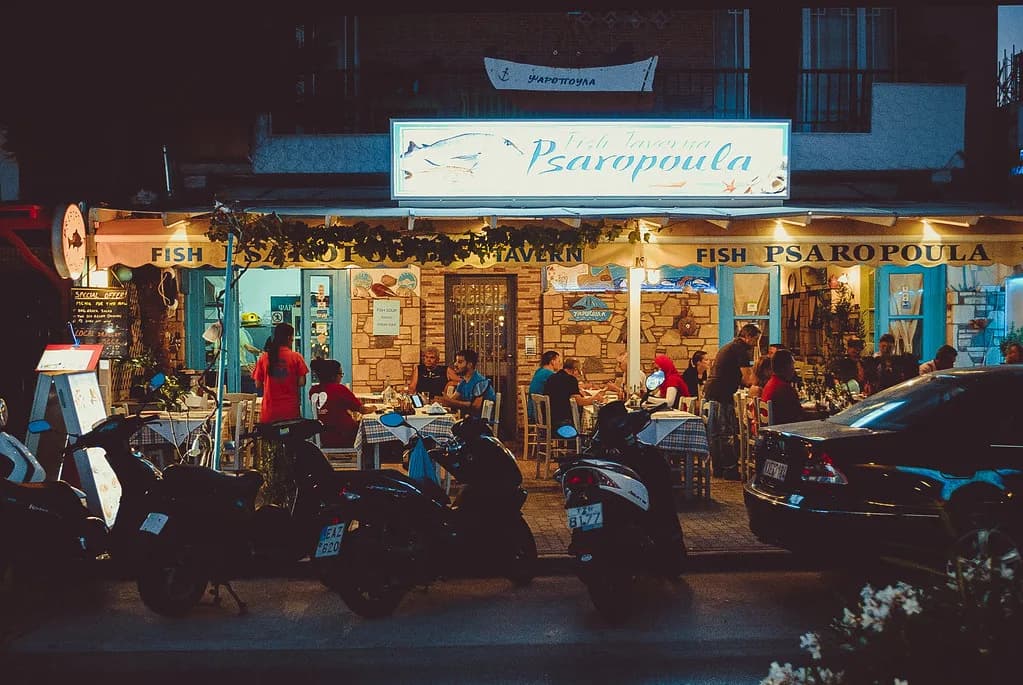
In a working taverna, opa turns up incidentally. A waiter threads between chairs and clips one, a carafe tips over, a child's fork hits the floor — and someone says opa without thinking about it. It is the sound of a small mishap, not a performance. If you hear it once during dinner, you have probably just witnessed the most human moment of the evening.
What you will not usually hear is a room of Greeks shouting opa in unison at a birthday or a first bite. The habitual calls at a Greek table are different words with different jobs: yamas for a toast, kali orexi before eating. If you want to learn the toast properly, our explanation of yamas meaning covers the mechanics, and the wider set of phrases is gathered in our guide to basic greek phrases.
Ordering is where a traveler's vocabulary earns its keep. Many tavernas serve small plates called mezedes — appetizers shared across the table, the Greek answer to tapas — alongside grilled fish, fried squid and dips such as tzatziki, a yogurt, cucumber and garlic dip. Knowing the names helps you ask for what is actually on offer rather than a single set menu, and our guide to traditional Greek food breaks the same dishes down one by one. If your island itinerary includes the Cyclades, things to do in Mykonos covers where those taverna meals fit between the beaches and the town.
Fish tavernas run on their own rhythm, and the vocabulary matters: kalamari is squid, gavros is anchovy, sardeles are sardines, and by law the menu has to mark whether a fish is fresh or frozen. Those small words do more for your dinner than any exclamation.
The Plate-Smashing Question
Plate smashing is the image most visitors bring, and it is the reason opa gets attached to broken crockery in the popular imagination. The custom is associated with celebration in Greece, and the sound of breaking plates is the cue for the shout. That much is the general picture; what actually happens in any given room is a matter for the venue, not for a guidebook rule.
In practice, many places that stage the ritual for guests use cheap, purpose-made plates rather than good tableware, and plenty of tavernas simply do not do it at all. Some hosts discourage it, some perform it on fixed nights, and some leave it to wedding parties. Rather than assume, ask the taverna directly whether it is part of the evening and whether guests are expected to join in — a question staff hear often and answer plainly.
The safest etiquette is to follow the room. If plates are being broken around you, opa is the natural response; if the tables are quiet, smashing your own plate is not a charming surprise but a bill and an apology. When in doubt, treat opa as a word for accidents and leave the crockery alone.

Opa vs. the Calls You'll Actually Use at the Table
The phrases that do the real work at a Greek table are short and specific. Yamas is the everyday toast, roughly "to your health", and the fuller form stin ygeia mas carries the same wish. Kali orexi means "enjoy your meal" and is said as food arrives, the Greek equivalent of "bon appétit". Opa has no seat at that table — it is not a toast at all, and using it as one is a small, forgivable mistranslation.
Greeks also drink and eat with a rhythm of shared hospitality that visitors notice quickly: bread usually arrives and is charged for, dishes come out to be shared, and the table is meant to fill up. Learning a handful of words — thank you, please, cheers, enjoy — smooths more interactions than any single exclamation. Our guide to how to say thank you in greek covers one of the most useful, including the fuller efcharistó polí.
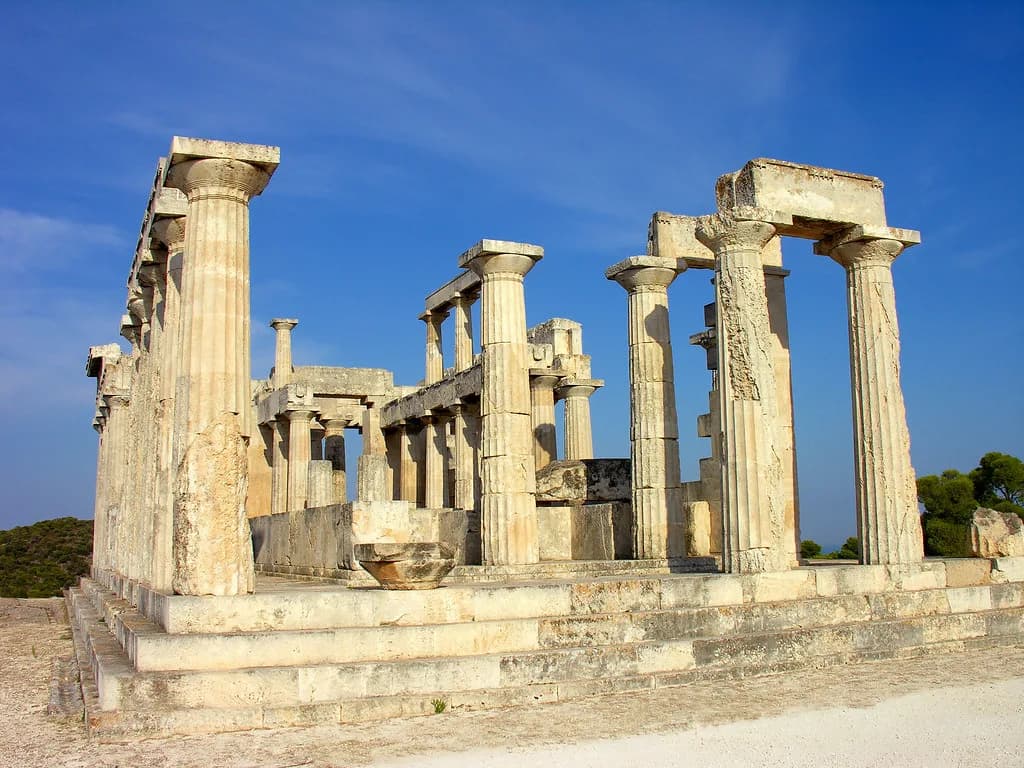
If your trip includes an ouzo bar, you will meet a different vocabulary again: ouzo is an anise-flavored spirit usually served with water and small plates, and the customs around it are relaxed and unhurried. None of it requires opa. What helps is knowing which small dishes to order and how to pace them, which our guide to what to eat in Greece lays out dish by dish. If your travels also take in the ruins, our guide to ancient sites in Greece pairs well with the same unhurried rhythm.
How "Opa" Travels Outside Greece
The word has been exported mostly as atmosphere. Greek restaurants abroad put it on signs and menus because it signals a good time to customers who have never heard it used naturally, and films and songs reuse it as shorthand for Mediterranean joie de vivre. The result is a mild feedback loop: visitors arrive expecting a celebratory cry, and venues supply one.
The same spelling causes real confusion in other languages. In German, Opa is the everyday word for grandfather, so a German visitor hearing opa shouted across a courtyard has a moment of disorientation. Medical and administrative texts use OPA as an abbreviation, and Spanish and Chinese speakers meet similar-looking syllables with unrelated meanings. None of these are connected to the Greek exclamation, and mixing them up is a common search-engine detour.
For travelers the practical lesson is simple: match the word to the country. In Greece, opa is a reaction; in Germany, it is a relative; in a clinic, it is an acronym. Keeping those apart saves a confusing moment, and it also explains why so many online explanations of the word contradict each other.
Practical Etiquette for Visitors
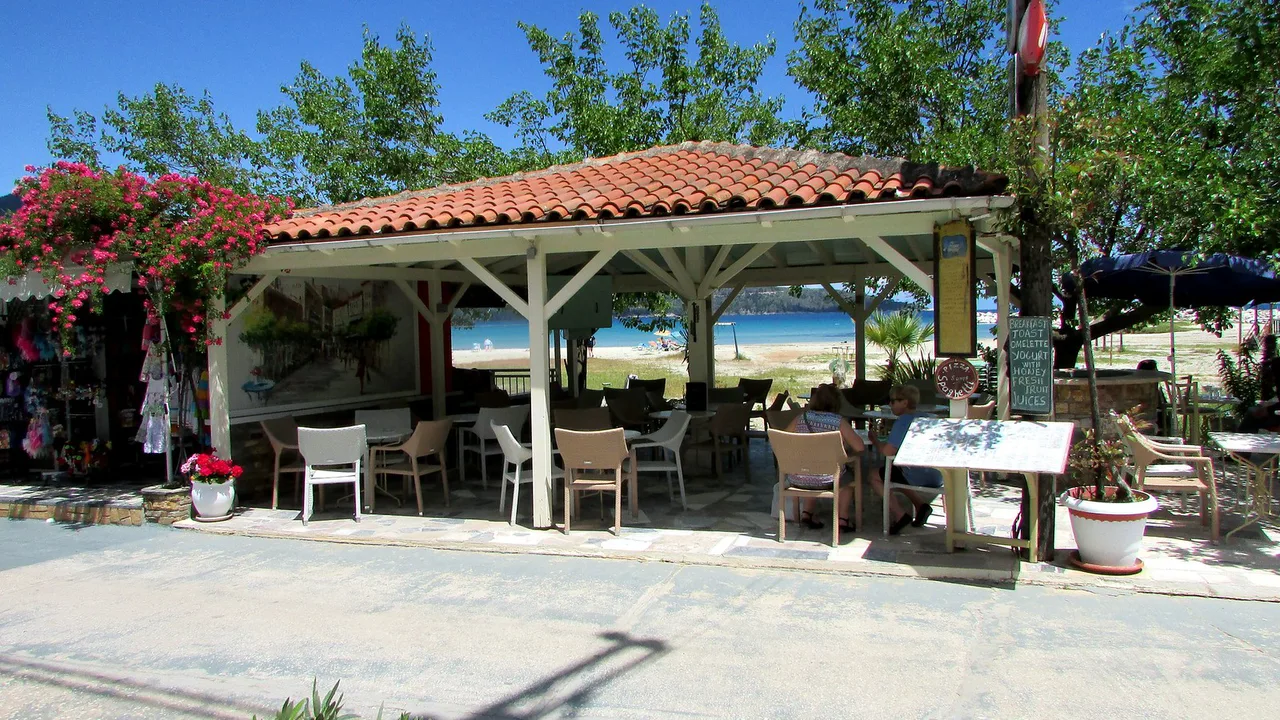
At a Greek table, the reliable etiquette is quiet and observational. Let the host or the most senior diner start eating, share what is on the table rather than guarding your plate, and expect bread and water to appear without being ordered. If something spills, a smile is enough; nobody expects you to narrate the moment in Greek.
Tipping follows local habit rather than hard rules, and rounding up or leaving a small amount on the table is common in tavernas, with more expected in smarter restaurants. Because the exact practice varies by venue and by the type of bill, check current expectations on the menu or ask staff if you are unsure — a direct question is never rude in Greece. Carry some cash for small places, where card machines can be unreliable.
Joining a celebration is welcome when it is clearly open to guests, and awkward when it is not. Watch for a table that is already singing or a host who invites the room, and read the rest of the taverna before you clap along. Greek dancing, when it starts, tends to draw people in rather than keep them at a distance, and the etiquette around it is easier to follow than to plan.
Where This Fits in a Taverna Trail Trip
Opa is a small entry in a larger vocabulary of Greek eating, and it works best as a window onto how language and meals fit together. A traveler who knows that opa means "oops", yamas means "cheers" and kali orexi means "enjoy" can read a Greek table far more accurately than one armed with a slogan. The words are short, the mistakes are survivable, and the reward is a slightly better conversation with the people feeding you.
Before you sit down anywhere, sort the phrases you actually need: greetings for the morning and evening, thanks, a toast, and the names of what you want to order. Our guide to kalimera meaning covers the morning greeting and how the day shifts to kali spera and kali nichta, which is more useful at a breakfast counter than any exclamation.
Finally, remember that most of what happens in a Greek taverna needs no performance from you. Eating well, saying thank you and paying fairly are the customs that matter. Opa can stay where it belongs: a quick, cheerful sound for the moment a glass slips.
Plan Around the Words, Not the Cliché
Treat opa as a piece of everyday Greek rather than a ritual you are owed. You will hear it when something nearly goes wrong, and you may hear it when plates are broken for a celebration — but the toast, the greeting and the thank-you are the words that will shape your meal. Learn those first, and opa will make sense the moment it happens.
Where a taverna's practice matters — whether plates are smashed, whether a table is booked for a big group, whether the kitchen is serving what you hoped for — ask the venue directly rather than relying on a general rule. Greek hospitality tends to answer honestly, and a short question at the door is worth more than a paragraph of assumption.
Explore more Greece sauna guides
Frequently Asked Questions
What does "opa" mean in Greek?
It works as a quick exclamation rather like "oops" or "whoops": a sound people make when something slips, spills, wobbles or nearly goes wrong. It is not a fixed word with one tidy translation, so the situation around it carries most of the meaning.
Is opa a toast or a cheer?
Not really. The word Greeks use to raise a glass is yamas, with the fuller form stin ygeia mas, both meaning roughly "to your health". Kali orexi, said as food arrives, means enjoy your meal. Opa belongs to accidents and sudden moments rather than to a toast.
Do Greeks still smash plates and shout opa?
Plate breaking is associated with celebration, but whether it happens in a particular taverna depends entirely on that venue. Some hosts stage it, some discourage it and many do not do it at all. Ask the taverna directly whether it is part of the evening and whether guests are expected to join in.
When will I actually hear opa in Greece?
Most often incidentally: a waiter clips a chair, a carafe tips over, a fork hits the floor. It can also greet a near-catch or a surprise. It rarely requires a reply, and it is not usually shouted in unison across a dining room.
Does opa mean grandpa in other languages?
In German, Opa is the everyday informal word for grandfather, which is unrelated to the Greek exclamation. Medical and administrative writing also uses OPA as an abbreviation. Keeping the Greek, German and acronym senses apart explains why online explanations of the word often seem to contradict each other.
Sources
Notes for eating well in Greece
Optional updates to our guides.
You might also like

Continue reading
More guides you'll find useful