Greek Dancing: Syrtaki, Kalamatianos and Tsamiko Explained
Greek dancing explained for travelers: syrtaki, kalamatianos and tsamiko, their rhythms and steps, and how to join a line at a panigyri or taverna night.
On this page
Greek dancing rarely looks like a performance with an audience. Most of the time it is a circle or an open line of ordinary people holding hands, with a musician or a small band setting the pace and the rest of the room either dancing or watching with a drink. That is the format to expect at a village panigyri, the saint's-day festival that is the heart of local summer life.
This guide separates the dances visitors actually meet: syrtaki, made famous by cinema and now a taverna standard; kalamatianos, a line dance in seven beats that turns up at weddings and national holidays; and tsamiko, the stately, leaping dance you will recognise by its posture. It also covers the rhythm counts, the instruments that produce them, and the etiquette of stepping into a line.
What Visitors Actually Meet as Greek Dancing
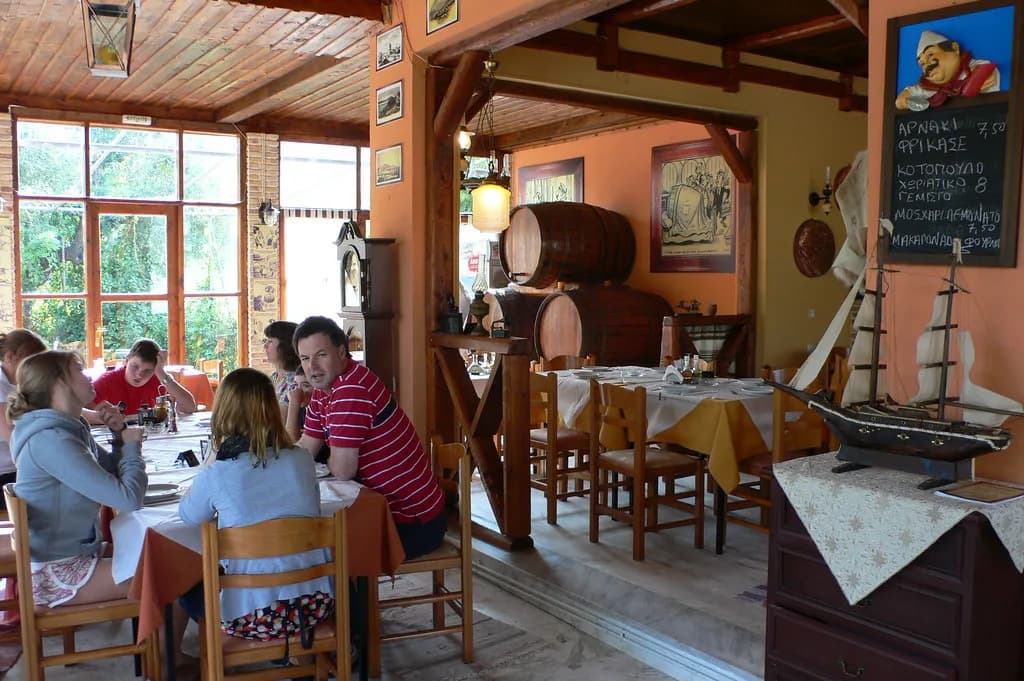
Three settings account for most encounters. The first is the panigyri, a saint's-day celebration where families gather under trees or in a plateia, eat, and dance in circles well into the night. The second is the live-music taverna night, where a small band plays and diners clear space for syrtaki and a few older dances. The third is the staged show, often folded into a dinner, which is polished but not where locals learn to dance.
What is the most famous Greek dance? Syrtaki is the most widely recognised outside Greece, largely because of the 1964 film Zorba the Greek, for which it was created. It is not the oldest dance in the repertoire, and Greeks themselves often treat kalamatianos as the more everyday social dance at weddings and festivals.
Is syrtaki a traditional Greek dance? Not in the folk tradition sense. It was choreographed for cinema in 1964 and built from elements of authentic Greek dances, and it became popular and symbolic afterwards.
What is the difference between kalamatianos and tsamiko? Kalamatianos is a lively line or open-circle dance in 7/8 time, built on a repeating seven-step pattern, and it is the easier one for beginners. Tsamiko is slower and more formal in bearing, traditionally led by men, and features controlled jumps and knee lifts.
The distinction matters when you plan an evening. A panigyri is free-form and social, with dancing that runs well into the night, while a taverna with live music sells you a table and expects you to eat through the set. If you want to dance rather than watch, pick the first two and treat the stage show as entertainment. Greek dancing is not one thing but a repertoire, and each dance carries its own region, rhythm and mood.
Much of what shapes a Greek evening generally, from toasts to table manners, is worth reading before you go, and our guide to greek customs covers the ground without turning dinner into a test.
The Three Dances You'll See Most, at a Glance
Syrtaki is danced in a line with arms across neighbours' shoulders, starts slow and accelerates, and is the one foreigners are most often pulled into. Kalamatianos is an open circle or chain of hand-holding dancers moving through a seven-step pattern in 7/8 time, common at weddings and national celebrations. Tsamiko is slower and more formal in bearing, traditionally male-led, and known for controlled jumps and knee lifts.
If you only learn to recognise one thing, learn the tempo. Kalamatianos is bouncy and even, tsamiko is deliberate with bursts of leap, and syrtaki is the only one that visibly changes gear from a near-walk to something fast and loud. That audible shift is your cue about which dance is starting, even before the dancers settle into formation. The same pattern, moving from measured to fast, is what people are cheering about when someone shouts opa meaning approval at the moment a dancer takes flight.
Syrtaki: Created for Film, Adopted by Tavernas
Syrtaki is not an ancient dance. It was created for Michael Cacoyannis's 1964 film Zorba the Greek, with choreography credited to Giorgos Provias, and it mixes elements of authentic Greek dances into a cinematic package. It became a national symbol anyway, which is why you will hear it everywhere from harbour tavernas to dance schools, and why it is the safest bet if you want to be asked to join in.
The structure is the point: the dancers begin with slow, sliding steps, feet kept low, then the tempo rises and the steps become smaller and quicker as the arms lift from the waist toward shoulder height and above. If you are pulled into a line, do not try to learn the whole thing. Copy the person to your right, stay in physical contact through the arms or hands, and let the acceleration carry you.
One side note worth knowing before the music peaks: the shout of opa has its own set of uses, and it is not reserved for plate-smashing displays.
Kalamatianos: An Open Circle in Seven Beats
Kalamatianos is the classic chain dance, danced with hands joined in a line or an open circle that moves counter-clockwise around the space. The rhythm is 7/8, which sounds exotic until you count it as a fast one-two-three, one-two, one-two, with the first three beats carrying the step forward and the rest carrying the close and the pass-behind. Dancers hold hands throughout, which is what keeps the line together when the pattern repeats.
The basic sequence is a step forward on the right foot, a follow with the left, then the right passing behind the left, repeated with small variations as the line turns. Because the pattern is repetitive, there is room to improvise; the skilled dancers near the front decorate it while beginners keep the skeleton. Follow the person to your right, keep your arm relaxed, and watch the line's turn rather than your own feet.
Kalamatianos belongs to weddings and national holidays in the popular imagination, and its seven-count bounce is usually the second dance a visitor learns after syrtaki. If you can count to seven out loud while stepping, you already understand the structure.
If a dance lesson or a video tutorial is your preferred way to learn, the step-by-step format works well because the count repeats; greek language skills are not required to follow along.
Tsamiko: The Stately Dance With Leaps
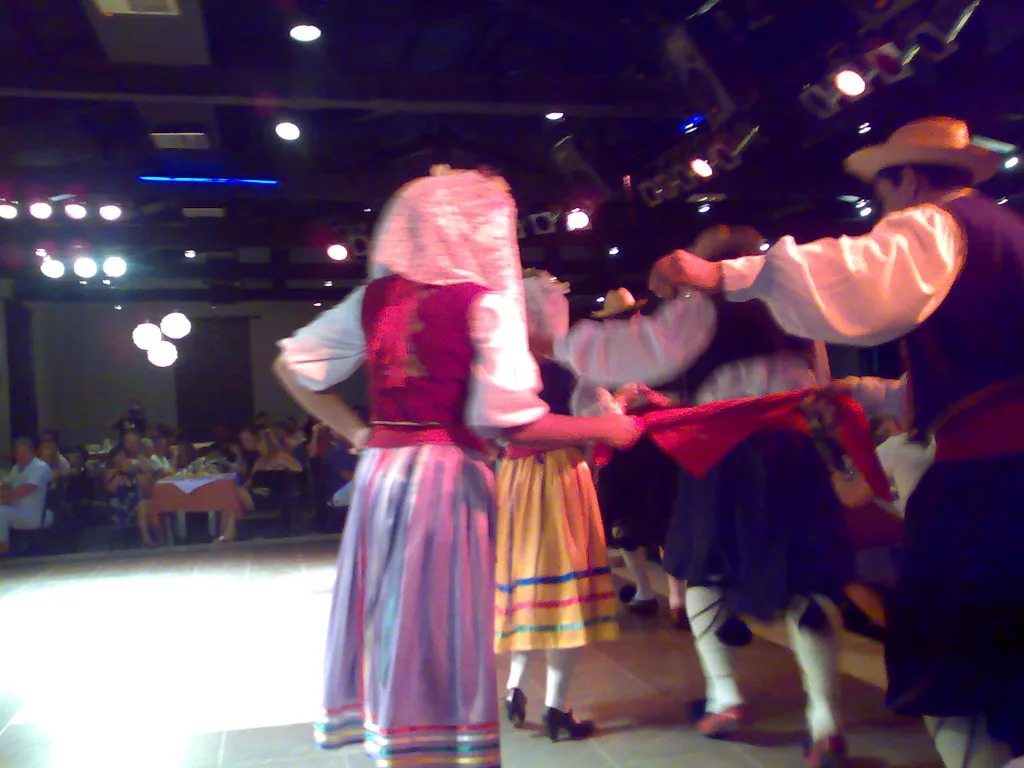
Tsamiko is the dance people describe as the warrior dance, and the description fits the posture: upright, deliberate, with slow measured steps broken by controlled jumps in which one knee lifts and the heels kick. It is traditionally led by men, though women join the line too, and the mood is dignified rather than celebratory in the syrtaki sense. You will see it at panigyria and at performances where the older repertoire is showcased.
For a visitor, tsamiko is the one to watch before attempting. The rhythm is slower and the footwork less forgiving of a wrong entry, and the leader at the front of the line sets both the pace and the ornaments. If you are invited into a tsamiko line, take a place near the end, keep the steps small, and let the leap come only when the dancers around you make it.
Rhythm and Instruments: Why the Count Matters
Greek folk music runs on asymmetrical metres, and the sources single out 7/8 and 5/4 as rhythms that also appear in ancient Greek poetry. What that means practically is that the beat is not an even four-count you can clap along to by instinct; it groups in uneven clusters. Kalamatianos, in 7/8, is the easiest to hear once you know to listen for the long-short-short pattern.
The sound is carried by a small set of instruments. The bouzouki, a plucked string instrument with a bright, resonant tone, is the backbone of much Greek folk music; the lyre, more melodic, is associated with the island regions; and the lute, with a rounder and softer voice, fills in the harmonies underneath. Village celebrations may add a clarinet or a gaida, a goatskin bagpipe, depending on the region and who is playing.
You do not need to identify the instruments to enjoy the evening, but knowing that a lyre-led band signals island repertoire and a bouzouki-led one signals the mainland taverna set helps you guess what is coming next. It also tells you which dances are likely: island repertoires lean on different patterns and faster, springier steps than the mainland chain dances.
The deeper history, from circle dances around threshing floors to the choral origins of theatre, is covered in the helleniccomserve essay on Greek dance, which traces the connection between the modern circle and ancient ritual without pretending certainty where the record is thin.
Steps for the First-Timer: How to Enter a Line
The mechanics are simple. A line forms with dancers holding hands or linking arms, usually with the leader at the right-hand end as the dancers face. To join, approach the free end rather than breaking the chain in the middle, wait for a natural pause, and take the hand offered to you. If the line is closed in a circle, look for a gap and step in where the next dancer can take your hand without letting go of anyone else.
Once in, follow the person to your right and copy their feet a half-beat behind; this is the single most reliable technique for any of these dances. Keep your steps small, stay relaxed in the arms, and do not try to lead from the middle. If you lose the pattern, hold the hand contact and walk in time until it comes back, which is exactly what everyone else is doing.
Three common beginner mistakes are worth naming: gripping your neighbours' hands too hard, turning to watch the person beside you instead of feeling the direction of travel, and attempting the ornaments before the basic step is automatic. None of them will ruin the evening, but all three make the line harder to steer, and the dancers near you notice.
If you would rather rehearse before you arrive, filmed lessons such as the greek dancing video lessons let you rewind a step you keep missing, and how many times you replay it is entirely up to you.
Where You'll See or Join Greek Dancing
Panigyria are the best-value introduction in every sense: village squares and churchyards fill on the saint's day, tables appear, a band sets up, and the dancing starts when the food is cleared. Because these are religious-calendar events rather than tourist programming, the date depends on the local saint, so ask at your accommodation or the local kafeneio which panigyri falls during your stay. The celebration links closely to greek name days, which are celebrated on fixed dates tied to saints.
Taverna live-music nights are the other main route. Some places have a regular band, others only on weekends or in high season, and a few bring musicians in for specific holidays. Schedules change, so confirm by phone or in person rather than building an evening around a listing that may be out of date, and ask whether the music is amplified and whether dancing is expected or just possible. If you are deciding which city to base a music-and-food evening around, our Heraklion restaurants and things to do guide shows how one town pairs tavernas with old-town wandering.
Formal performances and dance lessons exist in the bigger cities and resort areas, often run by cultural associations, but no single listing covers them reliably. A local cultural club or municipal office is a better source of dates than a hotel leaflet, and clubs often welcome visitors to watch a rehearsal.
Dance often closes an evening rather than opening it, and the food comes first, so read up on what to eat in Greece before you go so the meal is not an afterthought to the music.
Guest Etiquette: Dress, Tipping and Being Invited to Lead
There is no dress code for dancing, but panigyria run late and often take place outdoors, so a layer and shoes you can move in matter more than anything formal. Tipping musicians is not obligatory; if a hat or a plate circulates, putting in a few coins or a note is a friendly gesture rather than a rule. Buying a round for the table you have joined is a more common courtesy than handing cash directly to the band.
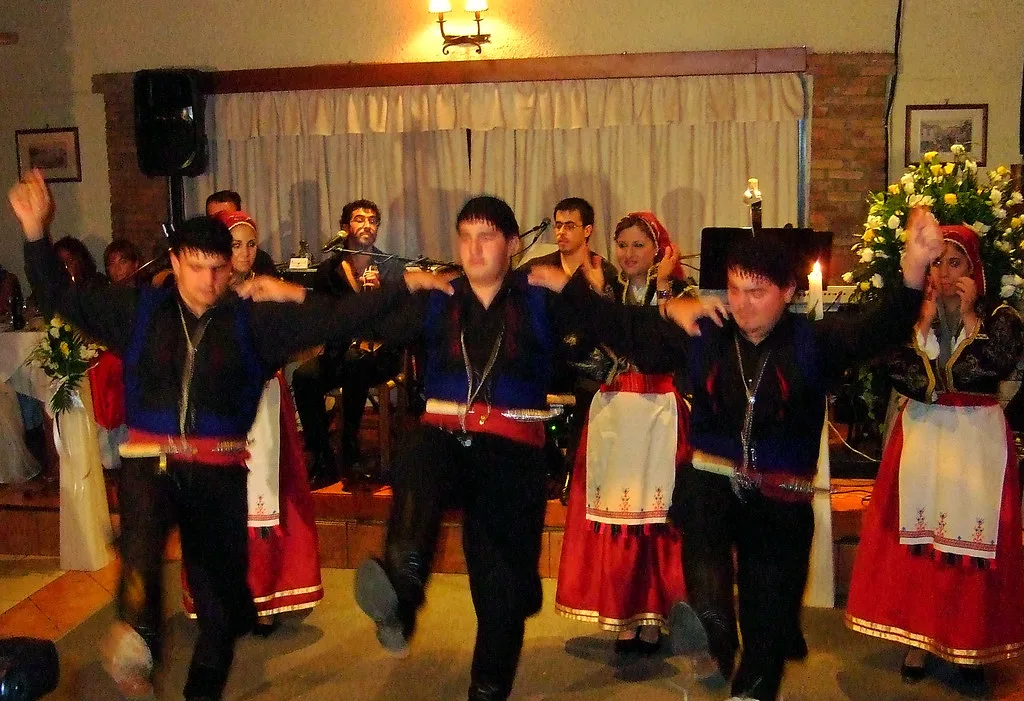
Being invited to lead is an honour and also a practical problem, since the leader sets the pace for everyone behind. If it happens and you do not know the dance, smile, take the position, keep the steps basic and small, and let an experienced dancer take over after a turn or two. Refusing with a polite gesture is also completely acceptable, and nobody will remember it a minute later.
Knowing when to sit it out matters too. If the song is clearly a specialised regional dance, watch and enjoy it; joining badly can break the line's rhythm and the dancers' concentration. The etiquette around hospitality and generosity governs much of this, and our guide to greek hospitality explains why an offer of a drink or a plate is rarely just politeness.
Practical Planning: Fitting Dance Into Your Evening
Plan around the meal, not the music. Greek dinners run long, and dancing usually comes after the main dishes are cleared, so a table booked for late evening will put you in the room for the band; an early sitting may not. Ask when you reserve whether there will be live music that night, and whether the tables are rearranged to make floor space, since that tells you how central dancing is to the venue.
Keep one generic check in mind rather than a list: live-music schedules, festival dates and whether a particular taverna has a band on your dates all change, so confirm in the afternoon rather than trusting an old listing. A phone call is the usual way Greeks confirm an evening's plan, and it works just as well for visitors. It helps to have a few phrases ready, and our basic greek phrases cover the essentials for a short call.
Finally, build in a rest day if you are chasing panigyria across several nights, because these celebrations run late and the next morning can be slow. Two festival nights and one quiet evening is a more realistic pattern than four in a row.
Plan Your Visit Around the Music
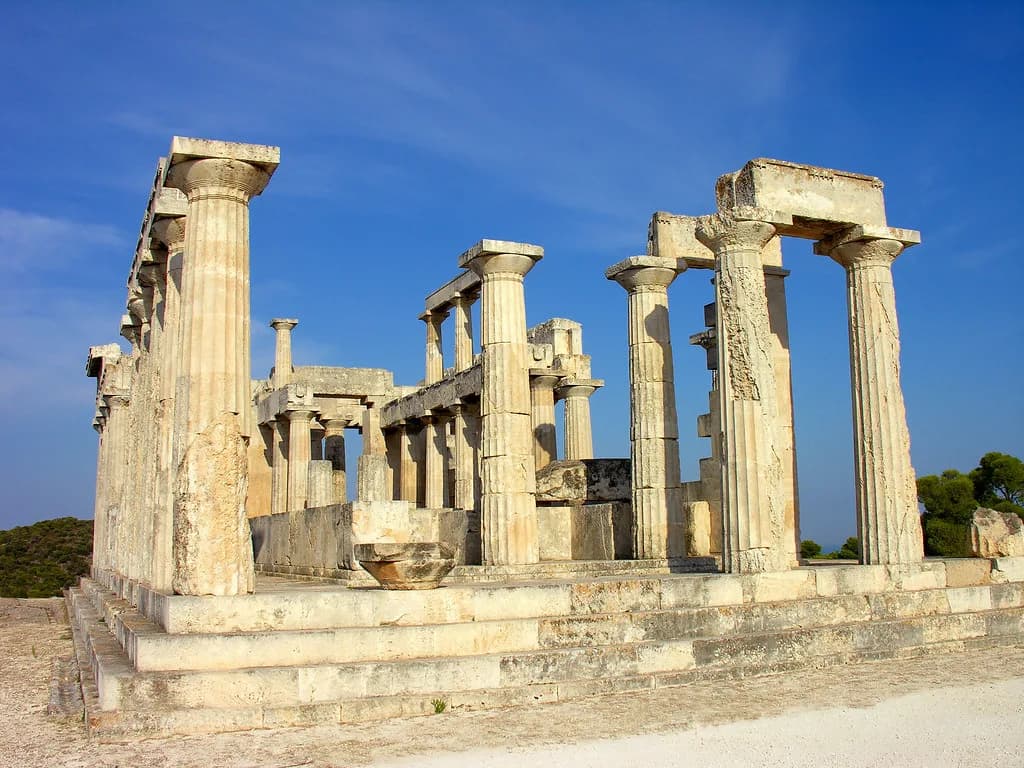
Start with the calendar: find out which panigyri or saint's day falls during your stay, then build one taverna evening around live music and one free evening as a buffer. Learn the count for kalamatianos, accept one invitation to join a syrtaki line, and watch the tsamiko until the pattern looks familiar. None of it requires talent, only a willingness to hold hands and follow the person to your right. The same planning logic applies to ancient sites in greece, where you build the day around what is actually open and happening.
If dancing turns out to be the best part of the trip, the next step is usually a longer stay somewhere with a strong local music scene, where the same musicians play the same rooms week after week. And if you plan to travel during festival season, read up on greek superstitions before you go, so a well-meant compliment or a spilled drink does not get you a puzzled look.
For the broader context of Greek culture and how it shapes a visit, the site's overview of Greek Customs and Etiquette is the sensible next read.
Explore more Greece sauna guides
Frequently Asked Questions
What is the most famous Greek dance?
Syrtaki is the most widely recognised outside Greece, largely because of the 1964 film Zorba the Greek, for which it was created. It is not the oldest dance in the repertoire, and Greeks themselves often treat kalamatianos as the more everyday social dance at weddings and festivals.
Is syrtaki a traditional Greek dance?
Not in the folk tradition sense. It was choreographed for cinema in 1964 and built from elements of authentic Greek dances, and it became popular and symbolic afterwards. Kalamatianos and tsamiko belong to the older regional repertoire that predates it.
What is the difference between kalamatianos and tsamiko?
Kalamatianos is a lively line or open-circle dance in 7/8 time, built on a repeating seven-step pattern, and it is the easier one for beginners. Tsamiko is slower and more formal in bearing, traditionally led by men, and features controlled jumps and knee lifts.
What instruments are used in Greek dancing?
The core sound comes from the bouzouki, a plucked string instrument, the lyre, which is more melodic and associated with the islands, and the lute, which fills in harmonies. Regional bands may add a clarinet or a gaida, a goatskin bagpipe, depending on where you are.
Can visitors join in Greek dancing at a festival?
Yes, at a panigyri or a taverna with live music, joining the end of an open line is normal. Wait for a pause, take the hand offered, and follow the person to your right rather than trying to lead or learn the entire pattern at once.
How can I find out if a taverna has live music on my dates?
Ask when you book or call in the afternoon on the day, since schedules change and venues rarely publish them far ahead. It also helps to ask whether tables are moved to create floor space, which tells you how central the dancing is.
Sources
Notes for eating well in Greece
Optional updates to our guides.
You might also like

Continue reading
More guides you'll find useful