Hydra History: What to See in Greece's Car-Free Island
A practical guide to Hydra's history for travelers: shipowning families, the 1821 fleet, the mansions above Hydra Town, and why the island stays car-free.
On this page
Most people arrive on Hydra for the harbour photograph and stay for the absence of scooters. The island's story is tightly packed into that same horseshoe of stone: wealthy maritime families built tall mansions on the slopes above the port, and the sea trade that paid for them later helped fund a revolution.
This guide keeps the history attached to things you can see in Hydra Town, so the narrative has a use beyond background reading. It also covers the practical side that shapes any history-focused visit: how you move without wheels, how much time museums realistically take, and how ferry timing decides whether you see the town as a day trip or an overnight.
One warning about the search term itself: results for Hydra history mix the Saronic island with the fictional Marvel organization of the same name. They are unrelated, and nothing in the comics has any bearing on the Greek town; the name collision is purely a search-engine annoyance to filter out.
What Travellers Want From Hydra's History
Hydra attracts two kinds of curiosity at once. Some visitors want the revolutionary story, the merchant fleet and the political weight the island carried in the early nineteenth century. Others simply want to understand why a Greek island town looks like this: stone towers of houses stacked above a working harbour, with no traffic noise.
Why is the Greek island called Hydra? The name is ancient, derived from the Greek word for water, a reference to the island's springs. It has no connection to the many-headed monster of myth beyond the shared root, and none at all to the Marvel organisation that dominates some search results.
Did Hydra play a role in the Greek Revolution? Yes. Hydra was one of the maritime islands whose merchant ships and sailors gave the 1821 uprising reach at sea, and its shipowners and captains helped finance and command the revolutionary fleet.
Are there cars on Hydra? Hydra Town functions without cars, and movement is on foot through stepped lanes, with luggage often carried by mule or hand cart. This shapes practical planning: pack a bag you can carry, and choose accommodation with the walk from the ferry in mind.
The two questions answer each other. Sea trade produced the money, the money produced the mansions, and the mansions sit in a town whose geography never allowed cars to take over. If you are planning a broader trip around Greek archaeological sites, it helps to know that Hydra is not an ancient-sanctuary island like others in the Aegean; its interest is post-Byzantine and modern, and the ancient sites in greece that draw most travellers sit elsewhere.
Set expectations accordingly. A history-minded visit here is about streets, houses, a harbour and a handful of collections rather than excavated temples, and that changes how you budget your hours.
Hydra Town in Brief: The Harbour, the Lanes and No Wheels
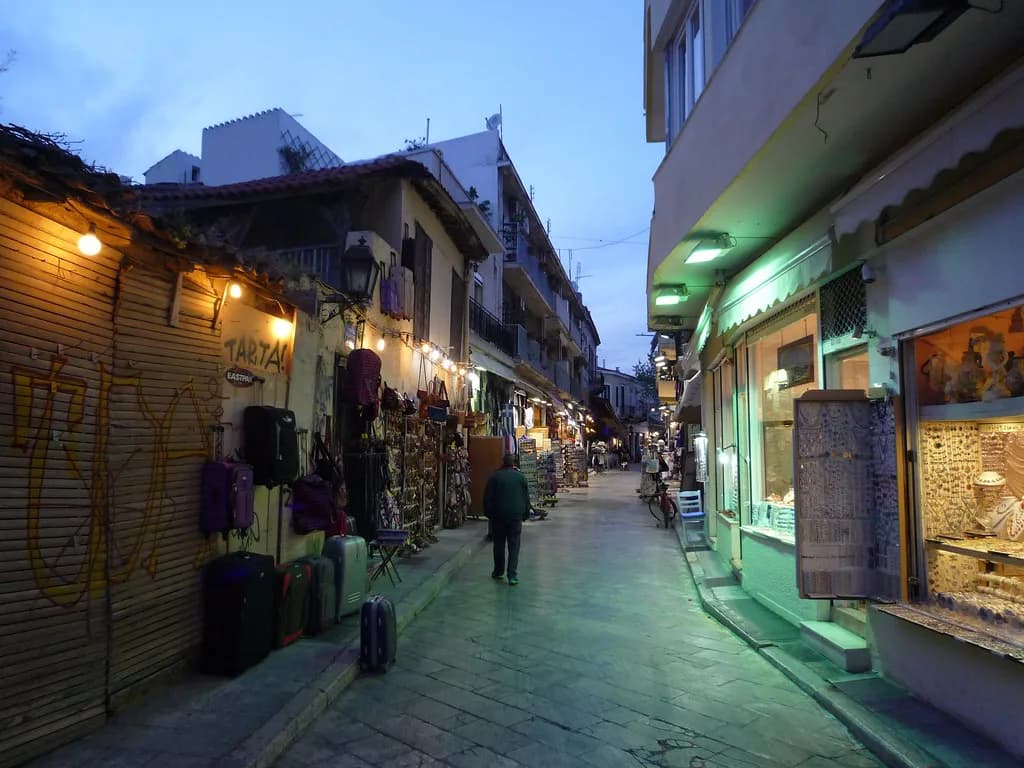
Hydra Town wraps around a horseshoe harbour on the island's north coast, with the main quay at the bottom and steep stone lanes climbing on both sides. The town is the arrival point for essentially all visitors, since ferries from the mainland dock at the harbour edge rather than at a separate port district.
Movement is on foot, and luggage often travels the last stretch on mules or hand carts rather than in a vehicle. That single fact should shape your packing: a wheeled suitcase is a liability on stepped lanes, and a shoulder bag or backpack makes the walk from the quay to a hillside guesthouse far easier.
The car-free pattern is also why the town feels quiet at night and why lanes double as everything else: a route to a chapel, a place for a café table, a viewpoint over the water. Treat the lanes as pedestrian streets with residents living on them, not as a sightseeing circuit.
If you are comparing Hydra with other Greek old towns that reward slow walking, the same principle applies elsewhere: read the street pattern before booking accommodation. A guide to Rhodes Old Town, for example, is useful mainly for understanding which gates and lanes put you closest to where you sleep.
The Shipowning Era: How Maritime Trade Built the Mansions
Hydra's wealth came from the sea in the eighteenth and early nineteenth centuries, when the island's merchant ships worked routes across the Mediterranean and beyond. Shipowning families reinvested profits in town houses: tall, plain-fronted stone mansions with small windows, built for storage and defence as much as display, often with courtyards behind heavy doors.
Look up as you climb from the quay. The largest houses occupy the higher slopes, where there is more space and a view over the harbour entrance, while the waterfront itself was given over to trade, warehouses and, later, tavernas. That vertical arrangement is the physical record of how maritime money sorted itself across the town.
Many mansions are private homes, so admire facades and doorways from the lane rather than through windows or gates. A few historic houses are open to the public as museums or house museums, but which ones are open in a given season changes; the harbour-side information office and the town's museum listings are the places to check current access rather than relying on an old guidebook.
Hydra is not unique in Greece in turning maritime profit into stone architecture, and comparing towns sharpens what you notice. On Santorini, the equivalent story is a different one: volcanic soil, a fractured coastline and a history of trade and defence that reads in completely different buildings, covered in santorini history.
1821: Hydra's Fleet and the Greek Revolution
When the Greek Revolution broke out in 1821, Hydra was one of the maritime islands whose ships and sailors gave the uprising reach at sea. The island's merchant fleet could be converted to war use, and Hydra's shipowners and captains became financiers and commanders of the revolutionary effort, which gave the island political weight well beyond its size.
The consequences are visible in the town's collective memory: memorials, street names and museum collections that assume the visitor already knows 1821 matters. Read a little before you arrive, because labels in smaller collections may be in Greek and light on explanatory text, and a bare ship model tells you much more if you know which war it sailed in.
For scale, Hydra's revolutionary role belongs to the same period as the Greek state's formation, and understanding that arc helps when you visit later sites. If your itinerary includes Athens, the Acropolis of Athens museum collections make an easier starting point for the nineteenth-century story than a small island archive does.
What to Actually Look At in Hydra Town
Start at the harbour and walk the quay end to end before climbing. You will see the cannon-lined waterfront, the low arcaded buildings that once served shipping, and the way the town presents a solid stone face to the sea. Then pick one side lane and go up slowly, because the interest is in details: pebble-mosaic courtyards, ironwork, painted shutters, family chapels built into house walls.
Churches are part of the historical fabric rather than separate sights, and small ones appear at the top of lanes without warning. Dress and behaviour inside should follow ordinary Greek practice, and if a church is open but unattended, keep the visit short and quiet.
Allow time for simply standing at a high point and tracing the harbour shape, since the geography explains the town's success as a sheltered anchorage. A walking loop from the quay, up one side, across the saddle and down the other is a reasonable half-day at an unhurried pace, with café stops.
Museums and Archives for Context, With Realistic Timing
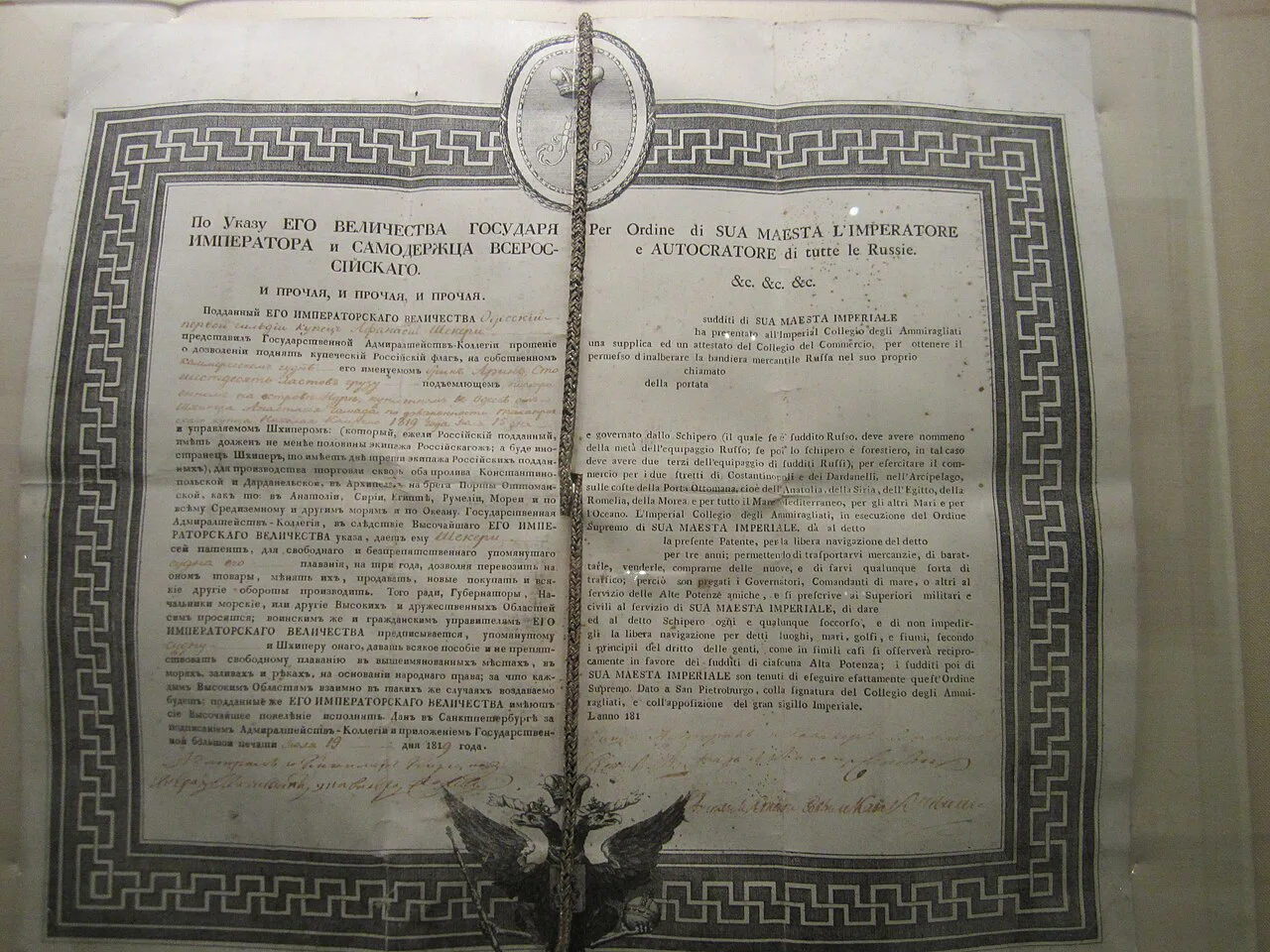
Hydra Town has historical collections, including a major museum and archive tradition tied to the revolutionary period and to the island's maritime families. Opening days and hours vary by season, so confirm the current schedule with the museum or the harbour information point on arrival rather than planning a day trip around an assumed timetable.
Budget generously for a small collection: an hour and a half is realistic for a museum with documents, portraits and ships' material if you actually read the panels, and less if you skim. Two museums plus a walk plus a meal is a full day, so resist the common mistake of squeezing everything into a two-hour gap before an afternoon ferry.
If archives and documents are your main interest, contact the institution in advance to ask whether the reading room is open to visitors and whether any identification is required. That one email prevents the disappointment of arriving on a day reserved for researchers.
Cars, Mules and the Day-Trip Versus Overnight Decision
The absence of cars is a planning constraint, not just charm. It means your arrival time and your accommodation location matter more than they would elsewhere: a guesthouse high above the port turns a late ferry arrival into a climb with luggage, and a mule transfer has to be arranged through your host rather than flagged down at the quay.
A day trip works if you accept a compact plan: harbour walk, one museum, one climb to a viewpoint, lunch, departure. An overnight stay buys the early morning and the evening, when the day boats have gone and the lanes are quiet, which is when the town's architecture reads most clearly.
Neither option requires a driving route, and that is the point. Visitors who plan Hydra like a road-trip island waste time looking for a car rental that does not exist in any useful form.
Monasteries and Inland Walks: Distances and Heat
Hydra's interior holds monasteries and chapel sites reached on footpaths from the town, and the walking is the attraction as much as the destination. Distances are modest on a map but the terrain is rocky and exposed, so a monastery that looks close can take considerably longer than expected in summer heat.
Carry water, wear shoes with grip, and start early. Paths are marked but not uniformly signed, and a wrong turn on a bare hillside is tiring rather than dangerous; ask at your accommodation for the current state of the route you plan, since paths can be overgrown or diverted.
Combine an inland walk with a swim stop on the coast if you want a full day, and treat the return as part of the plan rather than an afterthought. Late-afternoon light goes early behind the hills, so set a turnaround time and keep to it.
Eating in Hydra Town: Meze, Views and Back Streets
Meze means small shared plates, the Greek equivalent of tapas, and a lunch of several mezedes with bread is often a better introduction to the town than a single large main. Expect the harbour front to charge for the view, with tables literally at the water and higher prices to match, while lanes one or two streets back offer simpler rooms, fewer visitors passing and usually gentler bills. If you are weighing up other islands for the rest of the trip, a guide to what to eat in Greece makes the same taverna-versus-back-street calculus easier to apply elsewhere.
Order by dish type rather than by set menu. A plate of tzatziki (yogurt with cucumber and garlic), a fava (yellow split-pea purée), a tomato keftedes (tomato fritter) and a grilled fish or a plate of grilled octopus covers the range, and sharing means you can compare. For a fuller glossary of dish names and how they are served, see this Traditional Greek Food guide before you order.
Seafood pricing deserves care on any Greek island. Fish is often sold by weight and can be expensive, while cheaper species such as sardines, anchovies and mackerel are just as traditional; menus are also required to state whether fish is fresh or frozen, so read the small print or ask. A fish taverna by the water is the place to eat fish, but ask what is local and what the price per kilo is before ordering.
Outside peak season, island restaurants often run reduced hours or close for the winter, and Hydra is no exception in pattern though individual businesses differ. Check directly with a place you have set your heart on, especially in spring and late autumn, and keep a second option in the lanes behind the port.
Getting to Hydra and Shaping the Day Around the Ferry
Hydra is served by ferries and hydrofoils from the mainland, with Piraeus the usual departure point for travellers based in Athens, and the crossing is part of the day's shape. Timetables change with the season, so check the ferry company's own schedule for the dates you plan rather than relying on a printed guide, and note that weather can delay sailings in the Saronic Gulf.
Book accommodation knowing your arrival boat. If you take a morning ferry you get a full afternoon; a midday arrival leaves time for the harbour and one museum, not a long walk. Return sailings cluster in the late afternoon, so confirm the last practical departure before you commit to a day trip, and keep the ticket confirmation on your phone.
If you are extending a Greek trip and juggling currencies and card acceptance, the practicalities are covered in this currency in greece guide, which is worth reading before you rely on a card at a small taverna, and it pairs naturally with knowing what to eat in Greece so you can budget a meze lunch here as well.
Common Mistakes on a History Visit to Hydra
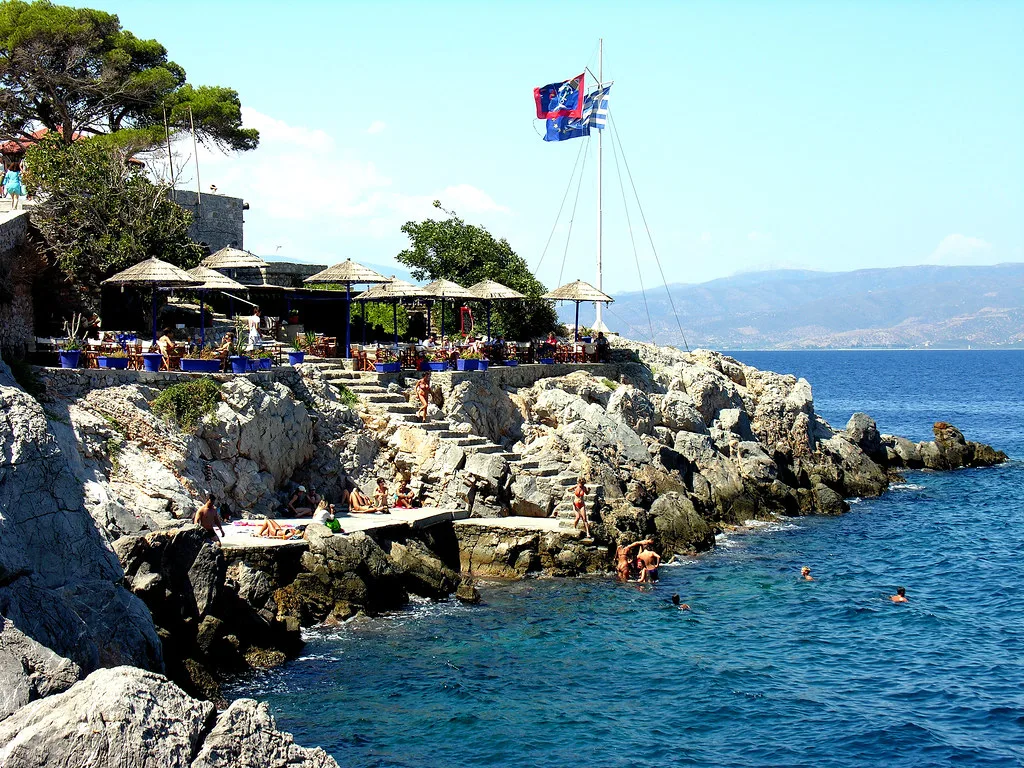
Three errors account for most disappointing visits. The first is expecting beaches: Hydra's coast is rocky and swimming happens from specific platforms and coves rather than a long sand strip, so plan a swim rather than a beach day. The second is planning a driving route, which cannot work in a town without cars. The third is allocating two hours to museums that need a morning.
A fourth, quieter mistake is treating the mansions as a backdrop. Read a short history before you arrive, and the same lanes become legible: here the shipowner's house, there the warehouse, here the memorial to the fleet.
Finally, do not confuse this island with the fictional organisation. Searches for Hydra history return both, and one has nothing to do with the other; if a page starts talking about comic-book mythology, you are on the wrong island.
A Short Reading List for More Depth
For a compact visit, one general history of modern Greece covering the revolutionary period plus the island's own museum catalogue will carry you through. If you prefer to read on the boat, choose a book with a chapter on the maritime islands and the 1821 fleet rather than a general travel guide, which tends to compress the history into a paragraph.
For the wider context of Greek places and their stories, including island towns with different histories, this Rhodes History for Visitors piece shows how a single town's maritime and medieval layers get told.
Plan Your Visit
Hydra rewards a visit built around walking and reading rather than checking off sights. Arrive with a rough grasp of the shipowning era and 1821, pick one museum, climb one lane, and leave time for a meze lunch where you can see the harbour or deliberately sit a street back from it; if you are weighing what to eat in Greece across the rest of your trip, the same harbour-versus-back-street logic travels with you.
Fix your ferry times first, book a room you can reach on foot with a bag, and confirm museum hours and restaurant opening directly before you travel. One final check of current details a few days out is enough; the point of the trip is the town itself.
Explore more Greece sauna guides
Frequently Asked Questions
Why is the Greek island called Hydra?
The name is ancient, derived from the Greek word for water, a reference to the island's springs. It has no connection to the many-headed monster of myth beyond the shared root, and none at all to the Marvel organisation that dominates some search results.
Did Hydra play a role in the Greek Revolution?
Yes. Hydra was one of the maritime islands whose merchant ships and sailors gave the 1821 uprising reach at sea, and its shipowners and captains helped finance and command the revolutionary fleet. The town's museums and memorials assume this background, so read a short account before visiting.
Are there cars on Hydra?
Hydra Town functions without cars, and movement is on foot through stepped lanes, with luggage often carried by mule or hand cart. This shapes practical planning: pack a bag you can carry, and choose accommodation with the walk from the ferry in mind.
How do you get around Hydra without cars?
You walk. The town is compact but steep, so a reasonable plan is one climb, one museum and one meal rather than a full circuit. For inland monasteries, use the footpaths, start early, carry water and ask locally about the current state of the route.
How long is the ferry from Athens to Hydra?
Crossings run from Piraeus, but durations vary by vessel and season, so check the timetable for your dates. Weather in the Saronic Gulf can also affect sailings, so build some slack into a day trip.
Is Hydra worth visiting for history rather than beaches?
Yes, if you want maritime and revolutionary history in a walkable stone town. If a sandy beach is the priority, Hydra's rocky coast will disappoint; plan swims from platforms and coves, and treat the architecture and museums as the main event.
Sources
Notes for eating well in Greece
Optional updates to our guides.
You might also like

Continue reading
More guides you'll find useful