Skiathos Old Town: A Walking Guide to the Lanes, Port and Bourtzi
Skiathos Old Town is the car-free quarter above the port, ending at Plakes beach. Here is how to walk it, what to see, and how it fits around the harbour.
On this page
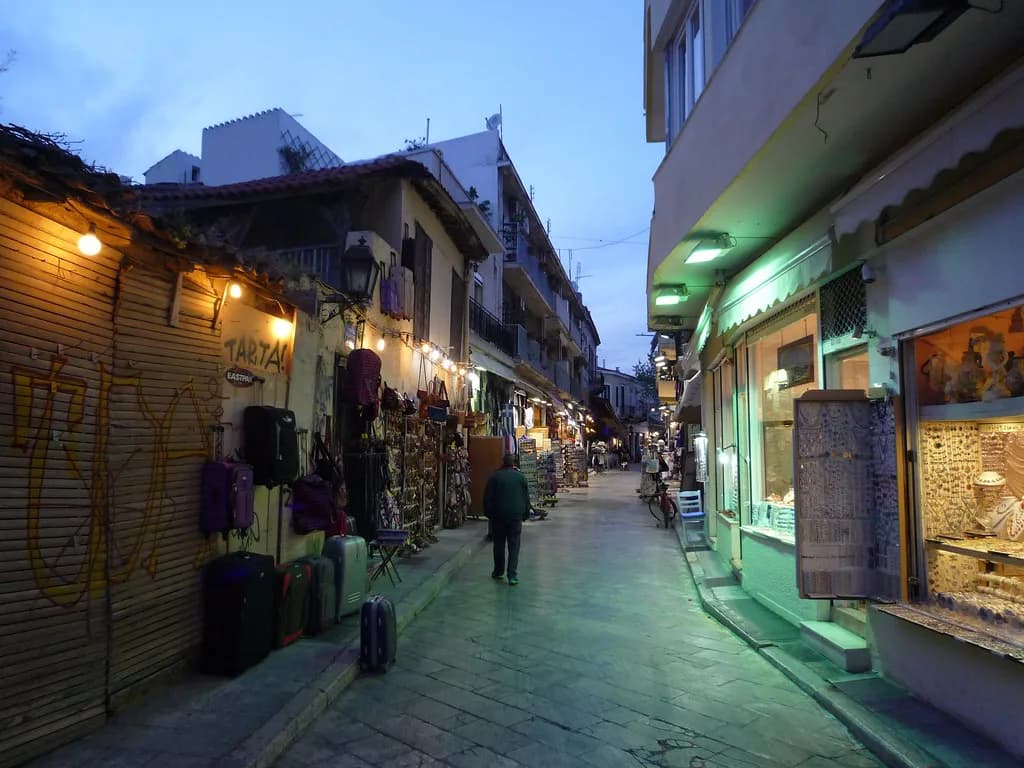
Skiathos Old Town is not a separate village sitting outside the modern town; it is the historic core wrapped around the port and the small peninsula that finishes at Plakes beach. That distinction matters when you book accommodation, because the lanes are pedestrian-only and a taxi cannot pull up at every door. This guide walks you through the quarter, names the landmarks the sources support, and explains where to eat and sleep without overpromising on schedules or prices.
Plan on spending a morning or late afternoon here rather than a full day: the compact centre rewards slow wandering, and the surrounding island has beaches and the Kastro to fill the rest. Walking times below are ranges, since pace, heat and the number of photo stops change everything.
What 'Old Town' Means in Skiathos
In Skiathos the phrase describes the neighbourhood around the port and the little peninsula that ends at Plakes beach, and this part of town is car-free. Skiathos Town as a whole is larger, with roads, the bus network and the wider harbour, so expect vehicles right up to the edge of the quarter and none inside it. Knowing the boundary helps you decide where to stay and how to move luggage.
Where does the old town of Skiathos start and end? It is the car-free neighbourhood around the port and the small peninsula that finishes at Plakes beach. The modern town, with roads and the wider harbour, surrounds it, so you cross a clear boundary from traffic to pedestrians.
Can you walk from the port to Plakes beach? Yes. Plakes sits at the tip of the peninsula, so the walk from the port front follows the lanes through the old quarter and out to the beach.
How long does it take to walk around Skiathos Old Town? Allow roughly an hour for a loop of the core at an unhurried pace, more if you stop at churches, shops or a taverna. Heat, steps and photo stops stretch that, so plan a morning or afternoon rather than a fixed schedule.
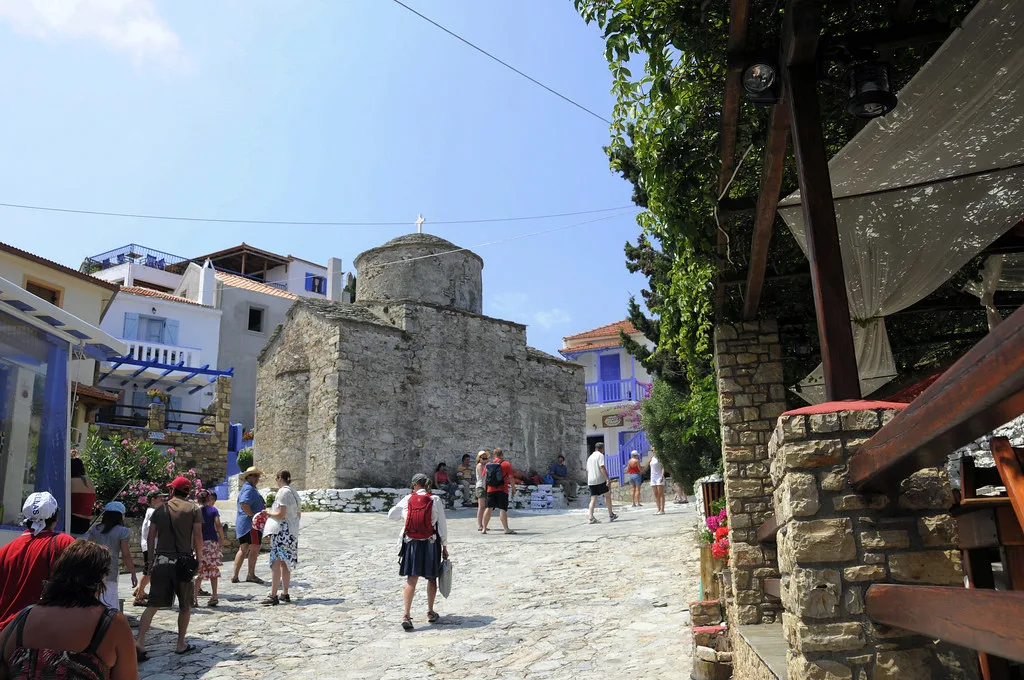
The practical consequence is simple: you walk everywhere within the quarter, over paving and steps, between whitewashed houses and small churches. Travellers with heavy suitcases or limited mobility should treat the lanes as a short stroll from a drop-off point rather than a door-to-door arrival. If that sounds like friction you would rather avoid, the modern town beside the port is the easier base.
Orientation: Port, Peninsula and Plakes
Think of the old quarter as a loop hanging off the commercial harbour. The port front is the busy, open edge with the ferries and the main waterfront; from there the lanes run through the peninsula to Plakes beach, which sits at the tip and gives you a swimming option without leaving town. Use the waterfront as your compass point and you will not get lost for long.
Transport to the beaches starts here too. A boat taxi from the old harbour is one way to reach Koukounaries, and a bus service also runs from town to the same beach as the last stop on its route. Neither should be treated as a fixed timetable: ask locally about departure points and times on the day, since services vary with the season.
A Walking Route Through the Lanes
Start at the port front, walk into the lanes and keep the sea loosely on one side as you head for the peninsula and Plakes. A loop of the core, with stops at a church or two and a look at the older houses, takes roughly an hour at an unhurried pace; add time for coffee, photographs and shade breaks. The lanes are short but uneven, so shoes with grip beat sandals on the polished stone.
When the heat or the steps start to wear, the sensible turning point is the waterfront: come back out to the open harbour rather than pressing on through another loop of alleyways. There is no shame in a shorter walk, and the harbour gives you benches, breeze and an easy route back to wherever you started.
Churches and Landmarks Worth Stopping For
The old quarter's small churches are part of the texture of the walk rather than formal sights, and the Agios Nikolaos Church and Clock Tower is the landmark most visitors use to orient themselves in Skiathos Town. Skiathitiko Spiti, a preserved traditional house, gives a sense of how the town was built and furnished. Both are listed among the town's principal attractions, so they make natural anchors for a route.
The Papadiamantis House, associated with the Greek writer Alexandros Papadiamantis, is the other name to look for as you wander the lanes. Because the sources do not publish reliable opening hours or entry arrangements here, treat these interiors as optional stops and check locally or on official town information before building your day around them. The lanes themselves need no ticket.
Bourtzi: The Peninsula Off the Harbour
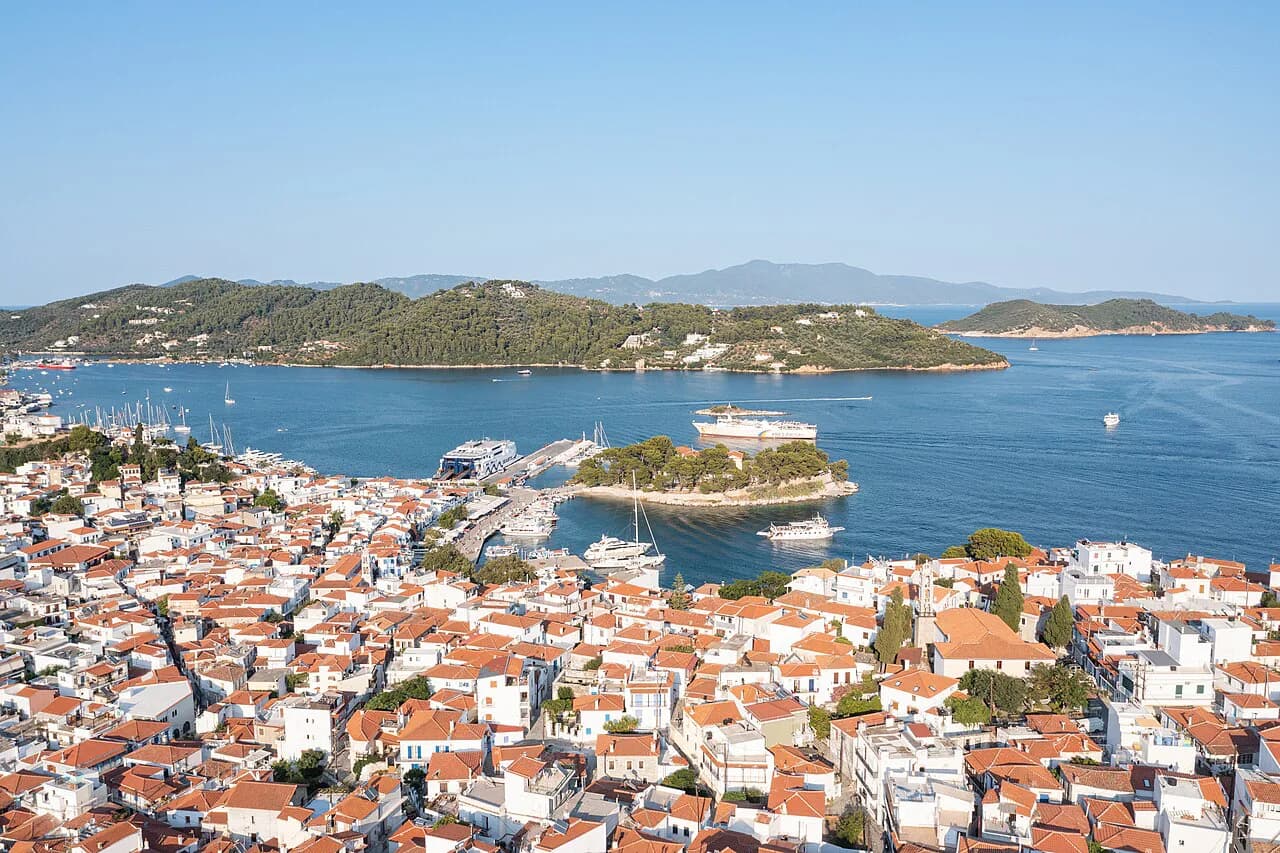
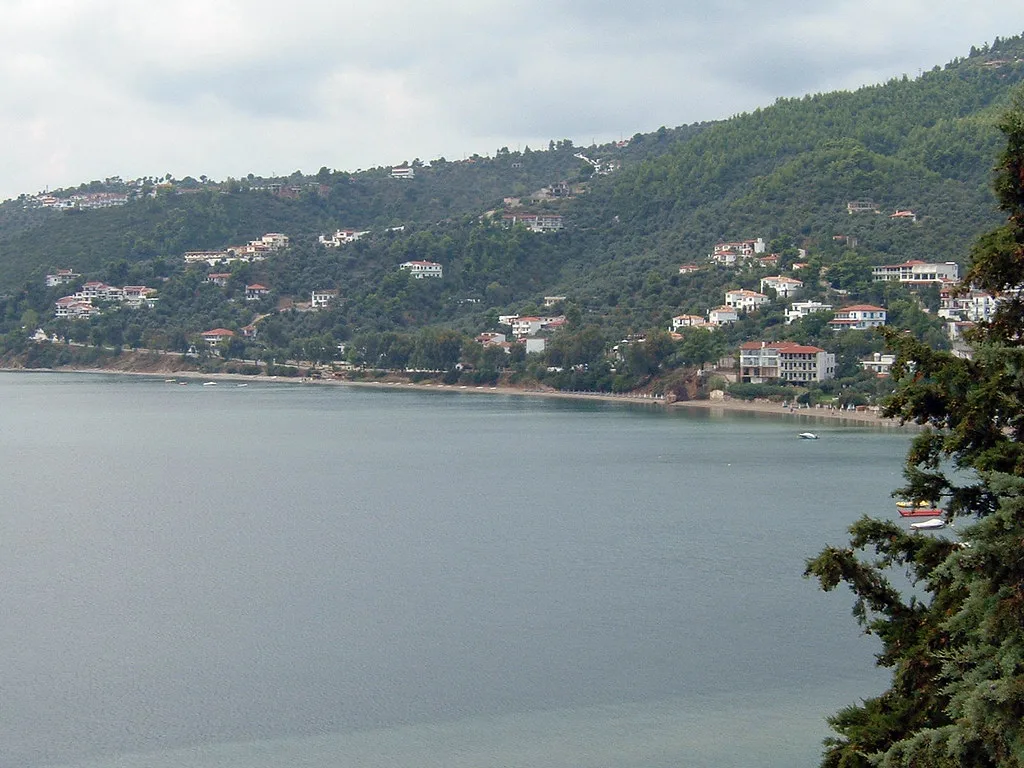
Bourtzi is the small wooded peninsula that sits just off the harbour and is one of the town's defining silhouettes. It fits naturally into a walk as a detour from the waterfront rather than a separate excursion, and it is best approached when you are already at the port edge.
How much time you give it depends on whether you want to sit under the trees or simply look back at the town from the water's edge. Either way, the view back toward the old quarter is the point: you see the whitewashed houses stacked above the harbour in one frame, which is hard to reproduce from inside the lanes.
Views and Photo Stops
There is a real trade-off between shade and outlook in the old quarter. The narrowest lanes give you cool walls, bougainvillea and quiet corners, but almost no long view; the harbour front and the peninsula give you openness and light at the cost of heat and company. Serious photographers should walk the lanes in the morning and save the waterfront for later, when the light softens.
For the classic shot of the town, position yourself across the water on the Bourtzi side and look back. Inside the lanes, the worthwhile frames are the details: a stepped alley, a chapel door, a courtyard glimpsed through a gate. Keep the camera close to your body in the narrowest passages so you do not block residents walking home.
Shopping in the Lanes and on the Port Front
The old-town shops sit in the same narrow streets you are walking, which means browsing has a physical cost: a group stopping to look at a window display can block a lane entirely. Step into doorways and shop interiors rather than standing in the middle of the passage. The port-front businesses are easier to browse quickly, but the lane shops are where the atmosphere is.
Greek shopping districts generally mix everyday shops with souvenir and craft stores, and Thessaloniki's example shows how a city's retail streets layer local products with tourist-facing goods. Expect the Skiathos version to be smaller and more seasonal, and check what is actually open before making a special trip for a particular shop.
Eating in and Around the Old Town
The core decision is harbour table versus lane taverna. The waterfront gives you sea views, space and a steady breeze, and it is where you eat when the view is the point; the lanes give you smaller rooms, closer tables and often a quieter meal, at the cost of the outlook. Neither choice is automatically better value, and the packet names no specific Skiathos restaurants, so judge by the menu posted at the door.
Learn three words before you sit down. Mezédes are small plates meant to be shared, ordered together and picked at slowly rather than as a starter-main sequence. Tzatziki is a thick dip of yogurt, cucumber and garlic, and ouzo is the anise-flavoured spirit that turns a plate of small dishes into a long afternoon; it clouds when you add water. Ask for a carafe of house wine if anise is not your thing. For the wider repertoire beyond these three, our guide to what to eat in Greece covers the dishes dish by dish.
Seafood is where the bill can climb fastest. Fish is often sold by weight, and the cheaper species such as sardines, anchovies and mackerel are just as traditional as the expensive ones; ask to see the fish and confirm the price per kilo before it goes on the grill. Menus are required to indicate whether fish is fresh or frozen, so look for that marking when you order.
Drinks and Nightlife After Dark
After dark the old quarter changes character: the bar streets fill and the quiet lanes empty, so where you sleep relative to the bar cluster matters more than it does by day. If you want early nights, ask for a room away from the busiest streets; if you want the nightlife, the harbour edge puts you in the middle of it.
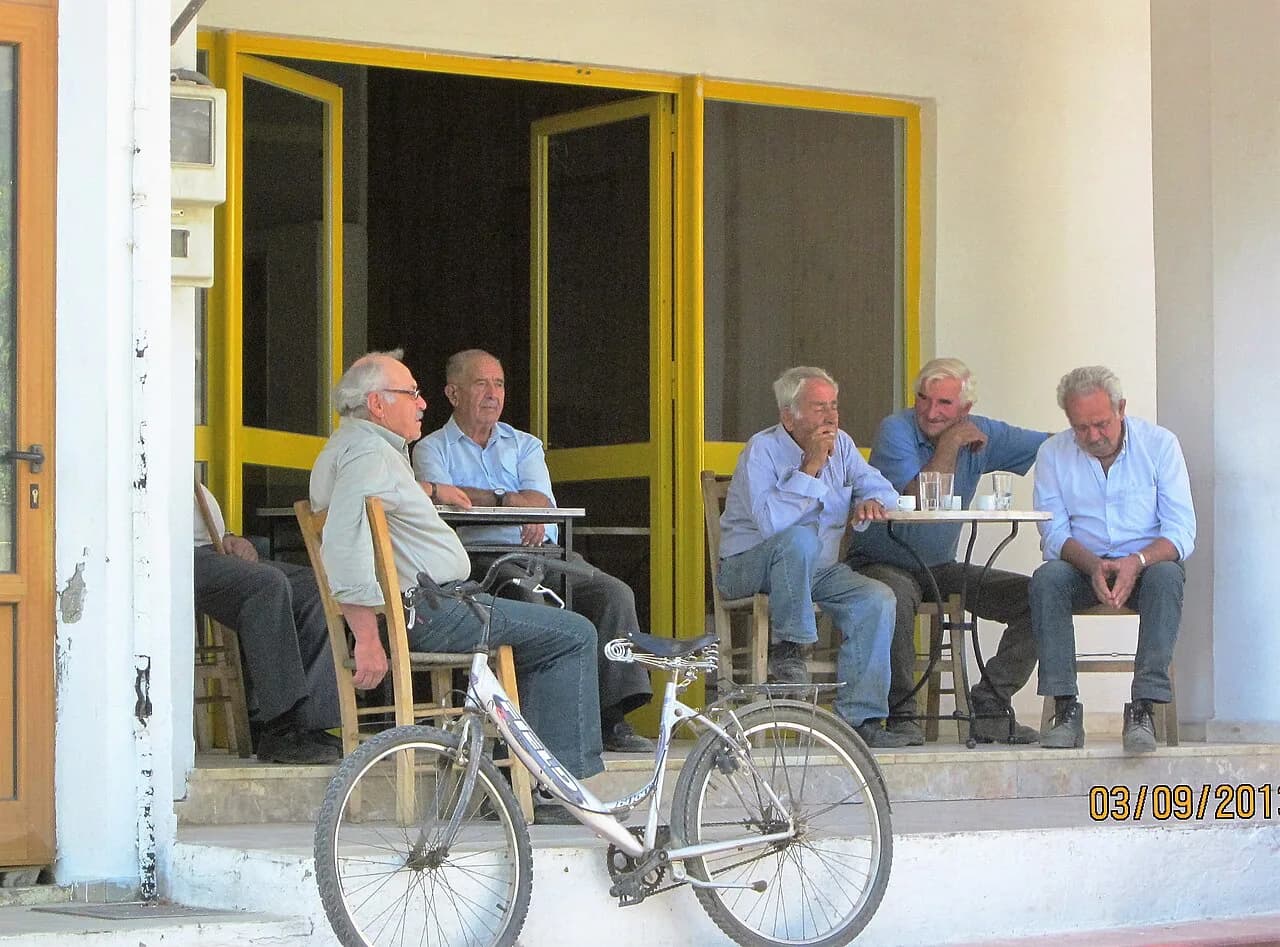
Drinking in Greece is usually paced around food and company rather than a quick round, so an evening in the lanes tends to mean a table, a bottle and several small plates over a couple of hours. Keep an eye on the time if you have an early ferry, because the walk back through the car-free quarter is on foot.
Staying in the Car-Free Quarter
Sleeping inside the old quarter means charm and silence from traffic, plus the daily reality of carrying bags over paving and up steps. Ask your host where a vehicle can actually stop and how far the walk to the door is. Travellers with mobility issues, small children or very heavy luggage should weigh the atmosphere against the practical drag and consider the port side instead.
The modern town beside the harbour is the pragmatic alternative: easier arrivals, more traffic, less of the old-world feel. Whichever you choose, book with a clear idea of the walk from the drop-off point, and remember that many island businesses operate seasonally.
Getting There and Away
Ferries arrive at the port, which puts the old quarter within walking distance of the gangway for anyone travelling light. From town, buses run out to the island's beaches, and boat taxis leave from the old harbour for at least some of them, including Koukounaries. Verify departure points, times and whether services are running on your dates, especially outside high summer.
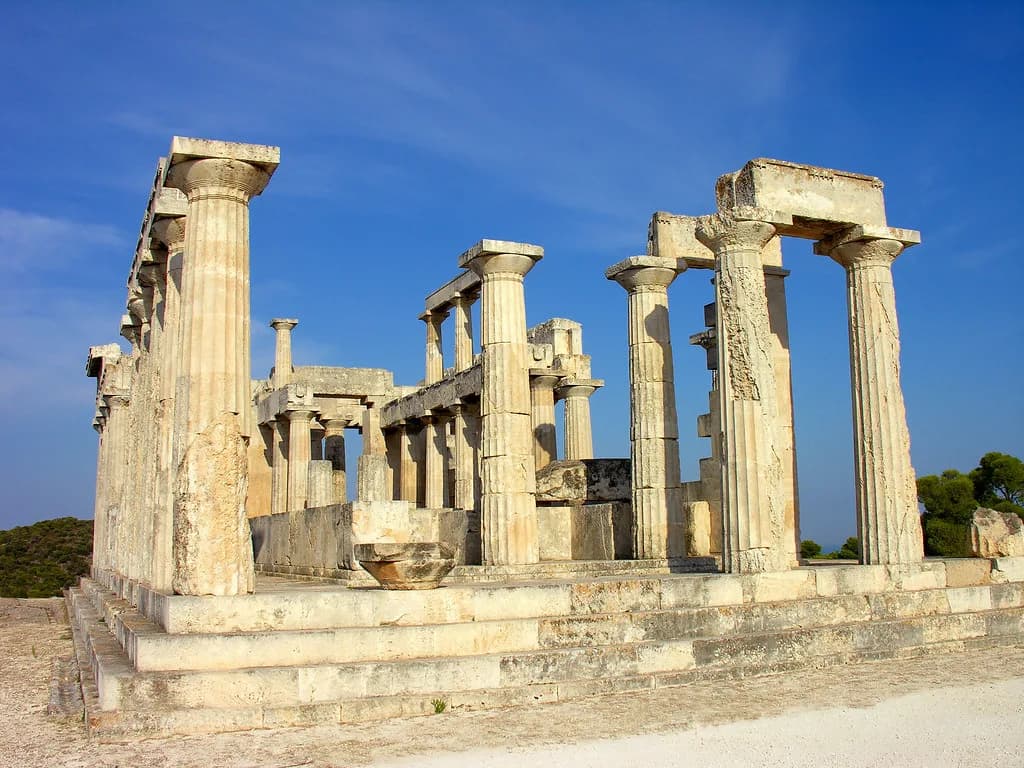
If your trip is built around archaeology rather than beaches, island hopping in the Sporades pairs awkwardly with the big mainland sites, so treat Skiathos as a separate chapter and plan any classical sightseeing around a dedicated stay elsewhere. The wider guide to ancient sites in greece is the place to start that planning.
Before You Go
Island businesses commonly open seasonally and close outside the summer months, so do not assume a shop, taverna or boat service is running in the shoulder season. Check current details for the specific places and transport you are counting on before you travel, and keep your plans loose enough to absorb a closure.
One more useful habit: pay in euros, and check whether cards are accepted before you order in a small lane taverna. Carry some cash for the smaller places and for boat taxis, where a card machine is not guaranteed.
How Long to Allow, and Pairing the Old Town With a Beach
Give the old quarter a morning or an afternoon, not a full day: an hour for the lanes, extra for Bourtzi, a church and a meal, and you have seen the core comfortably. Pair it with Plakes beach at the tip of the peninsula for a swim without leaving town, or take a bus or boat taxi out to Koukounaries for a longer beach day. If you want to compare the island's main draws before committing your days, our Skiathos Attractions: 5 Visitor Guides sets out the options.
If your interests run to older history, the island's Kastro and the wider story of Greek antiquity belong to a separate itinerary; santorini history shows how much a single island's past rewards proper reading before you arrive. Build the old town into your first or last day, when a short walk near the port fits around ferry times.
Explore more Greece sauna guides
Frequently Asked Questions
Where does the old town of Skiathos start and end?
It is the car-free neighbourhood around the port and the small peninsula that finishes at Plakes beach. The modern town, with roads and the wider harbour, surrounds it, so you cross a clear boundary from traffic to pedestrians.
Can you walk from the port to Plakes beach?
Yes. Plakes sits at the tip of the peninsula, so the walk from the port front follows the lanes through the old quarter and out to the beach. It is short but uneven in places, with steps and paving underfoot.
How long does it take to walk around Skiathos Old Town?
Allow roughly an hour for a loop of the core at an unhurried pace, more if you stop at churches, shops or a taverna. Heat, steps and photo stops stretch that, so plan a morning or afternoon rather than a fixed schedule.
Is Skiathos Town worth visiting?
Yes, if you want the historic core rather than only beaches: the lanes, the small churches, Bourtzi and the harbour views are all here, and boat taxis and buses to the beaches leave from town. It is a compact stop rather than a full-day destination.
What is the prettiest part of Skiathos?
That is a matter of taste, but within town the narrow lanes and the view back from Bourtzi are the strongest candidates. Beyond town, the beaches and the Kastro are the usual reasons people rate the island highly.
Was Mamma Mia filmed in Skiathos?
Several Greek islands are associated with the film, but no reliable source confirms a specific Skiathos location, so treat any claim you hear locally as unverified. Ask at an official tourist information point if it matters to your trip.
Do I need to book ahead to eat in the old town?
The sources name no specific old-town restaurants and give no booking policy, so the booking rules depend on the individual taverna. For a harbour table at sunset, ask your accommodation to call ahead on the day.
Sources
Notes for eating well in Greece
Optional updates to our guides.
You might also like

Continue reading
More guides you'll find useful