Agios Nikolaos Old Town: Lake Voulismeni Lanes and Harbour Guide
Plan a walk through Agios Nikolaos old town: Lake Voulismeni, the lanes, churches, harbour and museum, plus where to eat and how the areas fit together.
On this page
Agios Nikolaos sits on the eastern side of Crete, in the Lasithi region, and its historic centre is not a walled old town in the way visitors expect from Rhodes or Rethymno. The old town here is the small, dense core built around Lake Voulismeni, a deep little lake joined to the harbour, with stepped lanes, churches and café terraces packed into a few hundred metres.
That compactness is the key planning fact: lake, lanes and port are close enough to cover on foot in a single unhurried loop rather than as separate excursions. The official municipal travel site lists the town's coastline, inland villages, Elounda and its beaches as distinct areas of the wider municipality, which helps you decide how much to keep for another day.
What 'Old Town' Means in Agios Nikolaos
Searching for the Agios Nikolaos old town turns up images of a lake ringed with cafés, not a gate-and-wall quarter. The historic centre is the lake-harbour core, and the town grew up partly over the ruins of the ancient city of Lato pros Kamara, as the municipality's own site describes. Expect a working Greek town centre with tourism layered on, rather than a preserved museum district.
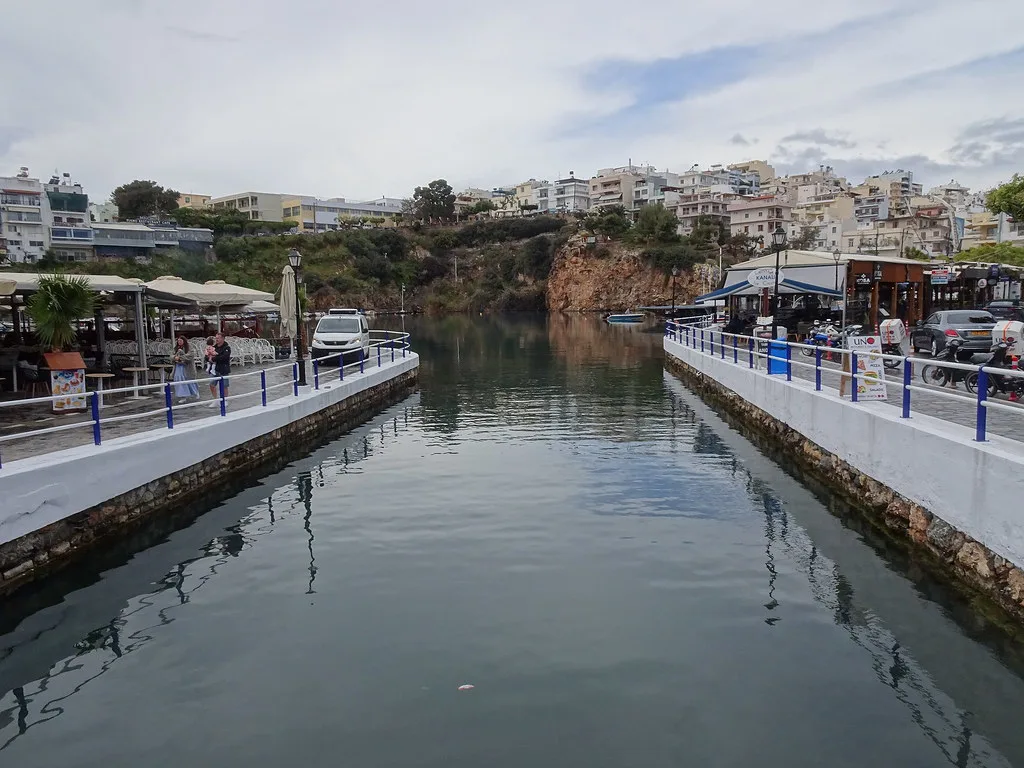
Does Agios Nikolaos have an old town? There is a historic centre, but not a walled, car-free old quarter of the kind found in Rhodes or Rethymno. The old town is the compact core around Lake Voulismeni, joined by a short channel to the harbour and marina, with stepped lanes climbing inland behind the lakefront.
How long does it take to walk around Agios Nikolaos old town? The centre is small: the lake-to-harbour stretch takes only a few minutes, and a loop around the lake, along the marina and up through the back lanes can be done comfortably in an hour or two at an easy pace. Add time for a coffee stop, shopping or churches.
Where should I eat in Agios Nikolaos old town? Choose by position rather than reputation. Lakefront tables offer the view and the bustle, harbour tables on the marina side suit a longer evening with open water, and back-street tavernas in the lanes are quieter and often simpler.
This matters for expectations. If you want car-free medieval lanes and a fortress, Crete offers that elsewhere, and a Rethymno or Rhodes comparison is more apt than anything in Lasithi. Come to Agios Nikolaos for a short, walkable centre with a genuine lake at its middle, a harbour, and easy access to the beaches and islands of the Mirabello coast. If you are building a wider eating plan for Crete or the mainland, the guide to Traditional Greek Food is a useful companion to this town's tavernas.
Orientation: Walking the Lake, Lanes and Harbour as a Loop
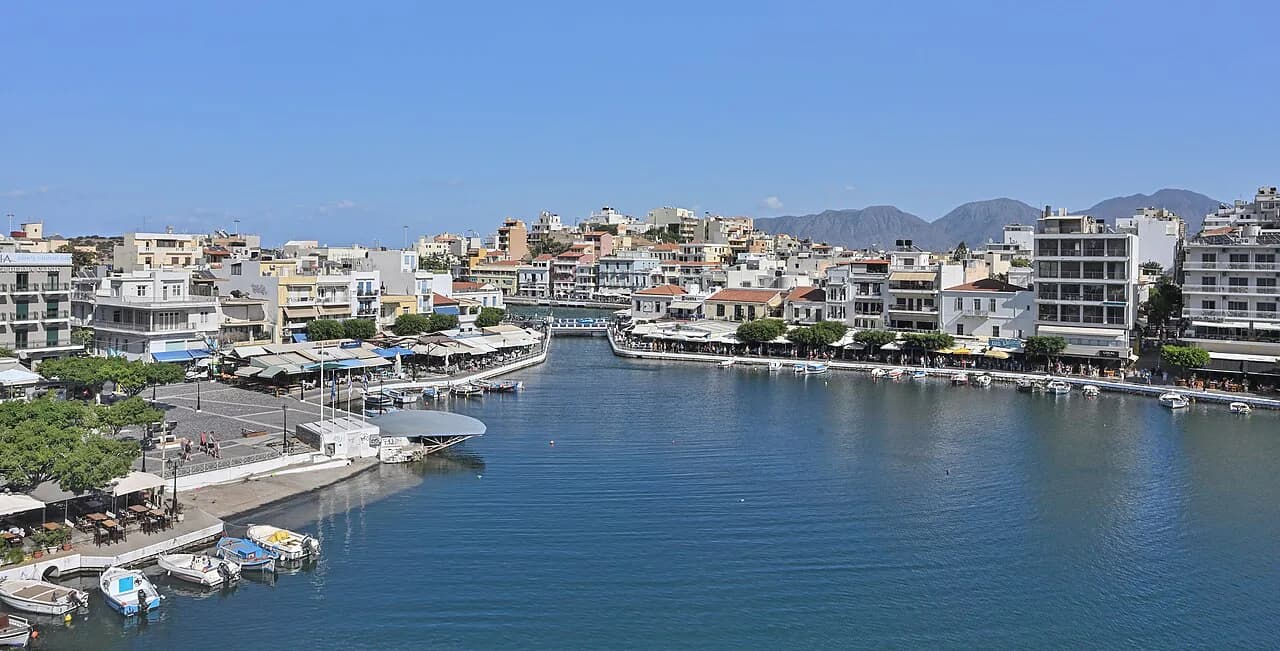
Picture the centre as three rings that touch. Lake Voulismeni is the inner anchor, ringed with cafés and a path around its rim; a short channel links it to the harbour and marina on the sea side, where boats moor and waterfront tables face open water; and the lanes run inland and uphill from the lake, with shops, churches and stepped alleys between ordinary houses.
A sensible loop starts at the lake, follows the channel down to the port, walks the harbour arm, then climbs into the back lanes and returns to the lake from above. That order gives you the busy waterline first, when it is cooler, and quieter streets later. Distances inside this core are short enough that most walkers will not need transport between stops; save taxis and buses for Elounda, Voulisma Beach or Spinalonga.
Wear shoes that grip. The lanes include steps and polished stone slopes, and shade is patchy at midday in summer. Carry water and plan the uphill sections for early or late in the day rather than between the hottest hours.
Lake Voulismeni: The Anchor of the Centre
Voulismeni is small and unusually deep, and it is the social heart of town: cafés line the rim and the surrounding terraces, and a walk around the water takes minutes. Travel writing on the town notes that the lake is joined to the harbour, which is why the water level and mood change with the sea rather than standing still like a pond.
This is the place for a frappé, the Greek iced instant coffee shaken to a foam and served cold, or a Greek coffee if you prefer something hot and small. Ordering one drink buys you a table and a view; it is the classic local pause rather than a sight to tick off. The trade-off is that lakefront seats are the busiest and most photographed in town, so mid-morning and late afternoon are calmer than the sunset rush. If coffee is your entry point to the cuisine, our guide to what to eat in Greece is a natural next read.
Do not expect a wild natural setting. The lake is urban, enclosed by buildings and terraces, and its appeal is the ring of life around it. Treat it as a place to sit and orient yourself before exploring the streets behind.
The Lanes and Back Streets: Shops, Churches and Stepped Alleys
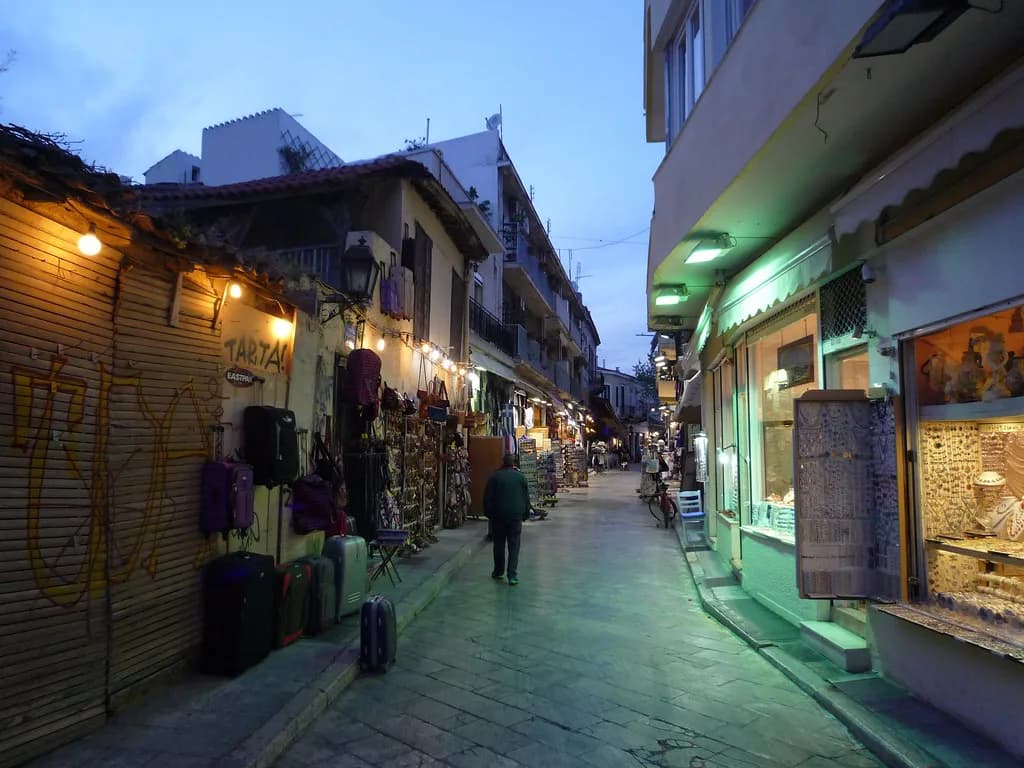
Behind the lakefront, the centre breaks into narrow lanes with small shops, churches and houses, and the gradient rises as you move inland. This is where the old town feels like a town rather than a promenade, and where you will find the quietest corners of the centre. Browsing here is slow and aimless by design.
The practical choice is between the lakefront and these streets. The lakefront gives you views, people-watching and easy ordering, at the cost of higher prices and more noise; the back lanes give you space and everyday shops, at the cost of fewer terraces and a steeper walk. A good compromise is to shop and wander in the lanes, then return to the water for one drink rather than several. Wherever you end up paying, it helps to know your options, and the guide to currency in Greece covers euros, cards and cash.
Churches sit within this fabric rather than on a separate circuit. The municipality's site notes that religion has long played a central role in Cretan life and that the wider Mirabello area holds a notably large number of monasteries, which is why a short walk in town can be paired with a church or monastery visit nearby if that interests you.
The Harbour and Marina: A Different Mood
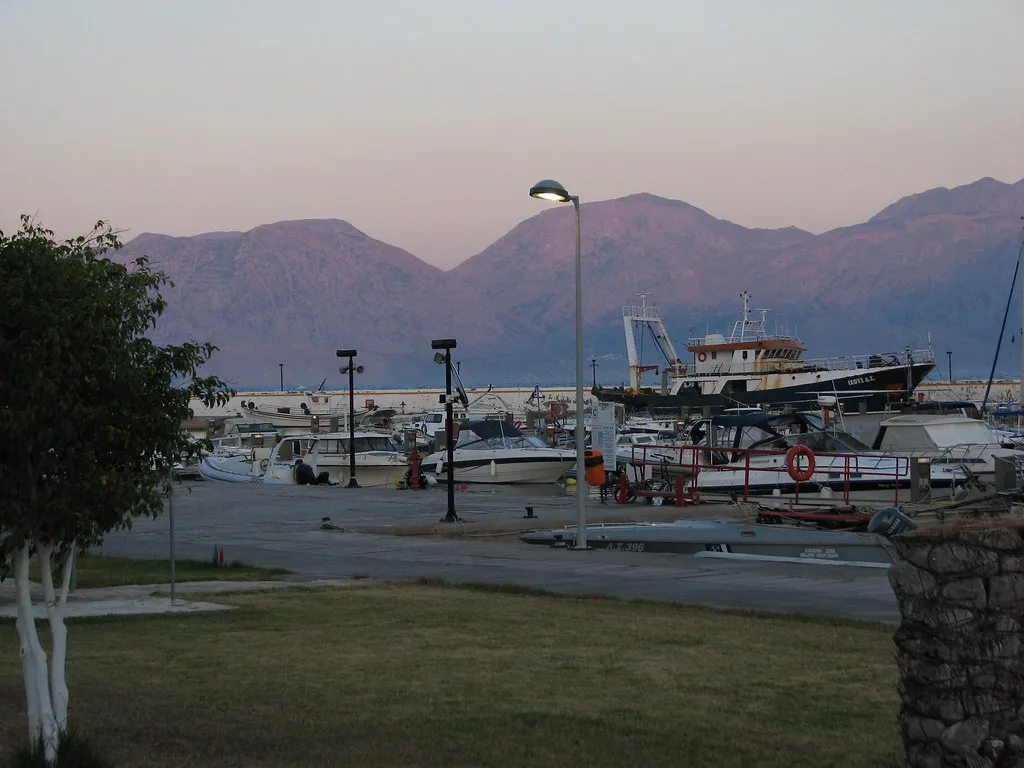
Walk down the channel from the lake and you reach the port and marina, where the town opens out to the sea. The official site treats the marina and port as a distinct part of the town experience and lists the coastline as its own area to explore. The mood is broader and breezier than the enclosed lake.
For a drink or a meal, choose the harbour when you want open sky, boats and a sense of arrival, and the lake when you want enclosure, people and the classic town view. Harbour tables tend to suit a longer evening; lake tables suit a quick stop. Both are within a few minutes' walk, so you can decide on the spot rather than committing your whole evening in advance.
Archaeology and the Town's Ancient Past
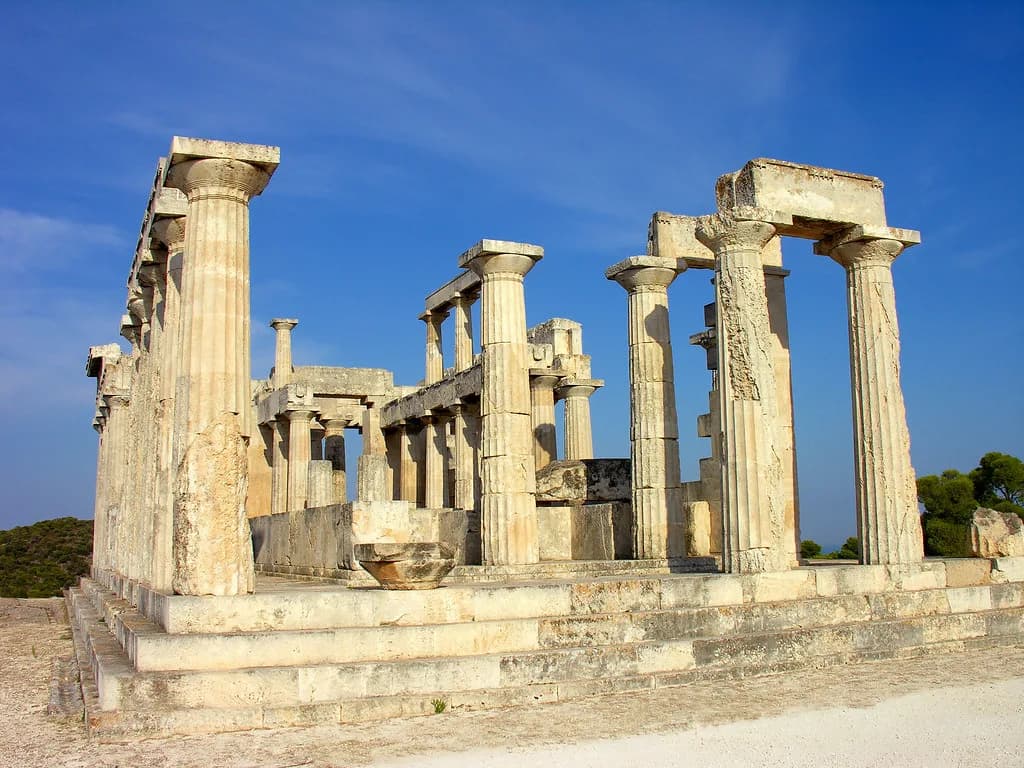
The town's roots reach back to ancient Lato pros Kamara, whose remains lie partly beneath the modern centre, according to the municipality's own introduction to the town. For a wider frame on comparable sites across the country, the guide to ancient sites in Greece is a useful planning companion before you travel.
Archaeology here is not a single ticketed monument in the centre. If ruins and museums are a priority, ask at the town's tourist information point or the municipal site which archaeological collections and sites are currently open, since small museums change schedules. Build the walk around the lake and lanes, and treat any site visit as an addition rather than the main event.
The regional museum and archaeological context in eastern Crete reward a little reading first. If you are also heading to the Cyclades, the Santorini History for Visitors page gives a similar grounding for that island's ancient sites.
Where to Eat in the Old Town
There is no single old-town restaurant strip: the choice is really a choice of position. Lakefront tables sell the view and the bustle; harbour tables sell open water and a slower evening; back-street tavernas sell quieter rooms and a more local rhythm. Decide by mood and budget rather than by review score.
For dishes, start with mezedes, the small shared plates that open a Greek meal, then move to grilled fish if you want the harbour setting to make sense. Raki, the clear grape spirit poured in small glasses, usually arrives with the table rather than being ordered. For a dish-by-dish primer before you go, see what to eat in Greece and use the plain-English explanations to order with confidence.
Prices vary by position and season, so compare menus at the door before sitting down and confirm whether bread, water and cover charges are added. Many island and coastal restaurants in Greece run seasonal hours, often closing through the winter months, so if you are travelling outside summer, call the restaurant you plan to eat at ahead of time to see whether it is open. Carrying some cash in euros is sensible; the currency in Greece page explains the practical basics.
Shopping in the Lanes
The centre sells a mix of practical goods and visitor-oriented stock, and the lanes make the difference obvious: everyday shops sit beside souvenir displays rather than in separate districts. Buy olive oil and local food products from shops that present them as produce rather than packaged gifts, and ask where the oil was pressed if that matters to you.
The town's history of olive cultivation reaches back to the Minoans, who gathered and processed oil for export, as the municipal site explains, so olive products are a genuinely local category rather than a tourist invention.
Spinalonga and Elounda as Half-Day Add-Ons
The two big add-ons from the old town are Elounda, the resort village to the north, and Spinalonga, the island fortress in the bay. Both appear prominently among the area's attractions, and Spinalonga draws the largest share of day-trippers. Boats to the island leave from the Elounda and Plaka side, so the trip works best as a half day rather than squeezed into a lunch break.
Choose one, not both, if you have a single day. Spinalonga brings history and a boat ride; Elounda brings a seafront village and a slower meal. Trying to add Voulisma Beach as well usually means seeing all three briefly and enjoying none. If your trip continues to the Cyclades, Hydra History offers a comparable island-town read before you go.
A Realistic One-Day Plan
Start with the lake in the morning, walking the rim before the café terraces fill, then take the channel down to the harbour and along the marina arm. That gives you the geography of the centre while it is still cool and quiet.
Have lunch in the back lanes rather than on the water, where the tables are calmer and the menu often simpler, then spend the early afternoon indoors or in shade when the heat peaks. Late afternoon is for shopping and churches, and the evening returns to the harbour or the lake for a drink and dinner.
Practical Notes: Heat, Shade and Lakeside Tables
The whole centre is walkable and the lake-to-harbour stretch takes only a few minutes, but the stepped lanes make a full loop more tiring than the map suggests. Summer heat is the main constraint, so plan the uphill sections early or late and keep the middle of the day for sitting down.
Lakeside and harbour tables at sunset are the most contested seats in town. Arrive before the rush or book ahead where a place takes reservations, and ask about the table's position if a water view matters to you. For anything time-sensitive, such as boat departures or a specific restaurant's opening days, check current details shortly before you travel.
Plan Your Visit
Agios Nikolaos rewards a loose plan: walk the lake, follow the channel to the harbour, climb into the lanes, then choose your table by mood rather than by list. One day covers the centre comfortably and leaves room for either Spinalonga or Elounda if you start early.
Book accommodation near the lake if you want to walk everywhere, and further out if you value quiet and parking. Either way, the old town is small enough to visit twice in a day: once for orientation in the morning, once for dinner when the waterfront settles into its evening rhythm.
Explore more Greece sauna guides
Frequently Asked Questions
Does Agios Nikolaos have an old town?
There is a historic centre, but not a walled, car-free old quarter of the kind found in Rhodes or Rethymno. The old town is the compact core around Lake Voulismeni, joined by a short channel to the harbour and marina, with stepped lanes climbing inland behind the lakefront. Treat the lake, port and lanes as one continuous area rather than separate stops, and allow a morning or a full day to cover it on foot.
How long does it take to walk around Agios Nikolaos old town?
The centre is small: the lake-to-harbour stretch takes only a few minutes, and a loop around the lake, along the marina and up through the back lanes can be done comfortably in an hour or two at an easy pace. Add time for a coffee stop, shopping or churches. The stepped alleys make the loop more tiring than the distance suggests, so in summer walk the uphill parts early or late.
Where should I eat in Agios Nikolaos old town?
Choose by position rather than reputation. Lakefront tables offer the view and the bustle, harbour tables on the marina side suit a longer evening with open water, and back-street tavernas in the lanes are quieter and often simpler. Compare menus at the door before committing, and confirm whether bread, water or cover charges are added. Check opening days directly with the restaurant, especially outside summer.
Is Agios Nikolaos worth visiting for a day?
It works well as a one-day stop: morning around the lake, the channel and marina, lunch in the lanes, shade during the hottest hours, then shopping and an evening drink at the harbour or lake. If you want a half-day add-on, pick either Spinalonga by boat from the Elounda and Plaka side or a slower meal in Elounda itself, but not both plus a beach on the same day.
Can you walk from the old town to the harbour?
Yes. A short channel connects Lake Voulismeni to the port and marina, so the two are only a few minutes apart on foot. That makes it easy to switch between a lakefront table and a harbour table on the same evening. The lanes behind the lake rise uphill, so allow a little more time and wear shoes with grip for the steps.
How do I combine the old town with Spinalonga?
Keep the town walk for the morning, then head north to the Elounda and Plaka side for a boat to Spinalonga in the afternoon, or reverse the order and return to the harbour for dinner. Boats leave from that side of the bay, so build in travel time from the centre and check departure times. Choose Spinalonga or Elounda, not both, if you only have a day.
Sources
Notes for eating well in Greece
Optional updates to our guides.
You might also like

Continue reading
More guides you'll find useful