Shopping in Thessaloniki: Tsimiski, Markets and Food Gifts
Plan shopping in Thessaloniki around Tsimiski Street, the Kapani and Modiano markets, and edible gifts like bougatsa and tsoureki from named shops.
On this page
Shopping in Thessaloniki is less a mall trip than a walk through two different retail worlds. One is Tsimiski, the central street lined with shoes, fashion and everyday Greek brands. The other is the food market cluster around Kapani and Modiano, where the goods are olives, spices, cheese and pastries rather than clothing.
The two jobs need different timing and different bags. Clothes shopping works best as a loose loop anchored on Aristotelous Square, while market food is a morning errand with cash in your pocket. Keep them separate and each becomes quicker.
This guide names only shops with a confirmed street address and explains the Greek product names, from bougatsa to tsoureki, in plain English the first time they appear. Prices are not quoted here because the city's shops do not publish consistent figures; check at the counter.
Tsimiski Street: The Spine of Central Shopping
Tsimiski runs through the commercial heart of Thessaloniki and is often named as the city's main shopping street, with shoes, fashion stores and specialist clothing shops along its length. Treat it as a spine rather than a destination: pick one end, walk it once, and note the windows you want to return to.
The practical value of Tsimiski is that it connects the rest of your day. Terkenlis, the pastry shop known for tsoureki, has a branch at Tsimiski 30, so a retail walk can end with something edible. The same street sits within walking distance of Aristotelous Square, which makes it a natural midpoint between shopping and lunch.
One trade-off to settle before you start: central-street shops are convenient but rarely discounted. If you are hunting for reduced clothing rather than gifts, One Salonica describes itself as Greece's first premium outlet mall, with more than 100 boutiques, restaurants and a cinema. Confirm the current store mix and how to reach it before making the trip.
Kapani Market on Vlali: The Working Food Market
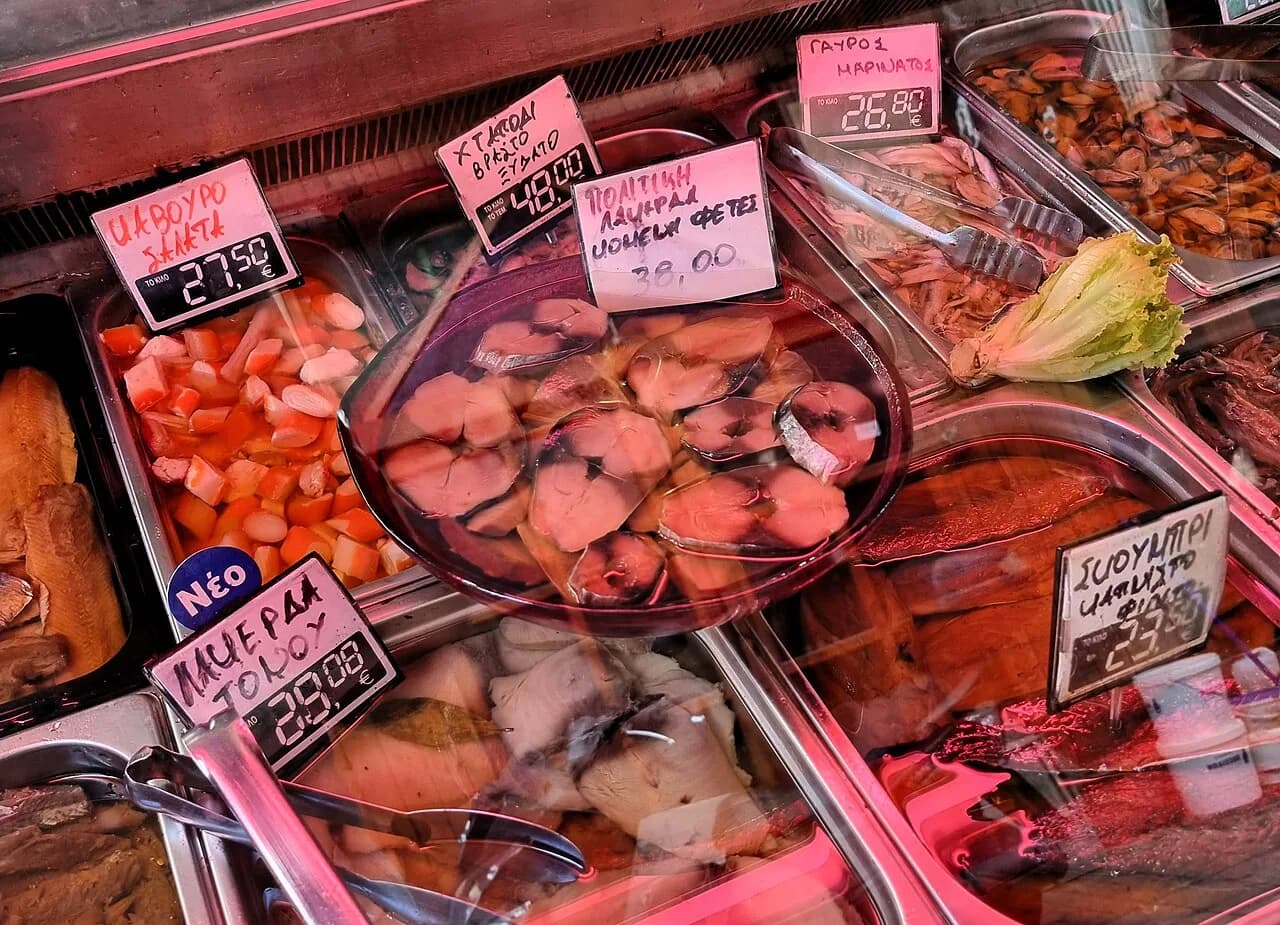
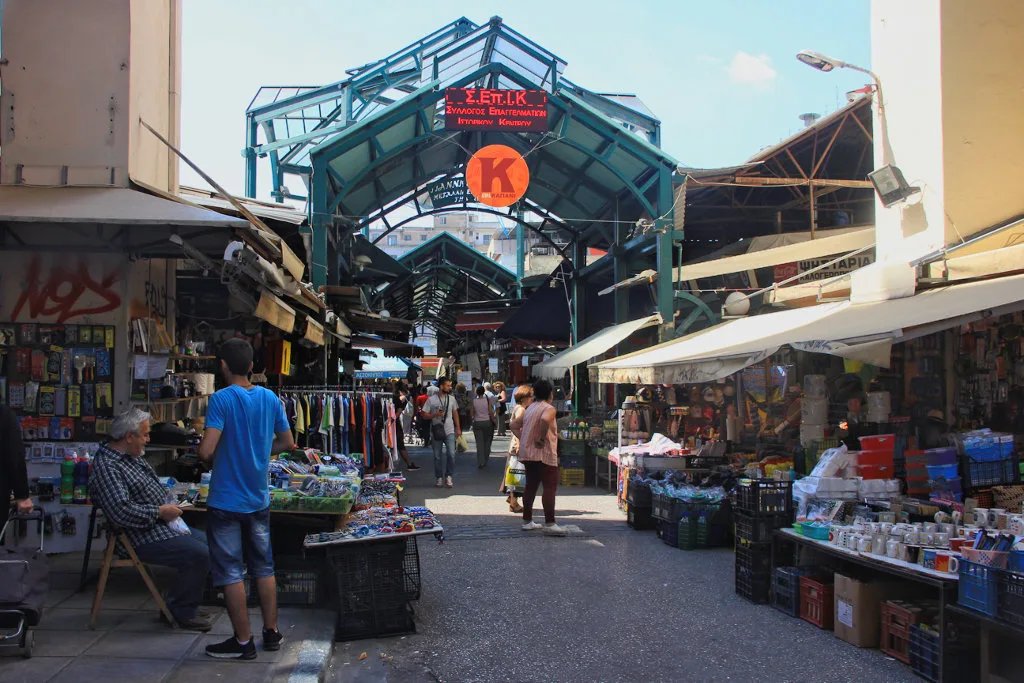
Kapani Market is the covered food market locals use, spread along Vlali and selling fruit, vegetables, meat, seafood, and a sideline of clothing and souvenirs. It is worth walking even if you buy nothing, because the layout shows how the city feeds itself: separate stalls for fish, meat and produce rather than one supermarket aisle.
Go early and bring cash. Market trading here is a morning business, and small vendors work in notes and coins rather than card terminals; the sources do not publish individual stall hours, so check the market's own site before you set out. Buy small quantities: a handful of olives or a bag of spices is easier to carry and easier to pack than a kilo of anything.
The market's contrast with a supermarket is the point. You can ask for a taste, point at what you do not recognise, and buy a single piece of cheese rather than a sealed pack. The city's own description of its markets notes the mix of daily fresh products, spices, olives, fish, meat, bakeries and sweet stalls, which is a fair summary of what to expect on a single walk-through.
Modiano Market: The 1920s Covered Hall
Modiano Market is the other half of the central food cluster, and its building carries a date: construction began in 1922 and finished in 1930 to designs by the architect Eli Modiano. That makes it a different kind of stop from Kapani, more of a hall to walk through than a street of stalls.
Treat the two markets as a pair rather than a choice, since they sit within the same central district and are easy to combine on foot. Modiano suits a slower look at food stalls and prepared goods; Kapani suits buying produce. If you only have time for one and your priority is edible gifts, start with Kapani and use Modiano as the walk back. If you are weighing this against another city break, our guide to shopping in Chania covers the same market-and-street balance.
Neither market publishes a reliable list of which traders open on which days, so check the Modiano Market and Kapani Market websites and social pages rather than a blog post. That is the one detail worth confirming the week you travel, since a closed hall changes the shape of a half-day route.
What Actually Travels Home
The single most useful buying rule in Thessaloniki is to separate fresh from packaged. Custard-filled pastries, fresh cheese and anything from a chilled counter will not survive a flight in hand luggage. Olive oil, honey, dried herbs, packaged sweets and sealed cheese do.
For a one-stop deli-and-market shop, ERGON Agora on P. Mela 42 combines a deli, bakery, greengrocer, butcher and fishmonger under one roof, sourcing from small producers and stocking items such as artisanal cheeses, cured meats and honey. It is the sensible stop when you want several gifts in one bag rather than a market crawl.
Beyond that, the city's food reputation rests on flavours with eastern, French and Balkan influences, and the practical expression of that for a shopper is a spread of spices, olives and sweets. Buy what you can legally carry and declare at your own border; honey and olive oil are liquid-adjacent items that belong in checked luggage, not a cabin bag.
Bougatsa: The Sweet Souvenir You Eat on the Spot
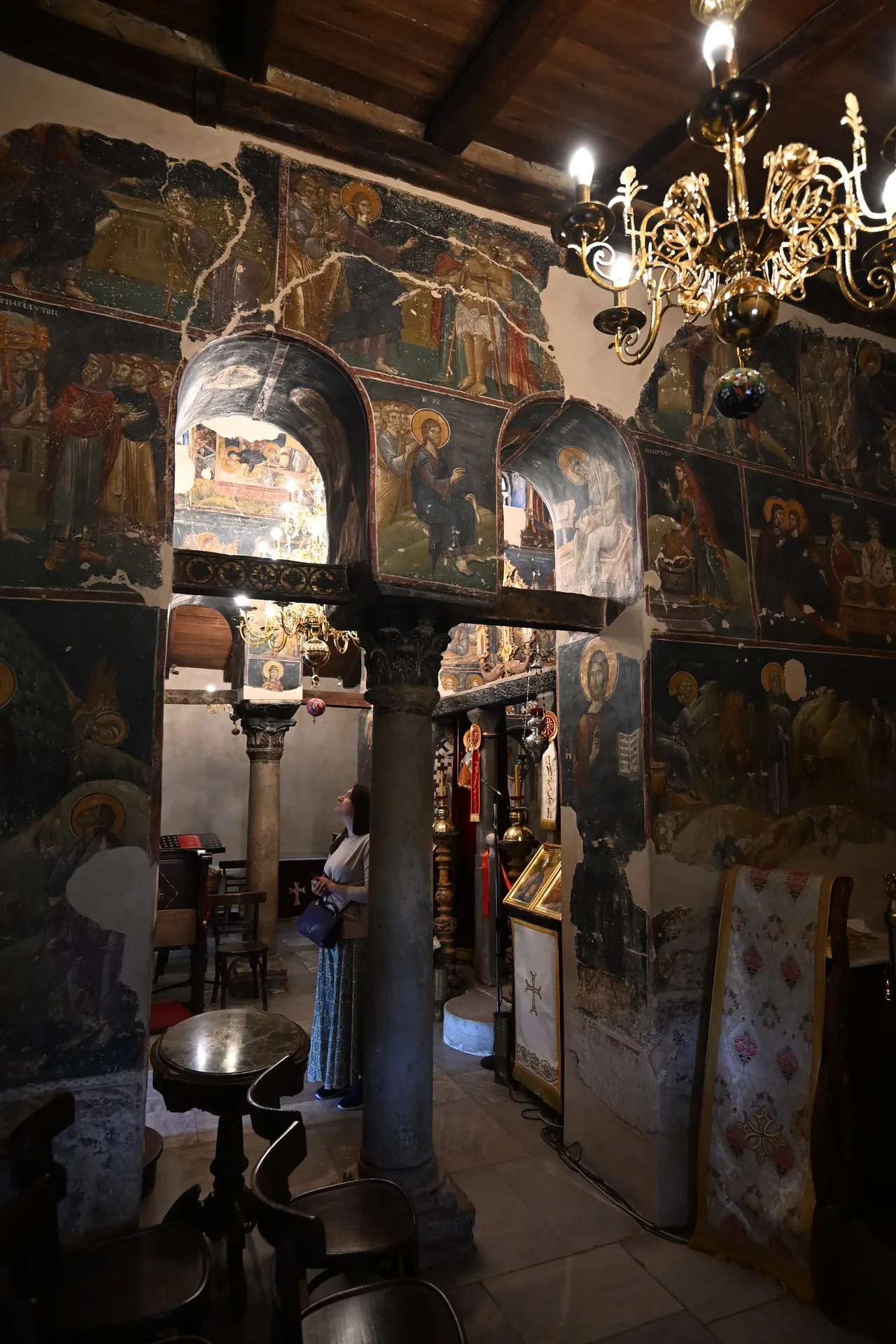
Bougatsa is a phyllo pastry, hand-stretched into thin sheets and filled either with sweet semolina custard or with savoury fillings such as cheese, spinach or minced meat. It is a morning food, made in large trays and cut to order. Our guide to bougatsa in Thessaloniki breaks down the sweet and savoury versions and how to order them.
Three named shops make the buying decision concrete. Bougatsa Bantis at Panagias Faneromenis 33 has been making the pastry since 1969, according to the shop's own history as reported in listings. Bougatsa Giannis at Mitropoleos 106 has served it since 1996 and offers fillings including feta, sweet custard and a chocolate-hazelnut spread. Both are central and easy to fold into a Tsimiski walk.
Estrella at P. Mela 48 sells something different: the bougatsan, described as a baked croissant filled with custard cream and topped with seasonal fruit such as raspberries or strawberries. It is a dessert built on the bougatsa idea rather than a traditional version, so order it expecting croissant texture, not phyllo. None of these travel well; eat them the same day.
Tsoureki and the Pastry Shops
Tsoureki is a sweet, brioche-like bread, traditionally braided into a large loaf and eaten in slices. Terkenlis at Tsimiski 30 is the city's best-known name for it, with variations that include filled versions and a vegan loaf, according to listings for the shop.
For shelf life, ask at the counter. A plain braided loaf keeps far better than a cream-filled one, and the shop staff can tell you which version is intended to be eaten within a day. If you plan to carry it home, buy it close to the end of the trip and keep it flat in your bag; one short check of current prices and opening hours before you set out covers the rest.
Pastry shops also sell the smaller, drier sweets that make better gifts: plain biscuits, nut confections and packaged tsoureki. Those are the items to buy in quantity; the fresh cream-filled loaves are for eating in Thessaloniki.
Aristotelous Square as a Midpoint
Aristotelous Square is where the two halves of a shopping day meet: it opens toward the waterfront, sits within walking distance of Tsimiski, and has cafes on its edge. MONO Unique Fresh at Aristotelous Sq 7 is a convenient stop for breakfast or a coffee between shops, with a menu that runs from breakfast platters to pastries.
Use the square as a fixed point rather than a shopping destination in itself. From it you can head north to Tsimiski 30, west toward the markets, or south to the waterfront. That geometry is what makes a half-day loop workable without taxis.
If your day needs more than shopping, the city keeps a long list of museums, from the Archaeological Museum on M. Andronikou to the Museum of Byzantine Culture on Leoforos Stratou, and most sit inside the same central band. A morning of shops followed by an afternoon museum is a realistic pairing.
A Half-Day Route That Works
Start early at Kapani Market on Vlali while the stalls are busy, buy only what you can carry, and walk the short central stretch to Modiano Market for a slower look. Both sit in the same central district, so the two together take a morning rather than a day. Carry cash for the produce stalls.
From the markets, head to Tsimiski and walk it in one direction without doubling back, noting shops rather than entering all of them. End at Terkenlis on Tsimiski 30 for tsoureki, then continue to Aristotelous Square for a coffee at MONO Unique Fresh or a bougatsa at Bougatsa Bantis on Panagias Faneromenis.
If you need a proper sit-down meal at either end of the route, the area around Ladadika and the centre has plenty of options; our guide to the best restaurants in Thessaloniki organises them by neighbourhood. That way the shopping route and the eating plan do not fight each other.
If you want to build a whole day of eating around the markets rather than a single stop, our Thessaloniki Food Guide sets out what to eat in Thessaloniki and where to try it, so you can line up dishes in the right neighbourhoods. A Thessaloniki Food tour is a reasonable trade-off against the freedom of walking it yourself.
Before You Go
Two checks are worth doing the week you travel. First, confirm which market halls and individual traders are open on your dates through the markets' own channels, since the sources do not publish reliable daily schedules. Second, check the current hours of any specific shop, including Terkenlis, Bougatsa Bantis and Bougatsa Giannis, directly with the shop or its official page.
Pack for the return leg: put olive oil, honey and any liquids in checked luggage, keep pastries flat, and plan to eat the custard-filled ones before you fly. Buy the plain, dry things as gifts and the fresh ones as breakfast. Everything else is decided at the counter.
Explore more Thessaloniki sauna guides
Frequently Asked Questions
Is Thessaloniki good for shopping?
Yes, but in a specific way. The city has a central retail street, Tsimiski, with shoes, fashion and everyday brands, plus two historic food markets, Kapani and Modiano, and a strong tradition of edible gifts such as bougatsa, tsoureki, olive oil and honey. It is not primarily a mall city, so plan around streets and markets rather than a single shopping centre.
What is the most famous shopping street in Thessaloniki?
Tsimiski Street is the one most often named as the main shopping street, running through the commercial centre with fashion, shoes and specialist clothing stores. It is best used as a spine for a half-day walk rather than as a single destination, since Terkenlis at Tsimiski 30 and Aristotelous Square are both close by.
Where do locals shop for food in Thessaloniki?
Kapani Market on Vlali is the working covered market for fruit, vegetables, meat, seafood and spices, and Modiano Market is the other central food hall. Both are in the same district and can be combined on foot. Bring cash and buy small quantities, since the sources do not confirm individual stall hours.
What food souvenirs should I buy in Thessaloniki?
Buy what survives a flight: olive oil, honey, dried herbs, packaged sweets, plain tsoureki and sealed cheese. ERGON Agora on P. Mela 42 sells cheese, cured meats and honey from small producers in one place. Fresh custard-filled pastries and chilled items should be eaten in the city rather than packed.
Can I bring bougatsa or tsoureki home from Greece?
Plain tsoureki travels better than cream-filled versions, but ask at the counter about shelf life. Bougatsa is best eaten the same day and is a poor candidate for a flight, especially the custard-filled kind. If you want a pastry gift, choose the drier, packaged sweets sold alongside.
How far is Kapani Market from Aristotelous Square?
Both sit in the central district of Thessaloniki and are walkable from each other, though the sources do not give an exact distance. The practical approach is to treat Kapani, Modiano and Aristotelous Square as one central loop on foot. Confirm the route on a map on the day, since one-way streets and pedestrian zones affect the walk.
Is there an outlet mall near Thessaloniki?
One Salonica describes itself as Greece's first premium outlet mall, with more than 100 boutiques, restaurants, cafes and a cinema. It is a separate trip from the central shopping streets, so check its current store list and how to reach it before committing part of a day. The central streets and markets remain the core of a shopping day.
Sources
Notes for eating well in Greece
Optional updates to our guides.
You might also like
Continue reading
More guides you'll find useful