Santorini Cooking Class: Formats, Menus and What to Expect
Compare Santorini cooking class formats, from three-hour private sessions to cave-house and Megalochori classes. See what you cook and how to book.
On this page
A cooking class is one of the few Santorini activities that does not depend on the caldera view or the weather. You spend the session indoors or in a courtyard, learn a handful of dishes you can repeat at home, and eat the result around a shared table. The trade-off is time: most classes run two to three hours and several start in the late afternoon, which shapes how you plan the rest of the day.
The formats differ more than the marketing suggests. Some operators run private sessions for one family or group of friends with transport included, others host shared classes in cave houses, and others run public tables in village settings such as Megalochori. Choosing well comes down to group size, whether you want pickup, and how hands-on you want the cooking to be.
Why a Cooking Class Suits Santorini's Slower Hours
Santorini days tend to split into a sightseeing block and a sunset block, with a dead zone in the mid-afternoon when the heat is at its worst. A late-afternoon class fills that gap rather than competing with it: the Blue Shades of Santorini session starts daily at 17:00, so it slots in after a morning of villages or a beach and before a late dinner.
It also gives you a reason to eat something other than taverna plates. If your itinerary is already heavy on caldera viewpoints, pairing it with a hands-on session balances the trip, and you can read up on what to eat in santorini before you go so the menu names are not a mystery on the day.
Cooking is also a rain-proof card to keep in hand, since a kitchen session runs whatever the meltemi wind is doing to the beaches. Browse the wider things to do in santorini list to see which sights suit a morning slot before an afternoon class, rather than losing a day to weather.
The Main Formats: Private, Cave-House and Village Classes
The clearest split is private versus shared. Blue Shades of Santorini runs its class as a private booking for up to 8 guests, which suits a family or a group of friends travelling together and wants the kitchen to themselves. Shared classes, by contrast, put you at a table with other travellers, which usually means a livelier room and a lower per-person commitment.
The setting is the second choice. Cave-house classes use the island's carved interiors, which are cool and photogenic but small, so group sizes stay limited. Village-hosted classes such as the one Chef Christos runs in Megalochori put you in a lived-in settlement rather than a purpose-built studio, and the listing describes that event as public, with other guests sharing the experience unless you book it privately.
A third option is the tourist-platform cooking class, often held in a traditional cave house and sold through booking sites with reviews attached. These are easy to compare on price and availability in one place, but the listing page is the only reliable description of the menu, so read it rather than guessing at the format from the photos.
What You Actually Cook: The Dishes Explained
Menus vary by operator, but the standard repertoire is built from dishes that are easy to teach and easy to eat together. Tzatziki is a thick dip of strained yogurt, grated cucumber, garlic and olive oil; Greek salad here means tomato, cucumber, onion, olives and a slab of feta, without lettuce. Tomato fritters are Santorini's signature: grated tomato mixed with flour, herbs and often a little cheese, then fried in spoonfuls.
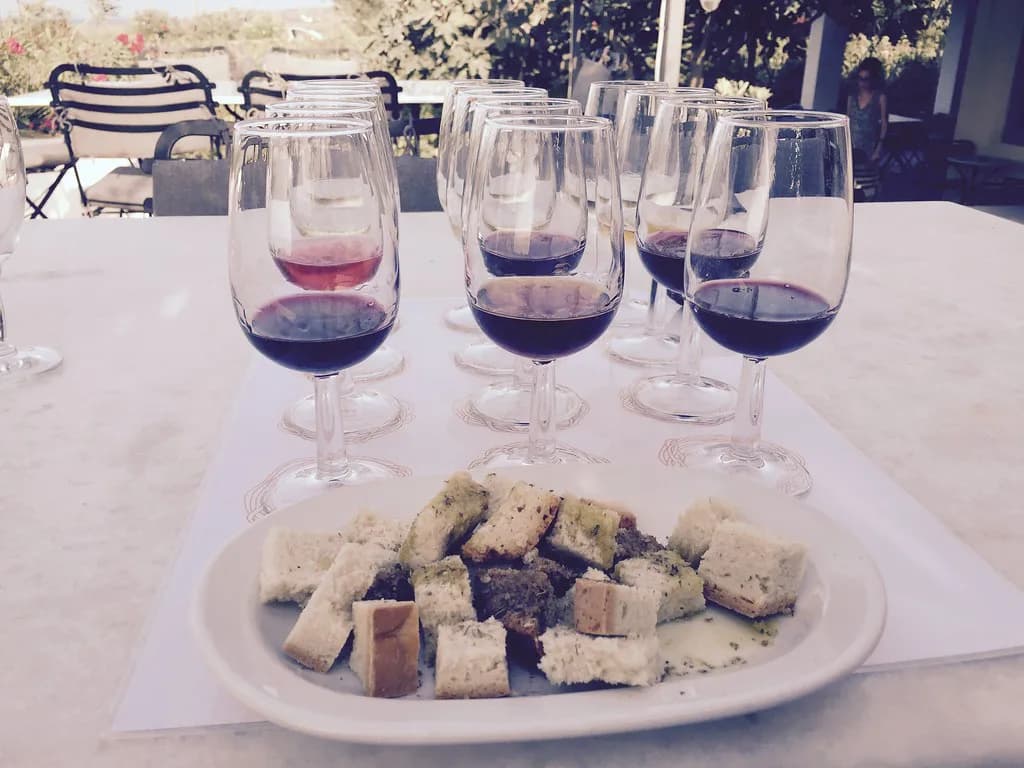
Pastitsio is the main course most often taught, and it is worth knowing what you are signing up for: a baked pasta dish layered with spiced meat sauce and a thick béchamel topping, closer to a Greek lasagna than to a quick weeknight plate. The Megalochori class also serves Santorinian wine alongside the meal, described on the listing as free-flowing.
The private Blue Shades class works differently: the exact menu is decided the day before, because the cook builds it around the freshest ingredients, including seasonal vegetables from the Blue Shades garden. That is good news for anyone who wants to cook what is actually ripe, and less good for a traveller who has set their heart on a specific dish, so mention it when booking rather than on the night.
Where Classes Are Held and What the Setting Adds
Megalochori sits inland in the south-west of the island, a compact village of stone houses and vineyards that sees far fewer tour groups than Fira or Oia. Cooking there means you also get a walk through the village before or after the class, and it is a short drive from the south-coast beaches and the caldera rim.
The private class includes hotel pickup, with collection between 16:15 and 16:30 depending on where you are staying, and drop-off back at your hotel or at a designated meeting point if your accommodation cannot be reached by car. That matters on an island where many cave hotels sit at the bottom of pedestrian lanes, so confirm your pickup point at booking.
Cave-house settings are the other distinctive option, and they are worth choosing deliberately rather than by accident. The appeal is the architecture, not extra cooking time, and if you have already booked a cave hotel you may prefer a village kitchen for contrast. The Santorini Attractions: 7 Visitor Guides collection is a useful place to see which sights and villages sit close to your class location.
Timing and Duration: Three-Hour and Two-Hour Sessions
Three hours is the standard for a full private class: cooking, eating, and the table conversation in between. Blue Shades of Santorini lists its session at three hours with a 17:00 start, which puts the meal in the early evening and leaves the rest of the night free.
The Megalochori class is shorter, described as a two-hour hands-on session that ends with everyone sitting down to eat what was cooked. Two hours suits travellers with an evening booking afterwards, while three hours gives more slack for shopping, prep and a slower meal.
Whichever you pick, the arithmetic matters: a 17:00 start with pickup from about 16:15 rules out a late-afternoon swim at the far end of the island. Build the day so you are back at your hotel well before pickup, and plan dinner loosely, since you will have eaten.
Group Size and Who Joins
Private classes cap numbers so the kitchen stays workable. Blue Shades takes up to 8 guests, which is roughly one large family or two couples travelling together, and the company asks in advance whether any participant is under 18 and how many. If your group is bigger than the cap, ask about splitting into two sessions rather than expecting an exception.
Shared classes work the opposite way: the Megalochori event is public, so other guests share the table, and the host offers a private-event option for groups who want the room to themselves. Shared tables are cheaper per head and fine for solo travellers or couples, but check the maximum group size before booking a family of six.
Price Ranges and What Is Included
Published prices for Santorini cooking classes vary by format, and the Megalochori listing shows a per-guest charge with wine included in the meal. Treat that as one operator's listed figure rather than a market-wide rate, since private sessions with transport typically cost more per head and shared classes less.
Inclusions are where cheap-looking classes can turn expensive. The private Blue Shades class bundles welcome wine, use of all equipment, printed recipes, lunch with a glass of wine, seasonal garden vegetables and mineral water, so the price covers the meal rather than just the tuition.
When comparing listings, add up transport, drinks and the meal before judging value. A class without pickup means a taxi each way, and a class without wine means a bar bill afterwards; for context on what a normal dinner costs, the best restaurants in santorini guide covers price levels by area.
Dietary Needs, Allergies and Under-18 Participants
Operators need dietary information before the class, not on the night. Blue Shades asks to be told in advance about allergies and about any participants under 18, and since the menu is fixed the day before, late notice gives the cook little room to adapt. Put allergies in the booking notes and repeat them at pickup.
For the Megalochori class, the host can be contacted with specific requests at the time of booking, which is the right moment to ask about substitutions for a vegetarian in the group or a child who will not eat pastitsio. The kitchen is unlikely to swap a main course on the day.
Booking Advice: Release Periods and Cancellation Terms
Cancellation terms are the part of the booking most people skim, and they differ by company. Blue Shades of Santorini charges 50 percent for cancellations made less than three days before the confirmed date, and 100 percent for no-shows or cancellations within 24 hours, with exceptions for weather and events beyond the company's control. Check current terms when you book, as figures can change.
That structure rewards booking early and confirming the date before you lock in flights or ferries. If your trip depends on a specific evening, book the class first and build the day around it, since moving the date late in the game can cost half the fee.
The other practical point is punctuality: Blue Shades asks guests to be at the pickup point five minutes early and warns that the vehicle leaves on time, with missed pickups treated as no-shows. Set an alarm for 15 minutes before your listed pickup and keep your phone reachable.
Fitting a Class Around Sightseeing and Wine Tours
A 17:00 class leaves the morning and early afternoon free, which is enough for one village and one site rather than a full island loop. Use the morning for the caldera rim walk out towards Skaros Rock or a swim, keep the middle of the day slow, and leave the evening to the class.
Wine is the natural companion. Some operators, including Blue Shades, also run dedicated winery tours, so you can pair a cooking class one day with a vineyard visit another rather than trying to do both in one evening. If you are based in the north, the best restaurants in oia santorini guide helps with a pre-class lunch that will not ruin your appetite.
Choosing Between View, Value and Hands-On Depth
A cooking class does not compete with the caldera view, so decide what the session is for. If you want to learn techniques and eat a full meal, the longer private format wins; if you want a sociable evening at a lower per-head price, a shared village class in Megalochori is the better fit.
Where you stay should shape the choice as much as the menu. Guests in Fira or Imerovigli can reach most pickup points easily, while those staying in the north may prefer a class that includes transport; the best restaurants in fira santorini guide is useful if you want to eat in town after a morning class instead.
Anyone comparing islands should note that Santorini classes lean on the same core dishes, so a class elsewhere in Greece can add variety. A chania cooking class, for example, draws on Cretan ingredients and gives a different baseline if you are island-hopping, and our guide to choosing a hands-on Cretan session covers the formats there.
Final Checklist Before You Book
Confirm four things before paying: the start time and pickup arrangement, the menu or how it will be set, the maximum group size, and the cancellation release period. Ask about allergies and under-18 participants in the booking notes, and check the official listing for current details since schedules and dates can change between seasons.
Then build the rest of the day around the class rather than squeezing it in. One morning sight, a slow afternoon, and an evening in the kitchen is a realistic Santorini day; two villages, a beach and a class is not.
Explore more Santorini sauna guides
Frequently Asked Questions
How much does a Santorini cooking class cost?
Prices depend on the format. Shared classes cost less per person, while private sessions with hotel pickup cost more, partly because transport and the meal are bundled in. The Megalochori class listed on Eatwith shows a per-guest price on its booking page.
What do you cook in a Santorini cooking class?
The common repertoire is tzatziki, a yogurt and cucumber dip; Greek salad with tomato, cucumber, olives and feta; Santorinian tomato fritters; and pastitsio, a baked pasta dish with meat sauce and béchamel. Some operators decide the exact menu a day in advance based on seasonal produce, so the dishes can change.
How long is a Santorini cooking class?
Sessions typically run two to three hours. The private class run by Blue Shades of Santorini lasts three hours and starts at 17:00, while the Megalochori class is described as a two-hour hands-on session that ends with a shared meal.
Are Santorini cooking classes private or shared?
Both formats exist. Private classes cap numbers so one family or group of friends has the kitchen, while shared classes put you at a table with other travellers and often offer a private-event upgrade for groups who want the room to themselves.
Do cooking classes include wine?
Many do. The private Blue Shades class includes a welcome wine and a glass with lunch, and the Megalochori listing describes free-flowing Santorinian wine with the meal. Check the inclusions on the specific listing, since drinks are not universal.
What should I know before booking a cooking class in Santorini?
Check the cancellation terms, the pickup arrangement and the group size cap. Blue Shades, for example, charges 50 percent for cancellations under three days before the date and 100 percent for no-shows or cancellations within 24 hours, so confirm your dates before paying.
Sources
Notes for eating well in Greece
Optional updates to our guides.
You might also like
Continue reading
More guides you'll find useful