Museums in Santorini: Which to Visit and How to Plan Your Day
Plan Santorini's museums and archaeological sites: what each collection covers, where it is, and how to group Fira, Akrotiri and Ancient Thera in one day.
On this page
Santorini's archaeology is spread across the island rather than gathered in one building, which catches many visitors out. The pottery and frescoes pulled from the Bronze Age town at Akrotiri are displayed in Fira, roughly a 40-minute drive from the covered excavation itself, so a single ticket buys you one half of the story. Understanding that split is the difference between a coherent day and three rushed stops.
The island has two substantial museums in Fira, one major roofed archaeological site in the south, one hilltop ancient city in the east, and a handful of smaller collections that work best as add-ons. This guide takes each in turn, explains which objects you will actually see, and then suggests how to cluster them with the bus network and with lunch. For a wider national context before you go, the Taverna Trail guide to museums in greece is a useful companion.
Sites Versus Museums: Why Santorini's Finds Are Split Up
An archaeological site is the place itself: walls, streets, pots left where they fell. A museum is where the movable finds end up once they have been lifted, cleaned and catalogued. On Santorini the two are deliberately separated, so the frescoes and finest pottery from Akrotiri sit in air-conditioned cases in Fira while the streets and houses they came from remain under a protective roof near the south coast.
What is the difference between the Archaeological Museum of Thera and the Museum of Prehistoric Thera? They cover different periods and hold different objects. The Museum of Prehistoric Thera displays the frescoes, pottery and finds from the Bronze Age town at Akrotiri.
Is Akrotiri a museum or an archaeological site? It is an archaeological site: an excavated Bronze Age town protected by a modern roof, with walkways above the original streets and houses. The objects recovered from it are in the Museum of Prehistoric Thera in Fira, which is a separate visit in a different part of the island.
Are any Santorini museums free to enter? The published policy includes free admission days through the year, including International Museum Day in May and European Heritage Days in late September, plus additional winter Sundays. EU citizens under twenty-five and non-EU visitors under eighteen generally enter free.
Practically, this means you should decide which half you care about most. If you want to understand how people lived, go to the site; if you want to see the art and the objects up close, go to the museum. Doing both is the ideal, but they sit at opposite ends of the island, so build the day around one of them rather than trying to squeeze both into a morning.
Museum of Prehistoric Thera in Fira: The Anchor Museum
This is the collection to prioritise if you only visit one museum on Santorini. It holds the material from Akrotiri and other prehistoric sites on the island, including the wall paintings that made the Bronze Age town famous and a deep reserve of Cycladic pottery. The building sits near the bus terminal in Fira, which makes it the natural first stop when you arrive by bus from Kamari, Perissa or the port.
Give it a focused two hours rather than a full morning. The collection is modest in size but dense, and the fresco rooms reward slow looking: the spring fresco with its swallows and lilies, the boxer fresco, the antelopes. Labels are in Greek and English, and the sequence runs roughly chronologically, so start at the beginning rather than wandering.
Because the museum sits beside the bus terminal, it pairs naturally with a Fira lunch and an afternoon walk along the caldera rim. It also sets up a later visit to the site itself: seeing the objects first makes the excavated rooms at Akrotiri far easier to read when you get there, since much of the site is roofless, signposted reconstruction rather than furnished interiors.
Archaeological Museum of Thera in Fira: The Other Half of the Story
Visitors often assume the two Fira museums overlap, then find they have paid twice for the same pots. They do not. The Archaeological Museum of Thera covers the historical periods, with sculpture, inscriptions and pottery from the Archaic through Roman eras, including material from Ancient Thera on Mesa Vouno. The Prehistoric museum stops roughly where this one begins.
If your interests lean towards classical and later antiquity, this is the better single stop, and it pairs directly with a visit to Ancient Thera, where the same city's streets and civic buildings survive in the open. The museum has been subject to renovation work in recent years, and its access has changed accordingly, so treat any published schedule as provisional and confirm before travelling across the island for it.
The most efficient approach is to pick one Fira museum as your main visit and treat the other as optional. Two dense collections in one day is possible, since they sit within walking distance in the same town, but it leaves little room for the caldera walk that most people come to Fira for.
Akrotiri Archaeological Site: The Bronze Age Town Under a Roof
Akrotiri is the headline experience, and it is not a museum in the conventional sense: it is a working excavation of a town buried by volcanic ash, now protected by a large modern roof with walkways threaded above the streets. Multi-storey houses, storage jars, drainage channels and staircases survive in place. Because the site was evacuated before the eruption, finds are plentiful and human remains are scarce, which shapes how the story is told.
The site is in the south of the island, well away from Fira and its museums, so it belongs to its own half-day rather than a Fira morning. It has also experienced structural inspection closures in recent seasons, so check its open status on Santorini.net before setting out. The island's tourism portal carries the current published status alongside the other sites.
Allow around ninety minutes on the walkways at a comfortable pace; the roof keeps the worst of the sun off but the site is airy and exposed at the edges. Combine it with the nearby south-coast villages and a late lunch rather than trying to return to Fira mid-afternoon, because the drive back and forth eats into the day.
Ancient Thera on Mesa Vouno: The Hilltop City
Ancient Thera occupies a ridge on Mesa Vouno, the mountain that separates Kamari from Perissa on the east coast. The climb is the trade-off: the road up is steep and winding, and once at the top there is little shade across the ruins. In high summer, go early or late rather than at midday, and carry water. The reward is a genuine ancient city with streets, a theatre, cisterns and views down to both coasts.
The site is usually closed one day a week, and that day has been Wednesday in recent published schedules. Because schedules and closure days change between seasons, check the current arrangement shortly before you go. The same Santorini.net page that lists the closure day also lists the entry fee and the seasonal hours.
Ancient Thera suits travellers staying in Kamari or Perissa, who can reach it quickly, better than those based in Fira or Oia, for whom it is a longer excursion. If you are based on the caldera side, weigh it against a slower day at Akrotiri. The Taverna Trail guide to ancient sites in greece puts Santorini's sites in a national frame if you are planning several stops.
Smaller Collections: Pyrgos and the Folklore and Maritime Museums
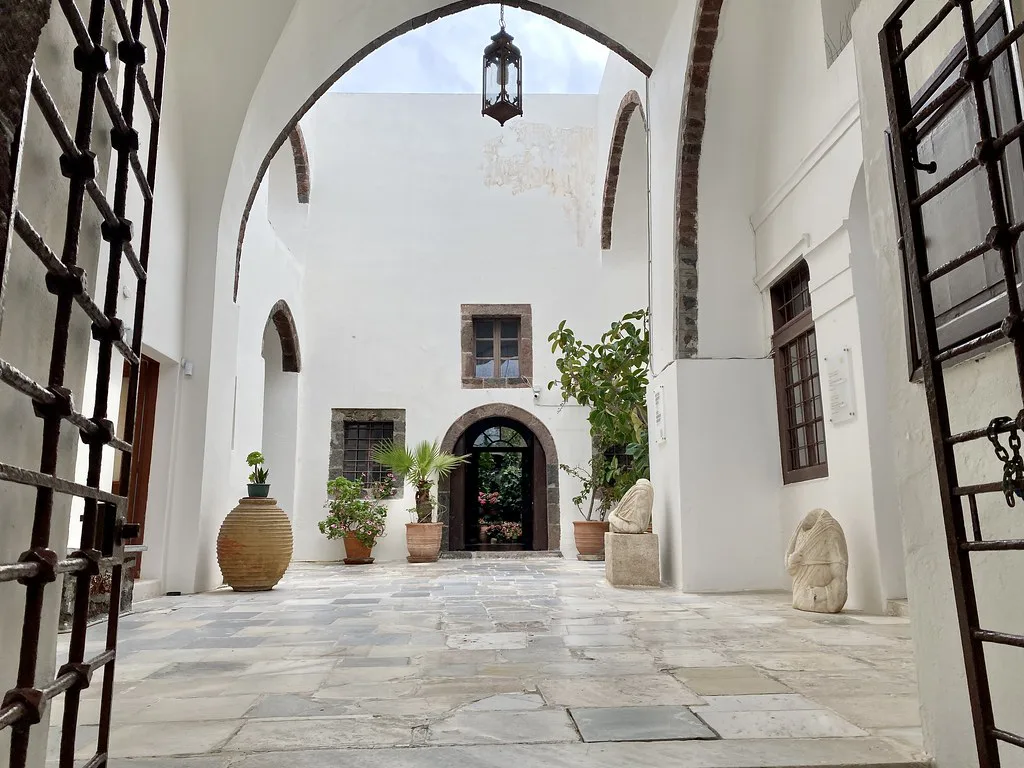
Beyond the big four, Santorini has a scatter of smaller collections. The Agia Triada Collection in Pyrgos is the one with published hours and a modest entry fee, and it sits in a village that rewards a slow walk through its narrow streets. Treat it as a thirty-to-forty-five-minute stop rather than a destination in itself.
Oia has a maritime museum and there are folklore collections in several villages, but the available information on their hours and fees is thin and changes with the season. Travellers who have visited report the Fira historic museums and Oia's maritime collection as worthwhile, though such reports are impressions rather than schedules. Confirm locally on the day rather than planning a trip around them.
These smaller museums work best when they coincide with somewhere you are already going. Pyrgos is on the road towards Akrotiri, and Oia is a natural evening stop, so fold a collection into a day you have already planned rather than making a separate journey.
Grouping Your Day: Three Clusters That Actually Work
The Fira cluster is the easiest: the Museum of Prehistoric Thera beside the bus terminal, the Archaeological Museum of Thera within walking distance, and a caldera walk to finish. This is a half-day of museum time plus a leisurely lunch, and it requires no vehicle if you are staying in Fira or arriving by bus.
The south-island cluster is Akrotiri plus the surrounding south-coast villages, best done with a car or a bus that puts you in the area for the better part of a day. The east-coast cluster is Ancient Thera plus a beach at Kamari or Perissa, which suits anyone staying on that side of the island. Trying to do all three clusters in one day is the classic mistake: you end up seeing three car parks and no pots.
If you are also planning to visit the island's churches, the guide to santorini churches covers the village chapels that fit neatly into the Pyrgos and Oia legs of these clusters, and the Oia churches page details the Panagia Platsani in the village centre for an evening add-on.
Tickets, Hours and Closures: What the Published Schedule Says
Santorini's archaeological sites and museums run a summer schedule from the start of April to the end of October, with different opening patterns for each site. Akrotiri has been listed as open daily with longer hours, except on two weekdays when it closes early; Ancient Thera and the Museum of Prehistoric Thera each close on a different weekday; and the Archaeological Museum of Thera has been affected by renovation. Those patterns are a guide, not a promise, because sites close for works and seasonal adjustments.
Two rules matter for planning. Last admission is generally twenty minutes before closing, so an afternoon arrival needs to be earlier than you think. And the sites close on certain public holidays, including Easter Sunday and the first of May, with shortened hours on the days around Easter. If your trip falls near a Greek holiday, check the published notice before committing a day.
Entry fees have been revised, and the reduced winter rate has been abolished, so you pay the same in November as in July at the sites covered by the new policy. Because fees and hours are the most volatile part of any visit, check the official listing in the week before you travel.
Discounts and Free Entry Days
The published policy gives free entry to EU citizens under twenty-five and to non-EU visitors under eighteen, with a fifty percent reduction for EU visitors aged sixty-five and over between October and May. Free admission also applies to visitors with disabilities and certain other groups. Bring identification: entitlement is checked at the ticket desk.
There are also free days through the year, including a date in March for Melina Mercouri, an April date for monuments and sites, International Museum Day in May, the last weekend of September for European Heritage Days, and the national holiday in October, plus additional winter Sundays. These are the same dates the source publishes, and they shift little from year to year, but confirm them before you build a free day into the plan.
How Much Time to Give Each Stop
Allow around two hours for the Museum of Prehistoric Thera, ninety minutes for the Archaeological Museum of Thera if you are interested in the classical material, ninety minutes at Akrotiri's walkways, and a similar span at Ancient Thera once you factor in the climb and the heat. Add transport between them: Fira to Akrotiri crosses much of the island, while Fira to Kamari is a shorter run to the foot of the mountain.
A sensible half-day is one Fira museum plus a walk and lunch. A full day is the Fira pair in the morning and a late caldera walk, or Akrotiri plus the south coast. Two full days lets you add Ancient Thera and the east coast without rushing, which is the version most people actually enjoy.
What to Skip When Time Is Short
If you have one day, skip the second Fira museum and skip Ancient Thera entirely. Do the Museum of Prehistoric Thera and, if it is open, Akrotiri. The pair tells one coherent story, and the frescoes in Fira are what most people remember from a Santorini visit.
If you have two days, add Ancient Thera rather than a third museum. It gives you a different landscape, the east coast, and the classical world that the Fira museums only touch on. The smaller collections are the first thing to drop, and the ones most often visited only because they happen to be nearby.
Where to Eat Around Each Cluster
Around Fira, look for the classic Santorini dishes after a museum morning: tomatokeftedes, small fried patties made from the island's cherry tomatoes and herbs; fava, a yellow split-pea purée served with olive oil and onions; and a glass of Assyrtiko, the island's dry white wine grown in basket-trained vines. Vinsanto, the sweet dried-grape wine, is the dessert option. Back streets one row off the caldera charge less than the rim terraces, at the cost of the view. If these island specialties whet your appetite, our guide to what to eat in Greece covers the wider national menu dish by dish. For a deeper dive into local tavernas and dishes, see where to eat in Santorini.
Around Pyrgos and Akrotiri, the villages inland and along the south coast are quieter and the tavernas tend to be smaller, which suits a late lunch after the site. Around Kamari and Perissa, the seafront rows serve grilled fish and mezze for beach days after Ancient Thera; expect to pay more for the front row and less one street back. Prices vary by season and by taverna, so check the menu board before sitting down rather than relying on any published figure.
Plan Your Visit
The workable plan is simple: one Fira museum as your anchor, Akrotiri if it is open, and Ancient Thera only if you have a second day or you are staying on the east coast. That order gives you the objects before the streets, which makes both easier to read.
Before you travel, check the published status of Akrotiri and the weekday closure at Ancient Thera, since both have changed recently. Then build the day around transport rather than the other way round, and leave room for a long lunch. The archaeology rewards unhurried visitors more than thorough ones.
Explore more Greece sauna guides
Frequently Asked Questions
What is the difference between the Archaeological Museum of Thera and the Museum of Prehistoric Thera?
They cover different periods and hold different objects. The Museum of Prehistoric Thera displays the frescoes, pottery and finds from the Bronze Age town at Akrotiri. The Archaeological Museum of Thera covers the later historical periods, with sculpture, inscriptions and pottery from Ancient Thera and other sites. Visiting both means two tickets, but you will not see the same objects twice.
Is Akrotiri a museum or an archaeological site?
It is an archaeological site: an excavated Bronze Age town protected by a modern roof, with walkways above the original streets and houses. The objects recovered from it are in the Museum of Prehistoric Thera in Fira, which is a separate visit in a different part of the island.
Are any Santorini museums free to enter?
The published policy includes free admission days through the year, including International Museum Day in May and European Heritage Days in late September, plus additional winter Sundays. EU citizens under twenty-five and non-EU visitors under eighteen generally enter free. Confirm the current dates with the site before you plan around them.
How do I get from Fira to Akrotiri?
By road, and the journey crosses a good part of the island, so allow for it. Buses and taxis serve the route from Fira, and a car gives you the flexibility to combine Akrotiri with the south-coast villages. Check current timetables locally, as services vary by season.
Is Ancient Thera worth it?
It is worth it if you are interested in the classical city and can handle a steep climb and little shade, especially if you are staying in Kamari or Perissa. If you are based on the caldera side and have only one day, Akrotiri and the Fira museum give a stronger return for the travel time.
How long should I spend at each Santorini museum?
Around two hours for the Museum of Prehistoric Thera, ninety minutes for the Archaeological Museum of Thera, ninety minutes at Akrotiri's walkways, and a similar span at Ancient Thera including the climb and the heat. Add transport between them. A half-day fits one Fira museum plus lunch; a full day fits the Fira pair or Akrotiri with the south coast.
Sources
Notes for eating well in Greece
Optional updates to our guides.
You might also like

Continue reading
More guides you'll find useful