Museums in Rhodes: Which Ones to Visit and What's Inside
Rhodes museums compared: the Archaeological Museum in the Hospital of the Knights, the Museum of Modern Greek Art and what each collection actually covers.
On this page
Rhodes Town rewards a slow day rather than a checklist. Two museums do most of the heavy lifting for visitors: the Archaeological Museum of Rhodes, installed in the medieval Hospital of the Knights inside the walled city, and the Museum of Modern Greek Art, which spreads its collection across four venues on both sides of the walls. Understanding that geography before you arrive saves a lot of walking in the heat.
The pair works well together because they ask different things of you. One is a monument you walk through as much as a collection, the other a modern gallery network where you choose a building rather than try to see everything. This guide covers what each holds, how the venues relate to each other, and how to slot a museum morning around a proper Greek lunch.
Quick orientation: where Rhodes Town's museums sit
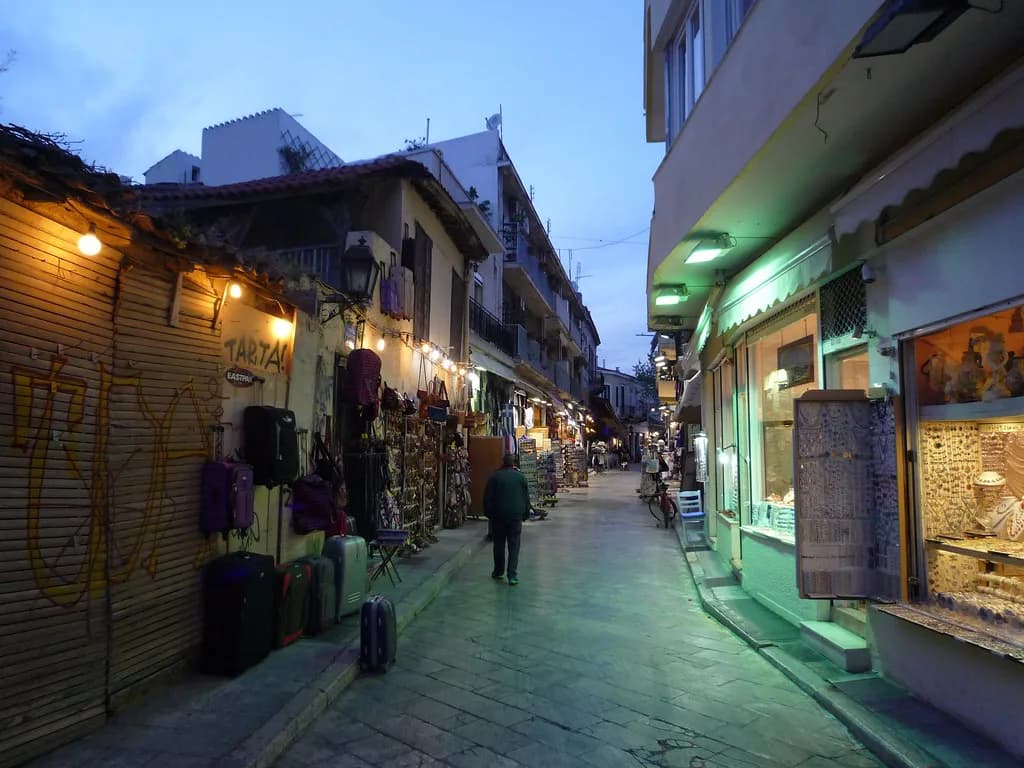
The Medieval City of Rhodes is a UNESCO World Heritage Site, and most of the museum-going happens within or immediately beside its walls. The Archaeological Museum occupies the Hospital of the Knights in the heart of the old town. The Museum of Modern Greek Art's original venue sits at Symi Square, right at the entrance to the Medieval City, while its largest exhibition space lies outside the walls in the modern center.
What is the best museum to visit in Rhodes Town? There is no single answer, because the two main museums do different jobs. The Archaeological Museum of Rhodes offers ancient sculpture and mosaics inside the medieval Hospital of the Knights, so the building is part of the experience.
How long does the Archaeological Museum of Rhodes take? The collection is not enormous, but the medieval hospital building slows you down, with galleries opening off courtyards rather than lining up in a single run. Most visitors should plan a couple of hours for the sculpture galleries, the courtyard mosaics and the pithoi, and treat the Epigraphic and Prehistoric wings as optional browsing rather than a fixed stop.
Is the Museum of Modern Greek Art worth visiting? It is the main venue in Rhodes for modern and contemporary Greek art, and it holds paintings, engravings and sculptures by recognized Greek artists. Its unusual structure is part of the appeal: venues include the Symi Square building at the entrance to the Medieval City, the Old Syssitio on Socratous Street and the Nestorideion Melathron at the 100 Palm Trees Square.
That layout means you can build a loop rather than a series of taxi rides. Start inside the walls, cross into the modern town for the afternoon, and keep the walking short by grouping the old-town venues together. A printed map from your accommodation is more useful than a phone in the narrow lanes, where signal and orientation both suffer.
Archaeological Museum of Rhodes: the Hospital of the Knights
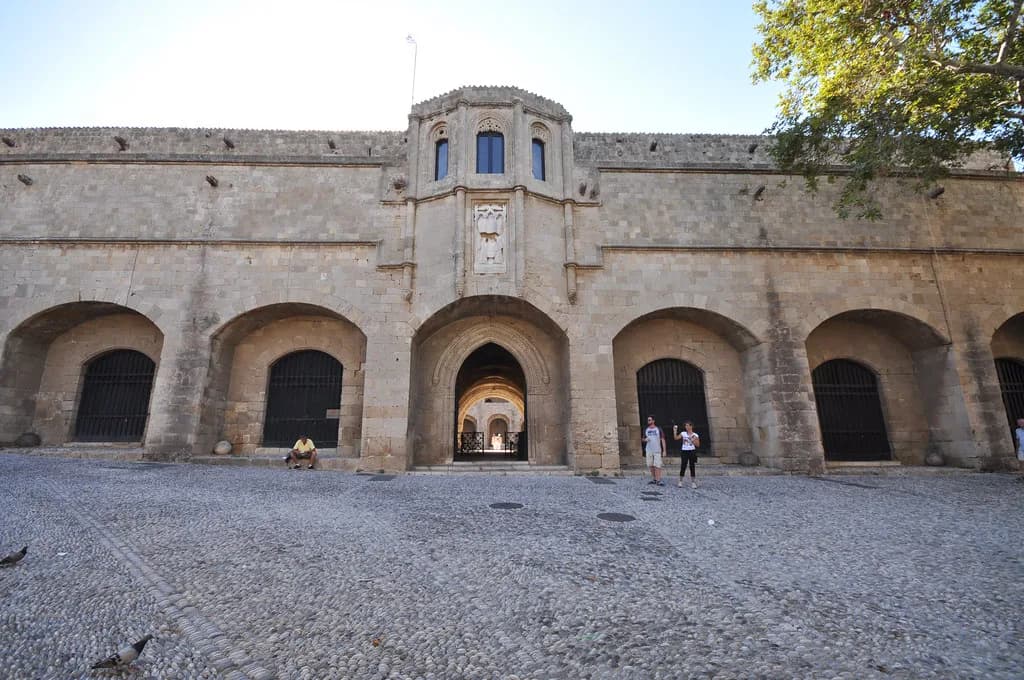
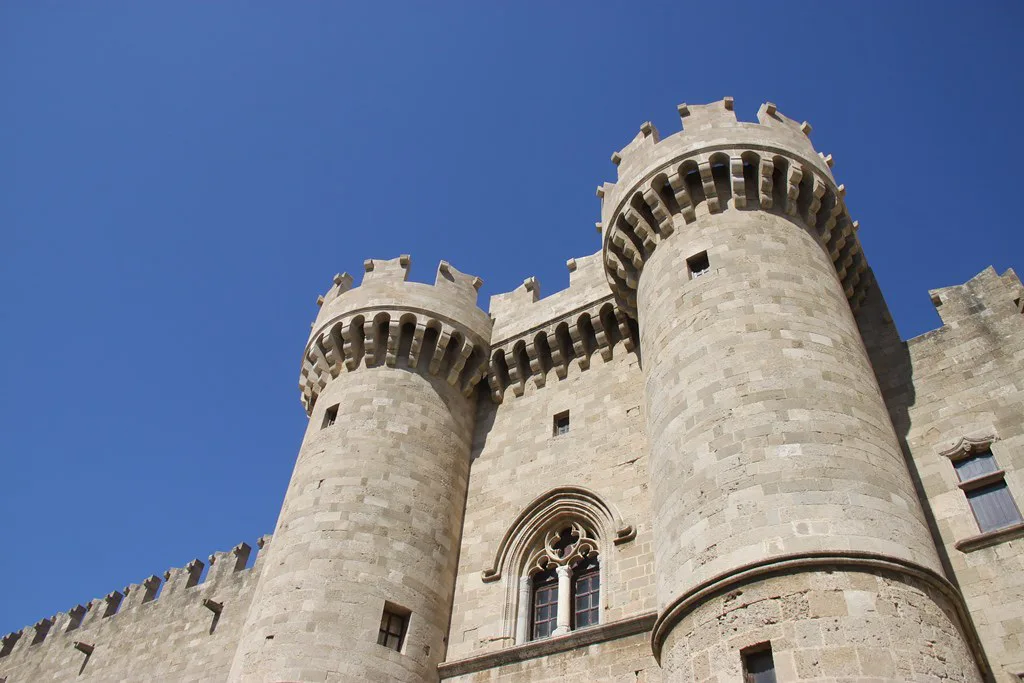
The building is half the visit. The structure began life as the Hospital of the Knights, built by the Knights Hospitaller, with construction starting in 1440 and completion attributed to the era of Grand Master d'Aubusson between 1476 and 1503.
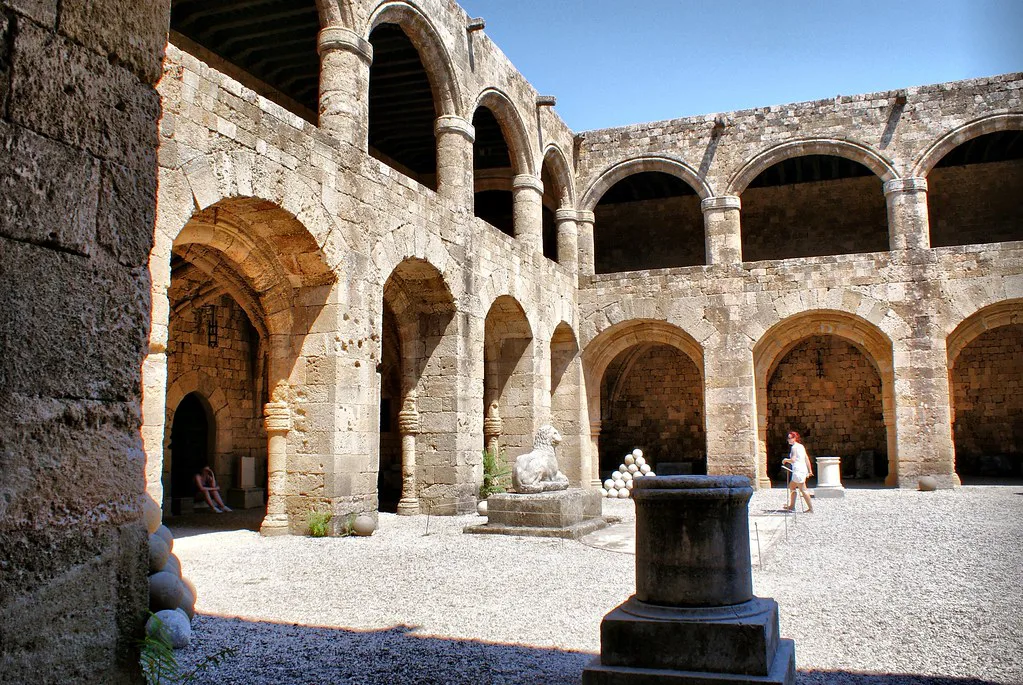
Architecturally, you are walking through a medieval charitable institution that has been adapted into galleries, which shapes how the collection is displayed. Rooms open off courtyards, and the transition between the two is part of the experience. Allow more time than the object count suggests, because the building itself slows you down.
The main exhibition draws on finds from the ancient cities of Ialysos and Kamiros, two of the three great city-states of ancient Rhodes. Objects from these sites give a picture of daily life, burial custom and craft on the island. If you have already visited the archaeological site at Kamiros on the west coast, the museum labels will make far more sense, and the same logic applies to other ancient sites if you are touring the Dodecanese beyond Rhodes.
Outside the sculpture galleries, the renovated historical courtyard displays mosaic floors lifted from Hellenistic villas. Seeing them in the open air, in the shadow of a medieval hospital, compresses several centuries of Rhodian history into one space. It is also the most natural place to pause between gallery rooms.
What to look for inside the Archaeological Museum
A handful of pieces anchor the collection. The Aphrodite of Rhodes is a first-century BC statue thought to draw on a celebrated third-century BC prototype by the sculptor Praxiteles, which makes it a useful lesson in how Roman-era sculptors quoted Classical masters. Look for the pose and the treatment of drapery rather than racing to the label.
The Head of Helios, the sun god and patron deity of Rhodes, has an unexpected modern afterlife: it appeared on an album cover and became associated with the vaporwave aesthetic. That makes it the museum's most photographed object for reasons that have nothing to do with antiquity. Expect a small crowd at that case even when the rest of the room is calm.
The pebble mosaic floor, dated to roughly 300–270 BCE, shows the hero Bellerophon riding Pegasus as he attacks the Chimera. Pebble mosaics are exactly what they sound like: patterns set in small stones rather than tessera tiles, and the technique gives the image a softer, more painterly texture. Give it a few minutes rather than a passing glance.
Also worth seeking out are the pithoi, the large ancient storage jars used for oil, wine and grain. They are agricultural infrastructure, not display pieces, and they say more about Rhodian trade than any statue. Nearby, an Attic red-figured krater from an infant's tomb carries a scene of a man with a lyre and a woman with clappers, a rare glimpse of ancient music and funerary custom together.
The Epigraphic and Prehistoric wings: worth the extra time?
Recent additions to the museum include dedicated wings for the Epigraphic and Prehistoric collections. Inscriptions are the slow-burn part of any Greek museum: carved decrees, dedications, names and civic records that reward patience and a basic interest in how ancient states documented themselves. If your Greek is limited, the value lies in the shapes of the lettering and the scale of the stones rather than the text itself.
The Prehistoric material is the more immediately accessible of the two, covering early human presence on Rhodes before the Classical period. Whether the wings justify extra time depends on your tolerance for fragmentary objects and dense labels. A practical compromise is to give the main sculpture galleries your full attention and treat the wings as a browse on the way out, rather than budgeting them equally.
Museum of Modern Greek Art: four venues, one collection
The Museum of Modern Greek Art of the Municipality of Rhodes holds paintings, engravings and sculptures by modern and contemporary Greek artists, and it has an unusual structure: four separate exhibition buildings, each with its own character. Knowing which is which matters, because turning up at the wrong address is easy in a city of narrow lanes and similar squares.
The founding venue is the building at Symi Square, at the very entrance to the Medieval City, which began as the Municipal Gallery of Rhodes and opened officially in 1964. It is the first Museum of Modern Greek Art to have had its own facilities, and those facilities sit inside a UNESCO World Heritage Site. If you want one old-town art stop, this is the one by geography.
The second old-town venue is the Old Syssitio building on Socratous Street, deep in the heart of the Medieval City, used as a Center of Modern Greek Art for exhibitions by local and emerging artists. A third building, the Nestorideion Melathron, opened in 2002 on Gabriel Charitou Square, the square known locally as the 100 Palm Trees Square, at the center of the modern city and its tourist activity. A newer wing beside it, opposite the Grande Albergo delle Rose, functions as the museum's cultural hub.
Note that one venue, the Andrea Ioanou building, is described by the museum as under renovation, so it may not be open to visitors. That is the single strongest reason to confirm which buildings are currently receiving visitors before you set out, rather than assuming all four are available. The museum's own site is the place to check.
Choosing one Modern Greek Art venue for an afternoon
If you only have an afternoon, pick by location rather than by collection. Staying inside the Medieval City, the Symi Square building puts you at the old town's entrance and pairs naturally with the Archaeological Museum. Staying in the modern center, the Nestorideion Melathron and its new wing sit at the 100 Palm Trees Square, an easy walk from the commercial streets and the waterfront.
The old-town venues suit travelers who want art as part of a wandering day, since you can step out into the lanes and continue. The modern-center buildings suit a focused gallery visit with clearer hours. Neither is the compromise option: you are choosing a neighborhood, not a lesser exhibition.
The museum's published hours are Tuesday to Saturday, 10:00 to 21:00, with last entry at 20:30, and it is closed on Sunday and Monday. Those times are stated by the museum itself and can change with the season or with renovation work, so confirm before a Monday or Sunday visit. The long evening window is unusually generous for a Greek museum and makes a late-afternoon slot genuinely practical.
Monument setting versus modern gallery space
The Archaeological Museum asks you to accept medieval architecture as part of the display: low doorways, courtyard light, rooms that were designed for patients rather than visitors. The payoff is atmosphere and a sense of continuity, since you are seeing ancient Rhodian art inside a building built by the Knights who later defended the island. The cost is that labels and sightlines can be less tidy than in a purpose-built gallery.
The Museum of Modern Greek Art works the other way around. Its buildings are historic in their own right, but the exhibition spaces are organized for looking at paintings and sculpture, and the collection is modern by definition. Choose the archaeological museum for the deep historical layer, the art museum for a calmer, more contemporary hour, and both if you have a full day.
Timing your visit and what the sources do not say
Published opening hours exist in the public record for the Museum of Modern Greek Art, but check the official municipal or museum page for the Archaeological Museum of Rhodes, the Rhodes Jewish Museum and the Palace of the Grand Master for the day you plan to go, especially outside the main summer months. This is the one detail most likely to derail a museum day.
A sensible pattern is to book the indoor museum for the hottest part of the afternoon, when walking the exposed lanes of the Medieval City is least appealing, and keep mornings for outdoor wandering. Carry water, a hat and a light layer for air-conditioned galleries, which can feel cold after the street.
Pairing museums with the rest of Rhodes Town
The Medieval City and the modern center sit directly against each other, separated by the walls and a short walk, so a museum morning inside can flow into an afternoon outside without transport. The Archaeological Museum and the Symi Square gallery belong to the old town; the 100 Palm Trees Square venues belong to the new. Build your day around that single crossing and you will spend your energy on the collections rather than on logistics.
Rhodes also has a religious layer worth a separate hour. The island's churches and the old town's gateways reward a slow walk between museum stops, and the material sits naturally alongside a day of sculpture and mosaics. If church architecture interests you, plan a short loop that takes in a couple of them between venues, and the same instinct pays off on other islands, from the corfu churches to the painted chapels of Santorini, where the village churches of Mesa Gonia and Exo Gonia sit within a short drive of each other and follow the same pattern of village-based stops.
Eating near the museum areas
Museum-adjacent eating in Rhodes Town comes down to a familiar trade-off: tables with a view inside the Medieval City cost more than the back-street alternatives a few lanes away, and the modern center has its own straightforward tavernas and bakeries. The better approach is to walk one street back from the main squares and read menus before sitting down. If you want to plan the rest of the day around food as much as culture, our Rhodes food guide covers where to eat in Rhodes.
Order with the Greek names in hand. A meze plate of small dishes, a horiatiki salad of tomato, cucumber, onion, olives and feta without lettuce, and grilled fish sold by weight are the reliable standards; ask for the day's price per kilo before ordering fish, since it varies by catch and by taverna. For a full glossary of dish names before you go, keep a reference list on your phone, or read up on what to eat in Greece before you travel, which pairs as naturally with a museum day as our guide to the ancient sites in greece does with the collections themselves.
Timing matters more than venue choice. Greek lunch service runs later than in northern Europe, so a museum visit ending around 14:00 lands you in the main lunch window, while an early start can leave you waiting for kitchens to open. Plan the museum for late morning and eat afterwards.
Plan Your Visit
Rhodes Town's museums divide cleanly: the Archaeological Museum for the medieval hospital and the ancient sculpture, the Museum of Modern Greek Art for a modern collection spread over four buildings. Pair the old-town venues on one day and save the modern center for another, and you avoid doubling back through the lanes.
Before you go, confirm the art museum's current hours and which of its venues are open, and check the Archaeological Museum's schedule on an official page. Everything else, from the courtyard mosaics to the 100 Palm Trees Square, you can plan around with a map and a lunch reservation in mind.
Explore more Greece sauna guides
Frequently Asked Questions
What is the best museum to visit in Rhodes Town?
There is no single answer, because the two main museums do different jobs. The Archaeological Museum of Rhodes offers ancient sculpture and mosaics inside the medieval Hospital of the Knights, so the building is part of the experience. The Museum of Modern Greek Art holds modern and contemporary Greek painting, engraving and sculpture across four venues. Choose the archaeological museum for history and the art museum for a quieter, more contemporary hour.
How long does the Archaeological Museum of Rhodes take?
The collection is not enormous, but the medieval hospital building slows you down, with galleries opening off courtyards rather than lining up in a single run. Most visitors should plan a couple of hours for the sculpture galleries, the courtyard mosaics and the pithoi, and treat the Epigraphic and Prehistoric wings as optional browsing rather than a fixed stop.
Is the Museum of Modern Greek Art worth visiting?
It is the main venue in Rhodes for modern and contemporary Greek art, and it holds paintings, engravings and sculptures by recognized Greek artists. Its unusual structure is part of the appeal: venues include the Symi Square building at the entrance to the Medieval City, the Old Syssitio on Socratous Street and the Nestorideion Melathron at the 100 Palm Trees Square. Note that one building is listed as under renovation, so check which venues are open.
Are Rhodes museums open on Sundays?
The Museum of Modern Greek Art publishes Tuesday to Saturday opening hours and states that it is closed on Sunday and Monday, so it is not a Sunday option. Official hours for the Archaeological Museum of Rhodes and the Rhodes Jewish Museum are not set out in the sources consulted here, so check an official page for the day you plan to visit.
What can you see inside the Hospital of the Knights?
The Hospital of the Knights is the building that houses the Archaeological Museum of Rhodes. Inside, the main exhibition covers finds from the ancient cities of Ialysos and Kamiros, alongside a statue collection that includes the Aphrodite of Rhodes and the Head of Helios. A renovated courtyard displays Hellenistic mosaic floors, including the pebble mosaic of Bellerophon on Pegasus.
How many museums are in Rhodes Town?
Rhodes Town has a compact cluster rather than a long list. The two main ones are the Archaeological Museum of Rhodes in the Medieval City and the Museum of Modern Greek Art, which alone operates four separate venues across the old town and the modern center. Others, such as the Rhodes Jewish Museum, are listed in local museum directories if you want to add a smaller stop.
Sources
Notes for eating well in Greece
Optional updates to our guides.
You might also like

Continue reading
More guides you'll find useful