Corfu History Guide: What to See and Decide on Your Visit
Corfu history for travelers: how Venetian, French and British rule shaped Corfu Town, which sights show each layer, and what the island's myths explain.
On this page
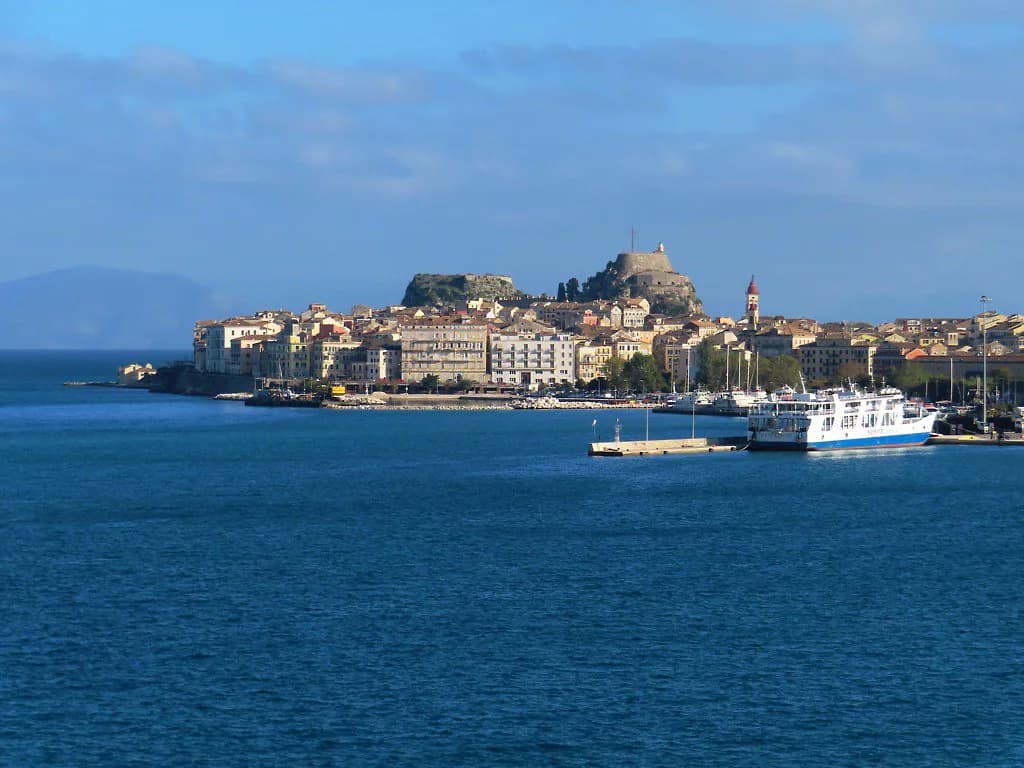
Corfu Town is a UNESCO World Heritage site and, by common description, one of the Mediterranean's most beautiful small cities, and most of its appeal is historical rather than beach-led. The island capital sits at the entrance to the Adriatic and traces its origins to the 8th century BC, so a single afternoon of walking crosses more than two thousand years. This guide organises that material by ruling power, because the Venetian, French and British layers each left something you can stand in front of.
One contrast frames everything else: unlike most of Greece, Corfu never came under Turkish rule. Successive dominations by Venice, France and Britain pushed the island's culture toward Western Europe rather than the eastern Mediterranean, which is why the architecture and cooking read differently from, say, Nafplio or the islands of the Aegean. Keep that in mind and the town's arcades, fortresses and menus start to look like a coherent story.
A Short Timeline from Myth to 1864
Corfu was already a name in the Greek imagination before any of its surviving buildings went up: Homer's Odyssey places Odysseus's shipwreck on the island of the Phaeacians, where King Alcinous's daughter Nausicaa finds him on the shore. Whether or not you take the story literally, it establishes the island as a place of hospitality and refuge in Greek myth. Documented history begins with the ancient city of Corcyra, whose ruins lie at Paleopolis near Mon Repos, south of the modern town.
The medieval and early modern sequence is the one that shaped the town you walk through. Turkish raids on Corfu in 1537, 1571 and 1573 pushed the Venetians to build the new fortress, and the most threatening Turkish attack, in 1716, was defeated by the united front of the natives and the Venetians. What is uncontested is that the fortifications, the Esplanade and the Liston arcades are Venetian-era and later additions to a town that grew up around defence.
The end point is cleaner: after a period of British administration, Corfu joined the new kingdom of Greece in 1864. Between those bookends came a French interlude beginning in 1797 and a British period that gave the island Mon Repos and a taste for winter tourism among wealthy British visitors. A useful way to hold the chronology is to remember that the town's grandest public spaces date from the Venetian centuries, its royal villa from the British, and its political vocabulary from the French Revolution.
Why Corfu Is Kérkyra in Greek
The name you see on road signs and ferry tickets is usually Kérkyra, and it comes from the nymph Corcyra, whom myth pairs with Poseidon. In that story the island takes her name, and their son Phaeax becomes ancestor of the Phaeacians who host Odysseus. The Latin-influenced Corfu is the form that reached English through centuries of Venetian and later Western contact, which is itself a small piece of evidence for the island's orientation toward Italy and beyond.
For practical purposes the two names are interchangeable, and Greeks will understand either. If you are searching for buses, museums or official notices, search Kérkyra as well as Corfu and you will find more results. The naming question also answers a common visitor query about the island's identity: it is a Greek island whose modern name in English records its Western European connections.
The Myth Layer and How Much of It Maps onto Real Sites
Corfu's mythological associations go beyond Odysseus. Jason and the Argonauts are said to have taken refuge here after winning the Golden Fleece, hosted again by Alcinous and Arete, and some versions of the labours place Hercules on the island while driving the cattle of Geryon. Poseidon's anger at the Phaeacians for helping Odysseus is supposed to have turned their returning ship to stone. These are stories, not excavated events, and the value for a visitor is that they explain why certain ruins carry the names they do.
Where myth meets ground is at Paleopolis, the ancient city of Corcyra near Mon Repos Palace. The site holds the Temple of Artemis, dated to the 6th century BC and described as one of the earliest Doric temples in Greece, whose pediment depicting the Gorgon Medusa is now in the Archaeological Museum of Corfu. The surrounding park also contains parts of the ancient city walls and the Kardaki Temple. That is the honest way to separate the layers: the Odyssey gives you the story, and the pediment in the museum gives you the object.
The same caution applies to the Perseus-and-Medusa imagery you will hear attached to the island. The Medusa figure is real and datable as sculpture; the heroic narratives are literary. Plan a visit to Paleopolis and the museum as an archaeology stop and treat the Homeric material as context rather than a map.
Why Corfu Differs from Most of Greece
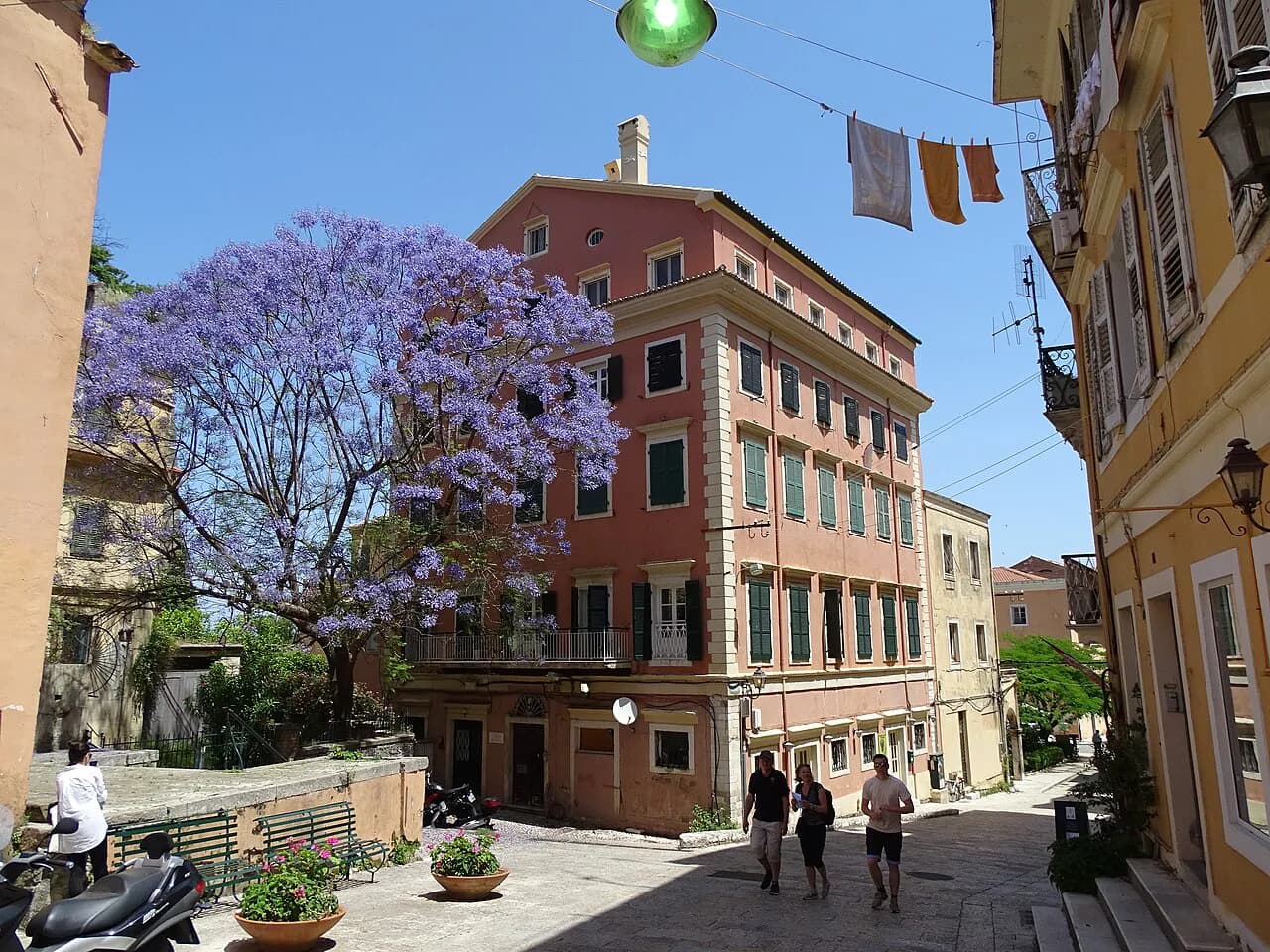
The no-Ottoman-rule fact is the single most useful thing to know before you walk the Old Town. Elsewhere in Greece, Ottoman centuries left a different street pattern, different church architecture and a different culinary register; Corfu's overlords were Venice, France and Britain, and the town reflects that. The result is a capital that feels closer to an Italian or Adriatic city in its proportions, with arcaded squares and tall shuttered buildings.
Corfu was also a British winter destination by the mid-19th century, popular with wealthy visitors before it joined Greece in 1864, and it later attracted European aristocracy. That history explains the villa culture of the northeast coast as much as the palaces near town. It also explains why the island's tourism board now tries to steer the image away from sun-and-sand toward culture and walking, a shift worth knowing if you want a history-focused trip.
The island's scale helps: at roughly 65 kilometres by 18 kilometres, Corfu is compact enough that a morning in town and an afternoon at a rural site are compatible. Rainfall is concentrated between October and April, so the shoulder months are when you are most likely to combine indoor museum time with outdoor walking. Plan accordingly, because not every day is a beach day.
Venetian Corfu: the Old Town, the Fortresses and Saint Spyridon
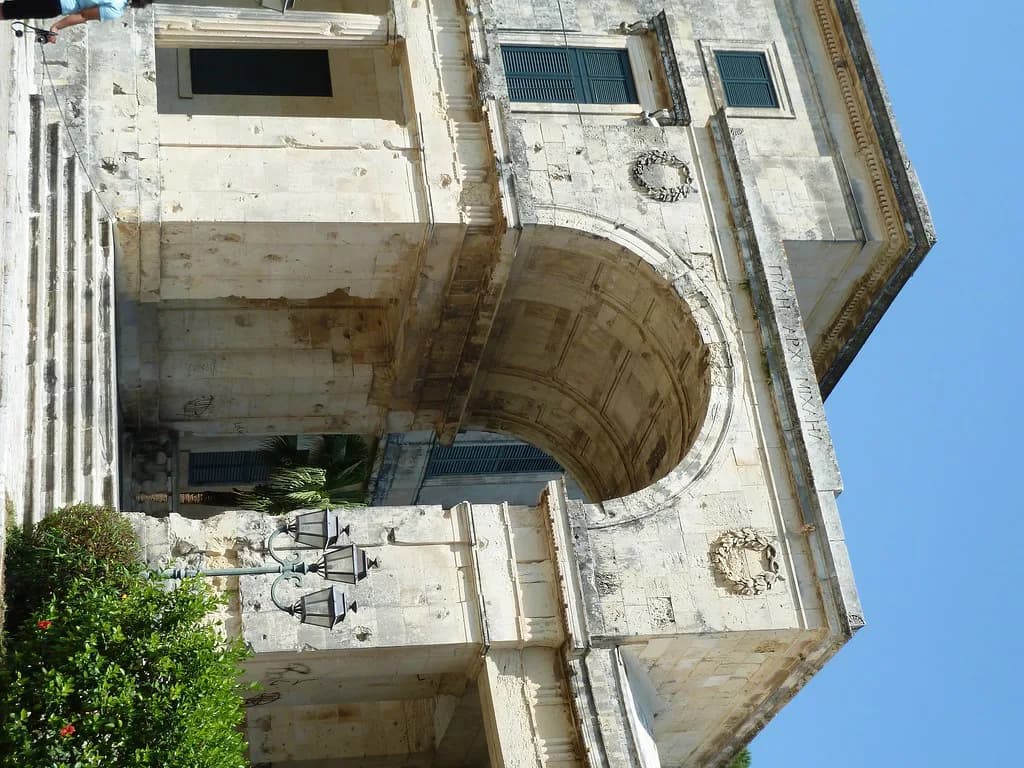
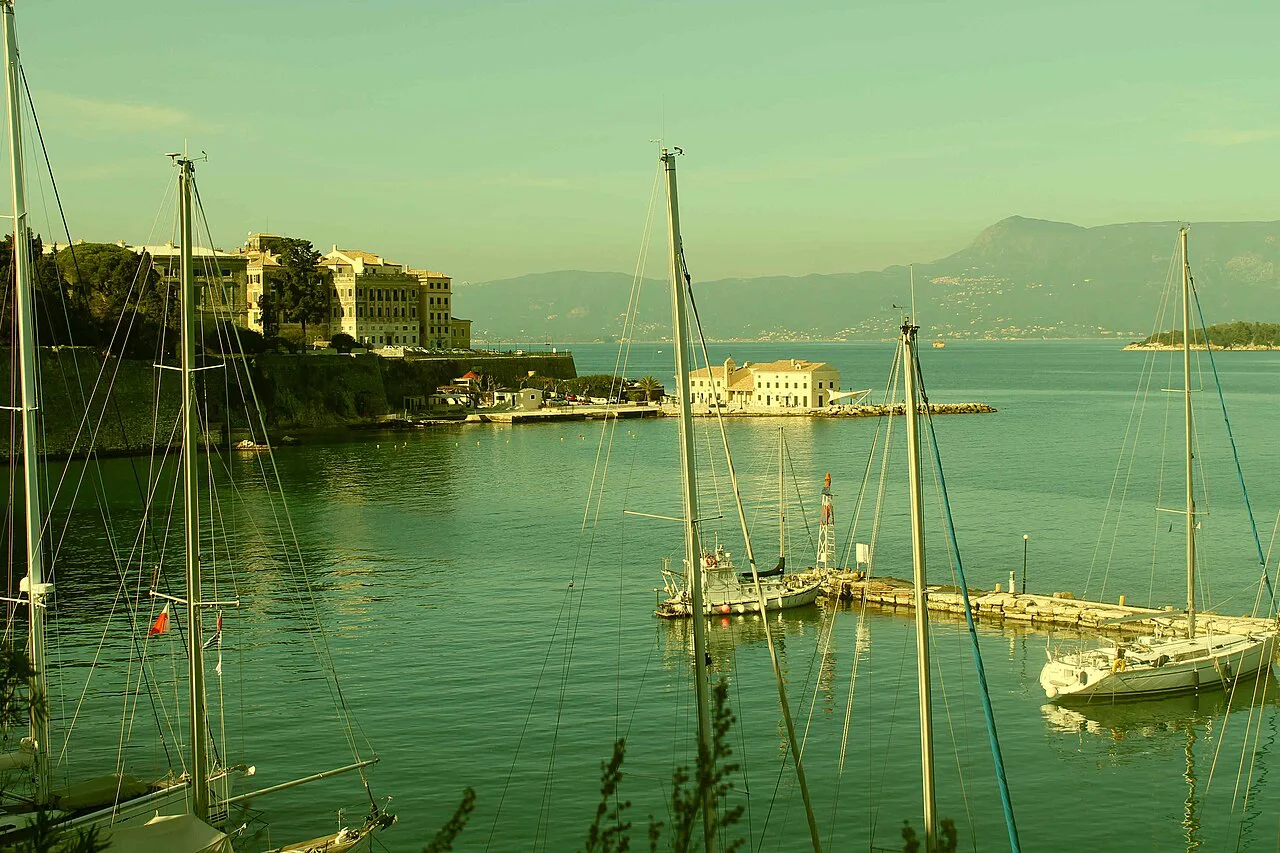
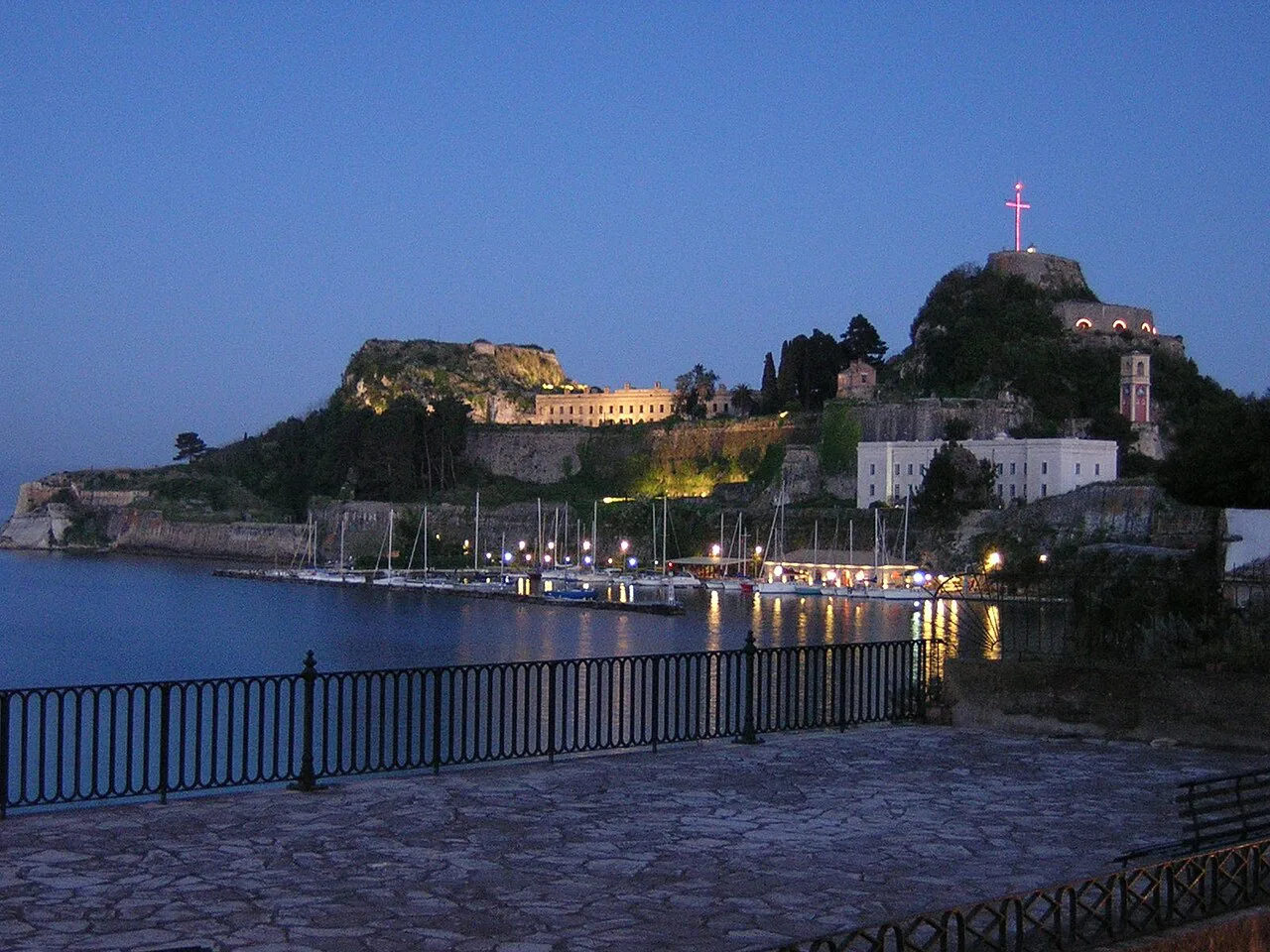
The Venetian contribution is the one you can see without buying a ticket. The Old Town's UNESCO-listed core, the Esplanade and the Liston arcades form a continuous public space, and the fortresses that anchor it were built and rebuilt under Venetian pressure. The Old Fortress and the New Fortress are the two names to look for; the new fortress dates from the period after the Turkish raids of 1571 and 1573 convinced Venice that the town needed stronger seaward defences. Walking between the Esplanade and the fortresses covers the essential Venetian geography in an hour or two.
Saint Spyridon is the other Venetian-era thread, and it is a living one. The saint is Corfu's patron, and a procession of his relics takes place annually on 11 August, the date associated with the deliverance of the island from the Turkish siege of 1716. If you are in town in mid-August, ask locally about the route and expect crowds. The church itself sits in the Old Town and is free to enter as a place of worship.
Venetian rule also left the olive landscape. Corfu holds an estimated three million olive trees, many planted in response to financial incentives from the Venetian administration in the 16th century, and they are often 15 metres tall rather than the low, intensively managed groves of the Peloponnese. Driving or walking through them is a history lesson in itself. This is the point where the island's landscape and its politics meet.
The French Interlude: 1797 and the Libro d'Oro
On 17 October 1797 Corfu became part of the French state, and Napoleon Bonaparte arrived on the island as a liberator. In the central square he burned the Libro d'Oro, the golden book that recorded the names and privileges of the nobility, and planted a tree as a symbol of liberty. It is a tidy, vivid episode: an aristocratic register destroyed in public by a revolutionary army, in a town whose elite had been shaped by Venetian rule.
Very little built fabric survives specifically from the French years, which were short and interrupted, so the French layer is best read as political rather than architectural. Stand in the central square, note that the Esplanade and Liston were laid out under Venetian and later administration, and treat the square as the stage for the 1797 gesture. If you are building a walk, this is the natural midpoint between the fortresses and the shopping streets of the Old Town.
British Corfu to 1864: Mon Repos and Its Royal Afterlife
Mon Repos is the clearest British building on the island. It was built between 1828 and 1831 for the British High Commissioner Frederick Adam, and it passed to King George I of the Hellenes when Corfu was ceded to Greece in 1864. The Greek royal family then used it as a summer residence until the monarchy ended in 1967. Several royal births took place there, including that of Prince Philip, later Duke of Edinburgh, in 1921.
Today Mon Repos and its extensive wooded grounds are open to the public, and the grounds double as an archaeological site because the ancient city of Corcyra lies in and around them. That combination is unusual and efficient for a history day: a 19th-century neoclassical villa, a royal biography, and 6th-century-BC temple remains within one park. Allow time for the walk between the villa and the ruins rather than treating them as separate stops.
The palace at Gastouri, the Achilleion, belongs to the same late-19th-century royal moment even though its builder was Austrian. Empress Elisabeth of Austria had it built in the 1890s to reflect her dreams of Greek antiquity, and its gardens were planted with exotic trees and shrubs, several of which survive. It is a different story from Mon Repos, but the two together show how European royalty used Corfu as a stage.
Out-of-Town History Stops: Achilleion, Angelokastro and Benitses
The Achilleion Palace sits at Gastouri, about 10 kilometres southwest of Corfu Town, which makes it a comfortable half-day rather than a full expedition. It is open to the public and its gardens are part of the visit, so budget for both the interior and a walk outside. Because distances and access arrangements on the island change with the season, confirm access before setting out rather than relying on an old guidebook. Pair it with a taverna lunch in the villages south of town and you have a coherent day.
On the west coast, Angelokastro is a Byzantine-era castle built on a high rocky hill near Palaiokastritsa, with defensive walls, a chapel and the remains of a central keep. It is a ruin rather than a reconstructed monument, so the appeal is position and view as much as fabric. The drive from Corfu Town to Palaiokastritsa is the longest of the history stops in this guide, which makes it a natural pairing with beach time rather than a quick detour.
At Benitses, south of Corfu Town, lie the remains of Roman baths dating from the 1st century AD, with mosaics and a hypocaust, the underfloor heating system Romans used in bath complexes. It is a modest site compared with the town's fortresses but it adds a Roman layer that the Venetian narrative tends to overshadow. Kassiopi, on the northeast coast, offers another ancient-port story with a Byzantine castle on the site of an older Roman fortress.
Reading the Layers on Foot in Corfu Town
A simple route works: start at the Esplanade and Liston, walk into the Old Town to Saint Spyridon Church, then continue to the Old Fortress and finish at the New Fortress or the central square where the Libro d'Oro was burned. This keeps the free public spaces and the church at the centre of the day and leaves the fortresses as end-points. It is also a low-cost structure, since the squares cost nothing to enter.
For the wider context of what to see and eat around this route, the guide to things to do in Corfu covers town sights, the coasts and food in one place. If you want to divide the day between sightseeing and lunch, that is the page to read first. The Old Town rewards an unhurried half-day more than a checklist sprint.
Free Squares and Churches Versus Ticketed Sites
The practical trade-off in a history-focused day is between free public space and ticketed interiors. The Esplanade, the Liston, the streets of the Old Town and the environs of the fortresses let you absorb the Venetian town without spending anything, while Mon Repos, the Achilleion and the Archaeological Museum of Corfu are the places where you pay to go inside. Since the actual ticket prices and opening hours are set by the sites and change, check them on the official Greek culture ministry or site pages before you go rather than trusting a blog figure.
Distance matters as much as cost. Mon Repos and Paleopolis are close to town, the Achilleion is roughly 10 kilometres southwest at Gastouri, and Angelokastro near Palaiokastritsa is the furthest. If you have one day, choose either the town walk plus Mon Repos or the Achilleion plus one coastal stop, not all of them. Trying to cover the whole island's history in a single day produces a lot of driving and very little looking.
A third variable is timing. The town is at its most pleasant outside the midday heat, and the fortresses involve stairs and exposed walls. If your trip falls in the wetter months between October and April, keep an indoor museum option in reserve. That is the same advice the rainfall pattern supports for any Corfu itinerary.
Food as History: What Venice and Britain Did to the Table
Corfiot cooking reads as more Western than the rest of Greece partly because of the Venetian centuries, and the island's cuisine is described locally as built on beef and fish dishes alongside newer combinations. That means you are not looking for the same taverna menu you find in the Cyclades. For the dish-by-dish picture, the Corfu Food Guide explains what to eat and why the island's pantry looks the way it does. Start there before choosing a restaurant, because a little vocabulary goes a long way.
Two dishes worth knowing: sofrito, a braised veal dish in a garlicky white sauce that is one of the island's signatures, and kumquat, the small citrus turned into liqueur and sweets, which is a more recent arrival than the Venetian era but has become a Corfu emblem. Corfu sofrito explains the first in more detail, and Corfu Kumquat covers the second and what to buy. Neither is a health food claim; they are simply what people order.
Where to eat is a matter of area as much as era. Corfu Town concentrates tavernas and modern restaurants around the Old Town and the Liston, while the coasts have their own harbour-led scenes. For a shortlist by neighbourhood, the best restaurants in Corfu guide is organised by area, and if you are staying in the northeast the best restaurants in Kassiopi is the more useful starting point. Harbour tables buy you the view; back streets buy you quieter rooms and often shorter waits.
Mistakes to Avoid When Planning a History Day
The first mistake is treating the Odyssey as an itinerary. The Phaeacian stories are literary, and the sites you can actually visit are the ancient city at Paleopolis, the museum pieces such as the Medusa pediment, and the later fortresses. The second is assuming everything is walkable: the town core is, but Achilleion, Angelokastro and Benitses need transport, and the distances are not trivial.
The third mistake is planning around a date you have not verified. The Saint Spyridon procession on 11 August is a recurring tradition, but timings and routes should be checked locally each year, and any special exhibition at the Archaeological Museum is the kind of thing that changes. The fourth is over-packing the day: the Old Town's appeal is cumulative, and two well-observed stops beat five rushed ones. Leave space for a coffee on the Liston and the history will settle better.
Plan Your History Day in Corfu
Build the day around one era and one place: Venetian fortresses and the Esplanade in the morning, then either Mon Repos and Paleopolis or the Achilleion at Gastouri in the afternoon. Use the free public spaces as your spine and let one or two ticketed interiors be the anchors, checking current hours and prices with the sites themselves. That structure keeps the driving short and the walking good.
When it comes to eating, let the history inform the order. For a wider shortlist of places by area, see the best restaurants in Corfu, and if you want to cook rather than just eat, a Corfu cooking class gives you the technique behind the island's dishes. For the fuller picture of costs and trade-offs, Is Corfu Expensive? Real Trip Costs and Where Your Money Goes helps you budget the season you are travelling in. And if you are comparing Greek cities, the Mykonos history and Nafplio history guides show how differently the Ottoman and Venetian centuries played out elsewhere.
Explore more Corfu sauna guides
Frequently Asked Questions
Where did the name Corfu come from?
The Greek name is Kérkyra, taken from the nymph Corcyra, who in myth was loved by Poseidon and gave her name to the island. The form Corfu reached English through the island's long Western European connections, especially the Venetian centuries.
Was Corfu ever under Ottoman rule?
No. Unlike most of Greece, Corfu never came under Turkish rule, and its culture was shaped by successive Venetian, French and British domination instead. That is the main reason its architecture and cooking feel more Western than the rest of the country.
Is the Durrells house in Corfu open to visitors?
There is no reliable public information confirming access to the Durrell family house, so do not build a day around it. If it matters to you, ask locally or contact the relevant municipal tourism office before travelling rather than relying on older guidebooks.
Which parts of Corfu Town show the Venetian period?
The UNESCO-listed Old Town core, the Esplanade, the Liston arcades and the two fortresses are the clearest Venetian-era fabric. The church of Saint Spyridon, the island's patron, sits in the Old Town and is free to enter as a place of worship.
How far is the Achilleion Palace from Corfu Town?
The Achilleion lies at Gastouri, about 10 kilometres southwest of Corfu Town, which makes it a realistic half-day trip rather than a full-day expedition. Confirm access and opening arrangements before you set out, since these change with the season.
Can you see Corfu's history without paying for tickets?
Yes. The Esplanade, the Liston, the Old Town streets and the surroundings of the fortresses can be experienced on foot at no cost, and the church of Saint Spyridon is free to enter. Ticketed interiors such as Mon Repos and the Achilleion are the add-ons, and their prices should be checked with the sites.
Sources
Notes for eating well in Greece
Optional updates to our guides.
You might also like
Continue reading
More guides you'll find useful