Corfu Food Tour: Walking Tours, Tastings and Taverna Routes
Plan a Corfu food tour around the Old Town: what guided walks and tastings cover, which local dishes to look for, and how to pace a taverna meal.
On this page
Most Corfu food tours happen on foot in Corfu Town, also called Kerkyra, where a guide leads a small group through the Venetian-era lanes and stops for tastes of local specialities along the way. Bookings for Corfu Town's local food tours typically combine a short city walk with samples of kumquat and olive products, which tells you the tasting is a light introduction rather than a full meal. The alternative is to build your own route from the same stops and eat a proper taverna lunch at the end.
Deciding between a guided walk, a short tasting and a self-guided taverna crawl matters more in Corfu than in most Greek cities, because the interesting food is spread between the Old Town's back streets and villages inland. A guide solves the navigation and the language of menus; doing it yourself gives you a long, unhurried lunch instead of a schedule. The sections below cover the dishes, the geography of the stops and the trade-offs, with the wider context in our guide to things to do in Corfu.
What a Corfu Food Tour Usually Is
In practice, a Corfu food tour is a guided walk through Corfu Town with a handful of tasting stops, often ending with a light meze lunch of island specialities. One operator's Old Town walking food tour follows the walk with exactly that: a traditional light meze plate rather than a full restaurant meal, which is worth knowing before you book a separate dinner.
The second format is shorter still: a tasting session built around kumquat and olive oil, which are the two products Corfu tastings lean on hardest. Because fruit and oil keep well, these sessions run with less seasonal risk than a taverna crawl, but they cover far fewer dishes. If your only goal is to understand what Corfiot cooking tastes like, a tasting alone will leave gaps.
The third option is self-guided: pick three or four addresses in the Old Town, eat standing or at a counter, then sit down for one proper meal. This costs nothing in fees and lets you follow your appetite, but you lose the explanations of what pastitsada or sofrito actually is and why the island cooks differently from the mainland. A short primer before you go closes most of that gap.
Why Corfu's Food Differs From the Mainland
Corfu spent centuries under Venetian, French and British rule, and the kitchen shows it: tomato-and-spice braises, pasta in place of rice, and a strong sweet-and-sour streak you rarely meet in the Cyclades. The island's cuisine is described as standing out from mainland Greek cooking precisely because of those foreign influences, and the dishes below are the clearest evidence of it.
That history also explains the drinks and sweets: kumquat, a small bitter orange, arrived during British rule and became a liqueur, preserve and sweet, while olive groves planted in the Venetian period still shape the landscape. If you want the long version of the island's table, our Corfu food pages go dish by dish.
Which Format Fits Your Day
Choose a guided walk if you have one full day in town and want orientation plus context; it front-loads the information so the rest of your stay is easier. Choose a short tasting if you are on a cruise stop or arriving by ferry and have two or three hours at most. Choose the self-guided route if you care more about one excellent lunch than about breadth, since sit-down meals in Corfu routinely stretch past an hour and often longer.
A useful rule is to book a tour only for the first morning of a Corfu Town stay. Morning walks finish before the heat and the cruise crowds peak, and they leave the afternoon free for the Old Fortress or a museum. Evening tours trade the heat for atmosphere but collide with dinner reservations, and you will not want a second large meal afterwards.
If you are travelling with people who cannot manage stairs or long standing stretches, the tasting formats suit better than a walk: the Old Town's lanes are narrow, cobbled and often stepped, and some addresses cannot be reached by car or taxi. Say so when booking, because group routes vary and a short detour for one format may not exist for another.
Where Tours Run: The Old Town, Spianada and Campiello
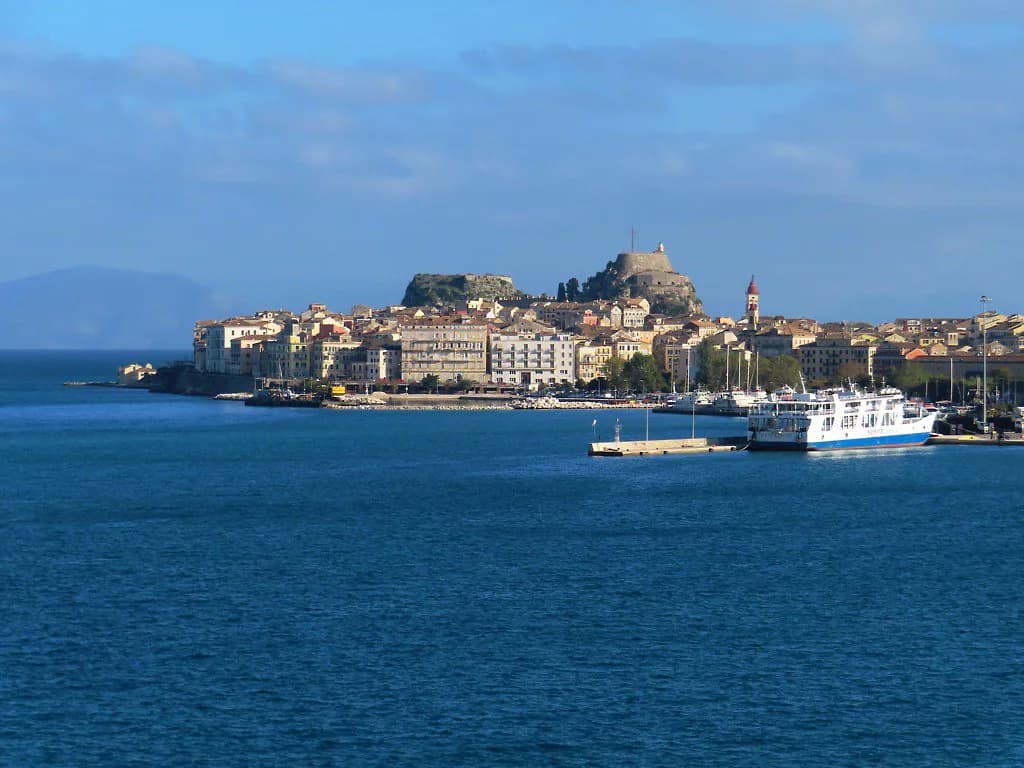
Corfu Town's historic centre is a UNESCO World Heritage site, and almost every food tour stays inside it, moving between the arcaded Liston promenade, the large open Spianada Square beside it, and the tangle of lanes behind. The Liston, modelled on a Parisian arcade, is where cafés spill onto the pavement, so it is a natural place to start or end a walk with a coffee.
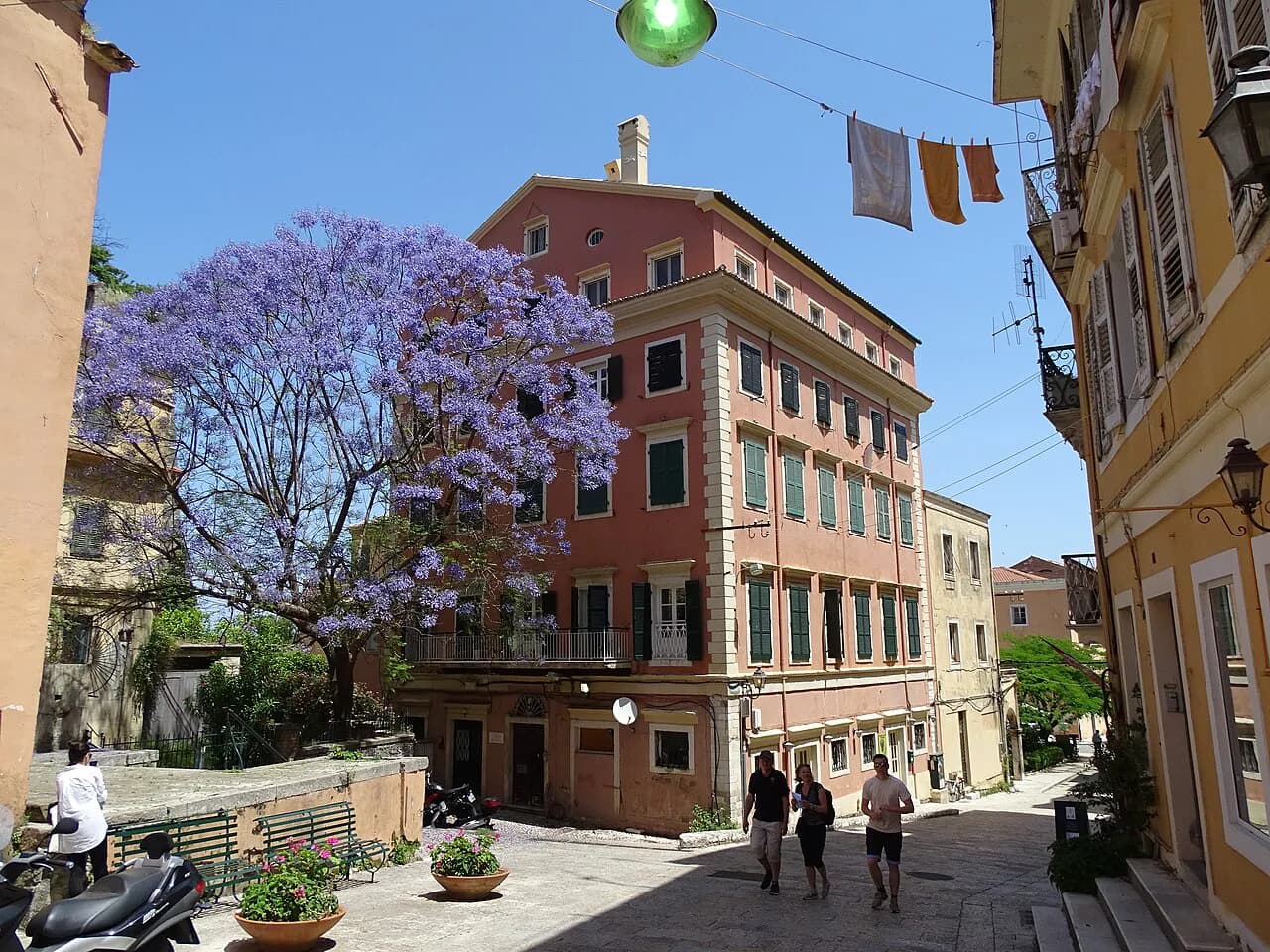
The most atmospheric quarter for eating your way through is Campiello, the oldest part of town, where stone staircases open onto small squares such as Kremasti with its Venetian well. Routes here are short in distance but slow in practice: you will walk a few hundred metres and spend far longer than you expect.
Note that the Old Town sits between the Old Fortress on one side and the New Fortress on the hill above, both within walking distance of the main tasting streets. A tour that finishes near the Liston leaves you ten minutes from either gate, which is convenient if you plan to climb afterwards.
The Core Dishes, Explained Plainly
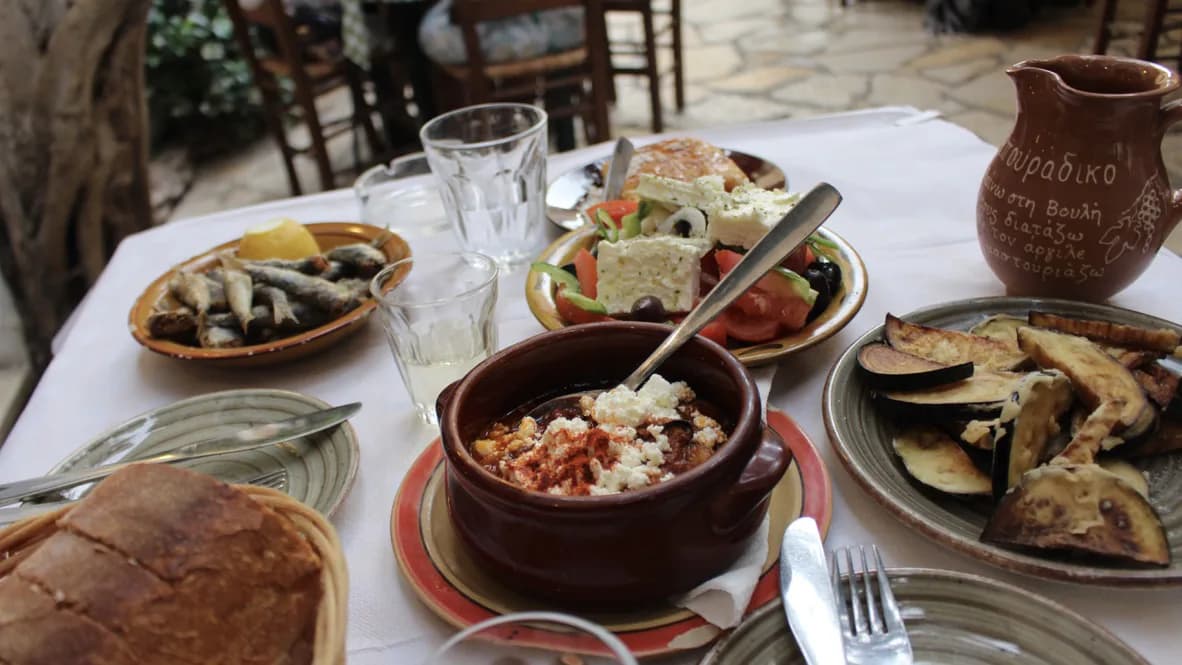
Pastitsada is the island's signature: beef or cockerel slow-cooked in a spiced tomato sauce and served over pasta, usually thick bucatini-like tubes. Sofrito is veal sliced thin and braised in white wine and plenty of garlic, without tomato, which makes it the lighter of the two. Bourdeto is a fish stew, traditionally made with scorpion fish, in a tomato base with a noticeable paprika kick.
Saganaki is fried cheese, often halloumi or feta, brought to the table in a small pan with honey, olive oil and sesame seeds, and it is a starter rather than a main. Loukoumades are small deep-fried dough balls served with honey and cinnamon, and they are best eaten hot from the fryer rather than carried away in a box.
On the drinks side, ouzo is a clear aniseed spirit that clouds when water is added, tsipouro is a similar grape-based spirit associated more with the mainland, and kumquat liqueur is Corfu's own sweet, citrus-forward pour. Local beer is also worth ordering with a spicy bourdeto. If the kumquat side of the menu appeals, our notes on corfu kumquat cover the liqueur, sweets and preserves.
Kumquat and Olive Oil: What a Tasting Involves
Kumquat tastings usually mean a flight of liqueurs plus sweets and preserves made from the fruit, and they are the quickest way to understand why the island's souvenir shops are full of it. Olive oil tastings work differently: you compare oils, learn what harvest date and variety do to flavour, and usually hear how the fruit is pressed.
Corfu has an estimated three to four million olive trees, many of them old, and estates on the island run tours that end with a guided tasting; the Governor's Olive Mill near Agios Matheos village is one that describes the whole process from harvest to bottling. Book direct with the producer and confirm the day's tour times, since these are working sites rather than attractions.
A tasting is not a meal, so do not schedule one in place of lunch. It pairs well with a walk through town in the morning and a late taverna lunch after, which is also how most locals structure a Sunday.
Corfu Town Stops Worth Building Into a Route
Panetteria, in the busy heart of the Old Town, is a bakery counter piled with sandwiches, pizza slices and cakes, and it is the practical answer to a picnic or a ferry journey. With several items bought there, a small meal comes to a modest sum rather than a restaurant bill, which makes it a sensible first stop before a long walk.
Papagiorgis Patiserie-Gelateria has served ice cream and pastries in the Old Town since 1924, and kumquat gelato is the flavour to try if you want the island in one scoop. The Dairy Shop of Alexis, a tiny old-fashioned dairy shop, is known locally for rice pudding, thick yogurt and Corfiot butter.
For something that is not food at all but belongs on the same walk, the Patounis Olive Oil Soap Factory has made soap by hand since the nineteenth century and lets visitors watch the process. It is a good counterweight to a morning of eating, and a bar of soap travels better than a bottle of liqueur.
Taverna Meals Beyond the Tour
If a guided walk leaves you wanting a real sit-down meal, Mouragia in Corfu Town is a traditional taverna where the menu runs to bread and dips, Greek salad and pastitsada. Expect the pace to be slow: in Corfu, a sit-down meal is an occasion rather than a transaction, and many restaurants bring bread or a small dish while you wait.
Outside town, the village of Doukades near Paleokastritsa has a reputation for family-run cooking using ingredients from the owners' own gardens, which makes it a natural extension of an Old Town food walk. Combine it with the drive to the west coast and a swim, rather than treating it as a separate excursion. Our guide to restaurants in paleokastritsa corfu is useful if you are basing yourself on that side of the island.
A caution worth repeating: restaurants on the main tourist strips of the Old Town can be pricier and less interesting than places a street or two back, and some of the weakest are exactly the ones with staff calling you in from the pavement. Use reviews and menus posted at the door, and walk on if neither convinces you.
East and Central Corfu Bases for Food
If you stay outside Corfu Town, food touring changes shape: you are driving between villages rather than walking between courses. On the east coast, Nisaki, Barbati and Dassia sit within a short drive of each other, with Nisaki holding the island's higher-end tables on hillside terraces overlooking the sea.
Inland, Sgombou and Giannades are farmland villages where courtyards and garden tables replace sea views, and the trade-off is clear: less scenery, more cooking aimed at locals. Apomero near Giannades is roughly 13 km from Agios Spyridon beach at Paleokastritsa, so it works as a lunch stop if you are already on the west side.
On the north coast, Sidari's Canal d'Amour draws swimmers and walkers, and Katarina's Taverna nearby is a straightforward place to refuel afterwards. If you base further north-east, our restaurants in kassiopi corfu notes cover that harbour village.
One celebrated table, Etrusco in Dassia, has been named Greece's best restaurant by Athinorama magazine every year since 2013 and grows much of its produce on site; it is not Michelin-starred, although its chef holds a star for a separate restaurant in Athens. Book well ahead if you want that as the centrepiece of a food-focused trip.
How Long to Allow and How to Pace the Day
Plan at least an hour for any sit-down meal in Corfu and expect two or three if the table is with friends; service is not designed to turn tables quickly. That single fact should shape your itinerary more than any list of stops, because a food tour plus a big lunch plus a fortress visit in one day is too much.
A workable pattern is a morning guided walk with tastings, a light bakery lunch, a rest during the hottest hours, then one long taverna dinner. Alternatively, eat your main meal at lunch and keep the evening to drinks on the Liston. Either way, leave slack: tours overrun, kitchens are unhurried and the Old Town rewards wandering.
If you would rather cook than be guided, a Corfu cooking class gives you the technique behind pastitsada and sofrito in an afternoon, and you eat what you make. It suits repeat visitors or anyone travelling with children better than a bar crawl of tastings.
Booking, Group Size and What Is Included
Ask three questions before paying: how many tastings are included, whether the price covers a sit-down plate or only samples, and how far the group walks in total. Corfu Town food tours are advertised at very different price points depending on group size and length, and a private tour quote is not a guide to what a shared walk costs.
Confirm whether drinks are included, since ouzo and kumquat liqueur tastings are often priced separately, and check the cancellation terms for weather. Corfu is genuinely wet outside high summer, and outdoor tastings have no indoor fallback at some venues.
Finally, check whether the tour finishes near your accommodation or leaves you across town. The Old Town is compact but not flat, and a twenty-minute walk back with shopping bags after a long lunch is not the same as a five-minute one.
Accessibility, Heat and Practical Notes
The Old Town's lanes are cobbled, narrow and frequently stepped, and some addresses cannot be reached by car or taxi, which matters if anyone in the group has limited mobility. Ask the tour company for the flattest available route rather than assuming one exists, and check current prices and dates when you book.
Summer heat is the other constraint: walking tours that start mid-morning can be punishing by noon, and the open squares offer little shade. Carry water, wear shoes with grip for polished stone, and choose an early slot over a late one if you have the choice.
Note that shops, tavernas and tour operators in Corfu Town keep their own opening days and holiday closures, which are not published in one central place. Check the specific venue's own page or call before you build a day around it, and do the same for any restaurant you have read about in an older guide.
Pairing a Food Tour With Sightseeing
The Old Fortress sits at the edge of the Old Town and is reached across a seawater moat by a bridge, with a climb to the lighthouse giving views over the rooftops and the Ionian Sea. It is a thirty-minute visit at speed and a half-day at leisure, so slot it either before a late lunch or after an early tasting.
The Museum of Asian Art occupies the Palace of St Michael and St George, a neoclassical building near the Spianada, and the Archaeological Museum holds the Gorgon pediment from the Temple of Artemis, one of the oldest stone pediments in Greece. Both are indoor, air-conditioned options for the hottest part of the day, and both are within a short walk of the main tasting streets.
For orientation on the island's other sights, from Angelokastro to Lake Korission, the Corfu Attractions: 7 Visitor Guides hub collects the practical guides in one place.
Self-Guided Half-Day Old Town Eating Walk
Start at the Spianada and the Liston with a coffee, cross into Campiello to wander the lanes and the Kremasti square, then pick up picnic food at Panetteria. Loop past the Church of Saint Spyridon, whose red dome is the town's landmark, and finish with ice cream at Papagiorgis; the whole circuit is walkable in a morning without rushing.
For the sit-down meal, book somewhere a few streets back from the waterfront rather than on the Liston itself, and order one braise, one fish dish and a saganaki to share. That gives you the three pillars of Corfiot cooking without over-ordering, and leaves room for loukoumades later.
If you have already done a food tour elsewhere in Greece, resist comparing formats too closely: a chania food tour runs on Cretan produce and a very different menu, so expect Corfu to feel more Venetian and less herb-driven. Our Chania Food Tour Guide breaks down how the Cretan version is structured if you want the comparison.
Plan Your Corfu Food Day
The simplest decision rule is this: book a guided walk for orientation on your first morning in Corfu Town, use a short kumquat and olive oil tasting if time is tight, and keep one long taverna lunch free for the dishes a tour can only introduce. Whatever you choose, walk the Old Town on foot and keep the itinerary loose enough for an unplanned second coffee.
Before you go, check tour availability and restaurant opening days directly, since both change with the season and are not published in one place. Then treat the rest as appetite-led: the best meal in Corfu is often the one nearest to where you are standing when you get hungry.
Explore more Corfu sauna guides
Frequently Asked Questions
What is included in a Corfu food tour?
It depends on the format. Guided walking tours in Corfu Town generally combine a short city walk with several tasting stops and commonly end with a light meze plate rather than a full lunch. Short sessions focus on kumquat products or olive oil instead. Before booking, ask whether drinks and a sit-down dish are included.
Which local dishes should I try in Corfu?
Prioritise pastitsada, a spiced tomato braise served over pasta; sofrito, thin veal cooked with white wine and garlic; and bourdeto, a paprika-scented fish stew. Add saganaki, the fried cheese with honey and sesame, and finish with loukoumades and kumquat liqueur. Together they cover the Venetian and British influences on the island's cooking.
Can I do a self-guided food tour of Corfu Old Town?
Yes, and it is straightforward. Base the route on Spianada Square and the Liston, wander the Campiello lanes, pick up bakery food for a picnic, and book one taverna meal a few streets back from the waterfront. You lose the explanations a guide provides, so read up on the main dishes first.
How long does a Corfu food tour last?
Durations vary by operator and are not standardised, so check the specific listing. As a planning baseline, allow a full morning for a guided walk with tastings and do not stack a large lunch immediately afterwards, because sit-down meals in Corfu routinely run past an hour.
What is the best time of day for a food tour in Corfu?
Mornings are the practical choice: the walking is cooler, the cruise crowds have not peaked, and you finish with the afternoon free for a fortress or museum. Evening tours suit people who want atmosphere more than efficiency, but they compete with dinner and often mean eating twice.
Do Corfu food tours run in winter?
Some do, but availability narrows outside the main season, and outdoor tastings are vulnerable to rain, which is common in Corfu outside high summer. Have an indoor alternative such as a museum in mind.
How much does a Corfu food tour cost?
Prices differ widely by format, group size and what is included, and private quotes are not a useful guide to shared walks. Compare listings on what the fee covers rather than headline price alone, and confirm whether drinks and a sit-down plate are part of it.
What should I pair with a food tour on the same day?
Keep the rest light: the Old Fortress and its lighthouse views, the Museum of Asian Art near the Spianada, or the Archaeological Museum with its Gorgon pediment. All are indoor or early-morning options that leave room for a long, unhurried dinner.
Sources
- Things to Do in Corfu: Unlocking the Magic of the Emerald Isle | Designer Journeys
- 20+ Best Restaurants in Corfu, Greece
- Highlights and hidden gems of Corfu Town: A complete guide (2026)
- Walking food tour of Corfu Old Town
- The best Corfu Town Local food tours
- What are the recommendations for guide culinary tours ...
Notes for eating well in Greece
Optional updates to our guides.
You might also like
Continue reading
More guides you'll find useful