Mykonos History: Delos, Venetians, Windmills & Tourism
A short Mykonos history for visitors, covering Delos, the Venetian and Ottoman years, the windmills and the 20th-century turn to tourism.
On this page
Mykonos is usually sold on light and beaches, but its streets carry a longer and rougher story: a rocky island that lived from sailing and trade, lost its footing when steam ships arrived, and then rebuilt itself around visitors. Knowing the sequence changes how you walk Chora, the main town, and helps you decide whether the boat to Delos is worth a half-day.
This guide follows the documented arc from the Venetian period through the Greek Revolution to the early tourist years, and it marks clearly where a story is mythology rather than record. Each period is tied to something you can actually look at, from the museums in town to the excavated site across the water, so the history reads as part of your day rather than a separate lesson.
Why Mykonos history matters on a visit
The whitewashed lanes and the windmills above town are not just scenery; they are the visible layer of an economy that was maritime long before it was touristic. Mykonians were noted sailors and traders, and the island's fortunes rose and fell with shipping routes rather than with farming, since the land was poor. Walking the town with that in mind makes the small museums and the harbour front read differently.
A good way to structure the day is to treat the town as the historical core and the beaches as the modern layer, saving time for one museum and one archaeological excursion. Our guide to the things to do in Mykonos sets out how the town, the beaches and Delos fit together before you commit a morning to any one of them.
Mythology and the name: the rocky-island tradition and the hero Mykonos
According to classical mythology, the Giants killed by Hercules lie buried under the island's granite blocks, and the name Mykonos has been read as a slightly dismissive reference to a mass of stones or a rocky place. A later tradition credits the name to a hero called Mykonos, son of Anios, king of Delos. Those naming stories are mythology and tradition rather than record, and the sources treat them that way.
What the sources do record is that ancient Mykonos was a poor island with limited agricultural resources, which explains why the sea mattered more than the soil. That single fact is the thread running through the next three thousand years of the island's story.
Ancient and Roman Mykonos, and why neighbouring Delos mattered more
In ancient times there were two towns on the island, and Mykonos sat within the orbit of the great panhellenic gods: Dionysos, Demeter, Zeus, Apollo, Poseidon and Heracles were among the principal deities worshipped here. The island later passed to the Romans and then to the Byzantines, who fortified it against Arab raids in the seventh century and held it until the twelfth.
For the region's archaeology, however, Delos is the site that matters: the French School of Archaeology began prolonged excavations there in 1873, and the neighbouring island holds the monumental remains that Mykonos itself lacks. Mykonos has its own ancient find, described as the earliest amphora of ancient times discovered on the island, but Delos rewards a dedicated visit.
The medieval period: Venetian rule from 1204, the Catalan raid of 1292 and the Barbarossa attack of 1537
After the fall of Constantinople at the end of the Fourth Crusade in 1204, the island was occupied by Andrea and Jeremia Ghisi, relatives of the Doge of Venice. It was looted by the Catalans in 1292 and formally handed to the Venetians in 1390. In 1537, still under Venetian rule, it suffered a catastrophic attack by Barbarossa, admiral of Souleiman the Magnificent.
The Venetian period also brought settlers from nearby islands and from Crete, and the island's population grew as a result. Starvation, epidemics and bouts of conflict were common until the late eighteenth century, which is the context for the islanders' later reputation as hardened sailors.
Ottoman-era Mykonos: sailors, traders and the Orlof Insurrection
Through the same period Mykonians were known as excellent sailors and successful traders and shipowners, and sometimes as pirates. Many islanders took part in the Orlof Insurrection, the Russian-backed revolt that paid off for them through profitable trade treaties between the Ottoman Empire and the Russian Empire. After the Greek Revolution broke out in 1821, the island's commercial ties reached Constantinople, Smyrna, Alexandria, Syros, Livorno and Marseille once the modern Greek state was established.
The Greek Revolution: Manto Mavrogenous and the 1822 defence of the island
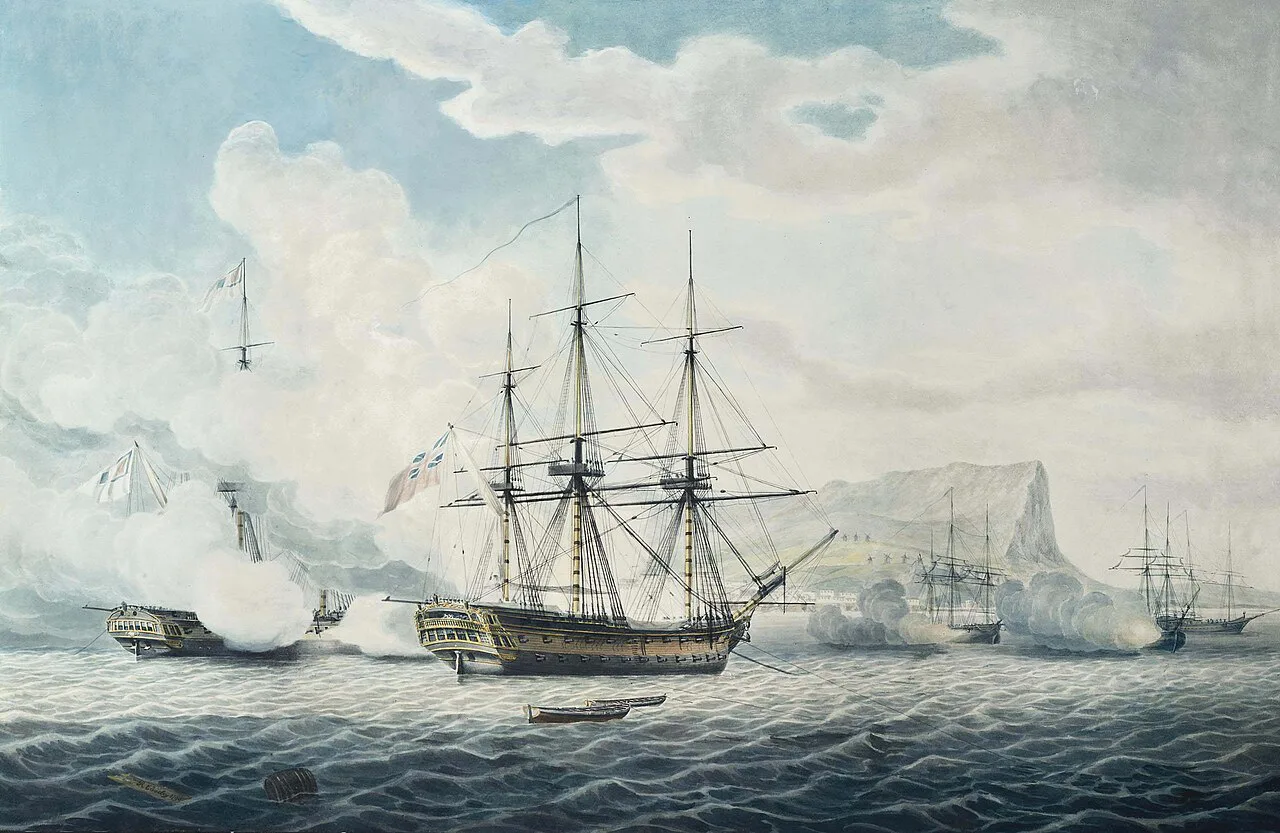
Soon after the revolution began in 1821, Mykonians rose up under Manto Mavrogenous, an aristocratic and educated nationalist heroine, and in 1822 they blocked a landing by a squadron of the Ottoman fleet. The island contributed four armed ships, two of them fitted out at her expense; she is said to have spent her family fortune on the cause before the war ended.
For a visitor, Mavrogenous is the clearest reminder that this small island played an active part in the war rather than watching from the sidelines. Her name recurs in the town's public memory, and it gives the harbour and the older streets a political as well as a nautical history.
Steam ships and the Corinth Canal: the late-19th-century economic slump and emigration
At the end of the nineteenth century, steam technology displaced the traditional sailing-ship trade that had made Mykonian merchants prosperous. The opening of the Corinth Canal in 1904 and the First World War deepened the depression, and many islanders left for the United States or for Piraeus and Athens. This is the least visible period in the town today, but it explains the gap between the grand trading era and the tourist era.
If you want the economic detail behind that story rather than the bare dates, the maritime collections in town are the better stop, and the Aegean Maritime Museum and the Folklore Museum in Chora are the two places to look for it. Neither should be planned around assumed hours, though: check the museum's own published opening days before you build a day around either one.
The 20th-century turn: artists and wealthy visitors from the early 1930s, then mass tourism
By the early 1930s, artists, politicians and wealthy travellers from Europe and the United States were already spending holidays on the island, drawn by its atmosphere. After the Second World War, Mykonos adapted quickly to the growth of tourism in southern Europe and became one of the most successful growth models of its kind and scale on the continent. The cosmopolitan character people now associate with the island is a twentieth-century product, not an ancient one.
That shift is worth keeping in mind when you choose where to eat: the town's restaurant scene is a direct descendant of the tourist economy, layered over the older harbour and back-street geography. Our guide to the best restaurants in Mykonos sorts the options by area and budget, which matters because Chora's lanes and the beach settlements serve quite different purposes.
How to read the town: windmills, churches and the whitewashed lanes as evidence of this history
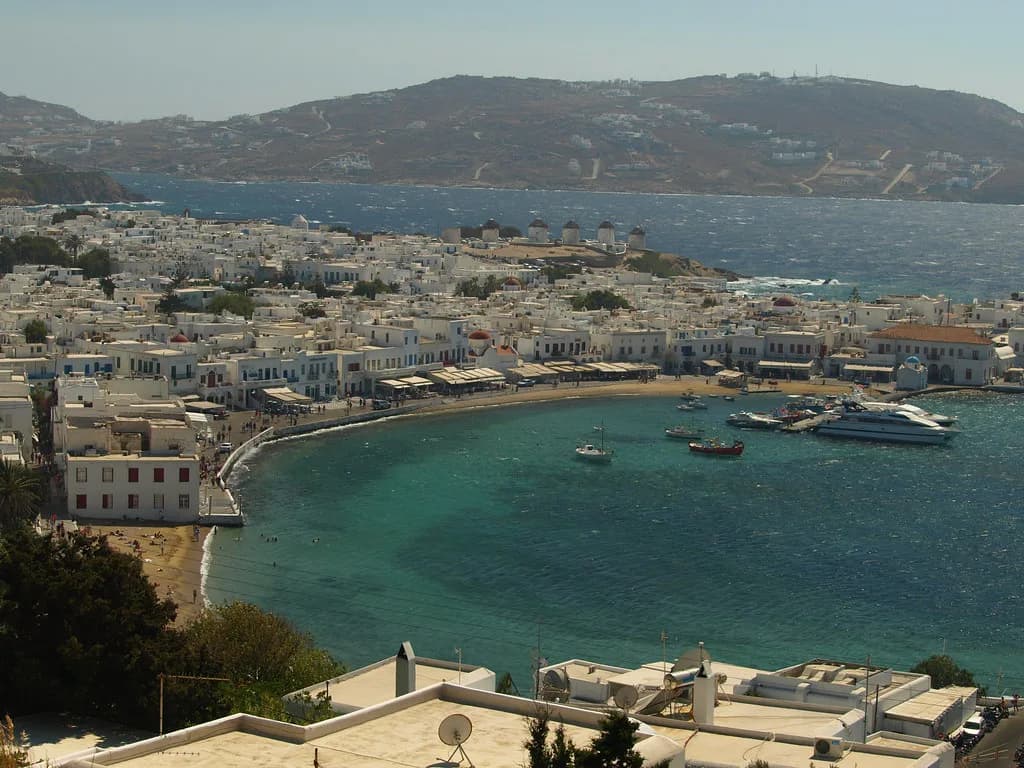
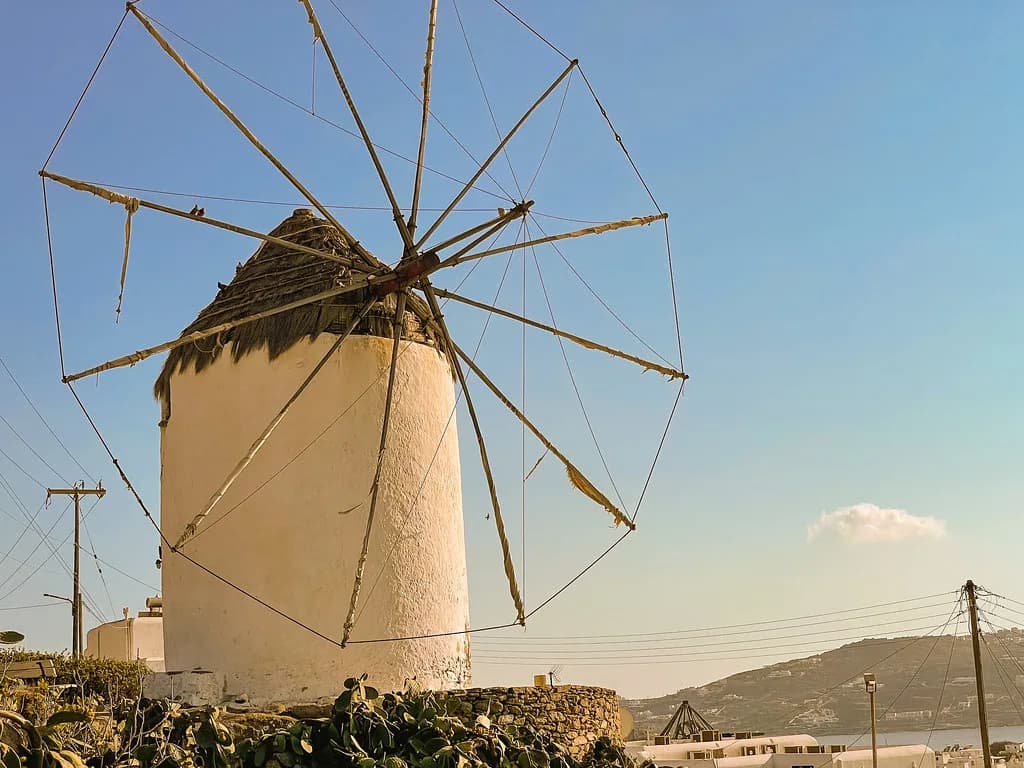
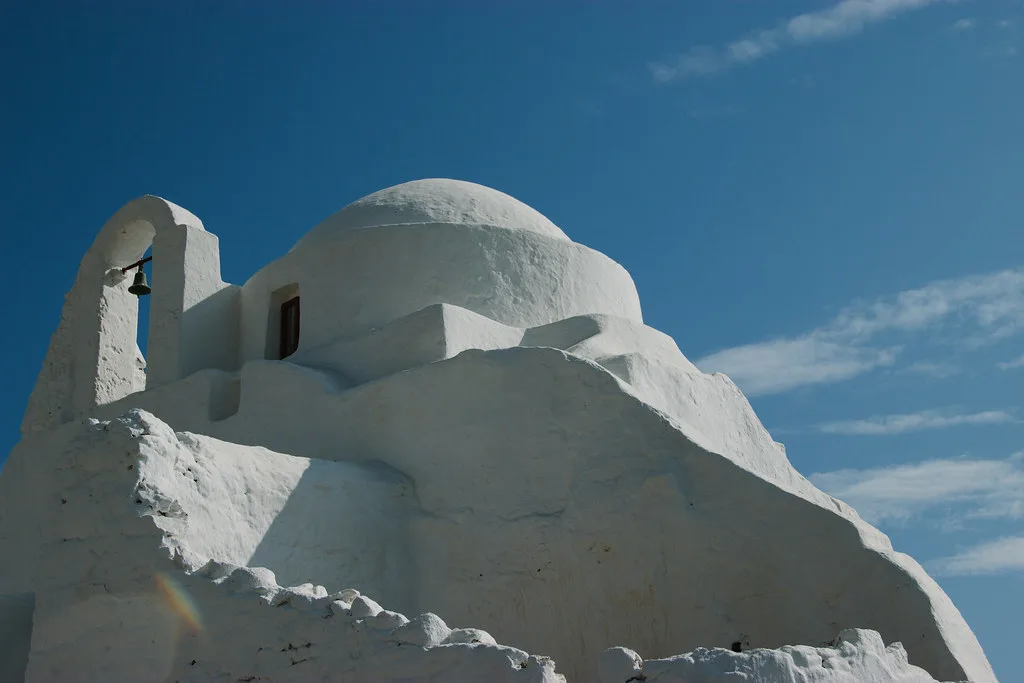
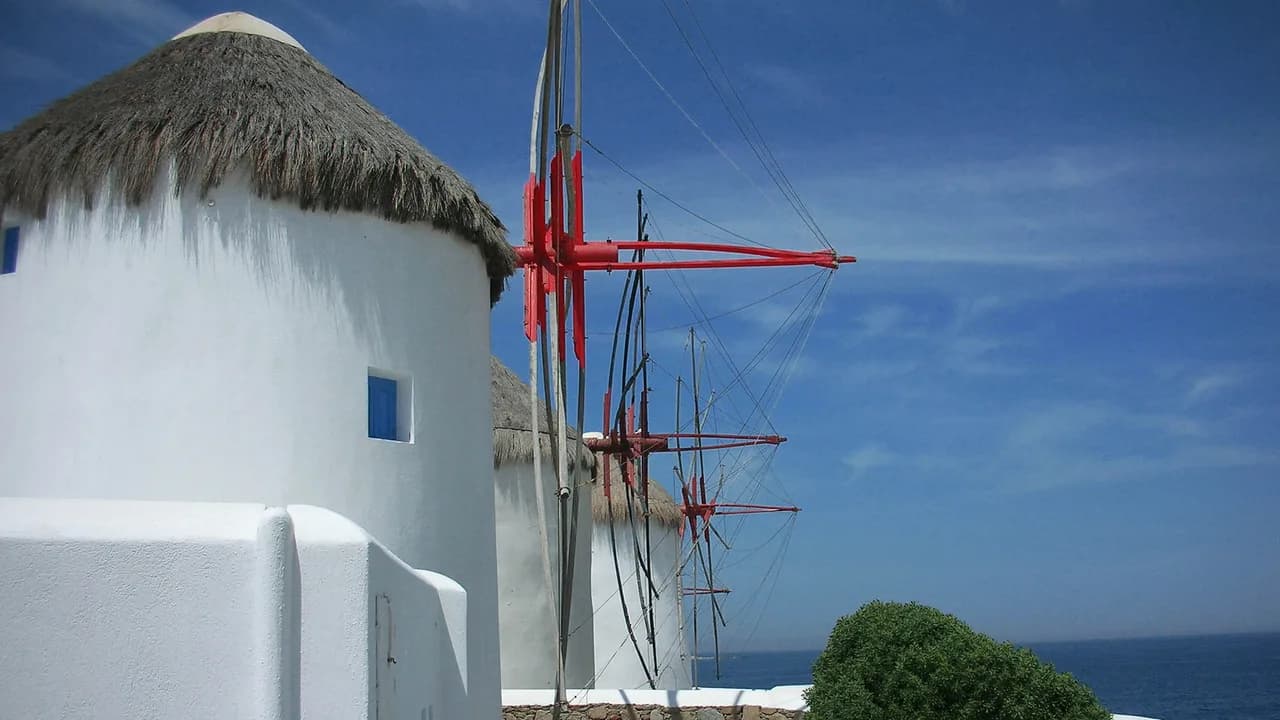
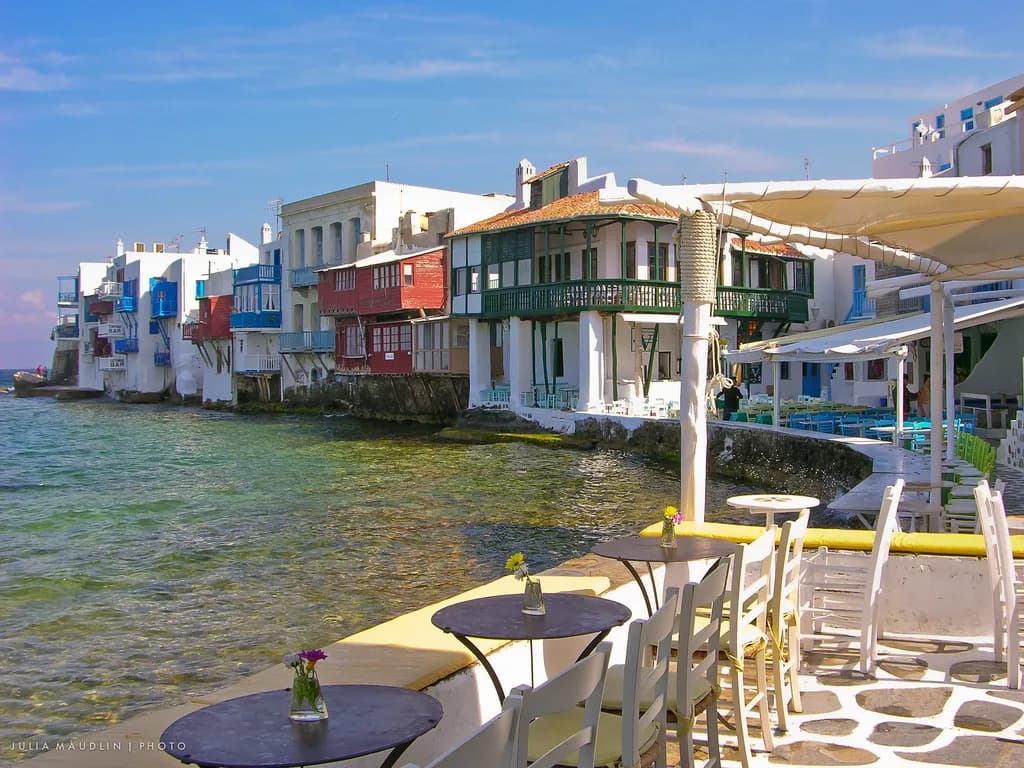
The windmills on the ridge above Chora were part of a working maritime economy, and the density of small churches and the tight lane plan reflect a town built for a seafaring population rather than a planned resort. Reading the town this way is more rewarding than treating it as a stage set, and it costs nothing. If a commonly repeated explanation for the whitewash is offered on a tour, treat it as local storytelling unless the guide can point to documented evidence.
Practical visitors often find that the town is best covered early, before the day-trip crowds, and then left for a swim; that rhythm also matches how the island's economy now works. If you want to eat your way through the same streets rather than just walk them, the guide to what to eat in Mykonos covers the local dishes worth ordering and where they appear on menus.
History-minded stops in and around Chora: the Aegean Maritime Museum and the Folklore Museum
The Aegean Maritime Museum and the Folklore Museum sit in Chora and hold the material that best explains the sailing and trading centuries. They are small, so an hour each is a realistic allowance, and they pair naturally with a walk through the lanes rather than a separate trip. Opening days vary by season, so confirm current times with the museum before walking over.
The rest of the island's attractions, including the beaches and boat excursions, are covered in the Mykonos Attractions: 8 Visitor Guides collection if you want to compare options before booking. For the history-minded, though, the museums and Delos will give you more per hour than another beach.
Delos: the archaeological site that explains the region's ancient importance
Delos, not Mykonos, holds the region's major excavated remains, and the French School's work there from 1873 shaped how the area is understood. A visit means a boat crossing and a site walk in exposed conditions, so plan for heat, wind and limited shade rather than a comfortable museum circuit. Boats and site arrangements change seasonally, so verify departures and site access through the official archaeological service rather than relying on a listing.
If your interests lean to food rather than ruins, a Mykonos cooking class can fill the same half-day and keep you on the island. Comparing the two is really a question of whether you want the region's ancient archaeology or a hands-on introduction to its kitchen.
Practical planning: where these places sit relative to each other and how to slot them into a day
Chora concentrates almost everything historical in a walkable area, with the museums, the windmills and the older lanes within easy reach of the harbour. Delos is the one element that requires a crossing and a fixed block of time, so it should anchor the day rather than be squeezed between town stops. Beach restaurants and the southern bays sit further out and are best combined with Delos on a different day.
A sensible pattern is one museum morning in Chora, one day for Delos, and a slower day for the beaches and a long lunch. If you are staying near Ornos, the bay's own restaurants make a convenient base for the latter, and the Restaurants in Ornos, Mykonos guide covers that area specifically.
What to check before you go: opening days for museums and boat timings to Delos
Museum hours, admission arrangements and Delos boat timetables are not fixed year-round and should be confirmed directly rather than taken from an old listing. The safest method is to check the museum's own published information and to book the Delos crossing through a licensed operator who can confirm the day's departure. Build a backup plan for wind, which can disrupt crossings even in good weather.
Prices for museums, boats and meals should likewise be confirmed at the source on the day, since they change and are not worth budgeting from a stale post. Any figure you see elsewhere is only indicative until the venue confirms it.
Plan Your Visit
The history of Mykonos is really a story about transport and trade, from sailing ships and Venetian conflicts to steam ships, the Corinth Canal and finally tourism from the 1930s onward. Walking Chora with that sequence in mind makes the windmills, churches and lanes legible, and one museum plus a Delos crossing covers the rest.
Keep the plan simple: confirm museum days and boat departures before you commit, group the town stops together, and leave the beaches for a separate outing. If you want a comparative view of how another Greek island's past is presented to visitors, the Corfu History for Visitors guide offers a useful contrast.
Explore more Mykonos sauna guides
Frequently Asked Questions
What is the history of Mykonos in brief?
The island was a poor, seafaring place that passed from the Romans and Byzantines to Venetian control after 1204, suffered raids including the Catalan attack of 1292 and Barbarossa's assault in 1537, and later prospered through sailing trade. After a late nineteenth-century slump caused by steam ships and the opening of the Corinth Canal, it turned to tourism from the early 1930s.
Did Manto Mavrogenous lead the defence of Mykonos?
Historical accounts describe Manto Mavrogenous, an educated aristocrat and national heroine, leading the islanders during the Greek Revolution, with a landing by an Ottoman fleet squadron successfully blocked in 1822. The island contributed four armed ships, two of them outfitted at her expense.
When did tourism start on Mykonos?
From the early 1930s, artists, politicians and wealthy visitors from Europe and the United States began holidaying on the island. After the Second World War, Mykonos adapted quickly to the growth of tourism in southern Europe and became one of the most cited growth models of its kind.
Why is Delos important to Mykonos history?
Delos holds the region's major archaeological site, excavated by the French School of Archaeology from 1873, which is why the area's ancient importance is read through Delos rather than Mykonos. Mykonos has its own ancient finds, but Delos is the archaeological destination that justifies a boat crossing.
Is Mykonos mentioned in the Bible?
The available historical accounts of Mykonos trace the island's record from the Late Bronze Age through the classical, Roman, Byzantine and Venetian periods without addressing a biblical mention. Travellers interested in that question should consult specialist biblical or historical scholarship rather than island tourism material.
Why is Mykonos so white?
Sources covering the island's history do not settle this question, so it is best treated as a local explanation rather than a documented fact. Guides may offer their own account of the whitewash tradition, but it should be presented as storytelling unless supporting evidence is cited.
What is Mykonos famous for?
It is known for its whitewashed town of Chora, its windmills and beaches, and its modern reputation as a cosmopolitan destination. Historically, it is notable for its sailors and traders and for the Greek Revolution role associated with Manto Mavrogenous.
Do I need to book the Delos boat in advance?
Bookings and departures change seasonally, and crossings can be affected by wind, so confirm with a licensed operator before relying on a schedule. Advance booking is sensible in high season, but the departure details should always be verified directly.
Sources
Notes for eating well in Greece
Optional updates to our guides.
You might also like
Continue reading
More guides you'll find useful