Mykonos Churches: Guide to Paraportiani and Old Town Chapels
Plan a walk past Mykonos churches: Panagia Paraportiani, Old Town chapels and Ano Mera's monastery, with etiquette, timing and a sensible town loop.
On this page
Almost every walk through Mykonos Town, the Chora, passes a whitewashed chapel with a red or blue dome, a bell wall and a bench outside. They are not separate sights to tick off but part of the fabric of the lanes, and the pleasure lies in noticing how they sit between shops, houses and the sea. This guide covers the one church most visitors come for, the smaller chapels that shape a town loop, the inland monastery at Ano Mera, and the etiquette that keeps a quick look respectful.
Treat the churches as a route rather than a list. The compact centre means Paraportiani, Little Venice, the Kato Mili windmills and the Old Harbor can be strung together on foot in an afternoon, with a museum or a meal as a break. For a wider view of how the churches fit alongside beaches, boat trips and the archaeological island of Delos, the full guide to things to do in Mykonos sets out the rest of the island.
Panagia Paraportiani in the Kastro Area
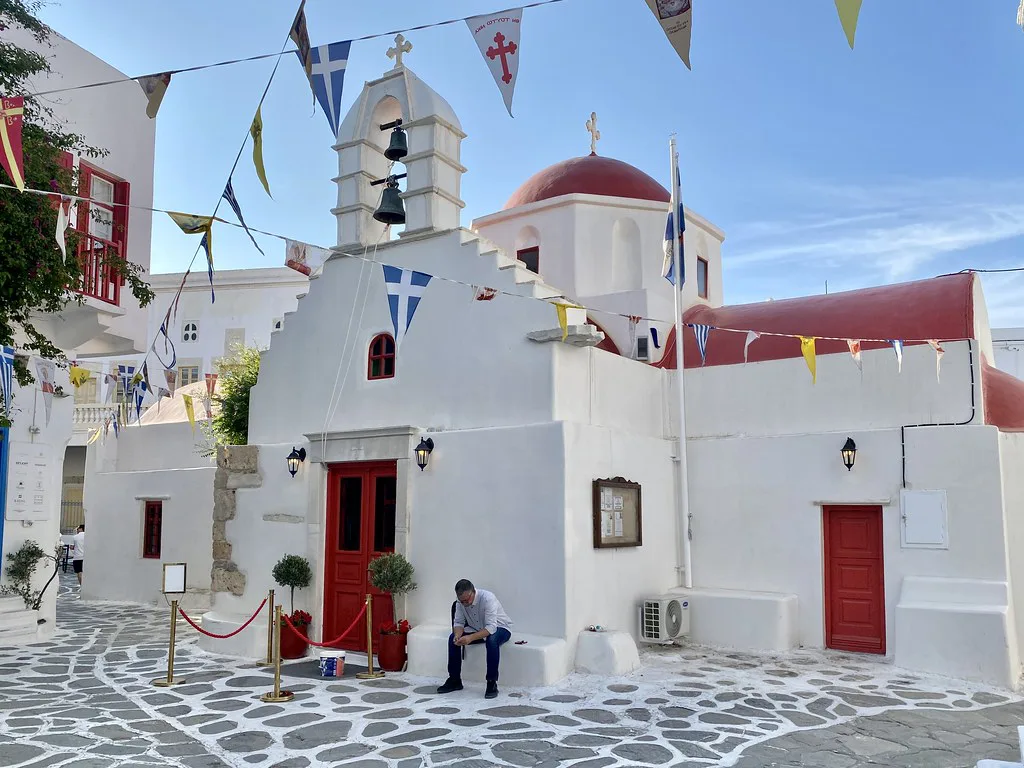
Panagia Paraportiani sits at the entrance to the Kastro neighbourhood, the oldest quarter of Chora, and is routinely described as one of the most photographed churches in Greece. What makes it unusual is its construction: it is not a single building but a stack of five churches built one on top of another over time, which is why the outline looks lumpy and asymmetric rather than neatly domed. The name means Our Lady of the Side Gate, a reference to its position beside the old entrance to the Kastro.
Plan on seeing it from the outside. Sources describe Paraportiani as an exterior landmark and photograph stop, and nothing published indicates reliable interior access, so arrive expecting to admire the whitewashed volumes and the setting rather than a museum-style visit. Because it is small and close to the lanes, the difference between a clear view and a crowd of raised phones is mostly a matter of timing: early morning and the hour before sunset are the obvious windows, and stepping back into the Kastro lanes gives a quieter angle.
Agios Nikolakis at the Old Harbor
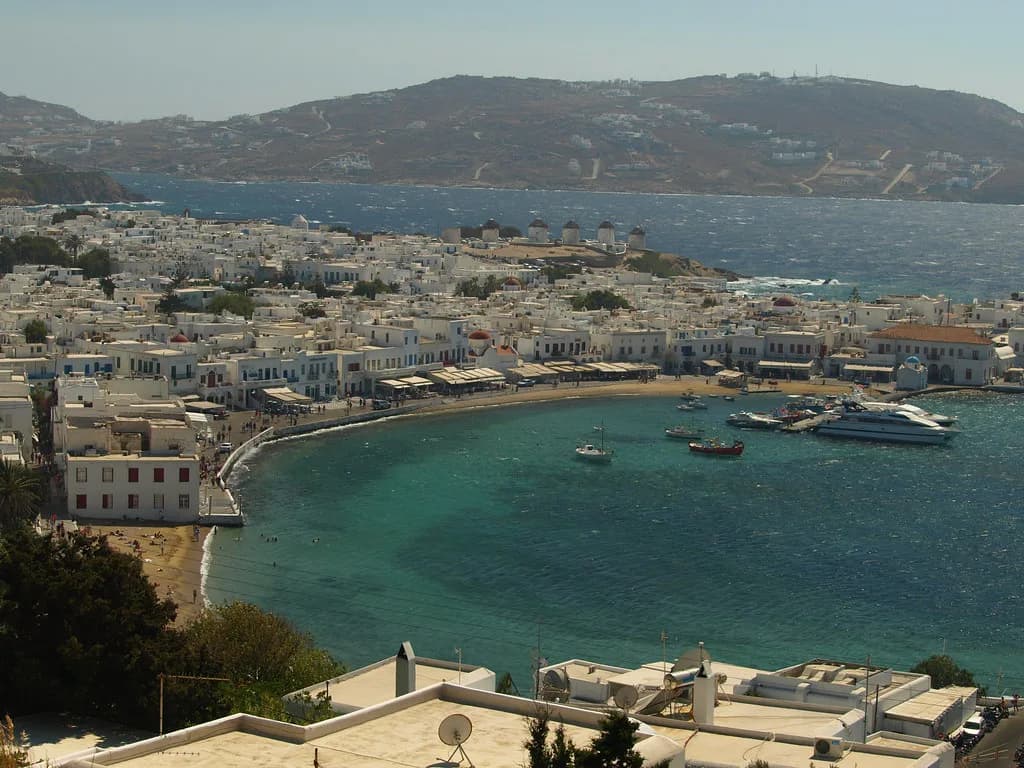
Just around the corner from Little Venice lies the Old Harbor, where restaurants line the waterfront, fishing boats bob in the water and daily boats to Delos leave from the main dock. A tiny church, Agios Nikolakis, stands at the entrance to that dock, so you pass it almost unavoidably if you are catching the Delos ferry or walking the harbour edge. Its scale is the point: it is a chapel sized for a moment's pause rather than a visit, and it frames well against the boats behind.
If you are taking the boat to Delos, buy tickets at the small booth in the harbour rather than assuming you can pay on board, and note that crossings have historically run roughly hourly from about nine in the morning. Round-trip ferry tickets and the island entrance fee are charged separately, so budget for both, and check current prices and dates before you travel. Allow a good ninety minutes or more on Delos itself if you want to see the main ruins rather than sprint back to the jetty.
The Red-Domed Chapels of Little Venice and the Kastro Lanes
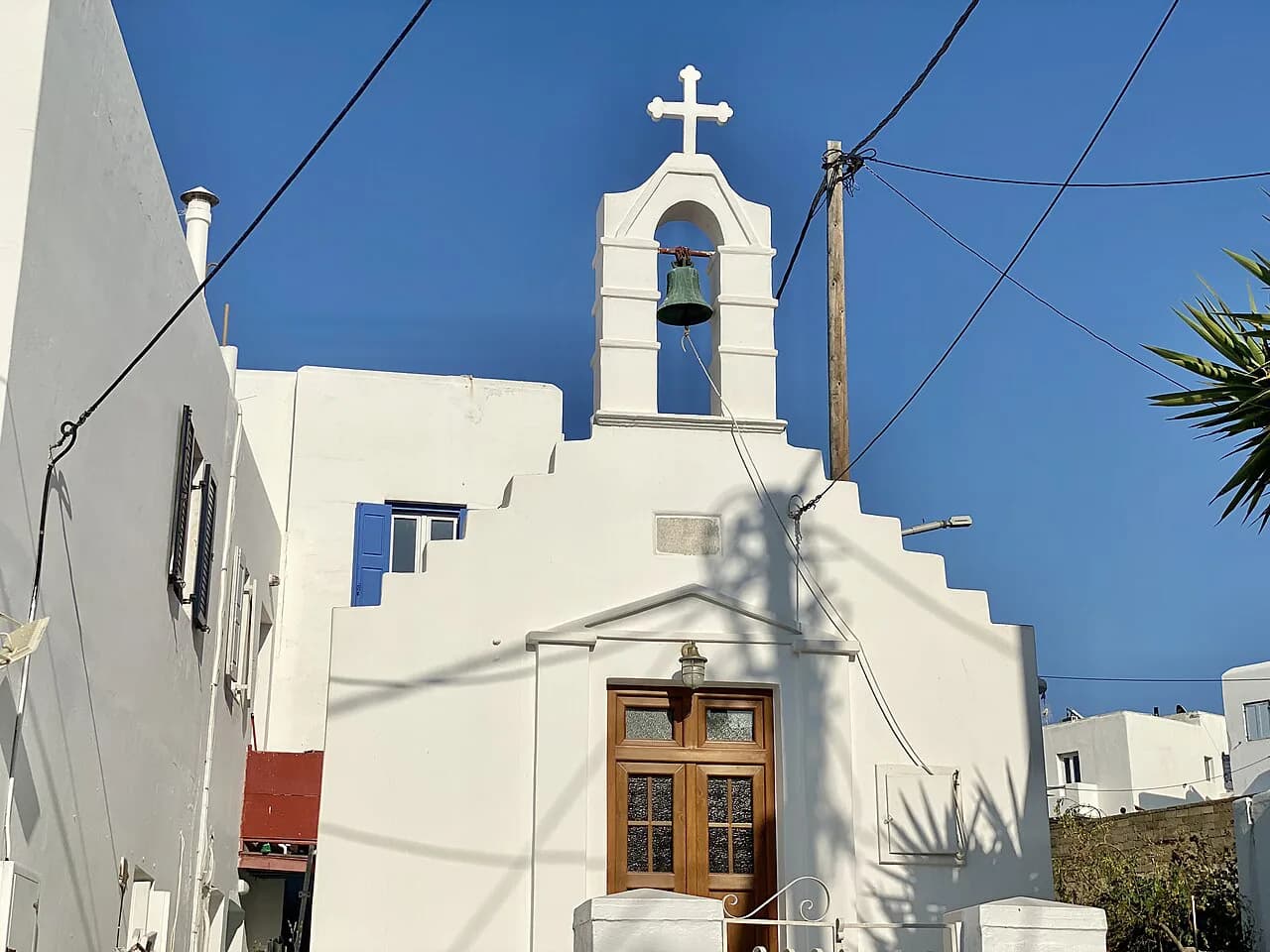
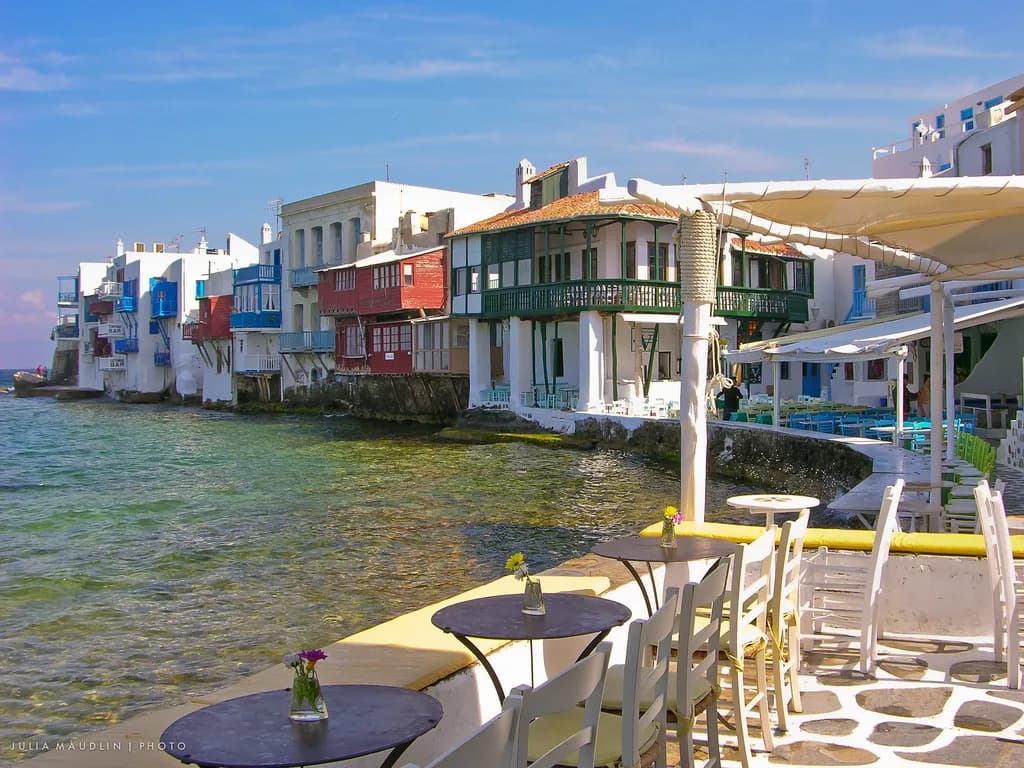
Little Venice is the row of eighteenth-century merchant houses whose balconies jut over the water, now partly converted into cafes and bars, and the lanes behind it are thick with small chapels. Look for the red domes and the blue ones, the white bell walls and the pots of basil by the door; these are parish-scale buildings, often no bigger than a room, and they read as landmarks in the maze rather than destinations in themselves. The maze is deliberate, laid out to confuse raiders, so a chapel dome is as useful as a street sign when you are trying to keep your bearings.
The old town's traditional colour coding is worth knowing as you walk: doors and windows were painted blue for fishermen, green for farmers and red for everyone else, which explains the flashes of colour against the whitewash. Whether or not every door still follows the rule, it gives you something to look for beyond the postcard angle. Walk slowly, keep to the side of the lane when you stop to photograph, and remember that these are people's front doors as much as visitor sights.
How Many Churches Are There in Mykonos Town?
Figures for the island as a whole are unreliable, but Mykonos Town alone is credited with around sixty churches, and one often-repeated local claim holds that there is roughly one church per family. Treat those numbers as a sense of density rather than a census. The practical consequence is that you do not need to hunt: any walk between Matogianni Street, the Kastro and the waterfront will pass several, and the pleasure is in the accumulation rather than a checklist.
Because the chapels are so closely packed, a route that tries to see them all makes no sense. Pick one anchor, Paraportiani, and let the rest arrive as you walk: from there to Little Venice is a couple of minutes, and the windmills sit on the hill just beyond. That short chain gives you the classic Chora photographs without turning the day into a church crawl.
Ano Mera and Panagia Tourliani
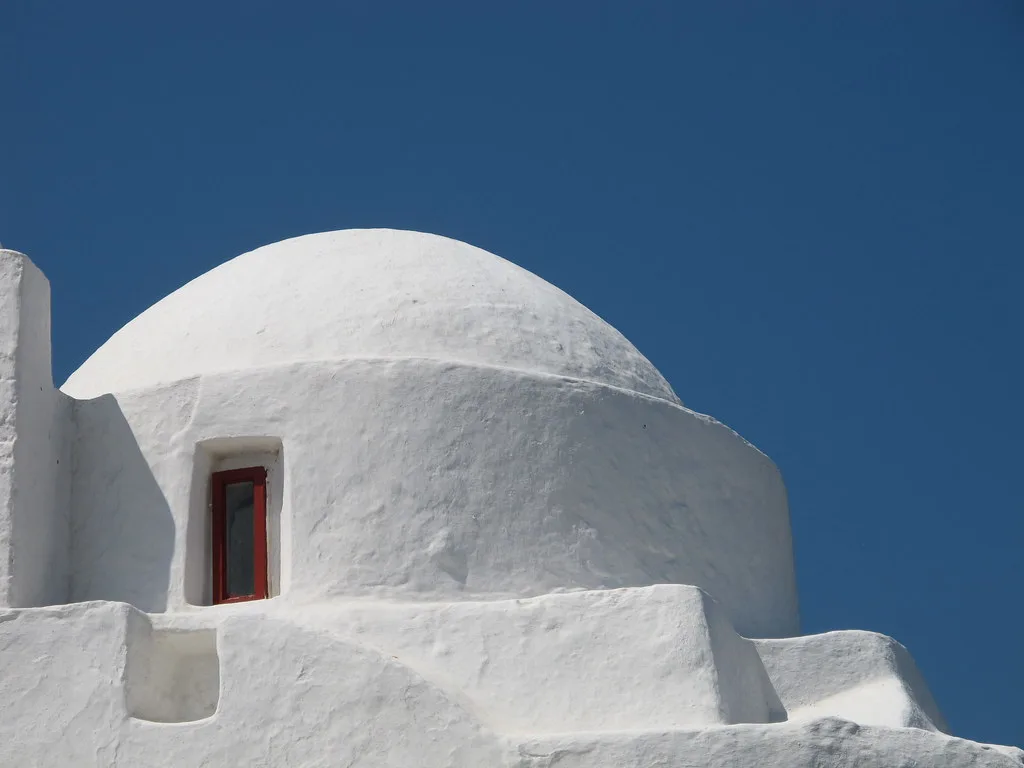
Ano Mera is the inland village in the middle of the island, and its monastery, Panagia Tourliani, is the substantial church visit on Mykonos, a contrast to the tiny locked chapels of the town. It is the kind of place where you go to see a working religious complex rather than a photo stop, and the village square around it gives you a reason to linger. Reaching it means a drive or a bus ride inland rather than a stroll, so it suits a day when you have a car or are combining it with the quieter eastern beaches.
Check locally before making the trip, since monastery access and village bus times are not published in a way that can be relied on from a distance; your accommodation or the local bus operator is the sensible source. If you are weighing the inland trip against a beach day, the trade-off is straightforward: Ano Mera gives you architecture, village atmosphere and a slower pace, while the southern beaches give you sand and sea. The guide to Mykonos attractions can help you slot either into a wider plan.
Visiting Etiquette: Dress, Quiet and Photographs
These are active places of worship, so the baseline is simple: cover shoulders and knees, speak quietly, and take your hat off inside. If a service is in progress, do not walk around or use a flash; stand at the back or wait outside until it finishes. Many town chapels are kept locked outside service times, which is a normal pattern rather than a slight, so peering through the doorway and moving on is often the whole visit.
Photographing worshippers is the line most visitors get wrong. Ask before including anyone in a frame, and accept a no without negotiating; a photograph of a dome or a doorway needs no permission, a photograph of a person does. If you want to step inside a chapel that is open, do so briefly, keep your voice down and leave a small donation if a box is set out. That is the whole etiquette, and it costs nothing to follow.
Timing and Why the Doors Are Often Shut
The town chapels are not staffed attractions with published hours, and no reliable source lists opening times for them; the honest advice is to expect locked doors and to enjoy the exteriors. The monastery at Ano Mera is the exception worth planning around, but its hours should be confirmed on arrival or through your hotel rather than assumed. Do not build a day around getting inside a particular town chapel.
Season shapes the island more broadly. From November through March the weather turns chilly and sometimes wet, and fewer restaurants and hotels stay open, while June through August brings heat and crowds; May, September and even mid-to-late April are calmer for walking the lanes. Outside high summer, check opening arrangements for anything you specifically want to see inside, and treat the shoulder months as the best compromise between atmosphere and access.
A Practical Church and Town Loop on Foot
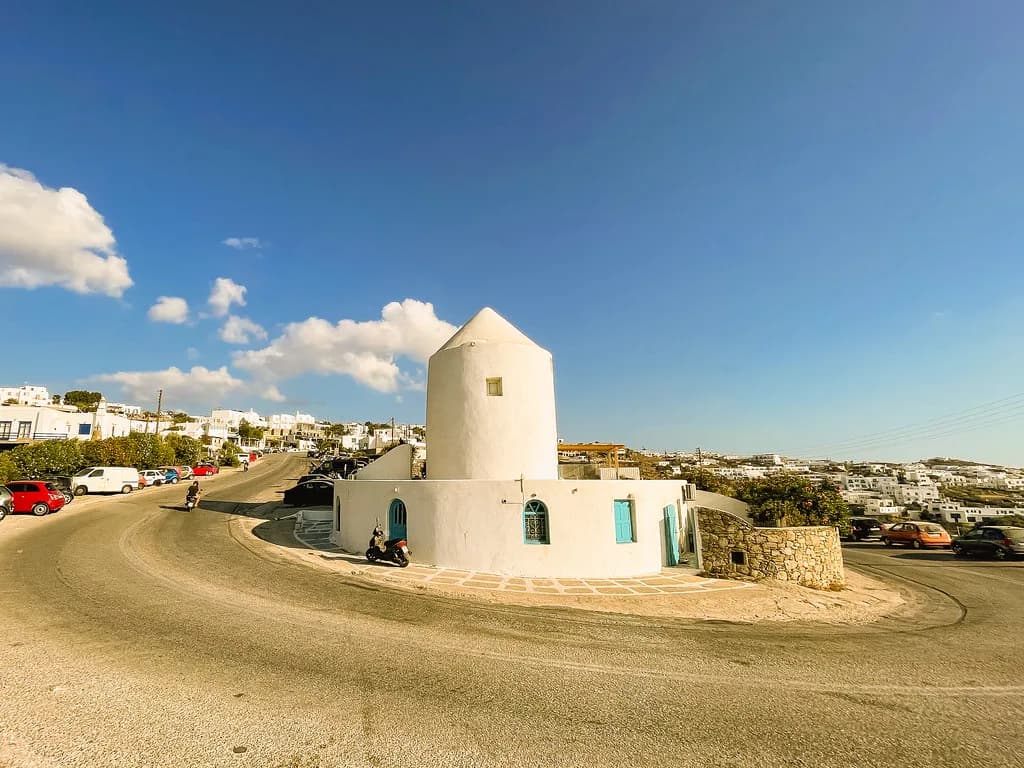
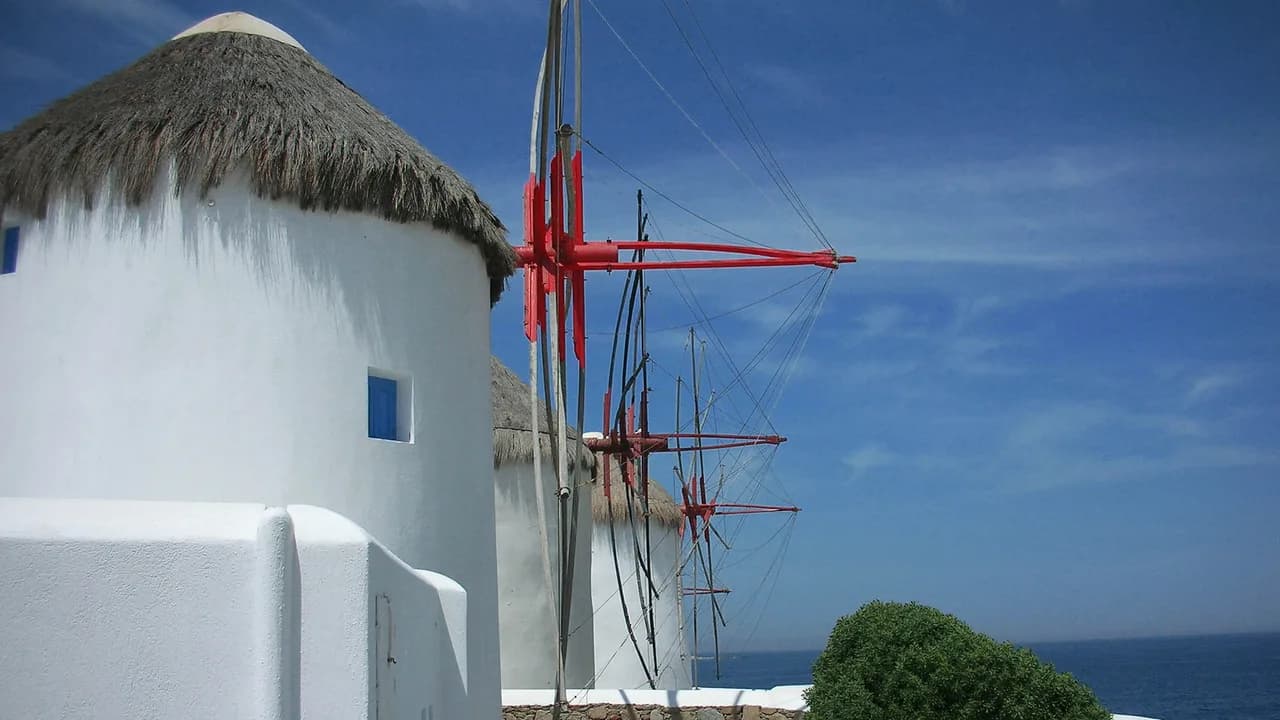
Start at Panagia Paraportiani in the Kastro, walk the lanes towards Little Venice for the balconies over the water, then climb the short rise to the Kato Mili windmills for the view back over the bay. From the windmills, drop down to the Old Harbor, where Agios Nikolakis marks the dock and the Delos boats load. That is a compact loop of perhaps an hour or two at an unhurried pace, and it takes in the churches, the classic viewpoints and the harbour in one go.
Walking is the sensible way to do this: the centre is small and easy to cross on foot, but the lanes are a genuine maze, so allow for wrong turns and use the domes and windmills as landmarks. Driving in town is a frustration rather than a help, and the roads outside it are rough, with potholes and dirt stretches toward several beaches. If you are hiring a car for Ano Mera or the beaches, pick it up near the Old Harbor and keep the town itself for walking.
Where to Eat Near the Churches
Chora is dense with places to eat, and several are named in travel accounts of the town: D'Angelo Mykonos for Italian, Raya Restaurant for Mediterranean seafood, and Captain's and M-Eating among the better-known tables. In the beachfront village of Platys Gialos on the south coast, Blue Myth Restaurant and Avli Tou Thodori are the names that come up. All of these sit in the busy, view-driven end of the market, so book ahead in high summer rather than hoping to walk in.
The trade-off is the usual island one: a table with a view of Little Venice or the harbour costs more and fills earlier, while the back lanes and the inland village squares give you simpler food and shorter waits. If you are eating after the church loop, the harbour end of town puts you close to the water without committing to the priciest waterfront row. For a broader survey by area and budget, see the guide to restaurants in Mykonos, and for the dishes themselves, what to eat in Mykonos explains the names on the menu.
Pairing Churches With Museums and Nearby Sights
The Archaeological Museum of Mykonos sits at the Old Port facing the sea, which makes it a natural pairing with Agios Nikolakis and the harbour; it was built in 1902 to house finds from Rhenia, including the large painted vase known as the Pithos of Mykonos. Nearby in the Tria Pigadia area, the Aegean Maritime Museum occupies a nineteenth-century building and covers ship models, navigational instruments and maritime painting. The Folklore Museum in the Kastro and Lena's House, a preserved nineteenth-century home, fill out a wet-weather or slow afternoon.
Small museums like these often have modest entry charges and limited daily hours that vary by season, so check the posted times at the door rather than trusting an old listing. Pairing one museum with the church loop breaks up the walking and gives you somewhere to sit out a shower. If you have already seen the town's churches and want a change of scale, the churches of Heraklion on Crete offer a very different, much larger set of monuments.
Fitting the Churches Into Your Mykonos Plan
For a one-day visit, the town loop is enough: Paraportiani, the Little Venice chapels, the windmills and the Old Harbor, with a museum or a long lunch as the break. With two days, add the boat to Delos or a drive inland to Ano Mera and Panagia Tourliani, and keep the town for the evening when the light softens and the day-trippers thin out.
The single most useful habit is to treat the chapels as part of the streetscape: look, keep quiet, cover up, and do not count on getting inside. Confirm the practical details that matter to you, museum hours, monastery access and ferry times, close to the date, and let the rest of the day unfold on foot.
Explore more Mykonos sauna guides
Frequently Asked Questions
What is the most famous church in Mykonos?
Panagia Paraportiani, at the entrance to the Kastro quarter of Mykonos Town. It is a stack of five churches built over one another and is widely described as one of the most photographed churches in Greece. Most visits are to the exterior.
How many churches are there in Mykonos Town?
Mykonos Town alone is credited with around sixty churches, and a local saying holds that there is roughly one per family. Treat that as a measure of density rather than an exact count; you will pass several on any walk through the centre.
Can you go inside Panagia Paraportiani?
Published descriptions treat it as an exterior landmark, and there is no reliable information on interior access. Plan to admire it from the lanes and do not build your day around getting inside.
Why do Mykonos churches have red domes?
Red and blue domes are simply part of the local church architecture you will see across the Cyclades. The separate colour tradition visitors notice most is on house doors and shutters, once painted blue for fishermen, green for farmers and red for others.
Is Panagia Tourliani in Mykonos Town?
No. Panagia Tourliani is the monastery at Ano Mera, the inland village at the centre of the island, reached by road rather than on foot from Chora. It is the substantial church visit on Mykonos and a contrast to the tiny town chapels.
What should you wear when visiting churches in Greece?
Cover shoulders and knees, remove hats indoors, and keep voices low. If a service is under way, stay at the back or wait outside, and never use a flash or photograph worshippers without asking first.
When is the best time to walk the church route in Mykonos Town?
Early morning and the hour before sunset give the best light and the thinnest crowds. May, September and mid-to-late April are calmer than the hot, busy months of June to August, and the lanes are easier to walk.
Sources
Notes for eating well in Greece
Optional updates to our guides.
You might also like
Continue reading
More guides you'll find useful