Is Mykonos Expensive? What Costs Really Look Like
Mykonos is expensive for Greece, but the money goes to specific things: harbour tables, beach clubs and July rooms. See what drives the bill and how to cut it.
On this page
Mykonos is one of the most expensive islands in Greece, but the bill is not spread evenly across the island. The premium concentrates around a few things: a table with a sunset view, a sunbed at a party beach, a room in the June to August peak, and a night out in Mykonos Town. Move away from those and costs settle towards ordinary Greek island levels.
This guide breaks the island down by the decisions that actually move money: which neighbourhood you eat in, whether you pay for the sunset seat or watch it free from the windmill hill, which beach you choose, and how you handle transport. It also separates costs the island publishes, such as the Delos ferry and site entry, from the ones you can only confirm by asking directly.
Short Answer: Pricier Than Most of Greece, but Only in Specific Places
Treat Mykonos as an expensive island with cheap corners rather than a uniformly costly one. The two biggest variables are accommodation in July and August and any table or sunbed attached to a famous view or a beach club. Everything else, from town wandering and church visits to the windmill hill, costs nothing beyond what you eat and drink.
It helps to place Mykonos against the rest of the country before fixing a budget, because the same money buys very different trips on different islands. A comparison of trip costs by island and city shows how much of the Mykonos premium is about the island itself and how much is simply Greece in high season.
The rest of this guide works through the specific spend points in the order you will meet them: eating in town, the sunset seat, beaches, where you sleep, transport, Delos and the museums. Each section says what drives the cost and what the cheaper alternative is.
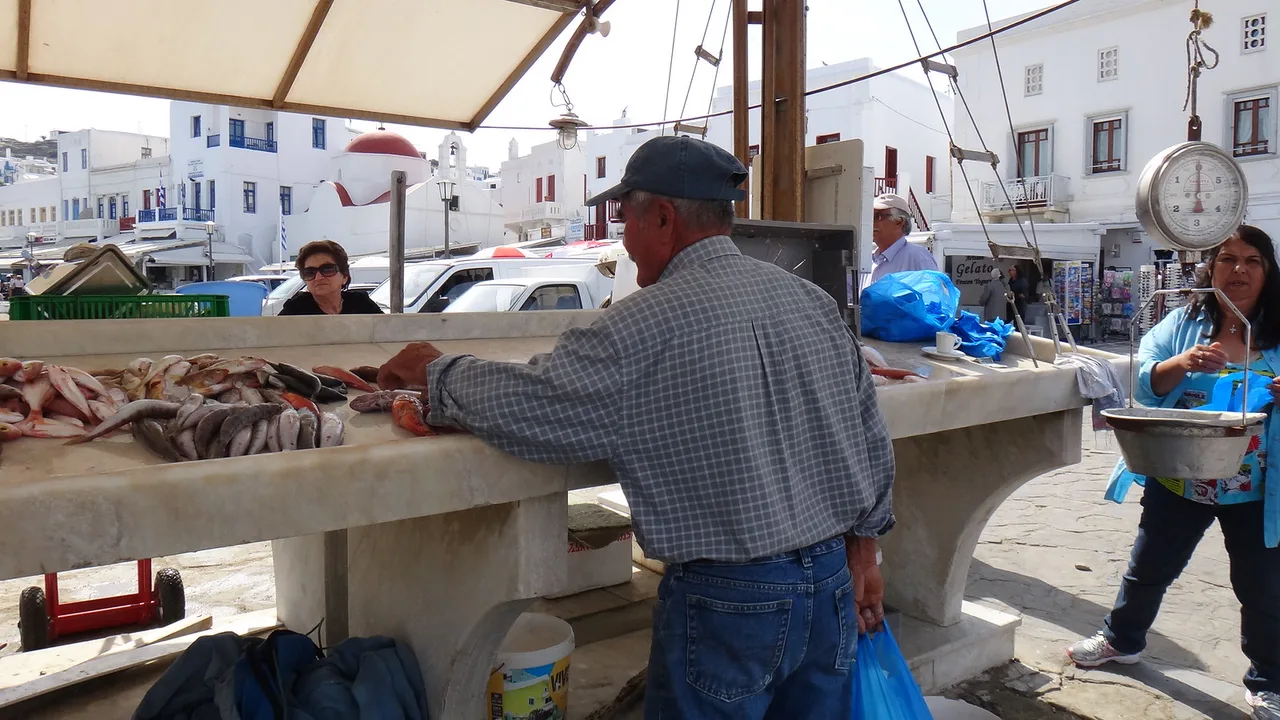
Mykonos Town (Chora): What Eating Around Matogianni Street Costs
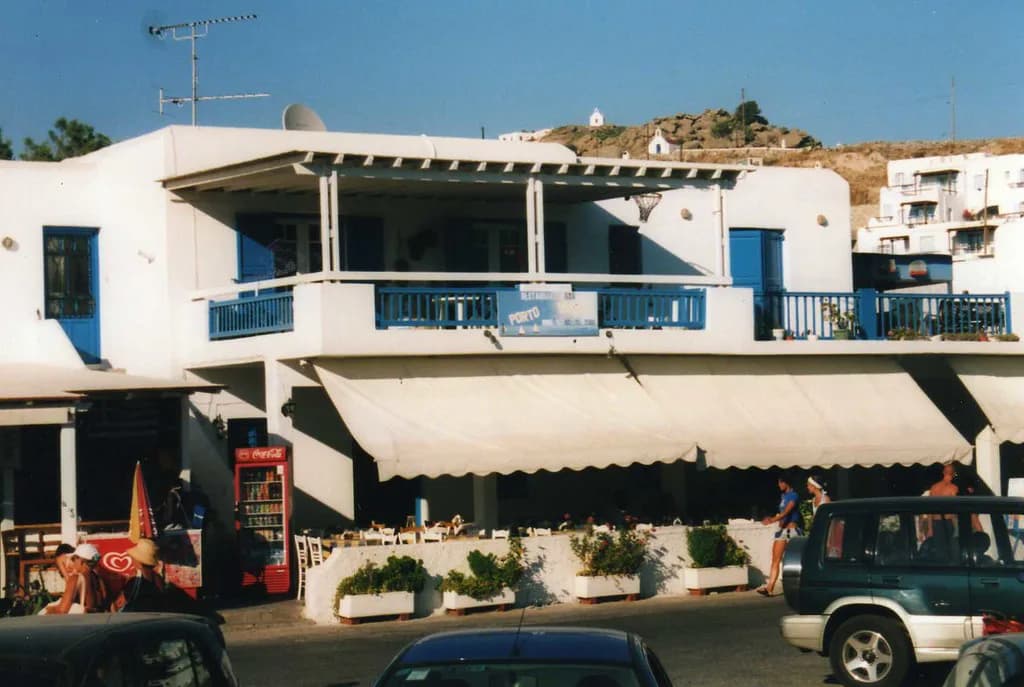
Mykonos Town, called Chora, is a maze of whitewashed lanes built to confuse pirates, and its shops and restaurants line streets such as Matogianni. Because the town is compact, you can walk from the upscale shopping lanes to quieter back streets in minutes. That matters for cost: frontage on a busy lane and a view carry a premium that a lane two rows back usually does not.
For orientation on what to order and where the various town kitchens sit, start with a broader look at places to eat by area and budget rather than picking the first menu you see on a main lane. Souvlaki (grilled meat skewers, often served in pita), moussaka (a baked aubergine and meat dish) and dolmades (stuffed vine leaves) are the reference points for judging whether a menu is priced as everyday food or as a night out.
Restaurants named in published guides to the town include M-Eating, Captain's, Raya Restaurant and D'Angelo Mykonos, all in or around Mykonos Town. Further south, Blue Myth Restaurant and Avli Tou Thodori sit at Platys Gialos on the beachfront. Being named tells you nothing about the final bill, so read the posted menu before sitting down and compare a back-street taverna with a harbour-front one on the same night.
Little Venice and the Windmills: Paying for the Sunset Seat
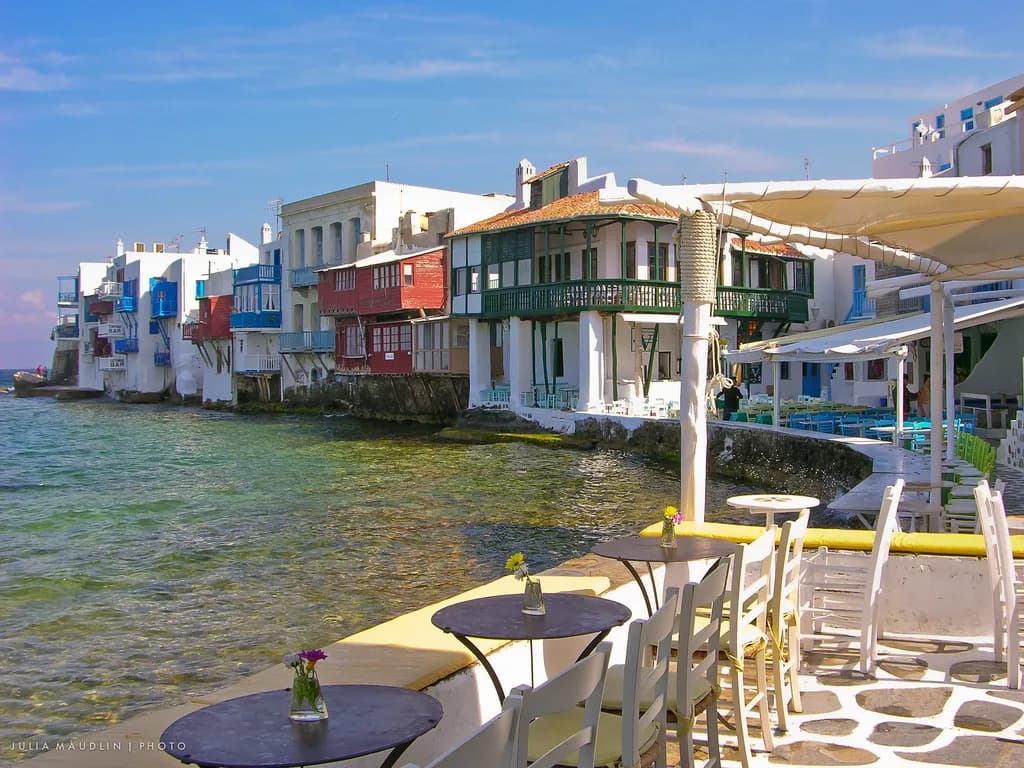
Little Venice is the row of old merchant houses whose balconies hang over the water, and many of them now hold cafes and restaurants. This is where the sunset premium is most visible: you are paying for a seat facing west over the sea at the busiest hour. The trade-off is simple, so book early or accept a table set back from the water, where the same sunset is still visible over someone else's shoulder.
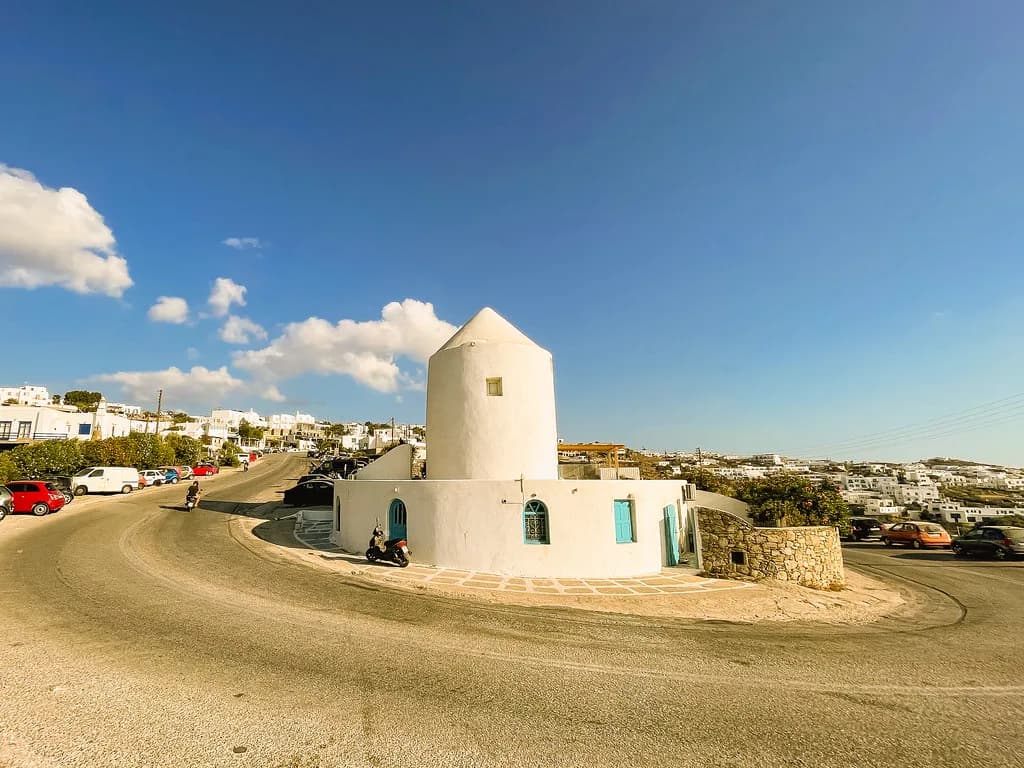
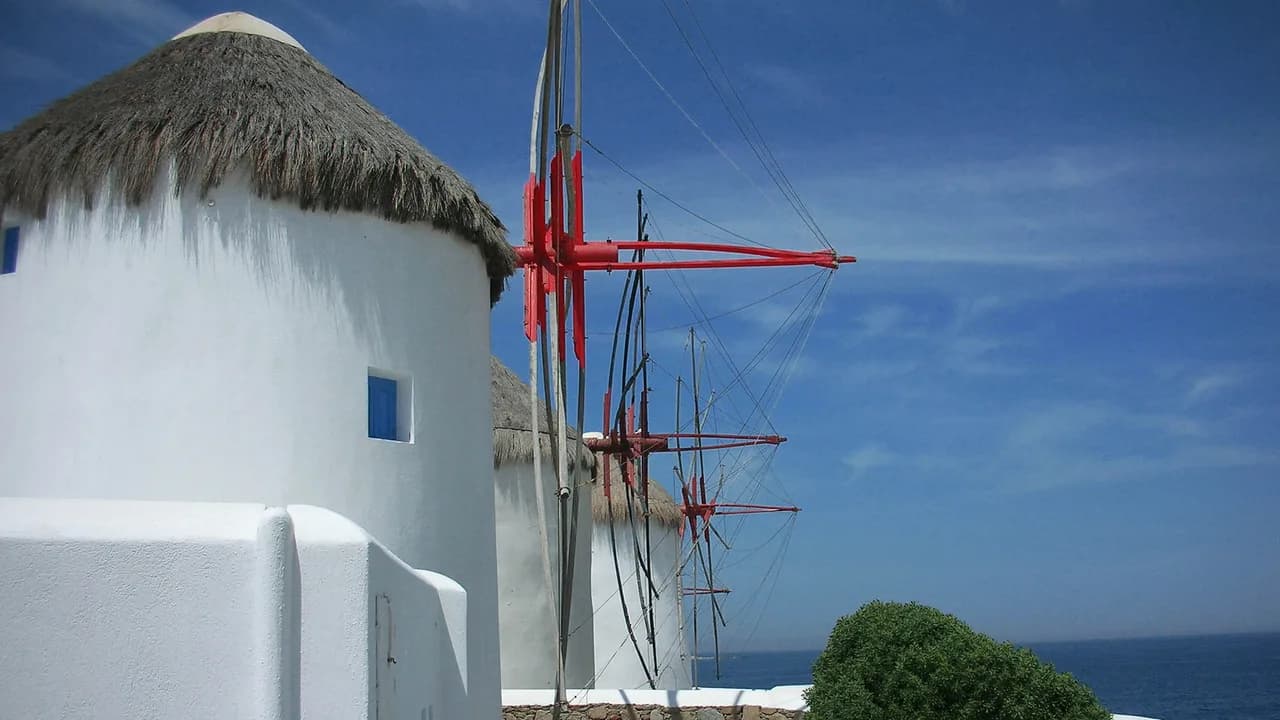
The free version of that view is a few minutes away. The Kato Mili windmills stand on the hill right next to Little Venice, and the hill gives an open view back over the Little Venice houses and out to sea. You can watch the same sunset standing there without ordering anything.
A short walk away, Panagia Paraportiani sits at the entrance to the Kastro neighbourhood, a cluster of five churches built on top of each other and one of the most photographed monuments in Greece. It costs nothing to look at. Pairing it with the windmills and Little Venice makes a free late-afternoon circuit before you decide whether any table is worth the surcharge.
Beach Clubs at Paradise and Super Paradise Versus the Quiet Beaches
Paradise and Super Paradise are Mykonos's party beaches, lined with restaurants and clubs that run from afternoon into the early hours. In June through August the atmosphere shifts considerably compared with the quieter shoulder months. Any beach club that sells music, service and a prime spot on a small strip of sand is pricing all three, so ask what a spot includes before you settle in.
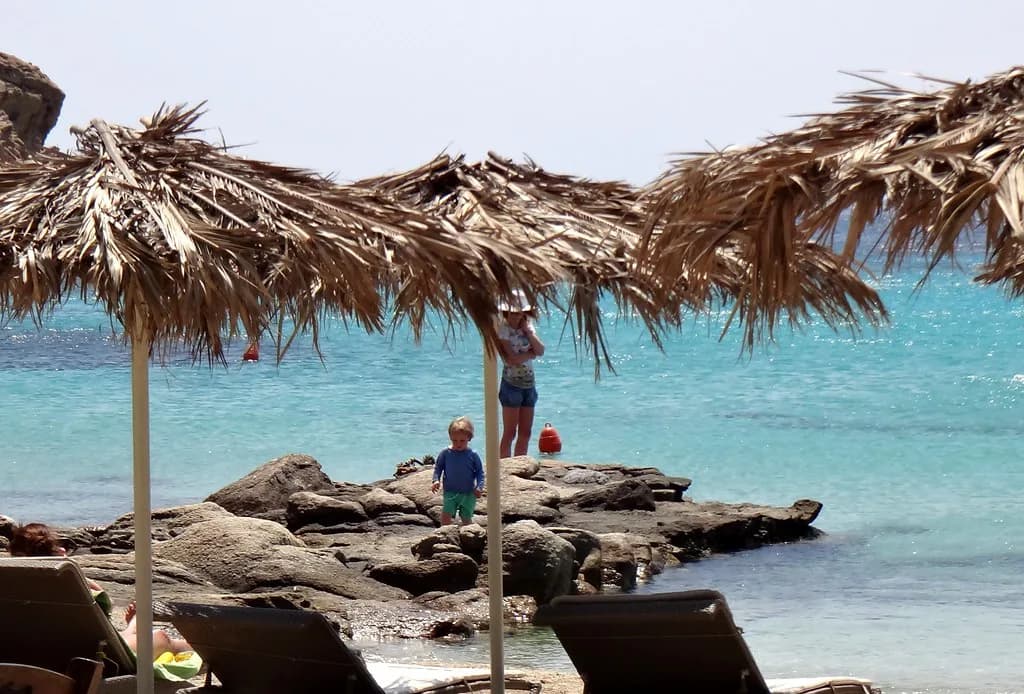
The alternative is the list of quieter beaches: Kapari, Agia Anna, Elia, Fokos, Agrari and Lia. Each has a different access story, and access shapes cost. Kapari is a tiny beach about 15 minutes from Mykonos Town, but the last stretch is a narrow, rough dirt road, so you park at Agios Ioannis and walk the final part or arrive by ATV.
The practical rule is to decide what you are paying for. A beach with a club, a bar and a DJ is selling an afternoon out; a beach reached on foot or over a rough track is selling quiet. Neither is cheaper by default once you add transport, so compare the total for the day rather than the price of one sunbed.
Platys Gialos and Ornos as Bases: Beachfront Clusters and Calmer Bays
Platys Gialos, a small beachfront town on the south coast, holds highly rated restaurants including Blue Myth and Avli Tou Thodori. Staying there rather than in Chora changes the shape of your spending: you are on a beach with a restaurant cluster at the door, and a bus or taxi ride from the town's nightlife. That suits travellers who want the sea first and the town as an excursion.
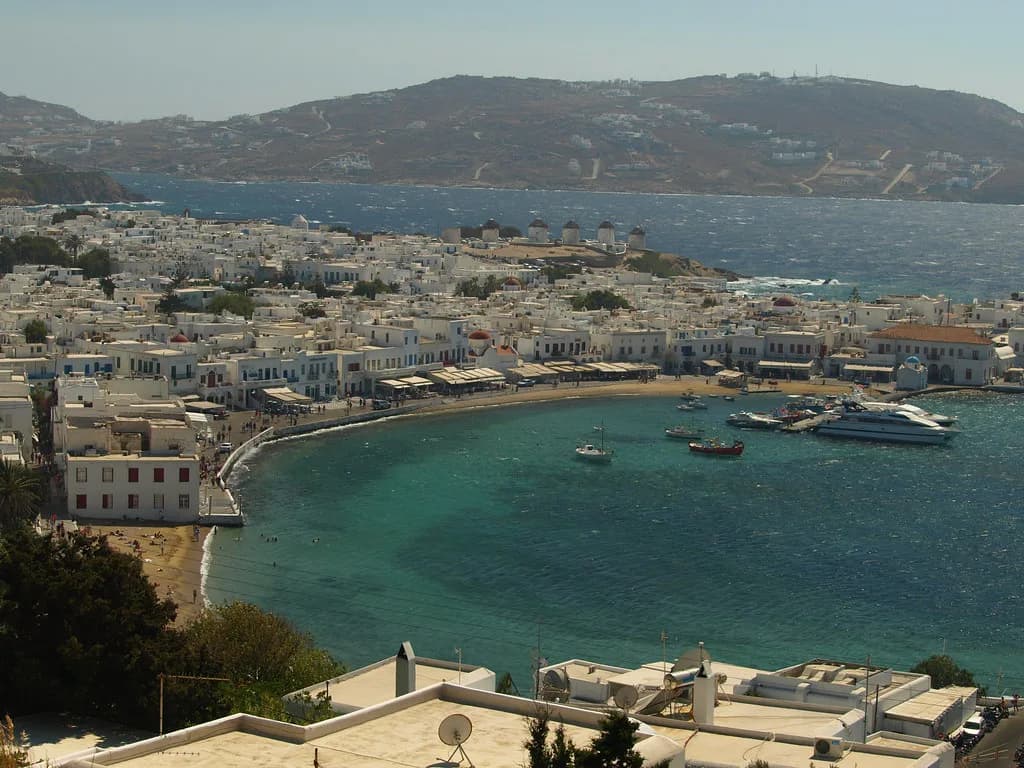
Ornos is the other calm-bay option, and it works as an alternative base to the town centre rather than a place you visit for a single meal. Because the bay is a short ride from Chora, you can sleep and eat in a quieter setting and still reach the windmills, Little Venice and the Old Harbor without paying town-centre rates for everything.
Whichever base you pick, the transfer logic is the same: the closer to Chora, the more you pay for the address and the less you spend on getting around. The further out, the reverse. Work out how many town evenings you actually want before paying for a central location you barely use, and compare the bays side by side before deciding.
Sleeping by Season: Peak Summer Versus May, September and Winter
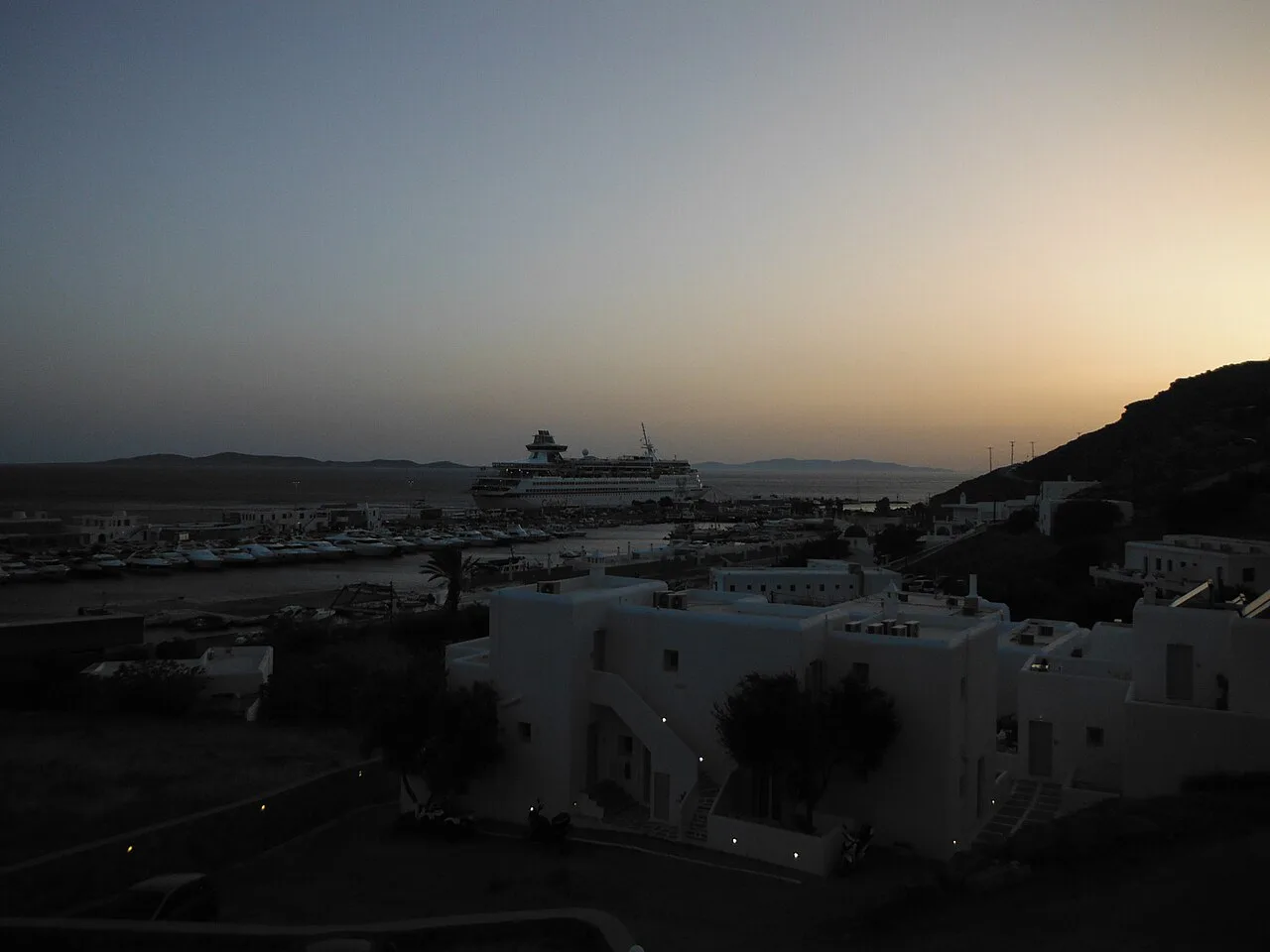
June through August is peak season, with hot weather and the largest crowds, and it is the period when rooms command the most. May and September are described as the best balance of decent weather and thinner crowds. Mid to late April can be relatively crowd-free, though the sea is still chilly for swimming.
Winter changes the equation in a different way. From November through March the weather turns chilly and sometimes wet, and fewer restaurants and hotels stay open. In April the island is just coming out of that slowdown, with restaurants beginning to open and work still under way on hotels. A cheap winter room is only a bargain if what you came for is actually open.
For a first visit built around eating and the main sights, May or September usually gives the best ratio of open kitchens to room rates. Book far ahead for the peak weeks regardless of budget, because the expensive nights are also the ones that sell out.
Getting Around: Ferries, Flights, Cars and Rough Roads
Arriving from Athens by ferry takes roughly 3 to 5 hours depending on the boat. The faster small catamarans are quicker but bumpier, and travellers prone to seasickness are often better off on the larger, slower vessels. Ferries can sell out even in the off-season, so booking ahead is worth the small effort.
Flying is the other option, with daily summer flights from Athens averaging around 25 minutes. On the island you can move by car, bus, taxi, water taxi, ATV, scooter or on foot. Renting a car for a day gives the most freedom, but the roads are potholed and the tracks to some beaches are dirt or narrow rough paving, so factor in time and nerves, not just the rental rate.
For most short trips, walking in Chora plus a bus or taxi for beach days is the cheapest sensible mix, since town parking is limited and driving in the lanes is pointless. If you do rent, inspect the car and confirm the return time in person; published opening hours and actual desk hours do not always match.
Delos as a Fixed Day-Trip Cost
Delos is the uninhabited island about 30 minutes by ferry from Mykonos, a UNESCO World Heritage Site and, in myth, the birthplace of Apollo and Artemis. Because it is a fixed excursion, it is one of the few costs you can plan precisely: the round-trip ferry is quoted at roughly 20 to 25 euros and site entry at about 20 euros, figures that should be confirmed before you travel.
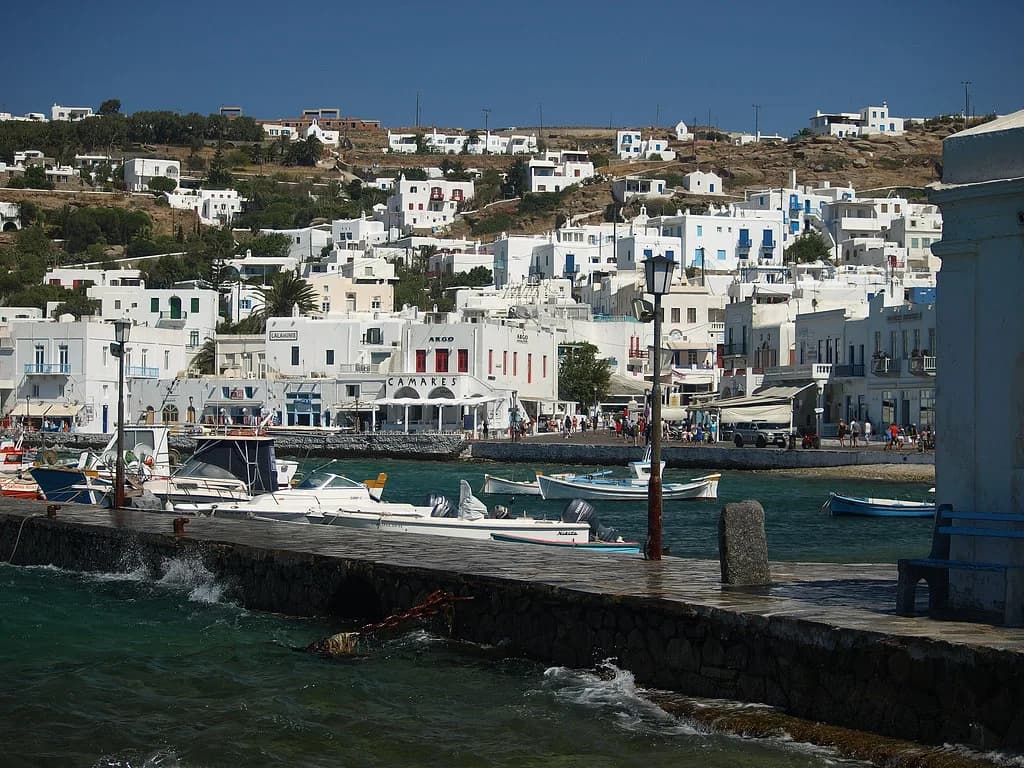
Boats leave from the Old Harbor in Mykonos Town, where a small ticket booth sells crossings, and ferries run roughly hourly from about 9am. A self-guided visit of the ruins takes 90 minutes or longer. A guided tour bundles transport and entry into one price, which costs more than doing it yourself but removes the queueing and timing decisions.
If you have one full day, the choice between Delos and a beach day is really a choice about what you value. The archaeological site is the more distinctive experience and its cost is predictable; a beach day's cost depends entirely on which beach and which club you choose.
Museums as Low-Cost Hours
Mykonos has several small museums that fill an hour or two cheaply: the Archaeological Museum at the Old Port, the Aegean Maritime Museum and Lena's House in the Tria Pigadia area, and the Folklore Museum in the Kastro area of Chora. They are close enough together to combine into one walkable afternoon rather than separate outings.
Published entry figures and hours vary between sources and change with the season, so treat any number you read online, including on aggregator pages, as indicative only and confirm at the door. That is also the honest answer to whether the museums are a cheap option: they generally are, but the exact ticket price should be checked locally rather than budgeted from a blog.
The Archaeological Museum faces the sea at the Old Port and holds finds from the island and the wider Cyclades, including the large ceramic vase known as the Pithos of Mykonos. Its location means you can fold it into a harbour walk before a Delos departure.
Where the Money Actually Goes: Views, Frontage and Nightlife
Of everything on the island, three things reliably raise a bill: a view, frontage and after-dark entertainment. A table at Little Venice, a spot at a Paradise or Super Paradise club, or a night in the town's bars all price the setting as much as the food and drink. Knowing this lets you choose when to pay for it and when to take the free version.
Nightlife is a cost centre in its own right, from sunset cocktails at Little Venice bars to clubs such as Cavo Paradiso and the town's bar scene. None of these prices are published in a way you can plan from, so set a nightly limit before you go out and treat covers, minimum spends and table bookings as questions to ask on arrival.
The flip side is that Mykonos's best-known sights are free: the windmills, the walk through Chora's lanes, Paraportiani church, the Old Harbor and the view from the lighthouse road. A day built around those costs only what you eat.
Practical Ways to Spend Less Without Eating Badly
Eat your main meal at lunch in a back-street taverna and keep dinner simple, or reverse it if you want one big evening. Order the everyday Greek dishes such as souvlaki, moussaka, dolmades and grilled fish sold by weight, and ask for the price of fish by the kilo before it is cooked. Menus posted at the door are the fairest way to compare two places.
Skip the sunset table a few nights and use the windmill hill instead, then spend the saving on one good meal. Choose the quieter beaches for swimming and save the club beaches for a single afternoon. If you want a structured tasting or a guided walk, a food tour or an olive oil tasting spreads the cost across several stops rather than one plate.
For cheaper everyday eating, gyros shops are the reliable fallback, and a cooking class can replace a restaurant meal while teaching you the dishes. Neither will be the cheapest hour of your trip, but both give something back beyond the calories.
A Realistic Daily Spend by Style of Trip
A budget-minded day looks like this: a room outside Chora booked for May or September, breakfast from a bakery, a morning on a free or cheap beach, lunch in a back-street taverna, the windmills at sunset and a gyros for dinner. The fixed cost is the room; everything else is small and elastic, and the day costs a fraction of one club afternoon.
A mid-range day swaps the bakery for brunch, takes one paid excursion such as Delos, and books a table with a view once. A splurge day is built around a beach club, a fine dining booking and a late bar. The three itineraries use the same island; the difference is how many premiums you say yes to.
Because almost none of these individual prices are published in a stable, citable form, build your daily figure from your own bookings and menus rather than from any article. Use the island's free sights as the anchor of each day and let the paid extras fit around them.
What to Check Before You Book
Confirm three things before committing money: that your hotel is open for your dates, that the restaurants you most want are open too, and what your chosen beach or club includes. Mykonos winds down from November to March, and shoulder-season opening is patchy. Ask by email, not just from a booking site's calendar.
Check ferry times and book ahead if you are using the faster catamarans, and decide in advance whether Delos will be self-guided or a bundled tour so you only pay for transport once. For the wider island picture, the full guide to things to do in Mykonos covers the sights and how they fit together across a short stay.
Plan Your Visit
Mykonos is expensive mainly where you choose to sit, sleep and be seen. The windmills, the lanes of Chora, Paraportiani church and the Old Harbor cost nothing, and the quiet beaches cost only the transport to reach them. Budget around the free sights and pay the premium deliberately, once or twice, rather than by default every day.
Fix the season first, with May or September over peak summer, then the base, then the one or two paid experiences that matter. That sequence controls more of the bill than any individual menu choice, and it leaves room in the budget for the meals you actually came for.
Explore more Mykonos sauna guides
Frequently Asked Questions
Is Mykonos expensive compared with other Greek islands?
Generally yes. The premium comes from a few specific things: waterfront tables at Little Venice, beach clubs at Paradise and Super Paradise, rooms in July and August, and nightlife in Mykonos Town. Sights such as the Kato Mili windmills, the lanes of Chora and Panagia Paraportiani are free, and quieter beaches keep costs closer to the rest of Greece.
What is the cheapest way to see the famous Mykonos sunset?
Watch it from the Kato Mili windmill hill next to Little Venice, which costs nothing and gives an open view over the water and the town. Tables at Little Venice charge for the setting; if you want one, book ahead or accept a table set back from the water and still see the sunset.
How much does the Delos day trip cost?
Ferry and site entry are sold separately, so check the current round-trip fare with the boat operator and the archaeological site entry price on the official ticketing pages before you travel. Crossings take about 30 minutes and leave from the Old Harbor. A guided tour bundles transport and entry into one price, which is simpler than arranging both yourself.
When is the cheapest time to visit Mykonos?
May and September offer a better balance of open restaurants, decent weather and thinner crowds than June to August. Mid to late April can be quiet and cheaper, though the sea is still chilly. From November through March many restaurants and hotels close and the weather turns wet and cold, so savings only pay off if what you want is open.
Do I need to book restaurants and beach clubs in advance?
In the busy summer months, reserve dinner in advance, especially for any table with a view or at a well-known town restaurant. For beach clubs, ask what a spot includes, whether there is a minimum spend and whether booking is required for the date you want, since these policies vary by venue and season.
Are Mykonos museums a cheap way to spend an afternoon?
The Archaeological Museum, Aegean Maritime Museum, Folklore Museum and Lena's House are small and close together in Chora, so they make an inexpensive walkable afternoon. Published ticket prices and opening hours vary between sources, so confirm the figures at the door rather than budgeting from a listing.
How do I get around Mykonos without spending much?
Walk inside Mykonos Town, where the lanes are a pedestrian maze and parking is limited, and use buses or taxis for beach days. Rent a car only if you plan a full day of exploring, and expect potholed roads and rough dirt tracks to some beaches. For Delos, book the ferry at the Old Harbor booth or take a tour that includes transport.
Sources
Notes for eating well in Greece
Optional updates to our guides.
You might also like
Continue reading
More guides you'll find useful