Best Gyros in Mykonos: Where to Eat and What to Order
Use this guide to order gyros in Mykonos with confidence, from pita sandwiches to platters, and find named shops in Mykonos Town and Ano Mera.
On this page
Mykonos has a reputation for high prices, and that reputation is largely deserved along the waterfront. The counter-service gyro shop is the exception, which is why a cheap, fast lunch matters so much here: it buys back budget for the rest of the day. Gyros is also the easiest Greek food to order badly if you do not know the vocabulary, so this guide starts with the words on the menu board.
The named places below cluster in Mykonos Town and in Ano Mera, the village in the island's interior. Distances are short but the town is a deliberate maze, so allow more walking time than the map suggests. Where a shop's hours or seasonal closure is not confirmed, the sensible approach is to call or check before you build a meal around it.
What Gyros Actually Is, and How It Differs from Souvlaki
Gyros means the meat itself: pork or chicken stacked on a vertical rotisserie and shaved off as it turns. A pita gyros is that meat wrapped in a warm flatbread with tomato, onion, fried potatoes and tzatziki, the thick yoghurt dip with cucumber and garlic. Order it as a sandwich and it arrives wrapped in paper, eaten standing or on a bench.
Souvlaki is skewered meat, usually pork or chicken, grilled rather than shaved. Kalamaki is the same thing under a different name, so do not read the two as separate dishes. A pita souvlaki swaps the rotisserie meat for skewers inside the same wrap, and the choice between the two is mostly about whether you want carved meat or grilled cubes.
Tzatziki appears across the menu, and so do tyropita, a cheese pie in filo, and horiatiki, the Greek salad of tomato, cucumber, onion, olives and feta with no lettuce. These are useful to know because a gyro shop often sells them alongside the wraps. For a wider survey of the island's dishes, the guide to what to eat in Mykonos is a natural next stop.
How Mykonos Prices and Portions Compare
Island pricing in Mykonos runs above what you would pay for the same wrap in Athens, and the gap widens near the Old Port and Little Venice. The trade-off is simple: a counter-service pita costs a fraction of a seated dinner, and it takes minutes rather than an evening. Travellers who want one proper taverna meal a day often eat gyros for lunch to make that possible. The same budgeting logic applies elsewhere in Greece, as the guide to the best gyros in Chania shows.
Portions are not dainty. One pita gyros is a light lunch for most adults and a full meal for some, while a merida, the platter version, is designed to be shared or to satisfy a serious appetite. Menus on Mykonos do not always publish prices online, so read the board at the counter before ordering; nothing here quotes figures because the named shops have not published current ones.
Mykonos Town (Chora): The Densest Gyro Territory
Chora, as the main town is called, packs most of the island's casual eating into a small area of whitewashed lanes. Matogianni Street is the shopping spine and the most reliable landmark for orienting yourself before hunting for food. Walk it once without choosing, note what is open, then commit; the lanes repeat themselves and it is easy to circle the same corner twice.
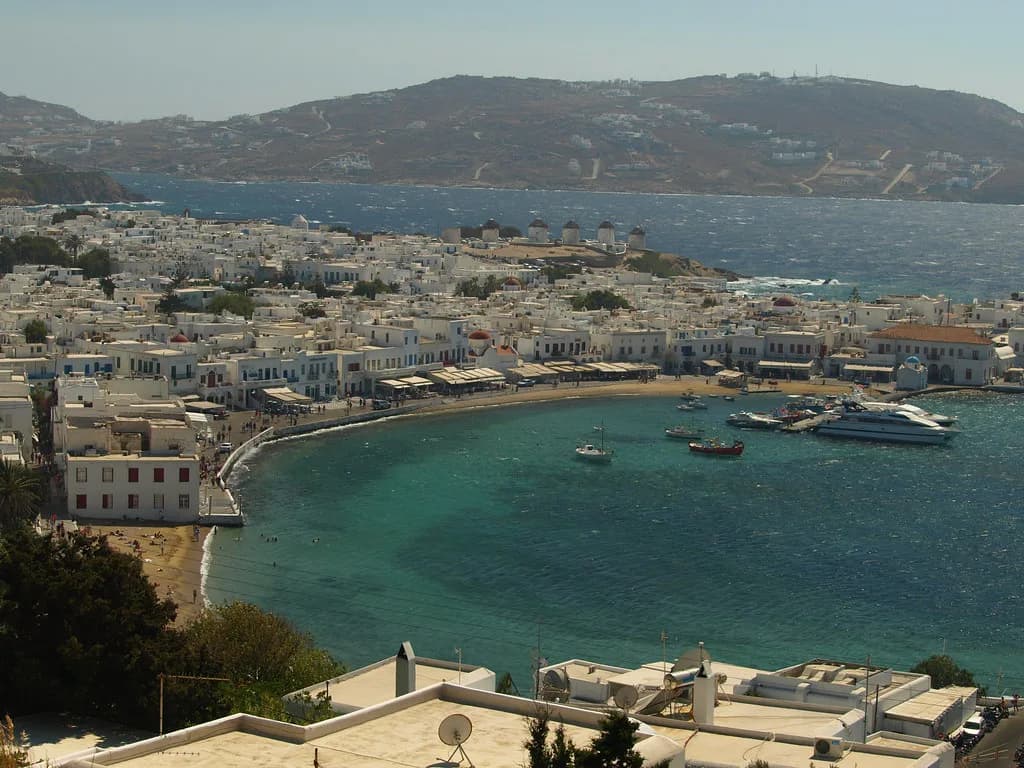
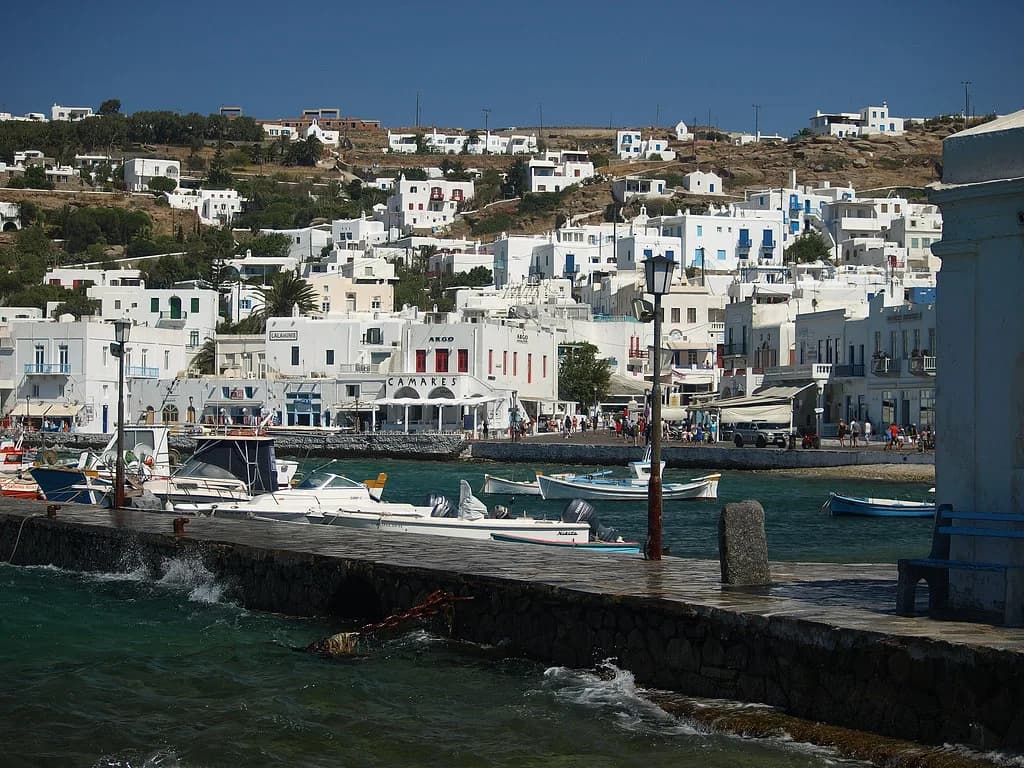
The Old Port sits just around the corner from Little Venice, with restaurants along the waterfront, a small church at the dock entrance and boats bobbing in the water. It is also where the Delos day trips leave, so a gyro before or after the ferry is a practical fit. The wider things to do guide covers the harbour walk if you want to pair lunch with sightseeing.
Jimmy's Gyros in Mykonos Town is the name that comes up most often in traveller discussion of casual gyros on the island. Treat that as a lead rather than a verdict: what people praise is the format, a quick wrapped gyro in the town centre, not a refined dining experience. Go early or late within the lunch window to avoid the queue, and expect to eat standing or take away rather than linger.
Kalammmakia Grill House in Ano Mera: The Village Option
Ano Mera sits inland from the south-coast beaches and offers a quieter, more residential setting than the town. Kalammmakia Grill House is a grill house there rather than a town-centre counter, which changes the rhythm: you sit, you order at the table and you eat a proper plate rather than a wrap on the move. That makes it a better fit for a slow lunch than for a five-minute stop.
A pork gyro platter at a grill house of this kind typically means the shaved meat served with pita, tomato, onion, tzatziki and fried potatoes, arranged on a plate rather than rolled. It is the order to choose when you want to sit down, share, and try the components separately. If you are staying near the beaches, pairing the village stop with a wander through Ano Mera's lanes makes more sense than detouring back into town.
Extreme Gyros: Search Interest Is Not a Recommendation
Extreme Gyros appears in related searches for gyros on Mykonos, but no address, menu or opening information is confirmed here. That is not a reason to dismiss it; it is a reason to check current details before you walk there. Search interest tells you the name is circulating, nothing more, and a name that circulates can just as easily be a queue as a bargain. Look up the address and hours yourself before setting out.
Before you commit, check the location on a map, confirm the current menu board at the counter rather than an old photo online, and look at recent reviews for whether it is actually open. If it turns out to be inconvenient, fall back to the town cluster, where several options sit within a few minutes of each other. This is one of the two places in this guide where checking current details before you travel is genuinely worth the effort.
Pita Sandwich or Platter: Choosing by Occasion
The pita sandwich wins for lunch on a sightseeing day: it is fast, portable and lets you keep moving between the windmills and the harbour. The platter wins when you want to sit down, order a drink and turn the meal into an hour rather than a pit stop. A useful rule is sandwich at midday, platter in the evening when the light and the pace slow down.
There is also a comfort trade-off. Counter shops have little seating, noise, and a queue that builds sharply at conventional lunch time. Grill houses and tavernas cost more and take longer but give you a table, a waiter and room to linger. Neither is objectively better; decide which one your afternoon can absorb before you set out.
If you would rather eat a late, slow breakfast and skip the lunch rush entirely, the brunch in Mykonos guide covers the alternatives. Gyros is a lunch and late-night food by tradition, and shops are busiest when the town is busiest.
Harbour View or Back Street: What You Are Paying For
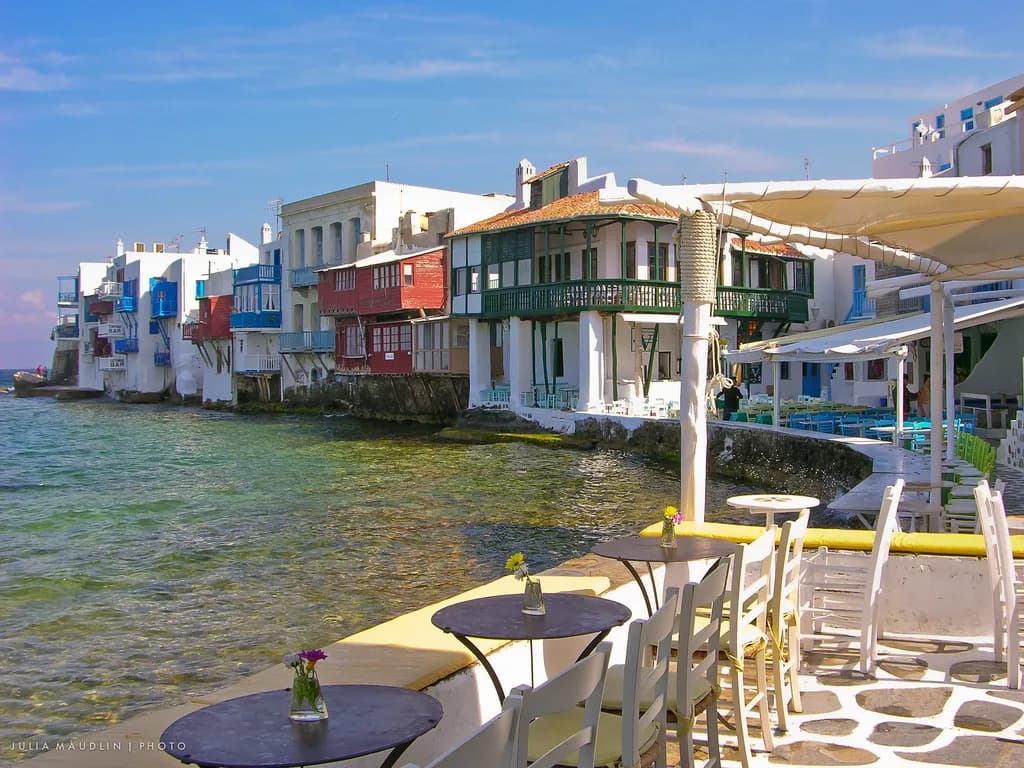
Little Venice is a row of former fishing houses with balconies over the water, now partly converted into cafes and restaurants, and it is where the view premium is most obvious. Tables facing the sunset cost more than a plain counter in a back lane, and you are paying for the setting rather than the cooking. The best restaurants in mykonos guide sorts the sit-down options if that is the meal you are planning.
For gyros specifically, the back streets usually win on value. A counter a few lanes inland serves the same wrap without the waterfront rent, and the walk between them is only minutes. The one exception is timing: a harbour-side table at sunset is worth the premium once, if you book it as an occasion rather than a habit.
Seasonality: Planning Around the Winter Months
From November through March the island goes quiet, with chilly, sometimes wet weather and fewer restaurants and hotels open for business. Mid to late April is still relatively crowd-free, though restaurants are only just beginning to open and hotels are still being prepared. That pattern matters for gyro hunting: a place you saw recommended may simply not be trading yet.
Practically, that means checking whether a specific shop is open before making it the centrepiece of a day, and keeping a second option in reserve. Mykonos Town is the safest bet in the shoulder months because it has the largest concentration of year-round businesses. This is the second point in the guide where a quick check of current details is worth doing.
Timing Your Meal: Greek Lunch and Dinner Rhythm
Greeks tend to eat lunch later than northern Europeans and dinner considerably later, so a gyro counter that looks deserted at noon may be heaving by two. Arriving early in the lunch window means shorter queues and fresher bread. Arriving at conventional meal times means waiting, especially in high season when the town fills with day visitors.
If your afternoon includes a ferry to Delos, the boat timings shape everything else. Ferries run roughly hourly from about nine in the morning and the crossing takes around half an hour, so a quick gyro before departure is the only realistic sit-down-free option. Book ferry tickets in advance in season, and treat lunch as something to fit around the sailing rather than the other way round.
A Walkable Cluster: Windmills, Little Venice and the Old Port
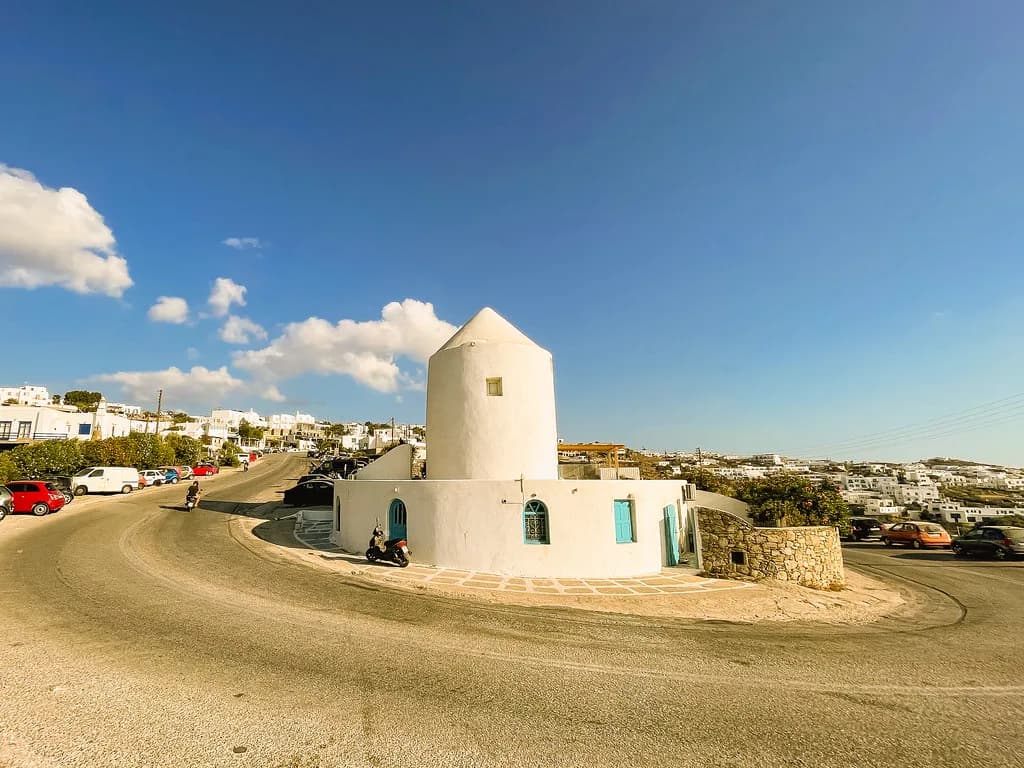
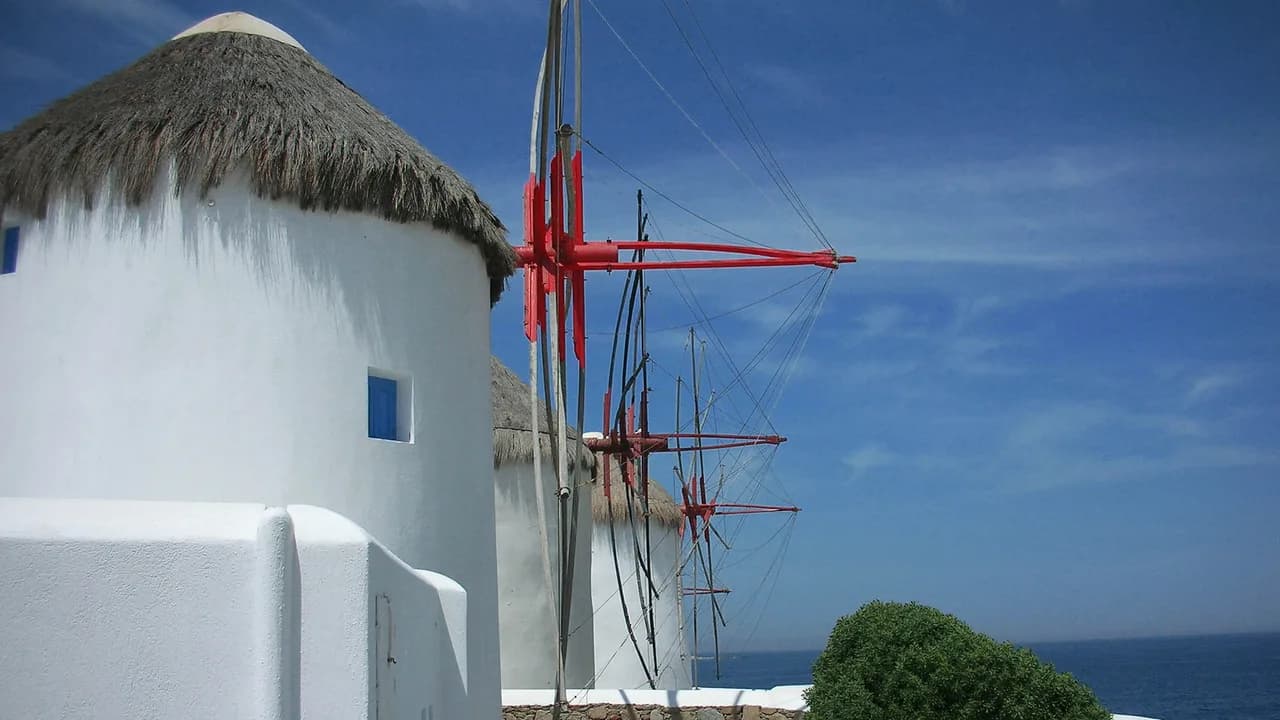
The Kato Mili windmills stand right next to Little Venice and give you a view back over the water and the town. They are the obvious first stop on a short walking loop, followed by the harbour and then a gyro in the lanes behind it. The whole circuit is compact enough to walk between stops rather than take a vehicle.
Wear shoes that cope with uneven, polished paving, and expect the lanes to be crowded when cruise ships are in port. Timing the walk for early morning or late afternoon makes the loop far more enjoyable and puts you near the counter shops at the right hour. The Mykonos Attractions: 8 Visitor Guides hub is the place to branch out if you want to add sights beyond this cluster.
Ordering Glossary for the Counter
Learn six words and the menu board stops being a puzzle. Gyros is the shaved rotisserie meat, souvlaki and kalamaki are skewers, pita is the flatbread wrap, merida means a platter portion, tzatziki is the yoghurt dip, tyropita is a filo cheese pie and horiatiki is the Greek salad. Ask for a pita gyros with everything and you will get the full assembly by default.
Useful add-ons are ap'ola, meaning with everything, and me patates for extra fried potatoes inside the wrap. If you want the meat without the bread, ask for a merida and it arrives on a plate. Pointing at what the person ahead of you ordered is a perfectly acceptable strategy, and nobody at the counter will mind.
Plan Your Gyros Day
The workable plan on Mykonos is to keep lunch cheap and fast so the rest of the day stays flexible. Eat a pita in Mykonos Town near the Old Port, walk the windmills and Little Venice while you are there, and save the sit-down platter for an evening when you have booked a table. If you are staying near the beaches, Ano Mera's grill houses give you a village alternative to the town crowds.
Beyond gyros, the island's restaurant scene ranges from harbour-front dining to inland tavernas, and the best restaurants in mykonos guide covers the sit-down end of it. Wherever you go, confirm the shop is open and check the counter prices before ordering, since published information goes out of date quickly on a seasonal island.
Explore more Mykonos sauna guides
Frequently Asked Questions
Does Mykonos have gyros?
Yes. Gyros is standard casual food on the island, sold in Mykonos Town around the lanes near Matogianni Street and the Old Port, and at grill houses inland such as Ano Mera. Expect both counter-service wraps and sit-down platters.
What is the difference between gyros and souvlaki?
Gyros is meat shaved from a vertical rotisserie and wrapped in pita with tomato, onion, fried potatoes and tzatziki. Souvlaki, also called kalamaki, is skewered meat grilled over heat. Both come as a pita sandwich or as a platter.
How much does gyros cost in Mykonos?
Prices are not published consistently online and vary by area, with waterfront locations charging more than back-street counters. Read the menu board at the shop before ordering rather than relying on older listings, and treat any figure you see quoted as indicative only.
Where can I get cheap gyros in Mykonos Town?
The lanes behind the Old Port and away from the Little Venice waterfront generally offer better value than tables with a sea view. Jimmy's Gyros in Mykonos Town is the most frequently discussed counter option; check that it is open before you walk over.
Are gyro shops in Mykonos open in winter?
Many restaurants and hotels close from November through March, and April is still a shoulder month when businesses are only beginning to reopen. Some town-centre places stay open, but confirm the specific shop before making it your plan.
Is it better to order a pita gyros or a platter?
Choose the pita for a fast, portable lunch between sights, and the platter when you want a table, a drink and a slower meal. The platter is larger and designed for sitting down, so it suits evening better than a midday stop.
Sources
Notes for eating well in Greece
Optional updates to our guides.
You might also like
Continue reading
More guides you'll find useful