Things to Do in Nafplio: Which Fortress, Walks & Beaches
Plan days in Nafplio with Palamidi, Bourtzi, old town lanes, the Arvanitia promenade and nearby beaches, plus how to reach each and when to go.
On this page
Nafplio was the first capital of modern Greece, and its old town still reads that way: marble-paved squares, Venetian and neoclassical facades, and fortifications layered on the hills above and the islet below. It sits on the Argolic Gulf in the Peloponnese, roughly two and a half hours by car from Athens according to one visitor account, which makes it a realistic base for several days rather than a quick photo stop.
The useful thing about the town is its scale. You can wander the lanes, climb or drive to a fortress, walk a coastal promenade to a beach and be back for dinner without a car, though having one widens your options for beaches and day trips. Everything below is framed as a choice, because most visitors face the same ones: steps or a taxi, harbour view or back street, sand or pebbles.
Why Nafplio Works as a Base
Nafplio compresses a lot into a small area: a compact old town ringed by three Venetian fortresses, a harbour with a fortified islet in the middle of it, and beaches within walking or short driving distance. One family travel account describes the old town as having the feel of an island town, built on a hilly peninsula and topped by a castle, with tavernas and shops around every corner.
That density is also why the town divides opinion on crowds. A blogger who visited in mid-May noted tourists but no crush, and recommended spring (April to June) or early autumn (September to October) over July and August, when the heat in the Argolis region is at its worst. If you come in high summer, plan fortress climbs and long walks for the morning and save the water for the afternoon.
Two or three days covers the town itself comfortably and leaves room for at least one day trip. Because the archaeological sites around Nafplio sit within roughly 20 to 40 minutes' drive, you can sequence fortresses, beach time and excursions without much backtracking. For background on how the town came to look this way, the story runs from Frankish and Venetian building through the Greek War of Independence.
Orientation: Syntagma Square, the Port and Psaromahalas
Start at Syntagma Square, the marble-paved platia at the heart of the old town, surrounded by historic buildings, cafes and the Archaeological Museum. It is described as one of the best-preserved nineteenth-century squares in Greece, and the streets feeding into it are closed to cars and given over to strolling, jewellery shops, bakeries and bars. Use it as your mental compass: most old town addresses are a few minutes from it.
From the square it is a short walk down to the port and the Bouboulinas waterfront, where cafe-bars alternate with fish tavernas and the parking for the old town sits along the water. This strip is where people gather at sunset, with vendors selling hot nuts and roast corn in season. The trade-off is plain: waterfront tables buy you the Bourtzi view, while back-street tavernas in the old town generally feel quieter and less performative.
Below Acronafplia lies Psaromahalas, the old fisherman's district, where the streets are small and steep and some are actually stairways rather than roads. It is the part of town that most rewards wandering without a goal. Expect the main pedestrian streets to be dominated by higher-end shops, with the more distinctive craft and instrument workshops tucked into the side lanes.
Palamidi Fortress: Steps, Taxi or Car
Palamidi sits on the hill above town and is actually three separate fortresses walled together, built by the Venetians in the early eighteenth century and taken by the Ottomans the following year. The famous approach is the stepped path from town, commonly quoted as 999 steps, though the sources themselves note the count is disputed. Treat the number as folklore and the climb as real: it is steep, exposed and best done early.
The alternative is to take a taxi or drive to the top and walk down, which one family did and recommended for the views over the town, the Argolic Gulf and the Mycenaean plain. Another visitor suggests timing the visit for the morning or near sunset, when the light is better and the heat is less punishing. Whichever direction you go, the fortress is open from 8:00 to 19:00.
Budget for the heat rather than the distance. The climb costs you time and water more than money, and in midsummer the exposed stone radiates heat by mid-morning. Carrying a refillable bottle and starting before the town fully wakes up is the difference between a memorable climb and a grim one.
Bourtzi: The Fortified Islet in the Harbour
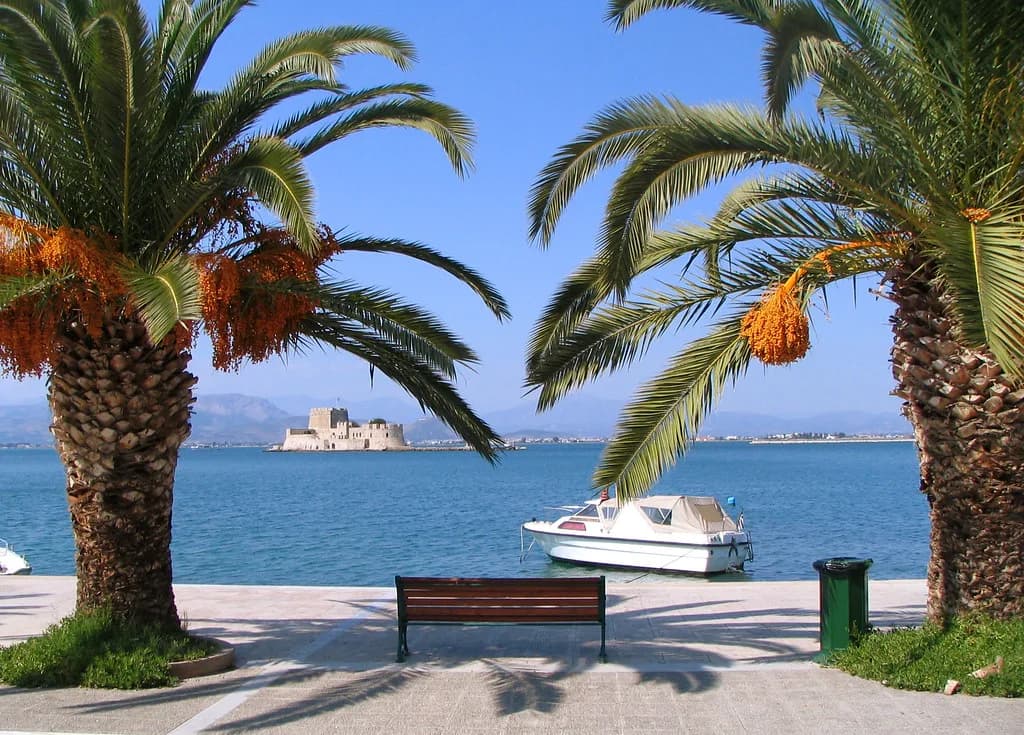
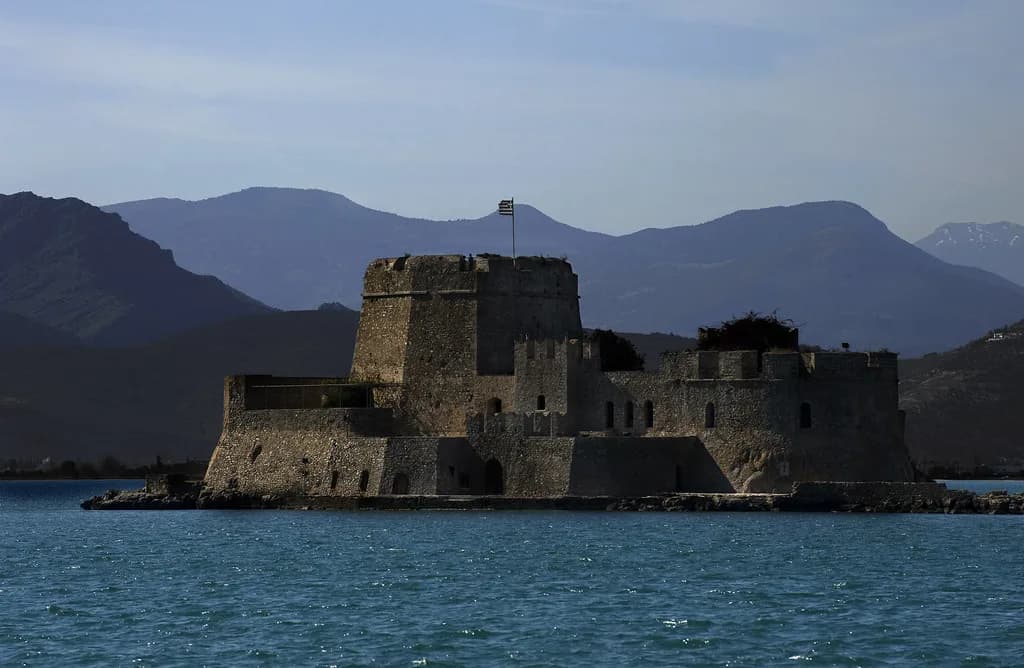
Bourtzi is the small Venetian fortress on the islet of Agioi Theodoroi in the middle of the harbour, and it is the image most associated with Nafplio. One account dates its construction to 1473, when it guarded the harbour entrance against pirates; in the nineteenth century it housed the executioners of the Palamidi prison, who were kept offshore because it was considered bad luck to have them living in town.
Access is by small boat from the harbour, but treat the crossing as weather-dependent. One visitor skipped the visit entirely because wind had made the sea rough, and a longer-standing account notes the islet has served at times as a prison, a hotel and a music venue and advises checking whether it is currently open. In practice, the reliable pleasure is the view from the quay, which costs nothing and never closes.
For photography, the islet is best from the waterfront near the old town or from the Acronafplia side, where the angle frames it against the gulf. Sunset tables along Bouboulinas put it directly in front of you, which is the main reason to pay the view premium on the harbour rather than eat a back street.
Acronafplia and the Sunset View
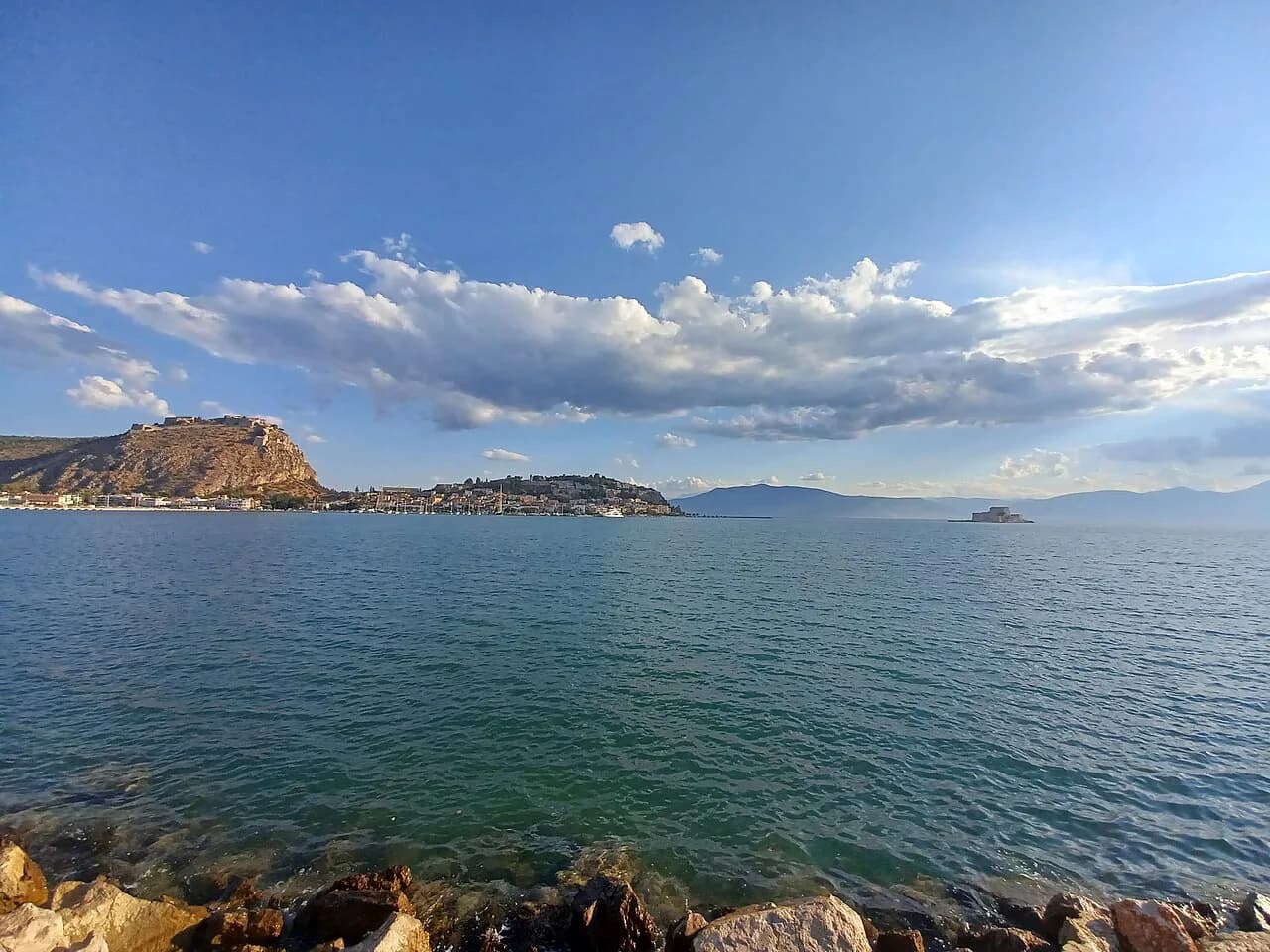
Acronafplia is the rocky peninsula and second-largest hill in town, and it was the original settlement long before the Venetians and Franks arrived in the thirteenth century. You can walk up on a main path from the old town, follow a small path from the port around the hill, or use the lift from the small square below the hotel on top, which runs through a long cave. The top now holds a couple of twentieth-century hotels, one of them abandoned.
The case for going late is the light. One account calls sunset the best time for photos from Acronafplia and notes the sweeping views over the town, harbour and coast. From the top you can follow the stone streets through the castle and walk back down to the rebuilt old city gate, which turns a viewpoint stop into a proper loop rather than an out-and-back.
Arvanitia Promenade and Beach
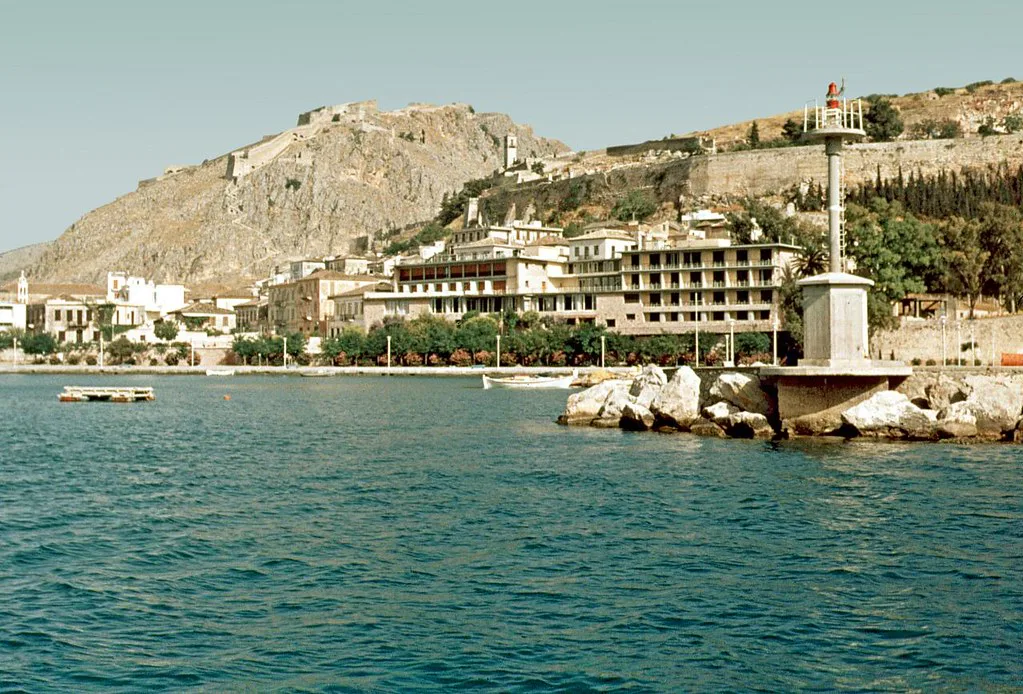
The Arvanitia Promenade is the most popular walk in town, running from the cafes at the port around the rocky base of Acronafplia to Arvanitia beach. One family describes it as the thing to do as the sun goes down, with the sea on one side and pine and cactus on the other, and steps near the lighthouse leading up to a chapel where a secret school was once held. It is short enough to do after dinner and scenic enough to justify doing it twice.
Arvanitia itself is a pebble beach reached through a short pine-lined path at the south end of town, so bring shoes you can swim in rather than expecting sand. In season there are sun loungers, umbrellas, a cafe, toilets and changing rooms; out of season it remains a good walk. The geography matters here, because the peninsula separates the harbour from the swimming water, which is why the town beach is cleaner than its location suggests.
Beyond Arvanitia, a coastal path continues toward Karathona. One family estimates the walk at around 45 minutes from the beach, or less if you keep a brisk pace. That makes it a half-day outing on foot rather than a quick dip, and a good reason to carry water and plan the return before the afternoon heat builds.
Karathona and Tolo Beaches
Karathona is the long sandy stretch where many locals go, a few kilometres east of town, with trees for shade and a fish taverna at hand. There is also a small church at one end. It suits a lazy afternoon: sand rather than pebbles, room to spread out, and the option of walking there along the coast if you have the legs for it.
Tolo is a further short drive along the coast, a town with a very long sandy beach and plenty of hotels, bars and restaurants, served by buses from the station roughly every half hour during the day with taxis after that. It is the better pick if you want water sports, cafes and a shallow entry for children. One family paid about 8 euros for two loungers and an umbrella at Karathona and quoted roughly 15 euros for a taxi to Tolo; these are single-source figures, so treat them as a rough sense of scale rather than a fixed rate.
Buses to Tolo run from the station every half hour from 7am to 7pm according to one account, then require a taxi; the trip takes around 20 minutes. If you are staying in Nafplio without a car, that schedule effectively sets your beach day. Staying in Tolo or another coastal town instead trades the old town atmosphere for easier morning swims.
The Old Town on Foot
The old town is best done without a plan. Start at Syntagma Square, wander the cobbled lanes and pedestrianised streets, and look up at the balconies and bougainvillea on the neoclassical buildings. Two former mosques and the building that housed the first Greek parliament are among the historic structures in the lanes; the church of Agios Spiridon is where Greece's first governor, Ioannis Kapodistrias, was assassinated in 1831, and the first shot is said to remain lodged in the wall.
Nafplio has several museums, including the Archaeological Museum in one of the well-preserved Venetian buildings, the War Museum and the Folklore Museum. The Archaeological collection includes ancient artefacts, toys and jewellery. These are the obvious wet-weather or too-windy-to-swim options, and they sit close enough together near the park to combine two in an afternoon.
Shopping is part of the walk rather than a separate outing. The town is known for komboloyia, the circular strings of beads used as worry beads, and for handmade leather sandals and bags sold in small workshops. An older account notes that the main streets have been taken over by higher-end businesses, so the more individual craft shops are in the side lanes.
For a slower version of the same walk, the smaller churches and chapels scattered through the old town make a good thread to follow between squares and shops.
Food Stops That Fit the Day
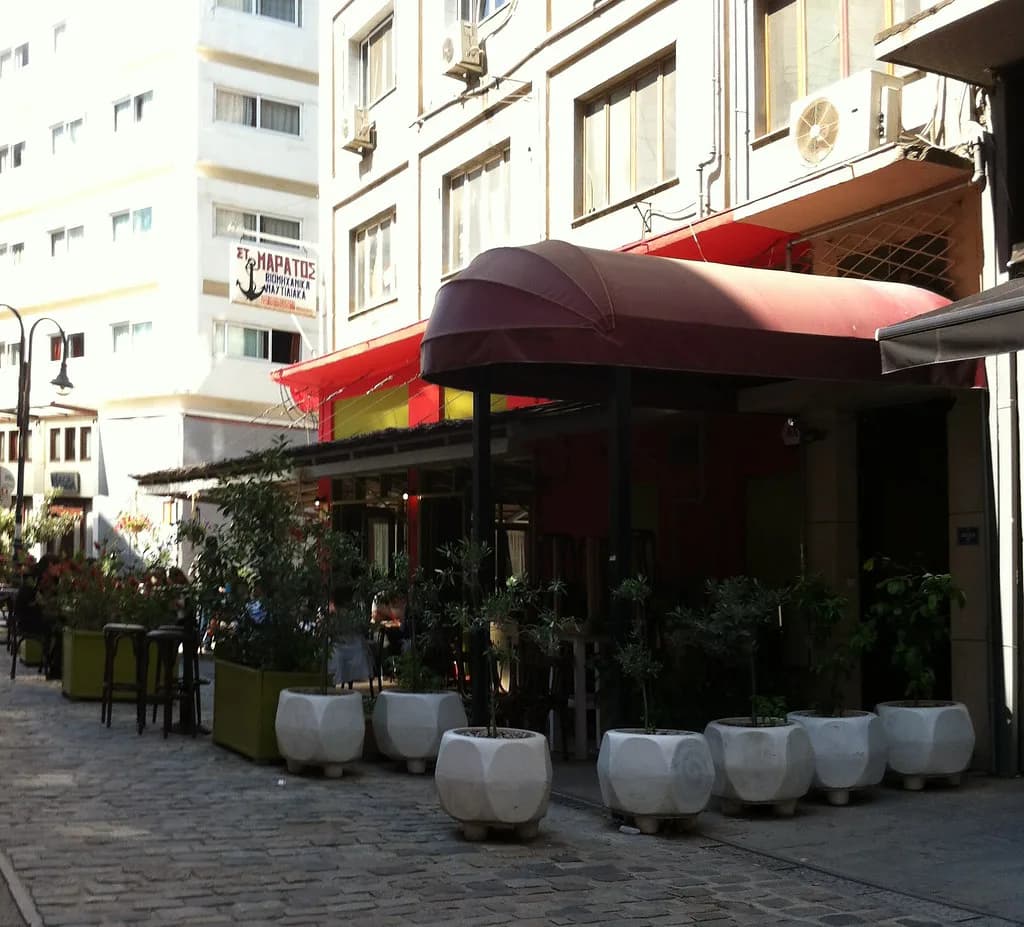
Nafplio's eating is split between the waterfront and the back streets. Along Bouboulinas, cafe-bars alternate with fish tavernas, so you can take a drink with a Bourtzi view and move next door for dinner. In the old town, Ellas Taverna presents itself as the first taverna in Greece and has kept its unpretentious, old working-class character despite a prime location.
Two local pastries are worth knowing by name. Bougatsa is a phyllo pastry with a custard filling, dusted with cinnamon and icing sugar, traditionally eaten at breakfast; tsoureki is a sweet braided Easter bread. Both turn up in Nafplio bakeries, and one family bought pastry at Flour and Sugar in town.
For a sit-down pause, L'amande is a patisserie serving ice cream and coffee with outdoor seats in a quiet alley. One visitor found it less crowded than comparable spots, with good ice cream and pastries, though the coffee was judged only fair. Pair it with a freddo, the Greek iced espresso, which is the default order at port cafes.
For a broader shortlist of tavernas by area and price level, our guide to the best restaurants in nafplio sorts old town tables from waterfront ones.
Day Trips: Epidaurus, Mycenae, Tiryns and Argos
Epidaurus holds one of the best-preserved ancient theatres in Greece, famous for acoustics so precise that a whisper on stage carries to the top rows. It is about a 30-minute drive from Nafplio. In summer the national theatre stages performances there, and one account warns that tickets sell out soon after release, so book early if a performance is the point of your trip.
Mycenae and Tiryns are the Bronze Age sites on Nafplio's doorstep, both UNESCO-listed, with Mycenae's Lion Gate and Tiryns' massive walls the highlights. One family ran out of time for them despite a multi-day stay, which is a useful warning: pick either the sites or the beach on any given day, not both.
Argos is about a 20-minute drive away and holds a municipal market in a neoclassical building on Wednesdays and Saturdays, with produce, honey and cheese. That makes market day a planning input rather than trivia: check the day before you commit. The town also has an ancient theatre and Larissa castle, and is quiet enough that you can often walk the site alone.
With a car, a mountain village makes a good half-day change of scenery. Karia, in the Artemisio mountains about 30 minutes into the hills, is a typical village with views that have appeared on film. The road is the main constraint; without a car, stick to the coastal and archaeological options.
Where to Sleep: View Versus Value
Accommodation splits into three zones. The old town puts you in the lanes near Syntagma Square, walkable to everything but often short on parking. The waterfront gives you the harbour view and the Bouboulinas strip on your doorstep, at a premium. Acronafplia, up on the hill, has the best views of the town and the islet, and one account notes an elevator from a small square below the hotel saves you the climb.
For travellers prioritising food and wandering, the old town wins; for anyone with a car or an early start, the waterfront is easier. A family-oriented apartment option sits centrally on Bouboulinas. If you want a beach on your doorstep for morning swims, staying in Tolo or another coastal town is the alternative trade-off worth weighing.
Two- and Three-Day Shapes
With two days, give the first morning to Palamidi, climbing early or taking a taxi up and walking down, then spend the afternoon on the old town walk with a museum if it rains. Finish with the Arvanitia Promenade at sunset and dinner on the waterfront. The second day is best spent on a beach and a boat: Karathona in the morning, Bourtzi from the quay if the wind allows, then a slow lunch.
With three days, add a day trip. Epidaurus pairs well with a beach afternoon on the way back; Mycenae and Tiryns suit a half day if you start early. Keep the market at Argos as a flexible option on Wednesday or Saturday, and leave the last evening free for the old town rather than squeezing in one more sight.
If your wider trip includes the islands, the same planning logic applies elsewhere on the site, from things to do in Chania to things to do in Corfu, both of which reward the same view-versus-value thinking about where to stay and eat.
Plan Your Visit
Nafplio rewards a plan built around heat and light rather than a checklist. Climb or drive to Palamidi in the morning, keep the middle of the day for the old town, museums or a long lunch, and save the promenade, the harbour and Acronafplia for the evening. Decisions like steps versus taxi and waterfront versus back street are what shape the day, not the number of sights.
Before you go, confirm ferry and boat timetables to Bourtzi, fortress opening hours and any summer festival programme, since these vary by season and weather. Carry shoes for cobblestones and pebbles, a refillable bottle, and a layer for the evening breeze off the gulf.
Explore more Nafplio sauna guides
Frequently Asked Questions
How many steps are there up to Palamidi Fortress in Nafplio?
The number usually quoted is 999, but the sources themselves note the count is disputed, so treat it as folklore rather than fact. What matters practically is that the stepped path is steep and exposed, so start early in summer or take a taxi or car to the top and walk down instead.
Can you visit Bourtzi island, and how do you get there?
Bourtzi is reached by small boat from Nafplio's harbour, but access depends on the season and the sea. Wind can make the crossing rough, and one account advises checking whether the islet is currently open before relying on a visit. The view from the quay is always available.
Is Arvanitia beach sandy or pebbly?
Arvanitia is a pebble and rock beach at the south end of town, reached through a short pine-lined path from the port. Bring shoes you can swim in. In season there are sun loungers, umbrellas, a cafe and changing rooms; out of season it is still a good walk.
How long does it take to walk from Arvanitia beach to Karathona?
Allow around 45 minutes if you walk the coastal path at an easy pace, less if you keep moving. Karathona is sandy, has shade trees and a fish taverna, and can also be reached by car or bus. Carry water, as much of the route is exposed.
Is Nafplio worth visiting in summer, or is spring and autumn better?
Spring and early autumn are generally more comfortable, with pleasant weather and smaller crowds than July and August. Summer is hot in the Argolis region, so if you go then, plan fortress climbs and long walks for the morning and keep the afternoon for swimming or shade. The town remains busy but workable in the shoulder months.
What can you do in Nafplio when it rains or is too windy to swim?
The town has seven museums, including the Archaeological Museum, the War Museum and the Folklore Museum. The old town's covered lanes, churches and shops fill a wet morning, and the cafes around Syntagma Square are built for waiting out a shower. A windy day is also a good reason to keep Bourtzi as a view rather than a boat trip.
How far is Nafplio from Athens, Epidaurus, Mycenae and Argos?
Driving from Athens takes roughly two and a half hours. Epidaurus is about 30 minutes away, Argos about 20 minutes, and Mycenae and Tiryns are close enough for a half-day excursion. A car makes these easy; without one, buses and organised tours cover the main sites.
What local food should you try in Nafplio?
Look for bougatsa, a breakfast phyllo pastry with custard, cinnamon and icing sugar, and tsoureki, the sweet braided Easter bread. Order a freddo, the Greek iced espresso, at a harbour cafe, and eat fish at the waterfront tavernas or old working-class dishes at Ellas Taverna in the old town.
Sources
Notes for eating well in Greece
Optional updates to our guides.
You might also like
Continue reading
More guides you'll find useful