Cretan Food in Chania: What to Eat and Where to Try It
A plain-English guide to Cretan food, from dakos and boureki to kalitsounia and raki, explaining what each dish is and how to order it in Chania.
On this page
Cretan food is not simply a longer version of a standard Greek menu. The island's kitchens lean on barley rusks, soft sheep's-milk cheeses, wild greens gathered from the hillsides and a finish of raki, the clear grape spirit also called tsikoudia, and those ingredients change how a meal is built. Once you recognise a handful of dish names, ordering in Chania becomes a series of easy decisions rather than guesswork.
The practical route is to treat the menu as a structure: cold and hot meze first, a rusk or salad to share, then one or two mains, with cheese and pies filling the gaps. Chania makes this easy because the old town, the Venetian Harbour and the Splantzia quarter sit within walking distance of each other, so you can compare a harbour table with a back-street taverna on the same evening.
Why Cretan Food Differs From Generic Greek Menus
Three ingredients do most of the separating work. First, the island's own cheeses, including myzithra (a soft, mild sheep's-milk cheese), staka (a thick, cream-like cheese used in cooking) and graviera (a firm aged cheese), appear far more often than feta on Cretan plates. Second, barley rusks replace ordinary bread in the dakos plate that opens many meals. Third, wild greens and herbs turn up in pies, stews and salads in varieties you rarely see on the mainland.
Raki, the strong spirit distilled from grape pomace, frames the meal at both ends. It is often poured as a gift from the house after eating rather than ordered, so a table that looks finished may still receive one more round. Wine follows a similar local logic, with Cretan grape names like Vidiano, Kotsifali and Thrapsathiri worth looking for on a list instead of defaulting to an international label.
The practical consequence is that a Cretan table tends to be shared and layered rather than divided into a starter and a main per person. If you order one salad, one rusk plate, two meze and one main between two people, you will usually eat well without over-ordering. Portions are generous, particularly on stews served with potatoes or rice, so adding a dish later is easier than finishing everything you ordered at the start.
How to Read a Cretan Menu
Meze (pronounced MEH-zeh) means small savoury plates meant to accompany drinks, roughly the role tapas plays in Spain. On a Cretan menu they range from olives and cheese to meatballs, fried squid and fries, and the mix shifts toward seafood in coastal villages. Ordering three or four meze for two people, then deciding whether you need a main, keeps the table varied without waste.
Watch for the phrase "of the house", which signals something the kitchen sends rather than something you chose. It may be a small dessert, a plate of fruit or a shot of raki, and it is generally complimentary rather than added to the bill. Accepting it is normal; if you would rather not drink, a simple decline is fine and nothing follows.
Prices on Cretan menus are usually listed per plate, not per person, and bread or rusks brought to the table may carry a small cover charge. If you want to keep the bill predictable, ask whether the bread is charged before you start eating it. Menus in the old town are generally posted outside, which lets you compare a harbour-front table with a back-street one before sitting down.
The Rusk Plate: Dakos Explained
Dakos is the dish to order first. It is a thick barley rusk, softened with grated tomato, topped with crumbled myzithra or feta, sprinkled with oregano and finished with olive oil. The result is denser and more savoury than a tomato salad, and it works as a shared opener rather than a personal starter.
Variations matter. Some kitchens use feta for a saltier, sharper result, others use myzithra for a milder, creamier topping, and a few add capers, olives or fennel. Because the plate depends so heavily on the rusk and the oil, quality varies more than with fried dishes; if the rusk is stale or the tomato watery, the whole plate falls flat.
A Cretan village salad differs from the standard Greek salad in one detail worth knowing: local soft cheese often replaces the feta. Both versions come with tomato, cucumber, onion, peppers and olives under a pour of olive oil. If you are ordering dakos as well, one salad between two is usually enough, since both plates are built on tomato and cheese.
Cheese Worth Ordering
Saganaki is a thick slab of cheese, often graviera or kefalotyri, breaded or floured and fried until the outside crisps. It arrives hot, sometimes with a squeeze of lemon, and is best eaten immediately while the centre is still soft. It is a heavy opener, so it pairs better with a plain salad or greens than with another fried dish.
Staka is the one to seek out if you want something you will not find at home. It is a rich, cream-like cheese traditionally served with fried eggs or used to enrich pilafi rice, and it appears on Chania menus more than elsewhere on the island. Mizithra, by contrast, is light and slightly salty, used on dakos and inside the small pies described below.
Graviera is the firm aged cheese you are most likely to meet on a meze plate or as a fried saganaki. It is nutty and salty enough to eat with raki, and a small plate goes a long way. If a menu offers a cheese selection, ordering one firm and one soft cheese gives you a better sense of the island's dairy than ordering two of the same type.
Pies and Pastries: Kalitsounia, Boureki and Mizithropita
Kalitsounia are small folded or half-moon pies, usually filled with myzithra cheese or with wild greens and herbs, then baked or fried. In Chania they are a breakfast and snack staple as much as a taverna dish, and the fried versions from the Chania area are a recognised local style. Order a mixed plate if you want to compare the sweet cheese filling with the savoury greens one.
Boureki is the dish most associated with Chania. It is a baked layered construction of courgette, potato, onion and soft cheese, usually cut in squares and served warm. It is substantial and vegetarian by default, which makes it one of the most useful plates on the menu for anyone avoiding meat. Chania-style versions are notable enough to appear under their own name.
Mizithropita is a simple cheese pie, often made with a thin pastry and a soft myzithra filling, and it turns up in bakeries and as a meze. It is milder than kalitsounia and lighter than boureki, so it suits the start of a meal. Bakeries in the old town are a sensible place to buy one for a morning walk around the harbour rather than committing to a full sit-down breakfast.
Vegetable and Pulse Dishes
Gemista are vegetables, usually tomatoes and peppers, hollowed out and filled with herbed rice and baked in a thin tomato sauce, often with potato wedges around them. They are reliably vegetarian and filling, and they arrive as a full plate rather than a side. Check whether the filling includes minced meat, since some kitchens add it to the rice without changing the dish name.
Kolokithokeftedes are fried patties of grated courgette, herbs and sometimes cheese, crisp outside and soft within. They are a useful shared meze and a good counterweight to heavier fried plates like saganaki, since the courgette keeps them lighter. Like all fried dishes they are best eaten soon after they arrive rather than left to cool on the table.
Wild greens are the quiet backbone of the Cretan table. Boiled or sautéed horta (wild greens) with olive oil and lemon appear as a simple plate, and greens also fill pies and accompany lamb and goat stews. Pulse dishes such as fava, a purée of split peas, and giant beans baked in tomato give vegetarians substantial options that are not just side salads.
Meat Dishes: Stifado, Lamb With Greens and Gamopilafo
Stifado is a slow-cooked stew built on small onions, vinegar and wine, and on Crete it is made with beef, lamb, goat or even octopus. The onions soften into the sauce and carry most of the flavour, so the dish is less about the meat cut than about the balance of sweet and sour. It usually comes with rice or chips, which makes it a complete main.
Lamb or goat stewed with wild greens is the other essential main. The meat is braised until it comes away from the bone and the greens take on the juices, giving a plate that is both rich and herbal. It is a good choice for a long lunch in a village outside Chania, where the cooking is often done in large pots rather than to order.
Gamopilafo means wedding rice, and it is the festive dish of Cretan celebrations: rice cooked in a rich meat broth, usually served with boiled or roasted goat or lamb. Antikristo is the other name to know, referring to meat roasted slowly around an open fire. Both are typically cooked for groups, so they suit a shared table of four or more rather than a solo diner.
Seafood on the Coast
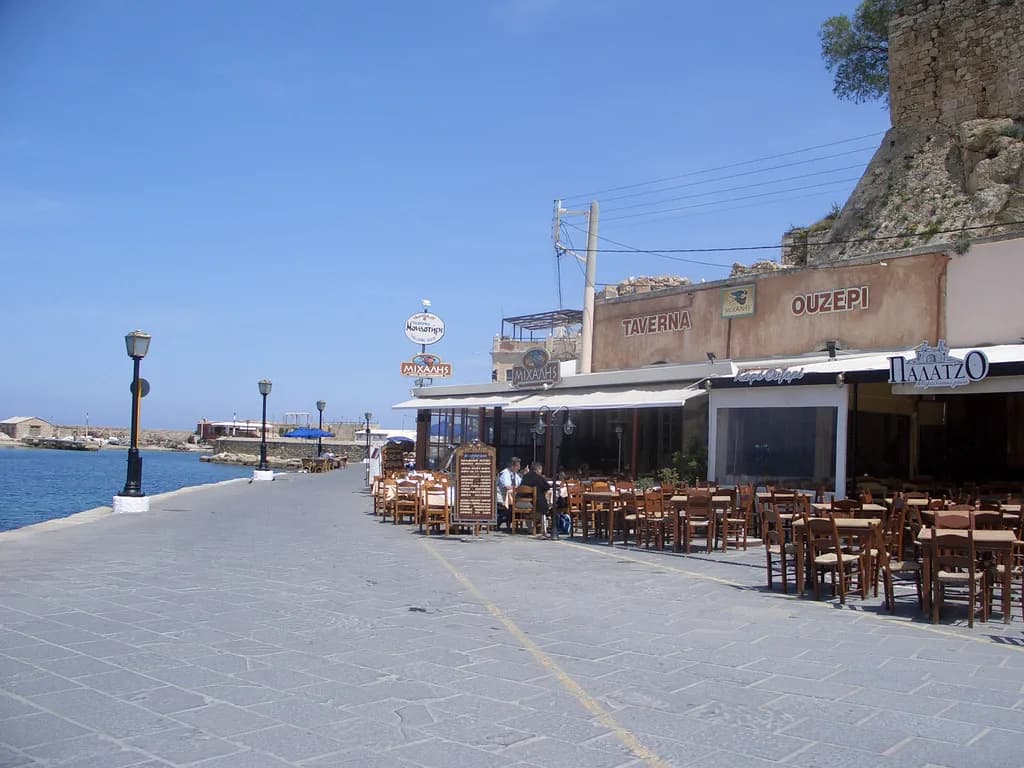
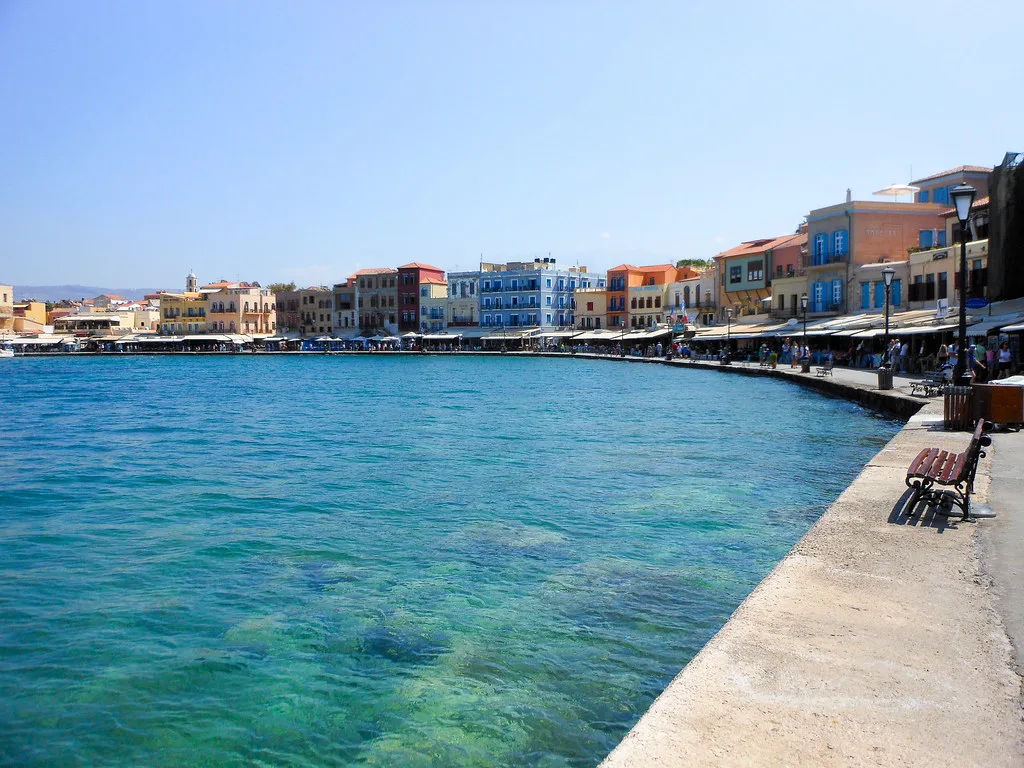
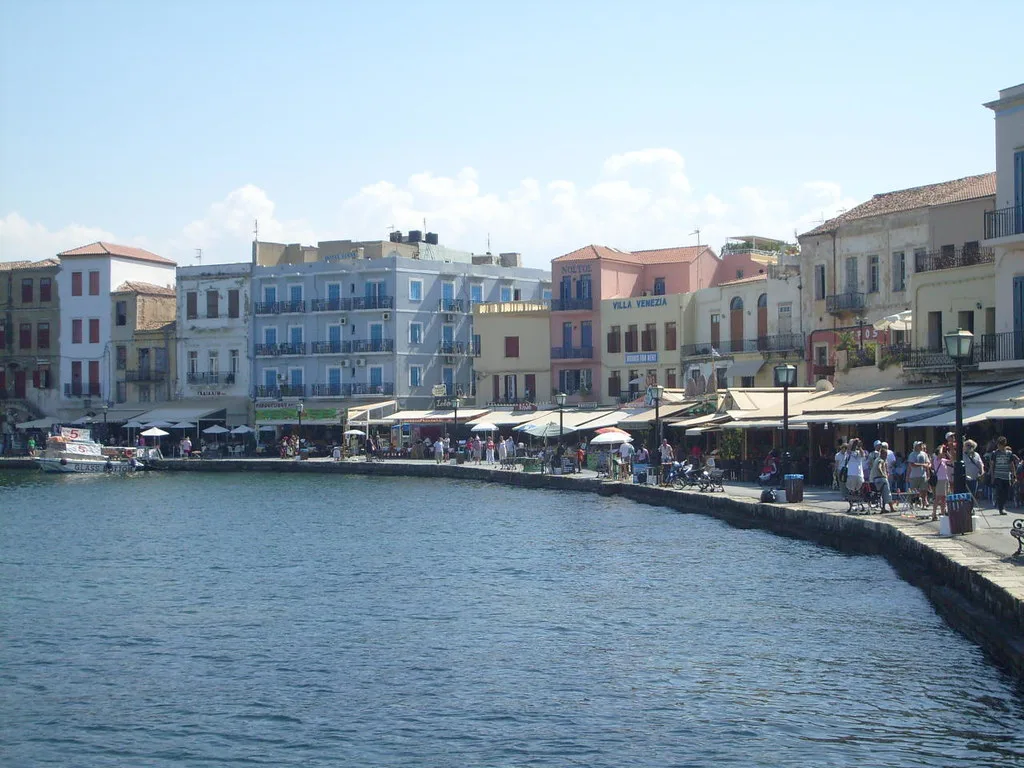
Grilled octopus, fried squid and grilled fish are the standard coastal orders, and Chania's Venetian Harbour has no shortage of tables facing the water. The trade-off is straightforward: harbour front means the view and the foot traffic, back streets mean lower noise, more local custom and usually a shorter menu. Neither is automatically better, and the two experiences serve different evenings. The same harbour-versus-back-street decision shapes where to eat in Rhodes, where the old town lanes sit just behind the waterfront.
Fish is often priced by weight rather than as a fixed plate, so ask for the price per kilo before ordering and confirm whether it is fresh or frozen. This is a normal question in Greek seafood restaurants and not a sign of suspicion. Fried squid and octopus are usually listed at a set price, which makes them easier to budget.
One traveller's account of a Chania seafood restaurant with an Asian-Greek menu records a total of about sixty euros for two people; treat that as a single report rather than a current benchmark, and check the menu board before sitting down. For a cheaper seafood meal, look to fried squid, sardines or octopus rather than whole fish, which carries the highest per-kilo cost.
Sweet Finish: Loukoumades and Local Desserts
Loukoumades are small fried dough puffs, usually soaked in honey and sometimes dusted with cinnamon or walnuts. On Crete the honey is often local, which makes the dish more than a generic fairground sweet. They are best shared, since a plate of ten or so is too much at the end of a full meal for most people.
Baklava, layers of thin pastry with nuts and syrup, appears on many Cretan dessert lists alongside local specialities like kaltsounia with honey and walnut. Galaktoboureko, a semolina custard wrapped in pastry, is another common option. If you want something lighter after a heavy main, ask for fruit or yoghurt with honey rather than another pastry.
What to Drink: Raki, Wine and Beer
Raki and tsikoudia are the same drink under two names, a clear spirit distilled from grape skins and served cold in small glasses. It is sipped slowly after the meal, not knocked back as a shot, and it is frequently offered free at the end of a taverna meal. Ouzo, by contrast, is an anise-flavoured aperitif usually drunk before eating, often diluted with water.
Cretan wine has a long history and a set of local grape varieties worth trying by name: Vidiano for a fuller white, Kotsifali for a soft red and Thrapsathiri for a lighter white. Winery visits exist around the island, including estates near Heraklion, but they are a day trip from Chania rather than an evening stop. A house wine by the carafe is the simplest way to drink locally without committing to a bottle.
On the beer side, Mythos is the widely available national brand, while Cretan labels such as Charma, Brink's, Lyra and Kasta turn up in bars and some tavernas. A cold local beer suits the fried meze plates well. Freddo espresso, an iced espresso shaken and served cold, is the standard summer coffee and is available almost everywhere in Chania.
Where to Eat in Chania
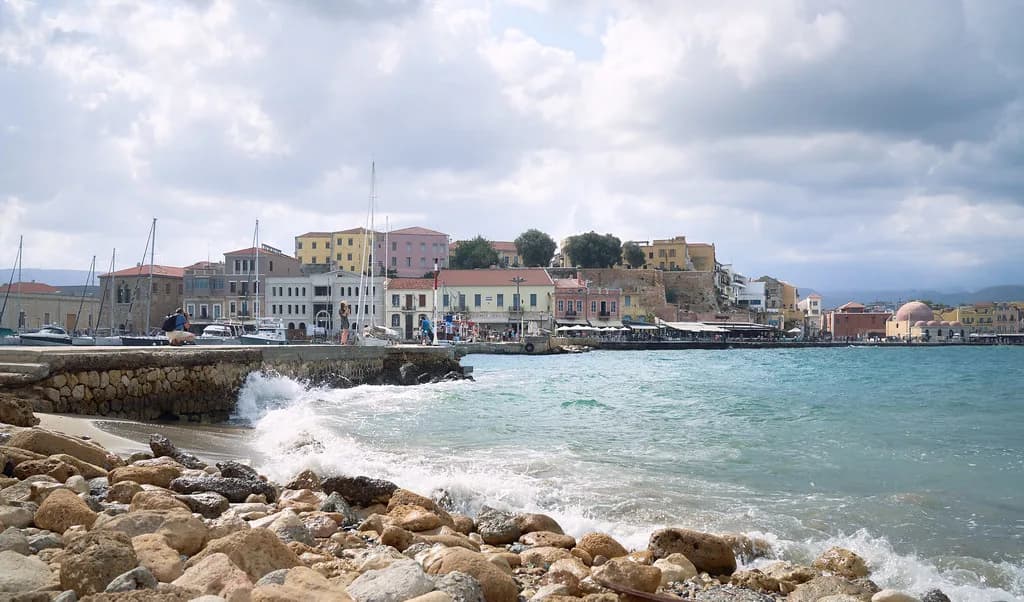
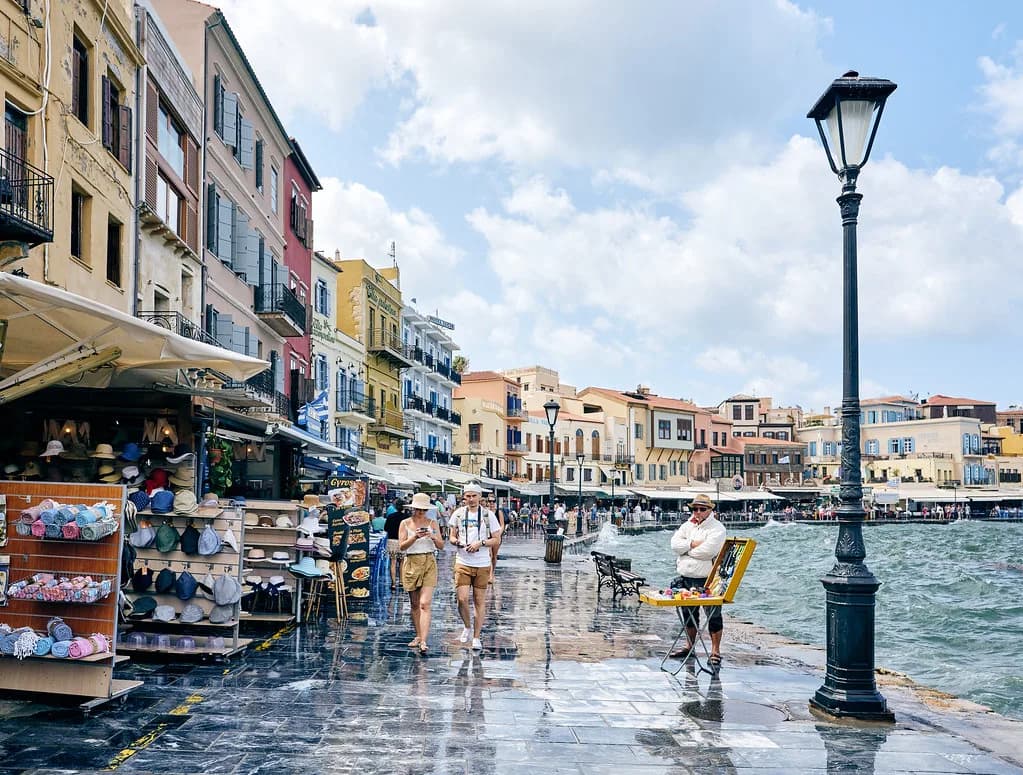
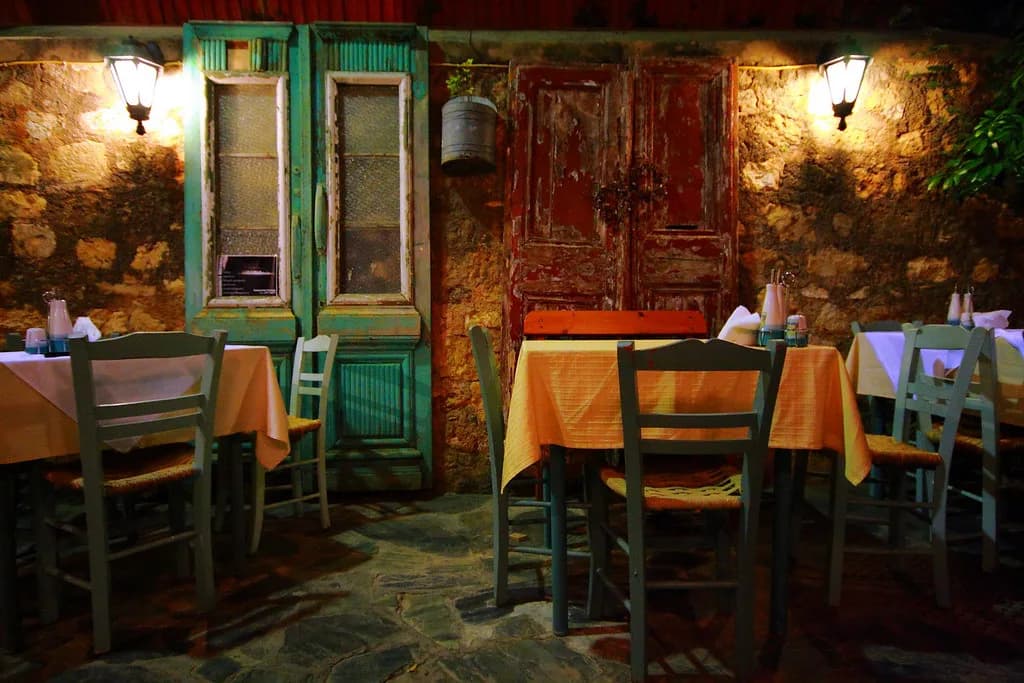
Chania divides neatly for eating purposes. The Venetian Harbour and the lanes behind it hold the most atmospheric tables, with higher prices to match. Splantzia, the old Turkish quarter just inland, has a quieter cluster of tavernas and cafés where you are more likely to see local families eating. The wider modern city has the cheapest everyday options, especially for gyros and pies.
For a structured introduction to the dishes above, a food tour or a cooking class in Chania can compress a lot of tasting into one afternoon, particularly if you want to try kalitsounia, boureki and staka in a single sitting. If you prefer to explore independently, plan a loop from the harbour through Splantzia and back along the waterfront, stopping for one meze plate at a time.
For the specific dishes, the best approach is to match the plate to the setting. Dakos, boureki and grilled meat suit a back-street taverna with a short menu, while seafood and harbour views belong to the waterfront. Gyros is a different meal entirely, cheap and quick, usually from a stand or small shop rather than a sit-down restaurant.
Dishes for Vegetarians
Cretan food is unusually kind to vegetarians, but only if you know which plates are safe. Dakos, boureki, gemista without minced meat, kolokithokeftedes, fava, giant beans, wild greens, saganaki and most kalitsounia are meat-free by default. That gives a vegetarian table enough variety to share properly rather than settling for one salad.
The dishes to question are the ones where meat hides in the base. Gemista may include minced meat in the rice, dolmadakia (stuffed vine leaves) may contain it alongside the rice, and stews and soups are often built on meat broth. Asking whether a dish is nistisimo, meaning suitable for fasting and therefore meat-free, is the clearest shorthand in a Greek kitchen.
How to Order a Shared Table and Handle the Bill
For two people, a working formula is one rusk or salad, two meze, one vegetable dish and one main, added to as you go. For four, double the meze and add a second main, plus a cheese plate and a dessert to share. Ordering in waves is normal in Crete; nobody will hurry you, and adding a dish later is expected rather than awkward.
Raki usually arrives after the plates are cleared. Tipping is not obligatory in Greece, but rounding up or leaving a small percentage is common for good service. Cards are widely accepted in Chania, though small village tavernas may prefer cash, so carrying some euros is sensible.
If you want a single reference point for planning the whole day around meals, the Chania attractions guide covers how the old town, harbour and nearby sights fit together on foot. A half-day of walking between meals is the most practical way to eat across the city without overcommitting to one restaurant.
Plan Your Visit
Cretan food rewards a little preparation: learn five dish names, understand that meze and rusks are shared, and expect raki at the end whether you ordered it or not. In Chania, compare a harbour table with a Splantzia back street on different evenings rather than trying to pick a winner in advance, and check the posted menu before committing.
If you are visiting outside the main season, ask directly whether a restaurant is open rather than relying on older listings, since many island kitchens run on seasonal schedules. Book ahead only where the view carries a premium, and keep the rest of your meals flexible so a good lunch does not rule out dinner.
Explore more Chania sauna guides
Frequently Asked Questions
What food is Crete famous for?
Crete is best known for dakos, a barley rusk topped with tomato and myzithra or feta; for the island's cheeses, including graviera, staka and myzithra; for Chania-style boureki, a baked layer of courgette, potato and soft cheese; and for kalitsounia, small pies filled with cheese or wild greens. Raki, the grape spirit also called tsikoudia, is the customary end to a meal, and Cretan wines made from Vidiano and Kotsifali grapes are worth ordering by name.
What is dakos made of?
Dakos is a thick dried barley rusk, moistened with grated tomato and olive oil, then topped with crumbled myzithra or feta and sprinkled with oregano. Some kitchens add capers, olives or fennel. It is served as a shared opener rather than a personal starter, and it is one of the most reliably vegetarian plates on a Cretan menu.
What is the difference between raki and ouzo?
Raki, or tsikoudia, is a clear spirit distilled from grape skins and pomace on Crete, served cold in small glasses after the meal and often brought to the table without being ordered. Ouzo is an anise-flavoured aperitif usually drunk before eating, often diluted with water, which turns it cloudy. Both are strong, so they are sipped slowly rather than taken as shots.
What are kalitsounia?
Kalitsounia are small folded or half-moon pies filled with soft myzithra cheese or with wild greens and herbs, then baked or fried. In Chania they work as a breakfast or snack as much as a taverna dish, and the fried versions from the Chania area are a recognised local style. A mixed plate lets you compare the sweet cheese filling with the savoury greens one.
What should vegetarians eat in Crete?
Dakos, boureki, kolokithokeftedes, fava, giant beans, wild greens, saganaki and most kalitsounia are meat-free by default, which gives a vegetarian table enough to share properly. Gemista, dolmadakia and soups need checking, because minced meat or meat broth can appear in the base. Asking whether a dish is nistisimo, the term for fasting food, is the clearest way to confirm it contains no meat.
Is Cretan food different from Greek food?
Yes, in specific ways. Cretan kitchens use barley rusks in place of ordinary bread, favour island cheeses such as myzithra, staka and graviera over feta, and put wild greens into pies, stews and salads. Dishes like gamopilafo, rice cooked in meat broth for celebrations, and antikristo, meat roasted around an open fire, are particular to the island rather than standard across Greece.
Sources
Notes for eating well in Greece
Optional updates to our guides.
You might also like
Continue reading
More guides you'll find useful