Best Restaurants in Chania: Where to Eat by Area
Plan where to eat in Chania, from Venetian Harbour tavernas to old-town back streets and mountain tavernas with views. Includes Cretan dishes to order.
On this page
Chania's eating scene spreads across three quite different zones: the curved waterfront of the Venetian Harbour, the narrow lanes of the old town behind it, and a ring of village and coastal tavernas reached by short drives. Choosing where to eat is less about finding a single best table than matching the setting to the meal you want. A harbour dinner, a back-street lunch and a mountain taverna are three different purchases, and each has its own trade-off.
The old rule that a good view signals a mediocre kitchen is worth testing here, because Chania has clear exceptions in both directions. Waterfront tables on the busy side of the harbour exist largely for the setting, while some of the most satisfying cooking sits in lanes with no sea glimpse at all. If you have a car, the calculus changes again: a 40-minute drive can put you in a mountain village where the menu follows what the family farm produces.
Below, places are grouped by area rather than ranked, with the dishes each is known for and the distances that matter when planning a day. Treat every recommendation as editorial opinion rather than an award, and confirm hours and season directly with the taverna before building a trip around it.
Venetian Harbour and the Waterfront: What You Are Paying For
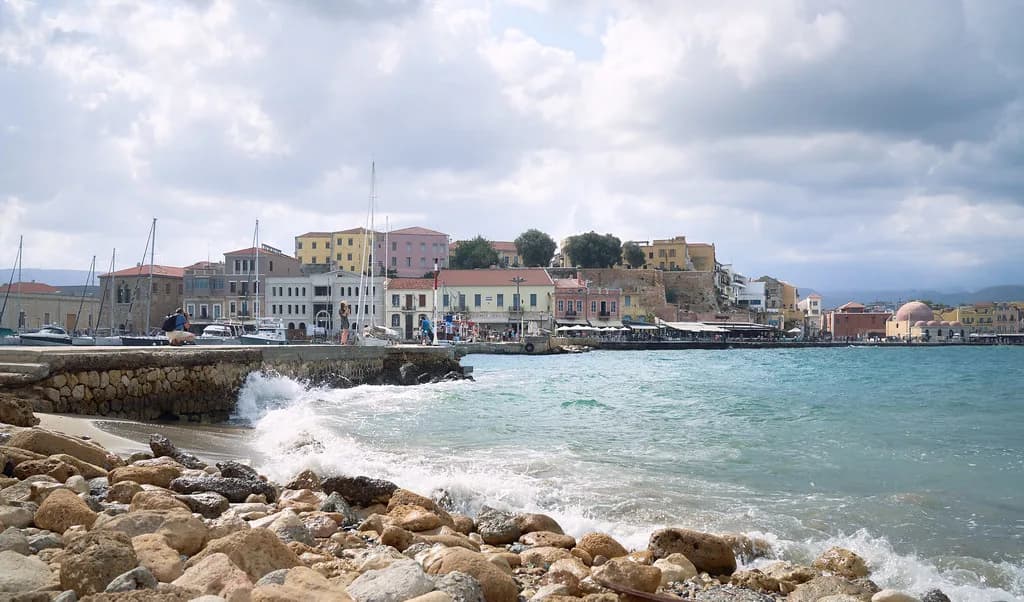
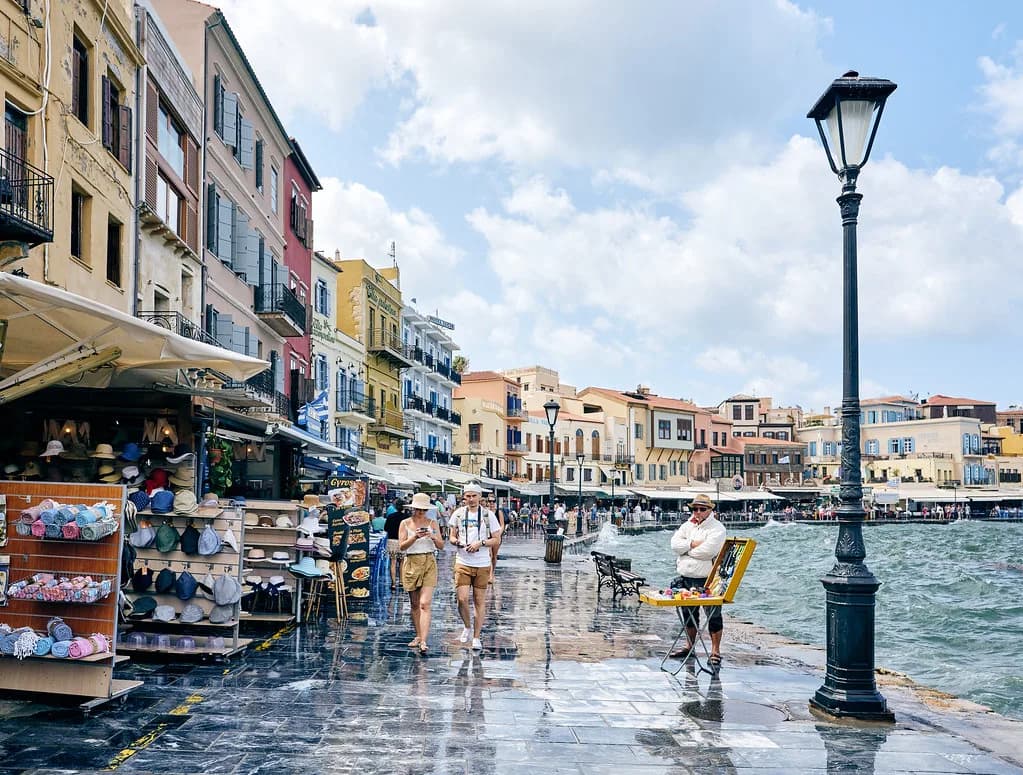
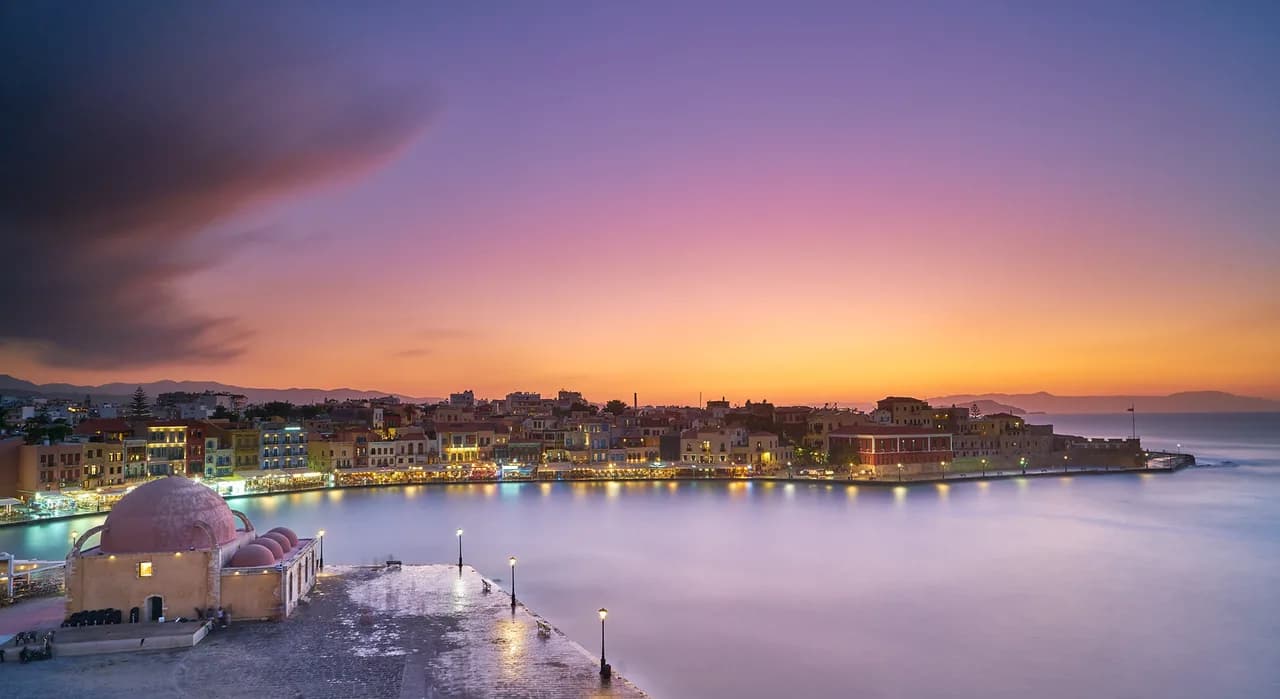
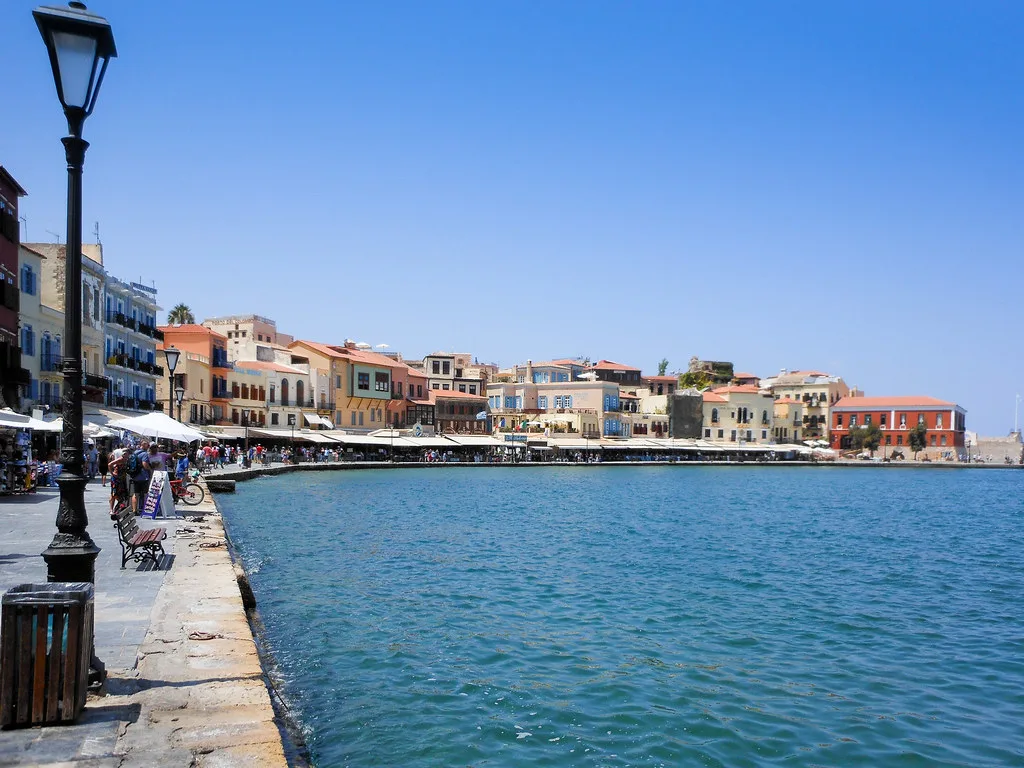
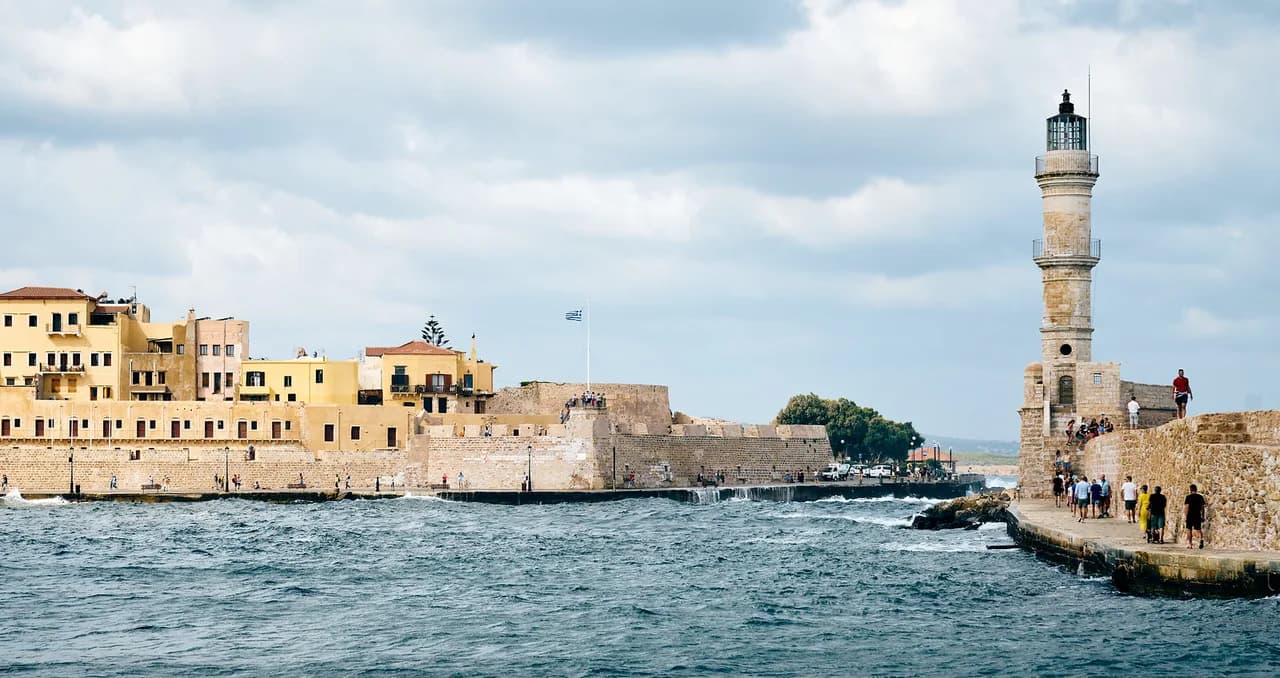
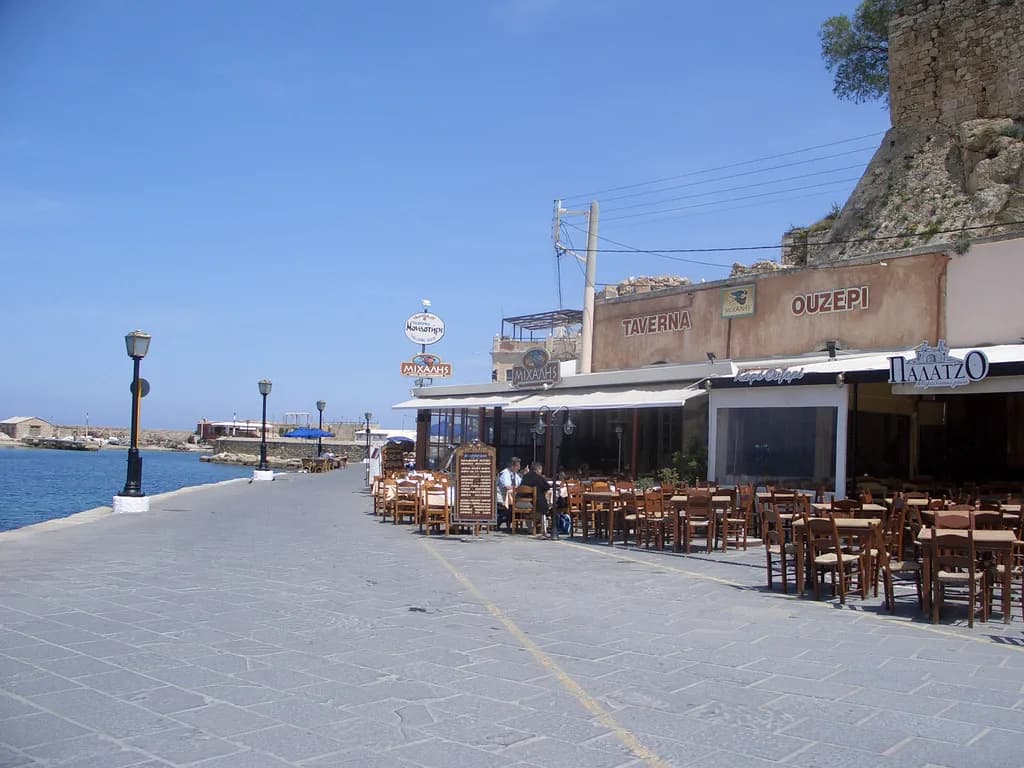
The Venetian Harbour is Chania's postcard: a 14th-century basin where buildings turn pastel at sunset and crowds gather near the lighthouse. Restaurants line the waterfront opposite the lighthouse side, and they are typically full of visitors. You are buying position here, so decide in advance whether a table on the water is the point of the evening or simply a convenient default.
A harbour table earns its place when the setting is doing real work: a first evening when you are jet-lagged, a sunset you want to watch without moving, or a meal where the company matters more than the last increment of cooking. It is a weaker choice when you have limited dinners and want the food to be the memory. A reasonable strategy is one harbour meal per trip and the rest spent a few lanes inland.
Sunset is the pressure point. If a specific waterfront table matters, ask the restaurant directly about reserving a table facing the water and arrive before the light goes; walk-ups at that hour compete with everyone else on the quay. The organiser or taverna itself is the only reliable source for whether bookings are taken at all.
Back Streets of the Old Town: No View, Better Value
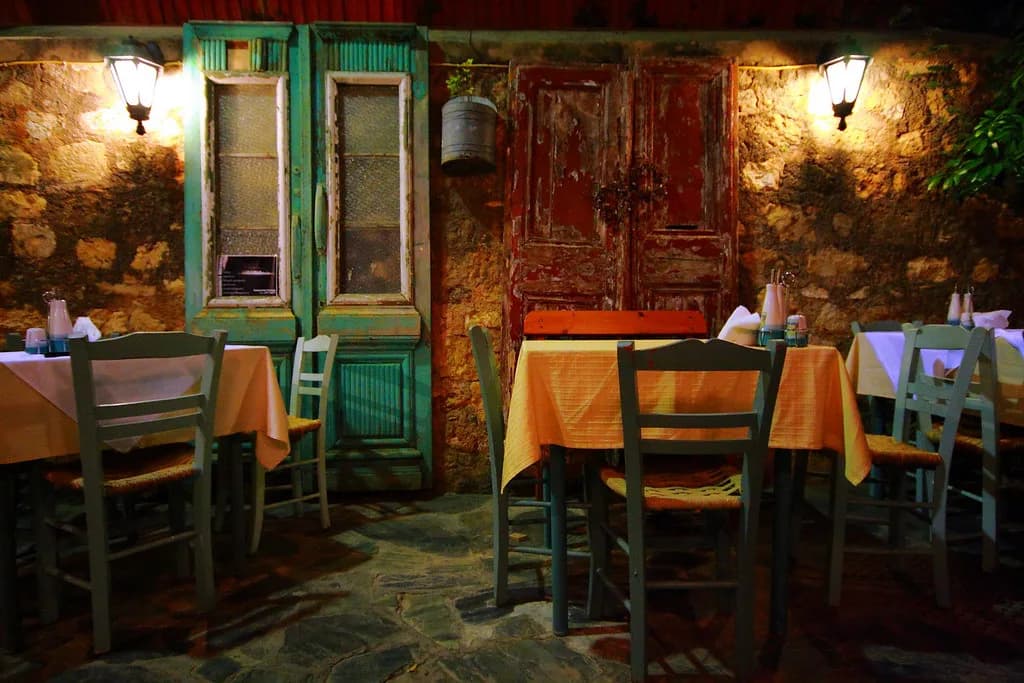
Behind the waterfront, the old town's lanes hold the kind of tavernas where the kitchen rather than the panorama carries the reputation. One Chania food guide singles out To Steno and Chrisostomos as among the best meals in town, explicitly noting that neither comes with a sea view. That is the trade-off in its purest form: you give up the harbour and gain a shorter walk, quieter tables and cooking judged on its own terms.
For a contemporary take on Cretan cooking, Arismari is recommended in the same guide, with seafood gnocchi among the dishes called out. To Stachy takes the traditional route: homemade Cretan pies, lamb with white wine sauce, lamb with artichoke and a side of fried feta drizzled with honey, with baklava to finish. The setting at To Stachy is described as low-key, which fits the pattern of good food without a view premium.
Old-town lanes are compact and walkable, so you can comparison-shop on foot before committing. Read menus at the door, note whether prices are listed per portion, and look at how full the room is with local diners rather than how many photographs are being taken. If you want a structured introduction before choosing, a guided walk through the food streets is one option.
Splantzia and the Lanes Near the Harbour
The lanes just inland from the harbour shade into Splantzia, a quarter of plane trees and quiet squares a short walk from the water. Because it is minutes from the quay but off the waterfront, it sits in a different bracket: you keep the convenience of central Chania while stepping away from the harbour's pricing logic. Use it as your middle option when you want atmosphere without committing to either extreme.
This is also where a flexible eating day works well. Breakfast or a late lunch in the old town, a wander through the lanes, then a decision over dinner: harbour, back street or a drive out. Walking between these zones takes minutes, not taxi rides, which matters if you are basing yourself centrally.
Halepa and Tabakaria: Thalassino Ageri and the Sunset Front Row
East of the centre, the Halepa district holds the Tabakaria, a stretch of dilapidated tanneries whose shells are reflected in the water. Set among them is Thalassino Ageri, a fish taverna at 35 Vivilaki Street that one Chania restaurant guide treats as a destination for both the setting and the seafood. It is roughly 2 km from the centre, a six-minute drive or a 25-minute walk.
The reason to come is the gravelly embankment seating facing the water at sunset; indoor tables exist but miss the point. The advice from the guide is to phone a few days ahead and specifically request a front-row table on the embankment. Dishes worth ordering include ahinosalata, a sea urchin salad dressed with olive oil and lemon, steamed mussels in olive oil and fried calamari.
Budget for the journey as well as the meal: the walk along the coast is pleasant in daylight but less inviting after dark, so many visitors drive or take a taxi for an evening booking. Arriving early gives you the tannery ruins in good light before dinner.
Mountain Tavernas Inland: Dounias at Drakona and Spiliaraki at Topolia
The most distinctive meals near Chania are up switchback roads. Dounias, on the main road at Drakona, is about 22 km and a 40-minute drive from the centre. The owner cooks in large clay pots over outdoor wood fires, and the animals, vegetables, olive oil and wine come from the property's own farm. The outdoor rotunda dining room is surrounded by hills, with bees a frequent presence in warm weather.
Ordering here is less about a menu and more about what is in the pots: ask to see what is cooking, and expect goat or lamb, with snails and eggplant stew worth asking after. The cooking style suits anyone comfortable with free-range meat and mountain herbs; if you prefer lean cuts, this is not the kitchen for you. That honesty about the trade-off is more useful than any ranking.
Spiliaraki sits about 46 km and a 45-minute drive from Chania, elevated above Topolia Gorge with a view down to a small church surrounded by fruit and olive trees. It cooks traditional Cretan dishes from the family garden, with outdoor tables sheltered by vines and hammocks for after the meal. Dishes to look for include apaki, a smoked pork, moussaka, house loukaniko sausage and yemista, vegetables stuffed with rice and herbs, plus a set yoghurt served in a terracotta pot with honey.
These drives only make sense with your own car, and they change the shape of a day: a mountain lunch rules out a beach afternoon, while an early dinner means driving back in the dark on winding roads. Pick one inland taverna rather than trying to combine two, and check the route before setting out.
Coastal Lunch Stops Toward the Western Beaches
Spiliaraki doubles as a lunch stop on the road to Crete's western beaches, positioned for drivers heading to Elafonissi or Kedrodasos. That makes it a practical answer to a common problem: the beach drives are long, and the roadside options near the car parks are rarely the reason you came. A shaded table above the gorge, reached before or after the sand, turns transport time into part of the day.
Plan the meal around the beach rather than the reverse. Lunch before the sand means arriving at the water in the afternoon heat; lunch afterwards means driving back later than you might like. Whichever you choose, carry water and confirm the taverna is serving that day before relying on it, since rural kitchens can be seasonal.
When the View Is the Point: Carte Postale and Fourogatos
Two places in Chania are recommended primarily for panorama. Carte Postale sits about 30 minutes from the centre by car, with views across the bay and a contemporary menu; the guide suggests it is worth a visit even for a drink and a snack. Fourogatos overlooks the promenade and sea and is noted for its cheeses and attentive service. Both are cases where the view is part of the bill.
If cheese is your priority, Fourogatos is the more targeted choice, since the recommendation centres on sampling Cretan varieties. Look for graviera, a firm sheep's or goat's cheese that is sweeter when young and nutty once aged, and soft cheeses such as myzithra and pichtogalo Chanion. The view is a bonus rather than the argument.
Cretan Dishes to Order and What They Are
Dakos is the appetiser to start with: a barley rusk soaked in olive oil and topped with chopped tomato, crumbled cheese such as myzithra or feta, oregano and basil. Chochlioi boubouristi are snails fried in olive oil and dusted with rosemary, a Cretan delicacy rather than a French import. Antikristo is a shepherd's technique of cooking lamb or goat on skewers set around a fire, the meat cooking in its own fat with heat from the flames rather than coals, sometimes for hours.
Pies stuffed with wild greens, cheese or meat are the comfort-food backbone, and Cretan cheeses vary village by village. Bougatsa is the breakfast pastry to know: in Chania the thin phyllo is filled with local mizithra cheese and finished with sugar or cinnamon. Raki, the island's clear spirit, typically arrives after the meal; accepting it is part of the ritual.
For a broader glossary of these dishes and how they differ from mainland Greek cooking, a dedicated Cretan food guide is worth reading before you go. Knowing the names makes menu reading faster and helps you avoid ordering three variations of the same cheese pie.
Breakfast and Lunch in Town
Bougatsa Chania is the obvious breakfast stop, built around the cheese-filled pastry described above. For a slower start, Kipo Cafe sits inside the municipal garden, a historic cafe where you can take coffee or mountain tea in leafy surroundings or retreat indoors. Both keep breakfast simple, which is the right approach before a day of driving or walking.
Lunch splits between the contemporary and the traditional. Carte Postale and Fourogatos cover the view-driven end, while To Stachy and the back-street tavernas cover the hearty end with pies, lamb and fried feta. A reasonable pattern is a light, view-led lunch and a more substantial dinner inland, or the reverse if you are driving afterward.
The Saturday Market on Minoos Street
Chania's weekly farmers' market runs along Minoos Street on Saturdays, beside the historic Venetian wall. Stalls sell fruit, vegetables, eggs, cheeses, honey and live produce, alongside charcoal-grilled souvlaki and even snails by the bag. Produce is sold as picked, dug up, caught or independently made, and stallholders are vocal about their wares.
Timing a trip around Saturday gives you a food stop that costs nothing to browse and shows you what the region grows. Go early for the best choice and calmer aisles, and bring cash in small notes. It is also a low-commitment way to try something unfamiliar before ordering it in a taverna.
Drinking: Raki, Cretan Wine and the Agia Triada Cellar
Raki is the default end to a Cretan meal, offered as a gesture of hospitality rather than a menu item. For wine, the cellars at Agia Triada Monastery run tastings, and the same guide highlights the bread, olive oil and vinegar served alongside. Vineyards are part of the landscape across Crete, so a tasting slots naturally into a day that already includes a monastery visit.
Ask at the door whether tastings are running that day and whether you need to book, since monastery schedules are not set for visitors. If you are driving, plan the tasting as the last stop before returning to Chania.
Choosing Between Harbour, Old-Town Lane and Country Taverna
Match the venue to the day you are having. After a long arrival or a beach afternoon, a harbour table for sunset asks nothing of you beyond showing up. A free evening in the centre suits a back-street taverna where the cooking leads. A full day with a car justifies a mountain lunch or a gorge-side stop on the way to the western beaches.
If you only have two dinners, split them: one for setting, one for cooking. If you have three, add the drive. This avoids the common trap of spending every evening on the waterfront and concluding that Chania's food is expensive and ordinary. The same setting-versus-cooking split shapes the best restaurants in thessaloniki, if your trip continues north.
Plan Your Visit
Book ahead only where the setting is the reason you are going: a front-row sunset table at Thalassino Ageri or a specific bay-view lunch. Elsewhere, walk the lanes, read menus and decide on the night. Confirm opening days and season directly with any rural taverna before driving out, since mountain kitchens follow their own calendar.
Build the rest of the trip around meals rather than squeezing them in: the old town, the harbour and the market are all walkable, while Dounias, Spiliaraki and the western beaches need a car and a clear half-day. With that structure, Chania's food stops stop being a lottery and start being a plan.
Explore more Chania sauna guides
Frequently Asked Questions
Where should I eat in Chania Old Town?
The lanes behind the Venetian Harbour hold tavernas known for cooking rather than views, including To Steno and Chrisostomos, plus Arismari for contemporary Cretan dishes and To Stachy for traditional pies, lamb and fried feta with honey. All are within walking distance of the harbour, so you can compare menus on foot before choosing.
Which Chania restaurants have a view?
Thalassino Ageri in Tabakaria sits among the old tanneries facing the water, about 2 km from the centre. Carte Postale, roughly 30 minutes away by car, looks across the bay, and Fourogatos overlooks the promenade and sea. Inland, Spiliaraki faces Topolia Gorge and Dounias sits in the hills above Drakona.
Is Chania a tourist trap for restaurants?
The waterfront opposite the lighthouse is the most visitor-heavy stretch, and those tables mostly sell position. The back streets and the short drives out of town are where the cooking tends to justify the trip. One meal on the harbour and the rest a few lanes inland is a workable balance.
What Cretan dishes should I try in Chania?
Start with dakos, a barley rusk with tomato and cheese, and chochlioi boubouristi, snails fried with rosemary. Look for antikristo lamb or goat cooked around a fire, apaki smoked pork, yemista stuffed vegetables, graviera and soft myzithra cheeses, and bougatsa for breakfast. Raki usually closes the meal.
Should I book a sunset table at a Chania harbour restaurant?
Yes if the setting is the reason for the meal. For Thalassino Ageri, phone a few days ahead and ask specifically for a front-row table on the embankment rather than indoors. For other waterfront spots, ask the restaurant directly whether it takes bookings at sunset, since policies vary.
Is it worth driving out of Chania for a taverna?
With a car, yes. Dounias at Drakona is about 40 minutes away and cooks in clay pots over wood fires, while Spiliaraki above Topolia Gorge is about 45 minutes and works as a lunch stop en route to Elafonissi or Kedrodasos. Without a car, stay central and eat in the lanes.
Sources
Notes for eating well in Greece
Optional updates to our guides.
You might also like
Continue reading
More guides you'll find useful