Best Gyros in Chania: What to Order and Where to Look
A practical guide to gyros in Chania: pork or chicken, pita and tzatziki explained, what to pay, and which neighborhoods to walk for a quick, good-value meal.
On this page
Chania rewards travelers who treat gyros as what it is: a fast, inexpensive meal built around meat carved from a rotating spit and folded into warm pita. The city's compact old town makes it easy to compare a harbor-front seat with a counter a few streets back, and the difference is usually view versus speed rather than quality. This guide sticks to what can be verified and tells you plainly where to check the rest.
One practical anchor before you start walking: Chania's historic center is small and pedestrian-friendly, which means most of your gyros decisions are made on foot rather than by bus or taxi. If you want to pair lunch with sightseeing, plan the day around these things to do in Chania, since the same streets that hold the counters also hold the harbor and the old neighborhoods.
What a Greek gyros actually is
Gyros means "turn," and the name describes the cooking: pork or chicken stacked on a vertical spit, roasted as it rotates, then shaved off in thin slices to order. The meat goes into a warm pita with tomato, onion, fried potatoes and tzatziki, a thick sauce of yogurt, cucumber, garlic and olive oil. In Greece the usual meats are pork and chicken, not the lamb-and-beef blend sold as gyros in the United States, so don't expect that flavor profile.
The potatoes are the detail that surprises first-timers: fries usually go inside the wrap rather than beside it, soaking up the tzatziki and making the whole thing a full meal in paper. If you want the wrap less messy, ask for the tzatziki on the side or omitted, which is a normal request rather than a fussy one. Vegetarian versions are increasingly offered at grills, typically built from grilled vegetables instead of meat.
Because gyros is assembled in front of you, it is also one of the easiest meals to judge before committing: if the spit looks dry or the pita is being pulled from a stack rather than warmed, walk on. That is a visual check, not a ranking of any named shop.
Pork, chicken or souvlaki: the decision to make before you walk in
A gyradiko is a shop specializing in gyros, and the first decision at the counter is pork or chicken. Pork is the more common default in Greece and generally the juicier, fattier carve; chicken is the lighter, milder option and often the one people order when they want a less rich wrap. Neither is a premium upgrade, so order by appetite rather than by price.
Souvlaki is the other half of the choice: skewered chunks of pork, chicken or sometimes lamb, grilled and served with pita, tomato, onion and yogurt or tzatziki. It arrives as distinct pieces rather than shaved ribbons, so the texture and the char are different even when the garnishes are identical. Many grills sell both, which means you can order one of each and split them.
If you are travelling with someone who does not eat pork, chicken souvlaki is usually the safest order, and vegetable-based versions cover most other gaps. Ask before assuming the fryer or the grill is shared if that matters to you; the shop can tell you.
What to expect to pay
Only one usable benchmark appears in the travel accounts available: a gyros in Chania reported at roughly four to five euros, described as typically huge and inexpensive. Treat that as a traveler's estimate rather than a menu quote, because portion sizes and prices at individual counters move with the season and the shop.
Read every price as a snapshot rather than a rule, since neither of the reports used here comes from an official menu. The sensible method is to compare the posted boards at two or three counters in the same area before you commit, which in a compact center takes only a few minutes of walking.
For anything beyond the wrap itself, such as a seated meal with drinks, expect the bill to climb and check the menu board or ask before ordering. Prices are not published in any official Chania source here, so the only reliable method is to read the posted prices at the counter you choose.
Where to look, by area
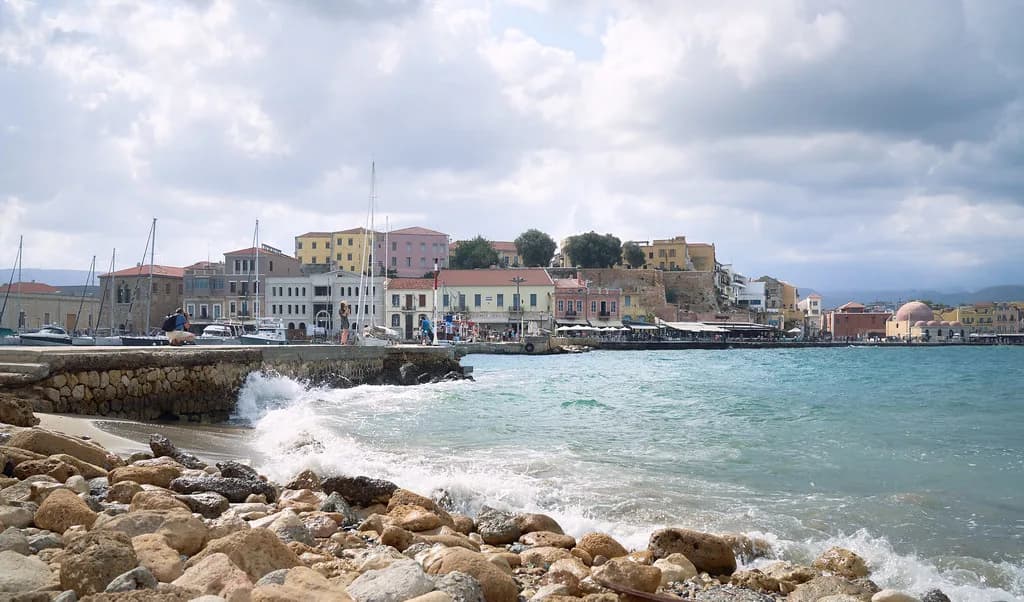
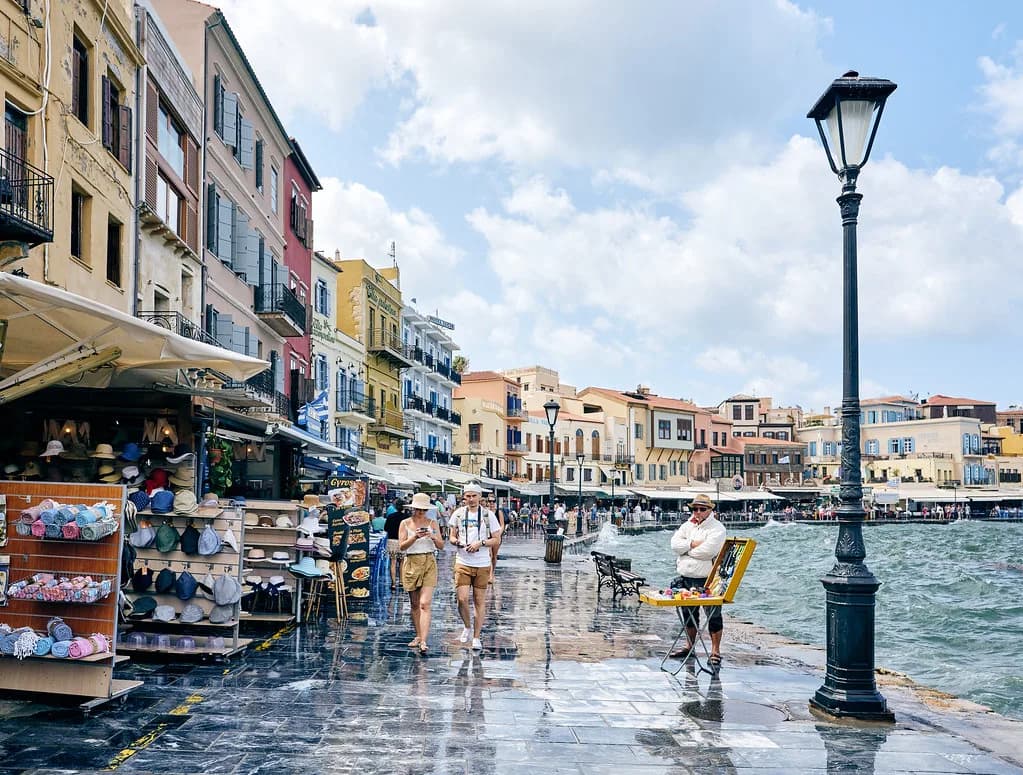
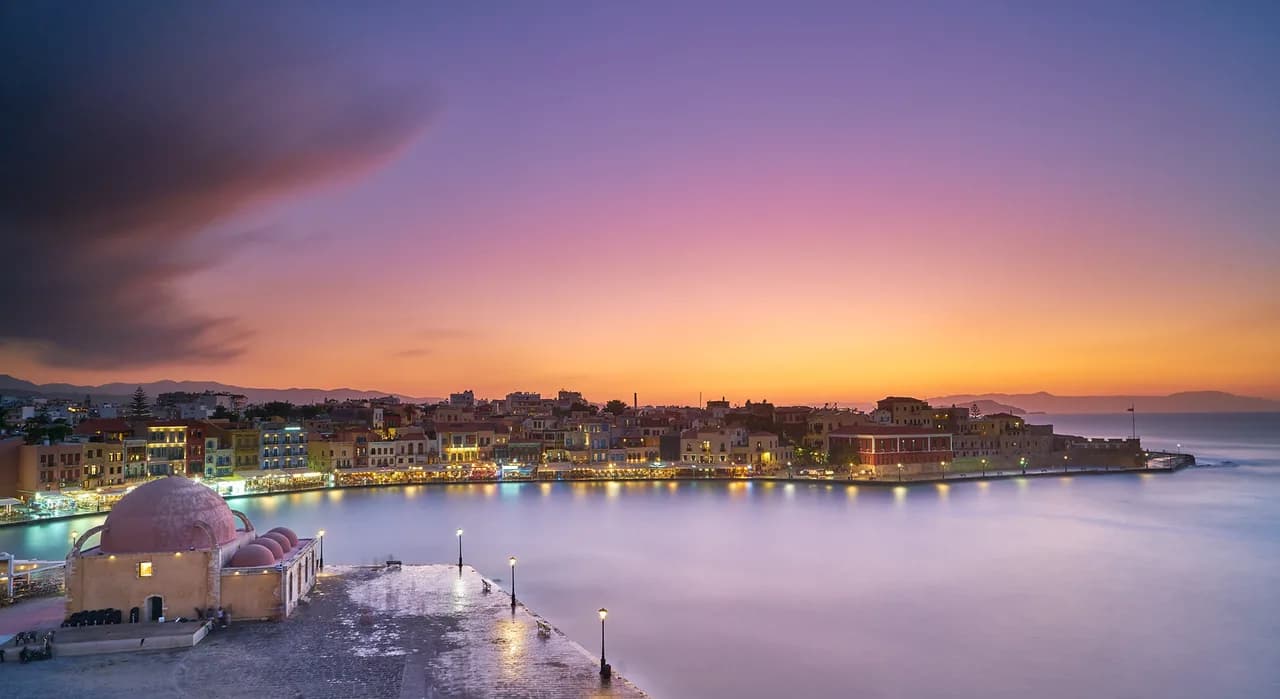
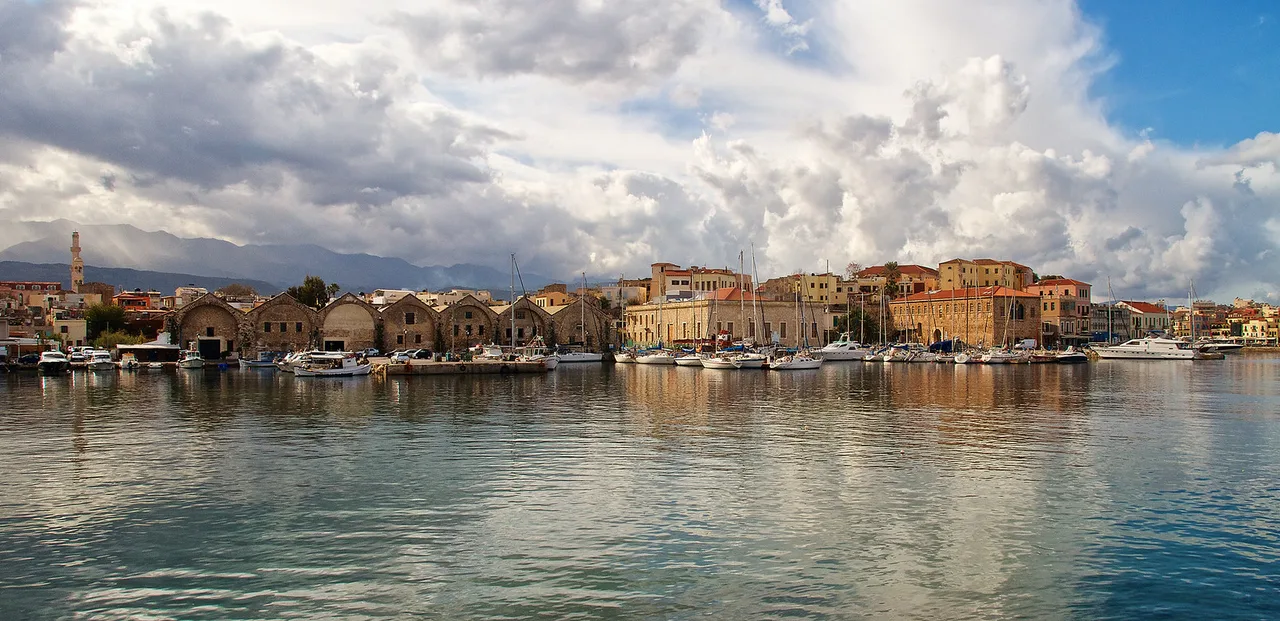
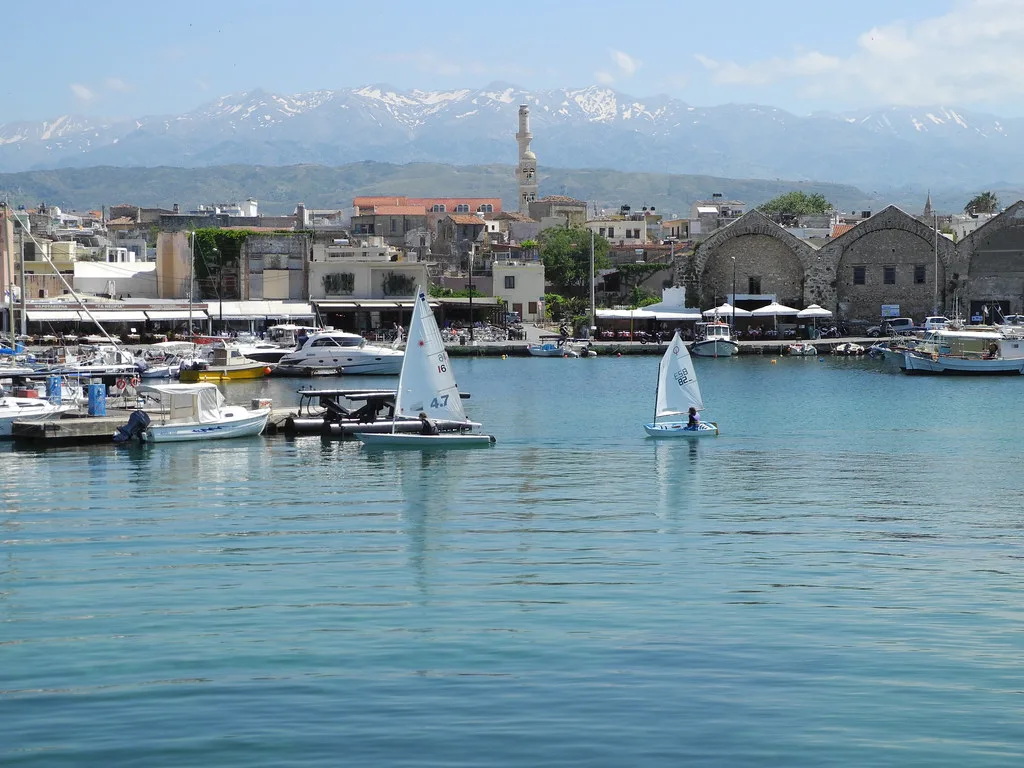
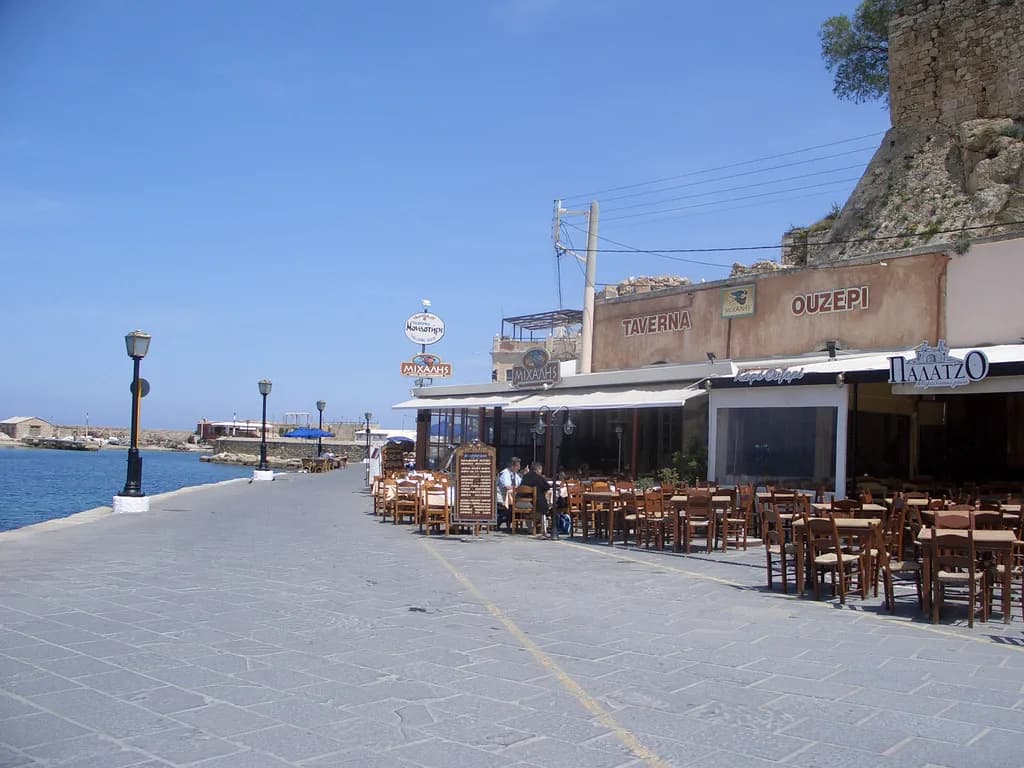
The Venetian Harbor promenade is the most scenic address in the city and the one where you pay for the setting. Restaurants line the waterfront one after another, and while harbor-side meals are not necessarily much more expensive than elsewhere in town, the seating is aimed at visitors and quality varies from shop to shop. Treat the harbor as a view-first choice, not a value-first one.
Splantzia Square, in the old Turkish quarter next to the Church of Agios Nikolaos, is a livelier local gathering place with outdoor tables ringing the square and a cluster of restaurants and coffee shops. It sits a short walk from the harbor, so you can compare the two on the same afternoon. Kouzina, a Greek taverna on the square, is named in one account as serving typical Greek dishes including gemista, stuffed vegetables.
For everyday, quicker eating, the streets around Chania's main city square are the practical zone. Grigoros, a gyros shop on a corner next to the main square, is named in one traveler account as a place to buy a wrap and take it to a park bench. That is the pattern to copy: order at the counter, eat outside, and keep moving.
The municipal market area is the third option, though one account reports the market building closed for restoration at the time of that visit. Check locally before planning a market-based lunch, and use the surrounding streets either way.
Harbor table versus back-street counter
The trade-off is simple to state and easy to get wrong. A harbor table buys you the view, a seat and a slower meal, and it usually comes with a higher bill and a menu aimed at people who are there for the setting. A back-street gyradiko buys you speed, a lower price and a wrap eaten standing or on a bench, with no view at all.
Neither is the "real" Chania. Locals eat at both, and the harbor restaurants are not uniformly worse; the same account advises a quick ratings check before sitting down because some harbor restaurants are better than others. That check takes a minute and saves an afternoon.
A workable plan is to split the difference: one sit-down meal with a view and one counter meal, rather than trying to find a single address that does both. If you want the sit-down meal to be the main event, look at the broader picture of the best restaurants in Chania before you commit to a waterfront table.
Chania spots named in the sources
Grigoros, mentioned above, is the only gyros shop named in the accounts used here, and it is placed on a corner next to Chania's main city square. Beyond that, the sources do not name a single best gyros shop, and ranking unnamed counters would be guesswork. Use the area guidance and your own look at the spit, and apply the same logic elsewhere with the guide to best gyros in mykonos if your trip continues to the Cyclades.
Kaiki, at Neo Chora Marina, is named for fish rather than gyros: a restaurant on the road across from the small marina where local fishing boats tie up, with a catch displayed in an iced cabinet. That marina strip is the seafood alternative when part of your group wants grilled fish instead of a wrap, and it is also handy if you are pairing lunch with a Chania cooking class later in the trip.
A directory listing places a shop called Gyros Chania on Kountourioti Street with posted hours and a phone number, but listing pages of this kind go stale and street details should not be copied as current. Use the listing to locate the area, then confirm on the ground.
What to drink with it
Ouzo is the anise-flavored spirit most associated with Greek drinking, and it turns milky white when mixed with water and ice. Raki, also called tsikoudia in Crete, is the local grape spirit and the one you are most likely to be offered after a meal. Both are strong, so a small glass alongside food rather than before it is the sensible order.
Meze means small savory plates served with drinks, roughly the Greek answer to tapas, ranging from olives and Cretan cheese to meatballs and seafood depending on the place. Near the coast the plates skew toward fish, which is why a harbor or marina table can make sense for drinks even when you eat gyros elsewhere. Drinking spirits without something to nibble is the one habit worth not copying.
If you want to go deeper into the local drinks, the island's wineries and spirit producers are covered in the wider guide to Cretan Food Explained, including named estates such as Lyrarakis winery. That is a separate outing from a quick gyros lunch, and worth planning as one.
Ordering vocabulary and small mistakes
Learn four words and the counter stops being intimidating: gyros, the spit-carved meat; pita, the flatbread; tzatziki, the yogurt sauce; and gyradiko, the shop itself. Add souvlaki if you want skewers, and meze if you are ordering drinks. Everything else can be pointed at.
The most common mistake is expecting a lamb-and-beef cone, which is a diaspora adaptation rather than the Greek norm. The second is forgetting that fries come inside the wrap, so ordering a side of fries as well can leave you with more potato than you planned for. The third is assuming tzatziki is optional by default, when it is standard unless you say otherwise.
If you want to learn the technique rather than just eat the result, a hands-on session through Chania Old Town is a different way into the same dishes. Look for one that covers the everyday cooking rather than restaurant showpieces.
How gyros fits into a broader Cretan menu
Dakos is the other cheap, fast Cretan dish worth knowing: a barley rusk topped with chopped tomato, crumbled mizithra or feta-style cheese, oregano and olive oil. Kalitsounia are small Cretan pies, sweet or savory, filled with cheese or wild greens depending on the version. The regional recipe collection lists both, alongside pies, snails, fish and greens, so it works as a checklist of names to recognise.
Cretan cooking overall leans on olive oil, wild greens, pulses, snails, lamb and goat, with fish depending on the coast, so a gyros lunch leaves plenty of room for a slower dinner of stewed greens or lamb with wild greens. Browse the dish names before you go so the taverna menu reads as food rather than vocabulary.
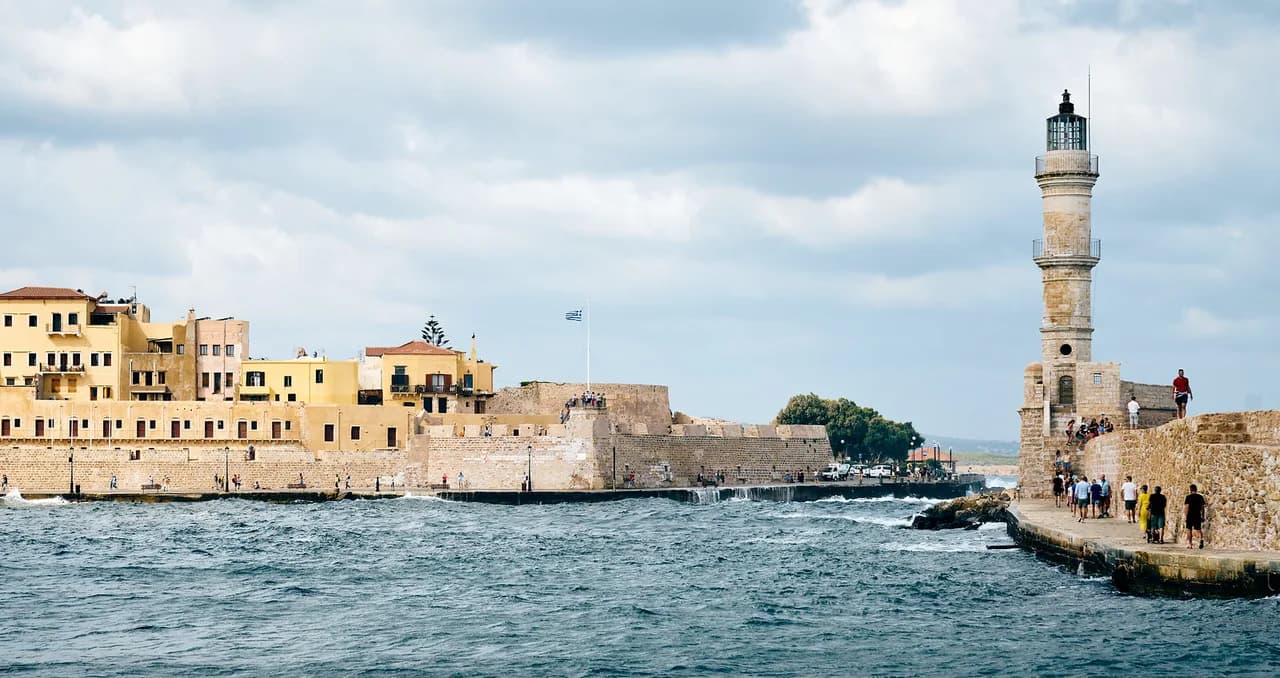
If you only have a day, pair a gyros lunch with one non-food sight so the meal is not the whole outing. The Chania Attractions: 8 Visitor Guides covers the harbor, the lighthouse and the old neighborhoods within walking distance of the counters.
Daytime logistics
The old town is walkable and most of what you want sits within easy walking distance of the center, which makes gyros a natural lunch between sights. Cars are of limited use in the historic center, and parking there is scarce, so don't plan to drive from counter to counter.
Ride-hailing apps do not operate in Chania or elsewhere in Crete, but taxis exist and the city has a public bus network with routes and times shown in mapping apps. Paying the driver is possible, while buying a ticket in advance from the central square kiosk is cheaper.
If your trip extends to other islands, the same decision framework applies: counter versus table, pork versus chicken, wrap versus skewer. The guide to best gyros in naxos applies the same logic to another town, including the area around Protopapadaki Street.
Plan Your Gyros Stop
Decide before you leave the hotel: a fast counter lunch or a seated harbor meal, pork or chicken, with or without tzatziki. That single set of choices solves most of the confusion around eating gyros in Chania, and it lets you spend the saved time on the old town instead of on comparing menus.
Use the area guidance rather than a fixed address, read the posted prices before ordering, and confirm anything time-sensitive such as market openings or shop hours on the ground. If you want to build a whole day of eating around the city, the Chania Food Tour Guide shows how a guided walk stitches the same stops together, and the best restaurants in chania old town covers the sit-down end of the list.
Frequently Asked Questions
Is gyros common in Crete?
Yes. Gyros and souvlaki are everyday street food across Crete and Greece, sold at dedicated gyradiko shops and at grills that also serve skewers. In Chania you will find them around the main square, in the old town and along the harbor, with pork and chicken as the standard meats.
What meat goes into a Greek gyros?
Pork and chicken are the usual choices in Greece, carved from a vertical spit and served in pita with tomato, onion, fries and tzatziki. The lamb-and-beef blend common in the United States is not the Greek norm, so order by the pork-or-chicken decision instead.
Do Greeks eat gyros with lamb?
Not typically as the spit-carved gyros filling, which is normally pork or chicken. Lamb does appear in Greek cooking as souvlaki skewers and in dishes such as lamb with wild greens, but the standard gyros wrap is not a lamb-and-beef mix.
How much does a gyros cost in Chania?
Traveler accounts report a large gyros at roughly four to five euros, but that is not an official menu quote and it will vary by shop and season. Read the posted price at the counter before ordering rather than relying on any figure online.
Is Chania walkable for finding gyros?
Yes. The historic center is compact and pedestrian-friendly, and the harbor, Splantzia Square and the main square area are all within walking distance of each other. Parking in the old town is limited, so walking is the practical way to compare counters.
What is the difference between gyros and souvlaki?
Gyros is meat stacked on a vertical spit and shaved off in thin slices, while souvlaki is chunks of meat grilled on a skewer. Both are usually served in pita with tomato, onion and tzatziki, but the texture and char are noticeably different.
What should I drink with gyros in Chania?
Ouzo, the anise spirit that turns cloudy when mixed with water, or raki, the Cretan grape spirit also called tsikoudia, are the local options. Both are strong, and they are normally served with small meze plates rather than on their own.
Can I get gyros without tzatziki?
Yes. Asking for no tzatziki or for it on the side is a normal request at a gyradiko counter. Note that fries usually come inside the wrap, so if you also want a portion on the side, order it deliberately.
Sources
Notes for eating well in Greece
Optional updates to our guides.
You might also like
Continue reading
More guides you'll find useful