Shopping in Santorini: What to Buy in Fira, Oia and Beyond
Plan your shopping in Santorini with a practical guide to Fira's Fabrica centre, Oia boutiques and edible souvenirs like fava and tomato paste.
On this page
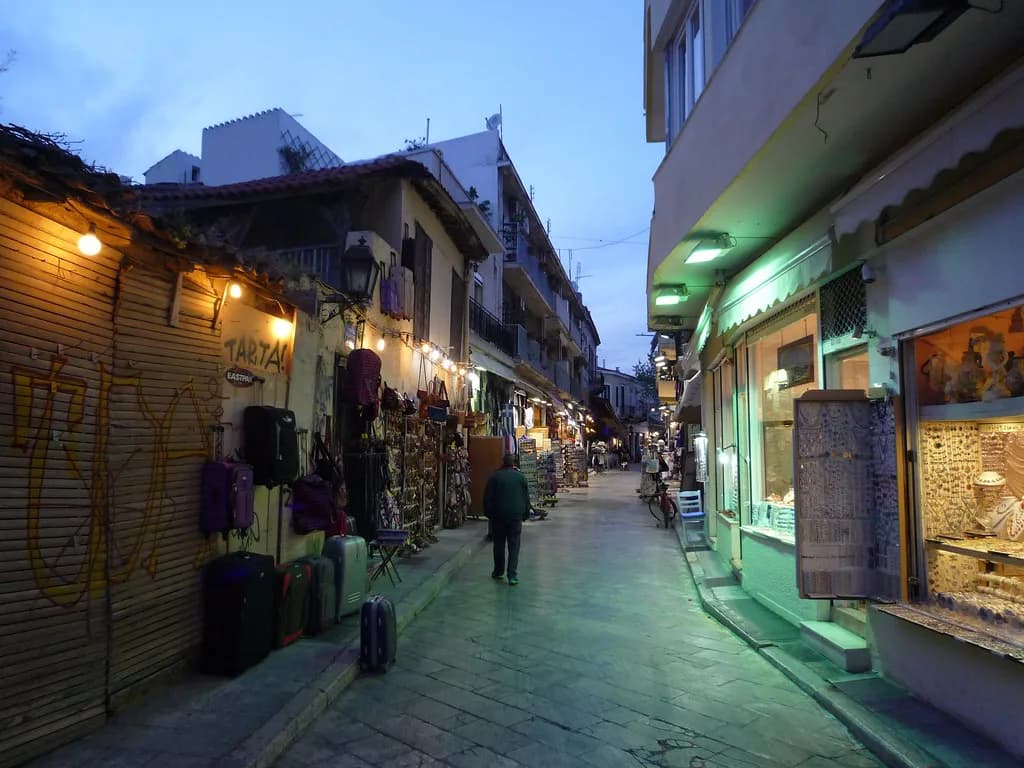
Most visitors picture Santorini as a cliff path of sunsets, but the island also has a busy retail side concentrated in two villages: Fira on the caldera rim and Oia in the north. Browsing is easy because the shops sit along the same lanes you walk anyway, yet the offer differs enough that it pays to know which village suits your list. This guide covers what is sold where, which local products make sense as gifts, and how to carry it all home from stepped, cobbled streets.
One expectation worth setting early: there are no blockbuster designer flagships in Fira or Oia, only boutiques and concept stores that mix international labels with Greek design, according to an overview of the island's shops. The nearest thing to a mall is Fabrica, a converted mill in Fira centre that gathers several known brands under one roof. Plan around that split, using Fira for volume and convenience and Oia for slower browsing, and the day becomes much simpler.
What Shopping in Santorini Actually Looks Like
The retail map is essentially two villages. Fira is the larger option, with the densest run of shops and a working town around them. Oia, at the northern tip, is smaller and more design-led, with narrow lanes that fill up before sunset. A third cluster of branded boutiques sits in Kamari, on the beach side of the island, for anyone staying near the east coast.
What are good souvenirs to buy in Santorini? Look for edible local products such as tomataki (small cherry tomatoes preserved as paste or dried), fava (yellow split peas, sold dried or as paste), white eggplant preserves and capers, all often sold in gift packaging. Ceramics from small workshops in Fira and Oia, jewellery from Fira's shops, and silk accessories or books in Oia are also practical.
Is shopping better in Fira or Oia? It depends on your list. Fira has the densest concentration of shops, including Fabrica, the closest thing to a mall, plus most of the jewellery and clothing boutiques.
What is Fabrica shopping centre in Fira? Fabrica is a converted mill in central Fira that functions as a small indoor shopping centre. One source lists brands such as Pink Woman, Yamamay, Superdry and Adidas among its tenants, while the centre's own site describes it as a mill turned mall.
Small workshops making ceramics and handmade objects are scattered through Fira and Oia rather than grouped in one craft district, so treat them as stops along your walk instead of a separate destination. That means your route matters more than a list: pick one village per session, and accept that you will pass most shops rather than cover them all. The reward is that the same lanes serve sightseeing and shopping at once.
Fira as Your Main Shopping Base
Fira's main cobblestone street is the island's most practical shopping stretch, lined with clothing boutiques, jewellery, souvenir shops and accessory stores. It is where you go if you want to compare several shops quickly, since the density lets you walk a short distance and see a dozen options. The trade-off is crowds, especially when cruise excursion groups are in town, so shopping earlier in the day or later in the afternoon is usually calmer than midday.
Fabrica, the converted mill in central Fira, works as a one-stop stop when you need a specific item rather than a browse. One source describes it as a mini-mall housing brands such as Pink Woman, Yamamay, Superdry and Adidas, while the centre's own site frames it as a mill turned mall. Brand line-ups change, so check the centre's shop directory before making a special trip for one label.
Beyond the chains, Fira carries several named boutiques worth knowing by area. Bazaar sits on the main street with international fashion labels and evening wear, Drakkar has two Fira locations mixing foreign design with Greek brands, and Milo and Spicy are both in Fira, with Spicy described as having caldera views. Spicy also stocks work by Greek designers and local artisans, which makes it a reasonable first stop if you want something made on the island rather than imported.
Oia Boutiques and Concept Stores
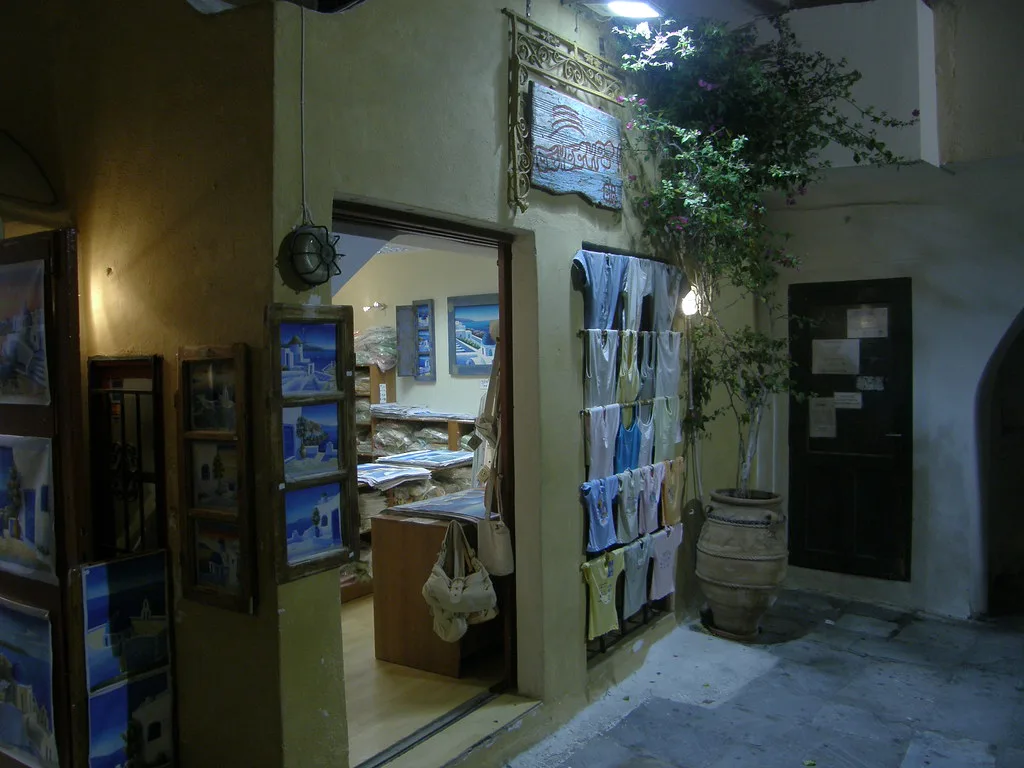
Oia's shops reward slow browsing, especially the concept stores that blend clothing, objects and art. Speira stocks Greek-designed apparel, artisan candles and Cycladic-themed pieces, while Ecru occupies a traditional captain's house selling Greek and international clothing, shoes and handmade items. Both are the kind of place where a single purchase takes twenty minutes of looking, so budget time rather than dashing between them.
The Silk Shop in Oia is a former bakery now selling silk scarves, shawls, sarongs and bags, a useful stop if you want a lightweight gift that packs flat. Atlantis Bookshop in Oia stocks English and French titles, art volumes and island history, and is the obvious pick for a reading gift or a rainy-day browse. For a wider walk-through of the village's lanes, see shopping in Oia.
Be realistic about timing. Oia's lanes bottleneck badly in the hours before sunset, when everyone converges on the caldera edge, and a shopping bag in those crowds is a nuisance. Shop in the morning or early afternoon, leave the fragile purchases at your room, and come back for the view unencumbered. If you are staying in Oia, ask your accommodation about baggage storage rather than hauling ceramics along the cliff path.
Jewellery in Fira: Design-Led vs Mass-Market
Fira holds most of the island's jewellery shops, from Greek houses to small independent counters, and the range makes it the right place to compare before buying. One of the named stops is Ilias Lalaounis Jewellery at the Fabrica Centre in Fira, a Greek house whose pieces draw on Byzantine, Neolithic and Mycenaean motifs. Knowing that context helps you read the displays: design-led pieces usually reference a specific tradition, with a story behind the form.
To tell a considered piece from a mass-produced one, look at how the design is finished rather than at the window lighting: ask whether the piece is made in Greece, whether it can be resized, and what documentation comes with it. Ask for the receipt and any hallmark information before you pay, and photograph the item so you have a record for insurance or customs. Prices vary widely and are not published consistently, so compare two or three shops in Fira before committing to a caldera-view counter.
Clothes, Brands and Sandals
Clothing in Santorini splits between international labels and Greek designers, and the two often share the same street. Ammos, one of the island's largest fashion names, has shops in Fira, Kamari and Oia and carries labels such as Mes Demoiselles, Moncler, Ash and American Vintage alongside Greek designers. Boutiques like Bazaar and Drakkar in Fira cover the international side, which means a single afternoon in Fira can cover most of a clothes list.
For Greek design specifically, look at Spicy in Fira and the concept stores in Oia, plus Wanderlista, which has boutiques inside the Mystique hotel in Oia and the Vedema hotel in Megalochori. The White Santorini, with shops in Fira and Kamari, sells bright, boho-style pieces that suit the island setting. Leather sandals appear in several boutiques rather than in dedicated shoe shops, so try them on when you find a pair instead of assuming you will see them again in the next village.
Edible Souvenirs: Tomataki, Fava and Capers
Santorini's most distinctive food souvenirs come from its volcanic soil. The Theran cherry tomato, called tomataki, is a small, intensely flavoured tomato dried or turned into paste and sold in jars; fava is a yellow split-pea purée ingredient, sold dried or as a ready paste; white eggplant is a pale local variety, often preserved; and capers grow wild on the island and are packed in brine or salt. All of these appear in special gift packaging in island shops, which makes them easy to carry.
Buying a jar of tomato paste or a bag of fava is a low-risk way to take the island home, and the products keep far better than pastries or cheese. Check that liquids and pastes are sealed, wrap jars in clothing inside a checked bag, and keep any bottle of wine under the airline's liquid limits if it goes in hand luggage. If you want a broader list of Greek food gifts to compare, our guide to greek souvenirs covers spoon sweets, Greek mountain tea and other staples you can also find on the island.
For context on how these ingredients are actually eaten, the dish-by-dish guide to what to eat in Greece explains fava and tomato-based meze in plain terms. Knowing the dishes makes shop labels easier to read, and it stops you buying a jar of something you would never serve at home. A small jar of capers or a pouch of fava is usually a better gift than a bulky novelty item.
Ceramics and Handmade Objects
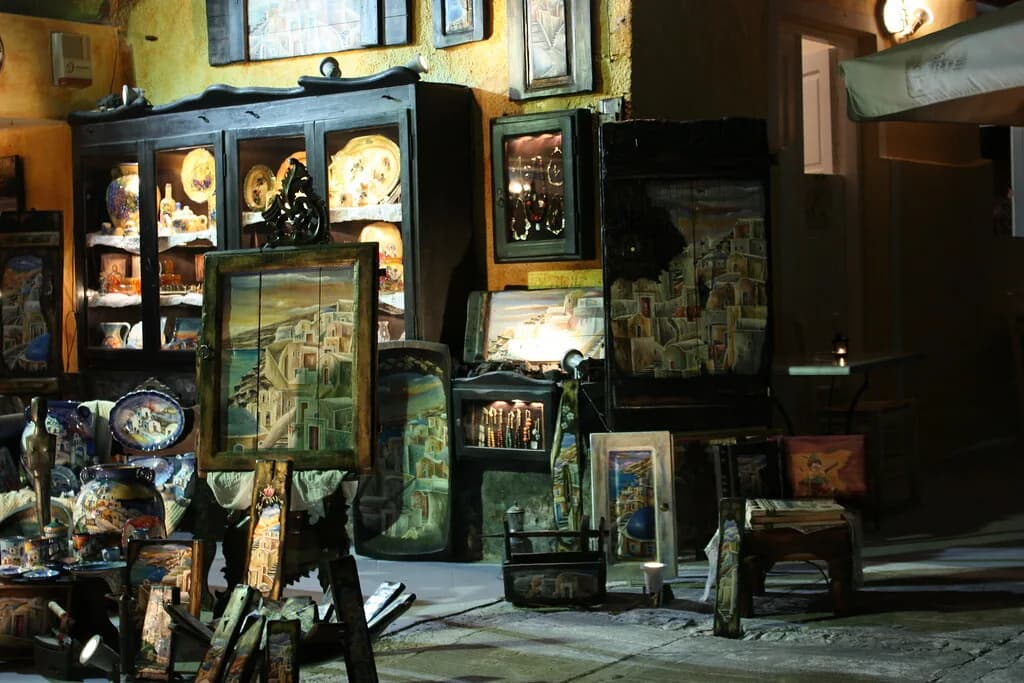
Small ceramic workshops in Fira and Oia sell plates, bowls and cups made on the island, and these are among the most satisfying purchases because they are both useful and made locally. The catch is fragility: cobbled steps, crowded buses and aircraft holds are unkind to pottery. Ask the shop to wrap the piece in bubble wrap and paper, then carry it in your hand luggage if the airline allows, or pack it in the centre of a checked bag surrounded by soft clothing.
Handmade objects extend beyond pottery. Speira in Oia stocks artisan candles and Cycladic-themed objects, and the boutiques around Fira carry paintings, sculptures and small design pieces. Set a spending limit before you enter, because the combination of view, lighting and holiday mood makes it easy to overspend on an object that will not fit in your bag. If a piece is too large, ask about shipping and get the cost and lead time in writing before you pay.
Price Tiers and the View-vs-Value Trade-off
The clearest trade-off on the island is location. Shops on the caldera side in Fira and Oia pay for the view and price accordingly, while back-street shops a few turns inland often sell similar souvenirs with less markup. The view-facing boutiques are not automatically worse value for design pieces or jewellery, where the product is distinct, but for generic T-shirts, magnets and postcards the back streets usually win. Walk one block off the main drag and compare before buying, the same compare-before-you-commit habit that pays off when you weigh up ancient sites in Greece.
Prices vary with season, so the sensible approach is to decide your budget per category before you leave your room: a set amount for edible gifts, a set amount for clothing, and a separate allowance for one piece of jewellery or ceramics. That framing keeps the caldera-view shops in perspective and stops small purchases from adding up unnoticed. If a price seems high, ask politely whether there is a better price for a second item rather than walking away.

Practical Logistics: Crowds, Heat and Bags
Cruise-ship arrivals reshape Fira's streets within minutes, filling the main lane and the cable-car area, then emptying again in the afternoon. If your schedule is flexible, shop in the late morning before the biggest groups land or after they return to the ship. In summer, the cobbles and white walls reflect heat, so carry water and plan a café stop between shopping sessions instead of powering through the whole street in one go.
Carrying purchases around stepped lanes is the practical problem nobody warns about. Take one sturdy tote rather than several paper bags, keep hands free for handrails, and leave heavy or fragile items at your accommodation before heading to dinner or a sunset viewpoint. If you are moving between Fira and Oia, check the current bus and taxi arrangements locally rather than relying on a fixed timetable, since services shift by season.
A Two-Day Shopping Plan That Fits Around Sightseeing
Give day one to Fira. Start on the main cobblestone street for clothes and sandals, stop into Fabrica for any specific brand, then spend the early afternoon on jewellery near the Fabrica Centre, ending with edible gifts from a grocery or gift shop before the jars get heavy. Keep the evening free for the caldera walk, and leave fragile ceramics for the next morning so they stay at your room overnight.
Give day two to Oia, arriving before the midday rush and working through the concept stores, the Silk Shop and the bookshop at a relaxed pace. Buy ceramics early in the day, ask for careful wrapping, and skip any purchase that will not fit your luggage home. If you still have appetite for browsing, Kamari's boutiques are a quieter alternative for branded clothing, and they are easier to combine with a beach afternoon than with Oia's cliff paths.
What Not to Bother Buying
Santorini's boutiques are not discounted designer warehouses, and treating them as outlets will only lead to disappointment. Skip the same souvenirs you will find in every Greek airport, such as generic blue-and-white magnets and printed T-shirts, unless you specifically want a cheap memento. The Greek evil eye is a common buy, but it is widely available across Greece at every price point, so compare here rather than assume an island premium is justified.
Two small items divide opinion more than they should: worry beads and olive wood trinkets. Both are traditional and inexpensive, but quality varies, so handle them before buying. If you want a considered version, look for a komboloi made from a material you can identify rather than a plastic string, and buy it from a shop that can explain its construction. For a wider context on Greek souvenirs, including what other islands do well, see our guide to greek souvenirs.
Plan Your Visit
The short version: use Fira for clothes, jewellery and one-stop shopping at Fabrica, and Oia for concept stores, silk and books, keeping Kamari in reserve for branded clothing near the beach. Buy edible gifts like tomataki paste, fava and capers early, pack ceramics with care and leave sunset hours for the view rather than the shops. That structure gets you the distinctive pieces without spending your whole trip in retail lanes.
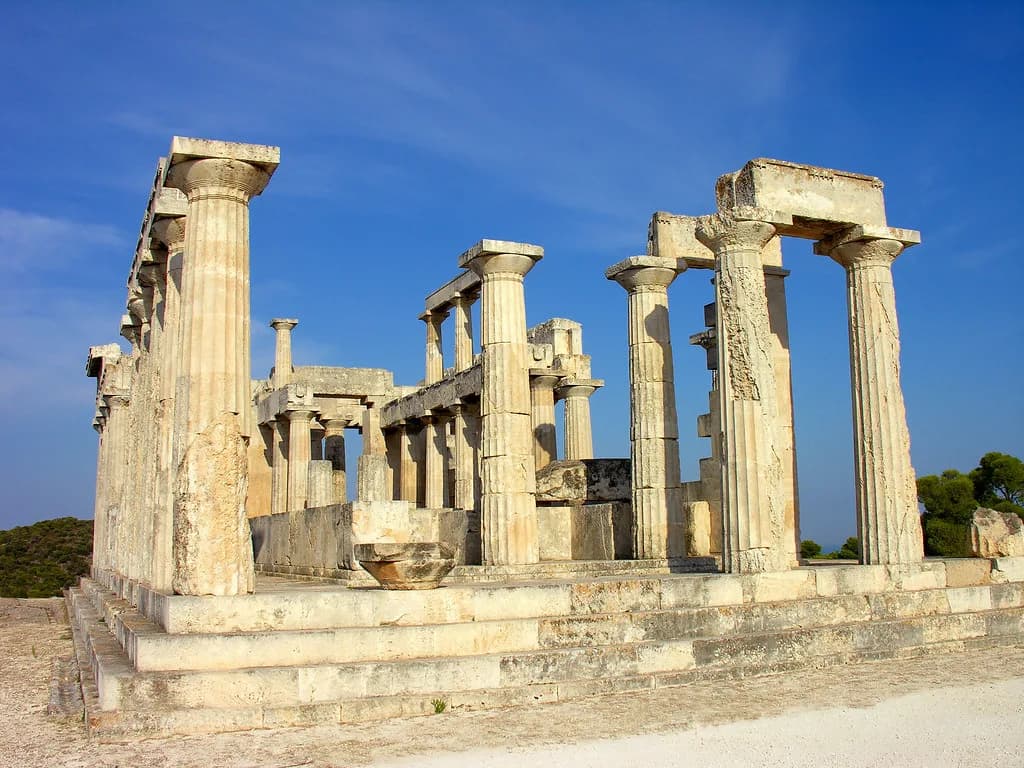
Before you go, check the shop directory at Fabrica and confirm that the particular boutique you want is still trading, since island line-ups change between seasons. If you are also planning sightseeing, our guide to ancient sites in Greece is a useful reminder that the archaeological stops deserve their own day rather than squeezing between shops. For the same reason, plan your meals as their own outing too, and our guide to what to eat in Greece gives you a place to start. Shop with a list, and Santorini's lanes will give you better things than you expected.
Frequently Asked Questions
What are good souvenirs to buy in Santorini?
Look for edible local products such as tomataki (small cherry tomatoes preserved as paste or dried), fava (yellow split peas, sold dried or as paste), white eggplant preserves and capers, all often sold in gift packaging. Ceramics from small workshops in Fira and Oia, jewellery from Fira's shops, and silk accessories or books in Oia are also practical. Skip generic souvenirs you can buy anywhere in Greece.
Is shopping better in Fira or Oia?
It depends on your list. Fira has the densest concentration of shops, including Fabrica, the closest thing to a mall, plus most of the jewellery and clothing boutiques. Oia is smaller and more design-led, with concept stores, a silk shop and a noted bookshop in narrow lanes. Fira suits comparison shopping; Oia suits browsing, ideally before the pre-sunset crowds.
What is Fabrica shopping centre in Fira?
Fabrica is a converted mill in central Fira that functions as a small indoor shopping centre. One source lists brands such as Pink Woman, Yamamay, Superdry and Adidas among its tenants, while the centre's own site describes it as a mill turned mall. Tenants change, so check the shop directory on the centre's site before making a special trip for a particular label.
Where can I buy local food products like fava and tomato paste?
Gift shops and food stores across Fira and Oia sell packaged local products, including tomato paste and dried fava, often in presentation boxes. Supermarkets in Fira are the cheaper option for everyday jars and capers, while boutiques charge more for gift packaging. Look for sealed jars and check labels for the producer and island of origin.
Are there malls or outlet stores in Santorini?
There are no outlet stores in the discounted-designer sense, and no large malls. Fabrica in Fira is the closest thing to a mall, gathering several known brands in one building. Elsewhere, the shopping is boutiques, concept stores and small workshops in Fira, Oia and Kamari.
Can I buy clothes and sandals in Santorini?
Yes. Fira has the widest choice, with boutiques carrying international labels and Greek designers; Ammos, Bazaar and Drakkar are among the names in Fira, and Ammos also has shops in Oia and Kamari. Leather sandals turn up in several boutiques rather than in dedicated shoe shops, so try them on when you see a pair, as you may not find the same one later.
Where are the jewellery shops in Santorini?
Most are in Fira, from Greek houses such as Ilias Lalaounis Jewellery at the Fabrica Centre to small independent counters along the main lanes. Compare several before buying, ask whether a piece is made in Greece and about resizing, and request a receipt and hallmark information. Prices are not published consistently, so compare in person.
How do I pack ceramics and olive oil safely?
Ask the shop to wrap ceramics in bubble wrap and paper, then carry small pieces in hand luggage or pack them in the centre of a checked bag surrounded by soft clothing. For oil, check the airline's liquid rules for hand luggage and wrap bottles in sealed bags before checking them. Keep receipts for anything valuable in case of insurance claims.
Sources
Notes for eating well in Greece
Optional updates to our guides.
You might also like
Continue reading
More guides you'll find useful