
Rethymno Lighthouse: A Guide to the Venetian Harbour Landmark
The Rethymno Lighthouse is the compact stone tower that marks the end of the old Venetian harbour breakwater in Rethymno, on Crete's north coast. It is a landmark to walk out to and look back from, not a museum or a tower you tour inside. This guide covers where it stands, its recorded history, how to approach it on foot, and what to pair with the visit in the old town.
What the Rethymno Lighthouse Is and Where It Stands
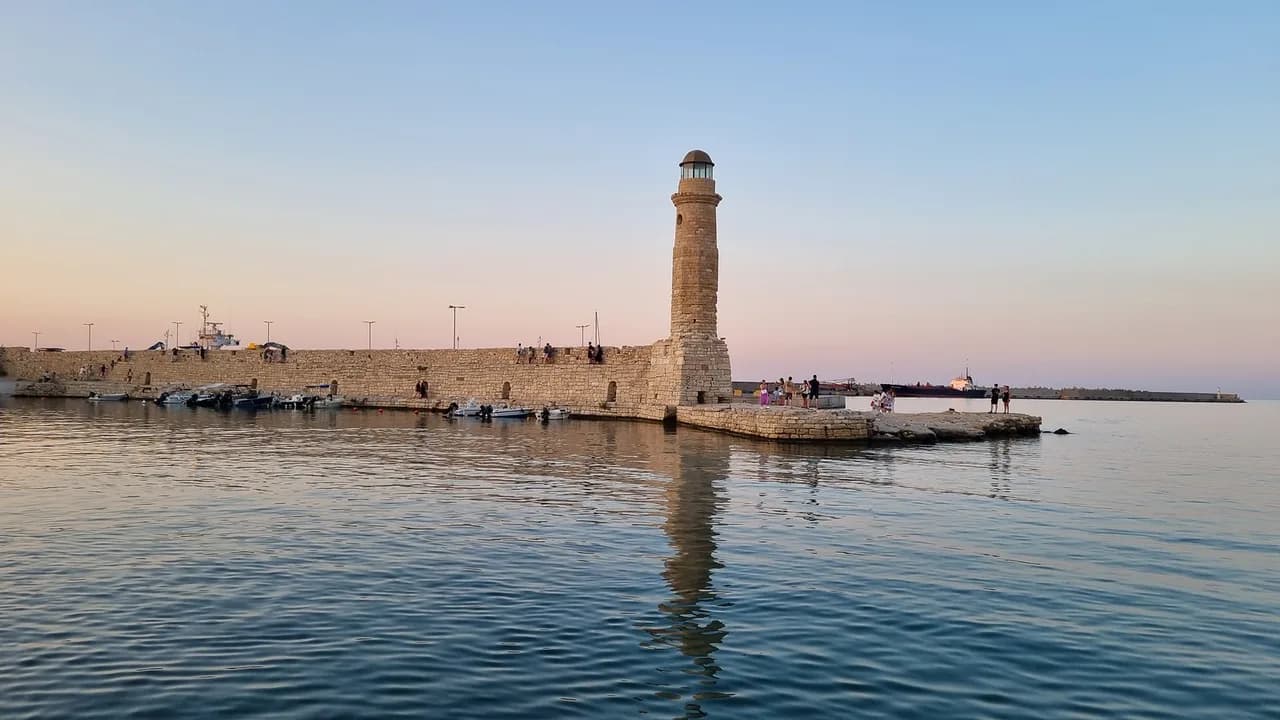
The lighthouse sits at the far end of the old harbour's breakwater, so the structure frames the water on one side and the town on the other. It is a short tower rather than a tall one, which is why it reads as part of the harbour scenery rather than dominating it. Plan on seeing it from the outside, as part of the quayside walk.
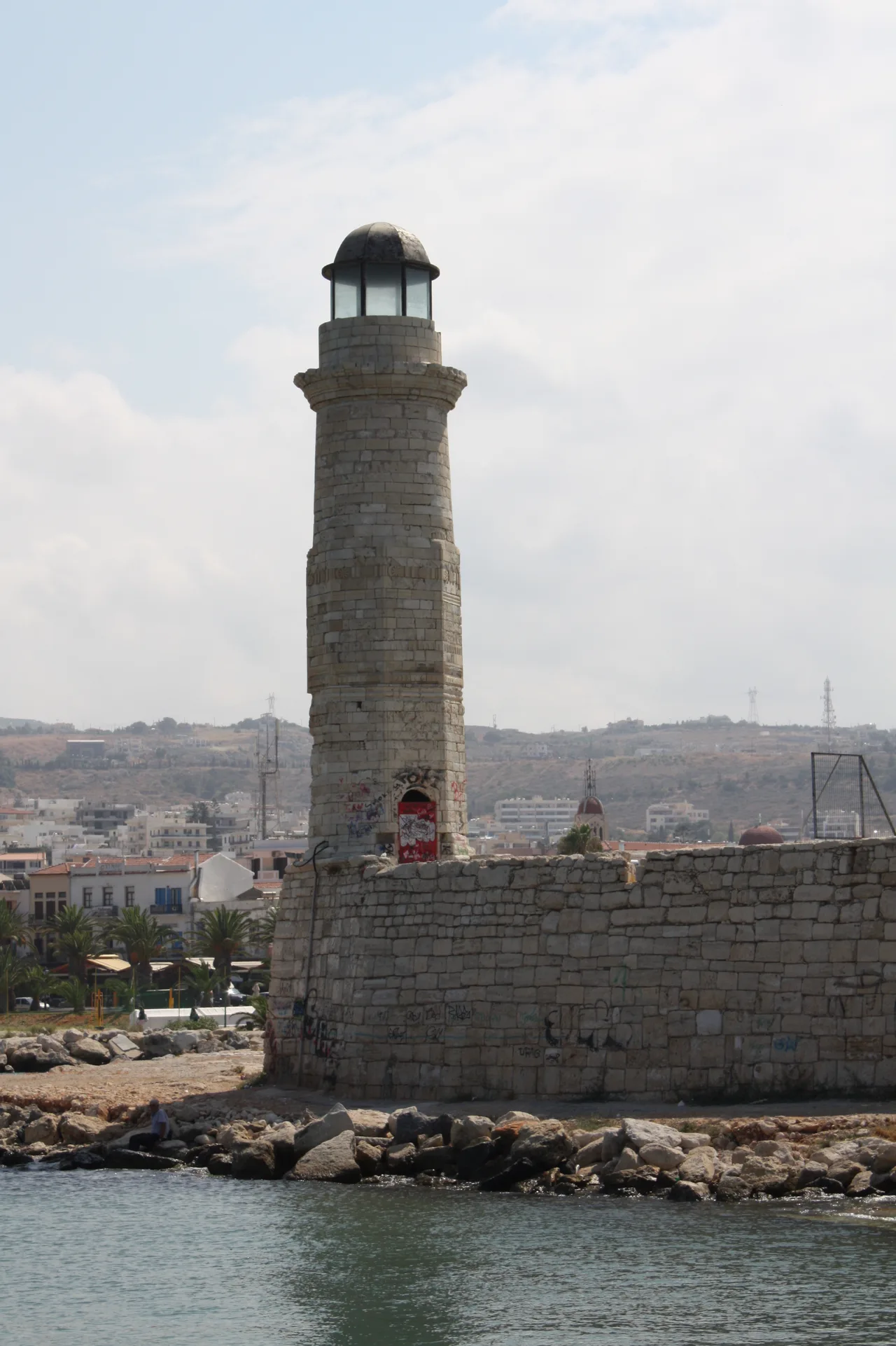
Sources describe the tower as 9 metres high and place it at the edge of the old breakwater in the Venetian port, making it the second-largest Egyptian lighthouse in Crete after the one in Chania. That comparison is useful context: if you have seen the Chania lighthouse, expect something markedly smaller here.
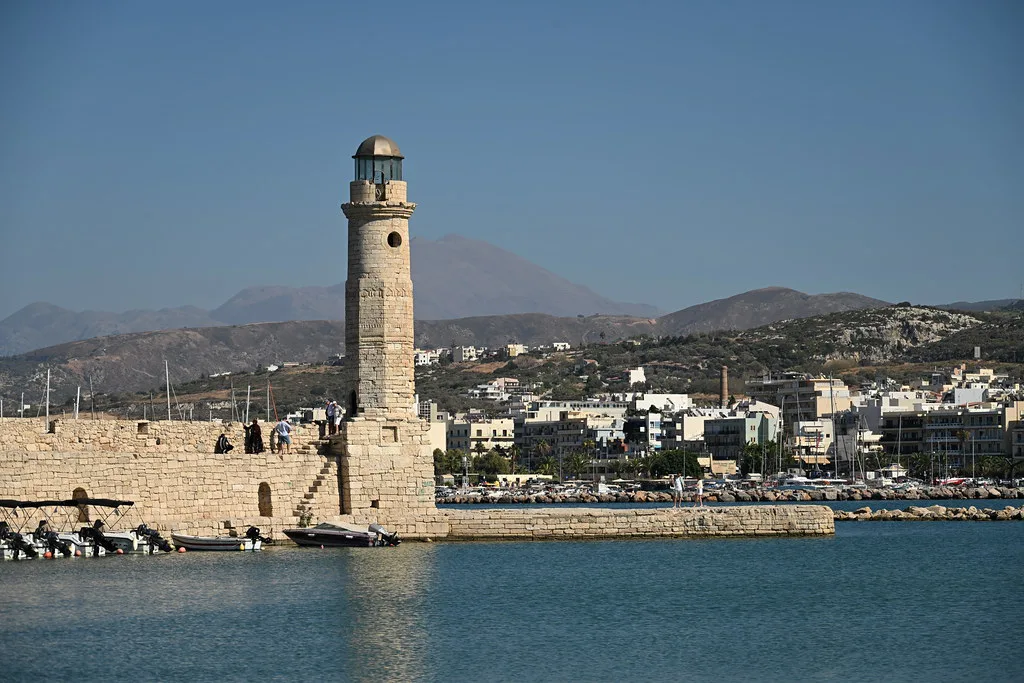
For orientation, the harbour sits below the old town, whose lanes climb toward the Fortezza. The Venetian Harbour of Rethymno is the body of water the lighthouse guards, and its quayside is the natural starting point for the walk out. Treat the lighthouse as the endpoint of a harbour stroll rather than a separate excursion.
How to Get There: Approach on Foot
The practical approach is on foot from the old town: descend to the harbour, then follow the quayside around to the breakwater and out toward the tower. Aim for the harbour itself first, since the lanes are narrow and signposted more for pedestrians than for cars. Walking lets you see how the tower's profile changes as you move along the water.
Driving to the breakwater is not the sensible plan; park outside the old town core and walk in, or arrive by bus and continue on foot. The harbour area is compact, so once you are on the waterfront the tower is the obvious visual target at the end of the stone arm. Wear shoes that handle uneven stone paving, especially on the breakwater.
The History in Brief
Recent research cited for the site indicates the lighthouse was built in 1838 during the Egyptian occupation under Mehmet Ali, with construction integrated into the port works of that period. In 1864 it came under the ownership of the French Company of Lighthouses. Those two dates are the anchors of its recorded story.
A Venetian lighthouse may have occupied the same spot earlier, but sources present that only as a possibility rather than a settled fact. The tower you see is therefore best described as an Egyptian-era structure on a site with a longer harbour history behind it. Keep that distinction in mind if you read older descriptions of the port.
What You Actually See and How Long to Allow
From the town side, the tower appears against the open sea at the end of the breakwater; from further out on the arm, the backdrop becomes the harbour and the old town rising behind it. Walking the quay in both directions gives you both readings of the same small structure. That contrast is the real reason to make the walk.
Allow a short stop rather than a half-day: the lighthouse is a viewpoint and photo subject, and the walk out and back along the harbour is the main activity. Combine it with a circuit of the old town lanes so the trip earns its time. Early morning and late afternoon generally give softer light and thinner crowds on the quay.
If you want more substance after the harbour, the Fortezza of Rethymno above the old town adds a substantial historic visit to the same outing. The two are within the same old-town walk, with the climb up to the fortress as the main effort. Build the day around the harbour first, then the fortress.
Practical Checks Before You Go
Check the municipality's tourism pages or ask at a local information point before you set out about opening hours, tickets, booking rules and interior access for the Rethymno Lighthouse, and plan around climbing it or going inside only once those details are settled. If access matters to you, look into it first instead of leaving it to chance.
Nearby in the Old Town
The harbour walk sits at the bottom of the old town, and several sights are within the same stroll. The Rimondi Fountain in Rethymno is a familiar meeting point in the lanes, and the Loggia of Rethymno is another landmark on the same pedestrian circuit. Both work as waypoints between the harbour and the town's main squares.
If you prefer a single page that maps the old town's sights together, the Rethymno Attractions: 10 Visitor Guides overview is the place to start before choosing what to add. It helps you see which sights cluster near the harbour and which require a longer walk. Use it to build a route rather than to chase every entry.
Two more old-town stops fit naturally: the Archaeological Museum of Rethymno for context on the region's past, and the Neratze Mosque, Rethymno, a former mosque that is now a music venue. Both are indoor stops that balance a harbour walk. Check their own pages for current visiting arrangements.
Food Near the Lighthouse: Harbour View vs Back Street
The main eating decision near the harbour is whether to sit on the waterfront for the view or step into the back lanes for a quieter table. Harbour-front seats trade higher prices and busier service for the outlook; back-street tavernas generally trade the view for a calmer room. Decide which matters more before you sit down, because the two experiences are genuinely different.
For homemade Cretan cooking in the heart of the old town, To Katsarolaki is named as a place for homemade food in Rethymno. It suits a meal after the harbour walk rather than a waterfront table. Order what the kitchen is cooking that day and ask what the dishes are if the names are unfamiliar.
Outside the centre, Calamies Taverna is described as a green oasis in Adelianos Kampos, and Acropolis Family Restaurant serves traditional flavours with Cretan music just outside Rethymno. Both make sense if you have a car and want to combine the lighthouse with a meal further along the coast. Plan the drive accordingly between the harbour and the coast.
In high season, ask about a table at sunset instead of turning up and hoping one will be free; waterfront seats go first. Many island restaurants close roughly November to April, so off-season travellers should check a place is open before making the trip. A phone call or a look at the restaurant's own page settles it quickly.
Plan Your Visit
The Rethymno Lighthouse rewards a modest plan: walk the harbour, see the tower from both sides, and fold the old town's lanes and sights into the same outing. Check access and any current arrangements before you go, then let the harbour set the pace. For the wider context, the Rethymno Attractions: 10 Visitor Guides page helps you slot the lighthouse into a day.
Frequently Asked Questions
Where is the Rethymno Lighthouse?
It stands at the end of the old breakwater in Rethymno's Venetian harbour, on Crete's north coast. The harbour sits below the old town, so you reach the tower on foot from the quayside.
How do you get to the Rethymno Lighthouse?
Walk down to the Venetian harbour from the old town and follow the quayside out along the breakwater. Arriving on foot is the practical approach; cars are best left outside the old town core.
How old is the Rethymno Lighthouse?
Research cited for the site dates it to 1838, during the Egyptian occupation under Mehmet Ali, with ownership passing to the French Company of Lighthouses in 1864. Sources describe a possible earlier Venetian structure on the same spot only as a possibility, not a confirmed fact.
Can you go inside the Rethymno Lighthouse?
No source in this guide confirms interior access, climbing or guided tours of the Rethymno Lighthouse. If entering the tower matters to your visit, check locally before you go.
How long does it take to visit?
Treat the lighthouse as a short stop within a harbour walk rather than a standalone sight. Most visitors combine it with a circuit of the old town lanes and nearby sights.
What is there to see near the Rethymno Lighthouse?
The Venetian harbour quayside is the immediate setting, and the old town's lanes lead up to the Fortezza. The Rimondi Fountain, the Loggia and the Archaeological Museum are within the same pedestrian area.
Where can you eat near the Rethymno Lighthouse?
Harbour-front tables offer the view, while back-street tavernas offer a calmer setting. To Katsarolaki is named for homemade food in the heart of Rethymno, and Calamies Taverna in Adelianos Kampos and Acropolis Family Restaurant just outside town are options if you have a car.