
Venetian Harbour of Rethymno: A Visitor's Guide to the Old Port
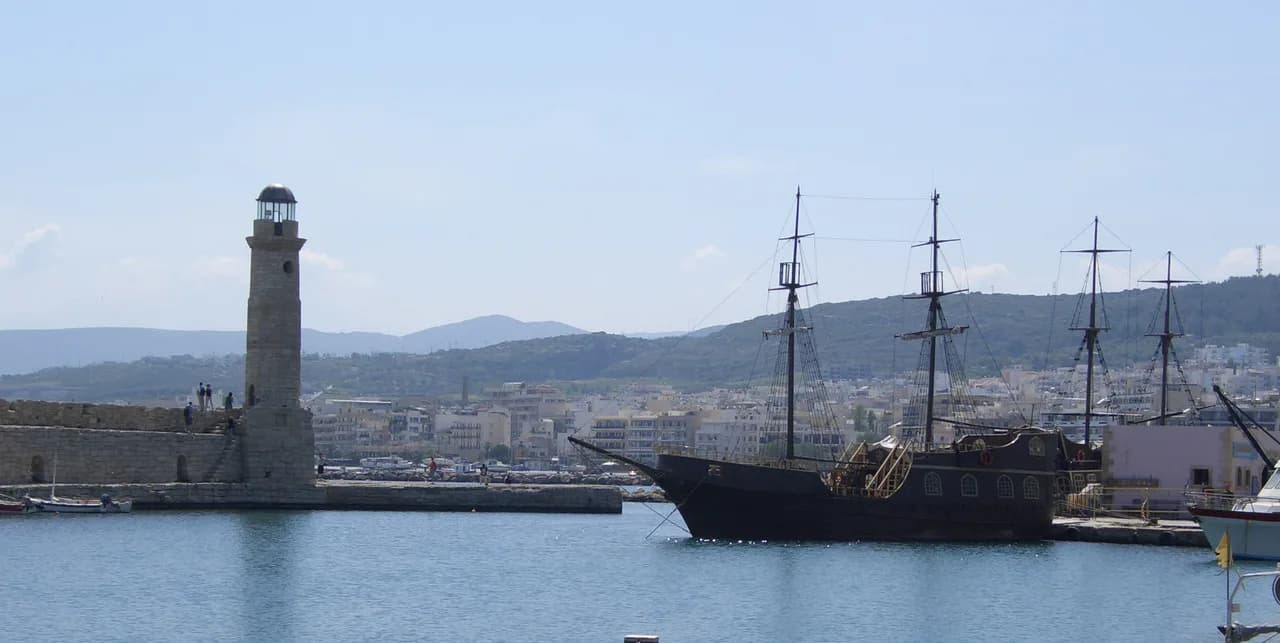
The Venetian Harbour is the old port of Rethymno, sitting at the heart of the harbour facilities and at the foot of the old town's lanes. It is not a museum piece cordoned off from daily life: fishing boats and yachts moor here, and the Egyptian lighthouse stands over the entrance. This guide treats the harbour as one place to visit, covering its layout, the walk along the quays, the lighthouse view, and the practical points that decide how long you stay.
What the Venetian Harbour of Rethymno Is
This is Rethymno's historic waterfront, an open harbour basin where the town's working boats and visiting yachts share the same sheltered water. The municipality describes the old harbour as lying within the core of the port facilities, so you are walking through an active small port rather than a decorative marina. That matters for how you plan the visit: there is no gate, no set route and no single viewpoint, so you build the stop around the quays, the entrance and the lighthouse.
The harbour's story runs deep. It is generally described as operating from the Byzantine period onward, and the waterfront you see today layers Venetian, Ottoman and modern elements along the same curve of stone. Travel accounts of the old town note that the harbourfront now mixes cafes, tour boats and local fishermen, which is a fair summary of what to expect: a place in use, not a preserved set piece.
Where It Is in Rethymno
The harbour sits on the north edge of Rethymno's Old Town, on Crete's north coast, and the old town streets run down to it. Once you are in the historic centre, the water is the simplest orientation tool you have: walk north and downhill through the lanes and you will reach the quayside. Coming from the modern town, head for the waterfront and follow it until the basin and the lighthouse come into view.
The port layout is worth knowing before you arrive. The municipality lists a total pier length of 390 metres, a sailing depth of 2.50 metres, and a harbour land surface area of 5,250 square metres, with a separate designated docking area for tourist vessels. In practice that means a compact basin you can walk around rather than a sprawling commercial port, and it explains why sightseeing boats and fishing caiques sit in distinct zones.
How to Get There and Use It as a Landmark
Walking is the natural way in. From the old town lanes the harbour is a short downhill stroll, and from the eastern or western waterfront it is a straightforward continuation along the sea. If you are arriving by bus or car into the modern town, park or alight centrally and approach on foot, because the value of the harbour is the connection between the water and the streets behind it.
Treat the harbour as your fixed point while exploring. The old town's sights sit inland of the quays, so you can loop out to a fountain or a gate and return to the water to reorient yourself. This is also how to judge distances realistically: the historic centre is small enough that most old town stops are a few minutes apart on foot, though the lanes bend and signs are inconsistent.
The Egyptian Lighthouse at the Harbour Entrance
The Egyptian lighthouse is the harbour's signature view, standing at the entrance to the basin where it frames every approach from the water. Accounts of the port date the structure to the 1830s, and it is the marker travellers photograph from the quay rather than a building you tour. The best angle is from along the breakwater side, looking back at the tower with the harbour mouth in front of it.
Plan the lighthouse as a view, not a destination with a queue. There is no visitor information published for entering the tower, so check locally if that matters to you rather than building the day around it. Late afternoon light falls favourably on the harbour mouth, while early morning gives you quieter quays and cleaner shots without crowds in the frame.
Boats in the Port: Fishing Caiques, Yachts and Tourist Vessels
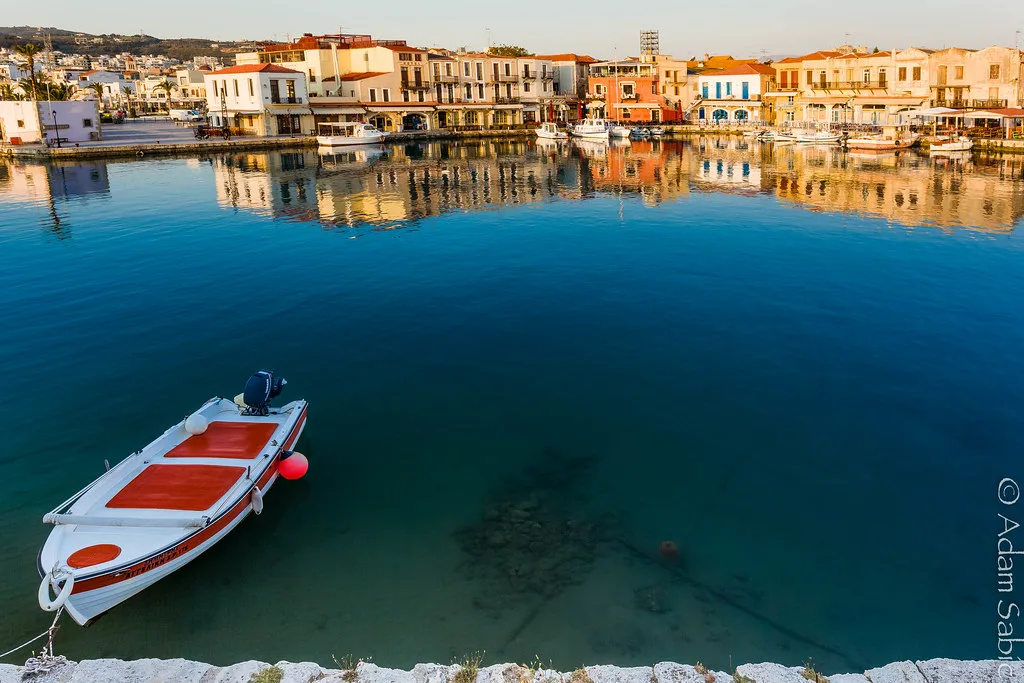
What you see moored tells you what kind of port this is. The municipality states that fishing boats and yachts dock along the Venetian harbour, and that a designated area handles tourist vessels. For a visitor this is part of the appeal: the basin is a working quayside you can wander, with the practical caution that mooring areas are not viewing platforms and boat crews have work to do.
If you are considering a boat trip from the harbour, book with the boat owner whose vessel is actually in front of you and confirm departure point, duration and what is included at the time of booking. Prices and schedules for trips are not fixed in any public listing, so ask the skipper or ticket seller at the quay rather than relying on a figure you read elsewhere. The harbour itself is free to walk through; the boats are a separate purchase.
The Waterfront Walk
The walk itself is the main activity: along the quayside past the moored boats, around the basin, and out toward the harbour mouth for the lighthouse view. Because the pier length totals 390 metres, a full circuit is a short stroll rather than a hike, which makes the harbour easy to combine with the rest of the old town. Look back inland as you go, since the waterfront gives you the clearest read of how the town's buildings step down to the sea.
The harbour also works as a natural link back into the streets. From the quays you can climb into the old town, where the lanes open onto squares, churches and Venetian-era buildings. If you want a structured route rather than a wander, the wider old town is worth exploring as its own walk once you have finished at the water.
Harbour-Side Eating and the Summer Season
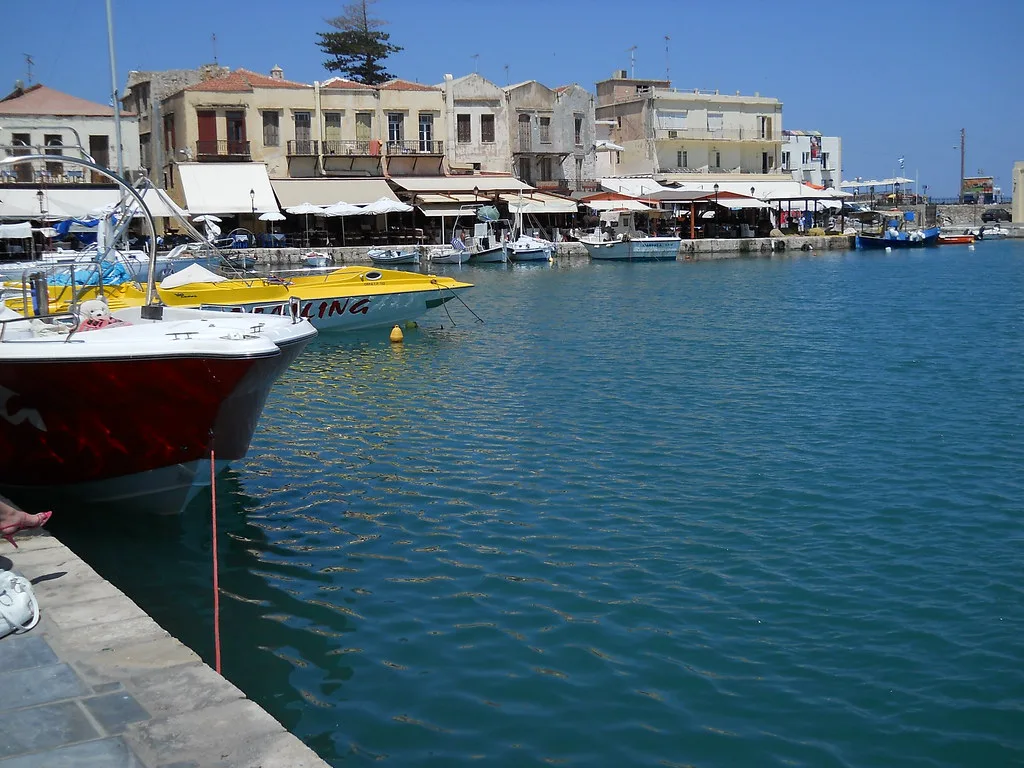
Fish restaurants line the Venetian harbour, and the municipality notes that these operate during the summer months. That wording matters for planning: it is a seasonal trade tied to the visitor season, not a year-round strip. If harbour-side seafood is part of your plan, treat the waterfront as a summer proposition and have a fallback in the old town for the quieter months.
For a Greek seafood meal, the names to recognise are grilled octopus (htapodi sti schara), fried or grilled sardines and other small fish, and calamarakia, small squid. A mixed plate or a fish sold by weight is common, so ask what the day's catch is and how it is priced before ordering. The trade-off at the harbour is obvious: you pay for the view and the location, while back streets a few minutes inland tend to be calmer and cheaper.
How Long to Allow
For the harbour alone, an hour covers a slow walk around the basin, a stop for the lighthouse view and a coffee on the quay. Add another hour if you are eating at a waterfront table, since a proper Greek meal is unhurried and the view encourages lingering. A half-day is realistic if you pair the harbour with two or three old town stops inland.
Time of day changes the experience more than season does. Early morning brings fishermen, quiet water and uncluttered photographs; evening brings the harbourfront to life with diners and strollers. Midday in high summer is the least comfortable window on an exposed quay, so plan the walk for the edges of the day and use the middle hours for the shaded lanes.
Nearby in the Old Town
The Rimondi Fountain is a short walk inland from the harbour, a Venetian-era fountain that still anchors a small square in the old town. It is a quick stop rather than a sight that needs its own slot, and it works well as the first inland point on a loop back from the water.
The Porta Guora, the surviving Venetian gate, marks another entry into the old town's street network and is close enough to fold into the same walk. Nearer the water, the Municipal Garden offers a green pause when the quayside is crowded. The Loggia and the Neratze Mosque, an Ottoman-era mosque now used as a music venue, sit within the same compact centre and can be added if you are extending the loop.
Other old town sights are close by if you want to build a fuller day: the cathedral, the Four Martyrs Church, and the archaeological museum housed in the former Church of Saint Francis. Keep the harbour as the anchor of the day and treat these as add-ons rather than a checklist, since the distances are short but the lanes slow you down.
Practical Notes Before You Go
The harbour has no published entry fee or opening-hours schedule, and it functions as an open outdoor space rather than a ticketed attraction. The municipality publishes the practical side of the port, including pier length and docking depth, on its harbour pages rather than any visitor timetable. For events, works on the quays or changes to the tourist-vessel docking arrangements, check that page shortly before you travel.
If the harbour is one stop on a wider trip, look at the town's other sights before you lock in a plan. The Fortezza, the Venetian fortress on the hill above the old town, is the obvious companion visit and gives you the reverse view down to the harbour and the sea.
Plan Your Visit
The Venetian Harbour rewards a simple plan: walk down from the old town, circle the basin, take in the Egyptian lighthouse at the entrance, and decide on the spot whether the waterfront view is worth a table or whether you would rather eat inland. Allow an hour for the harbour alone and a half-day if you are adding old town stops.
One check is worth making before you go: confirm whether the harbour-side fish restaurants are operating for your dates, since the municipality describes that trade as a summer one. With that settled, the rest of the visit is a matter of timing the light and leaving room to wander the lanes above the water.
Frequently Asked Questions
What is there to see at the Venetian Harbour in Rethymno?
The main draws are the harbour basin itself, the moored fishing boats and yachts, and the Egyptian lighthouse standing at the entrance to the port. The municipality describes a compact harbour with a 390-metre pier, with tourist vessels using a designated docking area. It is an open outdoor space rather than a ticketed sight, so you walk the quays and take in the view.
Can you walk to the Venetian Harbour from Rethymno Old Town?
Yes. The harbour sits on the north edge of the old town, and the lanes run downhill to the quays. From the historic centre it is a short walk of a few minutes, and the water is the easiest orientation point if you lose your bearings among the streets. Coming from the modern town, head for the waterfront and follow it to the basin.
Is the Venetian Harbour in Rethymno worth visiting?
It is worth visiting if you want a working port rather than a curated attraction: fishing boats and yachts moor in the same basin, and the lighthouse view is the signature image of the town. The trade-off is that there is little structured to do beyond walking and eating, so an hour or so is usually enough unless you add a waterfront meal.
When are the fish restaurants at Rethymno's Venetian Harbour open?
The fish restaurants along the Venetian harbour operate during the summer months, per the municipality. It publishes no specific opening or closing dates, so check directly with the restaurant you plan to visit if your trip falls near the start or end of the season. In the quieter months, look inland in the old town instead.
How long should you spend at Rethymno's old harbour?
An hour covers a slow circuit of the basin, a stop for the lighthouse view and a coffee on the quay. Add roughly another hour if you sit down for a meal at a waterfront table. If you are pairing the harbour with old town sights such as the fountain or the fortress, half a day is a realistic allowance.