
Loggia of Rethymno: A Visitor's Guide to the Venetian Loggia

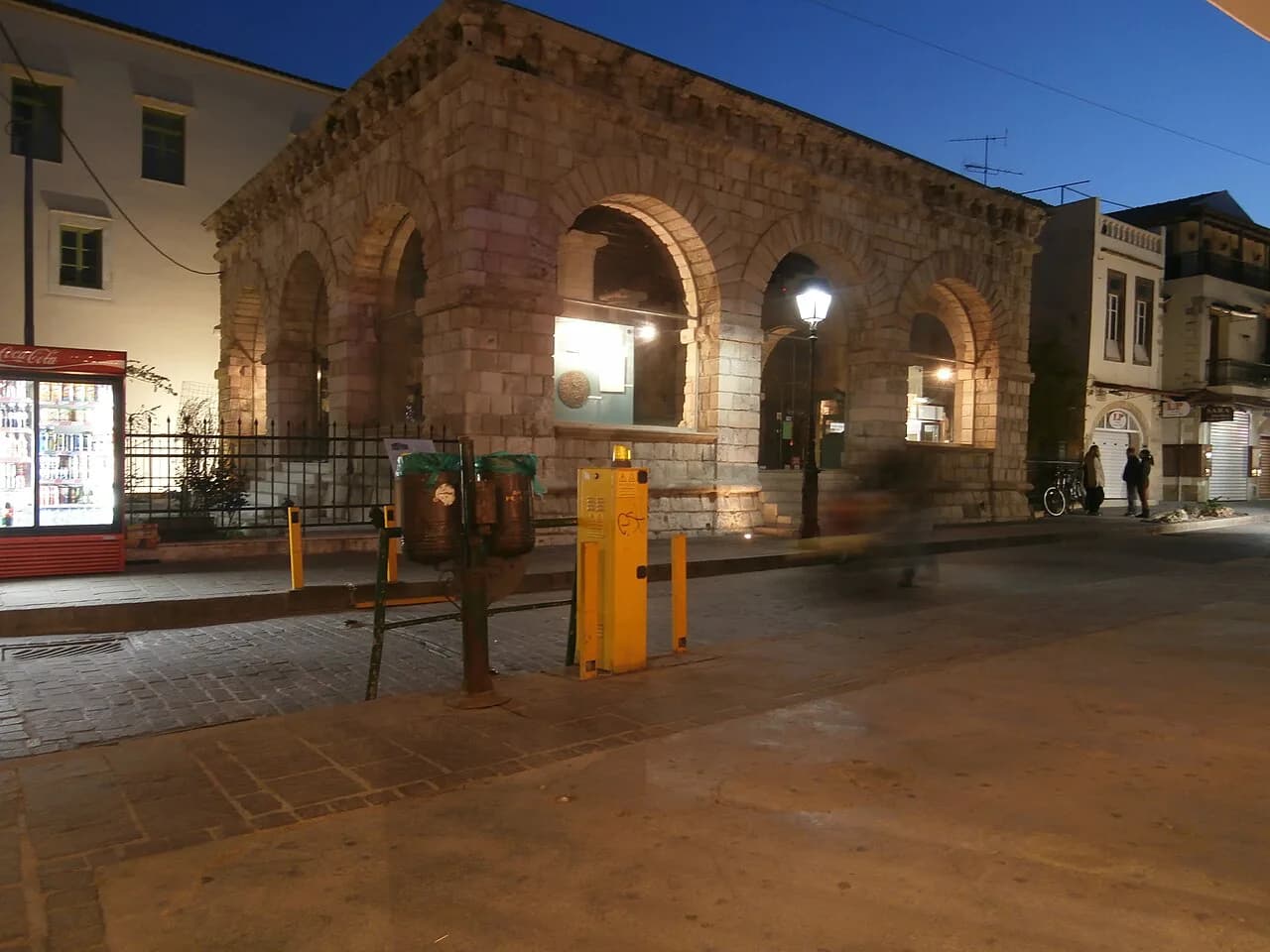
The Loggia of Rethymno is a small piece of Venetian civic architecture tucked into the lanes of the old town, and it is easy to walk past if you do not know what you are looking for. Sources describe it as a 16th-century building designed by Michele Sanmicheli and used as a meeting point for the city's nobles. Because it is one stop rather than a museum visit, the sensible approach is to slot it into a wider walk through the historic centre rather than build a day around it.
This guide covers what the building is, where it sits relative to the harbour and the Fortezza, how to arrive from Chania Airport, and what to combine with it on foot. Instead it tells you exactly where to confirm current access before you travel.
What the Loggia of Rethymno Actually Is
The Loggia is a Venetian-era building in the historic centre of Rethymno, dated to the 16th century and attributed to the architect Michele Sanmicheli. In its day it served as a gathering place for the nobility, which is why it reads as a civic building rather than a church or a house. The name comes from the Italian word for a covered gallery or open-sided meeting hall, a building type that Venetian towns raised for public business and conversation.
Rethymno as a whole is one of the best-preserved medieval towns in Greece, and the Loggia belongs to that same layer of Venetian influence. The old town around it mixes Venetian fortifications with Orthodox and Catholic churches, Venetian residences, arches and vaults, minarets and old hammams, which is why a short walk here covers several centuries at once. Treat the Loggia as one element in that street-level mosaic rather than a self-contained attraction.
Where It Sits in the Old Town
The Loggia stands inside the old town, the dense historic quarter that spreads back from the waterfront on the northern coast of Crete. The city sits between Chania and Heraklion, built between Mount Psiloritis and the Cretan Sea, and the old town is the walkable core of that layout. Use the lanes themselves as your reference: the building is reached on foot, not by car, and the surrounding streets are narrow enough that you will pass it while wandering rather than driving to it.
The easiest mental map is to place the Loggia between the small Venetian harbour with its Egyptian lighthouse and the Fortezza, the Venetian fortress that overlooks the town. The harbour is the waterfront anchor and the Fortezza the high point on the hill, so anything in the old town sits roughly between the two. The beachfront strip, with its hotels, restaurants and cafés, lies on the other side of that waterfront line.
Walking the old town is the realistic way to see it: the lanes reward slow movement and parking is the real constraint in the centre. If you arrive by car, plan to leave it at the edge of the historic quarter and continue on foot, because the streets feel largely car-free in practice. That makes the Loggia a natural pause during a loop through Rethymno old town rather than a destination you drive up to.
The Loggia Taverna Is a Different Place
Searching for the Loggia in Rethymno often surfaces Loggia Taverna, a restaurant on Fotaki street in the town, listed with the address Fotaki 6, Rethymno and a phone number. That is a separate business, not the historic Loggia building, and nothing in the available sources connects the two. If your goal is the Venetian monument, do not navigate to a restaurant address.
Before setting out, decide which of the two you actually want. For the monument, aim for the old town lanes and ask locally or follow signage for the historic centre; for the taverna, use the Fotaki street address. Menus, prices and hours for the taverna are not verified here, so check them directly with the business rather than relying on a search snippet.
How to Get to Rethymno
Most visitors arrive by air through Chania Airport, Ioannis Daskalogiannis, then continue by car. The national tourism organisation gives the drive from Chania Airport to Rethymno as about 1 hour 19 minutes, and the flight from Athens to Chania as roughly 55 minutes; treat both as approximate and allow extra time for traffic and parking on arrival. Thessaloniki also has direct flights to Chania of around 1 hour 15 minutes on the same published routing.
Once in Rethymno, the last stretch is on foot. Leave the car near the edge of the historic centre and walk in, since the old-town lanes are the bottleneck rather than the driving. This is the practical trade-off of the location: the setting is superb precisely because the streets are tight and pedestrian in feel, which also means you should not count on parking beside the building.

What to Look At on and Around the Building
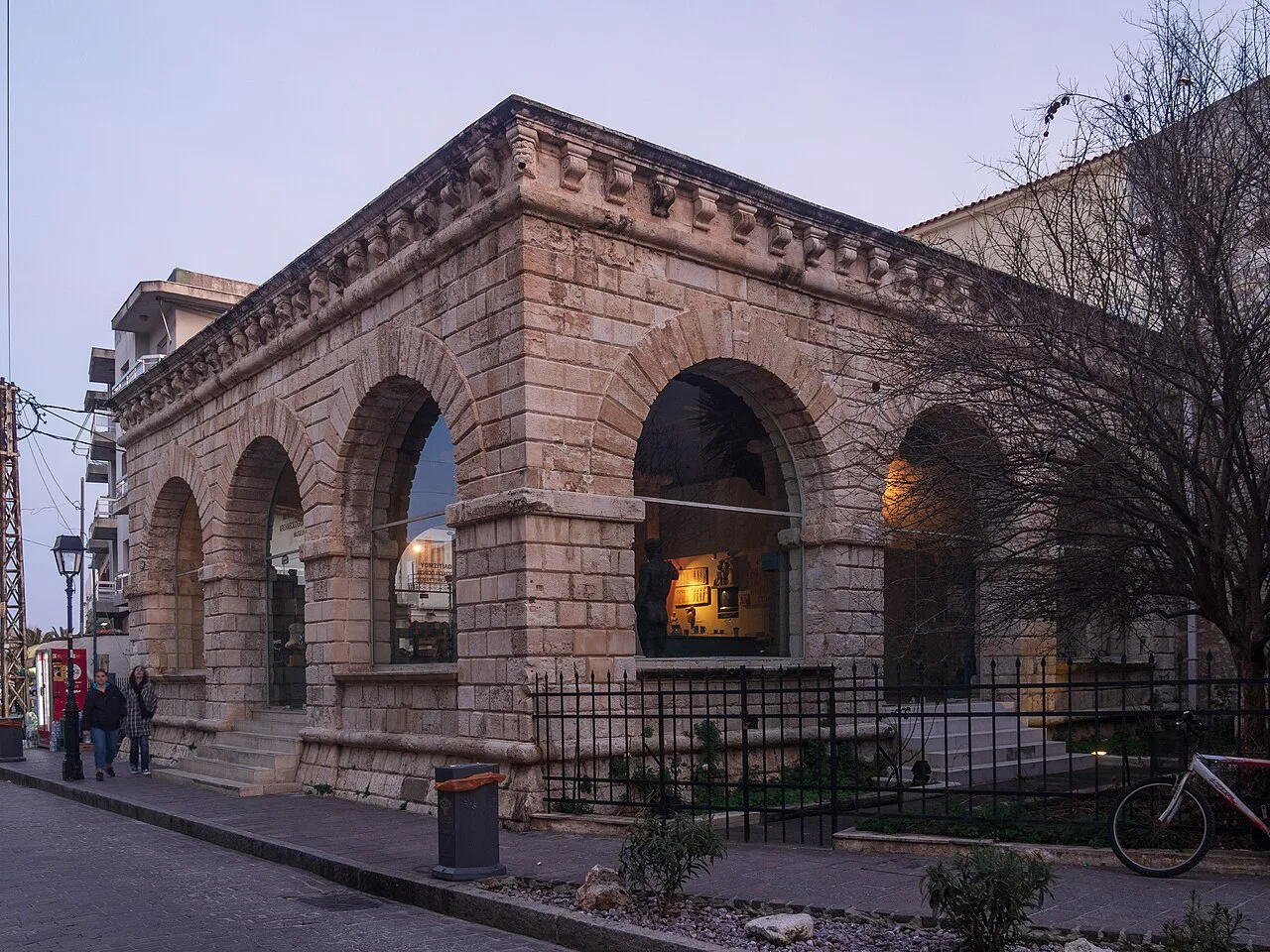
Look at the building as civic architecture: a Venetian loggia was designed as an open, public-facing structure for assemblies, which distinguishes it from the fortress walls and the churches around it. The pleasure of the stop is in reading the facade and then reading the street, where Venetian residences, arches and vaults sit directly against later Ottoman additions. Allow yourself to look up at the upper storeys, where the layers of occupation are most visible.
Nearby, the Rimondi Fountain is the obvious companion stop, a Venetian fountain built in 1626 and described as the only one surviving from the Venetian years in the city. Local legend holds that drinking its water guarantees eternal youth, which is a story rather than a promise. It sits in an inner-city space with Corinthian capitals, a short walk from the old town's main lanes.
If you want more context on the layers you are walking through, the Archaeological Museum of Rethymno occupies the Church of Saint Francis, a building dating to the start of the 16th century, and holds finds from Minoan sites in the region. It is a logical follow-on for anyone who wants the objects behind the architecture. Check its current hours and admission at the door or on the official pages, since they are not confirmed here.
How Long to Allow
Budget around 15 to 20 minutes at the Loggia itself, then build a walk of an hour or two around it. The building is a street-side monument rather than an exhibition, so the time goes into looking, photographing and reading the surrounding lanes. Pairing it with the Rimondi Fountain, the Fortezza and the harbour gives a coherent half-day on foot without turning any single stop into an outing.
The Fortezza is the one element that genuinely takes longer, because it is a fortress on high ground above the old town and the walk up and around adds real time. Set the Loggia as an early stop on the way through the centre, then decide whether to climb to the fortress or drop down to the water depending on how much daylight you have. The Venetian harbour, with the Egyptian lighthouse marking its entrance, is the natural place to finish.
Nearby Places to Combine With a Loggia Visit
The old town is compact enough that most of the historic sights sit within a short walk of each other. Beyond the fountain and fortress, the Neratze Mosque, the Four Martyrs Church and the Municipal Garden all sit in or beside the centre and give the walk variety beyond Venetian stone. The garden in particular is described as a pleasant break from the city streets, which matters in the middle of a hot day.
Churches are everywhere in this quarter, and the cathedral is one of the landmarks you will pass while threading between the Loggia and the fountain. Beyond the town walls, the wider region of Rethymno holds a large number of Byzantine churches and monasteries, including Arkadi, but those require a drive and belong to a separate day. Keep the town walk for the town and save the mountain monasteries for another outing.
Opening Hours, Tickets and Access
The building may be in other use, and access to the interior is not confirmed. Before you go, check the municipality or the regional tourism pages, or simply ask at your accommodation in the old town.
Eating Near the Old Town
Cretan cuisine is the draw in the old town, and the national tourism organisation notes that the aromas of Cretan cooking are part of the street experience. When you order, look for names you may not know: dakos is a barley rusk topped with tomato and cheese, kalitsounia are small filled pastries, and raki is the strong clear spirit often poured at the end of a meal. Ordering a few small plates is usually a better way to sample widely than committing to one large dish.
If you want a sit-down table after the walk, Loggia Taverna on Fotaki street is a separate restaurant rather than the monument, and it is listed as serving Cretan and Greek cuisine. Its hours, menu and prices should be confirmed directly, since they are not verified here. For a view-versus-value trade-off, the harbour front is the scenic option while the back streets usually mean quieter tables.
Plan Your Visit
Treat the Loggia of Rethymno as a 15-20 minute stop inside a longer old-town walk that takes in the Rimondi Fountain, the lanes, and either the Fortezza or the Venetian harbour. Arrive via Chania Airport by car, park at the edge of the historic centre, and cover the rest on foot.
Frequently Asked Questions
What is the Loggia in Rethymno?
It is a 16th-century Venetian building in the old town, attributed to Michele Sanmicheli and described as a meeting place for the city's nobles. The name refers to the Italian building type, a covered public gallery. No verified details of the interior or of visitor access are published in the sources used here.
Is the Loggia of Rethymno the same as Loggia Taverna?
No. Loggia Taverna is a restaurant on Fotaki street in Rethymno, listed with a separate address and phone number, and is a different business from the historic Loggia building. Check the taverna's hours, menu and prices directly with the business.
Where is the Loggia in the old town?
It sits inside Rethymno's historic centre, between the Venetian harbour with its Egyptian lighthouse and the Fortezza on the hill above the town. The old-town lanes are narrow and best covered on foot, so leave the car at the edge of the centre and walk in.
How do I get to Rethymno from Chania Airport?
Fly into Chania Airport, Ioannis Daskalogiannis, then drive. The national tourism organisation gives the drive to Rethymno as roughly 1 hour 19 minutes, which is an approximate figure; allow extra time for traffic and for finding parking near the old town.
How long does it take to see the Loggia?
About 15 to 20 minutes at the building itself is enough, since it is a street-side monument rather than a museum. Build an hour or two around it to include the Rimondi Fountain and the lanes, and allow more if you add the Fortezza or the harbour.
Is there an entrance fee to the Loggia of Rethymno?
No ticket prices or opening hours for the Loggia are published in the sources used here, so none are given. For current access and any entry rules, check with the municipality, the regional tourism pages, or your accommodation.
What else is near the Loggia?
The Rimondi Fountain, a Venetian fountain built in 1626, the Fortezza fortress above the old town, and the Venetian harbour with the Egyptian lighthouse are all within walking distance. The Neratze Mosque, the Four Martyrs Church and the Municipal Garden also sit in or beside the centre.