
Municipal Garden of Rethymno: Where It Is and What to Expect

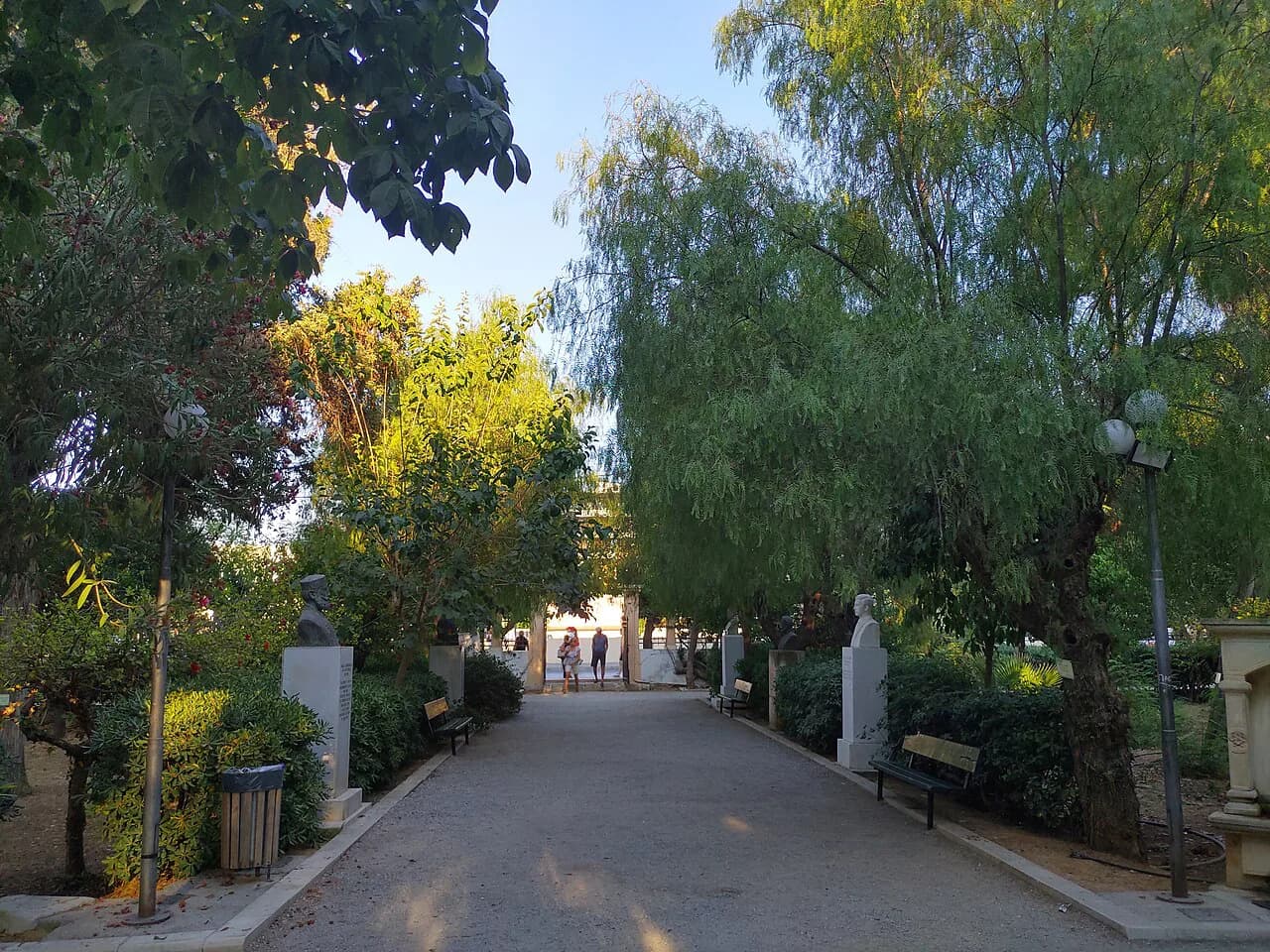
The Municipal Garden of Rethymno is a public town park in the middle of a city whose old lanes are mostly stone and sun, and its appeal is simple: trees, paths and benches. Published descriptions treat it above all as an easy place to step away from hot streets and traffic, so plan it as a break rather than a destination in its own right.
This guide keeps to the garden itself and the handful of landmarks within a few minutes' walk, so you can slot it into a Rethymno day without turning the visit into a city tour. The last section points you to where to check current arrangements before you set out.
What the Municipal Garden of Rethymno Is
Rethymno is Crete's third-largest city, spread between Mount Psiloritis and the Cretan Sea, with a compact medieval old town on one side and a long beach strip of hotels, restaurants and cafés on the other. The municipal garden sits in that central urban fabric, which is why it works as a pause between the two halves of the city rather than a separate excursion.
Treat it as a park, not a museum: expect trees, shade, paths and benches in a bounded green space, and do not build a half-day around it. A local place listing makes exactly this point, describing the Municipal Park as one of the easiest spots in central Rethymno for stepping away from hot streets and busy traffic, while photographs filed under the garden's English and Greek names show a leafy town garden rather than a planted collection. Visitors looking for exhibits or guided interpretation should head instead to the old town's churches and museums.

Because the sources here describe the garden only in general terms, nothing should be assumed about a playground, café or kiosk inside. If you are travelling with children or hoping for a coffee on site, check at the entrance before you commit an afternoon to it.
Where It Is and What to Call It
The garden lies in central Rethymno, within walking distance of the old town lanes and the waterfront, so it fits naturally into a walk between the two. No street address is confirmed in the material used here, so navigate by landmark rather than house number: ask for the town garden, and orient yourself between the old town and the beachfront strip.
When searching a map or asking directions, use the Greek name Dimotikos Kipos Rethymnou (Δημοτικός Κήπος Ρεθύμνου), literally the municipal garden of Rethymno. Greek signage and local map apps often render it only in Greek, and the English word garden and the Greek kipos do not look alike on a screen. Screenshotting the Greek name before you set out saves a lot of pointing.
If you are building a wider day around the centre, the broader collection of Rethymno Attractions: 10 Visitor Guides is a sensible place to see how this stop sits alongside the fortress, harbour and old-town churches.
How to Get There
Most visitors reach the garden on foot, because the old town and the Venetian harbour are compact and the streets between them are short. From the harbour front, walk inland through the old lanes; from the beach strip, walk towards the old town. Either way the approach is flat and signposted by the surrounding streets rather than by a grand entrance.
Rethymno has no airport of its own. The national tourism organisation's route notes bring travellers into Chania Airport (Ioannis Daskalogiannis) and then by car to Rethymno, giving the drive from the airport as about one hour and nineteen minutes; the same page shows connecting flights from Athens and Thessaloniki. From Heraklion, the other main gateway, distances are longer, so confirm your transfer arrangements before booking.
Bus and parking options should be checked locally on arrival rather than assumed from a web page. Central Rethymno parking fills quickly in summer, so arrive early or park on the edge of the centre and walk in.
What to See and Do Inside
A visit consists of walking the paths, sitting in the shade and letting the city noise drop away for a while. That is the honest expectation to set: this is a place to read a chapter, rest your feet or let children run, not to study plant labels. If you want botany, the region's monastery and church gardens repay the trip far more.
Use any time on a bench to plan the rest of your walk, because the garden's real value is its position. The old town around it packs Venetian fortifications, Orthodox and Catholic churches, Venetian residences, arches, minarets, old hammams and flowered gardens into a small area, as the official destination description sets out. A few quiet minutes here make the next hour of stone lanes more manageable in the heat.
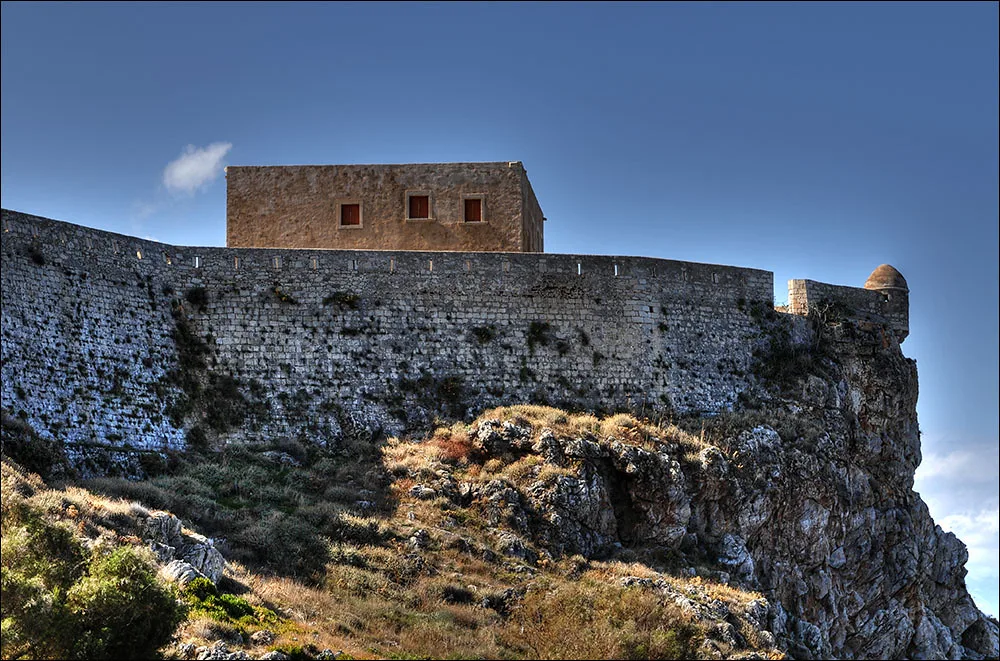
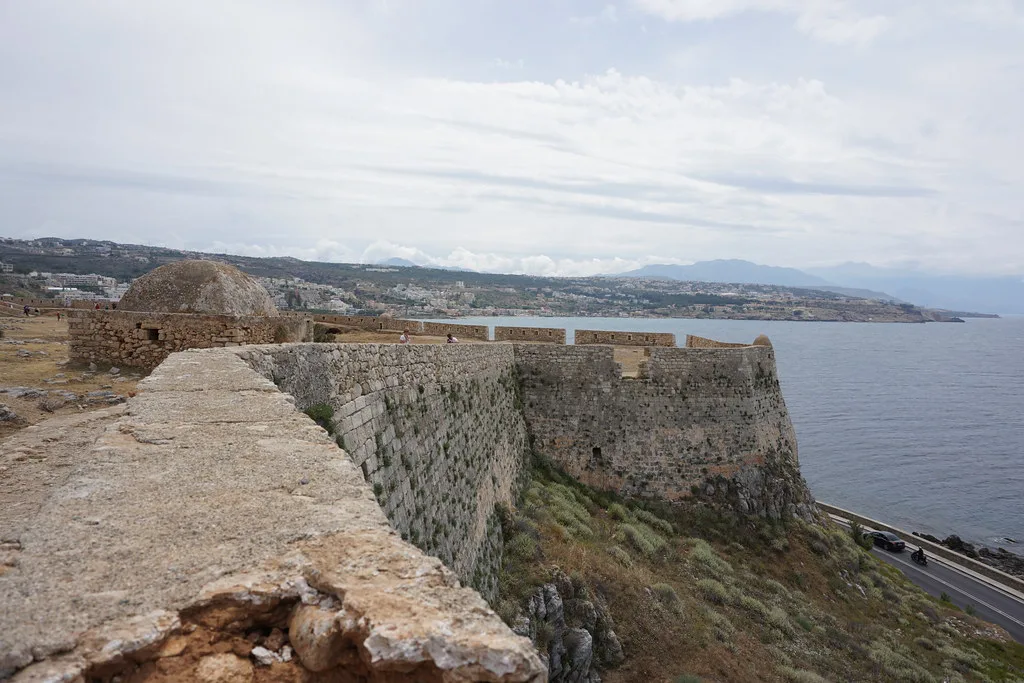
If you want one substantial sight on the same outing, the Fortezza of Rethymno is the obvious pairing: the Venetian fortress stands above the town and is visible from much of the centre. Read its guide before you go, because the climb and the exposed interior change how much energy you have left for the garden.
How Much Time to Allow
Set aside roughly twenty to forty-five minutes for the garden itself, which is enough for a loop of the paths and a sit-down. Stretch that to an hour if you are travelling with children, carrying a book or waiting out the hottest part of a summer afternoon. There is no reason to schedule more than that unless the garden is your chosen rest stop for the day.
Think of it as an interlude rather than a stop on a checklist. A realistic half-day in the centre might combine the old-town lanes, one museum or church, a harbour walk and this garden as the recovery point in the middle. That structure keeps you off your feet during the hours when the stone streets hold the most heat.
If your available time is genuinely short, the garden is the element to drop rather than the harbour or the fortress, since those carry the views and the history that most people come to Rethymno for.
Tickets, Hours and What to Confirm
Opening hours, seasonal changes and any entry fee for the Municipal Garden of Rethymno are worth confirming in advance, because guesses are worse than no information when a locked gate would wreck your plan. Ask at your hotel or at the entrance itself, and check the municipality's own notices if you want certainty before you go. This is one of only two check-current-details reminders in this guide, so treat it as the moment to settle the practical questions.
The same applies to facilities: agree in your group what you need — toilets, a café, a play area — and check on arrival rather than assuming they exist. Plan around what you actually find at the entrance.
Garden or Harbour? Weighing the Trade-Offs
Rethymno's waterfront is where the views and the café tables are. The small Venetian harbour and the Egyptian lighthouse that marks its entrance, built in the 1830s, are the image most people carry home, and the beachfront strip beyond is lined with restaurants and cafés. Choosing the harbour means paying for position, with tables set by the water, busier service and more noise; the garden trades the panorama for shade, quiet and a bench.
The two are close enough that this is not really an either-or decision. A workable pattern is harbour first, while you still want to be on your feet and taking photographs, then the garden as the afternoon slows. The Venetian harbour of Rethymno is the natural start, with the old breakwater and lighthouse as the far point of the walk before you turn inland.
If you only have one rest to spend, decide by what you need: a view and a drink, or silence and a seat. The garden wins the second; the harbour wins the first.
Nearby Sights Worth Combining
The Rimondi Fountain, built in 1626, stands in the old town and is one of the few Venetian-era fountains preserved in the city, with Corinthian capitals above the basins. It is a two-minute photo stop rather than a visit, and it pairs well with a garden break on the same loop through the lanes. Local lore holds that drinking its water brings eternal youth, which is at least a cheap ambition.
The old town's gate, the Porta Guora, survives from the sixteenth-century fortifications and still functions as a proper entry into the historic quarter, so it makes a logical start or end point for a walk that includes the garden. Just inside, the Archaeological Museum of Rethymno occupies the former Church of Saint Francis, a building dating from the early sixteenth century, and holds finds from Minoan sites in the region. Pairing the museum with the garden gives you one indoor and one outdoor pause in the same hour or two.
The Church of the Four Martyrs, inaugurated in 1975 near the spot where four men from Rethymno were executed in 1824, is another short stop in the central streets. Keep the list to two or three of these; the point of the garden is to slow down, not to sprint between monuments.
Best Time of Day and Season
In summer, the garden earns its place between roughly midday and late afternoon, when the old town's stone lanes and the fortress interior hold heat and offer little shade. Morning is better for the fortress and the harbour; the garden is the midday or mid-afternoon answer.
Outside high summer the calculation changes, because the open sights are comfortable for longer and shade is less urgent. Rethymno's wider region stays worth exploring beyond the beach season, with traditional villages, gorges, monasteries and archaeological sites inland towards Psiloritis, so a spring or autumn trip can give the garden a quieter feel. Whatever the season, check the day's forecast and carry water if you plan to combine the garden with the fortress.
Where to Eat Afterwards
After the garden, you have two eating decisions rather than one. The old-town lanes put you among small tavernas and cafés tucked into Venetian and Ottoman buildings, where the trade-off is atmosphere and character against tighter seating and a menu aimed at visitors. The harbour front and the beach strip offer more tables, more space and a view, usually at the cost of higher prices and busier service. Neither is wrong; pick by whether you want to look at the water while you eat.
On Cretan menus, look for dakos, a barley rusk topped with grated tomato and mizithra cheese, and kalitsounia, small cheese or herb pastries, as inexpensive ways to start a meal, along with grilled fish priced by weight. When a fish is sold by the kilo, ask for the weight and the total before it goes on the grill. Prices vary by season and by how close the table is to the water, so compare a back-street menu with a harbour one before sitting down.
Plan Your Visit
The Municipal Garden of Rethymno is a modest, useful stop rather than a headline sight: a place to sit, cool down and reset between the old town's monuments and the waterfront. Give it twenty to forty-five minutes, walk to it from the harbour or the beach strip, and search for it under its Greek name if your map struggles.
Before you go, confirm the day's opening arrangements locally. Then build the rest of the day around the Fortezza, the old-town lanes and the harbour, with the garden as the pause that makes the walking easier.
Explore more Rethymno sauna guides
Frequently Asked Questions
Is the Municipal Garden of Rethymno free to enter?
No entry charge is published for the garden in the sources consulted, and it is described as a public town park rather than a ticketed attraction. Because nothing confirms the current arrangement, ask at your hotel or check the notice at the entrance before you rely on it.
Where is the Municipal Garden in Rethymno?
It sits in central Rethymno, within walking distance of the old town lanes and the waterfront, which makes it easy to fold into a walk between the two. No street address is confirmed in the available sources, so navigate by landmark and search for the Greek name Dimotikos Kipos Rethymnou (Δημοτικός Κήπος Ρεθύμνου) if your map does not recognise the English one.
How long does it take to visit the Municipal Garden of Rethymno?
Allow roughly twenty to forty-five minutes for a loop of the paths and a sit-down, or up to an hour if you are with children, reading or escaping the midday heat. There is little to see beyond trees, paths and benches, so there is no reason to budget a half-day.
Is the Municipal Garden of Rethymno worth visiting?
It is worth it if you want shade and a bench between the old town and the beach strip, and it costs you very little time. Travellers with only a few hours in Rethymno should prioritise the Fortezza and the Venetian harbour instead, since those carry the views and the history.
What is near the Municipal Garden of Rethymno?
The old-town lanes, the Rimondi Fountain, the Porta Guora gate, the Archaeological Museum of Rethymno in the former Church of Saint Francis, the Church of the Four Martyrs and the Venetian harbour with its Egyptian lighthouse are all within a short walk. The Fortezza above the town is the biggest single sight to pair with a garden stop.
What are the opening hours of the Municipal Garden of Rethymno?
Opening hours, seasonal changes and any facilities are not published in the sources consulted, so they cannot be stated here with confidence. Confirm on the day at the entrance or through the municipality before planning your walk around it, particularly outside the summer season.