
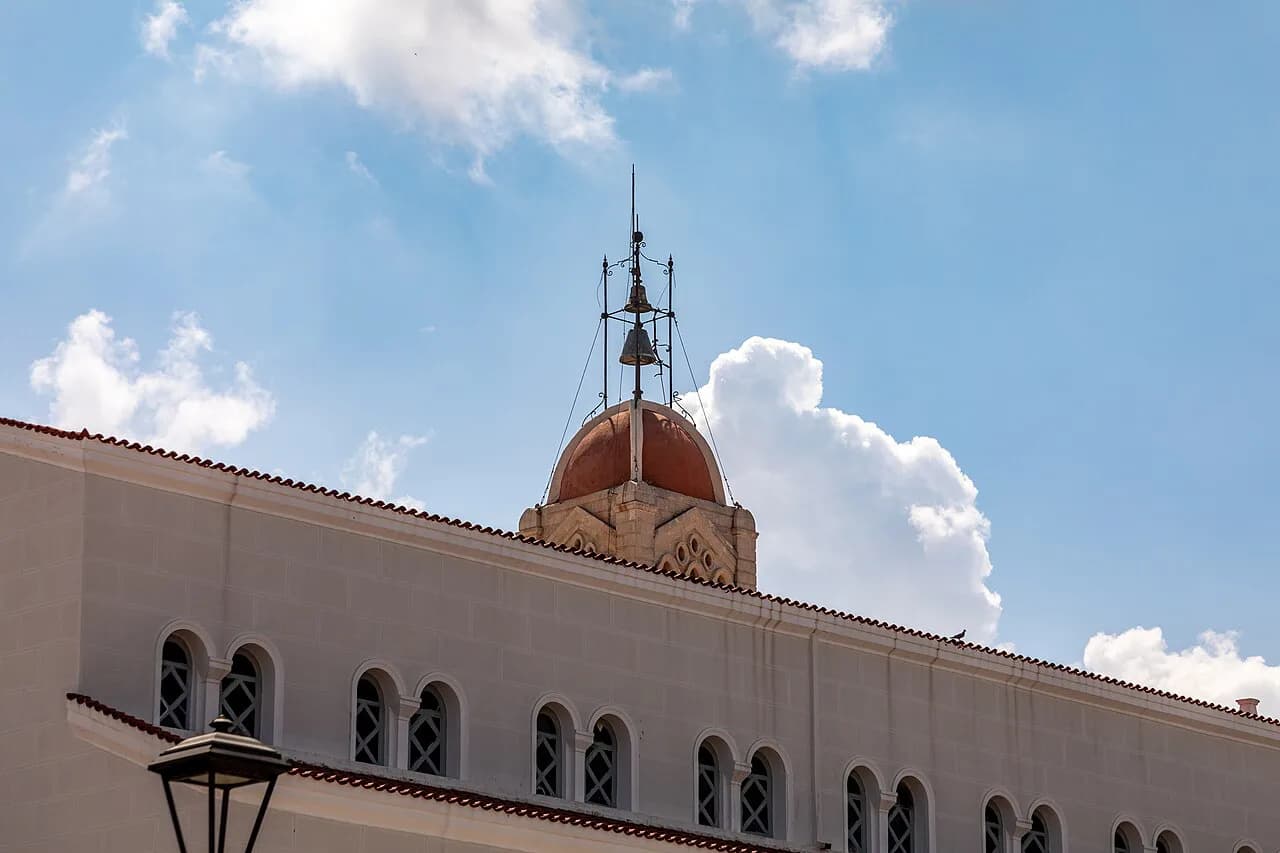
Rethymno Cathedral: A Visitor's Guide to the Metropolitan Church

Searching for "Rethymno cathedral" turns up two very different churches, and travellers often arrive at the wrong door. The cathedral most people mean is the Orthodox metropolitan church, the seat of the local bishop, set in the lanes of the old town. This guide stays on that one building: where it sits, how to walk to it, what to look at and what to pair with it nearby.
Rethymno itself is the third largest city on Crete, spread between Mount Psiloritis and the Cretan Sea, with a walled medieval core that rewards slow walking. The old town mixes Orthodox and Catholic churches with Venetian houses, minarets and hammams, as the Greek National Tourism Organisation's overview describes. That layered history is exactly why the word "cathedral" needs untangling before you set out.
What "Rethymno Cathedral" Refers To
In everyday use, Rethymno Cathedral means the Orthodox metropolitan church of the old town, the mother church of the local diocese. It is a working parish and bishop's seat rather than a museum, so you may find services under way or doors closed for preparations. The city's Catholic church is a separate building, the church of Saint Anthony, and it is the one usually described in English-language listings.
That Catholic church has its own story: its architect was Nikola Mancusco, it stood in dire condition by 1974, and it was restored in 1980 with support from local believers and foreign donors, mainly Swiss. A congregation that grows from March to November attends Mass there, according to the local listing, which also notes that the medieval Cathedral of Saint Francis on Ethnikis Antistaseos street once served as the Catholic episcopal church. None of this describes the Orthodox cathedral, so keep the two apart when planning.
If your interest is specifically the Catholic building, ask for Saint Anthony by name rather than "cathedral". If you want the Orthodox metropolitan church, ask for the mitropoli, the Greek word for a bishop's cathedral, and locals will point you into the old-town lanes.
Where It Is in the Old Town
The cathedral sits inside the pedestrian old town, within the ring of lanes that runs back from the Venetian harbour towards the Fortezza hill. The harbour with its Egyptian lighthouse is the easiest landmark to aim for first, and the fortress above it dominates the skyline as you approach. Use those two as your orientation points and the church is a short walk inland from the waterfront.
Because the old town is a knot of narrow streets with few straight sightlines, a paper map or an offline map pin helps more than a driving-style route. Look for the church square and the bell tower rather than a street number. Local signage in the centre is generally in Greek and Latin script, so the Greek name is worth recognising on a plaque.
How to Get There Without a Car
Most visitors reach the old town on foot, and that is the sensible approach: the centre is compact and parking is limited near the historic lanes. Crete's main gateways are Chania airport and Heraklion airport, with the drive on to Rethymno taking roughly an hour and a quarter from Chania according to the national tourism organisation's transport notes. From your hotel or the bus stop, walk towards the Venetian harbour and then inland towards the Fortezza.
Wear shoes that cope with polished stone and uneven steps, and allow extra time in the middle of the day when the lanes are busiest. The Greek National Tourism Organisation is the official source for how to reach Rethymno by air and onward transport, so confirm connections there rather than relying on old forum posts.
What to Look For Inside and Around the Church
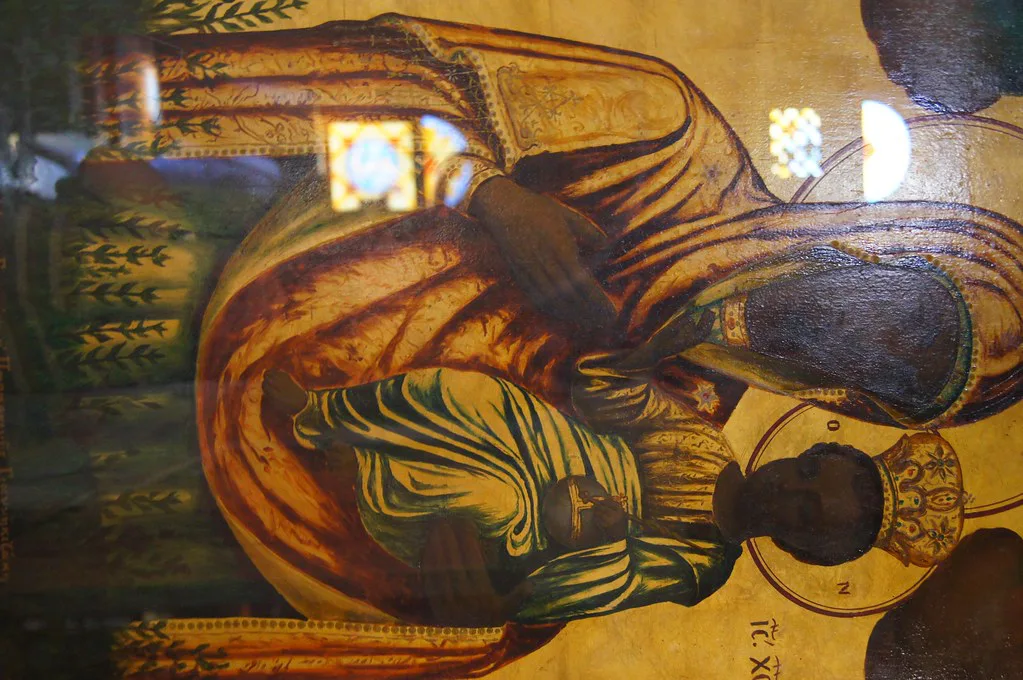
Treat the cathedral as a place of worship first. Look at the facade and bell tower from the square, then step inside for the interior layout, the icon screen that separates the sanctuary from the nave, and the painted decoration typical of Orthodox churches on Crete. The Cretan churches described in regional surveys show how Byzantine iconography absorbed Renaissance elements from the fifteenth century onwards, which gives you a useful frame for what you see on the walls.
Do not assume you may photograph freely inside; watch what others do and follow any notice at the door. Candles, votive stands and open books near the entrance are working parts of the church, not props. Outside, the surrounding lanes hold small workshops and cafés, and the walk back towards the harbour passes several of the old town's other monuments.
How Long to Allow and When to Go
Budget around twenty to thirty minutes for the church itself, plus whatever time you spend in the lanes around it. If you are combining it with the Fortezza and the harbour, set aside a half day rather than trying to tick off the old town in an hour. Early morning and late afternoon are cooler and quieter, and outside service times you are less likely to be in the way.
Opening hours and any restrictions are not published here because they change with the parish calendar. Check the notice board at the entrance on the day, or ask at your accommodation in Rethymno, and plan the rest of your walk so a closed door does not spoil the morning.
A Walkable Loop: Cathedral, Fortezza and Harbour
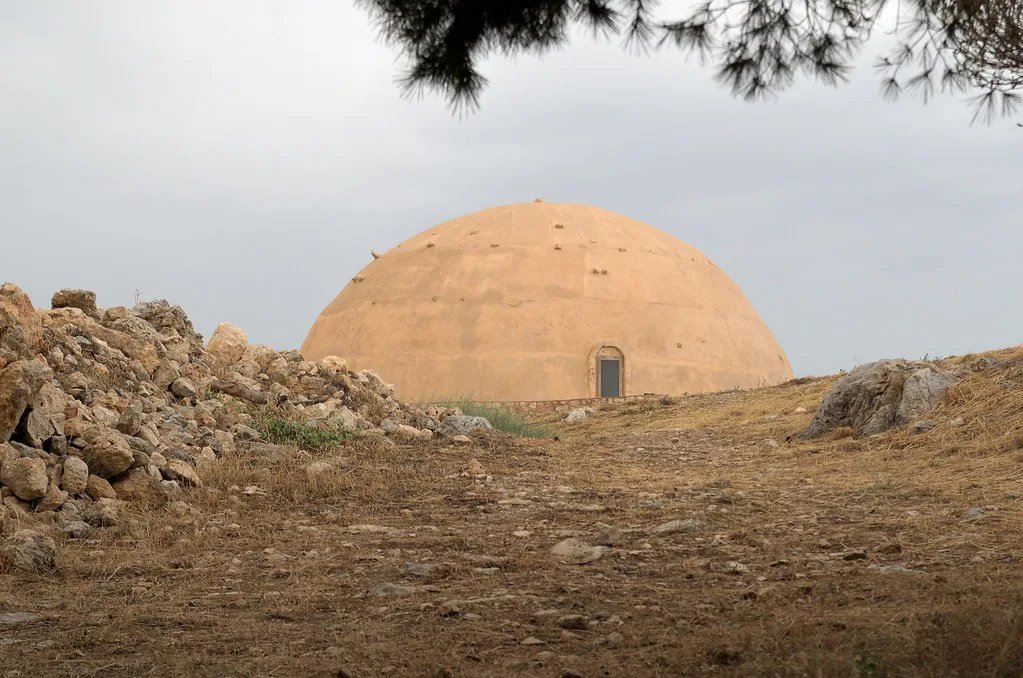
The cathedral works best as one stop in a loop that starts at the Venetian harbour, climbs to the fortress and drops back through the old town. The Fortezza is the Venetian citadel overlooking the sea, and the harbour below holds the Egyptian lighthouse that stands as the city's symbol. Doing the loop in that order keeps the uphill stretch early and leaves the shaded lanes for the return.
Two more stops fit naturally on the same walk: the Rimondi Fountain, a Venetian-era water feature used as a meeting point in the centre, and the Archaeological Museum of Rethymno, useful if you want context for the region's finds before or after the churches. Add either only if your legs and schedule allow.
Another Orthodox church worth knowing in the same quarter is the Four Martyrs Church, named for Rethymno's patron saints and easy to fold into an old-town amble. Seeing more than one church makes the city's mixed religious heritage concrete, and it helps you recognise the metropolitan church's particular role.
Why Rethymno Has Both Orthodox and Catholic Churches
Rethymno's old town grew up under Venetian rule, when the city was the seat of a Roman Catholic bishop, and later passed to Ottoman control before joining modern Greece. The result is a centre where Orthodox and Catholic churches stand among minarets, hammams and Venetian residences, as the national tourism organisation's overview of the city sets out. Reading the buildings in that sequence explains why a single city has more than one church called a cathedral in older documents.
For context beyond the city, Crete's wider church landscape includes hundreds of Byzantine churches and dozens of monasteries across the Rethymno region, from early Christian basilicas to the monastery at Arkadi. That density is why a short visit to one church can feel like a sample rather than the whole story.
If you are comparing cathedral visits across Crete, Chania Cathedral and Agios Minas Cathedral in Heraklion are the obvious counterparts for a multi-city trip. Each has its own character and its own rules, so treat them as separate stops rather than substitutes.
Etiquette and Practical Notes
Dress modestly, keep your voice low and stay out of the sanctuary area behind the icon screen. If a service is in progress, wait at the back or come back later rather than walking through the congregation. Photography rules vary between churches on the island, so look for a sign at the entrance before raising a camera.
Entry to Orthodox churches on Crete is generally free, but any candle offering or donation box is optional and modest. Confirm whether the church is open before you build your day around it, since parish use takes priority over visitor access.
Plan Your Visit
Pin the cathedral's location relative to the Venetian harbour and the Fortezza before you set out, and you can fold it into a single old-town walk without a car. Keep the Orthodox metropolitan church and the Catholic church of Saint Anthony distinct in your plans, because they are different buildings with different histories.
Pair the church with the harbour and the fortress, allow a half day, and check the entrance notice for hours on the day you go. That way a locked door costs you a detour rather than the morning.
Explore more Rethymno sauna guides
Frequently Asked Questions
Where is Rethymno Cathedral?
It is inside the pedestrian old town of Rethymno on Crete's north coast, a short walk inland from the Venetian harbour and below the Fortezza hill. Use the harbour and lighthouse as your first landmark, then walk uphill into the lanes; the church square and bell tower are easier to spot than a street number.
What is the difference between Rethymno Cathedral and the Catholic church in Rethymno?
Rethymno Cathedral is the Orthodox metropolitan church and the bishop's seat. The Catholic church is a separate building dedicated to Saint Anthony, restored in 1980 and used by a congregation that swells between March and November. If you want the Catholic one, ask for Saint Anthony by name.
How long does it take to visit Rethymno Cathedral?
Allow roughly twenty to thirty minutes for the church itself, plus time in the lanes around it. If you combine it with the Fortezza and the harbour, plan a half day rather than trying to cover the old town in an hour, and go early or late to avoid the busiest hours.
What else is near Rethymno Cathedral?
The Fortezza, the Venetian harbour and its Egyptian lighthouse are all within a short walk, as are the Rimondi Fountain, the Archaeological Museum of Rethymno and the Four Martyrs Church. A single loop linking the harbour, the fortress and the old-town lanes covers them without any transport.
Is the cathedral inside the old town of Rethymno?
Yes. It stands within the walled medieval core, among narrow lanes shared with Venetian houses, minarets and hammams. That compact setting is why most visitors arrive on foot and why parking near the historic centre is limited.
Do I need to check opening times before visiting?
The cathedral's hours follow the parish calendar rather than a fixed visitor schedule, so read the notice at the entrance on the day or ask locally. That is also the reliable way to find out whether a service is taking place when you plan to look inside.