
Fortezza of Rethymno: A Visitor's Guide to the Venetian Citadel

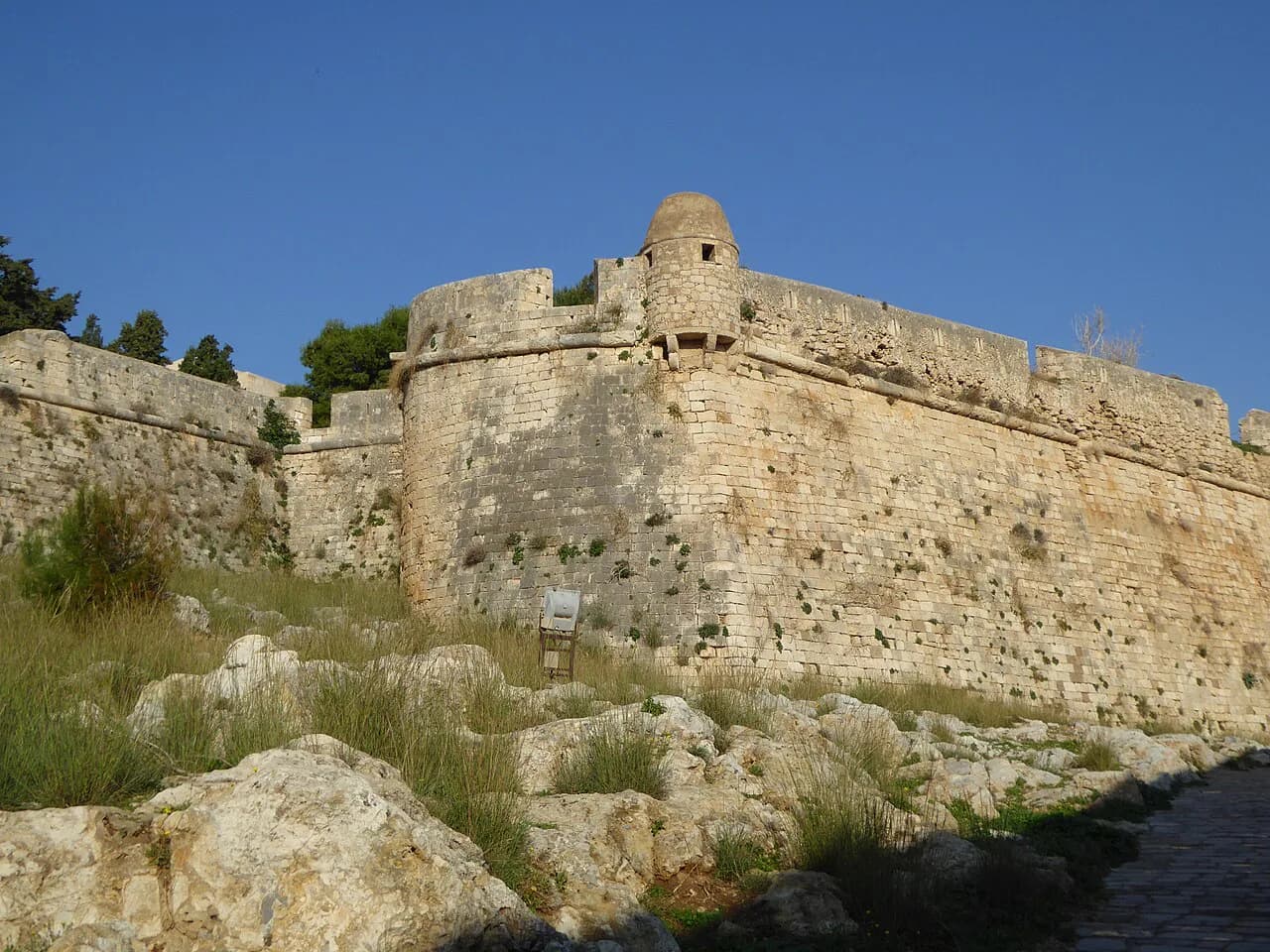
The Fortezza of Rethymno is the walled citadel that sits on Paleokastro hill, the high point on the northwest edge of the old town, looking out over the Cretan Sea. It is the monument that gives Rethymno its silhouette, and the reason the old town below reads as a single fortified ensemble rather than a scatter of lanes. This guide treats it as one place to visit on foot, with the practical detail you need before you climb.
What the Fortezza of Rethymno Is
The Fortezza is a Venetian citadel: a compact fortified town-within-a-town on Paleokastro hill, built to shelter the population and garrison rather than to serve as a single palace or keep. Its walls, bastions and gate form the outer shell, and the interior is largely an open plateau with the surviving buildings set upon it.
Rethymno itself is described by the Greek National Tourism Organisation as one of the best-preserved medieval towns in Greece, with the Fortezza named as the Venetian fortress that dominates the old town. That context matters when you plan: the citadel is not an isolated ruin outside the city but the crown of the historic centre, so you reach it from the lanes rather than by driving to a separate site.
Where It Sits Above the Old Town
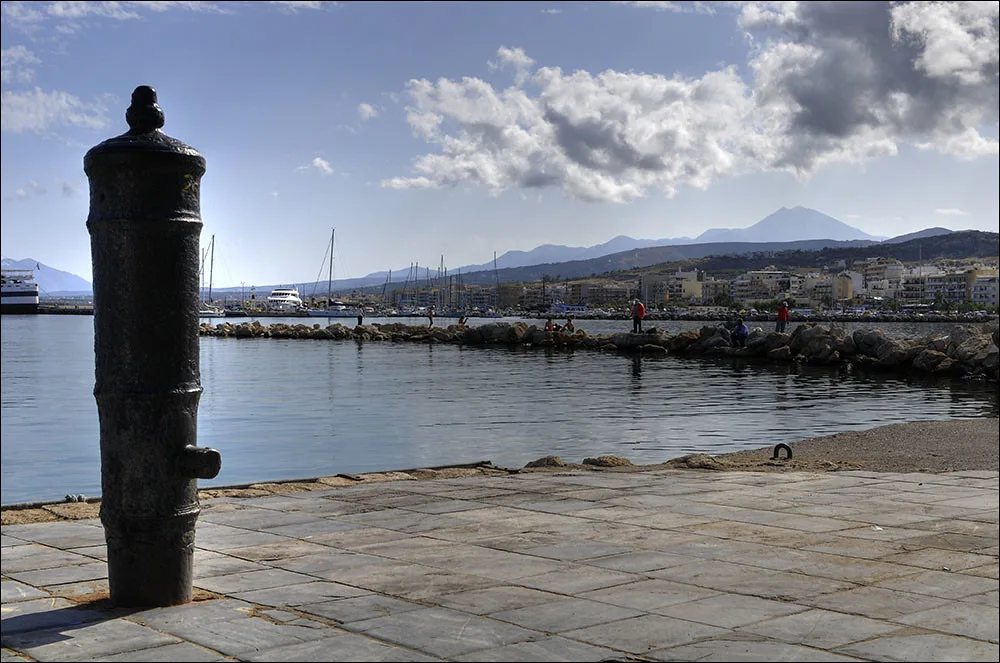
The fortress occupies the hill on the northwest side of the old town, above the small Venetian harbour and the Egyptian lighthouse that marks its entrance. In practice, you use the waterfront and the harbour as your lower reference point and walk up and inland from there toward the walls.
The harbour itself has been in use since the Byzantine period, and the Egyptian lighthouse at the port entrance was built in the 1830s, which helps explain why the walk up from the water reads as a sequence of layers rather than a single era. If you want the harbour and breakwater as a separate stop, the old breakwater page covers that walk.
Getting There on Foot from the Old Town
There is no separate approach road to plan around: the standard route is on foot through the old town, gaining height as you go. Porta Guora, the surviving Venetian gate that still forms a grand entry into the old town, is a useful wayfinding landmark, because from that side you are already inside the historic fabric and heading uphill toward the citadel.
Expect a steady climb rather than a short flight of steps, on paved but uneven lanes with some gradients. Wear shoes with a decent sole, carry water, and treat the ascent as part of the sightseeing rather than a transfer. If anyone in your group finds long uphill walks difficult, the harbour-side streets and the fountain square make a good base while others go up.
The Entrance and the Layout Inside
You enter through the fortress gate on the town side and come out onto the open central plateau, with the circuit of walls and bastions around the edge. The gate side is the practical orientation point: fix it in your mind before you wander, because the interior is broad and the exit is not visible from every corner of the site.
The fortress is a Venetian citadel of the 16th century, later captured by the Ottomans, and that is the working story to carry with you. Treat the 16th-century Venetian construction followed by an Ottoman capture as the sequence, and don't quote a precise year you haven't confirmed.
What to See Inside the Walls
The main draw inside is the fortification itself: the thick circuit of walls, the bastions that project from them, and the gate, all of which reward a slow walk around the perimeter rather than a beeline to the middle. Look at how the angles are cut to cover the ground below, and how the walls follow the shape of the hill.
The most conspicuous building on the plateau is the mosque that survives from the Ottoman period, a reminder that the citadel changed hands and changed purpose. With the Venetian shell and the Ottoman building read together, the site shows conquest as an accumulation of structures rather than a clean replacement.
The plateau is also the best viewpoint in the city: open ground with the sea on one side and the rooftops of the old town falling away on the other. Bring a hat and sun protection if you plan to linger, because the interior is exposed and shade is limited.
A Short History in Brief
The Venetians built the Fortezza as a defensive citadel for Rethymno, and the Ottomans later took the town and adapted the site, which is why a mosque stands inside a Venetian wall circuit. That layering is exactly what you are looking at on the plateau: two occupations leaving their own buildings inside one set of fortifications.
The same layering runs through the old town below, where the Greek tourism board notes Venetian fortifications sitting alongside Orthodox and Catholic churches, minarets and old hammams, or bathhouses. Walking down after the fortress puts those pieces in order, because you have just seen where the defensive decision was made.
How Much Time to Allow
Allow about an hour for a straightforward circuit of the walls with stops for the views, and closer to two hours if you want to look properly at the fortifications and the mosque building. The site rewards looking rather than reading: there is a lot of open ground, and the interesting detail is in the masonry and the siting.
The Fortezza works best as half of a day rather than a day on its own, paired with the lanes below instead of treated as a separate excursion. Plan it first, while the light is cooler, then drop into the old town for the rest of the morning. That sequencing also means the uphill walk happens before you are tired.
Opening Hours and Tickets: What to Check
The Fortezza is an archaeological site with controlled entry, so there is a ticket and there are opening hours, but published figures change and vary by season. Do not set out on the assumption that the site is free, open daily, or open late; confirm entry arrangements on the Greek Ministry of Culture's Odysseus portal or the local municipality's visitor pages before you walk up.
Check the day before you plan to visit, and again in the morning, because a single unannounced closure is more disruptive here than at an open square. If the gate is shut when you arrive, the harbour, the Rimondi Fountain and the old-town lanes fill the time without a wasted trip.
Views and Timing Your Walk Up
The climb is exposed, so the middle of the day is the least comfortable and the least photogenic time to make it. Early morning gives softer light over the rooftops and the sea, and late afternoon puts the sun behind you on the way up; either is easier than midday.
That exposure cuts both ways: the open plateau is why the views work, and also why there is nowhere to hide from the sun once you are inside the walls. Carry water, and plan your circuit around whichever stretch of wall gives you shade first.
Fortezza or Old Town: How to Sequence Them
The trade-off is between height and density. The Fortezza gives you the panorama and the defensive story in one sweep, but the streets below hold the churches, workshops, fountains and food; trying to do both at speed leaves you with neither.
A workable order is fortress first, then the lanes as a descent, ending at the harbour. That way the uphill work happens on fresh legs, and the dense old town, which is where you will want to stop for coffee or lunch, comes after the wide-open part of the day.
Nearby After Your Visit
Directly below the walls, the Venetian Harbour of Rethymno is the obvious next stop, with fishing boats, cafés and the Egyptian lighthouse at the port entrance. It is a short walk down from the fortress gate and a good place to sit after the climb.
Inland in the old town, the Rimondi Fountain is a Venetian fountain of 1626 with Corinthian capitals, and it is the only one of the city's preserved fountains that dates from the Venetian years. It sits in the heart of the lanes, so it slots naturally into a walk between the gate and the harbour.
The old town also holds the Archaeological Museum of Rethymno, housed in the former Church of Saint Francis, and a Neratze Mosque, and either makes a compact add-on if you have a full afternoon. The Loggia of Rethymno is another Venetian civic building worth a look on the same wander.
Ground Conditions and Comfort
The ground inside the walls is uneven, with rough stone, steps and changes of level between the gate, the plateau and the bastions. Sturdy shoes matter more than they would in the paved lanes below, and the perimeter walk is not suited to wheels or to anyone unsteady on their feet.
Beyond the sun and the surface, the site is short on shelter and seating, so build in a break rather than pushing a full circuit in one go. The old town below has fountains, a municipal garden and shaded squares where you can recover.
Plan Your Visit
The Fortezza of Rethymno is best treated as a short climb and a slow circuit: enter from the old town, walk the walls, look at the mosque on the plateau, and come down through the lanes to the harbour. Confirm opening hours and entry arrangements on the official portal before you set out, then let the rest of the day run at street level.
Explore more Rethymno sauna guides
Frequently Asked Questions
What is the Fortezza of Rethymno?
It is the Venetian citadel on Paleokastro hill on the northwest edge of Rethymno's old town, a walled enclosure with bastions, a gate and an open central plateau. A mosque building from the Ottoman period still stands inside the Venetian circuit, so the site shows two occupations within one set of fortifications. The Greek National Tourism Organisation describes it as the Venetian fortress that dominates the old town.
Where is the entrance to the Fortezza of Rethymno?
Entry is through the fortress gate on the old-town side of the hill, reached on foot from the lanes below. Use Porta Guora, the surviving Venetian gate into the old town, as your wayfinding landmark and head uphill from there. From the harbour and lighthouse, walk inland and up.
How long does it take to visit the Fortezza?
Allow roughly an hour for a circuit of the walls with stops for the views, and up to two hours if you want to study the fortifications and the mosque building closely. Because the interior is an open plateau, the time depends mostly on how much walking and looking you want to do rather than on queues or indoor displays.
Is the walk up to the Fortezza steep?
It is a steady uphill walk through the old town rather than a short flight of steps, on paved but uneven lanes. The walls and plateau inside the site are also exposed, with rough stone and changes of level between the gate and the bastions. Wear shoes with a decent sole and carry water.
What are the opening hours and ticket price for the Fortezza?
Hours and ticket prices change, so confirm them before you go. Check the Greek Ministry of Culture's Odysseus portal or the local municipality's visitor pages the day before, and again on the morning of your visit, rather than relying on a figure quoted in an older guide.
What else is near the Fortezza?
The Venetian Harbour of Rethymno and its Egyptian lighthouse sit just below the walls, and the Rimondi Fountain in Rethymno, a Venetian fountain of 1626, is a short walk inland among the old-town lanes. Other compact stops nearby include the Archaeological Museum of Rethymno, housed in the former Church of Saint Francis, and the Neratze Mosque.
What should I see inside the Fortezza?
The main draws are the circuit of Venetian walls and bastions, the gate and the open plateau with its views over the old town and the sea. The surviving mosque building from the Ottoman period is the one structure that most clearly shows the change of hands. Walk the perimeter slowly to see how the bastions are angled.
Is the Fortezza inside Rethymno's old town?
Yes. The citadel occupies Paleokastro hill on the northwest edge of the old town, so it is part of the historic centre rather than a separate site outside the city. You reach it on foot from the lanes and the harbour area, which makes it easy to combine with the rest of the old town in one morning.