
Chania Cathedral (Mitropoli): A Visitor's Guide to the Old Town Church

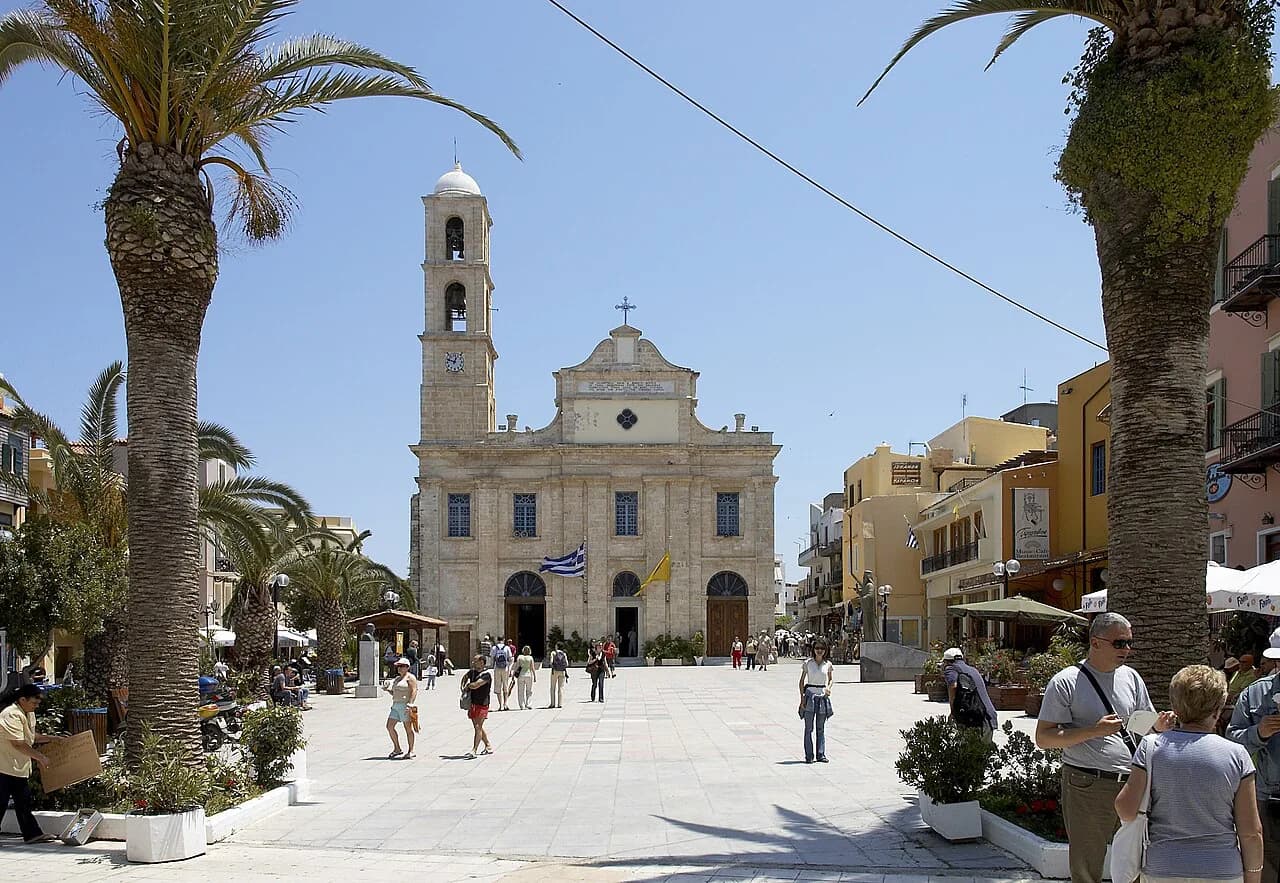
Chania Cathedral is the Orthodox mitropoli of the city, a three-aisled church standing on Plateia Athinagora in the middle of the Old Town. Most visitors reach it on foot within minutes of the Venetian Harbour lanes, and a short, quiet look inside fits easily into a morning of walking. This guide covers one building only: where it is, how to approach it, what to notice, and how much time to set aside.
Where Chania Cathedral Is in the Old Town
The cathedral faces Plateia Athinagora, a square in the heart of the Old Town of Chania, a short walk inland from the harbour front. Because the lanes around it bend and narrow, a map or offline navigation helps on a first approach; the square itself is the landmark to aim for.
From the harbour side, walk inland along the lanes behind Akti Kountouriotou and you will come out at the square within roughly ten minutes at an easy pace. The whole historic centre is compact and pedestrian-friendly, so the cathedral works well as a stop between the waterfront and the market streets rather than a separate trip across town.
If you are planning several sights in the centre, it helps to see the cathedral as one piece of a larger, walkable district rather than a standalone destination. A wider attractions overview for Chania shows how the churches, museums and harbour front sit relative to each other within the same small area.
Mitropoli, Eisodion and the Presentation: Sorting Out the Names
Locals usually call it the Mitropoli, which simply means the cathedral church of a bishopric in the Orthodox tradition. Map and listing services label it as the Presentation of the Virgin Mary Cathedral, and its full dedication is given as a three-aisled church honouring the Virgin Mary, Saint Nicholas and the Three Hierarchs.
Eisodion, the Greek word behind the English title, refers to the Presentation, the day the Virgin Mary is remembered as being brought to the temple as a child. That dedication explains why travellers sometimes see the church listed under a name that does not include the word Cathedral in the local sense at all.
Do not confuse it with the Catholic Cathedral of the Presentation of the Virgin Mary, a separate and much smaller church elsewhere in the Old Town. The Catholic one is easy to miss because its entrance is marked only by a modest sign reading Catholic Church, and it is described as a quiet, ornate church with a present structure dating from 1860.
When planning, decide which building you actually want. If you are after the grand Orthodox mitropoli on the square, that is the one this page covers; if you want the small Catholic church tucked behind its discreet sign, treat it as a separate visit and check its details before setting out.
Getting There on Foot Through the Old Town
Walking is the sensible way to reach the cathedral, since the Old Town lanes are narrow and parking near the square is limited. From the Venetian Harbour Chania waterfront, head inland and slightly uphill through the commercial lanes; you pass shops, cafes and small churches before the square opens up in front of you.
If you are coming from further west along the harbour, the Egyptian Lighthouse and the Venetian Shipyards make natural orientation points before you turn inland. Both sit in the same compact waterfront district, so the cathedral is never more than a short walk from the water.
Buses and taxis from the newer parts of the city drop passengers on the edge of the historic centre, from where the square is reached on foot. Wear shoes that cope with uneven paving and steps, because the approach lanes are more stone path than smooth promenade.
The Facade and Plateia Athinagora
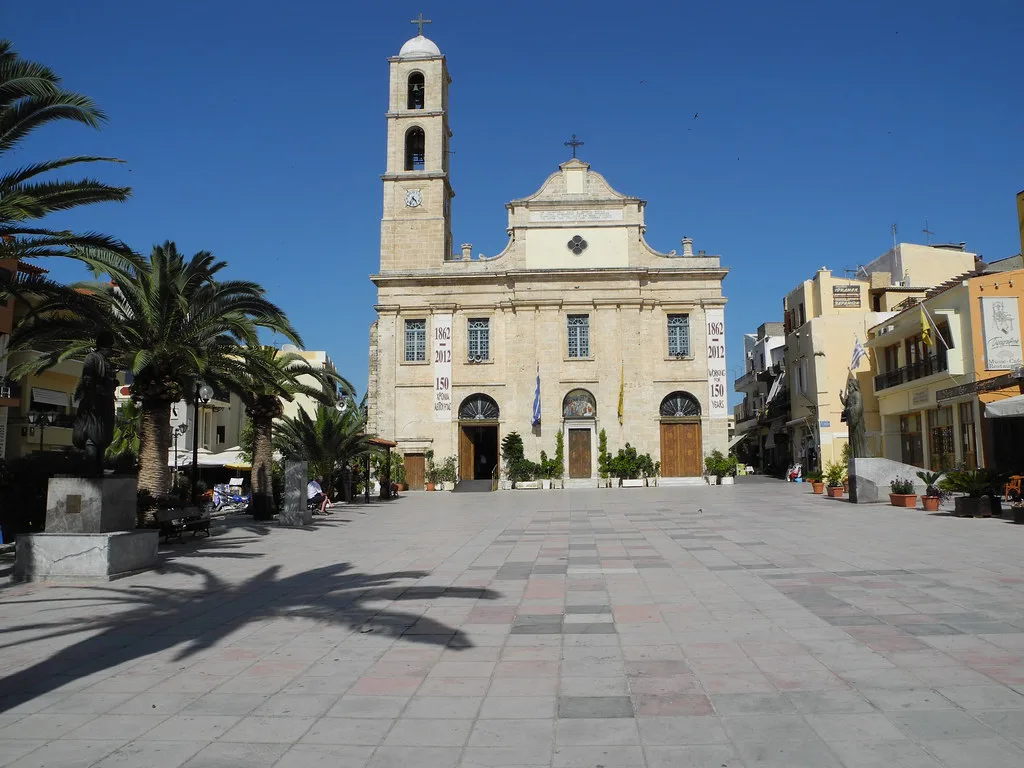
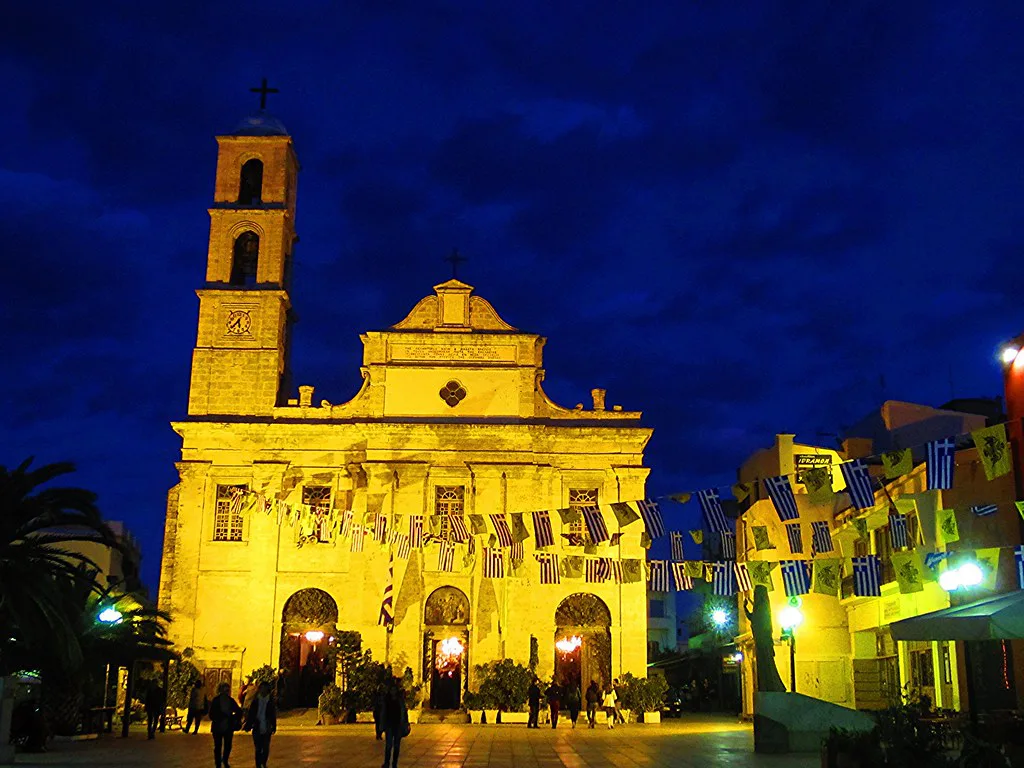
The present cathedral building is described as dating from the 1860s, although it is said to stand on the site of an earlier church. Photography of the building shows a stone facade with a bell tower, and on the square side you get the full front of the church rather than a glimpse down a lane.
The square itself is a working part of the Old Town rather than a monument precinct, with cafes and everyday foot traffic around the church. Take a moment to look back at the facade from across the square before going in; that is the view that makes the building's scale clear. If you are weighing up Greek island stops more broadly, our Santorini food guide is a useful companion for planning where to eat in Santorini once you move on from Chania.
Because this is an active place of worship, keep voices low near the doors and step aside for anyone entering for prayer. Photography outside is straightforward, but check for any notices at the entrance before using a camera inside.
Inside the Church: Three Aisles and Their Dedications
Inside, the church is arranged in three aisles with separate dedications: the Virgin Mary, Saint Nicholas and the Three Hierarchs. The Three Hierarchs are three revered bishops of the early church, and Saint Nicholas is the patron traditionally associated with sailors, which suits a port city.
Look for the painted decoration and icons that Orthodox churches carry throughout the interior, and notice how the aisles are separated rather than merged into one open hall. The effect is a series of smaller spaces, so walk slowly and look up as well as ahead.
If a service is in progress, stay near the back, keep phones silent and do not move around with a camera. Visitors are generally welcome to observe quietly, but the congregation's need for space comes first.
How Long to Allow and How to Behave
Fifteen to twenty minutes is enough to see the interior at an unhurried pace, longer if you want to sit quietly or read the icons. The visit is short by museum standards, which makes it easy to pair with one other nearby sight rather than building a whole morning around it.
Dress as you would for any church: covered shoulders and knees are the safe default, and a light scarf helps in warm weather. Speak softly, do not eat or drink inside, and follow any printed or posted instructions about photography.
For a broader sense of how this stop fits with the rest of the historic centre, a guide to things to do in Chania can help you sequence the lanes around the square.
Opening Hours and Entry: What to Check Before You Go
The published sources used here do not give opening hours or an entry policy for the cathedral, so check the times on the notice at the church door or ask at your accommodation on the day. Churches in Greece often keep shorter hours outside service times, and a locked door mid-afternoon is normal rather than unusual.
Treat any admission charge or donation box as something to confirm on site rather than assume, and remember that worship takes priority over sightseeing. If the doors are closed when you arrive, the square and surrounding lanes are reason enough to come back later the same day.
Religious Etiquette for Non-Orthodox Visitors
Non-Orthodox visitors are normally welcome to enter quietly, but participation in the liturgy is a different matter and should not be assumed. Stand and sit when the congregation does if you are inside during a service, or simply stay near the entrance and leave without fuss if you feel unsure.
Keep children close and calm, avoid flash photography, and never touch icons or lit candles unless a clear invitation is given. These small courtesies matter more than any guidebook rule and keep the visit pleasant for everyone.
Nearby: Museums and More Old Town Sights
The Archaeological Museum of Chania is a natural add-on for the same morning, since it sits in the same part of the historic centre and pairs well with a short church visit. The collection gives context to the layers of building you have just walked through.
The Folklore Museum of Chania is also described as being close by, in the neighbourhood of the cathedral, and is a good option if you want local domestic and craft history rather than archaeology. Either museum turns a brief stop into a half day without requiring transport.
For a change of register, the Etz Hayyim Synagogue in Chania is another small historic religious building in the same district and can be visited with the same quiet, respectful approach.
Walk back towards the water and the Chania lighthouse and Venetian sea wall give a completely different view of the city's defences and harbour history. Both are close enough to combine with the cathedral on foot.
The Catholic Cathedral: A Second Church If You Want Both
If you want to see both churches, plan the Catholic cathedral as a separate stop inside the Old Town rather than a wing of the Orthodox building. Its entrance is marked by a small, easily overlooked Catholic Church sign, which is why many visitors walk past without realising what is inside.
The Catholic cathedral's interior is described as ornate, with religious paintings and icons, and its building is usually attributed to the 1860s. There is also a local story about its founding involving a vision and a Turkish official's child, which is told as legend rather than documented fact.
The Catholic cathedral's feast day is given in guide listings as November 21, the Presentation of the Virgin Mary, which is worth knowing if you are in Chania in late autumn. For opening times and any restrictions, check at the church itself rather than relying on a listing.
Pairing the Cathedral With the Harbour and Lanes
A sensible half day pairs the cathedral with the waterfront: start at Plateia Athinagora, walk down through the lanes to the Venetian Harbour Chania, and finish with a look at the Egyptian Lighthouse. That route keeps walking distances short and gives you a natural break for coffee or lunch in between.
If you would rather stay indoors for part of the day, swap the harbour walk for the archaeological museum chania and the Etz Hayyim Synagogue, both within the same compact centre. The old town chania lanes themselves are the connective tissue between all of these stops, so a loose plan beats a strict schedule.
For a maritime angle, the Maritime Museum of Crete, Chania sits near the harbour front and fits neatly at the end of the same walk.
Before you set out, a quick look at the wider Chania Attractions: 8 Visitor Guides helps you decide which nearby sights deserve the remaining hours of your day.
Plan Your Visit
Chania Cathedral rewards a short, quiet visit rather than a long one: find Plateia Athinagora, look at the facade from across the square, step inside to see the three aisles, and keep your time there respectful. Build the rest of your morning around the lanes and museums within a few minutes' walk.
Check the door notice or ask locally for current opening times, and confirm any details for the separate Catholic cathedral before making a special trip. With those two checks done, the rest of the visit is simply a walk through one of the most compact historic centres in Crete.
Explore more Chania sauna guides
Frequently Asked Questions
Is Chania Cathedral Catholic or Orthodox?
The cathedral on Plateia Athinagora is the Orthodox mitropoli of Chania, the cathedral church of the local bishopric. The Catholic Cathedral of the Presentation of the Virgin Mary is a separate, smaller church elsewhere in the Old Town, reached through an entrance marked only by a modest sign reading Catholic Church. If you want a specific building, confirm which one you are heading for before you set out.
How long does it take to visit Chania Cathedral?
Allow roughly fifteen to twenty minutes to look around the three-aisled interior at an unhurried pace, or longer if you want to sit quietly. Because the visit is short, it pairs easily with one nearby museum, or with a walk down to the waterfront and the Venetian Harbour.
What should I wear and how should I behave inside?
Covered shoulders and knees are the safe default for any Greek church, and a light scarf is useful in warm weather. Keep voices low, silence phones, avoid flash photography, and do not touch icons or lit candles. If a service is under way, stay near the back and give the congregation room rather than moving around with a camera.
Does Chania Cathedral charge an entrance fee, and when is it open?
No reliable schedule of opening hours or an entry policy for the cathedral is published in the sources used here, so check the notice at the church door or ask locally on the day. Many Greek churches keep shorter hours outside service times, so a closed door in the middle of the afternoon is a normal possibility rather than an exception. Treat any donation box as something to confirm on site.
What is nearby once I have seen the cathedral?
The Archaeological Museum of Chania and the Folklore Museum of Chania are both described as close by in the same part of the historic centre, so either makes a natural follow-on. Walk downhill towards the water and you reach the Venetian Harbour, the Egyptian Lighthouse and the Maritime Museum of Crete within a short distance on foot.
What does Eisodion, the name attached to the cathedral, mean?
Eisodion is the Greek term for the Presentation, the day the Virgin Mary is remembered as being brought to the temple as a child. English listings usually render this as the Presentation of the Virgin Mary Cathedral, while local people more often simply call the building the Mitropoli, meaning the cathedral of a bishopric.