
Kos Municipal Market (Dimotiki Agora): What to See and How to Visit

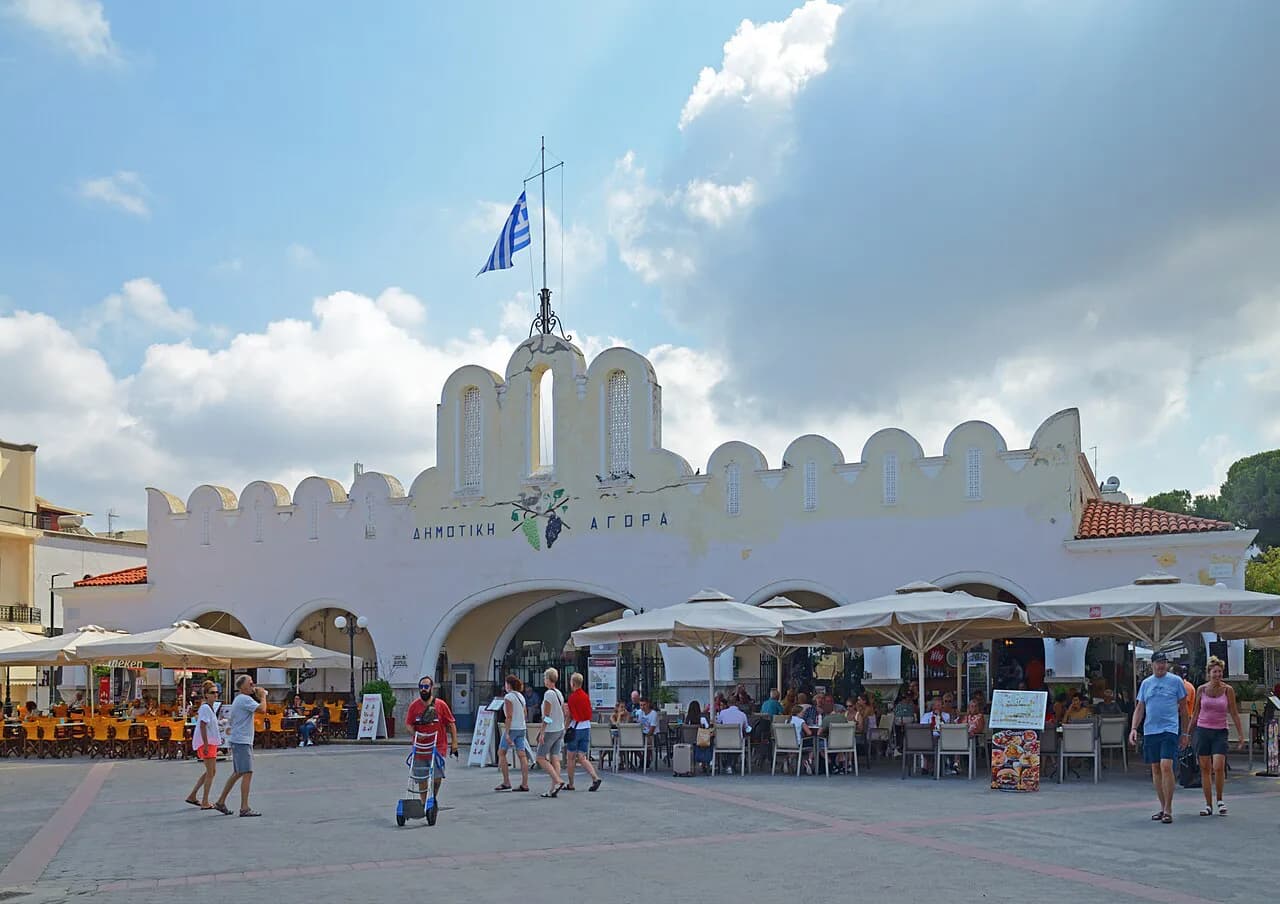
The Municipal Market of Kos is the island's central produce market, known in Greek as the Dimotiki Agora, or municipal market. It sits on Eleftherias Square in the middle of Kos Town, within a few minutes' walk of both the harbour front and the lanes of the Old Town, and it anchors our Kos Attractions: 10 Visitor Guides for anyone building a day around the town centre.
It is a compact stop rather than a full day out: most visitors combine it with the museum across the square or a walk along the promenade. This guide covers what to expect, what to buy, and how to slot it into a Kos Town morning.
What the Kos Municipal Market Is
The Dimotiki Agora is a working municipal market hall, not a themed shopping arcade. Agora is simply the Greek word for market, and dimotiki means municipal, so the name on signs and maps points to the same place travellers call the Kos municipal market or Farmers' Public Market.
It differs from the rest of Kos Town's retail scene in purpose and rhythm. This is where produce, honey and nuts are sold alongside souvenirs, while the town's wider shopping spreads through the streets around Eleftherias Square and the Old Town. Treat the market as a focused errand and the surrounding streets as the longer browse, and map the wider Kos Neighborhoods: 4 Area Guides if you plan to shop beyond the centre.
Where It Is: Eleftherias Square
The market stands on Eleftherias Square in central Kos Town, directly opposite the Archaeological Museum. That puts it inside the compact core of the town, with the seafront promenade a short walk away and the Old Town alleys just beyond.
Use Eleftherias Square as your landmark rather than a street number, since the square itself is the reference point locals and maps use. If you are coming from the harbour, walk inland into the town centre and ask for Eleftherias Square or the Dimotiki Agora if you lose your bearings.
How to Get There
From the harbour and the centre of Kos Town, the market is a walk rather than a trip: allow a few minutes on foot from the waterfront. Visitors staying in the Old Town or near the promenade can fold it into an ordinary morning stroll without any transport at all.
If you are arriving from resorts such as Kardamena or Tigaki, look up the current bus routes and town parking before setting out, because timetables and parking rules are not fixed season to season. The island's official tourism site is the sensible first stop for getting-around information.
What the Market Sells
According to the island's tourism website, the local market on Eleftherias Square is where you buy local vegetables, seasonal fruits, honey, dry nuts and souvenirs. That mix makes it useful for two different errands: edible take-home buys and small gifts.
Do not expect a vast hall with dozens of separate departments. The cited range is produce, honey, nuts and souvenirs, so plan your visit around those categories and do the rest of your shopping in the surrounding streets.
Reading the Stalls: Market Versus Town Shops
A working Greek produce market is organised around what is in season, so the fruit and vegetable offer shifts through the year rather than staying fixed. Honey and nuts are more stable purchases and easier to plan for if you want something to carry home.
The surrounding shopping has its own calendar. The tourism site notes that most central stores in Kos Town operate all year round, while souvenir shops and stores selling beach essentials are generally open from May until early November, with smaller local markets and stores in resorts such as Kardamena and Tigaki serving visitors in season.
The practical consequence is that a winter visit still gives you a functioning town centre and a municipal market, but a thinner choice of souvenir and beach-gear shops. If holiday trinkets are the priority, a summer trip matches the shop calendar better.
Honey and Nuts as Take-Home Buys
Honey and dry nuts are the simplest edible souvenirs the market is cited as selling, and they pack easily into hand luggage if you keep jars padded and within airline liquid rules. Read the label for origin and producer details rather than assuming every jar is island-made.
Buying honey here is about flavour and provenance as a food souvenir, not about any health benefit. Ask the vendor where the honey comes from if the label is unclear, and choose a size you can realistically carry rather than the largest jar on the stall.
Souvenirs and Ceramics
Ceramics are a Kos tradition rather than a generic souvenir: the island's tourism site describes a long-standing pottery craft, with both traditional pieces and contemporary designs on offer. The market sells souvenirs, and ceramics also appear in the shops of mountain villages such as Zia, where handmade Greek ceramics, miniatures and paintings are displayed.
If a particular piece matters to you, buy it when you see it rather than planning to return, and check how it will be wrapped for the flight home. For heavier ceramics, Zia's village shops make a separate excursion rather than a market add-on.
How Much Time to Allow
A quick browse of the market takes a short stop, enough to walk the stalls, buy honey or fruit and move on. If you want to compare produce, chat to vendors and pick out a souvenir, budget closer to a slow half hour.
Nearby Sights to Pair With the Market
The Archaeological Museum of Kos faces the market across Eleftherias Square, which makes it the most natural pairing and an easy way to fill a morning. The town's other central monuments sit within walking distance, so you can build a short loop rather than a full itinerary around the market.
Two landmarks are close enough to reach on foot: the Tree of Hippocrates and Neratzia Castle, the fortress that guards the harbour approach. Both are harbour-side stops, so they combine well with a walk back toward the promenade cafes after the market.
A little further out, the Roman Odeon of Kos and the Ancient Agora of Kos extend the archaeological theme for anyone who wants a fuller day of ruins after the market; the Asklepieion of Kos sits outside the centre and needs its own trip.
Hours, Seasonal Stalls and Where to Confirm
The market's opening hours and days of operation are not published in a form this guide can rely on, so confirm them locally or through the island's tourism office before making a special trip. Look for posted times at the market itself, or ask at your accommodation in Kos Town.
Season matters mainly for the shops around the square rather than the market's core produce offer, so check current details once when you plan the day and leave it at that. If you are visiting outside the main summer months, a quick question about which stalls are trading saves a wasted walk.
Pairing the Market With a Kos Town Morning
A sensible order is market first, museum second, then a walk to the harbour for the Tree of Hippocrates and Neratzia Castle. That keeps you in the compact centre, avoids backtracking and leaves the afternoon free for the promenade or the Old Town lanes, whose neighbourhoods are worth mapping before you set out.
Practical Takeaways
The Municipal Market of Kos is a small, central stop on Eleftherias Square opposite the Archaeological Museum, best used for produce, honey, nuts and a souvenir rather than as a destination in itself. Walk there from the harbour, allow a short browse, and pair it with the museum or the harbour monuments.
Check opening times and seasonal shop patterns before a special trip, especially outside summer, and buy ceramics and honey with packing and luggage limits in mind.
Explore more Kos sauna guides
Frequently Asked Questions
Where is the Kos municipal market?
The Municipal Market of Kos, also called the Dimotiki Agora or Farmers' Public Market, is on Eleftherias Square in central Kos Town, opposite the Archaeological Museum. It is within walking distance of the harbour promenade and the Old Town lanes, so you can reach it on foot from most of the town centre.
What can you buy at the Municipal Market of Kos?
The market is cited as selling local vegetables, seasonal fruits, honey, dry nuts and souvenirs. Produce varies with the season, while honey and nuts are the most reliable take-home buys. Ceramics are a Kos craft tradition and also appear in souvenir shops and in mountain villages such as Zia.
Is the Kos municipal market open year-round?
The market's exact opening hours and days are not published in a form this guide can confirm, so check locally. The town's wider shopping has a seasonal split: most central stores in Kos Town operate all year, while souvenir and beach-essential shops generally open from May until early November.
What is a market called in Greece?
Agora is the Greek word for market, and dimotiki means municipal, so Dimotiki Agora translates as municipal market. That is why you will see the Kos market named both as the Dimotiki Agora and as the Farmers' Public Market on maps and listings.
How long does it take to visit the Kos municipal market?
A quick browse takes a short stop, long enough to walk the stalls and buy fruit, honey or a souvenir. Allow closer to half an hour if you want to compare produce and choose a gift carefully. Most visitors combine it with the museum opposite or a walk to the harbour.
What is near the Kos municipal market?
The Archaeological Museum of Kos sits directly opposite on Eleftherias Square. The Tree of Hippocrates and Neratzia Castle are a short walk toward the harbour, and the Ancient Agora and Roman Odeon extend the archaeological theme if you want a fuller day in Kos Town.