
Casa Romana: The Roman Villa in the Heart of Kos Town

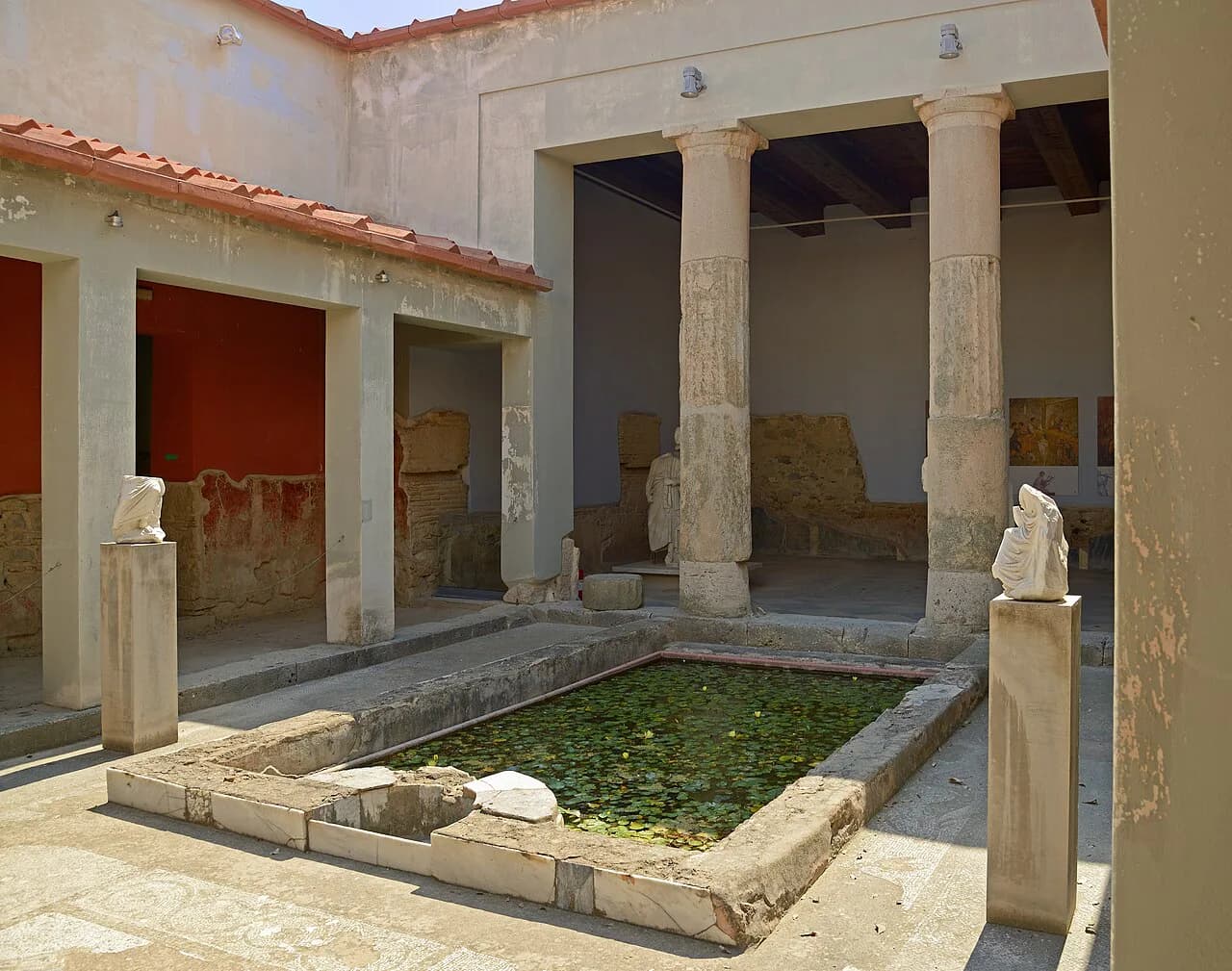
Casa Romana is an excavated Roman townhouse in the middle of Kos Town, a compact site built around three courtyards rather than a sprawling archaeological park. Travelers who have been to Pompeii will recognise the layout immediately: rooms opening onto colonnaded atria, floors in mosaic, walls once clad in marble. That resemblance is the reason to put it on a Kos Town morning rather than saving it for a separate excursion.
This guide sticks to the villa itself: where the entrance is, the details worth slowing down for in each atrium, how long the visit takes, and how to confirm the published ticket and closing day before you travel. It does not rank Casa Romana against other island sights, but it does point out what sits within a few minutes' walk once you step back outside.
What Casa Romana Is
Casa Romana is described as a third-century AD aristocratic villa, probably the home of a wealthy family, and the surviving decoration is compared to the houses of Pompeii. The site is an urban villa, meaning it sits within the modern town rather than on a hillside outside it. Expect a walled excavation rather than a reconstructed building, with the plan of the house read from its floors, column bases and standing wall fragments.
According to the travel site Vacanze Greche, the villa was uncovered after the earthquake of 23 April 1933, when rubble was being cleared during the period of Italian administration of Kos. The same account links the discovery to other Roman and Hellenistic remains found in the same clearance work. Treat the rediscovery story as reported rather than as an official excavation history, and let the fabric of the house itself carry the visit.
Where Casa Romana Sits in Kos Town
The site lies in central Kos Town, described as being to the right of Grigoriou Pemptou Street, west of the town centre and immediately beside the Roman Odeon. That makes the Odeon the simplest landmark: if you can find the small Roman theatre, you are at the villa's edge. Approach from the harbour side on foot and keep Grigoriou Pemptou Street as your reference line rather than relying on a street number.
Because the villa is inside the built-up town, it fits naturally between other stops in Kos Town rather than requiring transport. If you are still deciding how to shape a day around the town's antiquities, the wider set of Kos Attractions gives you the surrounding options before you commit. Walking is the practical way in; driving into the centre mostly adds parking problems rather than saving time.
What to See Inside: The Three Atria
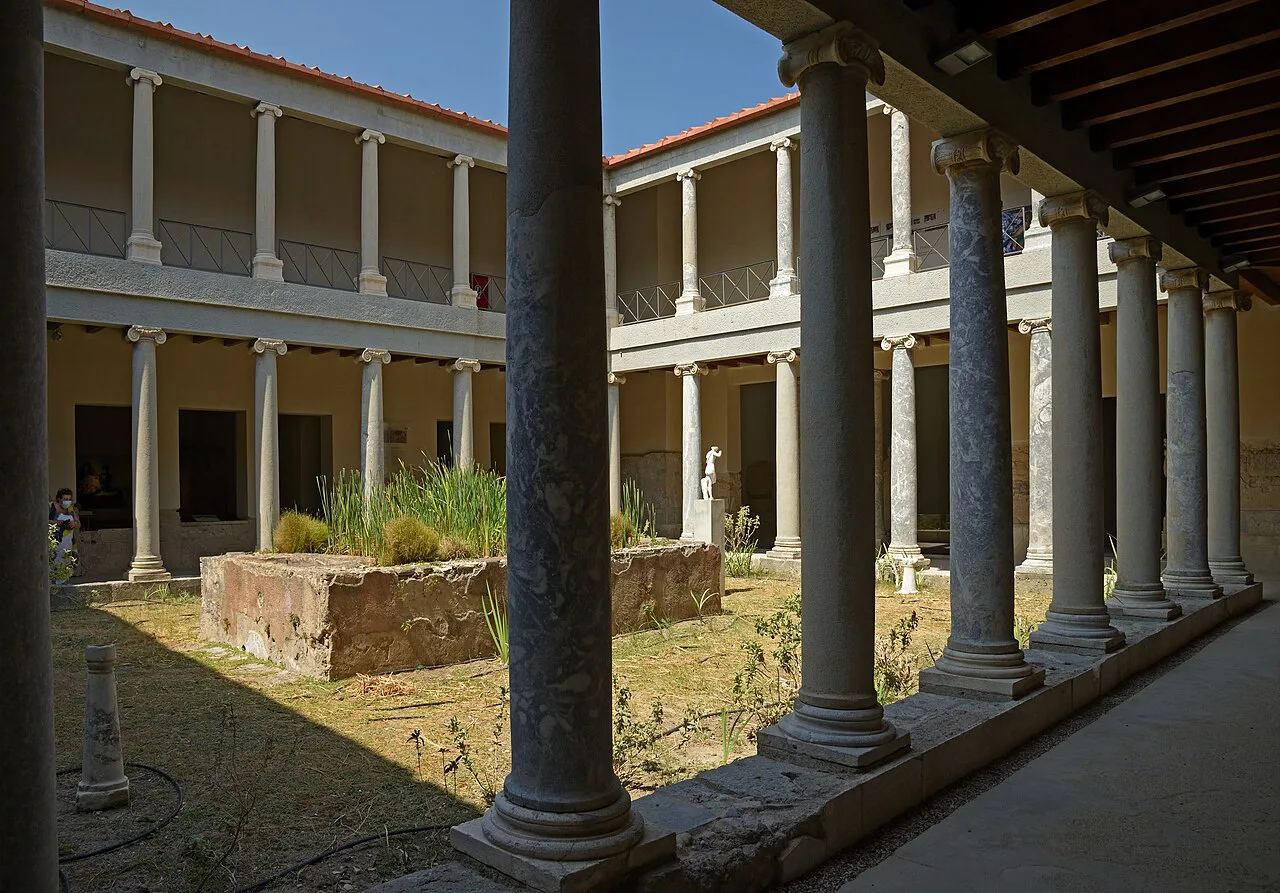
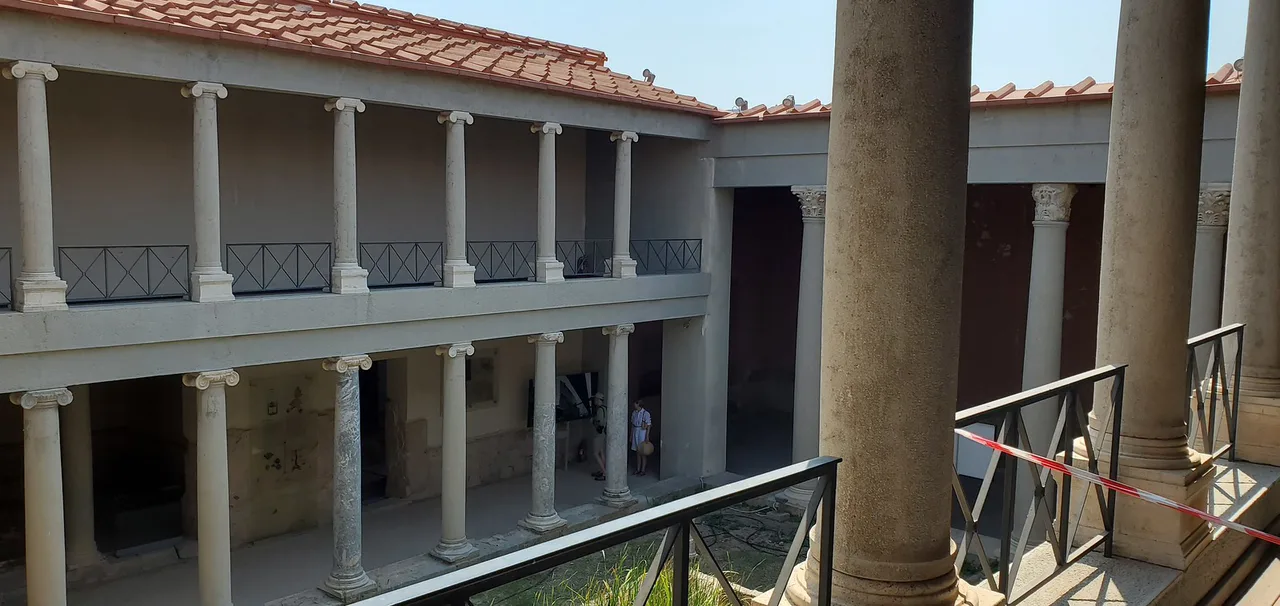
The house is organised around three large atria, which originally brought light and air into the surrounding rooms, each with a small fountain at its centre serving a decorative purpose. Read the visit as a route through these courtyards rather than a single room, and it becomes much easier to picture how the house worked. The colonnades, wall paintings and mosaic floors are the elements the source highlights as the core of the visit.
In the corridor of the first atrium stood a statue of Asklepios, the healing god whose sanctuary lies elsewhere on Kos. In the second atrium, look at the floor for a dolphin and a sea nymph, framed by walls that were once covered in marble. The third atrium is the largest, and it carries the richest combination of mosaics and painted wall decoration, so budget your attention accordingly.
Elsewhere in the house the source points to a dining room and an area given over to bathing, which together show the working half of an aristocratic household rather than only its reception spaces. The plan is reported as 36 rooms in total, which sounds large until you realise most are small and read from floor level. Look down as much as up: the mosaics are the most legible surviving feature for a non-specialist visitor.
A scale model of the site and villa helps translate the low walls into a standing house; visitors' photographs of it are widely shared online and give a sense of what the reconstruction shows. If you want a model of the site's context before walking it, the Archaeological Museum of Kos in town is the natural companion stop for the island's finds.

Tickets and Opening Days
Vacanze Greche publishes an adult ticket of 6 euros, free entry under 18 and a 50 percent reduction for visitors over 65, with opening from 08.00 to 19.30 on every day except Tuesday, when it lists the site as closed. Those figures come from a single third-party travel blog rather than the Greek archaeological service, so treat them as indicative. Seasonal hours at Greek sites commonly shift outside the summer months, so it is worth checking times and prices before you go.
The Tuesday closure is the detail most likely to spoil a short Kos Town stop, so plan the villa for another day of the week or confirm the day's opening before you walk over. If you are combining sites, check each one's published schedule separately; the Casa Romana keeps its own hours and does not share them with neighbouring monuments. A look at the entrance sign the day before is usually enough to avoid a wasted trip.
How Long to Allow and How to Pace It
Allow roughly 30 to 45 minutes for Casa Romana itself, longer if you read every mosaic panel and the room labels carefully. The site is small and sits in the open, with limited shade, so in high summer it makes more sense as an early stop than a midday one. Combine it with the Odeon next door and you have a comfortable hour or so without leaving the town centre.
Practical habits help here: stay on the marked walkways, keep off the mosaic floors, and watch your footing on uneven ground and low thresholds. Photography of the floors is the main reason many visitors linger, so check whether flash is restricted on arrival rather than mid-shot. Carry water in summer, since the site offers little relief from the sun.
What Is Nearby
The Roman Odeon is the immediate neighbour and the obvious pairing, and the Ancient Agora of Kos lies within the same central walkable area of town. Both reward a short look rather than a long stop, which suits an itinerary built around Kos Town rather than around transport. If you are mapping a wider circuit of the town's neighbourhoods, Kos Neighborhoods: 4 Area Guides sets out how the centre connects to the rest.
Other central sights within easy walking distance include Neratzia Castle on the harbour side and the Tree of Hippocrates, both useful anchors when you plan a loop back toward the waterfront. Agia Paraskevi Church, Kos Town is another short stop in the same quarter if you are already moving between the castle and the market. None of these needs booking, but each has its own published hours worth checking.
For the town's everyday side, the Kos Municipal Market and Defterdar Mosque in Kos Town sit within the same central area and give a change of register after the archaeology. These are quick add-ons rather than destinations in their own right, and they work best slotted between the villa and lunch. If you are weighing costs across the island, Kos Prices gives a sense of how town spending compares.
Where to Eat Afterward
No restaurant or taverna is identified near Casa Romana by name in the published material, so the sensible approach is to walk back into the Kos Town centre and choose from what you find there. The streets between the harbour and the market area give you the widest choice, and lunch after a morning site visit is the natural rhythm. For orientation on where the eating streets sit relative to the antiquities, start with the neighbourhood guides.
Plan Your Visit
Casa Romana earns its place on a Kos Town day because it is compact, central and rich in readable detail: three atria, a dolphin-and-nymph floor, painted walls and a bathing suite, all within a short walk of the Roman Odeon. Go early, allow under an hour, and pair it with one or two nearby stops rather than treating it as a half-day out.
Before you set out, confirm the current ticket price and the Tuesday closure with the ticket office or an official archaeological source, since the published figures come from a third-party travel site and may change. Build the rest of your Kos Town plan around what is genuinely within walking distance, and the villa becomes an easy, low-commitment stop rather than a detour.
Frequently Asked Questions
Is Casa Romana in Kos worth visiting?
Yes, if you are already spending time in Kos Town. It is a compact Roman townhouse with three atria, mosaic floors, painted walls and a bathing area, and it sits next to the Roman Odeon. Allow under an hour and treat it as one stop among several in the centre rather than a standalone excursion.
Where is Casa Romana in Kos Town?
It is in central Kos Town, described as being to the right of Grigoriou Pemptou Street, west of the town centre and immediately beside the Roman Odeon. Use the Odeon as your landmark and approach on foot from the harbour side; a street number is less reliable than the theatre next door.
How much is entry to Casa Romana?
A third-party travel site publishes an adult ticket price, free entry for under-18s and a reduction for visitors over 65, but that information has not been confirmed against an official source. Check the price at the ticket office or on the Greek archaeological service's pages before you travel, since rates and reductions can change.
Is Casa Romana open on Tuesdays?
The same third-party source lists the site as closed on Tuesdays and open from 08.00 to 19.30 on other days, but this has not been verified officially and seasonal hours may differ. Confirm the day's opening at the entrance or through an official source before you build a plan around it.
How long does it take to visit Casa Romana?
Most visitors can see the whole site in about 30 to 45 minutes, longer if you study the mosaics and the room plan closely. It is a small open-air excavation with limited shade, so an early visit in summer is more comfortable than a midday one.
What can you see inside Casa Romana?
The house is organised around three atria with central fountains, colonnades, mosaic floors and painted walls. Specific features include a statue of Asklepios in the first atrium corridor, a dolphin and sea nymph floor in the second, and the largest third atrium with its mosaics and wall decoration, plus a dining room and bathing area.
Is Casa Romana near the Roman Odeon?
Yes, the two are adjacent, with the villa described as sitting right next to the Odeon in central Kos Town. That makes them easy to visit together, and the Odeon is the simplest landmark for finding the villa's entrance.