
Agia Paraskevi Church, Kos Town: What to See and How to Visit

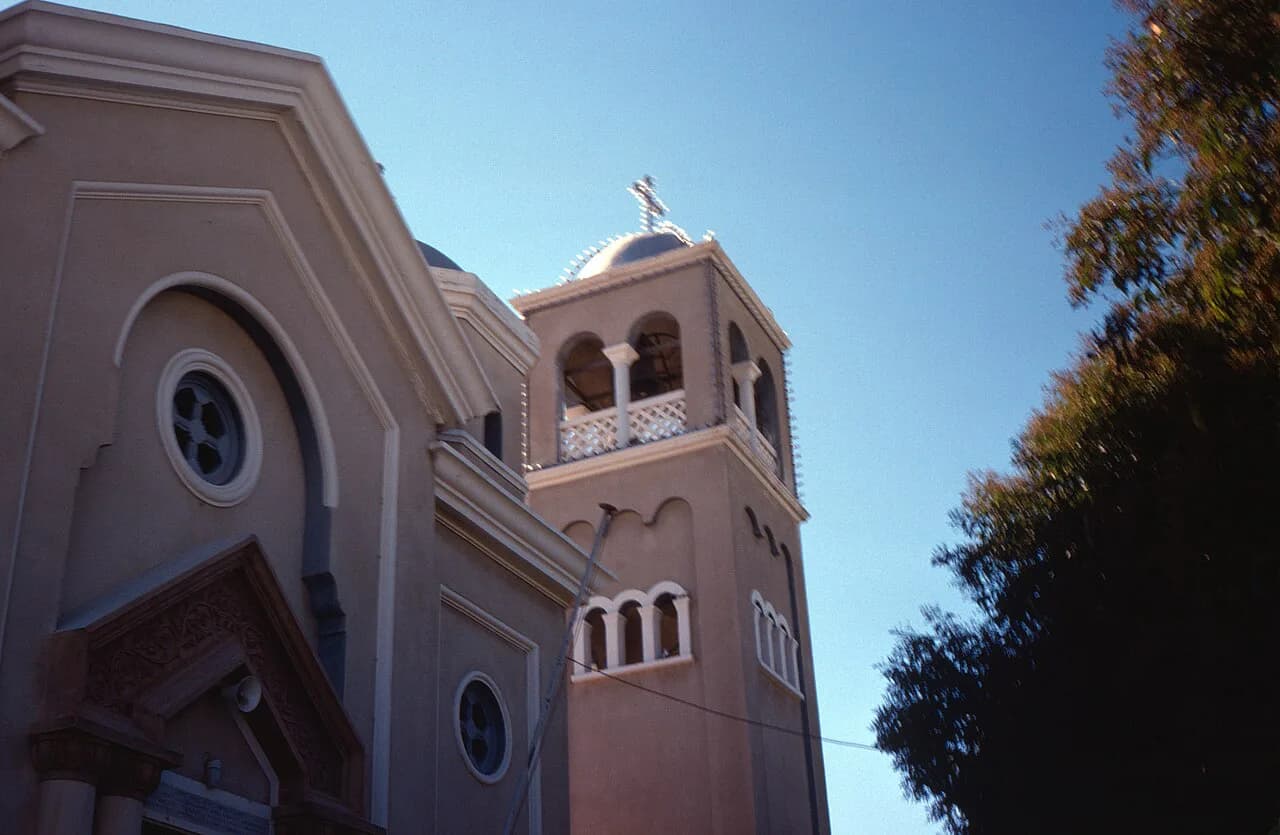
Agia Paraskevi Church is a Greek Orthodox church in the middle of Kos Town, and its position makes it an easy stop between the harbour and the old town lanes. The building is Neo-Byzantine in style, which means it borrows the rounded domes and brick-and-stone look of much older Byzantine churches rather than the plain whitewashed forms many visitors picture.
This guide sticks to the church itself: where it stands, how to approach it on foot, what to notice on the outside, how to behave inside, and how long to budget. It is one piece of a larger set of Kos Attractions: 10 Visitor Guides, so treat it as a single stop rather than a half-day plan.
Where Agia Paraskevi Church Is in Kos Town
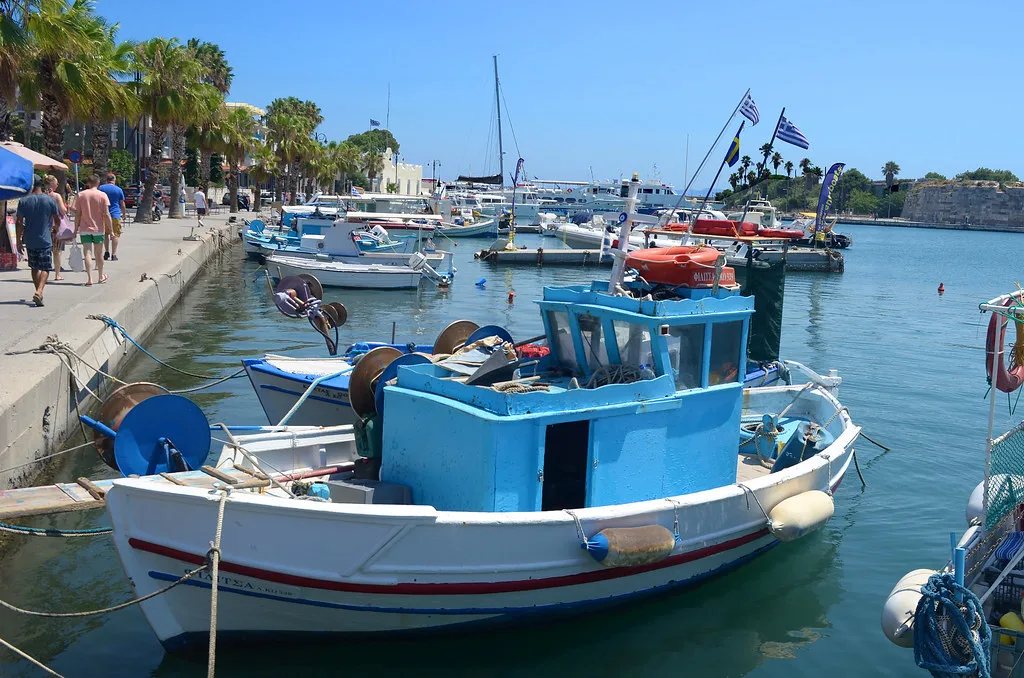
The church stands in the heart of Kos Town, about 200 metres south of the town port, which puts it within a few minutes' walk of the waterfront where ferries and excursion boats come in. Use the port as your anchor point: from the quay, head inland (away from the water) and slightly south, and the church's dome and bell structure should be the landmark you are steering toward.
Because it sits in the commercial core rather than in a quiet residential edge, the church is surrounded by everyday town life, with shops and cafes on the approach streets. That makes it a natural pause while you are already moving between the port and the market area, rather than a detour you need to schedule separately. If you want to understand how the harbourfront and the market zone relate, the Kos Neighborhoods: 4 Area Guides map out the same decision at another scale.
If you are plotting a wider day around central Kos Town, the Kos Neighborhoods: 4 Area Guides help you see how the harbourfront, the old town and the market zone fit together on foot. Reading that before you arrive saves you from criss-crossing the centre twice.
How to Reach It on Foot from the Harbour, Market and Old Town
Walking is the sensible way to reach Agia Paraskevi Church. From the port area you simply head inland for roughly 200 metres, and from the Municipal Market of Kos and the surrounding old town lanes you approach from the opposite direction, so the church works as a midpoint between the two.
Cyclists use the church as a waypoint too: local route listings include it on loops through the Kos Town historic centre and between the harbour and the old town. Those loops run roughly four to eight kilometres depending on the variant, which tells you the church sits comfortably inside a short town ride rather than on the edge of it.
If you are coming from further out, buses and taxis drop passengers in the town centre close to the port, and everything from there is level walking. Streets immediately around the church are narrow and busy with pedestrians, so park or alight at the edge of the centre and continue on foot instead of trying to pull up at the door.
The Exterior: What to Look At First
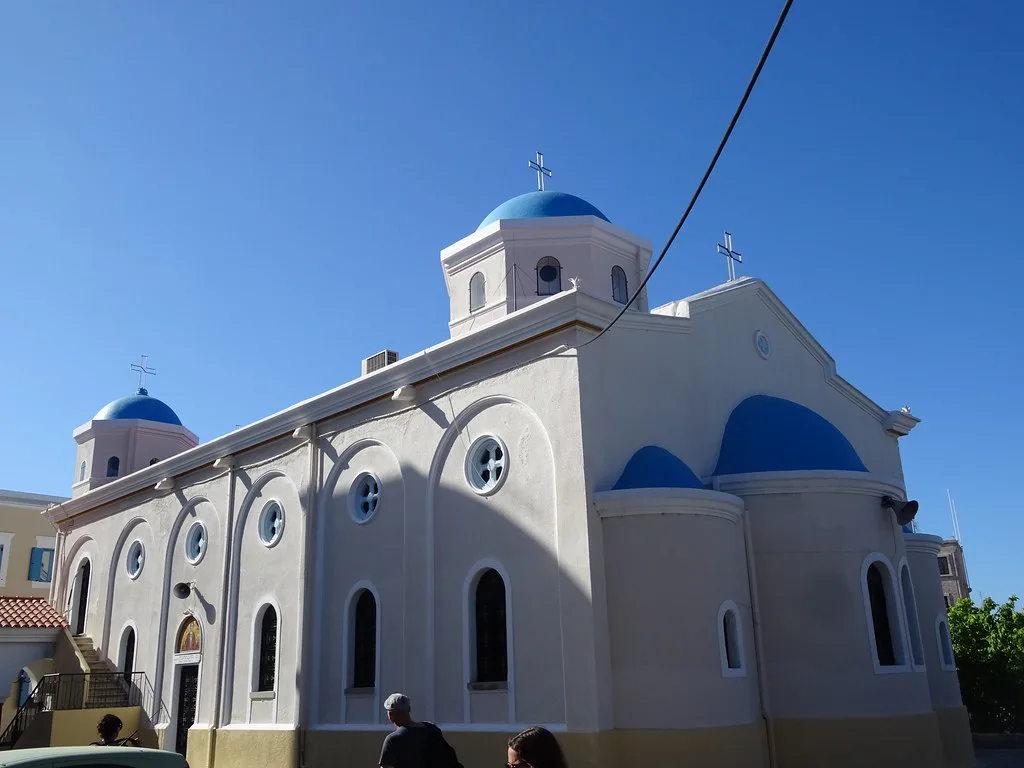
Start with the overall silhouette. Neo-Byzantine churches are recognisable by their domes, arched windows and decorative brickwork, and this one is described as one of the biggest churches in the area, so it reads as a substantial building rather than a small chapel tucked between shops.
Walk once around the outside before going in. Look at how the dome sits on the main body of the church, then at the window arches and any patterned stonework on the walls; those are the details that distinguish the Neo-Byzantine revival style from ordinary town architecture. Give this five to ten minutes rather than rushing straight to the door.
The setting is part of what you see. One visitor's note describes a very large tavern under huge trees directly beside the church, with shade and a view toward the market hall opposite, which gives you a sense of how tightly the church is woven into the surrounding streetscape.
Inside a Greek Orthodox Church: What to Expect and How to Behave
Step in quietly and you will usually find a space organised around an icon screen rather than rows of pews facing a pulpit. That screen, the iconostasis, separates the main nave from the sanctuary behind it and carries the painted icons that are central to Orthodox worship; visitors typically stand or sit toward the back and leave the area in front of the screen clear.
Modest dress is the safe default: shoulders and knees covered, hats off for men, and a low voice throughout. If a service is in progress, it is better to wait outside or stand at the rear rather than walk around taking photographs, and flash is best avoided entirely. If you want to photograph icons or interior detail, ask first, since practice varies from church to church.
Note that access is not something to assume. The building has been reported by visitors as affected by earthquake damage in recent years, with one listing stating that the church was closed as a result, so plan the church as a possible stop and keep a fallback nearby.
Opening Access and Earthquake Damage: What Is Documented
Public information on this church is thin. One visitor note from 2019 describes it as a pretty little church that was affected by the 2017 earthquake, and a later note says the damage was serious enough that the church was closed. Those are visitor observations rather than an official statement, and they should not be read as a reliable current status.
No opening hours, ticket prices or service times are published in the sources used here, so this guide does not give any. Photographs and existing reviews also tend to blur this church with the Church of Christ in Kos Town, which makes secondhand reports about 'the cathedral' especially unreliable for judging access.
The practical move is to treat the exterior as the dependable part of the visit and check access on the day. Ask at your accommodation in Kos Town or at the port tourist information point whether the church is currently open, and if it is shut, the surrounding streets and market area still justify the walk. This is one of only two points in this guide where checking current details matters most.
How Long to Allow and What to Pair With It
Budget around twenty to thirty minutes if the church is open: five to ten for the exterior, ten to fifteen inside, and the rest for a slow look at the details. If it is closed, treat it as a ten-minute orientation stop and move on rather than waiting around.
Central Kos Town packs several sights within easy walking distance, so the church slots naturally into a half day on foot. The Tree of Hippocrates in Kos is a nearby landmark in the town centre, and Neratzia Castle in Kos Town anchors the harbour side, so you can order a walk between them with the church in the middle.
If you want to extend the archaeology, the Roman Odeon of Kos and the Ancient Agora of Kos are both in the town area and suit travellers already walking the centre. Pick one of them rather than both if you are short on time, since they compete for the same attention span as the church.
For the hillside sanctuary outside the centre, the Asklepieion of Kos needs its own block of time and transport, so do not try to fold it into the same hour as the church. The Archaeological Museum of Kos is a more realistic add-on if you want context for what you have seen in town.
Practical Notes for Your Visit
Dress for a place of worship, not for the beach: covered shoulders and knees, sunglasses off inside, and a quiet voice. Carry a light layer if you plan to stand outside for photographs, and keep bags close in the busy streets between the port and the market.
Groups should split into small numbers at the door rather than filing in together, and anyone photographing should be ready to stop if asked. These are courtesies rather than rules published for this specific church, so follow any notices posted at the entrance and the guidance of anyone present.
The second and final reminder about verification concerns timing: opening patterns for Greek Orthodox churches in Kos Town can change with the season and with repair work, and no schedule is published for this one. Confirm on the day rather than planning your morning around it. If you are weighing up costs across the town, Kos Prices gives useful background before you commit a day's budget.
Plan Your Visit
Agia Paraskevi Church is a short, central stop in Kos Town rather than a destination in its own right. Its value lies in the Neo-Byzantine exterior, the easy position about 200 metres south of the port, and the way it stitches together a walk between the harbour, the old town lanes and the market area. If you want to understand how those three zones connect before you set out, these Kos Neighborhoods: 4 Area Guides are the natural companion read.
Approach on foot, look at the outside first, and treat the interior as a bonus if the doors happen to be open. Keep the stop short, pair it with one or two other central sights, and leave the question of access to a same-day check rather than an assumption made weeks in advance.
Explore more Kos sauna guides
Frequently Asked Questions
Where is Agia Paraskevi Church in Kos Town?
It stands in central Kos Town, roughly 200 metres south of the town port. From the harbour, walk inland and slightly south, and use the church's dome as your landmark. It sits among shops and streets rather than on the waterfront itself.
How far is the church from the port of Kos?
About 200 metres, which is a walk of a few minutes at an easy pace. Bus and taxi drop-offs cluster around the port and town centre, so the final stretch to the church is on foot through pedestrian streets.
Can you walk into a Greek Orthodox church as a visitor?
Often yes, but access is not guaranteed and depends on whether the building is open for prayer, cleaning or repairs. Dress modestly with shoulders and knees covered, keep your voice down, and do not walk in front of the icon screen or photograph during a service.
Is Agia Paraskevi Church open to visitors?
No reliable visiting schedule is published for this church. Visitors have reported earthquake damage in recent years, with one note stating the church was closed, so ask locally in Kos Town on the day.
What is there to see at Agia Paraskevi Church?
The main draw is the Neo-Byzantine exterior: domes, arched windows and decorative brickwork, described as one of the larger churches in the area. If you get inside, look for the iconostasis, the screen of painted icons separating the nave from the sanctuary.
How long does a visit to Agia Paraskevi Church take?
Allow twenty to thirty minutes if the church is open, including a circuit of the outside and a quiet look within. If the doors are shut, ten minutes to see the exterior and read the setting is enough before continuing into the old town.
What else is near Agia Paraskevi Church?
The Municipal Market of Kos and the old town lanes are a short walk away, and the harbourfront with Neratzia Castle and the Tree of Hippocrates is also within the centre. The Roman Odeon and the Ancient Agora suit travellers extending the walk.